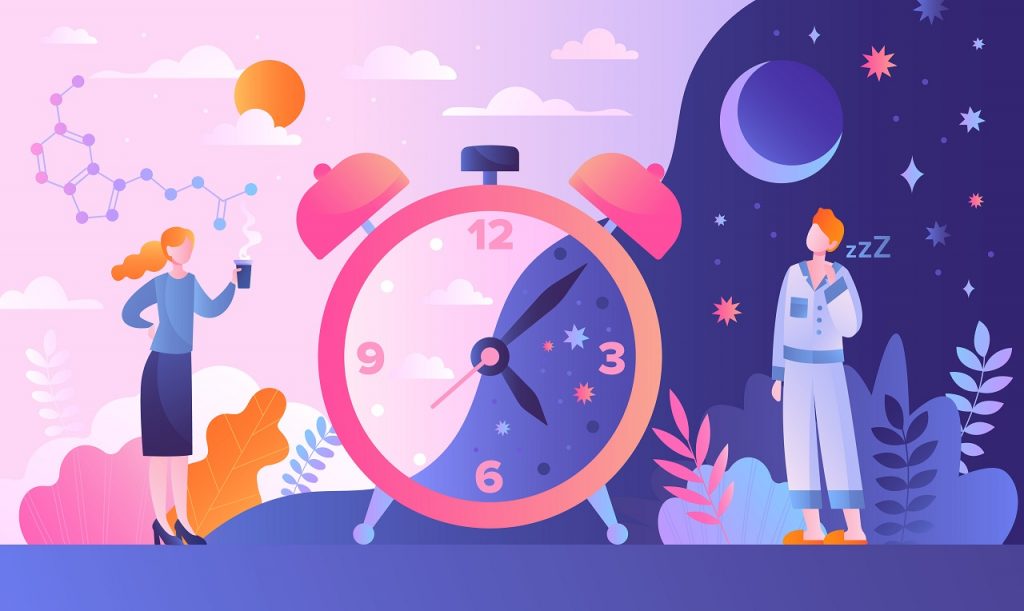
 Ever wondered why you feel energised in the morning some days and groggy on others? Or why you naturally wake up at the same time every day—even without an alarm? The answer lies in your circadian rhythm—your body’s internal clock that runs the show when it comes to sleep, energy, alertness, and more.
Let’s break it down.
What is Circadian Rhythm?
The term “circadian” comes from Latin:
- “Circa” – meaning about or around
- “Dian” – related to the day
- Rhythm – a repeating pattern or cycle
So, it literally refers to a roughly 24-hour internal cycle your body follows every day—governing things like sleep, wakefulness, body temperature, hormones, and alertness. Interestingly, it’s not exactly 24 hours—it’s about 24 hours and 15 minutes!
The Role of Light in Circadian Rhythm
The main trigger for circadian rhythm is light. Even though research shows it can still function without external light (like in a dark room), light exposure—especially sunlight—greatly influences it.
At the core of this system is a tiny region in your brain called the Suprachiasmatic Nucleus (SCN)—often referred to as your “third eye” or biological clock. It sits just above where the optic nerves from each eye cross and processes signals related to light, helping your body know when it’s time to wake up or wind down.
Your Circadian Type: Early Bird or Night Owl?
Not everyone’s rhythm is the same. People generally fall into three chronotype categories:
- Early Birds (25%) – feel energised early in the morning
- Night Owls (25%) – peak energy comes later in the day
- The Majority (50%) – somewhere in between
This 1–2 hour variation explains why some thrive at sunrise, while others come alive at night. You can find your chronotype through various free online tests.
How Circadian Rhythm Impacts Your Day
Your energy levels, alertness, heart rate, and even body temperature follow a circadian pattern. For example:
- Core body temperature can drop by 2°C during rest
- Heart rate can fall by 20 beats per minute
Trying to maintain consistent productivity throughout the day isn’t always natural. That’s why timing your most demanding tasks to match your personal energy peaks—say 11 am to 1 pm or 4 pm to 6 pm—can make a real difference.
Even jet lag is a result of circadian misalignment—your internal body clock is out of sync with the local time zone.
How to Align Your Body Clock for Better Sleep
Want to improve your sleep and energy levels? Here’s how to work with—not against—your body clock:
- Understand Your Chronotype
Discover when you’re naturally most alert and schedule important activities accordingly. - Get Morning Sunlight
Spend 10–15 minutes in natural light as early as possible. This helps set your body clock for sleep later in the evening. - Use a ‘Bedtime Alarm’
Instead of setting an alarm to wake up, set one to start your sleep routine. Going to bed at the same time daily trains your circadian rhythm. - Dim the Lights After 7:30 PM
Reduce screen and light exposure. Even better—enjoy a candlelight dinner to encourage natural melatonin production (your sleep hormone).
Understanding and aligning with your circadian rhythm isn’t just good for sleep—it’s great for your overall well-being. By syncing your routine to your natural rhythms, you’ll find yourself sleeping better, feeling more alert during the day, and living more in tune with your body.
#BeTheForce
 Antioxidants—also known as “free radical fighters”—have been making waves in the health and wellness industry. But what exactly do they do? Are they genuinely beneficial, or are they just another marketing buzzword? More importantly, is it better to get them from food or supplements? Let’s break it down.
 How many times have we fought in our intimate relationships with our partner? Definitely more than a few times. Couple conflicts, in themselves, are not unhealthy. They give us an opportunity to look at the areas of the relationship that need the most attention. For instance, a conflict about one partner not helping with housework highlights feelings of being left out and alone in life’s mundane struggles. While there are countless reasons couples fight or disagree, these conflicts act like a muslin cloth, filtering out the impurities that affect the relationship.
 Skin is the largest organ of our body and the one that is directly exposed to the outer environment every day. External factors like sunlight, wind, dust, cold weather, alcohol, and smoking, as well as internal factors like dehydration, aging, poor nutrition, stress, and lack of sleep, can damage the skin. When we feel that our skin is damaged or to prevent skin damage, many of us tend to fall for the plethora of skincare products available in the market. But in reality, we need to work on fixing our damaged skin internally rather than relying on external products that may contain harmful chemicals. So, what do we do for skin repair? The answer is simple—it’s the vitamins in our diet!


