GOQii

Blog

  • HOME
  • HEALTHY LIVING
  • FITNESS
  • HEALTHY RECIPES
  • USER STORIES
  • KARMA
  • BUY GOQii

April 17, 2026 By GOQii Leave a Comment

Social Health and Longevity: Why Relationships Matter as Much as Diet

When we think about living longer, the focus usually falls on diet, exercise and medical tests. However, one of the most important predictors of long-term health is often overlooked, our relationships. Over the past two decades, research has consistently shown that loneliness and social isolation are linked to higher risks of heart disease, stroke, depression and premature death. In some cases, the impact of chronic loneliness has been found to be comparable to smoking.

In simple terms, connection is not just a social need. It is a health requirement.

Loneliness and the Heart

Humans are biologically wired for connection. When that connection is missing, the body experiences it as stress. Over time, this leads to measurable physiological changes such as:

  • Elevated cortisol (stress hormone) levels
  • Increased blood pressure
  • Higher levels of systemic inflammation

These changes significantly increase the risk of cardiovascular disease.

Loneliness also affects daily behaviour. People who feel disconnected are more likely to:

  • Sleep poorly
  • Exercise less
  • Eat irregularly

This means the impact of loneliness is not just emotional it directly affects physical health. On the other hand, strong relationships act as a buffer. They help regulate stress, improve recovery, and support overall resilience.

Community as Protection

In regions where people tend to live longer, one common factor stands out strong social networks. Regular interaction through shared meals, gatherings and routines creates a sense of belonging and stability.

Being part of a community encourages consistency in daily habits. For example:

  • You are more likely to go for a walk when someone is waiting for you.
  • You are more likely to stick to routines when they are shared.
  • You are more likely to stay motivated when others are involved.

Social support also improves resilience, helping individuals cope better with illness, stress and life transitions.

The Power of Group Movement

Physical activity becomes easier to maintain when it is social. Activities such as:

  • Walking groups
  • Yoga classes
  • Cycling communities
  • Outdoor treks

…offer more than just exercise. They create shared experiences, making routines more enjoyable and sustainable.

Studies show that people who exercise in groups are more likely to stay consistent compared to those who work out alone.

Even digital communities can help through:

  • Regular check-ins
  • Shared challenges
  • Coaching support

Shared Habits Build Consistency

Health behaviours are easier to maintain when they are reinforced socially. Some common examples include:

  • Family meals improving dietary consistency
  • Friends checking in on activity levels
  • Group challenges increasing accountability

Shared routines reduce decision fatigue and make healthy habits easier to sustain over time.

Building Your Health Circle

You do not need a large social network. A few meaningful connections are enough. Simple ways to strengthen your social health include:

  • Scheduling regular time with friends
  • Joining a fitness or walking group
  • Participating in community events
  • Volunteering for a cause
  • Staying connected with family
  • Engaging in group-based health challenges

Consistency in connection matters more than frequency.

The Bigger Picture

Diet, exercise and sleep are all essential for long-term health. However, relationships influence how consistently we follow through on these behaviours.

Social health helps:

  • Reduce stress
  • Improve emotional balance
  • Strengthen adherence to healthy routines

It supports both mental and physical wellbeing.

Longevity is not built in isolation. It is shaped not just by what you do, but also by who you share your life with.

If you want to invest in long-term health, do not focus only on your habits. Pay attention to your relationships as well. Because sometimes, the strongest predictor of health is not what’s on your plate but who is sitting across from you.

Frequently Asked Questions (FAQs)

  1. How does loneliness actually affect physical health?
    When humans feel chronically isolated, the body registers it as a state of threat. This triggers a constant release of stress hormones like cortisol, which leads to higher blood pressure, increased inflammation, and a significantly higher risk of cardiovascular diseases over time.
  2. Is a digital or online community as effective as an in-person one?
    Yes! While in-person connection is wonderful, active digital communities where members share goals, participate in challenges, and check in on each other’s progress provide high levels of accountability, emotional support, and motivation that effectively boost social health.
  3. Do I need a large group of friends to be socially healthy?
    Not at all. Social health is about the quality of your connections, not the quantity. Having just two or three deep, meaningful relationships where you feel truly seen and supported is enough to provide the health-boosting benefits of social connection.

To better manage your lifestyle with the right guidance, community support, and daily motivation from certified experts, subscribe to GOQii’s Personalised Health Coaching here.

#BeTheForce 

Disclaimer: The information provided in this article is for educational and general informational purposes only. It is not intended to serve as professional medical or psychological advice. Always consult with your physician, mental health professional, or a certified GOQii health coach before making any significant changes to your lifestyle or health routine. If you are experiencing severe isolation, chronic stress, or depression, please reach out to a qualified healthcare provider.
April 7, 2026 By GOQii Leave a Comment

World Health Day 2026: The Years You’re Losing Without Knowing

We don’t get sick overnight.

We drift into it slowly, quietly and call it normal.

This is exactly why this year’s World Health Day theme – “Together for health. Stand with science.” matters.

Because the problem isn’t that we don’t know what to do.
It’s that we act too late.

The Reality We’re Avoiding

India is living longer than ever before.

But here’s what we don’t talk about:

We’re also spending more of those years managing poor health.

Data from the newly released India Fit Report 2026 highlights a clear pattern—health decline isn’t sudden. It builds over time, often without obvious warning.

On average, nearly 12 years of life are impacted by reduced health, chronic conditions, or loss of function.

Not at the end.
Across life.

This Isn’t Ageing. It’s Accumulation

Most people think health breaks down later.

It doesn’t.

It builds gradually:

  • Habits form early
  • Biology adapts silently
  • Symptoms show up last

Lifestyle diseases are not events. They are timelines.

What Science Actually Shows

Science doesn’t just tell us what happens.
It explains why.

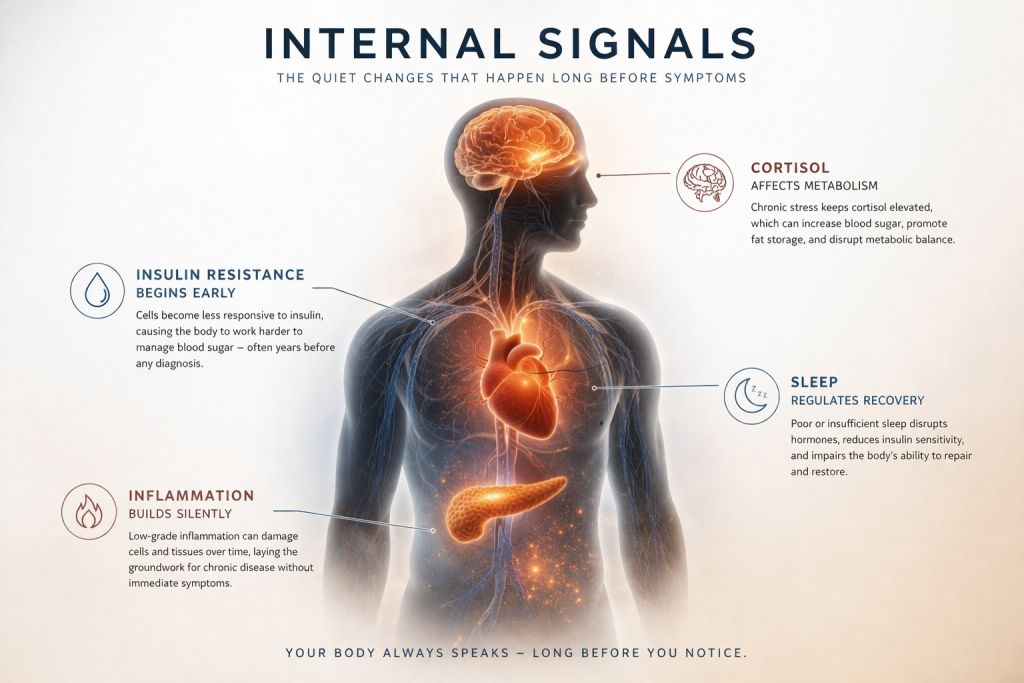
Long before diagnosis, the body shows signals:

  • Insulin resistance begins before blood sugar rises
  • Chronic stress elevates cortisol, impacting metabolism and heart health
  • Poor sleep disrupts hormone balance, recovery, and appetite regulation
  • Inflammation builds quietly, increasing long-term risk

These changes are not theoretical.

They are:

  • measurable
  • trackable
  • and most importantly, modifiable

What gets measured early can be managed early.

The Real Problem Isn’t Disease. It’s Delay

Nothing feels urgent.

  • No pain
  • No disruption
  • No immediate consequence

So nothing changes.

And that’s where the real damage happens.

The problem isn’t awareness.
It’s delay.

Where the Real Opportunity Lies

A large part of the population today sits in a grey zone:

  • Not sick
  • Not fully healthy

Functioning but fragile.

This is where outcomes are still flexible.

Because at this stage:

  • risks can be reversed
  • habits can be corrected
  • trajectories can change

But only if action is taken early.

What It Means to “Stand With Science”

It doesn’t mean doing more.

It means doing things earlier and doing them consistently.

  • Acting on signals, not symptoms
  • Using data instead of assumptions
  • Focusing on patterns, not quick fixes

Because most long-term health outcomes are shaped before they are diagnosed.

See the Data Behind This Shift

The India Fit Report 2026 brings together large-scale behavioural insights to show how everyday habits are shaping long-term health outcomes.

Download the full report here. 

We are not losing years at the end of life.

We are losing them every day, in ways that feel normal, until they aren’t.

This World Health Day:

Don’t wait for symptoms.
Start acting earlier.

Because the goal isn’t just to live longer.

It’s to stop losing the years that matter.

#BeTheForce

Disclaimer: The information provided in this article is for general awareness and educational purposes only. It should not be considered medical advice. Individual health needs and responses may vary. Readers are advised to consult a qualified healthcare professional before making any health-related decisions or changes to treatment, diet, or lifestyle.

Frequently Asked Questions (FAQs)

  1. What is the difference between lifespan and healthspan?
    Lifespan refers to how long you live, while healthspan refers to how many of those years are lived in good health.
  2. What causes loss of healthy years?
    Poor sleep, chronic stress, inactivity, and metabolic changes contribute to long-term health decline before symptoms appear.
  3. Can lifestyle diseases be prevented early?
    Yes. Many conditions like diabetes and heart disease develop gradually and can be delayed or prevented with early intervention.

April 3, 2026 By GOQii Leave a Comment

Staying Sharp After 40: The Ultimate Guide to Brain Longevity

Living longer is one thing. Staying mentally sharp is another.

After 40, many people begin to notice subtle changes. You may forget a name for a moment. Lose focus more easily. Feel mentally tired by evening. If you’ve found yourself asking, “Where did I put my keys?” or feeling that afternoon mental crash, you’re not alone.

While some slowing is natural, a serious decline is not inevitable. Brain health is strongly shaped by your daily habits. If you want longevity, you have to think about your brain.

Here is what you need to focus on to stay sharp for decades to come.

The Hidden Threat: Inflammation and the Ageing Brain

One of the biggest hidden threats to brain health is chronic inflammation. When the body is constantly fighting inflammation, it eventually affects the brain.

Research shows that midlife metabolic problems increase the risk of dementia later in life. Factors that fuel this fire include:

  • High blood pressure
  • Diabetes or poor blood sugar control
  • Chronic poor sleep
  • Excess abdominal fat

The brain depends on healthy blood vessels. What damages your heart and arteries also damages cognitive function. Protecting your brain starts with managing blood sugar, blood pressure, and stress.

Move Your Body, Feed Your Mind: Exercise

Physical activity does more than strengthen muscles. It stimulates the release of a protein called BDNF (brain-derived neurotrophic factor). Think of BDNF as “Miracle-Gro” for your brain—it helps brain cells grow, connect, and survive.

Regular exercise improves blood flow to the brain and supports memory and learning. Both aerobic activity and strength training play a crucial role.

Remember: You do not need intense workouts. Brisk walking, cycling, yoga, or resistance training a few times a week can make a significant difference. Movement is medicine for the brain.

Social Connection Matters More Than You Think

The brain thrives on interaction. Studies show that loneliness and social isolation are linked to faster cognitive decline.

Conversations, shared activities, and meaningful relationships keep the brain active. They challenge your memory, language skills, and emotional intelligence. Simple habits help significantly:

  • Meeting friends regularly.
  • Joining a walking group.
  • Volunteering.
  • Even regular family meals. Connection protects cognition.

Nature and Stress Relief

Time outdoors lowers stress hormones and improves mood. Green spaces help restore attention and reduce mental fatigue.

When stress levels drop, inflammation drops. Your sleep improves, and your focus returns. Even short walks in a park can refresh the mind in ways a screen never will.

The Non-Negotiable: Sleep

Sleep is when the brain repairs itself. It is a critical “housekeeping” mode.

During deep sleep, memories are consolidated, and vital waste products are physically cleared from the brain tissue. Chronic sleep deprivation interferes with this process and increases your long-term risk.

Aim for seven to eight hours of consistent sleep. Protect your bedtime routine and limit screens late at night.

Your Daily Plan: Simple Brain Hygiene

Brain longevity is not complicated. It rests on a few simple, daily habits:

  • Stay physically active
  • Eat balanced meals
  • Protect your sleep
  • Stay socially connected
  • Spend time outdoors
  • Keep learning new things

Challenge Your Brain, Boost Your Mood

Longevity is not only about preventing disease. It is about preserving clarity, mood, and independence. Your brain is a vital part of your healthspan. Take care of it now, and it will take care of you later.

The 7-Day Brain Boost Challenge!🧠

Let’s put these habits into practice! This week, we challenge you to:

  1. Take a 20-minute walk without your phone/podcast.
  2. Learn the names of 3 new people.
  3. Go to bed 30 minutes earlier than usual for 2 nights.

Are you going to try it? Let us know which tip you’re starting with in the comments below! For more tips on living a healthier life, check out Healthy Reads. You can also get personalised advice on brain hygiene and habits from experts by subscribing for GOQii’s Personalised Health Coaching here.

#BeTheForce

Disclaimer: The information provided in this article is for general educational and informational purposes only and is not intended as medical advice, diagnosis, or treatment. Always consult your doctor or a qualified healthcare professional before making any significant changes to your diet, exercise routine, or lifestyle, especially if you have pre-existing health conditions.

Frequently Asked Questions (FAQs)

  1. How does exercise improve brain function?

Physical activity increases blood flow to the brain, directly supporting memory and learning. It also stimulates the release of BDNF (brain-derived neurotrophic factor), a protein crucial for the growth, connection, and survival of new brain cells.

  1. Why is sleep so critical for brain longevity?

Sleep is the brain’s designated repair phase. During deep sleep, memories are processed and stored, while the glymphatic system actively flushes out harmful waste products from brain tissue that accumulate during the day. Chronic lack of sleep disrupts this cleansing process.

  1. Does social interaction actually help prevent cognitive decline?

Yes. Social isolation and loneliness have been strongly linked to a faster rate of cognitive decline. Conversations and shared activities keep the brain active by constantly challenging memory, language, and emotional processing skills.

March 27, 2026 By GOQii Leave a Comment

Brain Longevity: How to Stay Mentally Sharp After 40

Living longer is one thing. Staying mentally sharp is another.


After 40, many people begin to notice subtle changes. You may forget a name for a moment. Lose focus more easily. Feel mentally tired by evening. While some slowing is natural, a serious decline is not inevitable. Brain health is strongly shaped by daily habits.

If you want longevity, you have to think about your brain.

Inflammation and the Ageing Brain

One of the biggest hidden threats to brain health is chronic inflammation. High blood pressure, diabetes, poor sleep and excess abdominal fat all increase inflammation in the body. Over time, this affects the brain as well. Research shows that midlife metabolic problems increase the risk of dementia later in life.

The brain depends on healthy blood vessels. What damages your heart and arteries also damages cognitive function. Protecting your brain starts with managing blood sugar, blood pressure and stress.

Exercise Feeds the Brain

Physical activity does more than strengthen muscles. It stimulates the release of a protein called BDNF- (brain-derived neurotrophic factor). BDNF helps brain cells grow, connect and survive.

Regular exercise improves blood flow to the brain and supports memory and learning. Both aerobic activity and strength training play a role. You do not need intense workouts. Brisk walking, cycling, yoga or resistance training a few times a week can make a difference. Movement is medicine for the brain.

Social Connection Matters

The brain thrives on interaction. Studies show that loneliness and social isolation are linked to faster cognitive decline. Conversations, shared activities and meaningful relationships keep the brain active. They challenge memory, language and emotional skills.

Simple habits help. Meeting friends regularly. Joining a walking group. Volunteering. Even regular family meals. Connection protects cognition.

Nature and Stress Relief

Time outdoors lowers stress hormones and improves mood. Green spaces help restore attention and reduce mental fatigue. When stress levels drop, inflammation drops. Sleep improves. Focus returns. Even short walks in a park can refresh the mind in ways a screen never will.

Sleep Is Non-Negotiable

Sleep is when the brain repairs itself. During deep sleep, memories are consolidated. Waste products are cleared from the brain tissue. Chronic sleep deprivation interferes with this process and increases long-term risk.

Aim for seven to eight hours of consistent sleep. Protect your bedtime routine. Limit screens late at night.

Simple Brain Hygiene

Brain longevity is not complicated. It rests on a few daily habits:

  • Stay physically active
  • Eat balanced meals
  • Protect your sleep
  • Stay socially connected
  • Spend time outdoors
  • Keep learning new things

Longevity is not only about preventing disease. It is about preserving clarity, mood and independence. Your brain is part of your healthspan. Take care of it now, and it will take care of you later.

#BeTheForce

Frequently Asked Questions (FAQs)

  1. Why does cognitive function change after 40?
    After 40, subtle changes in memory and focus are natural, but severe decline is not inevitable. Much of this slowing is linked to lifestyle factors like chronic inflammation, poor sleep, and metabolic issues (such as high blood pressure and blood sugar) that begin to affect the brain’s blood vessels.
  2. How does exercise improve brain longevity?
    Physical activity stimulates the release of BDNF (brain-derived neurotrophic factor), a protein crucial for the growth, connection, and survival of brain cells. Regular movement also increases blood flow to the brain, directly supporting memory and learning.
  3. Why is sleep considered non-negotiable for brain health?
    Sleep is the brain’s dedicated repair time. During deep sleep, the brain consolidates memories and physically clears out waste products from brain tissue. Chronic sleep deprivation disrupts this cleansing process, significantly increasing the long-term risk of cognitive decline.

Disclaimer: The information provided in this blog is for general awareness and educational purposes only. It is not intended to replace professional medical advice, diagnosis, or treatment. Always consult a qualified healthcare provider for personalised medical guidance or concerns related to your health. Images shown are for representation purposes only and may not depict the exact recommendations or outcomes.

  • « Previous Page
  • 1
  • 2
  • 3
  • 4
  • 5
  • Next Page »

Search

Recent Posts

  • Hormones and Longevity: Why Midlife Health Depends on Hormonal Balance
  • Yoga for Seasonal Viral Infections: A 5-Level Approach to Supporting Recovery
  • National Ice Cream Day: A Guide to Mindful & Healthy Indulgence
  • From Burnout to Balance: How Dr. Ranjit Reclaimed His Health
  • 7 Tips to Prevent Diarrhea During Monsoons: Protect Your Gut This Rainy Season

Stay Updated

Archives

  • July 2026 (18)
  • June 2026 (22)
  • May 2026 (20)
  • April 2026 (24)
  • March 2026 (18)
  • February 2026 (14)
  • January 2026 (14)
  • December 2025 (19)
  • November 2025 (15)
  • October 2025 (20)
  • September 2025 (6)
  • August 2025 (6)
  • July 2025 (10)
  • June 2025 (18)
  • May 2025 (16)
  • April 2025 (22)
  • March 2025 (26)
  • February 2025 (21)
  • January 2025 (25)
  • December 2024 (22)
  • November 2024 (22)
  • October 2024 (20)
  • September 2024 (22)
  • August 2024 (28)
  • July 2024 (16)
  • June 2024 (23)
  • May 2024 (26)
  • April 2024 (27)
  • March 2024 (27)
  • February 2024 (23)
  • January 2024 (21)
  • December 2023 (14)
  • November 2023 (10)
  • October 2023 (19)
  • September 2023 (22)
  • August 2023 (17)
  • July 2023 (19)
  • June 2023 (21)
  • May 2023 (20)
  • April 2023 (19)
  • March 2023 (23)
  • February 2023 (19)
  • January 2023 (15)
  • December 2022 (11)
  • November 2022 (15)
  • October 2022 (15)
  • September 2022 (12)
  • August 2022 (9)
  • July 2022 (17)
  • June 2022 (11)
  • May 2022 (10)
  • April 2022 (6)
  • March 2022 (6)
  • February 2022 (13)
  • January 2022 (11)
  • December 2021 (7)
  • November 2021 (3)
  • October 2021 (6)
  • September 2021 (3)
  • August 2021 (8)
  • July 2021 (7)
  • June 2021 (15)
  • May 2021 (16)
  • April 2021 (10)
  • March 2021 (7)
  • February 2021 (4)
  • January 2021 (4)
  • December 2020 (3)
  • November 2020 (4)
  • October 2020 (10)
  • September 2020 (3)
  • August 2020 (3)
  • July 2020 (2)
  • June 2020 (4)
  • May 2020 (10)
  • April 2020 (12)
  • March 2020 (10)
  • February 2020 (4)
  • January 2020 (4)
  • December 2019 (3)
  • November 2019 (7)
  • October 2019 (5)
  • September 2019 (4)
  • August 2019 (9)
  • July 2019 (9)
  • June 2019 (11)
  • May 2019 (4)
  • April 2019 (8)
  • March 2019 (8)
  • February 2019 (9)
  • January 2019 (8)
  • December 2018 (9)
  • November 2018 (3)
  • October 2018 (3)
  • September 2018 (5)
  • August 2018 (10)
  • July 2018 (6)
  • June 2018 (13)
  • May 2018 (8)
  • April 2018 (18)
  • March 2018 (9)
  • February 2018 (8)
  • January 2018 (15)
  • December 2017 (12)
  • November 2017 (19)
  • October 2017 (13)
  • September 2017 (15)
  • August 2017 (4)
  • July 2017 (8)
  • June 2017 (7)
  • May 2017 (6)
  • April 2017 (8)
  • March 2017 (6)
  • February 2017 (7)
  • January 2017 (9)
  • December 2016 (10)
  • November 2016 (7)
  • October 2016 (7)
  • September 2016 (7)
  • August 2016 (11)
  • July 2016 (9)
  • June 2016 (9)
  • May 2016 (12)
  • April 2016 (17)
  • March 2016 (17)
  • February 2016 (8)
  • January 2016 (6)
  • December 2015 (2)
  • November 2015 (9)
  • October 2015 (7)
  • September 2015 (9)
  • August 2015 (11)
  • July 2015 (9)
  • June 2015 (11)
  • May 2015 (9)
  • April 2015 (13)
  • March 2015 (8)
  • February 2015 (5)
  • January 2015 (12)
  • December 2014 (14)
  • November 2014 (11)
  • October 2014 (6)
  • September 2014 (13)
  • August 2014 (12)
  • July 2014 (6)
  • June 2014 (2)
  • May 2014 (7)
  • April 2014 (4)

From Burnout to Balance: How Dr. Ranjit Reclaimed His Health

Dr Ranjit Bhatt has spent years tending to others. A practising doctor in Odisha, his days were packed with patients, surgeries, and emergencies. From the outside, it looked like a life lived in service. But on the inside, something wasn’t right. “I had no … [Read More...]

From Shimla’s Slopes to Chandigarh’s Sidewalks: Surinder Kaur Bhalla’s Journey from Chaos to Control

Some journeys start with a plan. Others begin with a stumble literally. Surinder Bhalla, a government professional, born and raised in the scenic hill town of Shimla, had always lived a life of movement. “In Shimla, you walked everywhere,” she reflects. “Walking was never an exercise. It was just life.” But after shifting to Chandigarh, […]

“I’ve Challenged Myself to Live 100 Years” – The Story of Chandubhai Savani’s Second Chance at Life

At 67, most people start slowing down. Not Chandubhai Savani. A resident of Surat, Chandubhai, thought life was on track. “My life was going well till I had my bypass surgery,” he says. That surgery, back in 2021, was a wake-up call.  Medication was routine, but exercise wasn’t. His diet? What he calls ‘normal.’ “I […]

Ananda Mukherjee Health Story

From Terminal Illness To Complete Wellness! Ananda Mukherjee Health Story

As we observe World Cancer Day under the powerful theme ‘United by Unique’ (2025-2027)**, we are reminded that every individual’s journey with cancer is distinct, yet united by shared resilience, hope, and the collective fight against this disease. This theme places people at the centre of care and their stories at the heart of the […]

  • HOME
  • HEALTHY LIVING
  • FITNESS
  • HEALTHY RECIPES
  • USER STORIES
  • KARMA
  • BUY GOQii

Copyright ©2016 GOQii