GOQii

Blog

  • HOME
  • HEALTHY LIVING
  • FITNESS
  • HEALTHY RECIPES
  • USER STORIES
  • KARMA
  • BUY GOQii

Search Results for: tea

April 15, 2026 By Sunita Arora Leave a Comment

Top 10 Foods For Diabetics: What to Eat to Manage Blood Sugar

Foods For DiabeticsYour food choices matter a lot when you are managing diabetes. While it is difficult to find single foods that completely prevent diabetes complications like heart disease, kidney issues, or sudden sugar spikes, there are powerful, nutrient-dense foods that can help you reduce your overall carbohydrate intake and keep your blood sugar in check.

Let’s take a look at the top 10 dietary additions that can make a massive difference in your daily diabetes management.

Top 10 Foods For Diabetics 

  1. Cinnamon
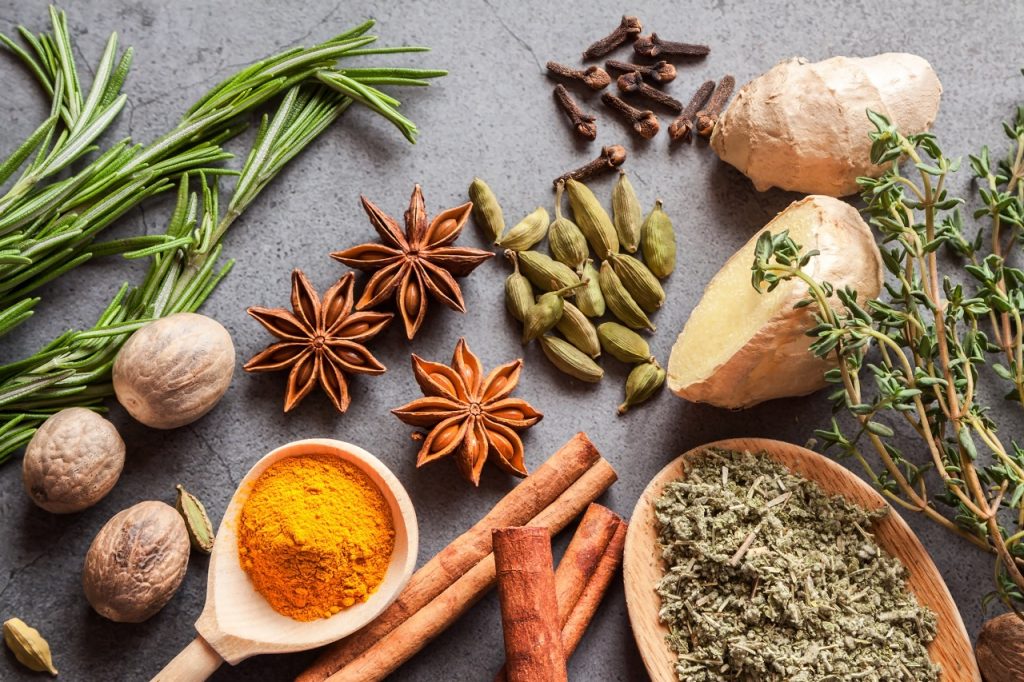
    This fragrant golden spice helps in controlling sugar, cholesterol, and triglyceride levels in Type 2 Diabetes. It adds a natural, warm flavour to food and can easily be sprinkled on tea, coffee, oatmeal, and smoothies. Studies have shown that just ¼ teaspoon of cinnamon daily can improve fasting blood sugar and boost insulin sensitivity.
  2. Extra Virgin Olive OilExtra-virgin olive oil contains antioxidants called polyphenols which are extremely beneficial for heart health. Olive oil is one of the best sources of MUFA (Monounsaturated Fatty Acids) when it comes to managing diabetes. Several studies have shown that MUFAs help keep blood sugar in check by lowering insulin resistance. It also keeps you full, minimizes spikes, and aids in the absorption of vital nutrients. A healthy daily intake is about 1-2 tsp (5ml-10 ml).
  3. Nuts
    Nuts are the ultimate snacking food for managing diabetes because they are delicious, satisfying, and highly nutritious. Nuts like walnuts, almonds, cashews, and pistachios are a boon because they are low in digestible carbohydrates but high in protein and healthy fats. This unique macronutrient profile helps stabilize blood sugar and reduce LDL (bad) cholesterol. Aim for a small handful (approx. 20-30 gm) daily, but be sure to avoid heavily salted or roasted-in-oil varieties.
  4. Beans
    Beans are complex carbohydrates loaded with fiber and rich in protein, which gives you a prolonged feeling of satiety. They are inexpensive, easily available, and incredibly versatile. Having beans in your diet regularly can control blood sugar and lower blood pressure. You can add approximately one bowl (25-30 gm raw) daily to your salads, soups, or vegetable curries to help regulate your levels.
  5. Quinoa
    Quinoa is considered a complete protein because it contains all nine essential amino acids needed to build muscle, and it is rich in minerals such as iron and magnesium. This protein-rich whole grain is a fantastic substitute for white rice. Because it is rich in fiber, it digests slowly, preventing sudden blood sugar spikes. Taking 20-30 gm of quinoa daily whether in a salad or mixed with vegetables is highly effective for both sugar control and weight loss.
  6. Fenugreek Seeds
    Fenugreek seeds are widely known for their effectiveness in traditional diabetes management. They are incredibly rich in soluble fiber, which lowers blood sugar levels by slowing down the digestion and absorption of carbohydrates. Studies suggest a daily dose of about 10 gm of fenugreek seeds, soaked overnight in water, helps significantly in controlling Type 2 Diabetes.
  7. Oatmeal
    Oatmeal is one of the best breakfast foods as it easily fits into any healthy meal plan. Oats have a low glycemic index and are packed with fiber, doing a miraculous job of regulating blood sugar while providing steady energy. Steel-cut or rolled oats (approx. 20-30 gm daily) made with low-fat milk or cooked with vegetables are the best choice, as they are the least processed.
  8. Garlic
    Garlic is a potent herb that helps reduce inflammation, blood sugar, and LDL cholesterol in people living with Type 2 Diabetes. It is also known to reduce blood pressure and boost overall immunity. You can crush 1-2 cloves of raw garlic and consume them with water early in the morning, or simply use them generously in your daily cooking.
  9. Turmeric
    Turmeric is a powerful spice with numerous health benefits. It contains an active compound called curcumin, which lowers inflammation, reduces blood sugar, and specifically benefits kidney and heart health in diabetics. As a staple in Indian cuisine, it is easy to include. Adding ¼ to ½ tsp in warm water or milk can boost immunity and help regulate your levels.
  10. Chia seeds
    Chia seeds are a powerhouse of nutrients and an absolutely wonderful food for managing diabetes. They are exceptionally high in viscous fiber, which lowers blood sugar and helps maintain a healthy weight by keeping you full for hours. They also decrease blood pressure and systemic inflammation. Try adding 10 gm of soaked chia seeds daily to your smoothies, shakes, or a bowl of fresh curd.

Frequently Asked Questions (FAQs)

1. Can I eat all 10 of these foods every day?
While all these foods are excellent for managing diabetes, portion control is key. You don’t need to eat all 10 every single day. Instead, focus on incorporating a variety of them into a balanced weekly diet plan to get a wide range of nutrients without exceeding your daily caloric limits.

2. Are oats good for diabetes, and does the type of oat matter?
Yes, oats are great for diabetes, but the type matters significantly. Steel-cut oats and rolled oats are complex carbohydrates that digest slowly. Avoid highly processed, sugary instant oatmeal packets, as these will cause rapid spikes in your blood sugar.

3. Should I consult a doctor before adding supplements like fenugreek or cinnamon?
Absolutely. If you are already on diabetes medication or insulin, adding potent natural remedies like fenugreek or high doses of cinnamon can sometimes cause your blood sugar to drop too low (hypoglycemia). Always consult your doctor or health coach before making concentrated dietary changes.

We hope incorporating these 10 foods helps you make a wonderful and positive shift toward a healthier life. (Note: Always consult with your doctor, nutritionist, or dietitian before drastically altering your diet.)

For more articles on managing your health, check out our Healthy Reads on Diabetes.

Managing diabetes is easier when you don’t have to do it alone. For the right guidance and daily motivation from certified experts, subscribe to GOQii’s Personalised Health Coaching here.

#BeTheForce 

Disclaimer: The information provided in this article is for educational and general informational purposes only. It is not intended to serve as professional medical advice, diagnosis, or treatment. Always consult with your physician or a certified GOQii health professional before making any drastic changes to your diet, especially if you are on diabetes medication.

April 7, 2026 By GOQii Leave a Comment

World Health Day 2026: The Years You’re Losing Without Knowing

We don’t get sick overnight.

We drift into it slowly, quietly and call it normal.

This is exactly why this year’s World Health Day theme – “Together for health. Stand with science.” matters.

Because the problem isn’t that we don’t know what to do.
It’s that we act too late.

The Reality We’re Avoiding

India is living longer than ever before.

But here’s what we don’t talk about:

We’re also spending more of those years managing poor health.

Data from the newly released India Fit Report 2026 highlights a clear pattern—health decline isn’t sudden. It builds over time, often without obvious warning.

On average, nearly 12 years of life are impacted by reduced health, chronic conditions, or loss of function.

Not at the end.
Across life.

This Isn’t Ageing. It’s Accumulation

Most people think health breaks down later.

It doesn’t.

It builds gradually:

  • Habits form early
  • Biology adapts silently
  • Symptoms show up last

Lifestyle diseases are not events. They are timelines.

What Science Actually Shows

Science doesn’t just tell us what happens.
It explains why.

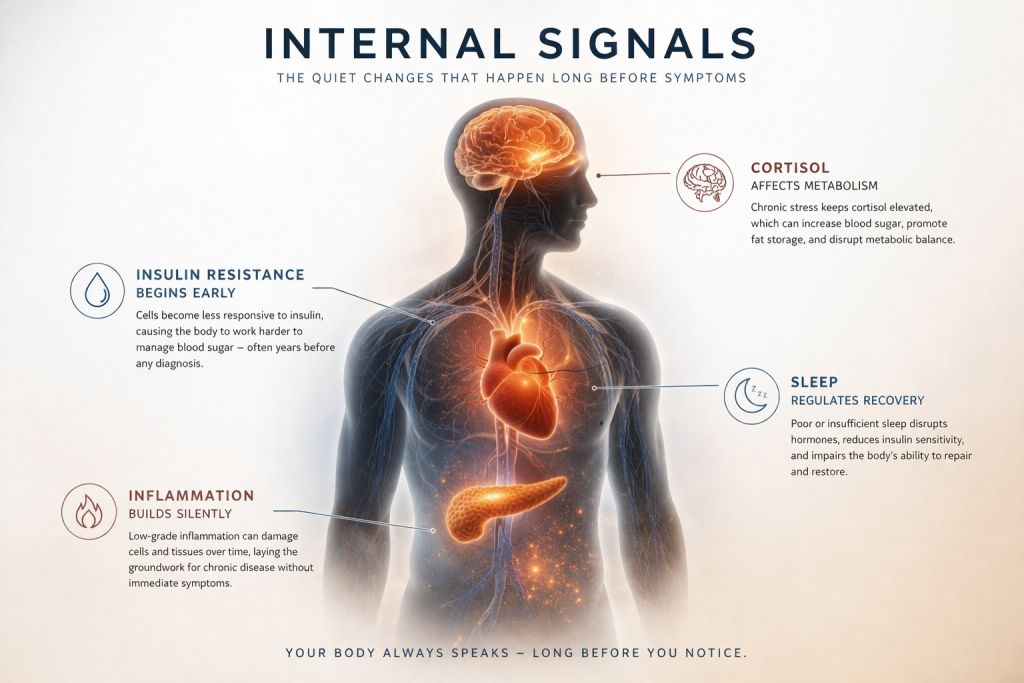
Long before diagnosis, the body shows signals:

  • Insulin resistance begins before blood sugar rises
  • Chronic stress elevates cortisol, impacting metabolism and heart health
  • Poor sleep disrupts hormone balance, recovery, and appetite regulation
  • Inflammation builds quietly, increasing long-term risk

These changes are not theoretical.

They are:

  • measurable
  • trackable
  • and most importantly, modifiable

What gets measured early can be managed early.

The Real Problem Isn’t Disease. It’s Delay

Nothing feels urgent.

  • No pain
  • No disruption
  • No immediate consequence

So nothing changes.

And that’s where the real damage happens.

The problem isn’t awareness.
It’s delay.

Where the Real Opportunity Lies

A large part of the population today sits in a grey zone:

  • Not sick
  • Not fully healthy

Functioning but fragile.

This is where outcomes are still flexible.

Because at this stage:

  • risks can be reversed
  • habits can be corrected
  • trajectories can change

But only if action is taken early.

What It Means to “Stand With Science”

It doesn’t mean doing more.

It means doing things earlier and doing them consistently.

  • Acting on signals, not symptoms
  • Using data instead of assumptions
  • Focusing on patterns, not quick fixes

Because most long-term health outcomes are shaped before they are diagnosed.

See the Data Behind This Shift

The India Fit Report 2026 brings together large-scale behavioural insights to show how everyday habits are shaping long-term health outcomes.

Download the full report here. 

We are not losing years at the end of life.

We are losing them every day, in ways that feel normal, until they aren’t.

This World Health Day:

Don’t wait for symptoms.
Start acting earlier.

Because the goal isn’t just to live longer.

It’s to stop losing the years that matter.

#BeTheForce

Disclaimer: The information provided in this article is for general awareness and educational purposes only. It should not be considered medical advice. Individual health needs and responses may vary. Readers are advised to consult a qualified healthcare professional before making any health-related decisions or changes to treatment, diet, or lifestyle.

Frequently Asked Questions (FAQs)

  1. What is the difference between lifespan and healthspan?
    Lifespan refers to how long you live, while healthspan refers to how many of those years are lived in good health.
  2. What causes loss of healthy years?
    Poor sleep, chronic stress, inactivity, and metabolic changes contribute to long-term health decline before symptoms appear.
  3. Can lifestyle diseases be prevented early?
    Yes. Many conditions like diabetes and heart disease develop gradually and can be delayed or prevented with early intervention.

April 6, 2026 By GOQii Leave a Comment

5 Essential Biomarkers Every Indian Should Monitor for Disease Reversal

Most lifestyle diseases do not begin with symptoms they begin with silent metabolic shifts.

You may feel “fine”, but beneath the surface, insulin resistance, inflammation, and vascular stress may already be progressing. By the time symptoms appear, the condition is often well established.

Disease reversal is not guesswork, it is biomarker-driven.

If you want to move from reactive treatment to proactive health, you need to measure what truly matters.

What Are Biomarkers and Why Do They Matter?

Biomarkers are measurable indicators of how your body is functioning internally.

They allow you to:

  • Detect risk early
  • Understand root causes
  • Track whether your lifestyle is improving or worsening your health

You cannot reverse what you do not measure.

The 5 Essential Biomarkers for Disease Reversal

  1. HbA1c (Chronic Blood Glucose Exposure)

HbA1c reflects your average blood glucose levels over the past 2–3 months.

However, it is important to understand:

HbA1c often rises after metabolic dysfunction has already begun.

Why it matters

  • Identifies pre-diabetes and diabetes
  • Reflects long-term glucose exposure
  • Indicates risk for nerve, kidney, and vascular damage

Optimal Range

  • Below 5.7%
  1. Fasting Insulin (The Earliest Warning Signal)

Fasting insulin measures how hard your body is working to control blood sugar.

High insulin is often the first sign of metabolic dysfunction, long before glucose rises.

Why it matters

  • Detects insulin resistance early
  • Identifies metabolic stress before diabetes develops
  • Helps guide dietary and lifestyle interventions

Optimal Range

  • Ideally below 8–10 µIU/mL
  1. Triglyceride-to-HDL Ratio (Metabolic Health Indicator)

Instead of focusing on total cholesterol, this ratio provides deeper insight into metabolic health.

A high triglyceride-to-HDL ratio is a strong marker of insulin resistance and cardiovascular risk.

Why it matters

  • Reflects how your body processes fats and carbohydrates
  • Predicts risk of heart disease
  • Indicates metabolic syndrome

Healthy Markers

  • Triglycerides: <150 mg/dL
  • HDL: >40 (men), >50 (women)
  • Ratio ideally below 2
  1. Blood Pressure (Vascular Stress Marker)

Blood pressure reflects the force exerted on your blood vessels.

Elevated blood pressure is not just a heart issue it is a whole-body stress signal.

Why it matters

  • Predicts cardiovascular events
  • Impacts brain, kidney, and vascular health
  • Tracks response to lifestyle changes

Optimal Range

  • Around 120/80 mmHg
  1. Waist Circumference (Visceral Fat Indicator)

Body weight alone does not define health. Fat distribution matters more.

Visceral fat stored around organs is metabolically active and strongly linked to disease risk.

Why it matters

  • Strong predictor of diabetes and fatty liver
  • Linked to inflammation and hormonal imbalance
  • Reflects lifestyle risk more accurately than BMI

Target

Waist should be less than half your height

Why This Matters More for Indians

South Asians have a unique metabolic profile:

  • Higher insulin resistance
  • Greater visceral fat at lower BMI
  • Earlier onset of metabolic diseases

Standard “healthy” markers often underestimate risk in Indian populations.

This makes early and regular biomarker tracking even more critical.

From Numbers to Action

Biomarkers are not just diagnostic they are directional.

They tell you:

  • Whether your diet is working
  • Whether your activity levels are sufficient
  • Whether your stress and sleep are impacting your health

Improvement in biomarkers is the clearest sign that disease reversal is underway.

Turning Biomarkers into Meaningful Action

Tracking biomarkers is only the first step. The real challenge lies in interpreting what those numbers mean for you and what to do next.

Two people with the same HbA1c or cholesterol levels may require completely different interventions based on their lifestyle, stress levels, sleep patterns, and activity levels.

Data without interpretation leads to confusion.
Data with guidance leads to change.

How GOQii Enables Data-Driven Disease Reversal

At GOQii, biomarker tracking is not treated as a standalone activity it is part of an integrated, personalised health system.

The platform combines:

Continuous Tracking

  • Daily activity, sleep, nutrition, and habits
  • Real-time behavioural data that complements lab biomarkers

Expert Coaching

  • Personalised guidance from certified coaches
  • Interpretation of biomarker trends in the context of your lifestyle
  • Ongoing accountability to ensure consistency

Actionable Insights

  • Connecting biomarker changes to daily behaviour
  • Identifying root causes not just symptoms
  • Designing targeted interventions for sustainable improvement

The goal is not just to monitor numbers but to move them in the right direction.

From Awareness to Transformation

Biomarkers tell you where you stand.
But transformation comes from what you do next.

When data, coaching, and daily behaviour come together, disease reversal becomes measurable and achievable.

With the right system in place, you are no longer guessing. You are:

  • Tracking progress
  • Adjusting intelligently
  • Improving consistently

Your health is not defined by a diagnosis it is defined by the direction your biomarkers are moving.

And with the right guidance, that direction can change.

#BeTheForce

Disclaimer: The information provided in this article is for educational purposes only and is not intended as a substitute for professional medical advice, diagnosis, or treatment. Always consult your doctor before making significant changes to your health monitoring or lifestyle routines.

March 31, 2026 By Yogita Agarwal 1 Comment

Eat to Defy Age: Top 5 Foods to Fight Wrinkles and Premature Ageing

We all want healthy and glowing skin, but do you know that your skin reflects what you eat? Healthy skin needs vital nutrients, a balanced diet, enough water, and quality sleep. When these aspects are balanced, it truly shows on our skin. While we cannot stop or avoid wrinkles entirely as they are a natural sign of ageing we can significantly delay them with healthy food choices and a supportive lifestyle.



When it comes to premature ageing or wrinkles, it often happens due to Sun damage and the loss of two crucial proteins: collagen and elastin. These two proteins take care of our skin and keep it healthy, young and firm. When UV rays hit our skin, it reduces the production of these proteins, increasing free radicals and leading to premature ageing. As we age, the skin starts losing its firmness and elasticity. Other factors that contribute to this process are pollution, smoking, stress, dehydration, lack of sleep and unhealthy food habits.

5 Powerful Foods Help Fight Wrinkles and Premature Ageing

  1. Avocado:
    Avocado is a fruit with healthy fats. It has fiber and many nutrients like Folate, Magnesium, Potassium, Riboflavin (Vitamin B2), Niacin (Vitamin B3), Pantothenic Acid (Vitamin B5), Pyridoxine (Vitamin B6), Vitamin C, Vitamin E and Vitamin K. Vitamin E aids skin nourishment, reduces scars and fights free radicals. Avocado is high in the antioxidant glutathione, which helps the body to detoxify and keeps skin clear of acne and wrinkles.
  2. Berries:
    All the berries are extremely rich in antioxidants, are a good source of Fiber, Vitamin C, Manganese, Vitamin K1, Copper and Folate. Those are rich in Flavonoids, Vitamins and Polyphenol. So berries are perfect food to fight wrinkles and fine lines. Berries not only help in reducing wrinkles but also help in the regeneration of new skin cells. Add berries to your breakfast or morning smoothies.
  3. Buckwheat:
    It is gluten free, rich in fiber, Iron, provides B1, is a rich source of Magnesium and Calcium, Folate, helps in heart health and controls blood sugar levels and also reduces the signs of premature ageing. It has Bioflavonoid Rutin which helps to maintain the production of collagen in the skin and encourage the body’s utilization of Vitamin C.
  4. Papaya:
    Papaya is rich in a variety of antioxidants, vitamins and minerals like Vitamin A, C, K and E, Calcium, Potassium, Magnesium, Phosphorus and Vitamin B. These help to improve skin elasticity and minimize the fine lines and wrinkles. Papaya is rich in the enzyme papain and chymopapain which helps to reduce inflammation. It helps to reduce acne by removing dead skin cells, and remove damaged keratin which can build up on the skin and form small bumps.
  5. Sweet Potatoes:
    Sweet Potatoes are rich in Vitamin A, B, C, D, Calcium, Iron, Magnesium, Potassium, Phosphorus, Thiamine, Zinc. It has the antioxidant beta-carotene which is converted into Vitamin A and helps in restoring skin elasticity, prompts skin cell turnover, which means healthy glowing skin. The Vitamin C and E in it helps in protection of skin from free radicals and keeps complexion radiant. Both the Vitamins are crucial to keep skin healthy, glowing and supple. Vitamin C boosts collagen and promotes tightening of skin.

Unlocking Your 10-Year Younger Skin Routine

In addition to including these specific foods to your diet, make sure that you consume healthy fats, a variety of veggies and fruits, especially different colour veggies and fruits. Keep yourself well hydrated, do regular exercise, learn to manage stress and sleep well.

Simultaneously, make it a priority to reduce the consumption of:

  • Alcohol
  • Tea and coffee
  • Preserved canned food
  • Processed food

Our body does not have a voice, but it talks to us through signs and symptoms, so pay attention to the health of your skin to be healthy and fit. With good food habits, a healthy lifestyle, proper hydration, quality sleep and stress management, we can turn the clock on our skin to look 10 years younger.

We hope this article helps you fight wrinkles! Do leave your thoughts in the comments below. For more tips on skincare, check out Healthy Reads or ask a GOQii Coach by subscribing for Personalised Health Coaching here.

#BeTheForce

Frequently Asked Questions (FAQs)

  1. What is the main cause of premature skin ageing?
    While factors like pollution, stress, and poor sleep contribute, the two single biggest hidden threats to youthful skin are Sun damage (UV exposure) and chronic inflammation. Over time, these destroy healthy skin cells and severely degrade the production of collagen and elastin, the proteins that keep skin healthy and firm.
  2. Why is collagen so important for preventing wrinkles?
    Collagen (and elastin) are vital structural proteins that act as the scaffolding of your skin. They are responsible for its texture, firmness, and flexibility. As you age, your body produces less collagen naturally. Foods that support collagen specifically those high in Vitamin C and antioxidants like the ones listed above are essential for maintaining that firmness and delaying the onset of wrinkles.
  3. Does hydration alone really make you look younger?
    Hydration is non-negotiable for skin longevity. Water acts as the medium for all cellular processes, including the ones that clear toxins and repair cells. Dehydrated skin looks dull, lacks “plumpness,” and causes existing fine lines to appear much deeper. For a radiant complexion, regular hydration must be combined with nutrient-dense foods that feed your skin from the inside out.

Disclaimer: The information provided in this article is for general educational and informational purposes only and is not intended as medical advice, diagnosis, or treatment. Always consult your doctor, dermatologist, or a qualified nutritionist before making any significant changes to your diet, skincare routine, or lifestyle, especially if you have per-existing health conditions.

  • « Previous Page
  • 1
  • …
  • 19
  • 20
  • 21
  • 22
  • 23
  • …
  • 214
  • Next Page »

Search

Recent Posts

  • Foods to Manage Blood Sugar Naturally: A Complete Guide to Better Blood Sugar Control
  • The Lazy Person’s Guide to Staying Healthy: 5 Micro-Habits That Take Less Than 2 Minutes
  • Healthy Eating: Comforting Chilli Bean Soup Recipe for the Monsoon
  • The Truth About the ‘Beer Belly’: What Alcohol Really Does to Your Metabolism
  • Benefits of Meditation: How One Daily Habit Can Transform Your Mental Wellbeing

Stay Updated

Archives

  • August 2026 (7)
  • July 2026 (25)
  • June 2026 (22)
  • May 2026 (20)
  • April 2026 (24)
  • March 2026 (18)
  • February 2026 (14)
  • January 2026 (14)
  • December 2025 (19)
  • November 2025 (15)
  • October 2025 (20)
  • September 2025 (6)
  • August 2025 (6)
  • July 2025 (9)
  • June 2025 (18)
  • May 2025 (16)
  • April 2025 (22)
  • March 2025 (26)
  • February 2025 (21)
  • January 2025 (25)
  • December 2024 (22)
  • November 2024 (22)
  • October 2024 (20)
  • September 2024 (22)
  • August 2024 (28)
  • July 2024 (15)
  • June 2024 (23)
  • May 2024 (26)
  • April 2024 (27)
  • March 2024 (27)
  • February 2024 (23)
  • January 2024 (21)
  • December 2023 (14)
  • November 2023 (10)
  • October 2023 (19)
  • September 2023 (21)
  • August 2023 (16)
  • July 2023 (16)
  • June 2023 (21)
  • May 2023 (20)
  • April 2023 (19)
  • March 2023 (23)
  • February 2023 (19)
  • January 2023 (15)
  • December 2022 (11)
  • November 2022 (15)
  • October 2022 (15)
  • September 2022 (12)
  • August 2022 (9)
  • July 2022 (17)
  • June 2022 (11)
  • May 2022 (10)
  • April 2022 (6)
  • March 2022 (6)
  • February 2022 (13)
  • January 2022 (11)
  • December 2021 (7)
  • November 2021 (3)
  • October 2021 (6)
  • September 2021 (3)
  • August 2021 (8)
  • July 2021 (7)
  • June 2021 (15)
  • May 2021 (16)
  • April 2021 (10)
  • March 2021 (7)
  • February 2021 (4)
  • January 2021 (4)
  • December 2020 (3)
  • November 2020 (4)
  • October 2020 (10)
  • September 2020 (3)
  • August 2020 (3)
  • July 2020 (2)
  • June 2020 (4)
  • May 2020 (10)
  • April 2020 (12)
  • March 2020 (10)
  • February 2020 (4)
  • January 2020 (4)
  • December 2019 (3)
  • November 2019 (7)
  • October 2019 (5)
  • September 2019 (4)
  • August 2019 (9)
  • July 2019 (9)
  • June 2019 (11)
  • May 2019 (4)
  • April 2019 (8)
  • March 2019 (8)
  • February 2019 (9)
  • January 2019 (8)
  • December 2018 (9)
  • November 2018 (3)
  • October 2018 (3)
  • September 2018 (5)
  • August 2018 (10)
  • July 2018 (6)
  • June 2018 (13)
  • May 2018 (8)
  • April 2018 (18)
  • March 2018 (9)
  • February 2018 (8)
  • January 2018 (15)
  • December 2017 (12)
  • November 2017 (19)
  • October 2017 (13)
  • September 2017 (15)
  • August 2017 (4)
  • July 2017 (8)
  • June 2017 (7)
  • May 2017 (6)
  • April 2017 (8)
  • March 2017 (6)
  • February 2017 (7)
  • January 2017 (9)
  • December 2016 (10)
  • November 2016 (7)
  • October 2016 (7)
  • September 2016 (7)
  • August 2016 (11)
  • July 2016 (9)
  • June 2016 (9)
  • May 2016 (12)
  • April 2016 (17)
  • March 2016 (17)
  • February 2016 (8)
  • January 2016 (6)
  • December 2015 (2)
  • November 2015 (9)
  • October 2015 (7)
  • September 2015 (9)
  • August 2015 (11)
  • July 2015 (9)
  • June 2015 (11)
  • May 2015 (9)
  • April 2015 (13)
  • March 2015 (8)
  • February 2015 (5)
  • January 2015 (12)
  • December 2014 (14)
  • November 2014 (11)
  • October 2014 (6)
  • September 2014 (13)
  • August 2014 (12)
  • July 2014 (6)
  • June 2014 (2)
  • May 2014 (7)
  • April 2014 (4)

From Burnout to Balance: How Dr. Ranjit Reclaimed His Health

Dr Ranjit Bhatt has spent years tending to others. A practising doctor in Odisha, his days were packed with patients, surgeries, and emergencies. From the outside, it looked like a life lived in service. But on the inside, something wasn’t right. “I had no … [Read More...]

From Shimla’s Slopes to Chandigarh’s Sidewalks: Surinder Kaur Bhalla’s Journey from Chaos to Control

Some journeys start with a plan. Others begin with a stumble literally. Surinder Bhalla, a government professional, born and raised in the scenic hill town of Shimla, had always lived a life of movement. “In Shimla, you walked everywhere,” she reflects. “Walking was never an exercise. It was just life.” But after shifting to Chandigarh, […]

“I’ve Challenged Myself to Live 100 Years” – The Story of Chandubhai Savani’s Second Chance at Life

At 67, most people start slowing down. Not Chandubhai Savani. A resident of Surat, Chandubhai, thought life was on track. “My life was going well till I had my bypass surgery,” he says. That surgery, back in 2021, was a wake-up call.  Medication was routine, but exercise wasn’t. His diet? What he calls ‘normal.’ “I […]

Ananda Mukherjee Health Story

From Terminal Illness To Complete Wellness! Ananda Mukherjee Health Story

As we observe World Cancer Day under the powerful theme ‘United by Unique’ (2025-2027)**, we are reminded that every individual’s journey with cancer is distinct, yet united by shared resilience, hope, and the collective fight against this disease. This theme places people at the centre of care and their stories at the heart of the […]

  • HOME
  • HEALTHY LIVING
  • FITNESS
  • HEALTHY RECIPES
  • USER STORIES
  • KARMA
  • BUY GOQii

Copyright ©2016 GOQii