GOQii

Blog

  • HOME
  • HEALTHY LIVING
  • FITNESS
  • HEALTHY RECIPES
  • USER STORIES
  • KARMA
  • BUY GOQii

Search Results for: stress

November 14, 2026 By GOQii Leave a Comment

World Diabetes Day 2026: Early Action on Diabetes – Know Your Risk, Get Tested, Reverse Prediabetes

Type 2 diabetes doesn’t appear overnight. It usually builds quietly for years, through a stage called prediabetes, before it’s diagnosed, often after damage to the heart, kidneys, eyes or nerves has already begun. That long, silent run-up is also an opportunity: the earlier you act, the more you can change.

That’s the idea behind this year’s World Diabetes Day on 14 November. The International Diabetes Federation’s theme for 2026–27 is “Early Action on Diabetes”, focusing on screening, early diagnosis and reducing risk. The IDF notes that almost half of people with diabetes are undiagnosed, and about 1 in 8 people worldwide are at high risk of developing type 2 diabetes.

In India, the scale is especially large. The ICMR-INDIAB study estimated that 101 million Indians have diabetes and 136 million have prediabetes. This guide follows the three steps of early action: know your risk, get tested, and, if you have prediabetes, take the steps that are proven to lower your chances of it becoming diabetes.

At a glance

  • Know your risk. Age, a family history of diabetes, extra weight around the waist and an inactive lifestyle are the biggest risk factors. The Indian Diabetes Risk Score (below) takes two minutes.
  • Get tested. A fasting blood glucose or HbA1c test is quick and widely available. Adults aged 30 and over in India are advised to be screened, and younger people with risk factors should be too.
  • Prediabetes is an early warning, not diabetes. An HbA1c of 5.7–6.4% or a fasting glucose of 100–125 mg/dL means your risk is raised, and there’s time to act.
  • Lifestyle changes work. In a landmark US trial, modest weight loss and 150 minutes of activity a week cut the risk of type 2 diabetes by 58%. An Indian trial found lifestyle changes cut risk by about 28%.
  • Small changes add up: brisk walking, fewer refined carbohydrates and sugary drinks, more vegetables and pulses, good sleep and not smoking.
  • Already have diabetes? Early action still counts. Good control and regular eye, kidney and foot checks prevent complications, and some people with recent type 2 diabetes can reach remission with significant weight loss.

Step 1: Know your risk

You can’t change your age or your genes, but knowing where you stand tells you how urgently to act.

The main risk factors

  • Age: risk rises from your 30s onwards.
  • Family history: a parent, brother or sister with type 2 diabetes.
  • Weight around the waist: belly fat is more closely linked to diabetes than overall weight. South Asians tend to develop diabetes at a lower body weight than Europeans.
  • Physical inactivity: long hours sitting and little regular exercise.
  • Diabetes in pregnancy (gestational diabetes), or PCOS.
  • High blood pressure, high triglycerides or low HDL cholesterol.
  • Poor sleep and smoking.
  • Fatty liver, or long-term use of certain medicines such as steroids or some antipsychotics.

Check your Indian Diabetes Risk Score

The Indian Diabetes Risk Score (IDRS), developed by the Madras Diabetes Research Foundation, is a simple screening tool used across India. It uses four questions, with points for each answer. Add up your points:

Question Your answer Points
Your age Under 35 0
35–49 20
50 or over 30
Waist (women) Under 80 cm 0
80–89 cm 10
90 cm or more 20
Waist (men) Under 90 cm 0
90–99 cm 10
100 cm or more 20
Physical activity Regular vigorous exercise or strenuous work 0
Regular moderate exercise 10
Regular mild exercise 20
No exercise, mostly sitting 30
Family history of diabetes Neither parent 0
One parent 10
Both parents 20

What your score means:

  • Under 30: lower risk. Keep up healthy habits and get tested as recommended for your age.
  • 30–50: moderate risk. Get a blood test and work on activity and waist size.
  • 60 or more: high risk. Get a fasting glucose or HbA1c test soon.

Measure your waist midway between your lowest rib and the top of your hip bone, standing relaxed and breathing out. The score is a guide to who should be tested, not a diagnosis. A low score doesn’t rule out diabetes, so get tested if you have symptoms or other risk factors.

Step 2: Get tested

Many people with type 2 diabetes or prediabetes have no symptoms, which is why the IDF puts screening and early diagnosis at the centre of this year’s campaign. India’s national programme offers screening for adults aged 30 and over at Ayushman Arogya Mandirs and government health facilities, and tests are also widely available at private labs.

Which test?

Test Normal Prediabetes Diabetes
HbA1c (no fasting needed) Below 5.7% 5.7–6.4% 6.5% or higher
Fasting blood glucose Below 100 mg/dL 100–125 mg/dL 126 mg/dL or higher
2-hour glucose tolerance test Below 140 mg/dL 140–199 mg/dL 200 mg/dL or higher

These are the American Diabetes Association thresholds, widely used in India. A result in the diabetes range usually needs a repeat test to confirm.

HbA1c isn’t reliable for everyone. Iron-deficiency anaemia, which is common in India, can falsely raise HbA1c, and thalassaemia trait or other haemoglobin variants, recent blood loss or transfusion, advanced kidney disease and pregnancy can also make it misleading. If any of these apply to you, ask your doctor whether a fasting glucose or glucose tolerance test would be more accurate.

When to get tested

  • If you’re 30 or over: at least every three years if your results are normal, or more often if your doctor advises.
  • At any age if you’re overweight (for South Asians, a BMI of 23 or more) and have another risk factor, or your IDRS is 60 or more.
  • Every year if you have prediabetes.
  • During pregnancy, as part of routine antenatal care, because gestational diabetes usually causes no symptoms.
  • 6–12 weeks after giving birth, and then regularly, if you had gestational diabetes.
  • Straight away if you have symptoms such as excessive thirst, frequent urination, unexplained weight loss or blurred vision. Our guide to the early signs of diabetes explains what to look for.

Step 3: Act on prediabetes

Prediabetes doesn’t always progress to diabetes, and for many people blood sugar can return to the normal range. Two landmark trials show what’s possible.

What the evidence shows

The US Diabetes Prevention Program (2001) followed 3,234 overweight adults with impaired glucose tolerance, a form of prediabetes. Those in the lifestyle group aimed to lose about 7% of their body weight through a healthier, lower-fat diet and to be active for around 150 minutes a week, mostly by walking. They cut their risk of developing type 2 diabetes by 58%, and by 71% in people over 60. Most kept off about 5% of their weight, a modest amount.

The Indian Diabetes Prevention Programme (2006) tested lifestyle changes in 531 Asian Indians with impaired glucose tolerance. Advice on diet and physical activity reduced the risk of diabetes by 28.5% over three years, similar to the effect of the medicine metformin, and combining the two added no extra benefit. Interestingly, the participants didn’t lose weight, which suggests that better eating and more activity help even before the scale moves.

What to do: practical steps

Move more, most days

  • Build up to at least 150 minutes of moderate activity a week, such as brisk walking, cycling, swimming or dancing, plus muscle-strengthening exercises on two days.
  • Take a short walk after meals. Even 2–5 minutes of light walking after eating helps lower the rise in blood sugar.
  • Break up long periods of sitting every 30–60 minutes.

Eat for steadier blood sugar

  • Fill half your plate with vegetables, a quarter with protein (dal, chana, rajma, paneer, eggs, fish or chicken) and a quarter with whole grains or millets.
  • Cut back on refined carbohydrates such as white rice, maida, biscuits and bakery snacks, and keep rice and roti portions moderate.
  • Swap sugary drinks, packaged juices and sweetened chai for water, buttermilk or unsweetened tea. Jaggery and honey are still sugar; our guide to jaggery vs sugar explains why.
  • Limit fried snacks and ultra-processed foods, in line with the ICMR-NIN Dietary Guidelines for Indians.

Aim for modest weight loss if you’re overweight

Losing 5–7% of your body weight, for example 4–5 kg if you weigh 75 kg, is enough to make a real difference. Focus on your waist rather than the scale. Avoid unsupervised crash diets, especially if you take medicines for diabetes or blood pressure; our post-Diwali reset explains a steadier approach.

Look after sleep, stress and smoking

  • Aim for seven or more hours of sleep. Short sleep is linked to higher hunger and poorer blood sugar control; see our guide to improving sleep quality.
  • Find a stress outlet that works for you, whether that’s walking, yoga, breathing exercises or time with friends.
  • If you smoke, get help to stop.

Retest and review

Retest your HbA1c or fasting glucose after 3–6 months of changes, then at least yearly. Your doctor may also discuss metformin if your risk is high. Our tips on managing diabetes through lifestyle and nutrition apply to prediabetes too.

Already have diabetes? Early action still matters

The IDF stresses that early detection can prevent emergencies such as diabetic ketoacidosis and delay complications affecting the heart, kidneys, eyes and nerves. If you’ve recently been diagnosed, the years right after diagnosis are a valuable window.

Remission is possible for some people with type 2 diabetes

In the UK DiRECT trial, adults diagnosed with type 2 diabetes within the previous six years followed a medically supervised, low-calorie, meal-replacement programme. After one year, 46% were in remission, with blood sugar in the non-diabetic range without medication, compared with 4% of those receiving usual care. Remission happened only in people who lost weight, and was most likely in those who lost 15 kg or more.

This isn’t a do-it-yourself diet. Participants stopped their diabetes and blood pressure medicines under close medical supervision, with regular support from a nurse or dietitian. Very low-calorie diets can cause low blood sugar and other problems if you take diabetes medicines, so talk to your doctor before trying any intensive programme. Remission is also less likely the longer you’ve had diabetes, and it isn’t possible in type 1 diabetes. Our guide to type 1 vs type 2 diabetes explains the difference.

Remission isn’t a cure. Blood sugar can rise again if weight is regained, so people in remission still need at least a yearly HbA1c, and eye, kidney and foot checks. DiRECT was also carried out in the UK, mostly in people of European origin, so results may differ in other populations, including South Asians.

Regular checks prevent complications

Whatever your treatment, these checks help catch problems early, when they’re easiest to treat:

  • HbA1c every 3–6 months, against a target agreed with your doctor
  • Blood pressure at every visit, and cholesterol at least once a year
  • An eye check (retina) at diagnosis of type 2 diabetes, then at least once a year
  • Kidney tests (urine albumin and a blood test for kidney function) at least once a year
  • A foot check at every visit, and check your own feet daily for cuts, blisters or colour changes
  • Dental check-ups, because gum disease is more common in diabetes

Keep taking your medicines as prescribed, and don’t stop or change them without talking to your doctor.

The bottom line

This World Diabetes Day, early action means three simple steps. Know your risk: take two minutes to work out your Indian Diabetes Risk Score. Get tested: a fasting glucose or HbA1c test is quick and widely available. And if your result shows prediabetes, treat it as a chance to act, not a cause for alarm. Trials in the US and India show that regular activity, better eating and modest weight loss can lower the risk of type 2 diabetes substantially. If you already have diabetes, early, steady action protects your heart, kidneys, eyes and feet for the years ahead.

Pro Tip: Use the GOQii App to track your steps, meals, weight and sleep, so you can see how your habits change between blood tests. Your GOQii Personalised Health Coach can help you set realistic activity and eating goals, whether you’re working to reverse prediabetes or managing diabetes alongside your doctor.

Frequently asked questions

What is the theme of World Diabetes Day 2026?

The theme set by the International Diabetes Federation for 2026 and 2027 is “Early Action on Diabetes”. It focuses on screening, early diagnosis and reducing the risk of type 2 diabetes, so that complications can be prevented or delayed.

Can prediabetes be reversed?

Often, yes. Many people with prediabetes can bring their blood sugar back to the normal range with regular physical activity, healthier eating and modest weight loss. Even when blood sugar doesn’t fully return to normal, these changes lower the risk of progressing: in the US Diabetes Prevention Program, lifestyle changes cut the risk of developing type 2 diabetes by 58%.

How long does it take to reverse prediabetes?

It varies from person to person. HbA1c reflects your average blood sugar over the previous two to three months, so a retest about three months after you start making changes shows whether they’re working. After that, retest at least once a year.

What is the Indian Diabetes Risk Score?

The Indian Diabetes Risk Score is a simple screening tool from the Madras Diabetes Research Foundation. It scores your age, waist size, physical activity and family history of diabetes. A score of 60 or more means high risk, and you should get a blood sugar test.

How much weight do I need to lose to prevent diabetes?

If you’re overweight, losing about 5 to 7% of your body weight, such as 4 to 5 kg if you weigh 75 kg, can significantly lower your risk. In an Indian trial, healthier eating and more activity reduced risk even without weight loss.

Who should get tested for diabetes?

In India, adults aged 30 and over are advised to be screened. Anyone younger who is overweight and has another risk factor, such as a family history of diabetes, PCOS or diabetes in pregnancy, should also be tested, as should anyone with symptoms.

Can type 2 diabetes go into remission?

For some people, yes. In the UK DiRECT trial, 46% of people diagnosed within the previous six years were in remission after a year on a medically supervised low-calorie programme. Remission is linked to significant weight loss and should only be attempted with medical supervision.

#BeTheForce

Disclaimer: The information provided in this blog is for general awareness and educational purposes only. It is not intended to replace professional medical advice, diagnosis, or treatment. Always consult a qualified healthcare provider for personalised medical guidance or concerns related to your health.

November 13, 2026 By GOQii Leave a Comment

World Kindness Day 2026: How Kindness and Helping Others Benefit Your Health

Holding a door, checking in on an elderly neighbour, sending a message to a friend who’s been quiet: small kindnesses are easy to overlook. Research suggests they matter more than we think, and not only to the person on the receiving end.

World Kindness Day falls on 13 November. It was started by the World Kindness Movement, a coalition of kindness organisations formed in Tokyo in 1997, and has been marked on the same date since 1998. There’s no single official theme each year; the idea is simply to notice and practise kindness, in whatever way suits your community.

It comes at a useful moment. In 2025 the WHO Commission on Social Connection reported that about 1 in 6 people worldwide is affected by loneliness, and linked loneliness to more than 871,000 deaths a year. Kindness is one of the simplest ways to build the connections that protect health, for others and for ourselves.

This guide looks at what the research actually says about kindness and health, where the evidence is strong and where it’s still thin, and gives practical ideas you can start with today.

At a glance

  • Being kind is linked to small but real boosts in wellbeing. A meta-analysis of 27 studies found acts of kindness give a small-to-medium lift to the wellbeing of the person being kind. It won’t transform your life, but it can nudge it in a good direction.
  • Volunteering is linked to better health in later life. In a study of nearly 13,000 adults over 50, those who volunteered about two hours a week had a lower risk of dying over four years, and were more active and less lonely.
  • Generosity may help the heart. In one small experiment, people with high blood pressure who spent money on others saw their blood pressure fall.
  • Connection is the likely link. Kindness builds relationships, a sense of purpose and a buffer against stress, all of which protect health.
  • Small, regular acts count. A phone call, a shared meal, a compliment or an hour of volunteering.
  • Be kind to yourself too. Helping others shouldn’t come at the cost of your own health. Carers in particular need support and rest.

What the research says

There’s a lot of enthusiasm online about the health benefits of kindness, and some exaggeration. Here’s what the better-quality evidence shows.

Kindness and happiness: a small, real effect

A meta-analysis led by researchers at the University of Oxford, published in the Journal of Experimental Social Psychology in 2018, combined 27 studies involving more than 4,000 people. It found that performing acts of kindness had a small-to-medium positive effect on the wellbeing of the person being kind. The effect was similar for men and women, across ages, and across different kinds of kind acts.

That’s an honest, useful finding: kindness isn’t a cure for unhappiness, but it’s a free, low-risk habit that tends to help.

Volunteering and healthy ageing

The strongest evidence comes from studies of volunteering in later life. A Harvard-led study of nearly 13,000 adults over 50, published in the American Journal of Preventive Medicine in 2020, found that people who volunteered at least 100 hours a year (about two hours a week) had a substantially reduced risk of death over four years, compared with those who didn’t volunteer. They were also less likely to develop physical limitations, more physically active, and reported more purpose and optimism and less loneliness, depression and hopelessness.

Two important caveats: this kind of study shows a link, not proof that volunteering causes better health, because healthier people may be more able to volunteer. And the same study found no clear effect on chronic conditions such as diabetes, high blood pressure, heart disease or stroke.

Generosity and blood pressure

In two studies published in Health Psychology, researchers looked at adults with high blood pressure. In the first, people who spent more on others had lower blood pressure two years later. In the second, a small experiment with 73 people, those given money to spend on others over six weeks saw their blood pressure fall more than those who spent it on themselves. The studies were small, so this is a promising finding rather than a treatment, and it doesn’t replace blood pressure medicine or lifestyle changes.

The other side: loneliness harms health

The clearest health message may be the reverse. The WHO reports that loneliness and social isolation raise the risk of stroke, heart disease, diabetes, cognitive decline and early death, and that lonely people are twice as likely to become depressed. Kindness, whether you give it or receive it, is one of the most direct ways to build the social connection that protects against these risks.

Why kindness may be good for you

Scientists are still working out exactly how kindness affects health, and it’s likely a mix of factors rather than a single “kindness hormone”. The most plausible explanations are:

  • Stronger relationships. Kind acts build trust and closeness, and social connection is one of the best-established protectors of health. The WHO notes that connection reduces inflammation and the risk of serious illness.
  • A sense of purpose. Helping others can give your days meaning, and in the volunteering study, volunteers reported more purpose in life and more optimism.
  • A break from your own worries. Focusing on someone else for a while can interrupt rumination and put problems in perspective.
  • More movement. Many kind acts, from volunteering to running errands for a neighbour, get you up and about. Volunteers in the Harvard study were more physically active.
  • A buffer against stress. Feeling connected and useful may help soften the body’s response to stress, although this is harder to measure.

You may have heard of a “helper’s high”, the warm feeling after doing something kind. Many people do feel it, but claims that a single act of kindness floods your body with specific hormones go further than the evidence. The more reliable benefits come from kindness as a regular part of life.

Practical ways to be kinder, starting today

Kindness doesn’t need money, a plan or a special day. The WHO’s own suggestions for building connection are refreshingly simple: reach out to a friend, put your phone away during conversations, greet a neighbour, join a local group or volunteer.

Small, everyday acts

  • Call or message someone you haven’t spoken to in a while, especially an older relative or a friend who lives alone.
  • Give a specific, genuine compliment or thank someone properly, including the security guard, delivery rider or cleaner you see every day.
  • Listen fully, without checking your phone.
  • Share food: a dabba for a neighbour, a hot meal for someone recovering from illness.
  • Offer practical help, such as carrying shopping, helping an older person with an app or a form, or giving up your seat.

At work

  • Notice and name a colleague’s good work.
  • Help a new team member find their feet.
  • Respect people’s time off, and keep meetings and messages considerate.
  • Invite someone who often eats alone to join you for lunch or a walk.

In the family

  • Make time for one unhurried meal together without screens.
  • Share the load at home, especially with whoever does most of the caring or cooking.
  • Model kindness for children. They learn far more from what they see than from what they’re told.

In your community

  • Volunteer regularly, even an hour or two a week, with a cause you care about: teaching, a food bank, an animal shelter, an elder-care home or a local clean-up.
  • Donate blood if you’re eligible. A single donation can help patients in hospital.
  • Check in on neighbours, especially older people, during heatwaves, cold spells or high-pollution days.

In the volunteering study, the health links were seen at around two hours a week. Regular, modest commitment is likely to do more for you, and for the cause, than one big gesture a year.

Don’t forget to be kind to yourself

Kindness that leaves you exhausted isn’t good for anyone. If you’re caring for a parent, a partner or a child with health needs, it’s easy to put yourself last.

  • Set limits. Saying no to some requests lets you say yes properly to others.
  • Ask for and accept help. It gives others the chance to be kind too.
  • Protect the basics: sleep, regular meals, movement and time with friends. Our guide to improving sleep quality can help.
  • Talk to yourself as you would a friend. Harsh self-criticism rarely helps you change; a kinder inner voice often does.
  • Take a few minutes to breathe. These breathing exercises can help on stressful days.

If you’re feeling persistently low, lonely or overwhelmed, reach out to someone you trust or a professional. In India, Tele-MANAS offers free mental health support on 14416 or 1-800-891-4416.

The bottom line

Kindness won’t cure illness or transform your life overnight, and the research is honest about that. But small, regular acts of kindness are linked to a modest lift in wellbeing, volunteering is linked to healthier ageing, and the connections that kindness builds protect against loneliness, one of the biggest and most overlooked health risks of our time. This World Kindness Day, pick one small act today, one person to check in on this week, and one way to be a little kinder to yourself.

Pro Tip: Try a “one kind act a day” challenge this week, and use the GOQii App to keep an eye on your sleep, activity and mood as you go. Your GOQii Personalised Health Coach can help you build habits that support your mental wellbeing, from staying connected to managing stress.

Frequently asked questions

Is being kind good for your health?

Research links kindness and helping others to better wellbeing, and volunteering to healthier ageing and a lower risk of early death in older adults. The effects are modest and most studies show links rather than proof of cause, but kindness is a low-cost, low-risk habit that strengthens social connection, which protects health.

Does kindness make you happier?

Yes, modestly. A 2018 meta-analysis of 27 studies involving more than 4,000 people, led by researchers at the University of Oxford, found that performing acts of kindness has a small-to-medium positive effect on the wellbeing of the person being kind.

What are the health benefits of volunteering?

In a study of nearly 13,000 adults over 50, people who volunteered about two hours a week had a lower risk of dying over four years and were more physically active, more optimistic and less lonely than non-volunteers. The study found no clear effect on chronic conditions such as diabetes or heart disease.

Can kindness lower blood pressure?

One small study found that adults with high blood pressure who spent money on others over six weeks saw their blood pressure fall. The evidence is limited, and kindness doesn’t replace blood pressure medicine, a healthy diet or exercise.

How much volunteering is good for you?

The health links in research have been seen at around 100 hours a year, or about two hours a week. Regular, modest commitment seems to matter more than occasional big efforts.

What are simple acts of kindness I can do every day?

Call someone who lives alone, give a genuine compliment, listen without checking your phone, share a meal, help a neighbour with errands, or thank the people who serve you every day.

Why is self-kindness important?

Helping others shouldn’t come at the cost of your own health. Setting limits, accepting help, protecting your sleep and speaking to yourself kindly help prevent burnout, especially for carers.

#BeTheForce

Disclaimer: The information provided in this blog is for general awareness and educational purposes only. It is not intended to replace professional medical advice, diagnosis, or treatment. Always consult a qualified healthcare provider for personalised medical guidance or concerns related to your health.

November 11, 2026 By Priyanka Mangla 3 Comments

The Early Signs & Symptoms of Diabetes

symptoms of diabetes

Diabetes rarely announces itself. Type 2 diabetes, which accounts for more than 90% of cases, usually develops slowly over years, and many people have no obvious symptoms at all. Worldwide, the International Diabetes Federation estimates that 589 million adults are living with diabetes, and about 4 in 10 of them don’t know it.

In India, the numbers are especially high. The ICMR-INDIAB study, published in The Lancet Diabetes & Endocrinology, estimated that 101 million Indians have diabetes and another 136 million have prediabetes, blood sugar that’s higher than normal but not yet in the diabetes range.

That’s why it’s worth knowing the early signs, and also knowing that you shouldn’t wait for them. Spotting raised blood sugar early, before it damages the eyes, kidneys, nerves, heart and blood vessels, gives you the best chance of keeping it under control or, in the prediabetes stage, of bringing it back to normal. This guide explains the symptoms to look out for, how they differ between types of diabetes, who should get tested even without symptoms, and what the test results mean.

At a glance

  • Many people have no symptoms, especially with type 2 diabetes and prediabetes. A blood test is the only way to know.
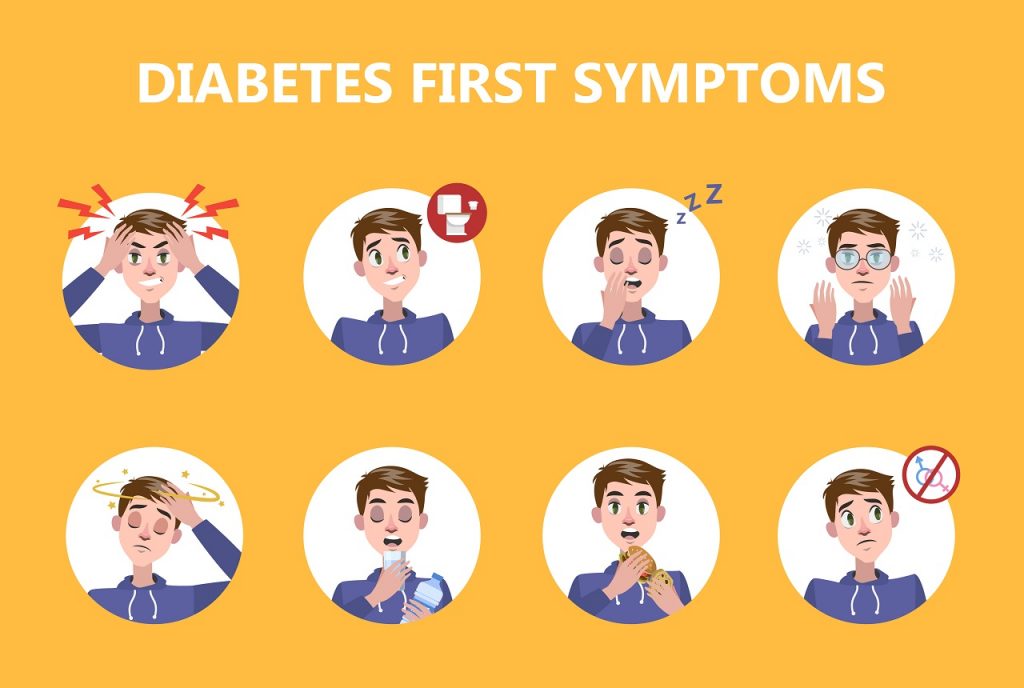
  • The classic signs are passing urine often (especially at night), feeling very thirsty, unexplained weight loss, tiredness and blurred vision.
  • Other clues include slow-healing cuts, frequent infections such as urinary or yeast infections, tingling or numbness in the hands or feet, and dark, velvety patches of skin on the neck or armpits.
  • Type 1 diabetes can appear quickly, over weeks, and can become an emergency. Vomiting, stomach pain, fast breathing, fruity-smelling breath or confusion need urgent care.
  • Get tested if you’re 30 or over, or younger with risk factors such as a family history, extra weight around the waist, a history of diabetes in pregnancy or PCOS. Indians tend to develop type 2 diabetes younger and at a lower weight.
  • The main tests are fasting blood glucose, HbA1c and the oral glucose tolerance test. An HbA1c of 6.5% or more suggests diabetes; 5.7–6.4% suggests prediabetes.
  • Prediabetes is a window to act. Healthy eating, regular activity and modest weight loss can lower your risk of it progressing.

The early signs of diabetes, and why they happen

When there’s too much glucose (sugar) in your blood, your body tries to get rid of it and can’t use it properly for energy. That explains most of the symptoms below. The US Centers for Disease Control and Prevention lists these as common symptoms of type 1 and type 2 diabetes. You might notice only one or two of them, and they can be mild enough to put down to stress, age or a busy schedule.

1. Passing urine more often

When blood sugar is high, your kidneys pass the extra glucose into your urine, and it takes water with it. You may need to urinate more often, particularly at night, and pass larger amounts.

2. Feeling very thirsty

Losing more water through urine leaves you dehydrated, so you feel thirsty and may have a dry mouth however much you drink. Thirst and frequent urination together are among the most common early clues.

3. Feeling hungry and tired

Insulin moves glucose from your blood into your cells for energy. When insulin isn’t working well or there isn’t enough, your cells are short of fuel even though there’s plenty of sugar in your blood. You may feel tired, low on energy, irritable or hungry soon after eating.

4. Losing weight without trying

If your body can’t use glucose for energy, it starts breaking down fat and muscle instead, and you lose calories as sugar in your urine. Unexplained weight loss is more typical of type 1 diabetes, but it can happen with type 2 too, and it always deserves a check-up.

5. Blurred vision

High blood sugar can change the fluid balance in the lens of the eye, making it swell and your vision blur. This often improves when blood sugar comes down, but it’s worth seeing a doctor. Over time, diabetes can damage the blood vessels at the back of the eye.

6. Slow-healing cuts and frequent infections

High blood sugar can affect circulation and the immune system, so cuts, sores and wounds may take longer to heal. Some people get repeated infections, such as urinary tract infections, thrush (yeast infections), skin or gum infections.

7. Tingling, numbness or burning in the hands or feet

Over time, raised blood sugar can damage nerves, particularly in the feet. This tends to happen when type 2 diabetes has been present for a while without being diagnosed, which is one reason testing early matters.

8. Dark, velvety skin patches

Darker, thicker, velvety skin in body folds, such as the back of the neck, armpits or groin, is called acanthosis nigricans. It’s often a sign of insulin resistance, the problem behind type 2 diabetes, and can appear years before diabetes develops. It’s common in South Asians and worth mentioning to your doctor, particularly in children and young adults.

Signs that are often blamed on something else

Tiredness, frequent urination at night, itchy skin, recurring infections and irritability are easy to put down to age, work or the weather. If you have several of these, or any of them along with risk factors for diabetes, ask for a blood test rather than waiting to see if they pass.

A note on what’s not a reliable sign: symptoms alone can’t confirm or rule out diabetes, and some that are often listed online, such as pale skin or a loss of libido, have many other causes. Only a blood test can tell you.

How symptoms differ: type 1, type 2, prediabetes and pregnancy

How it develops What you might notice
Type 1 diabetes An autoimmune condition in which the body stops making insulin. It can start at any age, but is most often diagnosed in children, teenagers and young adults. Symptoms can appear suddenly, over a few weeks or months, and can be severe: marked thirst, frequent urination, weight loss, tiredness, and sometimes nausea, vomiting and stomach pain.
Type 2 diabetes The body doesn’t respond well to insulin (insulin resistance) and gradually can’t make enough. Linked to genes, age, weight around the waist and lifestyle. Symptoms often take several years to develop, and some people have none. Slow-healing wounds, infections, tingling feet and dark skin patches may be the first clues.
Prediabetes Blood sugar is higher than normal but below the diabetes range. Usually no symptoms at all. It’s found only with a blood test.
Gestational diabetes High blood sugar that develops during pregnancy, usually in the second half. Usually no symptoms, which is why pregnant women are tested routinely. It raises the risk of type 2 diabetes later in life.

Type 1 diabetes isn’t present from birth, and type 2 is no longer only an adult disease: it’s increasingly seen in young adults and even teenagers. Our guide to type 1 vs type 2 diabetes explains the differences in more detail.

When high blood sugar is an emergency

In type 1 diabetes, and occasionally type 2, a severe lack of insulin can cause diabetic ketoacidosis (DKA), a life-threatening condition that can develop quickly. Get urgent medical help, or call 112, if someone has high blood sugar symptoms along with any of these warning signs of DKA:

  • stomach pain, feeling sick or being sick
  • breathing more deeply than usual
  • fruity-smelling breath (like pear drops or nail polish remover)
  • tiredness, sleepiness or confusion

This is especially important in children and young people who suddenly become very thirsty, are passing a lot of urine and losing weight. Don’t wait for a routine appointment.

Who should get tested, even without symptoms

Because type 2 diabetes and prediabetes are often silent, testing is based on risk rather than symptoms.

Risk factors

  • Age 30 or over. India’s national programme offers diabetes screening at Ayushman Arogya Mandirs and government health facilities for all adults aged 30 and over.
  • A parent, brother or sister with diabetes.
  • Extra weight, especially around the waist. For South Asian adults, a waist of more than about 90 cm (35.5 in) for men or 80 cm (31.5 in) for women is a common warning threshold.
  • South Asian heritage. At the same body weight, Asian Indians tend to have more body fat, more fat around the organs and less muscle than people of European descent, and diabetes often develops at a weight that would be considered healthy in Europeans. US screening guidance suggests considering testing in Asian adults from a BMI of 23.
  • Diabetes during pregnancy, or having had a baby weighing more than about 4 kg.
  • Polycystic ovary syndrome (PCOS).
  • High blood pressure, high cholesterol or triglycerides, or heart disease.
  • Little physical activity, smoking or regularly short sleep.
  • Dark, velvety skin patches (acanthosis nigricans).

How often to test

  • Adults aged 30 and over: get a blood sugar test, and repeat it at least every three years if it’s normal. Your doctor may suggest testing more often if you have other risk factors.
  • Younger adults with extra weight plus one or more risk factors: get tested now rather than waiting.
  • People with prediabetes: test every year.
  • Women who had gestational diabetes: get tested 6–12 weeks after the birth, then regularly for life.
  • Anyone with symptoms: don’t wait for a routine check. See a doctor soon.

If you’re due a check-up, our Dhanteras health guide lists the key tests by age and where to get them.

The tests, and what your numbers mean

Diabetes is diagnosed with a blood test, not a urine test or a symptom checklist. These are the ranges used by the American Diabetes Association, which are widely used in India too:

Test Normal Prediabetes Diabetes
Fasting blood glucose (after 8 hours without food) Below 100 mg/dL 100–125 mg/dL 126 mg/dL or higher
HbA1c (average blood sugar over 2–3 months; no fasting needed) Below 5.7% 5.7–6.4% 6.5% or higher
Oral glucose tolerance test (2 hours after a 75 g glucose drink) Below 140 mg/dL 140–199 mg/dL 200 mg/dL or higher

A random blood glucose of 200 mg/dL or more in someone with classic symptoms, such as thirst, frequent urination and weight loss, also points to diabetes.

A few things to know:

  • One high result usually needs confirming with a repeat test or a second type of test, unless your sugar is very high and you have clear symptoms.
  • HbA1c can be misleading in people with anaemia, some inherited haemoglobin conditions (such as thalassaemia trait), kidney disease or pregnancy. Your doctor may use fasting glucose or a glucose tolerance test instead.
  • Home glucometers are useful for monitoring once you’re diagnosed, but a lab test is needed to diagnose diabetes.

What to do with your result

  • Normal: keep up healthy habits and retest at least every three years, or as your doctor advises.
  • Prediabetes: this is a window to act. Regular activity, healthier eating and losing even a modest amount of weight can lower your risk of developing type 2 diabetes. Retest every year. Our tips on managing diabetes with lifestyle and nutrition apply here too.
  • Diabetes: your doctor will talk to you about treatment, which may include lifestyle changes, medicines or both, and check your eyes, kidneys, feet, blood pressure and cholesterol. Diagnosed early and managed well, diabetes is far less likely to cause complications.

Be wary of “cures”. Foods and traditional remedies such as karela (bitter gourd), jamun seeds or methi are often promoted as natural treatments for diabetes. Some have shown small effects in early studies, but none replaces diagnosis and medical treatment. Don’t stop or change prescribed medicines without talking to your doctor. If you’re weighing up sweeteners, our guide to jaggery vs sugar explains why gur isn’t a healthier choice for blood sugar.

The bottom line

Diabetes often develops quietly. Thirst, frequent urination, tiredness, blurred vision, slow-healing wounds and unexplained weight loss are all reasons to get checked, but the absence of symptoms isn’t a reason to skip testing. If you’re 30 or over, or younger with a family history, extra weight around the waist, PCOS or a history of diabetes in pregnancy, a simple blood test can tell you where you stand. Finding high blood sugar early, especially at the prediabetes stage, gives you the most room to act.

Pro Tip: Book a fasting glucose or HbA1c test if you haven’t had one in the last year, and log the result in the GOQii App so you can track it over time alongside your steps, weight and sleep. If your numbers are in the prediabetes or diabetes range, your GOQii Personalised Health Coach can help you build realistic eating and activity habits, alongside your doctor’s advice.

Frequently asked questions

What are the first signs of diabetes?

The most common early signs are passing urine more often, especially at night, feeling very thirsty, tiredness, blurred vision and losing weight without trying. Many people with type 2 diabetes or prediabetes have no symptoms at all, so a blood test is the only way to know.

Can you have diabetes without any symptoms?

Yes. Type 2 diabetes often develops slowly over years without obvious symptoms, and prediabetes usually has none. The International Diabetes Federation estimates that about 4 in 10 adults with diabetes don’t know they have it.

What are the early signs of diabetes in women?

Women have the same main symptoms as men, but may also notice repeated vaginal yeast infections (thrush) or urinary tract infections. Women with PCOS or a history of diabetes in pregnancy have a higher risk and should be tested regularly.

What blood sugar level indicates diabetes?

A fasting blood glucose of 126 mg/dL or higher, an HbA1c of 6.5% or higher, or a 2-hour glucose tolerance test result of 200 mg/dL or higher indicates diabetes, usually confirmed with a repeat test. Fasting glucose of 100 to 125 mg/dL or HbA1c of 5.7 to 6.4% indicates prediabetes.

At what age should I get tested for diabetes?

In India, adults aged 30 and over are advised to be screened. Get tested earlier if you have extra weight plus a risk factor, such as a family history of diabetes, PCOS, high blood pressure or diabetes in a previous pregnancy.

How is type 1 different from type 2 diabetes in symptoms?

Type 1 symptoms often appear suddenly over weeks and can be severe, with marked thirst, frequent urination and weight loss. Type 2 symptoms usually develop slowly over years and may be mild or absent. Vomiting, stomach pain, fast breathing or fruity-smelling breath can signal diabetic ketoacidosis and need urgent care.

Can prediabetes be reversed?

Prediabetes can often return to normal blood sugar levels with regular physical activity, healthier eating and modest weight loss, which also lowers the risk of developing type 2 diabetes. Retest at least once a year.

#BeTheForce

Disclaimer: The information provided in this blog is for general awareness and educational purposes only. It is not intended to replace professional medical advice, diagnosis, or treatment. Always consult a qualified healthcare provider for personalised medical guidance or concerns related to your health.

November 10, 2026 By GOQii 1 Comment

How to Improve Sleep Quality Naturally: 12 Science-Backed Tips for Better Sleep

sleep

Do you spend enough hours in bed but still wake up tired? Or feel exhausted at night and then lie awake? After a festive season of late dinners, card parties, early pujas and noisy nights, many of us are running on less sleep than we’d like, and it isn’t only festival weeks. In a 2025 LocalCircles survey of more than 43,000 people across India, up to 59% said they got less than six hours of uninterrupted sleep a night.

Sleep is often the first thing we give up when life gets busy, yet it matters as much as diet, exercise and managing stress. While you sleep, your body repairs tissue, supports your immune system, consolidates memory and restores energy. The American Academy of Sleep Medicine and the Sleep Research Society recommend that adults get at least seven hours of sleep a night, and say regularly sleeping six hours or less isn’t enough to sustain health and safety.

The good news is that simple, consistent habits often help. Here are 12 that are backed by evidence, plus an honest look at which “sleep foods” are worth it and when poor sleep needs a doctor.

At a glance

  • Keep the same sleep and wake times every day, including weekends. It’s the single most useful habit.
  • Get morning daylight and keep evenings dim.
  • Cut off caffeine by early afternoon. Even caffeine taken six hours before bed can shorten sleep.
  • Go easy on alcohol. It helps you drop off but disrupts sleep later in the night.
  • Keep your bedroom dark, quiet and cool, and finish dinner two to three hours before bed.
  • Exercise regularly, ideally earlier in the day.
  • Wind down for 30–60 minutes before bed, with fewer screens.
  • Keep naps short: 10–20 minutes, before mid-afternoon.
  • If you can’t sleep after about 20 minutes, get up and do something calm until you feel sleepy.
  • No single food is a sleep cure. A balanced diet and good timing matter more than kiwi or cherries.
  • See a doctor if poor sleep lasts more than three months, or if you snore loudly, gasp at night or are very sleepy in the day.

12 evidence-based ways to sleep better

1. Keep a consistent sleep schedule

Go to bed and wake up at about the same time every day, including weekends and holidays. Your body clock runs on a roughly 24-hour cycle, and regular timing keeps it in step, so you feel sleepy and alert at the right times. Sleeping until noon on Sunday to “catch up” shifts that clock and makes Sunday night and Monday morning harder. If you’ve had a run of late nights, return to your usual wake-up time and let an earlier bedtime follow naturally. Our guide to circadian rhythm and sleep explains the body clock in more detail.

2. Get daylight in the morning, and keep evenings dim

Light is the strongest signal to your body clock. Step outside or sit by a window for some time soon after waking, ideally with a morning walk. In the evening, switch to softer, warmer lighting and avoid bright overhead lights in the last hour before bed.

3. Build a wind-down routine

Give yourself 30–60 minutes to switch off before bed. Read a book, stretch gently, listen to calm music or write down tomorrow’s to-do list so it isn’t running through your head. Slow breathing can help too; try one of these breathing exercises for five to ten minutes. Some people find the scent of lavender relaxing, but the evidence for aromatherapy is mixed, so treat it as a pleasant extra rather than a fix.

4. Put screens away earlier

Phones, tablets and laptops keep your brain engaged with messages, news and endless scrolling, and their light may delay melatonin, the hormone that signals night-time. Try to stop using screens at least 30–60 minutes before bed, keep your phone out of reach and switch on night mode if you do use it. In India, though, phones aren’t the main reason people wake at night: in the LocalCircles survey, the most common reasons were waking to use the washroom, poor schedules, and noise and mosquitoes.

5. Make your bedroom dark, quiet and cool

  • Dark: use blackout curtains or an eye mask, and cover standby lights.
  • Quiet: try earplugs or a fan for steady background sound if traffic or neighbours are a problem.
  • Cool: most people sleep better in a slightly cool room. Use a fan or set the AC to a comfortable temperature rather than very cold.
  • Comfortable: a supportive mattress and pillow, and a mosquito net or repellent where needed.
  • For sleep only: where you can, keep work, TV and eating out of the bed, so your brain links it with sleep.

6. Cut off caffeine by early afternoon

Caffeine stays in your system for hours. In a study reported by the American Academy of Sleep Medicine, a large dose of caffeine taken six hours before bed cut sleep by more than an hour, even though participants didn’t notice. Remember that chai, coffee, green tea, colas, energy drinks and dark chocolate all contain caffeine. If you’re sensitive, stop by about 2 pm.

7. Go easy on alcohol and avoid nicotine

Alcohol can make you drowsy, but it disrupts sleep later in the night, causing lighter, more broken sleep and more trips to the washroom. Nicotine is a stimulant and can make it harder to fall asleep. If you drink, keep it moderate and finish a few hours before bed.

8. Time your meals and drinks

Finish dinner two to three hours before bed, and keep it lighter than lunch where you can. Large, rich or very spicy meals late at night can cause indigestion and acid reflux when you lie down. If waking to use the washroom is a problem, drink plenty earlier in the day and less in the last hour or two before bed. If it happens often, it’s worth mentioning to your doctor.

9. Move during the day

Regular physical activity is linked to better sleep. Aim for at least 150 minutes of moderate activity a week, such as brisk walking, cycling or dancing. Morning or afternoon exercise suits most people; if a vigorous evening workout leaves you wired, move it earlier. Our post on sleep and muscle recovery explains why sleep matters if you train.

10. Try a warm bath or shower 1–2 hours before bed

It sounds backwards, but warming up helps you cool down. A warm bath or shower draws heat to your hands and feet, and your core temperature then drops, which is a natural cue for sleep. A meta-analysis of 17 studies found that bathing in water at about 40–43°C one to two hours before bed helped people fall asleep around 10 minutes faster. A shower just before bed is too soon for the effect.

11. Keep naps short and early

A short nap can boost alertness, but a long or late one can make it harder to sleep at night. Aim for 10–20 minutes, before about 3 pm. Our guide to power naps explains how long is too long. If you’re struggling with insomnia, it’s usually better to skip naps altogether.

12. If you can’t sleep, get up

Lying in bed, watching the clock and worrying makes your brain link bed with being awake. If you haven’t fallen asleep after about 20 minutes, or you wake and can’t get back to sleep, get up and go to another dim room. Do something calm, such as reading or breathing exercises, without screens, and return to bed when you feel sleepy. This technique, called stimulus control, is one of the core parts of cognitive behavioural therapy for insomnia (more below).

Food and sleep: what the evidence really says

You’ll often see lists of “foods that help you sleep”. Some have small studies behind them, but none is a cure, and the amounts of sleep-related compounds they contain are usually small.

Food The claim What we know
Kiwi Helps you fall asleep faster One small Taiwanese study found people who ate two kiwis an hour before bed for four weeks reported better sleep. It had only 24 participants, no control group and was funded by a kiwi marketer, so the results are encouraging but far from proven.
Tart cherries Contain melatonin They contain a little melatonin, and a few small trials of tart cherry juice suggest a modest benefit. The evidence is limited.
Almonds, walnuts and seeds Contain magnesium and melatonin They’re nutritious, but the melatonin content is tiny. There’s no good evidence that eating them improves sleep in people who aren’t deficient in magnesium.
Warm milk Tryptophan makes you sleepy Milk contains tryptophan, but not in amounts that act like a sleeping pill. A warm, caffeine-free drink can still be a comforting part of a bedtime routine.
Bananas Prevent night cramps Bananas provide potassium and some magnesium, but there’s little evidence they prevent cramps or improve sleep.

What matters more:

  • Overall diet. A balanced diet with plenty of vegetables, fruit, whole grains, pulses and protein supports good health, including sleep.
  • A heavy meal late at night is more likely to disturb sleep than any single food is to improve it.
  • What you leave out. Cutting back on caffeine, alcohol and very rich or spicy food at night usually makes a bigger difference.
  • Steady blood sugar. Long gaps between meals followed by a large dinner can leave you hungry or uncomfortable at night.

The link runs both ways: short sleep tends to increase appetite and cravings the next day. Our post on sleep and weight gain explains more, and if you’re getting back on track after the festive season, see our post-Diwali reset.

A note on melatonin supplements: melatonin can help with specific problems such as jet lag or some circadian rhythm disorders, but it isn’t a general sleeping pill and it’s not right for everyone. Speak to your doctor before taking it, especially if you take other medicines, are pregnant or want to give it to a child.

When poor sleep needs a doctor

Everyone has the odd bad night, especially around festivals, travel or stressful times. Speak to a doctor if:

  • you’ve struggled to fall asleep or stay asleep at least three nights a week for three months or more, and it’s affecting your days
  • you feel very sleepy during the day, or nod off while reading, watching TV or driving
  • you snore loudly, or someone has noticed you stop breathing, gasp or choke in your sleep
  • you wake up with headaches, a dry mouth or still feel unrefreshed despite enough hours in bed
  • you have uncomfortable, restless legs in the evening that make it hard to settle
  • poor sleep comes with low mood, anxiety or worry that won’t switch off

Sleep apnoea is common, and often missed

In obstructive sleep apnoea, the airway repeatedly narrows or closes during sleep, causing pauses in breathing and broken sleep. A meta-analysis by AIIMS doctors estimated that about 11% of Indian adults have obstructive sleep apnoea, around 104 million people, with men more often affected than women. Many don’t know they have it. Untreated, it’s linked to high blood pressure, heart disease and daytime accidents, and it’s treatable, so loud snoring with daytime sleepiness is worth getting checked.

Insomnia has an effective, drug-free treatment

For chronic insomnia, the American College of Physicians recommends cognitive behavioural therapy for insomnia (CBT-I) as the first-line treatment, ahead of sleeping pills. CBT-I combines techniques such as stimulus control (tip 12), carefully planned sleep schedules, and changing unhelpful thoughts about sleep. It can be delivered one-to-one, in groups, online or through guided self-help. Ask your doctor about it, and avoid starting over-the-counter sleep aids or someone else’s sleeping pills on your own.

The bottom line

Better sleep rarely comes from one trick. It comes from steady habits: the same wake-up time every day, morning light, an earlier cut-off for caffeine, a lighter and earlier dinner, a calm wind-down and a bedroom that’s set up for sleep. Give changes two to three weeks to work, and don’t worry about the odd bad night. If poor sleep lasts for months, or you snore loudly and feel exhausted in the day, talk to a doctor. Effective help is available.

Pro Tip: Use the GOQii App to track your sleep alongside your steps, meals and caffeine for two weeks, and look for patterns, such as late dinners or afternoon chai, on your worst nights. Your GOQii Personalised Health Coach can help you build a realistic wind-down routine and stick to a regular sleep schedule.

Frequently asked questions

How many hours of sleep do adults need?

Adults should aim for at least seven hours a night, according to the American Academy of Sleep Medicine. Most people need seven to nine hours. Regularly sleeping six hours or less isn’t enough to sustain health and safety.

How can I fall asleep faster naturally?

Keep a regular sleep and wake time, get morning daylight, avoid caffeine after early afternoon, finish dinner two to three hours before bed, wind down without screens and keep your bedroom dark, quiet and cool. A warm bath or shower one to two hours before bed can also help you fall asleep a little faster.

Why do I wake up at night and can’t go back to sleep?

Common causes include needing the washroom, noise, stress, alcohol, caffeine, an irregular schedule and medical conditions such as sleep apnoea. If you can’t get back to sleep after about 20 minutes, get up and do something calm in dim light until you feel sleepy. See a doctor if it happens often.

Are daytime naps good or bad?

Short naps of 10 to 20 minutes taken before mid-afternoon can boost alertness without affecting night-time sleep. Long or late naps can make it harder to fall asleep at night. If you have insomnia, it’s usually best to avoid napping.

Do foods like kiwi, cherries or warm milk help you sleep?

Some small studies suggest kiwi and tart cherry juice may help a little, but the evidence is limited, and no food is a cure for poor sleep. Overall diet, meal timing and cutting back on caffeine and alcohol make a bigger difference.

Is it safe to take melatonin for sleep?

Melatonin can help with specific problems such as jet lag, but it isn’t a general sleeping pill and isn’t right for everyone. Speak to a doctor before taking it, especially if you take other medicines, are pregnant or want to give it to a child.

When should I see a doctor about sleep?

See a doctor if you’ve had trouble sleeping at least three nights a week for three months, feel very sleepy during the day, snore loudly or stop breathing in your sleep, or if poor sleep comes with low mood or anxiety. Cognitive behavioural therapy for insomnia is the recommended first treatment for chronic insomnia.

#BeTheForce

Disclaimer: The information provided in this blog is for general awareness and educational purposes only. It is not intended to replace professional medical advice, diagnosis, or treatment. Always consult a qualified healthcare provider for personalised medical guidance or concerns related to your health.

  • « Previous Page
  • 1
  • …
  • 7
  • 8
  • 9
  • 10
  • 11
  • …
  • 165
  • Next Page »

Search

Recent Posts

  • Vegetarian protein guide
  • Warming winter soups: 3 protein-rich recipes
  • World AMR Awareness Week 2026: when you need antibiotics, and simple steps to prevent AMR
  • PCOS: diet, exercise and the myths to stop believing
  • Cholesterol numbers explained: LDL, HDL and triglycerides

Stay Updated

Archives

  • November 2026 (23)
  • October 2026 (23)
  • September 2026 (5)
  • August 2026 (8)
  • July 2026 (24)
  • June 2026 (22)
  • May 2026 (20)
  • April 2026 (24)
  • March 2026 (18)
  • February 2026 (14)
  • January 2026 (14)
  • December 2025 (19)
  • November 2025 (14)
  • October 2025 (17)
  • September 2025 (6)
  • August 2025 (5)
  • July 2025 (9)
  • June 2025 (18)
  • May 2025 (16)
  • April 2025 (22)
  • March 2025 (25)
  • February 2025 (21)
  • January 2025 (25)
  • December 2024 (21)
  • November 2024 (21)
  • October 2024 (15)
  • September 2024 (22)
  • August 2024 (27)
  • July 2024 (14)
  • June 2024 (23)
  • May 2024 (26)
  • April 2024 (27)
  • March 2024 (27)
  • February 2024 (23)
  • January 2024 (21)
  • December 2023 (14)
  • November 2023 (10)
  • October 2023 (18)
  • September 2023 (20)
  • August 2023 (16)
  • July 2023 (16)
  • June 2023 (21)
  • May 2023 (20)
  • April 2023 (19)
  • March 2023 (23)
  • February 2023 (19)
  • January 2023 (15)
  • December 2022 (11)
  • November 2022 (15)
  • October 2022 (15)
  • September 2022 (12)
  • August 2022 (9)
  • July 2022 (17)
  • June 2022 (11)
  • May 2022 (10)
  • April 2022 (6)
  • March 2022 (6)
  • February 2022 (13)
  • January 2022 (11)
  • December 2021 (7)
  • November 2021 (3)
  • October 2021 (6)
  • September 2021 (3)
  • August 2021 (8)
  • July 2021 (7)
  • June 2021 (15)
  • May 2021 (16)
  • April 2021 (10)
  • March 2021 (7)
  • February 2021 (4)
  • January 2021 (4)
  • December 2020 (3)
  • November 2020 (4)
  • October 2020 (10)
  • September 2020 (3)
  • August 2020 (3)
  • July 2020 (2)
  • June 2020 (4)
  • May 2020 (10)
  • April 2020 (12)
  • March 2020 (10)
  • February 2020 (4)
  • January 2020 (4)
  • December 2019 (3)
  • November 2019 (7)
  • October 2019 (5)
  • September 2019 (4)
  • August 2019 (9)
  • July 2019 (9)
  • June 2019 (11)
  • May 2019 (4)
  • April 2019 (8)
  • March 2019 (8)
  • February 2019 (9)
  • January 2019 (8)
  • December 2018 (9)
  • November 2018 (3)
  • October 2018 (3)
  • September 2018 (5)
  • August 2018 (10)
  • July 2018 (6)
  • June 2018 (13)
  • May 2018 (8)
  • April 2018 (17)
  • March 2018 (9)
  • February 2018 (8)
  • January 2018 (15)
  • December 2017 (12)
  • November 2017 (19)
  • October 2017 (13)
  • September 2017 (15)
  • August 2017 (4)
  • July 2017 (8)
  • June 2017 (7)
  • May 2017 (6)
  • April 2017 (8)
  • March 2017 (6)
  • February 2017 (7)
  • January 2017 (9)
  • December 2016 (10)
  • November 2016 (7)
  • October 2016 (7)
  • September 2016 (7)
  • August 2016 (11)
  • July 2016 (9)
  • June 2016 (9)
  • May 2016 (12)
  • April 2016 (17)
  • March 2016 (17)
  • February 2016 (8)
  • January 2016 (6)
  • December 2015 (2)
  • November 2015 (9)
  • October 2015 (7)
  • September 2015 (9)
  • August 2015 (11)
  • July 2015 (9)
  • June 2015 (11)
  • May 2015 (9)
  • April 2015 (13)
  • March 2015 (8)
  • February 2015 (5)
  • January 2015 (12)
  • December 2014 (14)
  • November 2014 (11)
  • October 2014 (6)
  • September 2014 (13)
  • August 2014 (12)
  • July 2014 (6)
  • June 2014 (2)
  • May 2014 (7)
  • April 2014 (4)

From Burnout to Balance: How Dr. Ranjit Reclaimed His Health

Dr Ranjit Bhatt has spent years tending to others. A practising doctor in Odisha, his days were packed with patients, surgeries, and emergencies. From the outside, it looked like a life lived in service. But on the inside, something wasn’t right. “I had no … [Read More...]

From Shimla’s Slopes to Chandigarh’s Sidewalks: Surinder Kaur Bhalla’s Journey from Chaos to Control

Some journeys start with a plan. Others begin with a stumble literally. Surinder Bhalla, a government professional, born and raised in the scenic hill town of Shimla, had always lived a life of movement. “In Shimla, you walked everywhere,” she reflects. “Walking was never an exercise. It was just life.” But after shifting to Chandigarh, […]

“I’ve Challenged Myself to Live 100 Years” – The Story of Chandubhai Savani’s Second Chance at Life

At 67, most people start slowing down. Not Chandubhai Savani. A resident of Surat, Chandubhai, thought life was on track. “My life was going well till I had my bypass surgery,” he says. That surgery, back in 2021, was a wake-up call.  Medication was routine, but exercise wasn’t. His diet? What he calls ‘normal.’ “I […]

Ananda Mukherjee Health Story

From Terminal Illness To Complete Wellness! Ananda Mukherjee Health Story

As we observe World Cancer Day under the powerful theme ‘United by Unique’ (2025-2027)**, we are reminded that every individual’s journey with cancer is distinct, yet united by shared resilience, hope, and the collective fight against this disease. This theme places people at the centre of care and their stories at the heart of the […]

  • HOME
  • HEALTHY LIVING
  • FITNESS
  • HEALTHY RECIPES
  • USER STORIES
  • KARMA
  • BUY GOQii

Copyright ©2016 GOQii



