GOQii

Blog

  • HOME
  • HEALTHY LIVING
  • FITNESS
  • HEALTHY RECIPES
  • USER STORIES
  • KARMA
  • BUY GOQii

Search Results for: protein

July 4, 2017 By Neha Morche 4 Comments

Tips for Healthy Skin

healthy-skin

Having flawless skin is every girl’s dream and why not? It only adds to the beauty of her personality. Most girls and women especially try every possible thing to make their skin look healthy and glowing. However, all these efforts are only for the betterment of the outward appearance which means that the actual overall nourishment that is required for the skin is not met. Let me inform you that skin is the largest organ of the body so you can imagine the urge of nutrients that skin needs.

So many people visit a dermatologist for some or the other reason and they do prescribe medicine or foods accordingly. Every now and then you will find a column written on the skin in newspapers and magazines for every season. Still, we don’t pay heed and try to follow the artificially made or let’s say wrongly marketed products for instant results.

There are three types of skin: dry, oily and normal. So accordingly we must look after it in a natural way.

As it is said that ‘You reflect what you eat’.. quality of food does matter to the skin. Here are the precautions we can take to make our skin healthy.

  1. Drink 2.5 litres of water every day to eliminate toxins, to clear your bowel movements, to increase blood circulations.
  2. Include fresh fruits and vegetables like oranges, all types of berries, tomatoes, leafy vegetables etc, Oilseeds, green tea to get anti-oxidants, vitamin A, C, E, zinc which also protects your skin from free radicals produced in your body and from ageing.
  3. Wash your face twice a day at least to keep it clean from dirt and sweat.
  4. 15 minutes of activity daily will improve blood circulation and hence provide nutrients to the skin.

5 . Do include Amla juice, Aloe Vera juice early in the morning on empty stomach. You can revisit my             blog on Aloe Vera

  1. Try and include a variety of foods to receive a variety of nutrients.
  2. Be patient for at least 3 months to a year to see the improvement in your skin.
  3. Include first class proteins and good quality proteins in your diet like milk and it’s products, eggs, chicken etc.
  4. Include whole grains cereals to get a good amount of fibre to improve digestion.
  5. Include omega 3 food items like flax seeds, fish, walnuts, soybean etc.

Things to Avoid

  1. Avoid meat, fish, eggs, fried foods, white flour and it’s products, coffee, tea, soft drinks, alcohol, tobacco.
  2. Avoid wearing too much of make- up .and do use mineral rich products if you do have to wear make- up.
  3. Avoid long exposure to the sun (10 am to 4 pm). Do apply sunscreen even if it’s cloudy.
  4. Avoid dehydration as dryness as it leads to wrinkled skin.

You have got an idea on how to maintain healthy skin but, the most important aspect that one should not forget is ‘Keep Smiling’ the best exercise for the face because happy face will always make you look beautiful.

May 27, 2017 By Farida Gohil 3 Comments

Low fat, low carb, or Mediterranean: which diet is right for you?

digestive-enzymes-consideration-for-your-health

Losing weight sometimes takes experimentation. If you give a diet your best shot and it does not work long term, may be it was not the right one for you, your metabolism, or your situation.Genes, families, your environment – even your friends – influence how, why, what and how much you eat, so don’t get too discouraged or beat yourself up because a diet that “worked for everybody” didn’t pay off for you. Try another, keeping in mind that almost any diet will help you shed pounds – at least for a short time.

Here is a look at three common diet approaches.

  1. Low fat: does not taste Great… and is less filling

Once the main strategy for losing weight, low fat diets were shoved aside by low-carb frenzy. But, healthy fats can actually promote weight loss, and some fats are good for the heart; eliminating them from the diet can cause problems.

Since fat contains nine calories per gram while carbohydrates contain four, you can theoretically eat more without taking in more calories by cutting back on fatty foods and eating more that are full of carbohydrates, especially water-rich fruits and vegetables. Still such a diet tends to be less filling and flavourful than other diets, which lessens its long-term appeal. And, if the carbs you eat in place of fat are highly processed and rapidly digested, you may be sabotaging your weight loss plan.

  1. Low carbohydrate: Quick weight loss but long-term safety questions

Eating carbohydrates – especially highly processed ones like white bread and white rice quickly boosts blood sugar, which triggers an outpouring of insulin from the pancreas. The surge of insulin can rapidly drop blood sugar, causing hunger. Low-carb proponents claim that people who eat a lot of carbohydrates take in an extra calories and gain weight. Limiting carbs in favour of protein and fat is suppose to prevent the insulin surge and make you feel full longer.

To make up for the lack of carbohydrates in the diet, the body mobilises its own carbohydrates stores from liver and muscle tissue. In the process the body also mobilises water, meaning that the pounds shed are water weight. The result is rapid weight loss but, after a few months, weight loss tends to slow and reverse, just as happens with other diets.

The American Heart Association cautions people against following the Atkins diet because it is too high in saturated fat and proteins, which can be hard on heart, kidneys and bones. The lack of carb rich fruits and vegetables is also worrisome, because eating these foods tends to lower the risk of stroke, dementia and certain cancers. Most experts believe that the south beach and the less restrictive low-carbohydrate diet offer a more reasonable approach.

  1. Mediterranean style: Healthy fats and carbs with a big side of fruits and vegetables

Good fats are the monounsaturated fats found in olive oil and other oils like Coconut oil etc,and the polyunsaturated fats found in fish, Canola oil, walnuts and other foods.(Saturated fats and trans fats are the bad guys.) Mediterranean diets tend to have a moderate amount of fat, but most of it comes from healthy fats. The carbohydrates in the Mediterranean-style diet comes from unrefined, fiber-rich sources like whole wheat and beans. These diets are also rich in fruits and vegetables, nuts,seeds and fish with only modest amount of meat and cheese.

People living in the Mediterranean countries have a lower-than-expected rate of heart disease. But the traditional lifestyle in the region also includes lot of physical activity, regular meal patterns, wine, and a good social support. It is hard to know what relative role these different factors play – but there is growing evidence that, in and of itself the diet can reduce cardiovascular risk and the development of Diabetes.

MAKE YOUR OWN

A good diet should provide plenty of choices, relatively few restrictions, and no longer grocery lists of sometimes expensive special foods. It should be good for your heart, bones, brain and colon as it is for your waistline. And, it should be something you sustain for years. Such a diet will not give you a quick fix. But, they can offer you something better- a lifetime of savoury, healthy choices that will be good for all of you, not just a part of you.

May 24, 2017 By Vaishali Nair 21 Comments

Ageing is not skin deep! Rejuvenate the Natural way!

japanese-green-tea

Age is just not a number! Aging affects the way we look and the way we feel. It affects our bodies in more than many ways as what we anticipate. The good news is that the aging process can be delayed by incorporating the right ingredients in your daily diet. The key is to focus on improving your cellular health and hormonal levels.

Aging does not stop at the surface level. It profoundly depletes the deeper layers, leading to unmistakable signs that no makeup can disguise and only anti-aging supplements, foods and products that work at both the cellular and hormonal levels can repair. Not even cosmetic surgery can correct some of these consequences.

To achieve true anti-aging effects, you must activate cellular mechanisms, plus biochemical and hormonal anti-aging pathways, and restore them to youthful functioning. So it’s important to understand how the combination of certain anti-aging supplements, foods and herbs can promote deep and long-lasting effects.

ageing

Green tea: – Green tea consists of leaves that haven’t been fermented and so contain the highest level of antioxidants. These teas contain polyphenols called catechins. Green tea catechins reduces the level of damaging free radicals. When applied to the skin, tea repairs scar tissue and prevents wrinkles, blemishes and other impurities. When used as a sunblock, tea can actually reduce or completely erase sun damage. It also helps with warts, psoriasis, acne, and rosacea. Tea sachets are beneficial when cold, too, helping to reduce puffiness by virtue of combining a cool compress with tannins. Tannins are a type of astringent that help to constrict blood vessels and reduce swelling. The caffeine in tea also tightens facial skin for a leaner look.

Turmeric:-Turmeric contains high amount of antioxidants. Antioxidants are essential for protecting the integrity of the skin by preventing free radicals from destroying its texture and elasticity. Research shows that turmeric inhibits a key enzyme (elastase) that reduces the ability of elastin from forming. Elastin, along with collagen, is a protein needed for making the skin smooth and pliable, and also helps it to retain its original position when pinched. In fact, turmeric, in vitro, may inhibit elastase by up to 65%.

Red Grape Juice:- Grapes and grape juice contain alpha hydroxy acids that help to make skin wrinkle free and smooth. Alpha hydroxyl acids in grapes are useful in removing surface scars as well.

Gingko Biloba:-Ginkgo’s antioxidant properties neutralize the free radicals that can damage proteins within the cell, enzymes, or the fragile lipid membranes that surround and protect the cell. The leaves of the ginkgo tree contain flavonoids and turpenoids – types of antioxidants which make it one of the best natural anti-aging supplements.

Hop plant: – Hops are also great if you have mature skin as it helps to balance moisture levels in the skin. Hops inhibit the elastase enzyme that is responsible for causing cross-linking in collagen. When our collagen is cross-linked, it breaks down, and the signs of aging gradually emerge.

Fennel: – It has powerful antiaging properties that will protect both skin and hair from premature aging. Fennel contains super-antioxidants like superoxide dismutase, catalase, and peroxidase, all of which are known to have properties effective at protecting the skin from environmental stressors.

Fenugreek:-The seeds are a rich source of vitamin B3 and niacin that helps in recovering the damaged skin cells and promotes the regeneration of new cells and tissues that help in lightening age spots, hyper pigmentation wrinkles, fine lines and crow’s feet that form on the forehead, at corner of eyes and lips.

Aloe Vera: – It functions as an effective natural remedy for pimples and acne and reducing excessive oiliness of skin. Malic acid present in aloe vera gel improves skin elasticity and reduces wrinkles and fine lines- the most evident signs of skin aging. Zinc present in the gel increases the youthfulness of skin by shrinking the pores whereas mucopolysaccharides – long chain sugar molecules present in the gel helps in retaining moisture and improves formation of collagen – the protein that forms the basis of cell structure and maintains skin elasticity.

Banana: – This fruit is loaded with skin benefitting nutrients such as potassium, vitamin B, vitamin C and vitamin E that makes it a complete remedy for all skin problems. It helps in hydrating and moisturizing dry skin, improving collagen production, skin elasticity and suppleness and fighting the damage causing free radicals and oxidative stress to provide a flawless and younger looking skin and adds a healthy glow to it.

Almonds:- Almonds are loaded with nutrients such as vitamin E, iron, zinc, folic acid and oleic acid that function as powerful antioxidants which prevent the degeneration of collagen fibers of skin and delay the aging process by treating wrinkles and fine lines.

Avocados:-It acts as a nourishing moisturizer for excessive dry skin that also helps in repairing damaged cells and promotes the regeneration of new cells. The antioxidants and amino acids present in this exotic fruit flushes out toxins from skin and prevents premature skin aging.

Pineapple Juice: – Pineapple juice is also effective for preventing premature aging. Being loaded with antioxidants such as potassium and vitamin C, pineapple juice helps in neutralizing the harmful effects of free radicals and oxidative stress of cells thus preventing premature aging of skin. It also helps in improving skin tone and correcting uneven skin tone, dark patches, age spots and hyper pigmentation.

May 11, 2017 By Farida Gohil 2 Comments

Nutritional facts to help preserve muscles in Seniors

senior-citizen-exercise

As you grow older it become imperative to work towrads building strength. The elderly need strength training more and more as they grow older to stay mobile for their everyday activities. The less active a person’s lifestyle, the earlier age-related changes will manifest.

According to International Osteoporosis Foundation (IOF), Nutrition working Group examines role of Nutrition in Sarcopenia, with focus on protein, vitamin D and B, and acid-based diet.

Age-related muscle loss, called sarcopenia, is a natural part of aging. An article published in Harvard Health said that after age 30, you begin to lose as much as 3% to 5% per decade. Sarcopenia is a common consequence of aging, and poses a significant risk factor for disability in older adults. As muscle strength plays an important role in the tendency to fall, sarcopenia leads to an increased risk of fractures and other injuries.

Quoting from an article in Harvard Health, according to Dr. Thomas W. Storer, director of the exercise physiology and physical function lab at Harvard-affiliated Brigham and Women’s Hospital, just because you lose muscle does not mean its gone forever. The elderly can increase muscle mass lost as a consequence of aging. “

The International Osteoporosis Foundation (IOF) Nutrition Working Group has published a new review which identifies nutritional factors that contributes to loss of muscle mass, or conversely, are beneficial to the maintenance of muscle mass. The Group reviewed evidence on worldwide studies on the role of nutrition in sarcopenia, specifically looking at protein, acid-base balance, vitamin D/calcium, and other minor nutrients like B vitamins.

The most obvious intervention against sarcopenia is exercise in the form of resistance training. However, adequate nutritional intake and an optimal dietary acid-base balance are also very important elements of any strategy to preserve muscle mass and strength during aging.

The review discusses and identifies the following important nutritional factors that have been shown to be beneficial to the maintenance of muscle mass and the treatment and prevention of sarcopenia:

  • Protein: Your diet also plays a role in building muscle mass. Protein is the king of muscle food. The body breaks it down into amino acids, which it uses to build muscle. The authors of the study propose an intake of 1.0-1.2 g/kg of body weight per day as optimal for skeletal muscle and bone health in elderly people without severely impaired renal function. .”While food sources are the best, supplemental protein can help if you struggle with consuming enough calories and protein from your regular diet,” says Dr. Storer.
  • Vitamin D: As many studies indicate a role for vitamin D in the development and preservation of muscle mass and function, adequate Vitamin D should be ensured through exposure to sunlight and/or supplementation if required. Vitamin D supplementation in seniors, and specially in institutionalized elderly, is recommended for optimal musculoskeletal health.
  • Avoiding dietary acid loads: Excess intake of acid-producing nutrients (meat and cereal grains) in combination with low intake of alkalizing fruits and vegetable may have negative effects on musculoskeletal health. Modifying the diet to include more fruits and vegetables is likely to benefit both bones and muscles. Emerging evidence also suggests that vitamin B12 and/or folic acid play a role in improving muscles function and strength.

The Review discusses non-nutritional interventions such as hormones, and calls for more studies to identify the potential of antioxidants and anti-inflammatory compounds in the prevention of Sarcopenia.

Strategies to reduce the numbers of falls and fractures within aging populations must include measures to prevent sarcopenia. At present, the available evidence suggests that combining resistance training with optimal nutritional status has a synergistic effect in preventing and treating sarcopenia.

Check with your doctor before embarking on any kind of strength-training routine. Then have a well-qualified personal trainer to help set up a detailed routine and supervise your initial workouts to ensure you perform them safely and in the best manner.


  • « Previous Page
  • 1
  • …
  • 125
  • 126
  • 127
  • 128
  • 129
  • …
  • 149
  • Next Page »

Search

Recent Posts

  • The Science of Power Naps: How Long is Too Long?
  • 7 Reasons Why Pulses Are Good For You!
  • How Exercise Impacts Mental Health
  • Dussehra 2026: 10 Unhealthy Habits to Leave Behind
  • 5-Minute Healthy Snacks for Work & Home

Stay Updated

Archives

  • October 2026 (16)
  • September 2026 (5)
  • August 2026 (8)
  • July 2026 (25)
  • June 2026 (22)
  • May 2026 (20)
  • April 2026 (24)
  • March 2026 (18)
  • February 2026 (14)
  • January 2026 (14)
  • December 2025 (19)
  • November 2025 (15)
  • October 2025 (20)
  • September 2025 (6)
  • August 2025 (5)
  • July 2025 (9)
  • June 2025 (18)
  • May 2025 (16)
  • April 2025 (22)
  • March 2025 (25)
  • February 2025 (21)
  • January 2025 (25)
  • December 2024 (22)
  • November 2024 (22)
  • October 2024 (15)
  • September 2024 (22)
  • August 2024 (27)
  • July 2024 (15)
  • June 2024 (23)
  • May 2024 (26)
  • April 2024 (27)
  • March 2024 (27)
  • February 2024 (23)
  • January 2024 (21)
  • December 2023 (14)
  • November 2023 (10)
  • October 2023 (18)
  • September 2023 (20)
  • August 2023 (16)
  • July 2023 (16)
  • June 2023 (21)
  • May 2023 (20)
  • April 2023 (19)
  • March 2023 (23)
  • February 2023 (19)
  • January 2023 (15)
  • December 2022 (11)
  • November 2022 (15)
  • October 2022 (15)
  • September 2022 (12)
  • August 2022 (9)
  • July 2022 (17)
  • June 2022 (11)
  • May 2022 (10)
  • April 2022 (6)
  • March 2022 (6)
  • February 2022 (13)
  • January 2022 (11)
  • December 2021 (7)
  • November 2021 (3)
  • October 2021 (6)
  • September 2021 (3)
  • August 2021 (8)
  • July 2021 (7)
  • June 2021 (15)
  • May 2021 (16)
  • April 2021 (10)
  • March 2021 (7)
  • February 2021 (4)
  • January 2021 (4)
  • December 2020 (3)
  • November 2020 (4)
  • October 2020 (10)
  • September 2020 (3)
  • August 2020 (3)
  • July 2020 (2)
  • June 2020 (4)
  • May 2020 (10)
  • April 2020 (12)
  • March 2020 (10)
  • February 2020 (4)
  • January 2020 (4)
  • December 2019 (3)
  • November 2019 (7)
  • October 2019 (5)
  • September 2019 (4)
  • August 2019 (9)
  • July 2019 (9)
  • June 2019 (11)
  • May 2019 (4)
  • April 2019 (8)
  • March 2019 (8)
  • February 2019 (9)
  • January 2019 (8)
  • December 2018 (9)
  • November 2018 (3)
  • October 2018 (3)
  • September 2018 (5)
  • August 2018 (10)
  • July 2018 (6)
  • June 2018 (13)
  • May 2018 (8)
  • April 2018 (17)
  • March 2018 (9)
  • February 2018 (8)
  • January 2018 (15)
  • December 2017 (12)
  • November 2017 (19)
  • October 2017 (13)
  • September 2017 (15)
  • August 2017 (4)
  • July 2017 (8)
  • June 2017 (7)
  • May 2017 (6)
  • April 2017 (8)
  • March 2017 (6)
  • February 2017 (7)
  • January 2017 (9)
  • December 2016 (10)
  • November 2016 (7)
  • October 2016 (7)
  • September 2016 (7)
  • August 2016 (11)
  • July 2016 (9)
  • June 2016 (9)
  • May 2016 (12)
  • April 2016 (17)
  • March 2016 (17)
  • February 2016 (8)
  • January 2016 (6)
  • December 2015 (2)
  • November 2015 (9)
  • October 2015 (7)
  • September 2015 (9)
  • August 2015 (11)
  • July 2015 (9)
  • June 2015 (11)
  • May 2015 (9)
  • April 2015 (13)
  • March 2015 (8)
  • February 2015 (5)
  • January 2015 (12)
  • December 2014 (14)
  • November 2014 (11)
  • October 2014 (6)
  • September 2014 (13)
  • August 2014 (12)
  • July 2014 (6)
  • June 2014 (2)
  • May 2014 (7)
  • April 2014 (4)

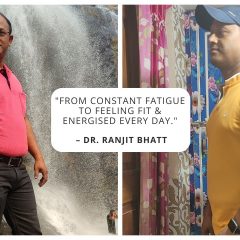
From Burnout to Balance: How Dr. Ranjit Reclaimed His Health

Dr Ranjit Bhatt has spent years tending to others. A practising doctor in Odisha, his days were packed with patients, surgeries, and emergencies. From the outside, it looked like a life lived in service. But on the inside, something wasn’t right. “I had no … [Read More...]

From Shimla’s Slopes to Chandigarh’s Sidewalks: Surinder Kaur Bhalla’s Journey from Chaos to Control

Some journeys start with a plan. Others begin with a stumble literally. Surinder Bhalla, a government professional, born and raised in the scenic hill town of Shimla, had always lived a life of movement. “In Shimla, you walked everywhere,” she reflects. “Walking was never an exercise. It was just life.” But after shifting to Chandigarh, […]

“I’ve Challenged Myself to Live 100 Years” – The Story of Chandubhai Savani’s Second Chance at Life

At 67, most people start slowing down. Not Chandubhai Savani. A resident of Surat, Chandubhai, thought life was on track. “My life was going well till I had my bypass surgery,” he says. That surgery, back in 2021, was a wake-up call.  Medication was routine, but exercise wasn’t. His diet? What he calls ‘normal.’ “I […]

Ananda Mukherjee Health Story

From Terminal Illness To Complete Wellness! Ananda Mukherjee Health Story

As we observe World Cancer Day under the powerful theme ‘United by Unique’ (2025-2027)**, we are reminded that every individual’s journey with cancer is distinct, yet united by shared resilience, hope, and the collective fight against this disease. This theme places people at the centre of care and their stories at the heart of the […]

  • HOME
  • HEALTHY LIVING
  • FITNESS
  • HEALTHY RECIPES
  • USER STORIES
  • KARMA
  • BUY GOQii

Copyright ©2016 GOQii