GOQii

Blog

  • HOME
  • HEALTHY LIVING
  • FITNESS
  • HEALTHY RECIPES
  • USER STORIES
  • KARMA
  • BUY GOQii

Search Results for: lungs

April 21, 2024 By Vaishali Khanna 2 Comments

Sleep Apnea, its symptoms and how you can prevent it?

Sleep-Apnea-700x400

Has anyone ever told you that you have a tendency to snore? Or maybe you don’t…but you have a partner or family member who does? Do you find that you tend to wake up throughout the night? Or maybe you think you get good sleep, but you consistently find yourself with a dry mouth in the morning?

These are all signs that could suggest that you (or…your beloved snoring family member) may have something called “Sleep Apnea.” Well, there are people who cannot sleep without a machine and that is because they suffer from a medical condition called ‘Sleep Apnea’.

Let’s actually break this down. What is Sleep Apnea?

The most common type of Sleep Apnea is ‘Obstructive Sleep Apnea’ (OSA). OSA is a potentially life-altering and life-threatening breathing disorder that occurs during sleep.

The upper airway repeatedly collapses, causing cessation of breathing (apnea) or inadequate breathing (hypopnea) and sleep fragmentation. The breathing stops during sleep for 10 seconds to a minute or longer. Oxygen levels in the blood decrease.

One challenge with something like this is that you may not necessarily wake up entirely. So it’s not always easy to self-diagnose. BUT – Sleep fragmentation results in chronic daytime sleepiness (which you would expect if you’re constantly getting interrupted throughout the night). This disrupts healthy sleep and causes a number of short-term and long-lasting effects that threaten the health and well-being of those who suffer from the condition.

How many people have OSA? The prevalence of OSA in the general population is still unclear. Several epidemiological studies have attempted to examine this issue. Epidemiological data from Young, Palta, Dempsey, et. Al (1993) in a study paper titled:- Obstructive sleep apnea syndrome: natural history, diagnosis, and emerging treatment options, estimated that in a group of 602 middle-aged individuals 2% of women and 4% of men meet the minimal diagnostic criteria for sleep apnea with excessive daytime sleepiness.

People most likely to have or develop OSA may have any of the following:

  • Obesity, especially in the upper body
  • Small upper airway due to excess throat tissue or abdominal jaw structure
  • Nasal Obstruction
  • High Blood Pressure
  • Family History of OSA
  • Overweight Obese individuals

Obesity, particularly abdominal and upper body obesity is the most significant risk factor for obstructive sleep apnea. Excess body fat on the neck and chest constricts the air passageways and sometimes the lungs – thus setting the stage for interrupted breathing during the night. And according to the research…The more obese a person, the greater the risk of apnea.

The good news is that there are some general things that can make a big difference.

This includes:

Losing some weight, if you are overweight or obese (even as little as 5% of your body weight can make a change)

Avoid alcohol, sedatives, and hypnotics (as they can sedate the very muscles we need to breathe)

Sleeping on your side or in a semi propped position

If you have sleep apnea, do not take sleep medicines or sedatives. These chemicals will increase the relaxation in the tissues of the upper airway and make the obstruction worse. The specific treatment for obstructive sleep apnea is usually a mask worn at night to keep the airway open or using a sleep machine that can help you breathe and sleep properly.

If OSA is left untreated, it can increase the risk of developing:

  • Hypertension
  • Cardiac Arrhythmias
  • Myocardial Ischemia
  • Stroke Pre-diabetes
  • Decreased quality of life (because who wants to feel sleep deprived?)

Weight loss is frequently recommended to improve OSA among obese patients. Not only does sustained weight loss improve OSA, it also improves many other independently linked comorbidities such as Hypertension, High Cholesterol, and Diabetes. The greater the change in body weight or waist circumference, the greater is the improvement in OSA

Prioritize your sleep health by recognizing the symptoms of sleep apnea and implementing preventative measures. Share your experiences and insights on managing sleep apnea in the comments below. For personalised advice and support, consult a healthcare professional specializing in sleep disorders or reach out to our certified experts by subscribing to GOQii’s Personalised Health Coaching here.

#BeTheForce
April 13, 2024 By GOQii 1 Comment

Fitness for women over 40

women fitness @40
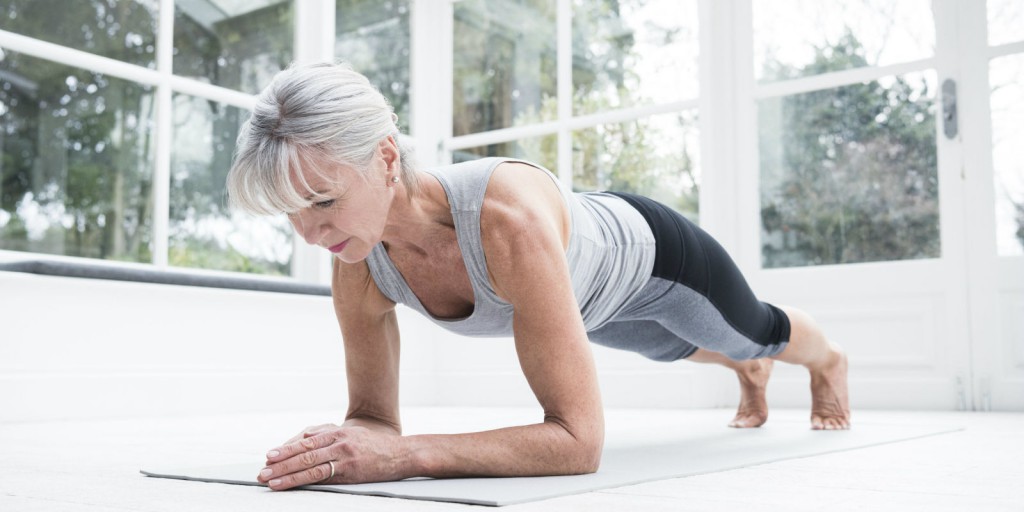
Turning 40 is the new 20s. But, remember your body is not what it used to be in its 20s. At 40 and over, women’s bodies go through several challenges. The older you grow the more the challenges. Which is even more reason to ensure you’re getting the nutrients you need through a healthy diet.

Now, despite all the exercise and fitness regime and being careful with your diet, you find that your waistline is expanding and don’t know what to do. Let me tell there is no magic formula, but certainly, I can say there is hope.

Did you know? When a woman is her 30s, the body’s metabolism (the rate that helps you burn calories) begins to slow down. In turn, means that she turns 40, she needs about 6 per cent fewer calories than when she was younger. This leaves little less room for that extra piece of pie those oily and carbohydrates filled French fries.

Most women fret over the fact that they are unable to maintain their beauty and body after their first pregnancy. This is because most turn to be careless towards their health, diet and medication. During pregnancy women generally face problems like the weakness of bones because of the deficiency of calcium, lower back pain due to lack of strength of lower back muscles same applies for knee pain as well.

Well, it’s not too late… You can be in your 40s and still be fit and feel good about yourself. Good food choices and exercise in your 40s and 50s can have a significant effect on your health and quality of life in your 60s, 70s and 80s. It’s never too late to start.

In my neighbourhood, I had a woman who was in her early 40s and she was detected with diabetes and blood pressure. Further due to weak knees she wasn’t able to do any kind of physical workout and that led her to become very lethargic and inactive. She knew I was in the fitness industry and a personal trainer and so approached me for some tips on how she can be fit at her age.

1women@40

Her is what I suggested to her …

Exercise – When you are over 40 and if you haven’t been fitness training then lifting any kind of weights or doing cardio in the gym might become strenuous … so here’s a solution …

* Walking – is better than any exercise… it helps to maintain and build your lost muscles as we age and also increases metabolism in the body. WALKING & EXERCISE also helps us to keep our heart more healthy and prevent illness.

*Yoga – Yoga is good for adults of all ages. Studies have shown that yoga can be extremely helpful when it comes to combating stress, fatigue and pain. Some yoga poses increase core strength and balance, which reduces the risk of fall-related injuries. Other poses can alleviate senior women-related health issues such as menopause. Above all, yoga is a form of exercise that can help senior women feel better and younger. Here are some of the yoga asanas which can help

(1)  Pranayama: Yoga Sutra cites Pranayama as a means to accomplishing higher status of awareness. The holding of breath is an important practice of reaching ultimate salvation or Samadhi. “Prana” is Breath or vital energy in the body. On subtle levels, prana represents the pranic energy responsible for life or life force, and “ayama” means control. Pranayama means the holding up of the process of exhaling and inhaling.

(2)  Surya Namaskara: Surya Namaskara has its origins in Hindu worship of the solar deity. It is a completely safe set of yoga poses that will not cause strain or injury. Surya Namaskar provides all of the key health benefits of yoga in a very concise package. This holistic exercise provides not only physical health benefits but also mental or emotional as well as spiritual benefits. The apparent gain of Surya Namaskar is the workout it provides for the muscles, but it also benefits joints, ligaments and the skeletal system by improving posture, flexibility and balance. 

(3)  Yoga Mudra: Yoga mudra in an entwined contemplative posture and cures constipation; exercises the intestines and has beneficial effects for asthmatics. It is a perfect asana for women who want to hang on to their beauty and youthfulness. It activates and exercises the lungs, cures loss of appetite, ulcer, indigestion and constipation. It also makes spine, waist, veins and muscles flexible, cures diabetes and reduces obesity

Spice it up: As you grow older, your taste buds decrease, causing many people to eat more bitter and sweet foods. Adding, natural herbs and spices to meals can keep the food healthy and appealing without adding more fat, salt and/or sugar.

Fruits and veggies: Eat two cups of fruit like oranges, apple and watermelon and 2 ½ cups of vegetables with variety each day. One serving can be a cup of frozen or fresh fruit or half a cup of dried fruit. If you have difficulty chewing raw fruits and vegetables, consider adding soups, vegetable juice, tomato sauce, stir fry or a cup of fresh fruits and vegetables to your diet.

Stay hydrated: Ageing diminishes thirst perception. Drink fluids throughout the day. Water is probably the best calorie-free beverage and best for a flawless skin, but don’t go for soda’s and those carbohydrate drinks can be harmful to your blood sugar level.

Women in their 40s and above should never feel old but, feel good about themselves. You can feel energized and fit by doing these simple exercises. You follow this regime you will achieve your goal. All you need some willpower and dedication to follow a routine.  

As you embrace the journey of aging, remember that wellness knows no age limit. With dedication to exercise, yoga, and a balanced diet, women over 40 can thrive in both body and spirit. Take charge of your health today and unlock the vitality that lies within you.

We hope this article helps you! For more articles on Women’s Health, check out Healthy Reads or speak to an expert by subscribing for GOQii’s Personalised Health Coaching here.

#BeTheForce

March 18, 2024 By Arooshi Garg 4 Comments

5 Breathing exercises for boosting immunity

breathing techniques for better sleep

Breathing exercises or “PRANAYAM’, the word is derived from ‘Prana‘ which stands for ‘life force’ and ‘Ayama‘ which means ‘to lengthen or to work on it’. Prana, in yogic terms, means the force within the body that is vital for the functioning of the body as well as its vitality. Breath is our vital source of energy. Did you know that we can throw out 80 per cent of the toxins from our body by breathing correctly? The key to healthy and happy living lies in right breathing. When we attend to our breath, it can heal us from within.

Our cells regenerate all the time, and cannot regenerate without oxygen. Breathing is the fastest and most efficient way for our bodies to get oxygen. Deep breathing helps our immune system regenerate cells in order to fight infection and any other ailments that affect us. Certain breathing exercises have shown to greatly increase the efficiency of our immune system. The better the air quality and the deeper you breathe the more you can help your immune system work properly. Routinely practicing deep breathing exercises can improve your overall immune system.

Benefits of  Pranayama to Boost Immunity

  • Pranayama enhances and stimulates the immune system
  • Improves function and strengthens cells, tissue, glands and organs
  • Pranayama releases stress, anxiety and depression
  • Removes heart blockages
  • Cures heart problems
  • Boosts overall health and cures many health issues
  • Pranayama increases blood circulation
  • Cures Aasthma, Headache, Migraine, Neurological problems, Depression, Gastric problems
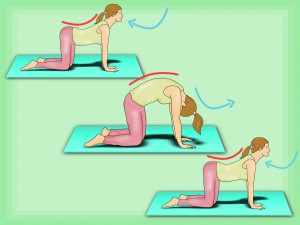
  1. Cat and Cow breathing exercise:

Cat-Cow-Pose-in-Vinyasa

This is a great yoga sequence that helps to improve circulation and clear congestion in the bronchial region and sinuses.

Benefits of Cat and Cow breathing exercise:

  • It stimulates digestion and, through muscular contraction and extension, pumps blood and lymphatic fluid through the thoracic muscle groups.
  • It increases cardiovascular fitness and helps stimulate the kidneys while relieving stress from the neck and shoulder area, and extending the lumbar spine region.

How to do it:

  • Rest your arms and knees on the floor. On the inhale breath, lift and expand the front chest up and forward, elongate your throat, draw your shoulders back, and curve your middle spine downwards as you tuck in your tailbone.
  • On a strong exhale, tuck your chin to your throat, pull in your belly, and arch your spine upwards (like an angry cat), rolling your shoulders forward and down to compress the front chest.
  • Inhale to Cow Pose and exhale to Cat Pose with a fluid up-and-down, wave-like motion of the spine and torso. Repeat the cycle 5 times.
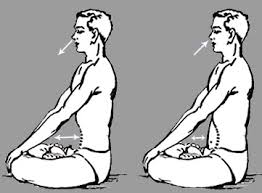
  1. Kapal Bhati Pranayam:

kapal bhati

Kapal meaning skull, Bhati meaning shining and pranayama meaning breathing technique. It is a great breathing exercise and can improve bodily functions. This breathing exercise can remove 80% of the toxins in our body through the outgoing breath. Regular practice of Kapal Bhati Pranayama can help detoxify all the systems in our body.

Benefits of Kapal Bhati:

  • Helps in increasing the metabolic rate
  • Improves digestive functioning, absorption, and assimilation of nutrients
  • Improves blood circulation and nervous system functioning

How to do it:

  • Sit at a comfortable place with your spine straight. Place your hands on the knees with palms open to the sky.
  • Take a deep breath in. As you exhale, pull your stomach in. Pull your navel in back towards the spine. Do as much as you comfortably can. You may keep your right hand on the stomach to feel the abdominal muscles contract.
  • As you relax the navel and abdomen, the breath flows into your lungs automatically.
  • Take 15-20 such breaths to complete one round of Kapal Bhati Pranayama.
  • After completing the round, relax with your eyes closed
  • Do two more rounds of Kapal Bhati Pranayam.

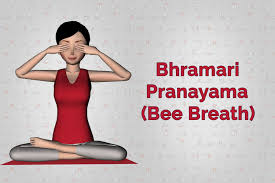
3.       Bee Breath (Bhramari Pranayam)

bee breathe

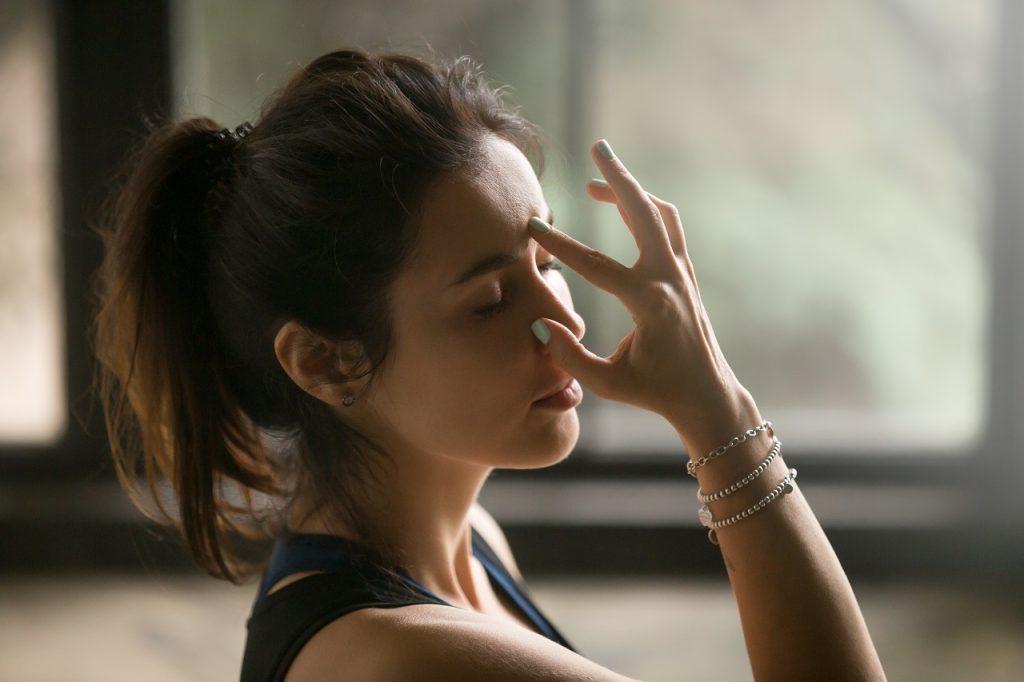
Bhramari Pranayama or the humming Bee Breath produces a sound similar to the humming of a bee. Bhramari comes from the Sanskrit word ‘Bramar’ which means a kind of black Indian bee. Bhramari pranayama has a soothing effect on the brain and calms the mind. Gives relief if you have a slight headache

 Benefits of Bhramari Pranayama (Bee Breath)

  • Helps mitigate migraines
  • Helps clear the nasal and ear canals
  • Clears the sinuses
  • Helps in improving concentration and memory
  • Effective in reducing blood pressure

How to do it:

  • Sit in a peaceful place with your spine erect
  • Place your index fingers on the cartilage between your cheek and ear
  • Take a deep breath in and as you breathe out, gently press the cartilage. You can keep the cartilage pressed or press it in and out with your fingers while making a loud humming sound like a bee
  • Breathe in again and continue the same pattern 4-5 times.

Precautions for doing Bhramari Pranayama

  • Ensure that you are not putting your finger inside the ear but on the cartilage
  • Don’t press the cartilage too hard. Gently press and release with the finger
  • While making the humming sound, keep your mouth closed
  1. Dog Breathing Exercise

Dog Breathing cleanses and detoxifies the body while expelling the toxins out from deep inside your tissues. The sharp contracting movements while practicing Dog Breathing strengthens the abdominal muscles.

Benefits of Dog breathing:

  • It beneficial in preventing fat deposition in the abdominal area,
  • Helps in improving the respiratory capacity and prevents the person from catching any respiratory disorder if practiced regularly.

How to do it:

  • Sit in Easy Pose with your chin in and your chest out. Stick your tongue all the way out and keep it out as you rapidly breathe in and out through your mouth. This is called Dog Breath. Continue this breath for 3-5 minutes.
  • To finish, inhale, and hold your breath for 15 seconds and press the tongue against the upper palate. Exhale. Repeat this sequence two more times.
  • Beginners can start with 15- 20 seconds and gradually reach up to 1 and then up to 5 minutes.
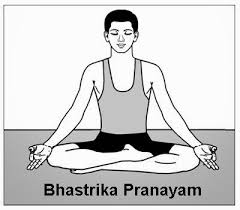
  1. Bhastrika Pranayama

bhastarika

It strengthens the immune power. Practice Bhastrika Pranayama for 10 minutes in the morning and evening on an empty stomach daily for one month.

Benefits of Bhastrika Pranayam

  • Helps reduce episodes of cold, cough and flu
  • Improves thyroid function and tonsils

How to do it:

  • Sit comfortably on the flat ground.
  • Take a deep breath through both nostrils and fill the lungs with air and then exhale with a hissing sound.
  • Inhale deeply and exhale completely.
  • Do this for 2 min to 5 minutes max

Precautions for Bhastrika Pranayama

Those suffering from lungs, heart problems and high blood pressure should practice slowly. High blood pressure patients should exhale through the mouth instead of the nose.

Incorporating these simple yet powerful breathing exercises into your daily routine can significantly boost your immunity and improve your overall health. Practice regularly and feel the transformative effects on your body and mind. For further information or guidance, reach out to our certified experts by subscribing to GOQii’s Personalised Health Coaching here.

#BeTheForce 
March 3, 2024 By Urvashi Sareen 2 Comments

Fluid Replacement and Athletic Performance

water_intake

I am not sure how many of you know that hydration and athletic performance is connected? In this blog, I am precisely going to tell you this aspect. Adequate fluid replacement helps maintain hydration and, therefore, promotes the health, safety, and optimal physical performance of individuals participating in the regular physical activity.

Dehydration can compromise athletic performance and increase the risk of exertion heat injury. Athletes do not voluntarily drink sufficient water to prevent dehydration during physical activity.

The two main factors influencing early fatigue and impaired performance (both physical and mental) in all types of sports and exercise are depletion of body levels of Carbohydrate and/or fluid. Fluid replacement is probably the most important nutritional concern for athletes. As an athlete exercise, fluid is lost through the skin as sweat and through lungs when an athlete breathes. If this fluid is not replaced at regular intervals during exercise, the athlete can become dehydrated bringing about metabolic changes.

Hypohydration (total body water below normal) impairs the body’s ability to regulate heat resulting in increased body temperature and an elevated heart rate. Perceived exertion is increased causing the athlete to feel more fatigued than usual at a given work rate. Mental function is reduced which can have negative implications for motor control, decision making and concentration.

Gastric emptying is slowed, resulting in stomach discomfort. All these effects lead to impairment in exercise performance. Most types of exercise are adversely affected by hypohydration, especially when they are undertaken in hot conditions, and negative effects have been detected when fluid deficits are as low as 2 %

Recommended water intake before, during and after sport/workout

Before Sports

Drinking fluids prior to exercise appear to reduce or delay the detrimental effects of dehydration.

  • 1 to 2 hours before sports: 4 to 8 ounces of cold water
  • 10 to 15 minutes before sports: 4 to 8 ounces of cold water
  • A good meal with containing water (e.g. fruits).

During Sports

  • Every 20 minutes: 5 to 9 ounces of a sports drink, depending on weight (5 for a child weighing 88 pounds, 9 ounces for a child weighing 132 pounds)
  • Any time a child feels thirsty
  • Encourage drinking fluids during timeouts and breaks
  • Encourage drinking from their own fluid container and avoid sharing with others
  • Encourage the ability to drink whenever they want and not to wait until they are told to take a break
  • Adjust fluid needs during practice according to the weather, the amount of equipment worn, and practice duration and intensity.

After Sports

Post-exercise hydration should aim to correct any fluid lost during the practice and help the body to recover from the sports activity:

  • Within the first 30 minutes after exercise, drink chocolate milk or a specially formulated sports drink containing protein and carbohydrates such as Gatorade G3 Recover.  Not only do they hydrate but, the protein helps the body recover from exercise by enhancing muscle repair, and the carbohydrate replenishes glycogen stores in muscles, which are a source of fuel during prolonged exercise of an hour or more.
  • Within two hours: 20-24 ounces of a sports drink for every pound (16 ounces) of weight loss
  • Replace all fluids lost during exercise plus any lost after exercise through urination
  • Eat a good meal with foods containing water

Given the above before, during and after sports water intake recommendations, one should follow these properly for healthy and active life

Proper hydration is the cornerstone of athletic excellence. Understanding the connection between fluid balance and performance can significantly enhance your physical and mental well-being during sports activities. Follow these recommended water intake strategies to fuel your body for peak performance and sustained health. For further information or guidance, reach out to our certified experts by subscribing to GOQii’s Personalised Health Coaching here.

#BeTheForce
  • « Previous Page
  • 1
  • …
  • 10
  • 11
  • 12
  • 13
  • 14
  • …
  • 26
  • Next Page »

Search

Recent Posts

  • Vegetarian protein guide
  • Warming winter soups: 3 protein-rich recipes
  • World AMR Awareness Week 2026: when you need antibiotics, and simple steps to prevent AMR
  • PCOS: diet, exercise and the myths to stop believing
  • Cholesterol numbers explained: LDL, HDL and triglycerides

Stay Updated

Archives

  • November 2026 (23)
  • October 2026 (23)
  • September 2026 (5)
  • August 2026 (8)
  • July 2026 (24)
  • June 2026 (22)
  • May 2026 (20)
  • April 2026 (24)
  • March 2026 (18)
  • February 2026 (14)
  • January 2026 (14)
  • December 2025 (19)
  • November 2025 (14)
  • October 2025 (17)
  • September 2025 (6)
  • August 2025 (5)
  • July 2025 (9)
  • June 2025 (18)
  • May 2025 (16)
  • April 2025 (22)
  • March 2025 (25)
  • February 2025 (21)
  • January 2025 (25)
  • December 2024 (21)
  • November 2024 (21)
  • October 2024 (15)
  • September 2024 (22)
  • August 2024 (27)
  • July 2024 (14)
  • June 2024 (23)
  • May 2024 (26)
  • April 2024 (27)
  • March 2024 (27)
  • February 2024 (23)
  • January 2024 (21)
  • December 2023 (14)
  • November 2023 (10)
  • October 2023 (18)
  • September 2023 (20)
  • August 2023 (16)
  • July 2023 (16)
  • June 2023 (21)
  • May 2023 (20)
  • April 2023 (19)
  • March 2023 (23)
  • February 2023 (19)
  • January 2023 (15)
  • December 2022 (11)
  • November 2022 (15)
  • October 2022 (15)
  • September 2022 (12)
  • August 2022 (9)
  • July 2022 (17)
  • June 2022 (11)
  • May 2022 (10)
  • April 2022 (6)
  • March 2022 (6)
  • February 2022 (13)
  • January 2022 (11)
  • December 2021 (7)
  • November 2021 (3)
  • October 2021 (6)
  • September 2021 (3)
  • August 2021 (8)
  • July 2021 (7)
  • June 2021 (15)
  • May 2021 (16)
  • April 2021 (10)
  • March 2021 (7)
  • February 2021 (4)
  • January 2021 (4)
  • December 2020 (3)
  • November 2020 (4)
  • October 2020 (10)
  • September 2020 (3)
  • August 2020 (3)
  • July 2020 (2)
  • June 2020 (4)
  • May 2020 (10)
  • April 2020 (12)
  • March 2020 (10)
  • February 2020 (4)
  • January 2020 (4)
  • December 2019 (3)
  • November 2019 (7)
  • October 2019 (5)
  • September 2019 (4)
  • August 2019 (9)
  • July 2019 (9)
  • June 2019 (11)
  • May 2019 (4)
  • April 2019 (8)
  • March 2019 (8)
  • February 2019 (9)
  • January 2019 (8)
  • December 2018 (9)
  • November 2018 (3)
  • October 2018 (3)
  • September 2018 (5)
  • August 2018 (10)
  • July 2018 (6)
  • June 2018 (13)
  • May 2018 (8)
  • April 2018 (17)
  • March 2018 (9)
  • February 2018 (8)
  • January 2018 (15)
  • December 2017 (12)
  • November 2017 (19)
  • October 2017 (13)
  • September 2017 (15)
  • August 2017 (4)
  • July 2017 (8)
  • June 2017 (7)
  • May 2017 (6)
  • April 2017 (8)
  • March 2017 (6)
  • February 2017 (7)
  • January 2017 (9)
  • December 2016 (10)
  • November 2016 (7)
  • October 2016 (7)
  • September 2016 (7)
  • August 2016 (11)
  • July 2016 (9)
  • June 2016 (9)
  • May 2016 (12)
  • April 2016 (17)
  • March 2016 (17)
  • February 2016 (8)
  • January 2016 (6)
  • December 2015 (2)
  • November 2015 (9)
  • October 2015 (7)
  • September 2015 (9)
  • August 2015 (11)
  • July 2015 (9)
  • June 2015 (11)
  • May 2015 (9)
  • April 2015 (13)
  • March 2015 (8)
  • February 2015 (5)
  • January 2015 (12)
  • December 2014 (13)
  • November 2014 (11)
  • October 2014 (6)
  • September 2014 (13)
  • August 2014 (12)
  • July 2014 (6)
  • June 2014 (2)
  • May 2014 (7)
  • April 2014 (4)

From Burnout to Balance: How Dr. Ranjit Reclaimed His Health

Dr Ranjit Bhatt has spent years tending to others. A practising doctor in Odisha, his days were packed with patients, surgeries, and emergencies. From the outside, it looked like a life lived in service. But on the inside, something wasn’t right. “I had no … [Read More...]

From Shimla’s Slopes to Chandigarh’s Sidewalks: Surinder Kaur Bhalla’s Journey from Chaos to Control

Some journeys start with a plan. Others begin with a stumble literally. Surinder Bhalla, a government professional, born and raised in the scenic hill town of Shimla, had always lived a life of movement. “In Shimla, you walked everywhere,” she reflects. “Walking was never an exercise. It was just life.” But after shifting to Chandigarh, […]

“I’ve Challenged Myself to Live 100 Years” – The Story of Chandubhai Savani’s Second Chance at Life

At 67, most people start slowing down. Not Chandubhai Savani. A resident of Surat, Chandubhai, thought life was on track. “My life was going well till I had my bypass surgery,” he says. That surgery, back in 2021, was a wake-up call.  Medication was routine, but exercise wasn’t. His diet? What he calls ‘normal.’ “I […]

Ananda Mukherjee Health Story

From Terminal Illness To Complete Wellness! Ananda Mukherjee Health Story

As we observe World Cancer Day under the powerful theme ‘United by Unique’ (2025-2027)**, we are reminded that every individual’s journey with cancer is distinct, yet united by shared resilience, hope, and the collective fight against this disease. This theme places people at the centre of care and their stories at the heart of the […]

  • HOME
  • HEALTHY LIVING
  • FITNESS
  • HEALTHY RECIPES
  • USER STORIES
  • KARMA
  • BUY GOQii

Copyright ©2016 GOQii