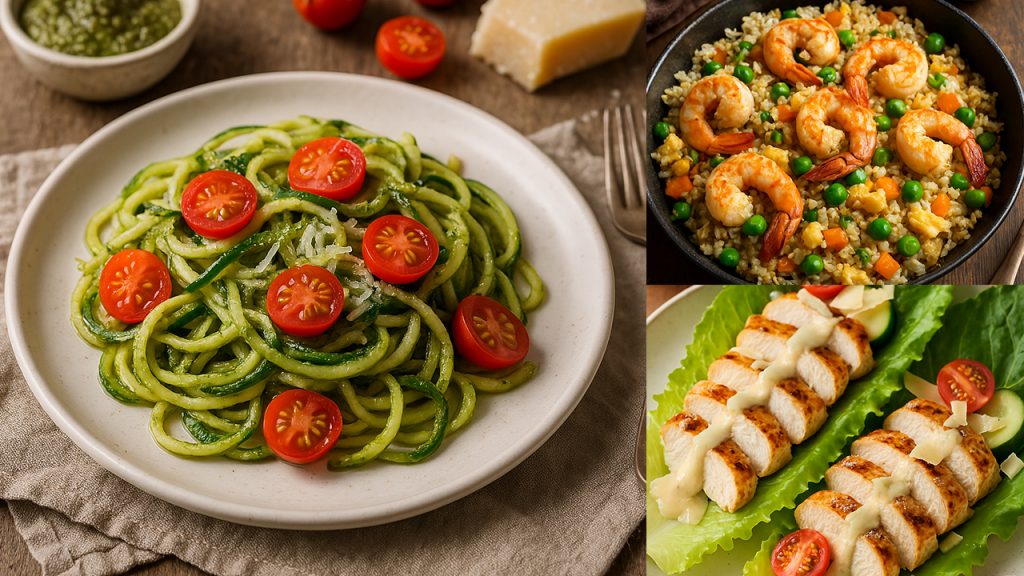
 A well-balanced lunch isn’t just about filling your plate—it’s about fueling your body for sustained energy, focus, and vitality throughout the day. These nutritious, low-carb, and flavour-packed recipes are designed to keep you feeling light, satisfied, and energised without the post-lunch sluggishness.
From the fresh and zesty Courgette Noodles with Pesto and Cherry Tomatoes to the protein-rich Grilled Chicken Caesar Salad Wraps and the flavourful yet wholesome Cauliflower Fried Rice with Shrimp, each meal is a delicious way to nourish your body while keeping carbs in check.
Easy to prepare and bursting with taste, these recipes will help you stay full, focused, and ready to take on the rest of your day!
1. Courgette Noodles with Pesto & Cherry Tomatoes
Ditch traditional pasta and embrace a healthier version with courgette noodles! This light yet flavourful dish is packed with nutrients and makes for a refreshing midday meal.
Ingredients:
- 2 medium courgettes, spiralised into noodles
- 1 cup cherry tomatoes, halved
- ¼ cup basil pesto (store-bought or homemade)
- Salt and pepper to taste
- Optional: grated Parmesan cheese for garnish
Method:
- Heat a skillet over medium heat.
- Add courgette noodles to the skillet and cook for 2-3 minutes, tossing occasionally.
- Add cherry tomatoes to the skillet and cook for another 1-2 minutes.
- Remove from heat and mix in the basil pesto until evenly coated.
- Season with salt and pepper to taste.
- Serve hot, garnished with Parmesan cheese if desired.
Health Benefits:
- Low-Calorie Alternative: Courgette noodles are a great substitute for carb-heavy pasta.
- Packed with Antioxidants: Tomatoes and basil offer anti-inflammatory properties.
- Rich in Healthy Fats: Pesto provides heart-healthy monounsaturated fats.
👉 A simple yet delicious meal that’s perfect for lunch. Serve it with a side of grilled chicken or tofu for added protein!
2. Grilled Chicken Caesar Salad Wraps
For a light yet fulfilling lunch, these Grilled Chicken Caesar Salad Wraps are an excellent choice. Using lettuce leaves instead of tortillas, this low-carb alternative is packed with flavour and nutrients.
Ingredients:
- 2 boneless, skinless chicken breasts
- Salt and pepper to taste
- 4 large romaine lettuce leaves
- ¼ cup Caesar dressing (store-bought or homemade)
- ¼ cup grated Parmesan cheese
- Optional: cherry tomatoes, cucumber slices, or avocado
Method:
- Preheat a grill or grill pan over medium-high heat.
- Season chicken breasts with salt and pepper.
- Grill for 6-8 minutes per side or until fully cooked.
- Remove chicken from the grill and let the chicken rest for a few minutes before slicing.
- Lay out romaine lettuce leaves and distribute sliced chicken evenly.
- Drizzle with Caesar dressing and sprinkle with Parmesan cheese.
- Add any optional toppings.
- Roll up the lettuce leaves and enjoy!
Health Benefits:
- Low in Carbs: Lettuce wraps are a great alternative to flour tortillas.
- Rich in Protein: Helps in muscle maintenance and satiety.
- Packed with Flavour: Caesar dressing and Parmesan cheese enhance taste without excess kilocalories.
👉 This meal is quick, delicious, and perfect for meal prepping. Enjoy it as a lunch or a light dinner when you’re craving something nutritious and satisfying!
3. Cauliflower Fried Rice with Shrimp
A low-carb twist on a classic dish, Cauliflower Fried Rice with Shrimp delivers all the flavour of traditional fried rice without the carbs. This dish is light, nutritious, and quick to make!
Ingredients:
- 1 medium head cauliflower, grated or processed into rice-like texture
- 1 tablespoon olive oil
- 1 onion, diced
- 2 cloves garlic, minced
- 1 cup frozen mixed vegetables (peas, carrots, and corn)
- 8 ounces shrimp, peeled and deveined
- 2 eggs, lightly beaten
- 2 tablespoons soya sauce or tamarind or Worcestershire sauce
- 1 teaspoon sesame oil
- Salt and pepper to taste
- Chopped green onions for garnish
Method:
- Heat olive oil in a large skillet or wok over medium heat.
- Add diced onion and minced garlic, cooking until softened (2-3 minutes).
- Stir in frozen vegetables and cook for another 2-3 minutes.
- Move vegetables to one side and add shrimp to the empty side.
- Cook shrimp for 2-3 minutes per side until pink and cooked through, then mix everything.
- Push everything to one side and add beaten eggs to the space.
- Scramble the eggs, then mix them with the vegetables and shrimp.
- Add grated cauliflower and stir well.
- Pour in soya sauce and sesame oil, stirring to combine.
- Cook for 3-4 minutes until cauliflower is tender.
- Serve hot, garnished with chopped green onions.
Health Benefits:
- Low in Carbs & High in Fibre: Keeps blood sugar levels stable.
- Rich in Protein: Shrimp and eggs provide essential amino acids.
- Packed with Nutrients: Contains vitamins and minerals from vegetables.
👉 This Cauliflower Fried Rice with Shrimp is a healthy and delicious alternative to takeout. It’s quick to make and full of flavour!
Nourish, Energise, and Thrive
A well-balanced lunch doesn’t just satisfy hunger—it fuels your body and mind for the rest of the day. With these nutrient-rich, low-carb, and flavourful recipes, you can enjoy a delicious and wholesome midday meal without feeling sluggish or weighed down.
Each of these recipes is easy to prepare, packed with essential nutrients, and designed to keep you feeling satisfied, focused, and energised all afternoon.
💡 What’s your favourite healthy lunch? Share your thoughts in the comments!
#BeTheForce
Disclaimer: The information provided in this blog is for general awareness and educational purposes only. It is not intended to replace professional medical advice, diagnosis, or treatment. Always consult a qualified healthcare provider for personalised medical guidance or concerns related to your health.






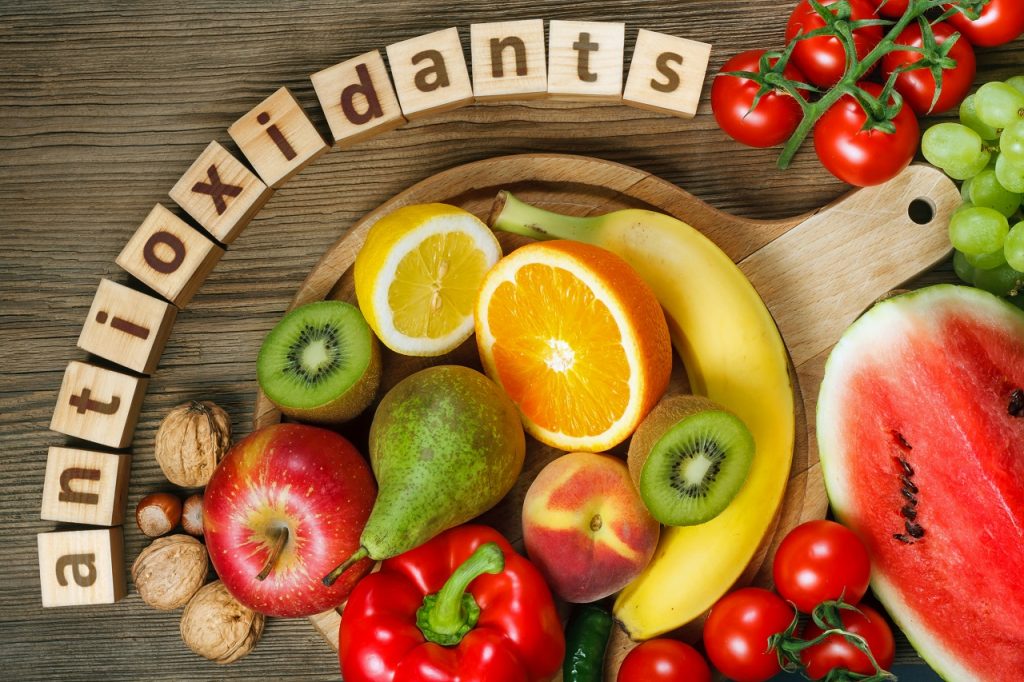 Antioxidants—also known as “free radical fighters”—have been making waves in the health and wellness industry. But what exactly do they do? Are they genuinely beneficial, or are they just another marketing buzzword? More importantly, is it better to get them from food or supplements? Let’s break it down.
 Picture this: You’re sitting at your desk, tackling mountains of paperwork and crunching numbers on Excel like a keyboard wizard. Just when you thought you had it all under control, bam! You’re summoned to a meeting and bombarded with even more projects. Your desk is now drowning in a sea of paperwork, and you find yourself juggling tasks like a stressed-out circus performer. Deadlines loom ominously, and stress levels skyrocket. It’s like being trapped in a never-ending desk nightmare. Yikes! But fear not, for there is a simple solution to vanquish stress in this chaotic scenario: Deep Breathing!


