GOQii

Blog

  • HOME
  • HEALTHY LIVING
  • FITNESS
  • HEALTHY RECIPES
  • USER STORIES
  • KARMA
  • BUY GOQii

Search Results for: hormone

September 11, 2023 By GOQii 9 Comments

2 Breathing Techniques For Better Sleep

breathing techniques for better sleep

Do you have trouble getting sleep despite the fact that you are tired? Sleeping well is an art. It needs a perfect blend of healthy habits and control of mind. A clean body and mind, relaxed mood, physical exercises, and perfect dietary control are some of the basic sleep-inducing methods. However, one of the best ways to bring the body into its relaxed state is – BREATHING! How do breathing techniques for better sleep work? Let’s find out!

Breathing Techniques For Better Sleep

Breathing deeply has been proven to affect the heart, the brain, digestion, the immune system and even the expression of genes. Research has shown that breathing exercises like Pranayama can have immediate effects by altering the pH of the blood, or changing blood pressure. But, more importantly, they can be used as a method to train the body’s reaction to stressful situations and dampen the production of harmful stress hormones and help induce sleep.

Here are 2 important breathing methods to calm the mind and induce sleep naturally.

1.  The 4-7-8 Technique

How To Do It?
This process is recommended by Dr. Andrew Weil, a practitioner and teacher of integrative medicine for the last thirty years. To do this exercise, sit up in bed with your back straight or lie down on a straight back and press the tip of your tongue on the roof of your mouth right behind your front teeth. Maintaining that position, close your mouth and inhale through your nose for four counts, hold that breath for seven counts, and then exhale through your mouth around your tongue for eight counts. Repeat this pattern until you have completed four full breaths.

How It Works?
The 4-7-8 breathing technique is effective because it encourages the fast removal of carbon dioxide. Doing so equates into a better preservation of the bicarbonate pool; our reservoirs for helping maintain an appropriate pH balance. Also, it allows the lungs to become fully charged with air, allowing more oxygen into the body, which promotes a state of calm.

2. Left Nostril Breathing 

How To Do It?
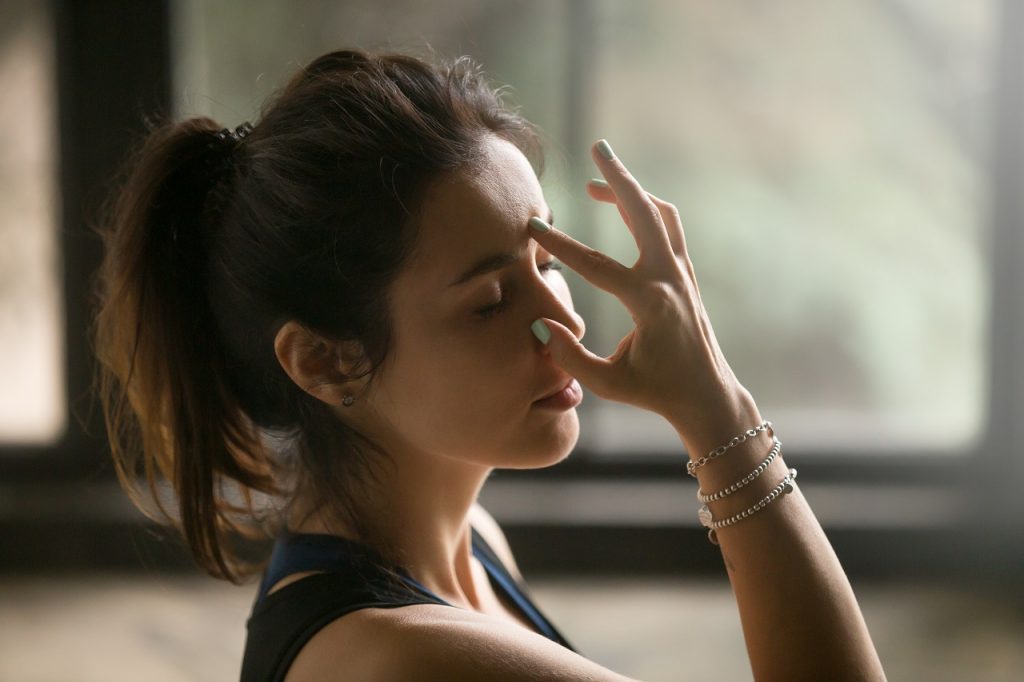
Simply take your right hand and with your fingers outstretched, block off your right nostril by putting gentle pressure on it with your right thumb.  Be sure to keep the rest of your fingers straight and pointing up. With a long, slow, deep breath, gently inhale through your left nostril.  Then, just as gently, exhale long, slowly and completely, again through the left nostril. Do this for at least 3 minutes; chances are you might doze of even before that!

How It Works?
When we’re under stress or feeling anxious, we tend to breathe mostly out of our right nostril, which is connected to our left brain. This activates our sympathetic nervous system, the channel responsible for the classic stress response – dilated pupils, increased core temperature, sweating, and increased heart rate and blood pressure. And when we start breathing through the left nostril the parasympathetic system gets activated which slows us down and helps our body automatically run its day to day jobs of digestion, elimination, sleep cycles and more.

Apart from these 2 breathing techniques for better sleep, you can also try meditation or mindfulness by just observing your breath as it goes in and as it comes out. Connecting with this rise and fall of the breath, and noticing where you feel that breath move within the body can help you begin the process of relaxing tense muscles and create a coherent heart pattern which brings an instant state of tranquil and helps you drift off to peaceful deep sleep.

We hope this article helps you sleep better! Do you meditate before you go to bed? What helps you sleep better? Leave your thoughts in the comments below! For more articles on sleep, check out Healthy Reads or you can get tips directly from a GOQii Coach by subscribing for Personalised Health Coaching here.

#BeTheForce
September 6, 2023 By Mubasheera Chaiwala 2 Comments

Benefits of Practicing Morning Yoga at Home!

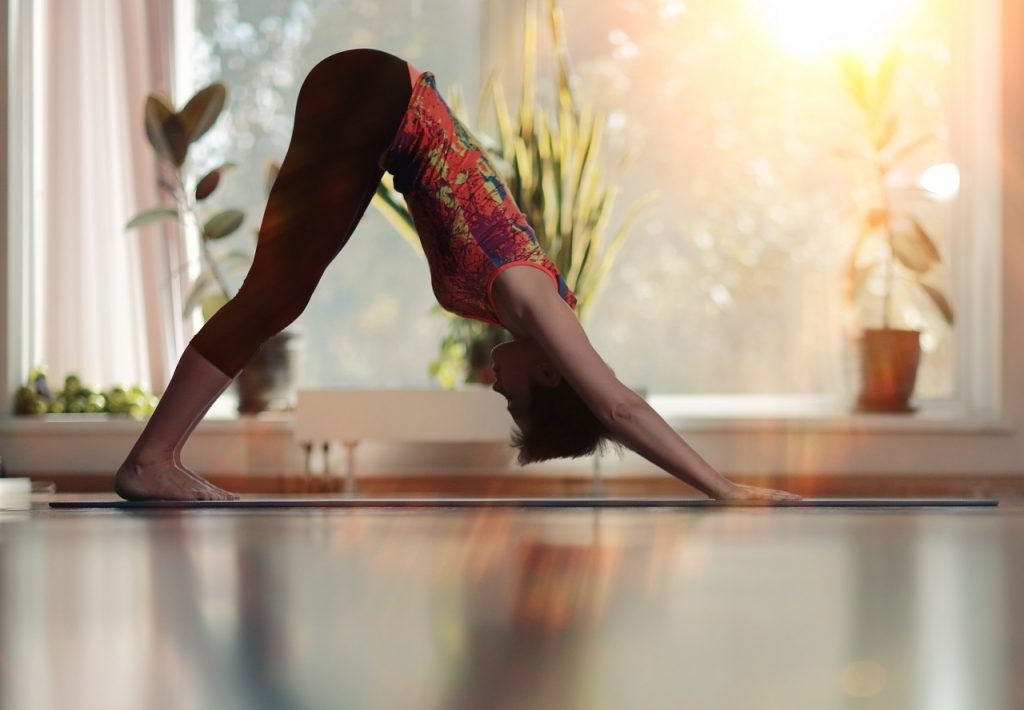
morning yogaPicture this: you’re starting your day with a sense of inner calm, strength, and clarity, all thanks to the practice of morning yoga at home. Before we unravel the numerous benefits that come with this enriching practice, let’s first take a moment to delve into the heart of yoga and what it signifies.
What Do You Understand About Yoga?

What is it? Is it a form of exercise? Is it meditation? For me, yoga is a way of life. I believe the whole idea behind it is total discipline. It is physical, mental, intellectual and spiritual development. It helps you balance health from a physical, mental and emotional standpoint.

Benefits of Morning Yoga

You can practice yoga in the morning and night as well, although, morning yoga is the best as it cleanses your mind and body. It energizes all day and keeps you disciplined. Let’s explore the benefits of morning yoga!

  • Yoga improves flexibility and posture but it’s much more effective in the morning. The fresh air helps us relax our body and make it more flexible.  
  • We have more energy in the morning and morning yoga enhances it to last all day. Which means more intensity and focus! 
  • Setting up a morning practice is beneficial as it creates a ritual – it sets the tone for the day. By practicing morning yoga, there are no distractions or tasks that will get in the way – so no excuses for cancelling your session in the morning. 
  • That fresh morning air helps you deliver more oxygen to the body, breathe better and cleanses your system naturally. 
  • It also helps your digestive system as metabolism rate is higher in the morning. It increases digestion and keeps all indigestion problems at bay. 
  • Morning yoga boosts your brainpower and makes your brain more active to study or work. 
  • It enhances happiness and positivity as it boosts mental clarity and relaxes you. The release of endorphins that early in the morning make your body a more physically comfortable place to live in. 
  • Disease-fighting white blood cells in the body are able to do their best when our blood flow and lymphatic system have efficient circulation. By moving in a way that feels good first thing in the morning, we essentially ‘wake up’ all the body’s systems, which enhances the flow of circulation and gives the immune system an immediate boost. Gentle inversions like Viparita Karani, Cow Pose and Child Pose are especially effective for stimulating the immune system.
  • As a parent, taking time out for your own well being is difficult. Getting up early and practicing morning yoga puts your health first. Only if you are healthy, can you take care of others. A morning yoga practice is a way to know you’ve done something for yourself that day  
  • Apart from all of the above, morning yoga regulates your sleep rhythm, balances your hormones and helps you build a healthy and consistent routine. 

Asanas You Can Practice 

Try these yoga poses daily in the morning to increase blood circulation, enhance and stimulate the immune system, improve body function and strengthen your cells, tissues, glands and organs! Also, these poses will help you beat stress, anxiety and depression.  

  1. Suryanamaskar – for over all body workout
  2. Jivah Bandh – manages and relieves stress
  3. Simha Mudra – decreases stress and prepares you to face the day by increasing your willpower.
  4. Sheetali Pranayama – is a process which can cool the body down and give a feeling of calmness.
  5. Bhramari Pranayama – is one of the great breathing exercises to release the mind of disturbance, anxiety or frustration and get rid of anger.
  6. Om Recitation – excellent breathing exercises for meditation. Brings stability of mind and improves memory power
  7. Shavasana – removes nervousness, adds a sense of presence. Very important to start our day peacefully.
  8. Tratak Drishti – to increase concentration.
  9. Anulom Vilom Pranayama – is the best way of balancing the Tri Dosas in our body. Our body gets ill when Tri Dosas are not in balance. Vaat, Pitta and Kaffa are known as the Tri Dosas (Tri means “three” and the meaning of dosas is impurities). All three are the cause of all diseases. So, it is important to balance them. The way to do that is to practice Anulom Vilom Pranayama regularly. It is the simplest and best way for this.
  10. Kapalbhati Pranayama – generates heat in the system to help dissolve toxins and waste matter. It adds luster and beauty to your face and helps your skin glow!  

If yoga is practiced regularly in the morning, it will help you face the day with balance and a practical approach. Ensure that you do not eat at least 2-3 hours before you begin your practice. So try morning yoga and do share your feedback and changes with us in the comments below! 

To learn more about Pranayama, read this article: https://goqii.com/blog/pranayama/. 

To begin practicing yoga subscribe for LIVE interactive sessions with our Yoga experts on GOQii Pro within the GOQii App.

#BeTheForce 

August 4, 2023 By Dr Darshana Salve 2 Comments

Tired All The Time? Here’s What’s Causing It!

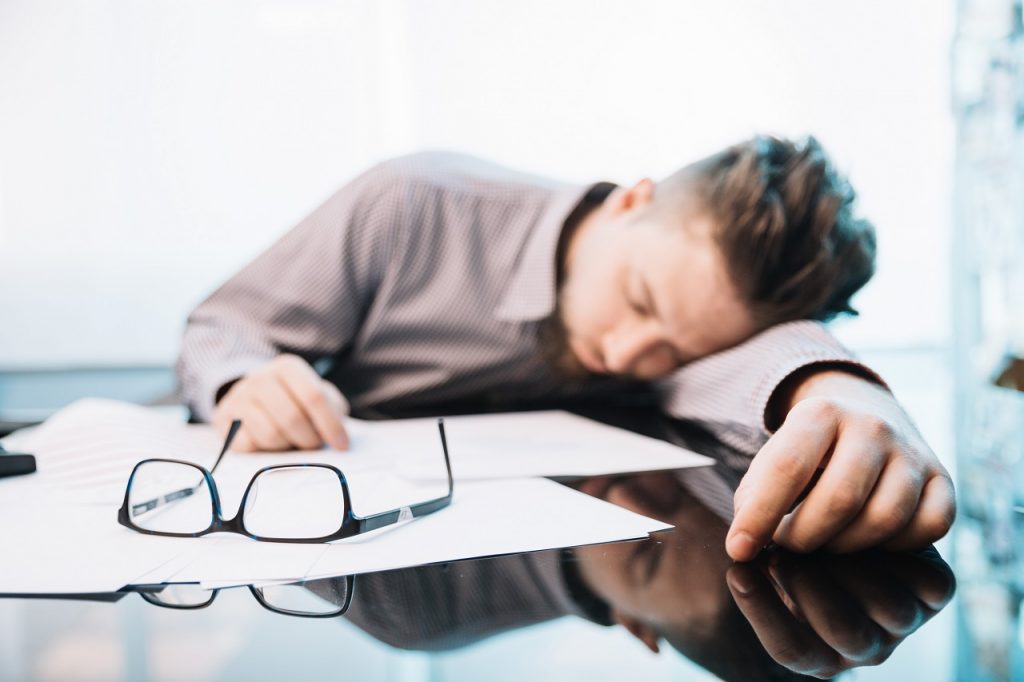
fatigueThe alarm is set for 6 am to go for a morning walk, filled with determination to start on a routine walk from the next morning, she went to sleep early. But, like any other day, the alarm went off, but as usual, she couldn’t get out of bed. With each passing day, it got difficult to even get up for work. This happened almost for 2-3 months when Ananya realized this was not just laziness but something beyond and decided to see a doctor. Ananya described that she had no energy to wake up in the morning and felt tired and exhausted by the end of the day. Sounds familiar? Yes! This happens to many around us or even to us. This syndrome is called Fatigue.

What is Fatigue?

Fatigue is generally defined as a feeling of lack of energy and motivation that can be physical, mental or both. Fatigue is very common. Fatigue can be caused by Physical (around 60%) as well as Mental causes (40%). Unfortunately, it can also occur in normal individuals who experience intense physical or mental activity (or both).

However, in contrast to fatigue that occurs with some diseases and syndromes, normal fatigue in healthy individuals is quickly relieved in few hours to about a day when the physical or mental activity is reduced and adequate rest is taken.

What Causes It?

  • Sleep Problems: Sleep Apnea, insomnia, working in shifts or work shift changes, pregnancy, extra night hours at “work”, gadget time, etc. can cause fatigue. For such problems, including foods like nuts or milk that are rich in tryptophan (sleep inducing hormone) can help get better sleep.
  • Dysglycemia: Skipping breakfast, long gaps between meals is known to cause irregular fluctuations in sugar levels. To avoid such irregularities one must have a healthy breakfast every day preferably within one hour of waking up. Always plan for a mid-meal snack especially when the gap exceeds 5 hours.
  • Nutritional Deficiency: Eating a healthy, balanced diet (proteins, carbohydrates, fats and fiber) is an important part of maintaining good health. It can help you feel your best. Include fruits, whole grains, and protein rich foods and avoid junk food, processed/packaged food.
  • Gut Disturbances: An acidic body doesn’t allow oxygen to be absorbed and in turn causes fatigue. Gastric issues such as bloating, constipation, food sensitivity/allergy, leaky gut (gastric reflux) all create havoc in our body resulting in physical and mental fatigue. Including adequate quantity of fiber, probiotics like curd and a good intake of water keep your gut happy and healthy.
  • Caffeine Overload: Limit tea/coffee/green tea to 2 cups/day. Avoid having it post sunset and near bed time.
  • Dehydration: When dehydrated, the fluid loss causes a drop in blood volume, which makes the heart work harder to push oxygen and nutrients through the bloodstream to the brain, skin, and muscles. Maintaining a water intake to 2.5-3 litre is adequate for the majority of the population.
  • Metabolic/Endocrine causes: Vitamin D deficiency, Hypothyroidism, Diabetes, Electrolyte abnormalities, kidney disease, Liver disease can all cause varying degrees of fatigue.
  • Anemia (Iron deficiency, Vitamin B12 deficiency): It is one of the most common reasons of fatigue or tiredness in India and especially common among women.
  • Infectious Diseases: Viral infections, Hepatitis, Tuberculosis, cytomegalovirus (CMV), HIV infection, Influenza (flu), Malaria and many other infectious diseases can cause fatigue.
  • Medications: It might come as a surprise to you but many drugs like antidepressants, anti-anxiety medications, sedatives, antihistamines, steroids and even some blood pressure medications can cause fatigue.
  • Mental Health: Stress, Depression, Anxiety, Drug abuse, Alcohol abuse, eating disorders, (for example bulimia/anorexia), Grief and Bereavement are all few of the most ignored causes of fatigue. Awareness and proactive management of mental disorders is a must for living healthy.

Depending on the above reasons, the right treatment must be decided as it is important that the root cause of fatigue be treated and not just the symptom.

In the case of Ananya, on taking a proper history and some blood tests, she was found to have nutritional and Vitamin D deficiency. Once these were corrected she felt strong and active enough to start with her healthy regime.

Fatigue is a natural part of our lives, because of which we tend to ignore it and instead learn to live with it. This causes more trouble in the long run. We must look out for tell-tale signs of things we could do earlier but can’t do anymore, unrelated aches and pains or headaches and if found positive we must seek the right help. Don’t let feeling tired today ruin your attempt to feel healthy tomorrow!

If you’re looking to relax, meditate or practice yoga to ward off fatigue, ask your GOQii Coach directly by subscribing for Personalised Health Coaching here.

#BeTheForce

July 17, 2023 By Trishala Chopra 1 Comment

Effects Of Different Medications On Exercise

Effects of Different Medications on Exercise Either you or somebody you know might be on some kind of long term medications! I am not talking about somebody who takes an aspirin or a paracetamol or some antipyretic. When I say long term medications, I am talking about cholesterol, blood pressure and blood sugar lowering drugs. When a patient usually gets on any of these drugs there are high chances that they are on them forever!



Each one of these medications has a tremendous impact on the body which comes as a blow if you’re an exercise person! Every medication has a different set of action, so here are some points for you to keep in mind.

1. Cholesterol Medications

The most commonly used cholesterol medication is statin. The generic names of these drugs available are usually Rosuvastatin, Atorvastatin, Fluvastatin, Lovastatin, Pravastatin, Simvastatin and Pitavastatin.

Note: To check which statin is your medication, check behind the tablet. If it is not mentioned, check it on the company’s site

Effects Of Cholesterol Medications On Exercise 

Statins deplete CoEnzyme Q10 in the body, which is very important for muscles to produce energy. This will affect your strength training routine and your post strength training recovery will be slow. It might also lead to rhabdomyolysis which means muscle death – it is definitely not good.

What Can You Do?

  • The first thing which you should always try is getting off statins as soon as possible with some changes in your diet and exercise routine. You can ask your coach to help you with this! Let your doctor change your medicines and your coach can guide you with the diet and exercise routine.
  • While you are on a statin, you should always try a gradual progress. Do not rush into any kind of exercise routine. Give your body enough time to get adapted.
  • Take longer recovery time. Instead of having a 1-day gap between your strength training schedules, you can take a 2 day gap which will give your muscles more time to recover. You can do light workouts on the day when you don’t plan to do strength training.

2. Beta Blockers

This is a group of medications is used to lower high blood pressure. The most commonly used beta blockers are atenolol, bisoprolol, propranolol and metroporolol.

Note: To check which beta blocker is your medication, check behind the tablet. Salt name is always mentioned. If in case it is not mentioned, check it on the company’s website.

Effects Of Beta Blockers On Exercise

People who are on beta blockers see that their heart rate is always less no matter what form of exercise they do. Maintaining a proper heart rate during different activities is very important for having good cardiac health. People taking beta blockers witness that their heart rate after a sprint and after moderate jogging is exactly the same. In fact, this shouldn’t be the case. It has to be more while sprinting than jogging.

What Can You Do?

  • Instead of checking your heart rate for your exercise progress, start checking your exertion timing
  • If you start panting very soon, note that time. Work on your stamina and then go ahead. Beta blockers will always keep your heart rate low.

3. ACE Inhibitors

These are another set of medications which are used to lower high blood pressure. The most commonly used ACE Inhibitors are fosinopril, lisinopril, quinapril.

Note: To check which ACE Inhibitor is your medication, check behind the tablet. Salt name is always mentioned. If in case it is not mentioned, check it on the company’s website.

Effects Of ACE Inhibitors On Exercise 

There are 2 types of people – One who has high blood pressure and is not taking any medication and another one who has high blood pressure and is on either a Beta Blocker or an ACE Inhibitor.

If the person without the medication exercises, his blood pressure will come down automatically post exercise. This is called as post exercise hypotension.

This even happens with someone who is on blood pressure medication, but then it can go really very low! That’s the reason people feel dizzy, shaky, nauseous, and experience blurred vision post exercise. Sometimes, the person can faint as well.

What Can You Do? 

  • For obvious reasons, you cannot skip the medications and neither can you skip your workout but you can definitely manage it
  • For people on BP medications, you should cool down a bit longer than an average person. Instead of a 5-minute cooldown, do a 10-minute cooldown
  • Use your tracker effectively. For example, if your heart rate is 140 beats per minute- Post workout it can drop to 110 which is ok. After another minute it might fall further to 90. Hold on. Breathe it. Stretch yourself. Your targeted heart beat should be only 10% more than your RHR (Resting Heart Rate) which is around 60-70 beats per minute.

4. Blood Sugar Lowering Medications

There are different blood sugar lowering medications which affect the body in different ways. Either they increase the insulin function or remove excess sugar out through urine or they decrease the amount of carbohydrate absorption in the body.

For a non-diabetic person, while exercising, there are different hormonal fluctuations which happen. Adrenaline is released followed by a surge in cortisol levels and these hormones raise blood sugar levels. To bring this down, pancreas secretes another hormone called insulin which brings the elevated sugars down. So, the fluctuation is not seen, whereas this is not the case in people with diabetes.

Some medications can cause hypoglycemia (Blood sugars below 70) in diabetics.

What Can You Do? 

  • In this case, nothing can be done apart from monitoring
  • Check your blood sugar levels before exercising, middle of the exercise and post workout
  • Keep half a glass of fruit juice or 1 glass of milk with you always! If the sugar drops, please consume either of the two.
  • Do strength training, reduce your carbohydrates, add enough proteins to your routine and ask your doctor to reduce your medication.

If this article helped, let us know in the comments below. You can find more articles on fitness here.

If you need help or have any queries regarding the information above, drop us a comment or speak to a certified expert directly by subscribing to GOQii’s Personalised Health Coaching here.

#BeTheForce

  • « Previous Page
  • 1
  • …
  • 42
  • 43
  • 44
  • 45
  • 46
  • …
  • 72
  • Next Page »

Search

Recent Posts

  • Foods to Manage Blood Sugar Naturally: A Complete Guide to Better Blood Sugar Control
  • The Lazy Person’s Guide to Staying Healthy: 5 Micro-Habits That Take Less Than 2 Minutes
  • Healthy Eating: Comforting Chilli Bean Soup Recipe for the Monsoon
  • The Truth About the ‘Beer Belly’: What Alcohol Really Does to Your Metabolism
  • Benefits of Meditation: How One Daily Habit Can Transform Your Mental Wellbeing

Stay Updated

Archives

  • August 2026 (7)
  • July 2026 (25)
  • June 2026 (22)
  • May 2026 (20)
  • April 2026 (24)
  • March 2026 (18)
  • February 2026 (14)
  • January 2026 (14)
  • December 2025 (19)
  • November 2025 (15)
  • October 2025 (20)
  • September 2025 (6)
  • August 2025 (6)
  • July 2025 (9)
  • June 2025 (18)
  • May 2025 (16)
  • April 2025 (22)
  • March 2025 (26)
  • February 2025 (21)
  • January 2025 (25)
  • December 2024 (22)
  • November 2024 (22)
  • October 2024 (20)
  • September 2024 (22)
  • August 2024 (28)
  • July 2024 (15)
  • June 2024 (23)
  • May 2024 (26)
  • April 2024 (27)
  • March 2024 (27)
  • February 2024 (23)
  • January 2024 (21)
  • December 2023 (14)
  • November 2023 (10)
  • October 2023 (19)
  • September 2023 (21)
  • August 2023 (16)
  • July 2023 (16)
  • June 2023 (21)
  • May 2023 (20)
  • April 2023 (19)
  • March 2023 (23)
  • February 2023 (19)
  • January 2023 (15)
  • December 2022 (11)
  • November 2022 (15)
  • October 2022 (15)
  • September 2022 (12)
  • August 2022 (9)
  • July 2022 (17)
  • June 2022 (11)
  • May 2022 (10)
  • April 2022 (6)
  • March 2022 (6)
  • February 2022 (13)
  • January 2022 (11)
  • December 2021 (7)
  • November 2021 (3)
  • October 2021 (6)
  • September 2021 (3)
  • August 2021 (8)
  • July 2021 (7)
  • June 2021 (15)
  • May 2021 (16)
  • April 2021 (10)
  • March 2021 (7)
  • February 2021 (4)
  • January 2021 (4)
  • December 2020 (3)
  • November 2020 (4)
  • October 2020 (10)
  • September 2020 (3)
  • August 2020 (3)
  • July 2020 (2)
  • June 2020 (4)
  • May 2020 (10)
  • April 2020 (12)
  • March 2020 (10)
  • February 2020 (4)
  • January 2020 (4)
  • December 2019 (3)
  • November 2019 (7)
  • October 2019 (5)
  • September 2019 (4)
  • August 2019 (9)
  • July 2019 (9)
  • June 2019 (11)
  • May 2019 (4)
  • April 2019 (8)
  • March 2019 (8)
  • February 2019 (9)
  • January 2019 (8)
  • December 2018 (9)
  • November 2018 (3)
  • October 2018 (3)
  • September 2018 (5)
  • August 2018 (10)
  • July 2018 (6)
  • June 2018 (13)
  • May 2018 (8)
  • April 2018 (18)
  • March 2018 (9)
  • February 2018 (8)
  • January 2018 (15)
  • December 2017 (12)
  • November 2017 (19)
  • October 2017 (13)
  • September 2017 (15)
  • August 2017 (4)
  • July 2017 (8)
  • June 2017 (7)
  • May 2017 (6)
  • April 2017 (8)
  • March 2017 (6)
  • February 2017 (7)
  • January 2017 (9)
  • December 2016 (10)
  • November 2016 (7)
  • October 2016 (7)
  • September 2016 (7)
  • August 2016 (11)
  • July 2016 (9)
  • June 2016 (9)
  • May 2016 (12)
  • April 2016 (17)
  • March 2016 (17)
  • February 2016 (8)
  • January 2016 (6)
  • December 2015 (2)
  • November 2015 (9)
  • October 2015 (7)
  • September 2015 (9)
  • August 2015 (11)
  • July 2015 (9)
  • June 2015 (11)
  • May 2015 (9)
  • April 2015 (13)
  • March 2015 (8)
  • February 2015 (5)
  • January 2015 (12)
  • December 2014 (14)
  • November 2014 (11)
  • October 2014 (6)
  • September 2014 (13)
  • August 2014 (12)
  • July 2014 (6)
  • June 2014 (2)
  • May 2014 (7)
  • April 2014 (4)

From Burnout to Balance: How Dr. Ranjit Reclaimed His Health

Dr Ranjit Bhatt has spent years tending to others. A practising doctor in Odisha, his days were packed with patients, surgeries, and emergencies. From the outside, it looked like a life lived in service. But on the inside, something wasn’t right. “I had no … [Read More...]

From Shimla’s Slopes to Chandigarh’s Sidewalks: Surinder Kaur Bhalla’s Journey from Chaos to Control

Some journeys start with a plan. Others begin with a stumble literally. Surinder Bhalla, a government professional, born and raised in the scenic hill town of Shimla, had always lived a life of movement. “In Shimla, you walked everywhere,” she reflects. “Walking was never an exercise. It was just life.” But after shifting to Chandigarh, […]

“I’ve Challenged Myself to Live 100 Years” – The Story of Chandubhai Savani’s Second Chance at Life

At 67, most people start slowing down. Not Chandubhai Savani. A resident of Surat, Chandubhai, thought life was on track. “My life was going well till I had my bypass surgery,” he says. That surgery, back in 2021, was a wake-up call.  Medication was routine, but exercise wasn’t. His diet? What he calls ‘normal.’ “I […]

Ananda Mukherjee Health Story

From Terminal Illness To Complete Wellness! Ananda Mukherjee Health Story

As we observe World Cancer Day under the powerful theme ‘United by Unique’ (2025-2027)**, we are reminded that every individual’s journey with cancer is distinct, yet united by shared resilience, hope, and the collective fight against this disease. This theme places people at the centre of care and their stories at the heart of the […]

  • HOME
  • HEALTHY LIVING
  • FITNESS
  • HEALTHY RECIPES
  • USER STORIES
  • KARMA
  • BUY GOQii

Copyright ©2016 GOQii
