GOQii

Blog

  • HOME
  • HEALTHY LIVING
  • FITNESS
  • HEALTHY RECIPES
  • USER STORIES
  • KARMA
  • BUY GOQii

Search Results for: heart health

May 10, 2026 By GOQii Leave a Comment

Mother’s Day 2026: 5 Meaningful Ways to Give the Gift of Health

Mothers are the ultimate caregivers. From the moment we are born, they spend their lives prioritizing our needs, our schedules, and our well-being often putting their own health on the back burner in the process.

Every year, we celebrate Mother’s Day with beautiful bouquets, greeting cards, and boxes of chocolate. While these gestures are sweet, flowers fade and chocolates disappear. What if, this year, you gave her something that truly lasts? What if you gave her the gift of health?

This Mother’s Day, let’s shift the focus toward empowering the women we love to take care of themselves. Here are 5 practical, meaningful ways to help your mom prioritize her physical and mental well-being.

  1. Schedule a Comprehensive Health Check-Up

As women age, their bodies undergo significant hormonal and metabolic changes, particularly during and after menopause. Unfortunately, many mothers skip their routine doctor visits because they are too busy taking care of everyone else.

The Gift: Take the initiative to book a comprehensive health screening for her. Depending on her age, this should include a lipid profile, thyroid panel, blood sugar tests, a mammogram, and a bone mineral density (BMD) test to check for osteoporosis. Offer to drive her to the appointment and take her out for a healthy lunch afterward!

  1. Upgrade Her Daily Nutrition (By Helping Out!)

Mothers often spend hours in the kitchen cooking meals that cater to the family’s preferences, sometimes neglecting their own nutritional needs. As they age, women need higher amounts of high-quality protein, calcium, and Vitamin D to maintain muscle mass and bone health.

The Gift: Take over the kitchen duties a few times a week, or subscribe her to a healthy meal delivery service. You can also work together to stock the pantry with nutrient-dense superfoods like roasted makhana, mixed nuts, and seeds so she always has healthy snacking options on hand.

  1. Create a Shared Fitness Routine

Telling someone to “exercise more” rarely works, but inviting them to spend quality time with you while being active is highly effective. Regular movement helps improve cardiovascular health, boosts mood, and prevents age-related mobility issues.

The Gift: Instead of buying her a gym membership she might not use, create a shared routine.

  • Schedule a 30-minute evening walk together after dinner.
  • Enroll in a local beginner’s yoga or water aerobics class together.
  • Plan weekend nature hikes. By making fitness a bonding activity, she is much more likely to stay consistent and enjoy the process.
  1. Prioritize Her ‘Me-Time’ and Mental Health

The mental load of motherhood is heavy, and chronic stress severely impacts physical health, leading to poor sleep, weight gain, and high blood pressure. Real wellness is not just about moving the body; it is about resting the mind.

The Gift: Give her the gift of uninterrupted time. Take over her weekend chores so she can sleep in. Set up a relaxing corner in the house with her favorite books, or treat her to a professional massage or spa day. Encourage her to engage in hobbies that have nothing to do with managing the household.

  1. Introduce Smart Health Tracking

Sometimes, the best way to motivate someone is to give them the tools to see their own progress. Wearable technology makes health tracking fun, interactive, and highly insightful.

The Gift: Equip her with a smart fitness tracker (like the GOQii Smart Vital) so she can effortlessly monitor her daily step count, heart rate, blood oxygen levels, and sleep quality. It is a fantastic way for her to stay mindful of her daily habits and take control of her fitness journey.

The greatest way to say “I love you” this Mother’s Day is to ensure your mom has the support, resources, and encouragement she needs to live a long, healthy, and vibrant life.

If you want to give her the ultimate health upgrade, consider gifting her a subscription for Personalised Health Coaching directly in the GOQii App. A dedicated coach can guide her through fitness, nutrition, and stress management at her own pace!

Frequently Asked Questions (FAQs)

  1. What are the most important health check-ups for women over 50?

Women over 50 should prioritize regular blood pressure checks, comprehensive cholesterol panels, blood glucose tests, mammograms (for breast cancer screening), bone density scans (to check for osteoporosis), and routine eye and dental exams.

  1. How can I motivate my mom to start exercising if she has never been active?

Start small and focus on activities she enjoys. Do not push for intense gym sessions. Instead, suggest light walking, gardening, or gentle stretching. The key is to join her having a workout buddy makes the process feel less intimidating and more like quality time.

  1. What dietary changes are most beneficial for older women?

Older women should focus on increasing their calcium and Vitamin D intake for bone health, consuming adequate lean protein to prevent muscle loss, and eating plenty of fiber-rich fruits and vegetables to support digestion and heart health.

#BeTheForce #MothersDay2026

Disclaimer: This article is intended for educational and informational purposes only and should not be considered a substitute for professional medical advice, diagnosis, or treatment. Always consult with a qualified healthcare provider before starting any new fitness routine, diet plan, or undergoing medical screenings.
April 30, 2026 By GOQii Leave a Comment

The GOQii India Fit Report 2026: Unmasking the Gender Health Divide

When we talk about the “Healthspan Gap” the years lost to preventable chronic illness we often look at the national average. However, peeling back the layers of the GOQii India Fit Report 2026 reveals a stark reality: the burden of unhealthy ageing does not fall equally.
In India, women live longer than men. On paper, that looks like success. In reality, it masks a troubling truth: women spend more of those extra years in poor health. This is the Gender Health Divide. It is a complex web of biology, societal expectations, nutritional gaps, and chronic stress that quietly erodes women’s health over decades.

Quick Takeaways: The Female Healthspan Penalty

  • The Longevity Paradox: Women generally outlive men but suffer from higher rates of multi-morbidity (having two or more chronic conditions) in their later years.
  • The Caregiver’s Toll: Unpaid caregiving heavily restricts women’s time for personal preventive health, driving up chronic stress and sleep disruption.
  • The Silent Deficiencies: Rates of thyroid disorders and dangerous visceral fat accumulation remain disproportionately high among Indian women.
  • The Menopause Blindspot: The midlife transition accelerates cardiovascular and metabolic risks, yet remains one of the least supported phases in women’s healthcare.

The Staggering Reality in Numbers

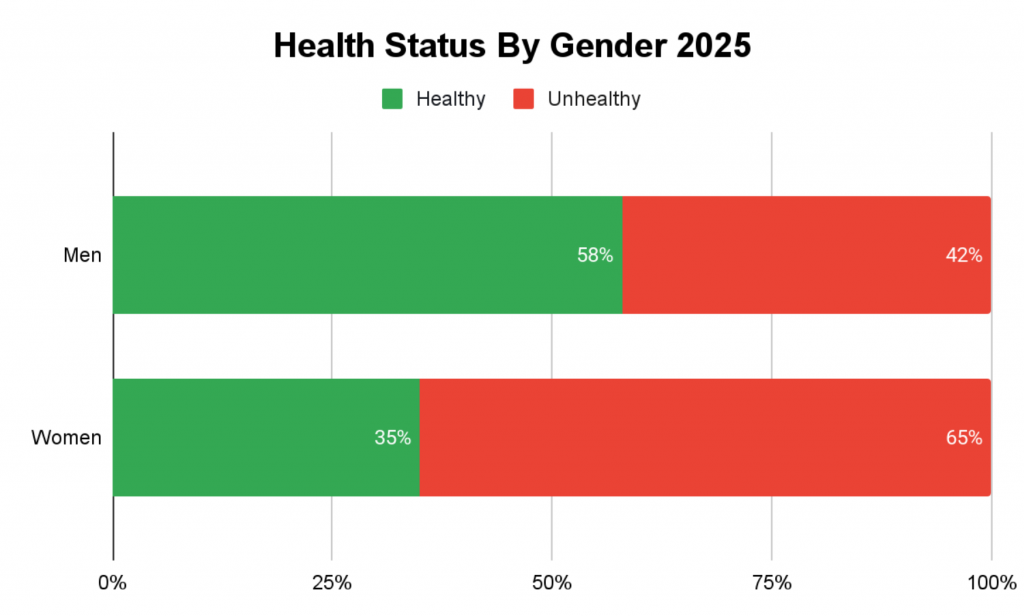
Before we look at the causes, we must look at the outcomes. The data exposes the toughest truth in India’s health landscape: women are now almost twice as unhealthy as men.

In 2025, only 35% of women fall into the healthy category, compared to 58% of men. Flip that around, and the picture is even starker: 65% of women are unhealthy, while men stay at 42%. This gap didn’t emerge overnight, and it has nothing to do with biology. Women are not getting sicker because their bodies are weaker; they are getting sicker because their lives are heavier.
The Caregiver’s Burnout: When “Caring for Others” Costs Your Health

One of the most defining factors of the gender health divide is the unequal distribution of caregiving. From early adulthood onward, women shoulder a disproportionate share of unpaid labour: caregiving for children, elders, and extended family, managing households, and balancing paid work alongside all of this.

This constant state of responsibility leaves little room for rest, recovery, or preventive care.

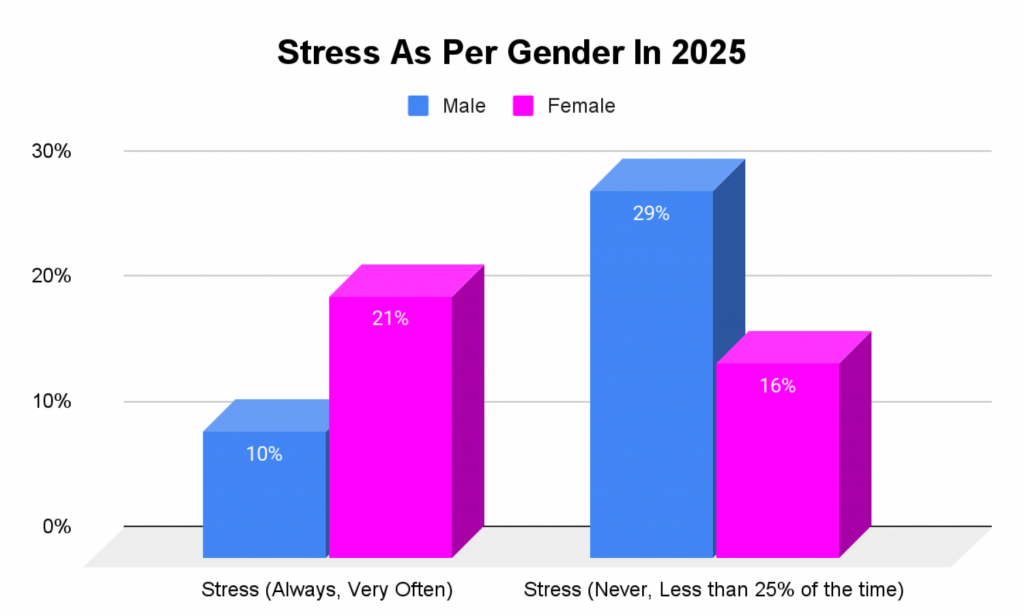
The numbers tell a stark story: 21% of women report feeling stressed “always or very often,” more than double the 10% of men who say the same.

  • Time Poverty: Women delay doctor visits because someone else needs attention first.
  • Chronic Stress: Persistent stress floods the body with cortisol, disrupting sleep and impairing metabolic health.
  • Sleep Disruption: Women are not just sleeping less; they are sleeping worse. Only 50% of women report sleeping well most of the time, compared to 61% of men.

The Nutritional, Diagnostic, and Metabolic Gap

When stress and exhaustion are normalised as part of “just managing life,” the body eventually keeps score. It shows up as thyroid imbalance, hypertension, insulin resistance, and burnout.

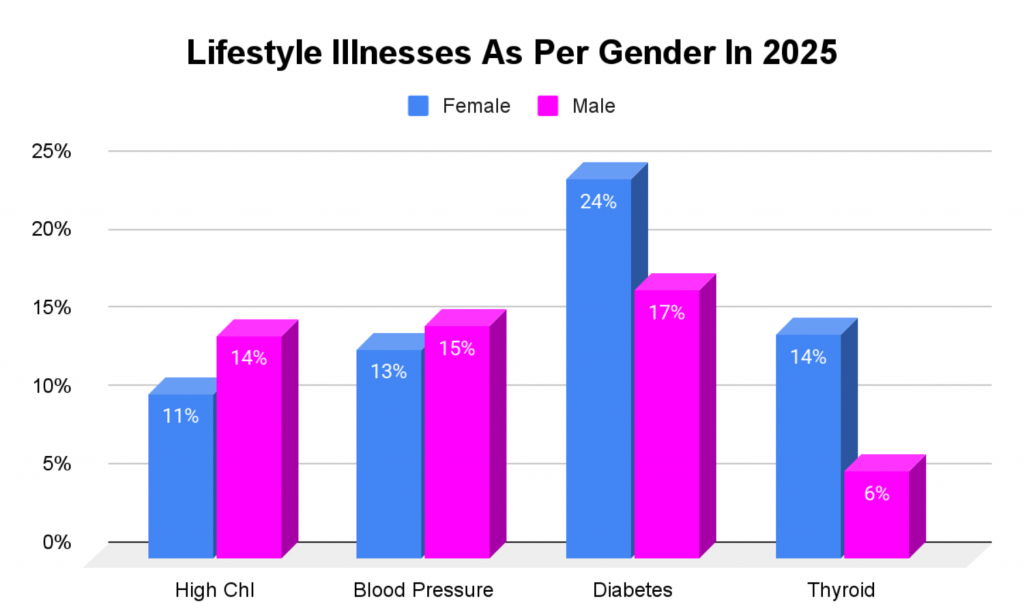
The GOQii data proves that lifestyle illnesses are gender-shaped:

  • Diabetes and Thyroid: 24% of women are affected by diabetes (versus 17% of men), and 14% struggle with thyroid disorders (versus 6% of men).
  • Dangerous Visceral Fat: Almost one in two women in India carries dangerous visceral fat. Staggeringly, 43.7% of women are in the “very high-risk” waist range, compared to just 12.7% of men. This is the kind of fat linked directly to diabetes, PCOS, heart disease, and early stroke.

Midlife and Menopause: The Critical Metabolic Window

Perhaps the most overlooked phase in women’s health is menopause. For decades, it has been treated purely as a reproductive transition. The data demands an immediate shift in this perspective.

Menopause is a long biological transition that reshapes metabolism, muscle mass, bone density, cardiovascular risk, and emotional health. Yet in India, very few women receive guidance on nutrition, strength training, sleep, or stress management during this phase. As a result, what could have been a powerful prevention window instead becomes a tipping point where weight gain accelerates, diabetes risk rises, and bone loss begins.

Closing the Divide: A Call for Self-Advocacy

Closing the gender health divide requires a fundamental shift in mindset and systems. It means recognising unpaid labour as a health risk factor, designing preventive care that accounts for hormonal transitions, and encouraging women to seek care early, without guilt.

The future of India’s health depends on the health of its women. It is time to put yourself back on your own priority list.

Click Here to Download the Full GOQii India Fit Report 2026 to explore the data on women’s health, understand the vital role of preventive screenings, and learn how to build a resilient healthspan.

Frequently Asked Questions (FAQs)

  1. What is the gender health divide?
    The gender health divide refers to the discrepancy in health outcomes between men and women. While Indian women typically have a longer lifespan than men , they often experience a shorter healthspan, spending their later years dealing with higher rates of obesity, chronic stress, thyroid disorders, and bone loss. Currently, 65% of Indian women are classified as unhealthy, compared to 42% of men.
  2. Why does menopause affect metabolic health?
    Menopause is not just a reproductive shift; it fundamentally alters a woman’s metabolism, muscle mass, bone density, and cardiovascular risk. If not managed actively with nutrition and exercise, it acts as a tipping point where weight gain accelerates and diabetes risk rises sharply.
  3. How does caregiving impact women’s healthspan?
    Unpaid caregiving creates immense time poverty and emotional strain. The constant state of responsibility leaves little room for rest, recovery, or preventive care, leading women to delay doctor visits and normalise exhaustion. This results in chronic stress, which is reported “always or very often” by 21% of women, compared to just 10% of men.

#BeTheForce

Disclaimer: The content provided in this blog, including all statistics, insights, and recommendations, is based on the findings of the GOQii India Fit Report 2026. This information is intended for educational and general informational purposes only and should not be construed as professional medical advice, diagnosis, or treatment. Every individual’s health journey is unique. Always consult with a qualified healthcare provider or a certified medical professional before making any significant changes to your diet, exercise routine, sleep schedule, or lifestyle, especially if you have pre-existing medical conditions. GOQii does not guarantee specific health outcomes or results based on the information shared in this report.

April 21, 2026 By GOQii Leave a Comment

The New Annual Health Check: Tests That Actually Matter After 35

Most people wait for symptoms before they take their health seriously. The problem is after 35, many of the biggest risks develop silently, long before symptoms appear.

For many, an annual health check still means cholesterol, fasting sugar, and perhaps an ECG. That may have been sufficient years ago, but it no longer reflects how modern health risks develop.

You may feel completely normal and still be developing insulin resistance, fatty liver, or gradual muscle loss. Preventive healthcare has evolved and your annual check-up needs to evolve with it. Understanding how daily habits influence long-term health is equally important, especially when it comes to building consistency in exercise and lifestyle routines.

Studies show that a large number of adults with early metabolic risk remain undiagnosed for years because routine tests fail to capture these silent changes.

Who Should Prioritise These Tests?

These tests are especially important if you:

  • Have a sedentary lifestyle
  • Have a family history of diabetes or heart disease
  • Carry excess abdominal fat
  • Experience fatigue despite “normal” reports

If any of these apply to you, your standard check-up may not be enough.

  1. Body Composition, Not Just BMI

BMI only tells you your weight relative to height. It does not distinguish between fat and muscle, which means it often misses underlying risk.

Body composition analysis provides a clearer assessment by measuring:

  • Body fat percentage
  • Visceral fat
  • Muscle mass

A normal BMI with high visceral fat is often where risk is missed.

Visceral fat—especially around the abdomen is strongly linked to heart disease and diabetes. It is also closely associated with chronic inflammation, which often develops silently and accelerates disease risk.

Assess annually where possible, especially if you are making lifestyle changes.

  1. Cardiorespiratory Fitness and VO₂ Max

VO₂ max reflects how efficiently your body uses oxygen during physical activity. It is one of the strongest predictors of long-term health and survival.

Higher fitness levels are associated with:

  • Lower cardiovascular risk
  • Better metabolic health
  • Reduced risk of early mortality

Fitness level often predicts health outcomes more accurately than weight alone.

While lab testing offers precision, many fitness trackers provide reasonable estimates. Clinical treadmill tests can also be used.

Track this every 1–2 years to monitor improvement or decline.

  1. Liver Health and Fatty Liver Screening

Fatty liver disease is rising rapidly, even among individuals who do not consume alcohol.

A basic liver function test may indicate elevated enzymes, but an abdominal ultrasound provides a clearer assessment of fat accumulation.

Fatty liver is often the first visible sign of deeper metabolic dysfunction. In many cases, this overlaps with early inflammatory changes that go unnoticed for years.

It is strongly linked to:

  • Insulin resistance
  • Central obesity
  • Elevated triglycerides

If you fall into these categories, consider screening annually or as advised by your doctor.

  1. Vitamin D, B12 and Ferritin

Micronutrient deficiencies are common and often overlooked, yet they can significantly impact overall health.

Key markers include:

  • Vitamin D – supports bone health and immunity
  • Vitamin B12 – essential for nerve function and energy
  • Ferritin – reflects iron stores and can explain fatigue

These do not need to be tested every year for everyone, but checking at least once after 35, especially if you have symptoms or dietary restrictions is sensible.

  1. HbA1c, Not Just Fasting Sugar

Fasting blood sugar provides a snapshot of your glucose levels at a single point in time.

HbA1c reflects your average blood sugar over the past three months, making it a more reliable indicator of early metabolic changes.

As a general guideline:

  • Below 5.7% → normal
  • 5.7%–6.4% → prediabetes
  • Above 6.5% → diabetes

If you are over 35 especially with a sedentary lifestyle or family history testing annually is advisable. Managing blood sugar effectively also depends on consistent lifestyle habits, not just test results.

Track Trends, Not Just Reports

A single abnormal value does not define your health. What matters more is the direction over time.

Ask yourself:

  • Is your HbA1c slowly rising each year?
  • Is visceral fat increasing?
  • Is your fitness declining?

These patterns often appear long before disease is diagnosed.

Preventive health is about early correction, not late intervention. Long-term consistency is often influenced by environment, routines, and even social health and behavioural patterns.

Save your reports. Compare annually. Adjust early.

The most dangerous health changes are the ones you don’t feel.

After 35, the goal is no longer to react to disease it is to detect risk early and stay ahead of it.

Preventive health works best when data is combined with daily guidance, habit tracking, and personalised support through a connected health ecosystem.

Because the earlier you see it,
the easier it is to change it.

Frequently Asked Questions (FAQs)

  1. What tests should you do annually after 35?

After 35, annual health checks should go beyond basic tests and include body composition, HbA1c, liver health screening, and key metabolic markers. These tests help detect early risk factors that may not show symptoms.

  1. Is BMI enough to assess health risk?

No. BMI does not differentiate between fat and muscle. A person can have a normal BMI but still carry high visceral fat, which increases the risk of heart disease and diabetes. Body composition is a more accurate indicator.

  1. Why is HbA1c better than fasting sugar?

Fasting sugar reflects glucose levels at a single point in time, while HbA1c shows average blood sugar over the past three months. This makes it more reliable for identifying early metabolic changes.

  1. How often should you check for fatty liver?

If you have risk factors such as central obesity, high triglycerides, or insulin resistance, screening for fatty liver annually or as advised by a doctor is recommended.

  1. What is VO₂ max and why is it important?

VO₂ max measures how efficiently your body uses oxygen during exercise. It is a strong predictor of cardiovascular health and long-term survival, often more indicative than weight alone.

  1. Do all these tests need to be done every year?

Not necessarily. Some tests like HbA1c and body composition may be tracked annually, while others like vitamin levels can be checked periodically based on symptoms and risk factors.

#BeTheForce

Disclaimer: This article is intended for general informational and educational purposes only and should not be considered medical advice. The tests mentioned may not be necessary for everyone and should be undertaken based on individual health needs and medical history. Always consult a qualified healthcare professional before making decisions about medical tests, diagnosis, or treatment. GOQii provides preventive health guidance and lifestyle coaching and does not offer clinical diagnosis or medical treatment.

April 17, 2026 By GOQii Leave a Comment

Social Health and Longevity: Why Relationships Matter as Much as Diet

When we think about living longer, the focus usually falls on diet, exercise and medical tests. However, one of the most important predictors of long-term health is often overlooked, our relationships. Over the past two decades, research has consistently shown that loneliness and social isolation are linked to higher risks of heart disease, stroke, depression and premature death. In some cases, the impact of chronic loneliness has been found to be comparable to smoking.



In simple terms, connection is not just a social need. It is a health requirement.

Loneliness and the Heart

Humans are biologically wired for connection. When that connection is missing, the body experiences it as stress. Over time, this leads to measurable physiological changes such as:

  • Elevated cortisol (stress hormone) levels
  • Increased blood pressure
  • Higher levels of systemic inflammation

These changes significantly increase the risk of cardiovascular disease.

Loneliness also affects daily behaviour. People who feel disconnected are more likely to:

  • Sleep poorly
  • Exercise less
  • Eat irregularly

This means the impact of loneliness is not just emotional it directly affects physical health. On the other hand, strong relationships act as a buffer. They help regulate stress, improve recovery, and support overall resilience.

Community as Protection

In regions where people tend to live longer, one common factor stands out strong social networks. Regular interaction through shared meals, gatherings and routines creates a sense of belonging and stability.

Being part of a community encourages consistency in daily habits. For example:

  • You are more likely to go for a walk when someone is waiting for you.
  • You are more likely to stick to routines when they are shared.
  • You are more likely to stay motivated when others are involved.

Social support also improves resilience, helping individuals cope better with illness, stress and life transitions.

The Power of Group Movement

Physical activity becomes easier to maintain when it is social. Activities such as:

  • Walking groups
  • Yoga classes
  • Cycling communities
  • Outdoor treks

…offer more than just exercise. They create shared experiences, making routines more enjoyable and sustainable.

Studies show that people who exercise in groups are more likely to stay consistent compared to those who work out alone.

Even digital communities can help through:

  • Regular check-ins
  • Shared challenges
  • Coaching support

Shared Habits Build Consistency

Health behaviours are easier to maintain when they are reinforced socially. Some common examples include:

  • Family meals improving dietary consistency
  • Friends checking in on activity levels
  • Group challenges increasing accountability

Shared routines reduce decision fatigue and make healthy habits easier to sustain over time.

Building Your Health Circle

You do not need a large social network. A few meaningful connections are enough. Simple ways to strengthen your social health include:

  • Scheduling regular time with friends
  • Joining a fitness or walking group
  • Participating in community events
  • Volunteering for a cause
  • Staying connected with family
  • Engaging in group-based health challenges

Consistency in connection matters more than frequency.

The Bigger Picture

Diet, exercise and sleep are all essential for long-term health. However, relationships influence how consistently we follow through on these behaviours.

Social health helps:

  • Reduce stress
  • Improve emotional balance
  • Strengthen adherence to healthy routines

It supports both mental and physical wellbeing.

Longevity is not built in isolation. It is shaped not just by what you do, but also by who you share your life with.

If you want to invest in long-term health, do not focus only on your habits. Pay attention to your relationships as well. Because sometimes, the strongest predictor of health is not what’s on your plate but who is sitting across from you.

Frequently Asked Questions (FAQs)

  1. How does loneliness actually affect physical health?
    When humans feel chronically isolated, the body registers it as a state of threat. This triggers a constant release of stress hormones like cortisol, which leads to higher blood pressure, increased inflammation, and a significantly higher risk of cardiovascular diseases over time.
  2. Is a digital or online community as effective as an in-person one?
    Yes! While in-person connection is wonderful, active digital communities where members share goals, participate in challenges, and check in on each other’s progress provide high levels of accountability, emotional support, and motivation that effectively boost social health.
  3. Do I need a large group of friends to be socially healthy?
    Not at all. Social health is about the quality of your connections, not the quantity. Having just two or three deep, meaningful relationships where you feel truly seen and supported is enough to provide the health-boosting benefits of social connection.

To better manage your lifestyle with the right guidance, community support, and daily motivation from certified experts, subscribe to GOQii’s Personalised Health Coaching here.

#BeTheForce 

Disclaimer: The information provided in this article is for educational and general informational purposes only. It is not intended to serve as professional medical or psychological advice. Always consult with your physician, mental health professional, or a certified GOQii health coach before making any significant changes to your lifestyle or health routine. If you are experiencing severe isolation, chronic stress, or depression, please reach out to a qualified healthcare provider.

  • « Previous Page
  • 1
  • …
  • 4
  • 5
  • 6
  • 7
  • 8
  • …
  • 144
  • Next Page »

Search

Recent Posts

  • Foods to Manage Blood Sugar Naturally: A Complete Guide to Better Blood Sugar Control
  • The Lazy Person’s Guide to Staying Healthy: 5 Micro-Habits That Take Less Than 2 Minutes
  • Healthy Eating: Comforting Chilli Bean Soup Recipe for the Monsoon
  • The Truth About the ‘Beer Belly’: What Alcohol Really Does to Your Metabolism
  • Benefits of Meditation: How One Daily Habit Can Transform Your Mental Wellbeing

Stay Updated

Archives

  • August 2026 (7)
  • July 2026 (25)
  • June 2026 (22)
  • May 2026 (20)
  • April 2026 (24)
  • March 2026 (18)
  • February 2026 (14)
  • January 2026 (14)
  • December 2025 (19)
  • November 2025 (15)
  • October 2025 (20)
  • September 2025 (6)
  • August 2025 (6)
  • July 2025 (9)
  • June 2025 (18)
  • May 2025 (16)
  • April 2025 (22)
  • March 2025 (26)
  • February 2025 (21)
  • January 2025 (25)
  • December 2024 (22)
  • November 2024 (22)
  • October 2024 (20)
  • September 2024 (22)
  • August 2024 (28)
  • July 2024 (15)
  • June 2024 (23)
  • May 2024 (26)
  • April 2024 (27)
  • March 2024 (27)
  • February 2024 (23)
  • January 2024 (21)
  • December 2023 (14)
  • November 2023 (10)
  • October 2023 (19)
  • September 2023 (21)
  • August 2023 (16)
  • July 2023 (16)
  • June 2023 (21)
  • May 2023 (20)
  • April 2023 (19)
  • March 2023 (23)
  • February 2023 (19)
  • January 2023 (15)
  • December 2022 (11)
  • November 2022 (15)
  • October 2022 (15)
  • September 2022 (12)
  • August 2022 (9)
  • July 2022 (17)
  • June 2022 (11)
  • May 2022 (10)
  • April 2022 (6)
  • March 2022 (6)
  • February 2022 (13)
  • January 2022 (11)
  • December 2021 (7)
  • November 2021 (3)
  • October 2021 (6)
  • September 2021 (3)
  • August 2021 (8)
  • July 2021 (7)
  • June 2021 (15)
  • May 2021 (16)
  • April 2021 (10)
  • March 2021 (7)
  • February 2021 (4)
  • January 2021 (4)
  • December 2020 (3)
  • November 2020 (4)
  • October 2020 (10)
  • September 2020 (3)
  • August 2020 (3)
  • July 2020 (2)
  • June 2020 (4)
  • May 2020 (10)
  • April 2020 (12)
  • March 2020 (10)
  • February 2020 (4)
  • January 2020 (4)
  • December 2019 (3)
  • November 2019 (7)
  • October 2019 (5)
  • September 2019 (4)
  • August 2019 (9)
  • July 2019 (9)
  • June 2019 (11)
  • May 2019 (4)
  • April 2019 (8)
  • March 2019 (8)
  • February 2019 (9)
  • January 2019 (8)
  • December 2018 (9)
  • November 2018 (3)
  • October 2018 (3)
  • September 2018 (5)
  • August 2018 (10)
  • July 2018 (6)
  • June 2018 (13)
  • May 2018 (8)
  • April 2018 (18)
  • March 2018 (9)
  • February 2018 (8)
  • January 2018 (15)
  • December 2017 (12)
  • November 2017 (19)
  • October 2017 (13)
  • September 2017 (15)
  • August 2017 (4)
  • July 2017 (8)
  • June 2017 (7)
  • May 2017 (6)
  • April 2017 (8)
  • March 2017 (6)
  • February 2017 (7)
  • January 2017 (9)
  • December 2016 (10)
  • November 2016 (7)
  • October 2016 (7)
  • September 2016 (7)
  • August 2016 (11)
  • July 2016 (9)
  • June 2016 (9)
  • May 2016 (12)
  • April 2016 (17)
  • March 2016 (17)
  • February 2016 (8)
  • January 2016 (6)
  • December 2015 (2)
  • November 2015 (9)
  • October 2015 (7)
  • September 2015 (9)
  • August 2015 (11)
  • July 2015 (9)
  • June 2015 (11)
  • May 2015 (9)
  • April 2015 (13)
  • March 2015 (8)
  • February 2015 (5)
  • January 2015 (12)
  • December 2014 (14)
  • November 2014 (11)
  • October 2014 (6)
  • September 2014 (13)
  • August 2014 (12)
  • July 2014 (6)
  • June 2014 (2)
  • May 2014 (7)
  • April 2014 (4)

From Burnout to Balance: How Dr. Ranjit Reclaimed His Health

Dr Ranjit Bhatt has spent years tending to others. A practising doctor in Odisha, his days were packed with patients, surgeries, and emergencies. From the outside, it looked like a life lived in service. But on the inside, something wasn’t right. “I had no … [Read More...]

From Shimla’s Slopes to Chandigarh’s Sidewalks: Surinder Kaur Bhalla’s Journey from Chaos to Control

Some journeys start with a plan. Others begin with a stumble literally. Surinder Bhalla, a government professional, born and raised in the scenic hill town of Shimla, had always lived a life of movement. “In Shimla, you walked everywhere,” she reflects. “Walking was never an exercise. It was just life.” But after shifting to Chandigarh, […]

“I’ve Challenged Myself to Live 100 Years” – The Story of Chandubhai Savani’s Second Chance at Life

At 67, most people start slowing down. Not Chandubhai Savani. A resident of Surat, Chandubhai, thought life was on track. “My life was going well till I had my bypass surgery,” he says. That surgery, back in 2021, was a wake-up call.  Medication was routine, but exercise wasn’t. His diet? What he calls ‘normal.’ “I […]

Ananda Mukherjee Health Story

From Terminal Illness To Complete Wellness! Ananda Mukherjee Health Story

As we observe World Cancer Day under the powerful theme ‘United by Unique’ (2025-2027)**, we are reminded that every individual’s journey with cancer is distinct, yet united by shared resilience, hope, and the collective fight against this disease. This theme places people at the centre of care and their stories at the heart of the […]

  • HOME
  • HEALTHY LIVING
  • FITNESS
  • HEALTHY RECIPES
  • USER STORIES
  • KARMA
  • BUY GOQii

Copyright ©2016 GOQii
