GOQii

Blog

  • HOME
  • HEALTHY LIVING
  • FITNESS
  • HEALTHY RECIPES
  • USER STORIES
  • KARMA
  • BUY GOQii

Search Results for: heart health

April 9, 2026 By GOQii Leave a Comment

The ROI of Preventive Health: A Guide for Modern Corporate Wellness

For decades, Corporate Wellness was viewed by many executives as a “nice-to-have” HR perk a checkbox item featuring an annual step challenge or a discounted gym membership. However, in today’s high-pressure, hyper-connected business landscape, that outdated view is a costly mistake.

Modern forward-thinking CEOs and HR leaders are realizing that employee health is inextricably linked to company performance. When your workforce is unwell, burned out, or chronically stressed, the bottom line suffers.

Investing in preventive health is no longer an employee benefit; it is a critical business strategy. Let’s break down the hidden costs of the modern workplace and explore the undeniable ROI of a data-driven corporate wellness program.

The Hidden Cost of the Modern Workplace

To understand the return on investment, we must first understand the cost of inaction. The GOQii India Fit Report 2026 reveals a stark reality: for most Indians, working life is the biggest driver of healthspan loss.

As careers intensify and responsibilities multiply, chronic stress becomes background noise. The modern workplace inadvertently creates an environment where health takes a back seat to productivity. The data highlights exactly how this impacts your workforce:

  • The Sedentary Epidemic: A staggering 50% of Indians now spend 5 to 8 hours a day sitting. This prolonged inactivity slows metabolism and triggers inflammation, driving up the risk of heart disease and diabetes.
  • The Burnout Culture: Burnout culture, long work hours, constant digital connectivity, and sedentary routines accelerate health decline.
  • The Emotional Toll: Stress levels have reached critical highs, affecting 45% of the population. Furthermore, 40% of people experiencing frequent episodes of low mood report poor work-life balance.
  • The Economic Drain: Early onset of lifestyle diseases forces many adults to exit the workforce years before retirement age. According to NITI Aayog, non-communicable diseases reduce India’s economic output by billions annually through lost productivity and healthcare costs.

When employees are managing silent epidemics like hypertension, high cholesterol, and chronic fatigue, they are physically present but cognitively depleted a phenomenon known as presenteeism.

Defining the ROI: How Prevention Translates to Profits

Shifting from a sick-care model to a preventive corporate wellness framework yields measurable financial and operational returns. Here is how the ROI of preventive health materializes for modern businesses:

  1. Drastic Reduction in Healthcare Costs

India’s healthcare system is still heavily treatment-focused, and managing advanced diseases consumes far more resources than preventing them. By implementing preventive health screenings and continuous monitoring, companies can help employees detect lifestyle risks like insulin resistance or rising blood pressure before they become full-blown chronic diseases requiring expensive medical interventions, hospitalizations, and premium hikes.

  1. Elimination of Productivity Leaks (Absenteeism & Presenteeism)

Healthy employees are focused employees. Regular movement, adequate sleep, balanced nutrition, and stress regulation protect healthspan far more effectively than drastic changes made late in life. When corporate wellness programs actively improve sleep quality and reduce stress, employees experience sharper cognitive function, better decision-making, and higher sustained energy levels, directly boosting daily output.

  1. Superior Talent Attraction and Retention

In a competitive talent market, top-tier professionals look for employers who care about their holistic well-being. Workplaces that prioritize movement, rest, and recovery foster deep loyalty. Providing robust mental health support and personalized coaching reduces turnover rates, saving companies the massive costs associated with recruiting, hiring, and training new staff.

3 Pillars of a Modern Corporate Wellness Strategy

To achieve a true ROI, corporate wellness must evolve from episodic interventions (like an annual health camp) to continuous, habit-building support.

  1. Continuous Data & Insights: Utilizing digital health platforms and wearables enables earlier detection, sustained behavior change, and a move from episodic care to continuous prevention. Tracking daily metrics like sleep and activity allows employees to understand their baseline health.
  2. Personalised Human Coaching: Technology, when paired with human coaching and accountability, enables this shift across life stages. Data alone does not change habits; personalized guidance from health experts helps employees translate their data into actionable, daily lifestyle changes.
  3. Mental Resilience as a Core Focus: Emotional health must be treated as biological health. Companies need to invest in stress management programs, promote a healthy work-life balance, and provide support systems for mental health.

Frequently Asked Questions (FAQs)

  1. What is the actual ROI of a corporate wellness program?
    The ROI of a modern corporate wellness program is measured through three primary financial pillars: drastically reduced long-term healthcare costs and insurance premiums, the elimination of productivity leaks (such as absenteeism and presenteeism caused by chronic stress or illness), and significantly lower employee turnover rates. Preventive health transforms wellness from a sunk cost into a strategic driver of profitability.
  2. How does preventive health directly impact employee productivity?
    According to the GOQii India Fit Report 2026, chronic stress and poor sleep are major drivers of decreased cognitive function and “presenteeism” (being at work but underperforming). Preventive health programs target these root causes by improving sleep quality and managing stress, which directly results in sharper decision-making, higher sustained energy, and better daily output.
  3. Why do traditional corporate wellness initiatives fail to show an ROI?
    Traditional wellness programs fail because they are episodic—relying on annual health check-ups or one-off step challenges. True behavioral change requires a continuous approach. The modern workforce needs ongoing data monitoring combined with personalized human coaching to build sustainable, daily health habits that actually reverse chronic disease risks.
  4. How does GOQii help companies maximize their wellness ROI?
    GOQii provides a comprehensive, continuous preventive healthcare ecosystem. By combining digital health monitoring with personalized, one-on-one human coaching, GOQii helps employees transition from awareness to action. This proactive approach manages lifestyle diseases early, directly reducing corporate healthcare burdens and building a more resilient, focused workforce.

The Bottom Line for Business Leaders

Treating corporate wellness as an expense is a miscalculation. Unhealthy employees will always cost a business more in lost productivity, healthcare claims, and turnover than the cost of a comprehensive wellness program.

The future of corporate success relies on building an infrastructure of prevention. By partnering with comprehensive healthcare ecosystems like GOQii which seamlessly integrates wearable technology, continuous data monitoring, and personalized human coaching you are securing the operational resilience and financial ROI of your company tomorrow. Invest in your workforce’s healthspan today, and watch your business thrive.

#BeTheForce

Disclaimer: The information provided in this article is for educational and informational purposes only and is not intended to serve as professional medical, legal, financial, or HR compliance advice. The health statistics, productivity metrics, and ROI projections discussed—including data referenced from the GOQii India Fit Report—are based on aggregated trends and may vary significantly depending on individual organizational structures, industry, and workforce demographics. Always consult with qualified healthcare professionals, certified HR consultants, or corporate legal counsel before designing, implementing, or altering any employee wellness programs or company health policies.
April 7, 2026 By GOQii Leave a Comment

World Health Day 2026: The Years You’re Losing Without Knowing

We don’t get sick overnight.

We drift into it slowly, quietly and call it normal.

This is exactly why this year’s World Health Day theme – “Together for health. Stand with science.” matters.

Because the problem isn’t that we don’t know what to do.
It’s that we act too late.

The Reality We’re Avoiding

India is living longer than ever before.

But here’s what we don’t talk about:

We’re also spending more of those years managing poor health.

Data from the newly released India Fit Report 2026 highlights a clear pattern—health decline isn’t sudden. It builds over time, often without obvious warning.

On average, nearly 12 years of life are impacted by reduced health, chronic conditions, or loss of function.

Not at the end.
Across life.

This Isn’t Ageing. It’s Accumulation

Most people think health breaks down later.

It doesn’t.

It builds gradually:

  • Habits form early
  • Biology adapts silently
  • Symptoms show up last

Lifestyle diseases are not events. They are timelines.

What Science Actually Shows

Science doesn’t just tell us what happens.
It explains why.

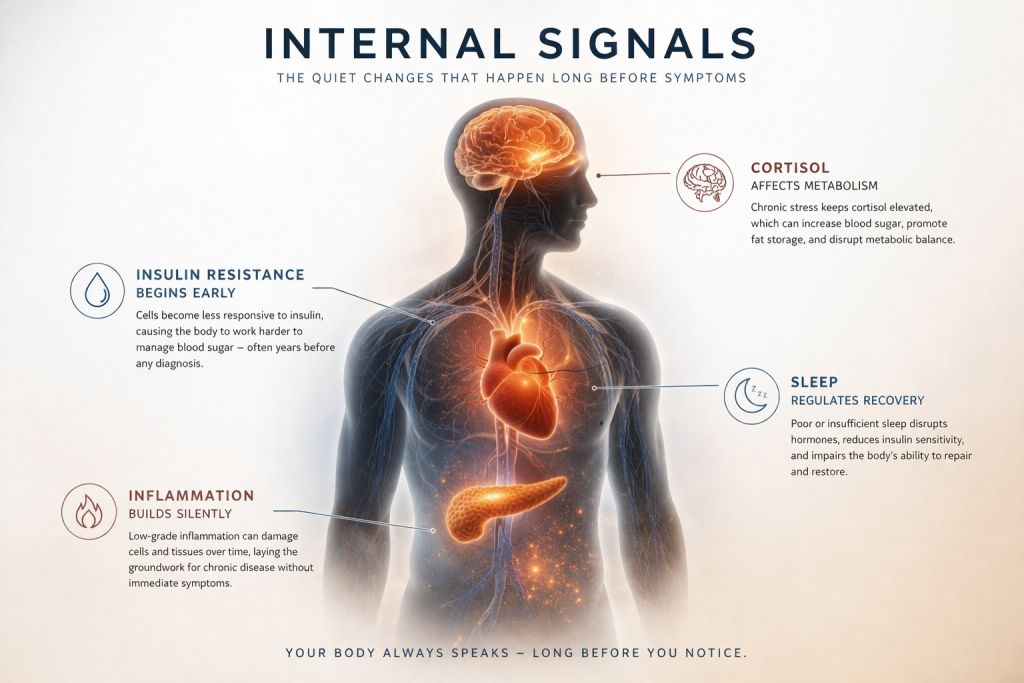
Long before diagnosis, the body shows signals:

  • Insulin resistance begins before blood sugar rises
  • Chronic stress elevates cortisol, impacting metabolism and heart health
  • Poor sleep disrupts hormone balance, recovery, and appetite regulation
  • Inflammation builds quietly, increasing long-term risk

These changes are not theoretical.

They are:

  • measurable
  • trackable
  • and most importantly, modifiable

What gets measured early can be managed early.

The Real Problem Isn’t Disease. It’s Delay

Nothing feels urgent.

  • No pain
  • No disruption
  • No immediate consequence

So nothing changes.

And that’s where the real damage happens.

The problem isn’t awareness.
It’s delay.

Where the Real Opportunity Lies

A large part of the population today sits in a grey zone:

  • Not sick
  • Not fully healthy

Functioning but fragile.

This is where outcomes are still flexible.

Because at this stage:

  • risks can be reversed
  • habits can be corrected
  • trajectories can change

But only if action is taken early.

What It Means to “Stand With Science”

It doesn’t mean doing more.

It means doing things earlier and doing them consistently.

  • Acting on signals, not symptoms
  • Using data instead of assumptions
  • Focusing on patterns, not quick fixes

Because most long-term health outcomes are shaped before they are diagnosed.

See the Data Behind This Shift

The India Fit Report 2026 brings together large-scale behavioural insights to show how everyday habits are shaping long-term health outcomes.

Download the full report here. 

We are not losing years at the end of life.

We are losing them every day, in ways that feel normal, until they aren’t.

This World Health Day:

Don’t wait for symptoms.
Start acting earlier.

Because the goal isn’t just to live longer.

It’s to stop losing the years that matter.

#BeTheForce

Disclaimer: The information provided in this article is for general awareness and educational purposes only. It should not be considered medical advice. Individual health needs and responses may vary. Readers are advised to consult a qualified healthcare professional before making any health-related decisions or changes to treatment, diet, or lifestyle.

Frequently Asked Questions (FAQs)

  1. What is the difference between lifespan and healthspan?
    Lifespan refers to how long you live, while healthspan refers to how many of those years are lived in good health.
  2. What causes loss of healthy years?
    Poor sleep, chronic stress, inactivity, and metabolic changes contribute to long-term health decline before symptoms appear.
  3. Can lifestyle diseases be prevented early?
    Yes. Many conditions like diabetes and heart disease develop gradually and can be delayed or prevented with early intervention.

March 21, 2026 By GOQii Leave a Comment

The Future of Longevity in India: Why Healthspan is the New Lifespan

For decades, the ultimate goal of modern medicine was simple: help people live longer. And by most metrics, we have succeeded. Thanks to advancements in medical science and technology, the average life expectancy in India has surged over the past few decades. But as we celebrate these extra years on our calendars, a new, more urgent question has emerged: Are we actually living better, or are we just taking longer to die?

This question is actively reshaping the landscape of Longevity in India. The conversation is no longer just about adding years to our lives; it is about adding life to our years. Welcome to the era where Healthspan is the new Lifespan.

The Lifespan Paradox in India

Lifespan refers to the total number of years a person is alive. Healthspan, on the other hand, refers to the period of life spent in good health, free from chronic diseases and debilitating age-related conditions.

Currently, India is facing a “Lifespan Paradox.” While we are living longer, a significant portion of our later years is often spent battling lifestyle conditions like Type 2 diabetes, cardiovascular diseases, and declining mobility. If a person lives to be 85 but spends the last 15 years managing severe chronic illnesses, their lifespan is long, but their healthspan is critically compromised.

Why Healthspan is the New Focus

The future of healthcare is shifting from reactive (treating you when you get sick) to preventive (optimizing your health so you don’t get sick in the first place). Here is why focusing on healthspan is the ultimate longevity strategy:

  • Quality over Quantity: A high healthspan means you retain your independence, cognitive function, and physical mobility well into your 70s, 80s, and beyond. It means playing with your grandchildren, traveling, and living actively, rather than being confined to hospital visits.
  • Economic Impact: Chronic disease management takes a massive financial toll on families. Maximizing healthspan reduces long-term medical costs and reliance on the healthcare system.
  • Mental and Emotional Wellbeing: Physical decline takes a heavy toll on mental health. Maintaining vitality protects against age-related depression and cognitive decline.

The Future of Longevity in India: Proactive, Not Reactive

The longevity landscape in India is undergoing a massive transformation, driven by technology and a growing awareness of preventive wellness:

  • Wearable Technology & Data: Devices like GOQii smart trackers are putting the power of continuous monitoring into the hands of the consumer. Tracking your sleep architecture, resting heart rate, and daily movement is the first step in extending your healthspan.
  • Personalised Nutrition: The one-size-fits-all diet is dead. The future is about understanding how your unique biology responds to food, focusing on blood sugar management, and preventing metabolic syndrome.
  • Focus on Muscle Mass: Sarcopenia (the age-related loss of muscle mass) is a silent healthspan killer. The fitness narrative in India is successfully shifting from just “losing weight” to building lean muscle and improving bone density through strength training.

4 Ways to Maximize Your Healthspan Today

You do not need to wait for futuristic anti-aging pills to start increasing your healthspan. The foundation is built on daily habits:

  1. Prioritize Metabolic Health: Limit refined sugars and processed foods. A stable blood sugar level is one of the strongest predictors of a long, disease-free life.
  2. Move for Mobility, Not Just Calorie Burn: Incorporate strength training to protect your joints and maintain muscle mass, alongside daily steps for cardiovascular health.
  3. Protect Your Sleep: Deep sleep is when your brain clears out toxins and your cells repair themselves. Chronic sleep deprivation directly accelerates biological aging.
  4. Manage Chronic Stress: Prolonged cortisol exposure creates systemic inflammation in the body, which is the root cause of almost all age-related diseases. Daily meditation or mindfulness is a non-negotiable longevity tool.

Frequently Asked Questions (FAQs)

What is the difference between lifespan and healthspan?
Lifespan is the total number of years you live, regardless of your health condition. Healthspan is the number of years you live in optimal health, free from chronic disease and physical decline.

Can you increase your healthspan at any age?
Yes. Whether you are 30 or 60, adopting preventive lifestyle habits such as strength training, a nutrient-dense diet, and stress managementcan immediately begin to improve your metabolic health and increase your functional years.

How is longevity tracking changing in India?
With the rise of preventive healthcare ecosystems and smart wearables, Indians can now track their biological age, heart health, and sleep quality in real-time, allowing for early interventions long before chronic diseases develop.

Are you ready to optimize your healthspan and take control of your future? For personalized guidance on nutrition, fitness, and healthy aging, consult a certified expert by subscribing to GOQii’s Personalised Health Coaching here.

#BeTheForce

Disclaimer: The information provided in this blog is for general awareness and educational purposes only. It is not intended to replace professional medical advice, diagnosis, or treatment. Always consult a qualified healthcare provider for personalised medical guidance or concerns related to your health. Images shown are for representation purposes only and may not depict the exact recommendations or outcomes.

March 11, 2026 By Luke Coutinho 9 Comments

Caution: Smoking is Injurious to health!!

No Smoking

With No Smoking Day upon us, there is no better time to evaluate the true impact of this habit. We are all incredibly familiar with this warning. Research consistently indicates that smoking is the number one cause of preventable death globally. By now, most of us are acutely aware of the severe toll it takes on the body.

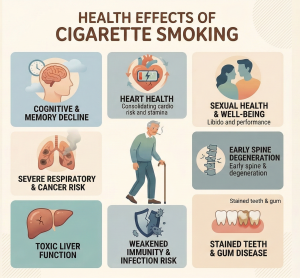
Chronic smoking is directly linked to:

  • Cardiovascular disease
  • Impotence, lack of sexual desire, and inability to perform
  • Various forms of cancer
  • A weakened immune system
  • Severely stained teeth
  • Early degeneration of bones (especially the spine)
  • Reduced lung function and capacity
  • Liver toxicity
  • Reduced stamina and endurance
  • Premature aging

Besides the above, there are several benefits of kicking the butt, apart from of course saving loads of money and time.

Interesting fact: 75% to 85% of smokers want to quit, but simply don’t know how, or find the withdrawal process too daunting.

One of the main reasons it is so hard to stop is because the dangers of continuing, and the benefits of quitting, seem very far away. However, your body begins to heal almost instantly.

The Healing Timeline: What Happens Right Now?

Here is a timeline detailing the immediate and long-term effects of quitting smoking, showing exactly how your body recovers minute by minute, and year by year.

  • In 20 minutes: Your blood pressure and heart rate will drop back down to normal levels.
  • In 8 hours: The carbon monoxide (a toxic gas) levels in your bloodstream will drop by half. Oxygen levels will return to normal, and your metabolism will begin to stabilize.
  • In 48 hours: Your chances of having a heart attack will have already decreased. All nicotine will have left your body. You will also notice your sense of taste and smell returning to normal levels.
  • In 72 hours: Your bronchial tubes will relax. You will notice an increase in your energy levels and lung volume.
  • In 2 weeks: Your blood circulation will increase, and it will continue to improve over the next 10 weeks.
  • In 3 to 9 months: Coughs, wheezing, and breathing problems will dissipate as your lung capacity improves by an impressive 10%.
  • In 1 year: Your risk of suffering a heart attack will have dropped by half compared to a smoker.
  • In 5 years: Your risk of having a stroke returns to that of a non-smoker.
  • In 10 years: Your risk of developing lung cancer will have dropped to that of a non-smoker.
  • In 15 years: Your overall risk of a heart attack will have entirely returned to that of someone who has never smoked.

You have far more immediate benefits to look forward to than you might realize. The healing starts the moment you put out your last cigarette. Make this No Smoking Day the day you finally kick the habit. Quit now!

Nutritional Support for Smokers

If you are currently smoking or in the process of quitting, nutritional support is vital. Smokers should ensure they take Vitamin C regularly, as smoking heavily depletes the body’s natural levels of this crucial antioxidant. Additionally, regular consumption of Curcumin (turmeric extract) is known to help clear nicotine patches from the lungs and is widely studied for its role in possible cancer prevention.

#BeTheForce

Disclaimer: GOQii is committed to providing accurate, up-to-date, and comprehensive health information. This article is intended for informational purposes only and should not be used as a substitute for professional medical advice, diagnosis, or treatment. Always consult a qualified healthcare professional before starting or changing any medication or supplement. Individual responses to treatment may vary.

  • « Previous Page
  • 1
  • …
  • 5
  • 6
  • 7
  • 8
  • 9
  • …
  • 144
  • Next Page »

Search

Recent Posts

  • Foods to Manage Blood Sugar Naturally: A Complete Guide to Better Blood Sugar Control
  • The Lazy Person’s Guide to Staying Healthy: 5 Micro-Habits That Take Less Than 2 Minutes
  • Healthy Eating: Comforting Chilli Bean Soup Recipe for the Monsoon
  • The Truth About the ‘Beer Belly’: What Alcohol Really Does to Your Metabolism
  • Benefits of Meditation: How One Daily Habit Can Transform Your Mental Wellbeing

Stay Updated

Archives

  • August 2026 (7)
  • July 2026 (25)
  • June 2026 (22)
  • May 2026 (20)
  • April 2026 (24)
  • March 2026 (18)
  • February 2026 (14)
  • January 2026 (14)
  • December 2025 (19)
  • November 2025 (15)
  • October 2025 (20)
  • September 2025 (6)
  • August 2025 (6)
  • July 2025 (9)
  • June 2025 (18)
  • May 2025 (16)
  • April 2025 (22)
  • March 2025 (26)
  • February 2025 (21)
  • January 2025 (25)
  • December 2024 (22)
  • November 2024 (22)
  • October 2024 (20)
  • September 2024 (22)
  • August 2024 (28)
  • July 2024 (15)
  • June 2024 (23)
  • May 2024 (26)
  • April 2024 (27)
  • March 2024 (27)
  • February 2024 (23)
  • January 2024 (21)
  • December 2023 (14)
  • November 2023 (10)
  • October 2023 (19)
  • September 2023 (21)
  • August 2023 (16)
  • July 2023 (16)
  • June 2023 (21)
  • May 2023 (20)
  • April 2023 (19)
  • March 2023 (23)
  • February 2023 (19)
  • January 2023 (15)
  • December 2022 (11)
  • November 2022 (15)
  • October 2022 (15)
  • September 2022 (12)
  • August 2022 (9)
  • July 2022 (17)
  • June 2022 (11)
  • May 2022 (10)
  • April 2022 (6)
  • March 2022 (6)
  • February 2022 (13)
  • January 2022 (11)
  • December 2021 (7)
  • November 2021 (3)
  • October 2021 (6)
  • September 2021 (3)
  • August 2021 (8)
  • July 2021 (7)
  • June 2021 (15)
  • May 2021 (16)
  • April 2021 (10)
  • March 2021 (7)
  • February 2021 (4)
  • January 2021 (4)
  • December 2020 (3)
  • November 2020 (4)
  • October 2020 (10)
  • September 2020 (3)
  • August 2020 (3)
  • July 2020 (2)
  • June 2020 (4)
  • May 2020 (10)
  • April 2020 (12)
  • March 2020 (10)
  • February 2020 (4)
  • January 2020 (4)
  • December 2019 (3)
  • November 2019 (7)
  • October 2019 (5)
  • September 2019 (4)
  • August 2019 (9)
  • July 2019 (9)
  • June 2019 (11)
  • May 2019 (4)
  • April 2019 (8)
  • March 2019 (8)
  • February 2019 (9)
  • January 2019 (8)
  • December 2018 (9)
  • November 2018 (3)
  • October 2018 (3)
  • September 2018 (5)
  • August 2018 (10)
  • July 2018 (6)
  • June 2018 (13)
  • May 2018 (8)
  • April 2018 (18)
  • March 2018 (9)
  • February 2018 (8)
  • January 2018 (15)
  • December 2017 (12)
  • November 2017 (19)
  • October 2017 (13)
  • September 2017 (15)
  • August 2017 (4)
  • July 2017 (8)
  • June 2017 (7)
  • May 2017 (6)
  • April 2017 (8)
  • March 2017 (6)
  • February 2017 (7)
  • January 2017 (9)
  • December 2016 (10)
  • November 2016 (7)
  • October 2016 (7)
  • September 2016 (7)
  • August 2016 (11)
  • July 2016 (9)
  • June 2016 (9)
  • May 2016 (12)
  • April 2016 (17)
  • March 2016 (17)
  • February 2016 (8)
  • January 2016 (6)
  • December 2015 (2)
  • November 2015 (9)
  • October 2015 (7)
  • September 2015 (9)
  • August 2015 (11)
  • July 2015 (9)
  • June 2015 (11)
  • May 2015 (9)
  • April 2015 (13)
  • March 2015 (8)
  • February 2015 (5)
  • January 2015 (12)
  • December 2014 (14)
  • November 2014 (11)
  • October 2014 (6)
  • September 2014 (13)
  • August 2014 (12)
  • July 2014 (6)
  • June 2014 (2)
  • May 2014 (7)
  • April 2014 (4)

From Burnout to Balance: How Dr. Ranjit Reclaimed His Health

Dr Ranjit Bhatt has spent years tending to others. A practising doctor in Odisha, his days were packed with patients, surgeries, and emergencies. From the outside, it looked like a life lived in service. But on the inside, something wasn’t right. “I had no … [Read More...]

From Shimla’s Slopes to Chandigarh’s Sidewalks: Surinder Kaur Bhalla’s Journey from Chaos to Control

Some journeys start with a plan. Others begin with a stumble literally. Surinder Bhalla, a government professional, born and raised in the scenic hill town of Shimla, had always lived a life of movement. “In Shimla, you walked everywhere,” she reflects. “Walking was never an exercise. It was just life.” But after shifting to Chandigarh, […]

“I’ve Challenged Myself to Live 100 Years” – The Story of Chandubhai Savani’s Second Chance at Life

At 67, most people start slowing down. Not Chandubhai Savani. A resident of Surat, Chandubhai, thought life was on track. “My life was going well till I had my bypass surgery,” he says. That surgery, back in 2021, was a wake-up call.  Medication was routine, but exercise wasn’t. His diet? What he calls ‘normal.’ “I […]

Ananda Mukherjee Health Story

From Terminal Illness To Complete Wellness! Ananda Mukherjee Health Story

As we observe World Cancer Day under the powerful theme ‘United by Unique’ (2025-2027)**, we are reminded that every individual’s journey with cancer is distinct, yet united by shared resilience, hope, and the collective fight against this disease. This theme places people at the centre of care and their stories at the heart of the […]

  • HOME
  • HEALTHY LIVING
  • FITNESS
  • HEALTHY RECIPES
  • USER STORIES
  • KARMA
  • BUY GOQii

Copyright ©2016 GOQii