GOQii

Blog

  • HOME
  • HEALTHY LIVING
  • FITNESS
  • HEALTHY RECIPES
  • USER STORIES
  • KARMA
  • BUY GOQii

Search Results for: fat

February 3, 2015 By MANISHA GURAM Leave a Comment

Indulge: Eat Without Feeling Guilty!

food

Ever since I have started health counselling, I have met at least 8 out of 10 people who go through a guilt factor after having eaten foods that they love the most.. Some of these people literally hate themselves for having done that. For most of these individuals an  outing/ family occasion/weekend/holiday means more worry about weight and less enjoyment.

Some of them miss meeting their friends and have stopped living their life because they don’t want to indulge while they are out.

Are you one of them?

If you are then, you must know that worry puts you and your body through stress and stress releases a hormone called cortisol which in turn promotes fat storage in our body. It increases the heart rate and breathing too. All of this can make one sick.

Cortisol makes you depressed and creates an imbalance in the biochemical reactions of the body. If you are worried about your health and weight, you must also be aware of the connection between the body and your mind. Our emotions share biochemical links with our digestive, nervous, endocrine and the immune system.

You must keep your negative thoughts and guilt away, else it will add up to stress. Your body will not be able to digest the food when you are very stressed! It’s like trying to stop a bull when he gets out of control.  It’s just a’int going to happen. Everyone has one weakness in food it could be a brownie, an ice cream cake, cheese cake, Pizzas, burgers and the likes that can make you go off track. For me it’s the brownie cake and oh yes how can I forget Pizzas! If one keeps feeling guilty about these foods one in a way then guilt is going to take the pleasure out of eating.

I would say eating without guilt is the key to keeping yourself healthy. It’s about enjoyment, spending time with family and at the same time having a balance  in everything you do. One should not worry unless you know you are eating extra everyday.

You must remember that there are no bad foods, there are just poor habits.

If you can form good habits over a period of time, eventually you will build a healthier you and start eating in moderation without guilt.

Here are some tips to eat guilt free and keep yourself in shape:

* Eat a bowl of salad before heading for a dine out as it will add on to the fiber in take, so while you enjoy family favorite, fiber will help you keep full for longer time.

*Enjoy your favorite food, savor it, eat mindfully, slow eating will automatically lead to portion control.

*Hydrate your body cells well, the craving for junk might be just that your body is thirsty.

*Moderation is the key.

*Don’t forget to add greens along with your favorite food.

*One meal or one food doesn’t make you healthy or unhealthy, worry is less healthier.

* Emotions are important, try to build good connect with people around you and contribute to the society, that will help you keep yourself positive and increase your serotonin levels. (The feel good hormone), in a way you are doing good to yourself while doing good to others.

*Remember a workout is not about just going to gym, it’s about doing what you love, it can be  dancing, chasing dog,washing car,gardening, cycling, have a life out of weight loss.

*Sleep well it will help restoring mind and body.

* Emotional eating due to stress is a part of life, try to reduce it by getting into hobbies, if you are finding it difficult to manage, relaxation techniques like breathing,meditation and yoga will help,feel good about yourself,live this moment, try to focus on present.

*Try adding food instead of subtracting and starving yourself, eating at regular interval helps your body boost metabolism.

*Slurp your juicy favorite fruits in the first half of the day when you are going to party out.

*Try switching from beer/diet sodas to wine.

*Go walking when the weather’s nice and you are looking pretty, enjoy the wind that shall make you move.

*Share your meals with your partner/friend so that you don’t stuff yourself.

*Don’t worry if you overeat a little, make sure of regular exercise and balancing out meals.

I would say shed off the guilt and move on!

January 19, 2015 By Ashwinkumar Rahate Leave a Comment

Squats and its benefits

squats

Human’s have been doing squats since time in memorial. Squat is a natural movement that humans have been doing since they existed. The great ‘ Gama’ became a world champion wrestler in 1910 using the Squat routine.

It is one of the important exercise and known as the ‘King of all exercises’. Squat is a compound full body exercise as more than one joint are involved during the squats. It works your whole body from head to toe.

You squat by bending through your hips and knees wit weight on your upper back until your hips come over your knees.

Squats targets Quadriceps, Gluteus ( hip0 muscle) maxims and hamstrings primarily and Gluteus medias, Gluteus minimus, Adductors , Gastrocnemius , soleus , Erector spine secondary muscles. Squats helps in gaining overall strength and muscles.

Even if you do not do aggressive workouts or gymming , doing squats daily is a good form exercise. There are several benefits of doing squats. Lets look at each of them

Benefits of Squats:

  • Burn More Calories
    As I have mentioned above, Squats exercise is multi joints or compound movement as it targets maximum muscles. Once maximum muscles are targeted it helps to burn more calories.
  • Burn Fats
    Squat targets multiple muscles at a time as a result of which testosterone level increases which in turn helps to burn more fats.
  • Build balance and Posture
    The Squats exercise enables to build balance as well as good posture.
  • Makes knee and hip joint strong and flexible
    Contrary to the popular belief that squats aren’t bad for your knees and lower back. In fact, if done properly under proper guidance you will strengthen the muscles surrounding your knees and lower back. Squats helps to make knee and hip joint stronger and flexible.
  • Improve blood circulation
    Squat exercise helps to improve blood circulation to the entire body due to which the muscles get more oxygen and essential nutrients.
  • Squat exercise increases core strength
    Squats with the proper posture will help to improve core strength.

How to perform basic squats

Stand with your feet, hip, back straight and shoulders apart. Move your hip back and bend your knees. Knee joint and hip joints should be moved at the same time. For better balance you can raise your arms in the front till shoulder level. Then return to the standing position. This should be repeated 10 times and 3 sessions of 10 each should be done.

Breathing during the Squats

Breathing is very important in any exercise. Inhale while going down and exhale while coming up.

To make this exercise more intense you can use dumbbells or barbells .

Who should avoid squats

The persons suffering from already existent knee injury and sleep disk (lower back pain) should avoid squats

Disclaimer: Before starting any form of exercise please take your physician and trainer’s advise

January 16, 2015 By Aqsa Shaikh 3 Comments

Protein importance for muscles strength

protein-foods

Sometimes we wonder how to build up protein, one very important thing that crops up in every human’s mind in terms of muscle development is “weight training” which is in a way correct, weight training is very important to build those muscles but diet is equally important. Wight training — creates microscopic tears in your muscles.

The nutrients you eat determine how well your muscles repair these tears and, in turn, how much strength you gain. Apart from eating healthful food, you must get enough sleep and eat frequent meals for the greatest muscular strength. Do you know that your fitness is 70% of your diet and 30% of your workouts?

For an example you have your vehicle, a car but you don’t have its key… Will you be able to drive the car? Absolutely not… Similarly, here the weight training is the car, and the key is your diet, a perfect amount of protein is very necessary for your muscle development. The most important nutrient in muscle repair, which allows your muscles to become stronger, is protein.

The Amount of protein for a sedentary person would be Approx 0.5 to 0.8 Grams, and for a active person who do rigorous activities, he needs at least 1.5 to 1 gram of protein for 1Kg. Protein is a macro nutrient necessary for the proper growth and function of the human body.. Any excess protein is turned into energy by the body. A deficiency in protein leads to muscle atrophy, and impaired functioning of the human body in general.

Ideal sources for building strength are complete protein sources, rather than incomplete proteins, states the National Strength and Conditioning Association. Complete proteins contain each of the nine essential amino acids. Sources include milk, yogurt, eggs, cheese, soy products, poultry, fish and meat. For the best benefit to your strength, consume a source of complete protein within 30 minutes of finishing your workout

Some of the good protein options are:-

1-Turkey and chicken breast

2-Fish ( tuna, salmon, halibut )

3-Cheese ( Non-fat mozzarella )

4-Lean beef ( Low fat )

5-Tofu

6-Beans ( Mature soy  beans )

7-Eggs ( Egg whites specially )

8-Yougurt, milk and soy milk

9-Nuts and seeds (Pumpkin and watermelon seeds, peanuts and almond )

So the next time you are going to prepare for your muscle build up, try to keep these things in mind. And keeping these things on track doesn’t mean that you avoid the other nutrients. They are equally important.

January 14, 2015 By ASHWINI PRAKASH CHAUDHARI Leave a Comment

Have a Rainbow in your plate

rainbow-eating

Monsoons are the time when we see rainbows in the sky. Just like the rainbow in the sky did you know that you can have a rainbow in your plate daily? Rainbow in your plate refers to eating colourful fruits and veggies daily. Wondering what do I mean by this? Have you ever heard of a rainbow diet? It’s not an actual diet – it refers to choosing fruits and vegetables of every colour that is there in the rainbow.

We have always been told to ‘eat our greens’, but now health experts say it’s just as important to eat our reds, oranges, yellows, blues and purples, too…Fruits and vegetables fall in five different colour categories- Red, Purple/Blue, Orange, Green and White/Brown. Each colour carries its own set of unique disease fighting chemicals called Phytochemicals.

The phytochemicals are responsible to give the fruits and vegetables their vibrant colour and of course some of their healthy properties. Fruits and vegetables contain hundreds of colourful phytochemicals that act as antioxidants, which help to ‘mop up’ potentially harmful molecules called free radicals before they get a chance to damage cells.

Eating the full rainbow of foods regularly helps to give your body the nutrients it needs. All those different colours will add plenty of flavours and textures to your dishes, making meals not just more healthy, but more enjoyable and satisfying.

Research has shown that eating a variety of these nutrients can work together to:

  • Strengthen your immune system
  • Lower your risk for certain cancers
  • Help ward off type 2 diabetes
  • Reduce high blood pressure
  • Prevent some eye diseases
  • Maintain urinary tract health
  • Maintain heart health
  • Improve memory
  • Help build strong bones and teeth

So what’s in these Colours?

Choose from: Raspberries, Cranberries, Strawberries, Cherries, Pomegranates, Red Apples, Grapes, Watermelon, Guava, Red Capsicum, Tomatoes, Peppers, Radishes, Red peppers, Red Onions and Potatoes.

RED- Red fruits and vegetables are coloured by a natural plant pigment called lycopene. Lycopene is a powerful antioxidant that can help reduce the risk of cancer, especially prostate cancer, keep our heart healthy, improve vision and avoid urinary tract infections. We absorb lycopene more easily when foods have been heated, so processed tomatoes are better than Raw. Fat, such as olive oil or cheese, also helps enhance absorption.

ORANGE/YELLOW– Choose from: Apricots, Cantaloupe, Mangoes, Peaches, Papaya, Oranges, Lemon, Grapefruit, Pineapple, Carrots, Sweet Potatoes, Yellow and Orange Peppers,Pumpkin and Sweet Corn.

Carotenoids are the ones who are responsible to give this group their vibrant colour. A well-known Carotenoid called Betacarotene is found in Sweet Potatoes, Pumpkins and Carrots. It is converted to vitamin A, which helps maintain healthy mucous membranes, healthy eyes and helps maintaining the skin and cells that line the airways and the digestive and urinary tracts. Another Carotenoid called Lutein is stored in the eye and has been found to prevent cataracts and age-related macular degeneration, which can lead to blindness. Beta-cryptoxanthin – in Mangoes,Nectarines, Peaches, Peppers and Citrus fruit – may maintain the respiratory tract, reduce the risk of lung cancer and ease inflammation associated with arthritis.

GREEN-Choose from: Asparagus, Avocado, Spinach, Lettuce, Lime, Cucumber, Broccoli, Leafy Cabbage, Green Beans, Peas, Sugar Snap Peas, Mangetout, Cress, Peppers, Spring Onions, Leeks, Green Apples, Green Grapes and Kiwi Fruit.

Green vegetables contain a range of phytochemicals including carotenoids, indoles and saponins, all of which have anti-cancer properties. Research shows that lutein and zeaxanthin act as ‘natural’ sunglasses and filter out harmful light that can damage the eyes. A good intake of these antioxidants may help prevent age-related macular degeneration, a leading cause of blindness, and may help protect against cataracts. Leafy veggies such as Spinach and Broccoli are also excellent sources of Folate.

PURPLE /BLUE-Choose from: Blackberries, Blueberries, Grapes, Black currants, Plums, Prunes, Raisins, Purple Cabbage, Red onions, Brinjal and Beetroot.

The plant pigment anthocyanin is what gives blue/purple fruits and vegetables their distinctive colour. Anthocyanin also has antioxidant properties that protect cells from damage and can help reduce the risk of cancer, stroke and heart disease. Good intakes of anthocyanins have also been linked to improving balance, co-ordination and short-term memory in old age, as well as better vision, although more research needs to be carried out to confirm these findings. Research shows that proanthocyanidins may help to protect against urinary tract infections.

BROWN/WHITE-Choose from: Cauliflower, Mushroom, Garlic, Banana, Potatoes, Dates, Onions, Ginger, Turnip.

White fruits and vegetables contain a range of health-promoting phytochemicals such as allicin (found in garlic) which is known for its antiviral and antibacterial properties. Some members of the white group, such as bananas and potatoes, are also a good source of potassium.

Your Daily Quota

  • Children 2 to 6 years oldshould get three servings of vegetables and two servings of fruit, that’s a total of five.
  • Children older than 6, teenage girls, active women and most men should get at least four servings of vegetables and three servings of fruit, a total of seven.
  • Teenage boys and active menshould get five servings of vegetables and four servings of fruits, a total of nine.

Create a Rainbow in Your Plate

Make a tropical rainbow fruit salad with fruits of each colour: Oranges, Strawberries, Mango, Watermelon, Kiwifruit, Bananas, and Blueberries. Stir fry your own mix of vegetables using each colour: Onions, Carrots, Baby Corn, Broccoli and Mushrooms.

Fruits and vegetables tend to be filling and low in calories, they can also be a good way to help you reduce or manage your weight. So eat a Rainbow even when it is not raining.

  • « Previous Page
  • 1
  • …
  • 202
  • 203
  • 204
  • 205
  • 206
  • …
  • 214
  • Next Page »

Search

Recent Posts

  • How to Improve Sleep Quality Naturally: 12 Science-Backed Tips for Better Sleep
  • Immunity-Boosting Kadhas: Why Natural Defense Matters During the Monsoon
  • Healthy Eating: Crispy Monsoon Corn Tikkis
  • Antenatal Exercises: Your Guide to a Fit and Healthy Pregnancy
  • Managing Type 2 Diabetes: Dietary Choices and Lifestyle Adjustments for Better Blood Sugar Control

Stay Updated

Archives

  • July 2026 (23)
  • June 2026 (22)
  • May 2026 (20)
  • April 2026 (24)
  • March 2026 (18)
  • February 2026 (14)
  • January 2026 (14)
  • December 2025 (19)
  • November 2025 (15)
  • October 2025 (20)
  • September 2025 (6)
  • August 2025 (6)
  • July 2025 (10)
  • June 2025 (18)
  • May 2025 (16)
  • April 2025 (22)
  • March 2025 (26)
  • February 2025 (21)
  • January 2025 (25)
  • December 2024 (22)
  • November 2024 (22)
  • October 2024 (20)
  • September 2024 (22)
  • August 2024 (28)
  • July 2024 (16)
  • June 2024 (23)
  • May 2024 (26)
  • April 2024 (27)
  • March 2024 (27)
  • February 2024 (23)
  • January 2024 (21)
  • December 2023 (14)
  • November 2023 (10)
  • October 2023 (19)
  • September 2023 (22)
  • August 2023 (16)
  • July 2023 (18)
  • June 2023 (21)
  • May 2023 (20)
  • April 2023 (19)
  • March 2023 (23)
  • February 2023 (19)
  • January 2023 (15)
  • December 2022 (11)
  • November 2022 (15)
  • October 2022 (15)
  • September 2022 (12)
  • August 2022 (9)
  • July 2022 (17)
  • June 2022 (11)
  • May 2022 (10)
  • April 2022 (6)
  • March 2022 (6)
  • February 2022 (13)
  • January 2022 (11)
  • December 2021 (7)
  • November 2021 (3)
  • October 2021 (6)
  • September 2021 (3)
  • August 2021 (8)
  • July 2021 (7)
  • June 2021 (15)
  • May 2021 (16)
  • April 2021 (10)
  • March 2021 (7)
  • February 2021 (4)
  • January 2021 (4)
  • December 2020 (3)
  • November 2020 (4)
  • October 2020 (10)
  • September 2020 (3)
  • August 2020 (3)
  • July 2020 (2)
  • June 2020 (4)
  • May 2020 (10)
  • April 2020 (12)
  • March 2020 (10)
  • February 2020 (4)
  • January 2020 (4)
  • December 2019 (3)
  • November 2019 (7)
  • October 2019 (5)
  • September 2019 (4)
  • August 2019 (9)
  • July 2019 (9)
  • June 2019 (11)
  • May 2019 (4)
  • April 2019 (8)
  • March 2019 (8)
  • February 2019 (9)
  • January 2019 (8)
  • December 2018 (9)
  • November 2018 (3)
  • October 2018 (3)
  • September 2018 (5)
  • August 2018 (10)
  • July 2018 (6)
  • June 2018 (13)
  • May 2018 (8)
  • April 2018 (18)
  • March 2018 (9)
  • February 2018 (8)
  • January 2018 (15)
  • December 2017 (12)
  • November 2017 (19)
  • October 2017 (13)
  • September 2017 (15)
  • August 2017 (4)
  • July 2017 (8)
  • June 2017 (7)
  • May 2017 (6)
  • April 2017 (8)
  • March 2017 (6)
  • February 2017 (7)
  • January 2017 (9)
  • December 2016 (10)
  • November 2016 (7)
  • October 2016 (7)
  • September 2016 (7)
  • August 2016 (11)
  • July 2016 (9)
  • June 2016 (9)
  • May 2016 (12)
  • April 2016 (17)
  • March 2016 (17)
  • February 2016 (8)
  • January 2016 (6)
  • December 2015 (2)
  • November 2015 (9)
  • October 2015 (7)
  • September 2015 (9)
  • August 2015 (11)
  • July 2015 (9)
  • June 2015 (11)
  • May 2015 (9)
  • April 2015 (13)
  • March 2015 (8)
  • February 2015 (5)
  • January 2015 (12)
  • December 2014 (14)
  • November 2014 (11)
  • October 2014 (6)
  • September 2014 (13)
  • August 2014 (12)
  • July 2014 (6)
  • June 2014 (2)
  • May 2014 (7)
  • April 2014 (4)

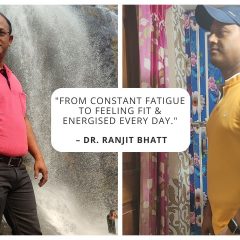
From Burnout to Balance: How Dr. Ranjit Reclaimed His Health

Dr Ranjit Bhatt has spent years tending to others. A practising doctor in Odisha, his days were packed with patients, surgeries, and emergencies. From the outside, it looked like a life lived in service. But on the inside, something wasn’t right. “I had no … [Read More...]

From Shimla’s Slopes to Chandigarh’s Sidewalks: Surinder Kaur Bhalla’s Journey from Chaos to Control

Some journeys start with a plan. Others begin with a stumble literally. Surinder Bhalla, a government professional, born and raised in the scenic hill town of Shimla, had always lived a life of movement. “In Shimla, you walked everywhere,” she reflects. “Walking was never an exercise. It was just life.” But after shifting to Chandigarh, […]

“I’ve Challenged Myself to Live 100 Years” – The Story of Chandubhai Savani’s Second Chance at Life

At 67, most people start slowing down. Not Chandubhai Savani. A resident of Surat, Chandubhai, thought life was on track. “My life was going well till I had my bypass surgery,” he says. That surgery, back in 2021, was a wake-up call.  Medication was routine, but exercise wasn’t. His diet? What he calls ‘normal.’ “I […]

Ananda Mukherjee Health Story

From Terminal Illness To Complete Wellness! Ananda Mukherjee Health Story

As we observe World Cancer Day under the powerful theme ‘United by Unique’ (2025-2027)**, we are reminded that every individual’s journey with cancer is distinct, yet united by shared resilience, hope, and the collective fight against this disease. This theme places people at the centre of care and their stories at the heart of the […]

  • HOME
  • HEALTHY LIVING
  • FITNESS
  • HEALTHY RECIPES
  • USER STORIES
  • KARMA
  • BUY GOQii

Copyright ©2016 GOQii