GOQii

Blog

  • HOME
  • HEALTHY LIVING
  • FITNESS
  • HEALTHY RECIPES
  • USER STORIES
  • KARMA
  • BUY GOQii

August 22, 2023 By Arooshi Garg 2 Comments

4 Ways to Naturally Heal Common Cold and Flu

4 Ways to Natural Heal Common Colds and FluIt’s that time of the year again when the ‘change in weather’ hits us all! Immunity levels suddenly drop, paving the way for cold, cough, flu, and body aches, which hamper our daily activities, work and physical well-being. What exactly is cold? Can you naturally heal common cold and flu? Let’s find out!
What is Common Cold?

You get a cold when a tiny living thing called a virus gets into your body. There are a hundred different types of viruses that can get you sick. Once a cold virus gets inside you, your immune system – the body’s defense against germs, launches a counter-attack. Your body’s response to the virus is what brings on the classic symptoms such as cough or a stuffed nose. The common cold is a viral, infectious disease that infects the upper respiratory system. It is also known as Acute Viral Rhinopharyngitis and Acute Coryza.

The viruses that cause common cold are contagious. You can contract them when someone who is infected sneezes, coughs, or shakes your hand. It can be spread by air droplets from coughs and sneezes and by touching infected surfaces. There are over 200 sub-types of viruses that can cause a cold with the Rhinovirus being the most common. Although colds occur more commonly during monsoon and winter, they can develop any time of the year. After a couple of weeks, at the most, your immune system fights off the illness and you should stop having symptoms.

Because there are more than 200 viruses that cause common cold, the human body can never build resistance to all of them. This is why colds are so common and often return. According to the CDC (Center for Disease Control and Prevention), adults get 2–3 colds per year, and children may have up to 12 per year.

How Can You Naturally Heal Common Cold and Flu? 

The symptoms of common cold are the body’s reaction to the cold virus. It triggers the release of chemicals, making the blood vessels leak, causing the mucous glands to work harder. So what’s the solution? With no long-term solution to this issue, the only way is to either avoid it or treat it! Here are 4 ways to naturally heal common cold and flu.

1. Steam Therapy

Steam therapy is absolutely natural.  Our bodies are made up of 50-60% water and steam is just droplets of water.  Quite simply put, you are renewing one of your body’s natural biochemical elements.

Steam therapy or steam inhalation, is the method of introducing warm, moist air into the lungs via the nose and throat. The prime benefit of breathing in moist, warm steam is that it may help ease the feeling of irritation and swollen blood vessels in the nasal passages. The moisture may also help thin the mucus in your sinuses, which allows them to empty more easily. This can return your breathing to normal.

Ways to Use Steam Therapy

  • Traditional: Boil a few cups of water, then pour the steaming water into a large bowl.  Place gently on a firm flat surface such as a kitchen table. Put a towel over your head to form a ‘tent’. Lean over with your face 15-20cm from the steam and inhale. Eucalyptus Oil, Lavender Oil and Holy Basil Leaves can be added for extra benefit.
  • Shower: Run a hot shower and inhale the steam – you can even use few drops of essential oils to help refresh and revitalize.
  • Personal Inhalers: An easy and portable way to enjoy steam therapy on the go. A great idea for the office or holidays, inhalers are also popular with public speakers, actors and singers to help open up the airways before a performance.

2. Gargle

Gargling several times a day with warm salt water can reduce swelling in the throat and loosen mucus. This helps in flushing out irritants or bacteria. Salt water creates a high-salt barrier and pulls out a lot of fluids from the tissues in the throat area. This helps in washing the virus out. The salt functions as a magnet for water. It’s good for symptomatic relief.

It’s best to use pure water because tap water often includes chlorine. One can also add Turmeric juice or powder to have an antiseptic effect. One can gargle every 4 hours if the cough/cold is troublesome.

3. Maintain Hydration Levels

Drinking plenty of fluids is one of the most important things you can do when you have a cold or flu. Because cold and flu symptoms like runny noses and sweating, which often accompanies fever, increase the amount of water your body loses. Dehydration might occur if your fluid intake is not increased to compensate.

Keeping your body hydrated also helps loosen mucus in your nose and relieve congestion. Staying hydrated ensures that the body can function properly and can defend itself more effectively against the cold or flu.

When you have a cold or flu, drink a minimum of 2 liters of fluid each day. Drink water or other healthy fluids whenever you are thirsty. Use your thirst as a guide to when and how much you should drink. If you are caring for a child who is over one year, ensure they drink a minimum of 90–120ml of fluid per hour. Babies under one year require at least 30–60ml fluid per hour. Pregnant women should increase their fluid intake to up to 2.50L per day.

Try these herbal concoctions:

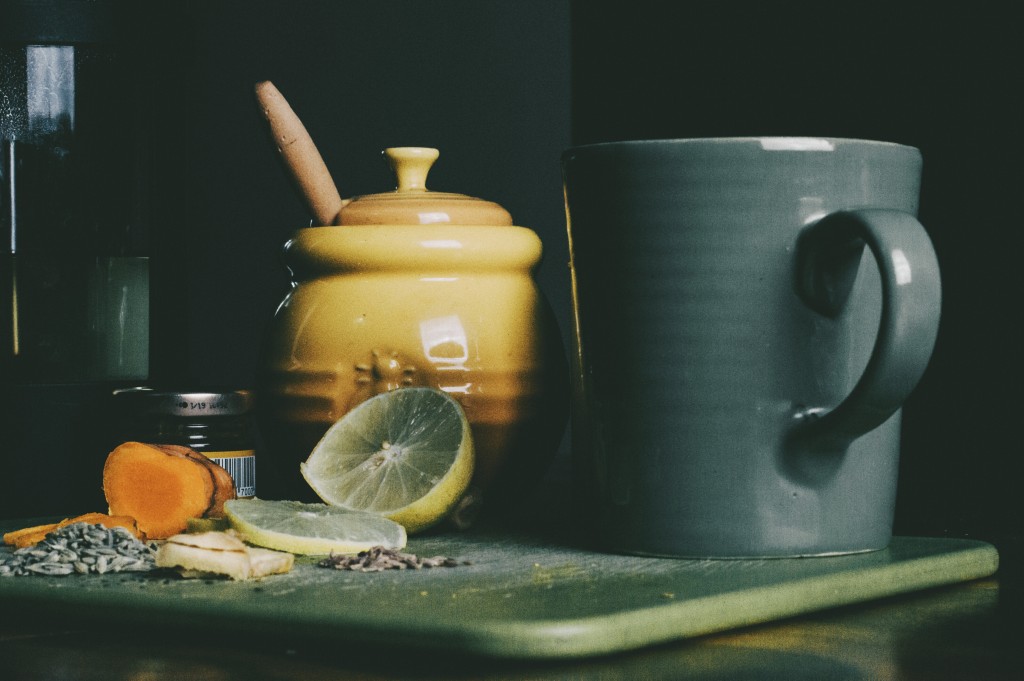
  • Herbal Tea: In a glass of boiling water, add a pinch of cinnamon, a few holy basil leaves, crushed ginger and a few crushed black peppercorns. Add honey and drink while hot.
  • Carom  Seeds Infused Water: Boil Carom Seeds in water. Strain and add Jaggery powder. This helps in relieving cough and congestion.
  • Garlic Concoction: Combine 2-4 cloves, chopped garlic and 3-4 slices of fresh ginger with 1 cup of water. Cover and let it steep for at least 20 minutes. Add honey and lemon to taste. Drink it while it is lukewarm.
  • Licorice Tea: Boil a 1/2inch piece of licorice + 1/2 tsp grated ginger and 1/2 spoon of cinnamon in 1 cup water for 10 mins. Strain and drink.
  • Raw Turmeric Drink: Boil a 1 inch piece of raw Turmeric or a 1/4 tsp of turmeric powder for 5 minutes. Add ginger juice/honey and consume.
  • Green Tea and Chamomile Tea
  • Soups: Vegetable soup/chicken soup/clear soup/chicken broth, lemon coriander soup, garlic spinach soup, tomato fennel soup or veg broth – all work well. A hot bowl of soup helps break up the congestion associated with both common cold and flu. The salt in the soup and its warmth can soothe a sore throat.

4. Rest

Rest is the best treatment! When you have a cold or flu, doctors recommend plenty of bed rest. When you limit mobility/take rest, your body has more resources to fight off your illness. Your body temperature goes up if you remain very active. Flu and cold organisms replicate at a faster rate when the body gets hotter. Also, if you head to the office when you are sick, the stress of work can make it hard for your body to attack the illness.

Do not over-exert yourself. You can do light intensity workout if you have the energy, your symptoms are mild such as just a runny nose, or if you have been fever free for more than 48 hours.

  • Avoid Exercise: When you have fever, body aches, cough, vomiting, diarrhea or chronic health concerns such as asthma /heart diseases.
  • Best Exercises: Walking, yoga or a light jog. All these stimulate you to take deep breaths and can help open up clogged passages.
  • Worst Exercises: Endurance runs, machines at gym and weight lifting.

We hope this information helps you naturally heal common cold and flu symptoms! Find more home remedies and articles on staying healthy during monsoon here. You can also get these tips, and more, directly from a GOQii Coach by subscribing for GOQii’s Personalized Health Coaching here.

Have a personal remedy of your own? Share it with us in the comments below!

#BeTheForce

June 27, 2023 By Shaeba Shaikh 3 Comments

5 Tips To Maintain A Healthy Gut This Monsoon

5 Tips To Maintain A Healthy Gut This MonsoonThe fresh, dewy weather, the chirping birds and the amazing smell of wet mud! The rainy season has its own charm but along with it, it also brings a host of diseases and infections. One such being a compromised Gut! The symptoms of a compromised gut may include an upset stomach, acidity, bloating, flatulence, gas, etc. making it crucial to maintain a healthy gut during this season.



How Can You Maintain A Healthy Gut This Monsoon? 

Here are 5 simple yet effective ways in which you can maintain a healthy gut: 

  1. Add Ginger/Garlic: These are the most commonly used herbs in our households and they provide us with an array of benefits. Raw Ginger/Garlic acts as a Prebiotic (food) for friendly gut bacteria, thereby improving gut health. Gingerol and Allicin present in them respectively, are found to have antibacterial and antifungal properties which keep infections at bay. Adding fresh herbs to your food/soups or drinking a warm cup of Ginger tea will be a great way to improve gut health.
  2. Eat Cooked Foods Over Raw Foods: Cooking has a bacterio-cidal (Bacteria killing) effect on the food prepared. Humidity provides a conducive environment for bacterial and fungal growth. Raw foods can be a host for bacterial growth. Hence, cooking foods rather than consuming them raw is a better alternative. Eg: Having a veg soup over a raw veg salad will be a better alternative.
  3. Eat Fermented Foods: Probiotics are the beneficial gut bacteria which work as the first line of defense against any infection. They also synthesize Short Chain Fatty Acids (SCFA) and Vitamin K in the body, thereby giving energy. Adding Idlis, dosas, homemade curds, Khimchi, Kefir, etc. to your diet will improve the number of probiotics and thereby improve gut health.
  4. Consume Fruits/Vegetables Immediately After Cutting: If vegetables or fruits are cut and left exposed to air, it can attract flies or insects which can infest the food. If this food is consumed, it can cause infections and affect gut health. Hence, eat the fruit/vegetable immediately after cutting/chopping it, or cover it if you wish to consume it later.  
  5. Eat Light: Foods such as rice, dal, legumes, soups, vegetables, fruits, Khichdi, etc. are lighter on the stomach and are easily digested and absorbed as opposed to the tempting fried Pakoras, vada pav, etc. which can cause bloatedness, acidity and/or flatulence.

Do keep these tips in mind and maintain a healthy gut for a healthy you! If these tips helped, let us know in the comments below.

You can find more gut health tips here or you can speak to an expert directly by subscribing to GOQii’s Personalised Health Coaching here.

#BeTheForce 

June 14, 2023 By Dr. Viral Thakkar 2 Comments

Is Blood Donation Really That Important?

blood donationPriyanka struggled to get blood for her father who was undergoing a surgery. The blood bank did not have her father’s blood type. As things got tougher, she tried to get in touch with other blood banks but none of them had it. In fact, she was ready to pay, but the blood banks did not have the blood type! Time was running out. She also started getting in touch with her friends but to no avail. Her friends all refused to donate blood due to their preconceived notions and myths.

Due to the shortage of blood, within a few hours, Priyanka lost her father. While she was inconsolable, what shattered her completely was the fact that in India, a country with such a large population, she could not garner enough blood for him, even though every human possesses it.

Timely, affordable access to screened blood is essential to the provision of safe surgical care. This depends on three key aspects:

  • Adequate volume of blood supply
  • Safe protocols for blood donation and transfusion
  • Appropriate regulation to ensure safe, equitable and sustainable distribution.

Different medical procedures require different components of blood. However, due to the lack of facilities, much of it goes to waste. Many low-income and middle-income countries experience a deficit in these categories, particularly in rural areas. This is coupled with lack of donor awareness and information.

The WHO recommends that the blood requirement of 1% of a country’s population be used as a ballpark estimate of its blood needs. By this measure, India was short of 1.9 million units of blood according to the data presented on March 2018.

One requires blood transfusions in various emergencies like women with complications during childbirth, anemia, accidents, complex medical surgeries, patient with thalassemia, sickle cell disease  or it is also used to make clotting factors for people with hemophilia. Among other issues coupled with low donor rate, the blood banks in India face a crisis of blood almost every year.

Physical Benefits of Blood Donation

1. Lower Risk of Heart Disease:  Blood donation may lower the risk of heart disease and heart attack since it reduces the blood’s viscosity. It also significantly lowers the total cholesterol and low-density lipoprotein cholesterol, protecting against cardiovascular disease.  Researchers note this is consistent with findings in other studies which found that blood donors had a lower risk of heart disease and heart attack.

According to a study, donating blood regularly may also lower iron stores which may reduce the risk of heart attack. The risk of heart attacks increase when the body stores a lot of iron.

2. Donating blood is an opportunity to get a basic health checkup done for free since the technician checks your:

  • Pulse
  • Blood pressure
  • Body temperature
  • Hemoglobin levels

This is an insight into your health! The blood is also checked for:

  • Hepatitis C
  • HIV
  • West Nile virus
  • Syphilis
  • Trypanosoma cruzi

Psychological Benefits

Donating blood has a feel good factor. It tends to improve one’s emotional well being. Hence, it might have an impact on stress reduction and providing a sense of belonging

Side Effects of Donating Blood

Post donating blood, one might feel

  • Nauseous, lightheaded or dizzy after donating blood. This usually settles in a  few minutes
  • There might be slight bleeding at the site of the pick, or you might develop a bruise. I believe it is all good since it is for a wonderful cause!

However, get in touch with a doctor or your blood center if you:

  • Still feel lightheaded, dizzy, or nauseous after drinking, eating, and resting
  • Develop a raised bump or continue bleeding at the needle site
  • Experience arm pain, numbness, or tingling

Where to Donate Blood

I personally suggest citizens to donate blood at a blood bank or nearby government run tertiary health centers. Otherwise, get in touch with Red Cross centers near your house and donate! Avoid donating at generic blood camps since one is not sure of the storage procedures. But ensure that you do donate!

People’s lives are usually at stake just because of myths people have on donating blood. Priyanka’s friends, even though educated, did not understand the importance of blood donation! Donating blood is giving the gift of life. As a human being, it is the duty of every person to donate blood at least once a year as a service to mankind! The decision to donate your blood can save a life, or even several if your blood is separated into its components — red cells, platelets and plasma — which can be used individually for patients with specific conditions.

May 24, 2023 By Divya Thampi 1 Comment

Making Sense of Schizophrenia

World Schizophrenia DaySchizophrenia is one of the most misunderstood mental disorders in our society. Hence, let’s start with what Schizophrenia is NOT:

  • It is not split personality or multiple personality disorder
  • People dealing with schizophrenia are not “Mad”
  • A vast majority of them are not violent and do not pose a threat to others

With that out of the way,

Let’s Understand What Schizophrenia Is:

It is a major psychotic illness that impacts thoughts, feelings and behavior of individuals. Schizophrenia is in fact, an umbrella like diagnosis used for categorizing a wide range of symptoms, all of which may or may not be experienced by people with this condition.

The experience of schizophrenia is unique to each person. It impacts about 1.1% of the world population i.e. about 51 million people worldwide and symptoms generally start showing up during adolescence or early adulthood.

The Symptoms Include:

  • Social withdrawal: The person may avoid spending time with others and may prefer being alone.
  • Loss of Interest & Enthusiasm: There may be reduced sense of enjoyment. Things and activities that used to interest them may no longer give them pleasure.
  • Disorganized Thinking: Here, the individual switches from one track of thought to another abruptly and without warning. This may seem bizarre and illogical to the listener, and is one of the defining features of schizophrenia.
  • Delusions: These are beliefs and impressions that seem disconnected with reality. For example, the person may believe that they are part of royalty or in a position of power with special abilities, or that people are plotting revenge against them, or that a catastrophe is about to occur, or that someone is in love with them.
  • Hallucination: This refers to seeing or hearing things that don’t exist, but for the person experiencing it, it feels very real and vivid. While it could involve the sense of sight, hearing or smell, the most common hallucinations include hearing voices speaking, murmuring or whispering.
  • Emotional Blunting: This refers to reduced expression of emotion on face, speech and bodily movements. It may appear that there is reduced interest and personal warmth in the individual dealing with schizophrenia.
  • Cognitive problems: They may have difficulty focusing on any one thing for longer durations and may quickly lose interest when someone is speaking to them. They may forget to do routine things which most of us take for granted and the lack of attention could impact their performance at work, studies and other areas.

Like mentioned earlier, people dealing with Schizophrenia may experience some of the symptoms and may not experience others. Also, the frequency and severity of the symptoms varies from person to person. There may be psychotic episodes where the severity of the symptoms may be more and continue to be severe for the duration of the episode.

World Schizophrenia Day The exact cause of schizophrenia has not yet been established. Studies indicate that a combination of genetics, environmental factors and brain chemistry contributes to the development of the disorder.

Schizophrenia is a chronic disorder that requires life-long management, just like in the case of diabetes and blood pressure. While there is no known cure for it, with the right treatment, symptoms can be managed and the individual can lead an independent, productive and meaningful life.

Early diagnosis, the right treatment and adhering to the treatment plan, go a long way in helping people manage the symptoms and live a functional life. A psychiatrist is qualified to diagnose the disorder and treatment is generally a combination of medication and therapy. In many cases the impacted individual may not have the insight that the changes in their behavior are due to a disorder and the family may have to take the initiative to take them for a diagnosis and treatment.

However, the stereotypes about this disorder compounded by the stigma around mental illnesses, often prevent families from reaching out for help, thus aggravating the condition. The impact of the ignorance of this illness is obvious in the statistics which show that 1 out of 10 people who deal with schizophrenia commit suicide and 4 out of 10, at the least attempt suicide.

World Schizophrenia DayBeing aware of the diagnosis of schizophrenia can be deeply distressing for the individual and they require a supportive environment for recovery. Due to fear, ignorance or awkwardness, friends, family members and others, may be overcautious or insensitive to people who may be dealing with the disorder.

If you have a colleague, friend or a known person who is dealing with the condition, educate yourself about the condition, talk to them, treat them normally and also let them know that you are there to help and support them. The illness can cause the individual to become socially withdrawn and isolated, hence it is important for them to have contact and connection with others.

Initiating conversations with the individuals dealing with schizophrenia, whether it is purely to discuss practicalities or for fostering a connection, is critical for them to be able to lead a normal life and overcome isolation.

  • « Previous Page
  • 1
  • …
  • 8
  • 9
  • 10
  • 11
  • 12
  • …
  • 24
  • Next Page »

Search

Recent Posts

  • The GOQii India Fit Report 2026: Unmasking the Gender Health Divide
  • International Dance Day: Why Dancing is the Ultimate Workout for Your Body and Mind
  • Summer Health Hazards You Need To Be Aware Of (And How to Prevent Them)
  • Sitting Too Much? Here’s How It’s Shortening Your Life
  • Everything You Need to Know About Malaria

Stay Updated

Archives

  • April 2026 (24)
  • March 2026 (18)
  • February 2026 (14)
  • January 2026 (14)
  • December 2025 (19)
  • November 2025 (15)
  • October 2025 (20)
  • September 2025 (6)
  • August 2025 (6)
  • July 2025 (12)
  • June 2025 (18)
  • May 2025 (16)
  • April 2025 (22)
  • March 2025 (28)
  • February 2025 (21)
  • January 2025 (25)
  • December 2024 (22)
  • November 2024 (23)
  • October 2024 (21)
  • September 2024 (23)
  • August 2024 (30)
  • July 2024 (21)
  • June 2024 (25)
  • May 2024 (28)
  • April 2024 (27)
  • March 2024 (27)
  • February 2024 (24)
  • January 2024 (21)
  • December 2023 (14)
  • November 2023 (10)
  • October 2023 (19)
  • September 2023 (22)
  • August 2023 (18)
  • July 2023 (22)
  • June 2023 (23)
  • May 2023 (24)
  • April 2023 (19)
  • March 2023 (23)
  • February 2023 (19)
  • January 2023 (15)
  • December 2022 (11)
  • November 2022 (15)
  • October 2022 (15)
  • September 2022 (12)
  • August 2022 (10)
  • July 2022 (17)
  • June 2022 (11)
  • May 2022 (10)
  • April 2022 (6)
  • March 2022 (6)
  • February 2022 (13)
  • January 2022 (11)
  • December 2021 (7)
  • November 2021 (3)
  • October 2021 (6)
  • September 2021 (3)
  • August 2021 (8)
  • July 2021 (7)
  • June 2021 (15)
  • May 2021 (16)
  • April 2021 (10)
  • March 2021 (7)
  • February 2021 (4)
  • January 2021 (4)
  • December 2020 (3)
  • November 2020 (4)
  • October 2020 (10)
  • September 2020 (3)
  • August 2020 (3)
  • July 2020 (2)
  • June 2020 (4)
  • May 2020 (10)
  • April 2020 (12)
  • March 2020 (10)
  • February 2020 (4)
  • January 2020 (4)
  • December 2019 (3)
  • November 2019 (7)
  • October 2019 (5)
  • September 2019 (4)
  • August 2019 (9)
  • July 2019 (9)
  • June 2019 (11)
  • May 2019 (4)
  • April 2019 (8)
  • March 2019 (8)
  • February 2019 (9)
  • January 2019 (8)
  • December 2018 (9)
  • November 2018 (3)
  • October 2018 (3)
  • September 2018 (5)
  • August 2018 (10)
  • July 2018 (6)
  • June 2018 (13)
  • May 2018 (8)
  • April 2018 (18)
  • March 2018 (9)
  • February 2018 (8)
  • January 2018 (15)
  • December 2017 (12)
  • November 2017 (19)
  • October 2017 (13)
  • September 2017 (15)
  • August 2017 (4)
  • July 2017 (8)
  • June 2017 (7)
  • May 2017 (6)
  • April 2017 (8)
  • March 2017 (6)
  • February 2017 (7)
  • January 2017 (9)
  • December 2016 (10)
  • November 2016 (7)
  • October 2016 (7)
  • September 2016 (7)
  • August 2016 (11)
  • July 2016 (9)
  • June 2016 (9)
  • May 2016 (12)
  • April 2016 (17)
  • March 2016 (17)
  • February 2016 (8)
  • January 2016 (6)
  • December 2015 (2)
  • November 2015 (9)
  • October 2015 (7)
  • September 2015 (9)
  • August 2015 (11)
  • July 2015 (9)
  • June 2015 (11)
  • May 2015 (9)
  • April 2015 (13)
  • March 2015 (8)
  • February 2015 (5)
  • January 2015 (12)
  • December 2014 (14)
  • November 2014 (11)
  • October 2014 (6)
  • September 2014 (13)
  • August 2014 (12)
  • July 2014 (6)
  • June 2014 (2)
  • May 2014 (7)
  • April 2014 (4)

From “Laddu Nawin” to Fit and Fierce: How a 25-Year-Old Insurance Advisor Shed 20 Kilos and Gained His Life Back

When 25-year-old Nawin Yadav from Hyderabad walked into his office every morning, he carried more than just his files and policy papers. He had the weight of fatigue, sluggish energy, and an ever-growing belly that was becoming the butt of jokes. “People … [Read More...]

“I’ve Challenged Myself to Live 100 Years” – The Story of Chandubhai Savani’s Second Chance at Life

At 67, most people start slowing down. Not Chandubhai Savani. A resident of Surat, Chandubhai, thought life was on track. “My life was going well till I had my bypass surgery,” he says. That surgery, back in 2021, was a wake-up call.  Medication was routine, but exercise wasn’t. His diet? What he calls ‘normal.’ “I […]

From Shimla’s Slopes to Chandigarh’s Sidewalks: Surinder Kaur Bhalla’s Journey from Chaos to Control

Some journeys start with a plan. Others begin with a stumble literally. Surinder Bhalla, a government professional, born and raised in the scenic hill town of Shimla, had always lived a life of movement. “In Shimla, you walked everywhere,” she reflects. “Walking was never an exercise. It was just life.” But after shifting to Chandigarh, […]

Ananda Mukherjee Health Story

From Terminal Illness To Complete Wellness! Ananda Mukherjee Health Story

As we observe World Cancer Day under the powerful theme ‘United by Unique’ (2025-2027)**, we are reminded that every individual’s journey with cancer is distinct, yet united by shared resilience, hope, and the collective fight against this disease. This theme places people at the centre of care and their stories at the heart of the […]

  • HOME
  • HEALTHY LIVING
  • FITNESS
  • HEALTHY RECIPES
  • USER STORIES
  • KARMA
  • BUY GOQii

Copyright ©2016 GOQii