
GOQii

Blog

  • HOME
  • HEALTHY LIVING
  • FITNESS
  • HEALTHY RECIPES
  • USER STORIES
  • KARMA
  • BUY GOQii

December 9, 2024 By Neha Goyal 2 Comments

Pistachios – Your Powerful Nutritional Punch!

Pistachios - Your Powerful Nutritional Punch!Pistachios are edible seeds of the pistachio tree, member of the cashew family. They are nutrient-packed nuts that can be enjoyed both as a healthy snack or as part of a delicious recipe. Available both in the shell (in-shell) or with their shell already removed (shelled), they’re typically sold roasted and salted, although unsalted options are available, as well as some flavoured varieties, too.

How Does It Give a Powerful Nutritional Punch?

  • Loaded with Vitamins and Minerals: Pistachios are a rich source of protein, dietary fibre, several minerals such as phosphorus, potassium, calcium, iron, magnesium, manganese, zinc, copper, sodium and selenium. It is also a good source of vitamins like vitamin A, K, C, E, B6, B1, B2, B3, B9, and B5.
  • Good Source of Antioxidants: They contain more antioxidants than most nuts and seeds, second only to walnuts and pecans. You can literally “see” the nutrients through the various colours in pistachio. The green and yellow colour of the actual nut comes from lutein and zeaxanthin. The thin purple skin surrounding the nut is loaded with anthocyanins, the same type of antioxidants found in grapes and cranberries.
  • Lowest in Fat: A serving of pistachios has 13 grams of fat, of which about 1.7 grams are saturated, 3.5 grams are polyunsaturated, and 7 grams are monounsaturated fats. Compared to most other tree nuts, pistachios are one of the lowest in fat.
  • Cholesterol-Free: Pistachios have the highest phytosterol content (214 milligrams per 100 grams) amongst nuts. Phytosterols come from plants and because they have a similar structure to cholesterol, they compete with cholesterol for absorption by the body, ultimately limiting the amount of cholesterol absorbed.
  • Compared to other tree nuts, pistachios have a higher essential amino acid ratio and the highest percentage of branched-chain amino acids. Pistachios are a great plant-based protein option for everyone, but especially those eating a vegetarian or vegan diet.

Health Benefits of Eating Pistachios

  1. Heart Health: A number of studies have shown that pistachios significantly reduced total cholesterol and the “bad” LDL-cholesterol levels while increasing the “good” HDL-cholesterol level. They may increase antioxidant concentrations, which is linked to improved dilation of blood vessels as a result of a reduction in inflammation.
  2. Weight Management: It may seem counterintuitive but eating pistachios—a high-fat, calorie-dense food—has actually been associated with weight management. Pistachios are rich in fiber and protein, both of which increase satiety by helping you feel full and eat less .
  3. Gut Health: Pistachios are high in fiber, which moves through our digestive system mostly undigested. But some types of fiber are digested by the good bacteria in your gut, acting as prebiotics. Gut bacteria then ferment the fiber and convert it into inflammation-fighting short-chain fatty acids, & also results in decreased the number of lactic acid bacteria. It also increases the number of butyrate-producing bacteria in the gut more than eating almonds does.
  4. Blood Sugar Control: Despite having a higher carb content than most nuts, pistachios have a low glycemic index, meaning they don’t cause a large spike in your blood sugar. Also rich in fiber and healthy fats, antioxidants, magnesium, carotenoids and phenolic compounds, which are beneficial for blood sugar control.
  5. Good For Eye Health: Pistachios are rich in antioxidants lutein and zeaxanthin, which are essential for eye health, as they reduce the chances of developing eye conditions, including age-related macular degeneration (AMD) and cataracts.
  6. Prevents Cellular Damage: As our cells grow older, they accumulate oxidative damage due to the presence of free radicals, which can cause considerable damage to cells. Pistachios, being rich in antioxidants, including lutein, beta-carotene, and gamma-tocopherol, has oxidative damage-fighting benefits which also play a key role in reducing the risk of disease, such as cancer.

How to Include Pistachios in Your Diet?

One of the simplest ways to enjoy pistachios is as a snack on their own. You can also throw chopped pistachios on your yogurt or morning oatmeal or use them as a crunchy topping for your salads. Pair pistachios with a piece of fruit for your afternoon snack, their fiber, fat and protein will keep you satisfied.

Takeaway

Pistachios are very nutritious. Regularly eating pistachios may be a good way to improve health and wellbeing. But stick to plain, unsalted pistachio nuts in their shells and avoid eating more than 30gm a day. Before you begin eating them, do consult with your doctor, nutritionist or dietitian.

For more on nutrition and healthy eating, check out Healthy Reads or speak to an expert by subscribing for GOQii’s Personalised Health Coaching here.

#BeTheForce 
November 25, 2024 By Tabassum Parveen 2 Comments

Food And Nutritional Guidelines for Healthy Kids

Healthy Food for ChildrenEvery parent, at some point, has faced an issue with food and children. On one hand, children can be quite fussy about the food they eat and on the other, they need the right food and nutrition. How do you bridge the gap? How can you feed your children nutritious food and get them to like it too?

While every child has his/her own preferences, we will share the essential food groups that must be included in your child’s diet as well as food options you can choose to get your child on the right side of healthy!

Carbohydrates and Proteins  

Grains are a good source of carbohydrates. They provide much-needed energy by children to carry out their day to day activities. We can get carbs from oatmeal, quinoa, millet, wheat bread and multigrain roti. This can be mixed with protein sources such as bread with peanut butter or almond butter, upma (cooked Semolina) with peanuts or Poha (flattened rice cooked) with a few dry fruits. Idli (steamed rice cakes) with sambar (vegetable curry) or roti (flat wheat bread) with dal (lentils) or beans or an egg sandwich can be opted for in order to make the meal nourishing.

Since proteins are the building blocks of the body, they promote growth and development. Kids need 1gm of protein for every kilogram he/she weighs. Few other examples of protein sources which you can opt for are peas, chicken, seafood, unsalted nuts and seeds.

Fruits

Fruits either in the morning or evening will give your kids a boost of vitamins, minerals and antioxidants. They will boost your child’s disease-fighting ability not just now but in the future as well. Keeping in line with the old adage, “An apple a day keeps the doctor away”, try to incorporate at least one fruit in their meal.

Although, there are certain rules of eating fruit. It should not be consumed along with a meal or immediately after meals. This is because the fruit might rot when mixed with any food you have eaten. It is safe to consume them at snack time. You can add a few pieces of fruit in his or her lunch box or can give it separately so they can eat it with mini intervals.

Vegetables

Encourage your kids to eat veggies. We understand that it is difficult to get your children to eat vegetables. An option that you could explore is smoothies. Some greens with a dash of any fruit they like, mixed with jaggery or honey can be a delicious treat! You could also make sprouts salad, peanut salad or chicken salad with a few vegetables like corn, tomatoes, peas, carrot or a vegetable liked by your child.

Good Fats

Try to incorporate some good fats. Fats help in the development of the brain, nerves and eyes. Examples of good fat are nuts like almonds, pista, cashew nuts and peanuts. Avoid these if your child is allergic to any nuts. You can also include seeds like chia, basil and mix them with fruit juice. More examples of good fats include avocados, olive oil and canola oil. The best way to consume oils is by sprinkling them on salads and nuts. Seeds can also be sprinkled with the aforementioned oils. You can also add them to any sandwich or toast.

Focus on reducing junk and fast food which are high in sugars, fats and low in important nutrients. They are easily available and tempting but they increase the risk of obesity, juvenile diabetes, asthma and allergies. Always try to make your kid’s plate colourful and attractive.

Dairy

Dairy plays an important role in keeping your little one’s bones strong. To ensure that your child has stronger teeth and bones, add one or two cups of milk to their diet. If your child does not like milk, go for Greek Yogurt which is available in many flavours. In case your child is lactose intolerant, go for almond milk, soy milk or opt for lactose-free milk.

Water Intake

Lastly, keep an eye over your child’s water intake. Water helps in various bodily functions such as absorption and digestion of food as well as excretion. Lack of water may leave your child dehydrated. Do not opt for carbonated beverages. Avoid tea or coffee as they don’t need it at such a tender age. Yes, you can give them tea but ensure that it is herbal like chamomile or green tea. You can also opt for healthier options such as a ginger turmeric drink which will reap positive health benefits for your child.

We hope the food and nutrition guidelines above help you and your growing child. Do leave your queries in the comments below! For more on Children’s Health, check out Healthy Reads or speak to an expert by subscribing for GOQii’s Personalised Health Coaching here.

#BeTheForce
November 23, 2024 By Mrinali Dwivedi Leave a Comment

Carrots, Beetroots and Tomatoes For Good Health!

carrots, beetroots and tomatoesStress, oily foods, greasy foods, smoke, smog and air pollution give rise to free radicals in our body. These free radicals cause cell damage and bring about aging in us. Antioxidants capture these free radicals and protect our cells and blood vessels from the damage caused by them. Thus, antioxidants are great for our skin, heart, metabolism and are anti-aging. Carrots, Beetroots and Tomatoes are among the vegetables that have the highest amount of these antioxidants. Carrots are rich in Vitamin A that helps build immunity and eyesight, while beetroots have blood pressure lowering properties and tomatoes are heart healthy and skin brightening!

The combination of carrots, beetroots and tomatoes helps in weight loss and curb constipation as well. The nutrients of these are best absorbed when taken in combination with each other. Though available throughout the year, they’re the best during winter! Here are some easy ways to make very low calories, yet satiating recipes with this wonderful combination. 

3 Healthy Recipes Using Carrots, Beetroots and Tomatoes

1. CBT Juice
Want to get rid of toxins? Employ Carrots, Beetroots and Tomatoes for a cleansing, detox drink that will flush out all those toxins! 

What you will need: 

  • Carrot – 1 medium sized 
  • Beetroot – 1 
  • Tomato – 1 
  • Mint – 5-6 leaves
  • Coriander – 2-3 twigs 
  • Rock salt and lemon juice – to taste 

Method:

  1. Peel and roughly chop the carrot, beetroot and tomato
  2. Blend them along with mint and coriander leaves in a blender/juicer
  3. Add some water if required while blending to bring a juice like consistency.
  4. Add lemon juice, rock salt and mix well

Important: Do not strain, or you’ll lose all the good fiber. Drink the juice within 15 minutes of preparation or else the juice gets oxidised and may lose most of its healthy goodness. The best time to have this is on an empty stomach in the morning – do not eat anything for the next half an hour. 

2. CBT Salad
Confused about what to eat for lunch? Want something that’s filling and low on calories? Let this CBT Salad be your go-to recipe! 

What you will need: 

  • Carrot – ½ cup grated
  • Beetroot – ½ cup 
  • Tomato – ½ cup finely chopped            
  • Onion – ¼ cup 
  • Coriander leaves – 1 tablespoon chopped
  • Mint leaves – 1 tablespoon 
  • Lemon juice – 1 tablespoon 
  • Sesame seeds – 1 teaspoon 
  • Salt to taste 
  • You can also add: Yoghurt, chopped walnuts, feta cheese

Method:

  • Mix and toss all the chopped and grated vegetables
  • Add lemon juice and salt.
  • Garnish with chopped coriander and mint leaves
  • You can pour a temper of curry leaves and mustard seeds over this salad
  • Yoghurt can be mixed with this salad
  • Add some finely chopped walnuts or sesame seeds for a nutty flavour and the good fats.
  • Feta cheese will add some first class protein

Important: Wash all the vegetables properly. Squeeze the lemon just before consuming the salad. Salad should be consumed within 20-25 minutes of preparation to avoid the nutrients getting oxidised. Start lunch with this salad as it will curb post-meal glucose excursion. Aids weight loss, as it is filling and has less calories.

3. Soup
In the mood for soup? Here’s something we’re sure you haven’t tried before! 

  • Tomatoes – 5 
  • Carrots – 2 
  • Beetroot – 1 
  • Ginger garlic paste – 1 tablespoon 
  • Cinnamon stick – 1 inch 
  • Bay leaf – 1 
  • Ghee (Clarified butter) – 1 tablespoon 
  • Salt, cumin powder, chili flakes, fresh pepper, dry herbs (oregano, basil, parsley) to taste.

Method:

  1. Pressure cook the carrots, beetroots and tomatoes with the cinnamon stick, bay leaf and enough water to soak for 2 whistles
  2. Cool down the boiled vegetables. Discard the cinnamon stick, bay leaf and the skin from the tomatoes. Puree the rest in a blender
  3. Heat 1 tablespoon ghee (clarified butter) in a medium pot. Add the ginger garlic paste and be sure to not burn it
  4. Carefully pour the puree in the pot
  5. Add cumin powder, salt, chili flakes and fresh ground pepper as per taste
  6. Bring to a boil on medium high heat, stirring the mixture a few times
  7. Sprinkle some dry herbs and serve hot! 

Important: The best time to have this soup is for a light dinner or a healthy evening snack. 

We hope you enjoy all the amazing benefits offered by this healthy combination of Carrots, Beetroots and Tomatoes! Do try out all the recipes and let us know in the comments below! For more on nutrition, check out Healthy Reads or ask a GOQii Coach by subscribing for Personalised Health Coaching here.

Eat healthy and #BeTheForce  

Disclaimer: The information provided in this blog is for general awareness and educational purposes only. It is not intended to replace professional medical advice, diagnosis, or treatment. Always consult a qualified healthcare provider for personalised medical guidance or concerns related to your health.

November 21, 2024 By Sohini Chakraborty Leave a Comment

Fat Facts That Are Easy to Digest

fat factsIt’s a shame that the word “Fat” has developed such a notorious reputation over the years with every health-conscious individual hellbent on removing that word from their dictionary. Before we condemn the word, we need to understand that the quality of fat is just as important as the quantity of it. So let’s bust some myths with these fat facts! 

Fat is one of the macro nutrients which provides 9kcal per gram and it is also essential for many functions of the body like solubilizing fat-soluble vitamins, secreting hormones, protecting our vital organs, etc. It is imperative to classify fats into broad categories. Now, let’s delve a little deeper into fat facts.  

1. Fats Which Are Bad For You

Here are the types of fats which are bad for your health.

  • Saturated Fat: Saturated fats are usually found in animal fats like beef, pork, lard, dark chocolate, full-fat dairy products like cheese, etc. They are usually solid at room temperature. Saturated fats were previously thought to cause cardiac problems but saturated fats are known to increase the amount of both HDL (good cholesterol) and LDL (bad cholesterol), hence it is safe to have saturated fats in lower amounts.
  • Trans-Fat: are produced during hydrogenation of fat when the oil is hardened to increase its shelf life. Apart from the natural Trans-fat present to some extent in dairies and meats, the artificial trans fat produced as a result of hydrogenation of fat is very harmful to health. It is found to increase the level of LDL cholesterol, thus increasing the risk of artery blockage and heart disease. It is also known to cause free radical damage to the body resulting in cancer. Trans-Fat is found in fried foods such as French fries, fried chicken, crackers, microwave popcorn, pizza, doughnut, cakes, muffins, pies, nuggets, sausages, non-dairy creamers, margarines, etc. Avoid this type of fat to stay healthy and free from diseases. Not more than 2% in a 2000kcal diet is permissible.
  • Cholesterol: is one of the most misunderstood subjects of this decade. Cholesterol is a wax like substance present in our body and can be obtained from many dietary sources like egg, meats and dairy products. It is necessary for bile formation and many other important functions of our body. According to recent studies, our total cholesterol level is not affected by entirely dietary intake as the body itself maintains the cholesterol balance. Then again, we should be careful about choosing the type of cholesterol to be consumed. There are 2 types of cholesterol: 
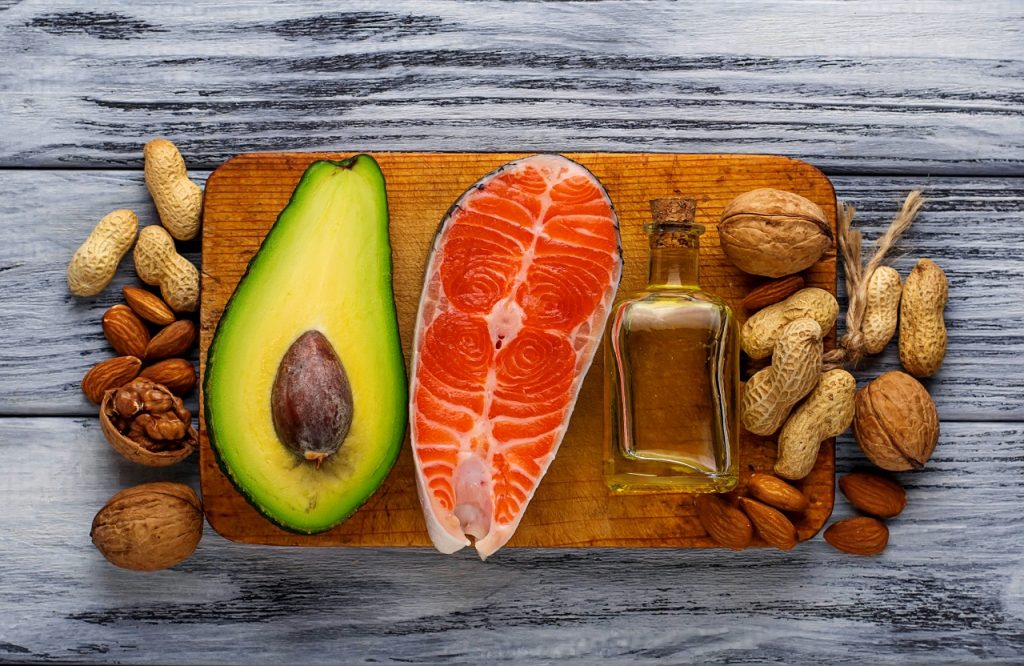
  1. HDL (High Density Lipoprotein): is very beneficial for the body as it removes plaques from the arteries and makes blood circulation smooth, preventing arterial block or damage. Its sources include olive oil, beans and legumes, high fiber fruits like avocado, chia seeds, nuts and fatty fish like salmon, trout, etc. These must be present in our diet.
  2. LDL (Low Density Lipoprotein), VLDL (Very Low Density Lipoprotein): are considered to be very harmful to the body. They create atherosclerotic plaque in the arteries, constricting proper blood circulation and cause the narrowing of blood vessels and heart blockage. Most of its sources include pork, beef, lamb meat, milk, butter, cream and cocoa butter. These should be present sparingly in our diet.

2. Fats Which Are Good For You

Let’s take a look at fats which are actually good for you!

  • Unsaturated Fats: contain double bonds in their structure and are known to be most beneficial among all. It may be of 2 types:
  • Monounsaturated Fats: These contain a single double bond and are known to be helpful in many ways. Evidently, they aid weight loss, reduce cardiac problems and decrease inflammation. Its major sources are avocado, nuts like almond, pistachios, vegetable oils like safflower oil, sesame oil, olive oil, canola oil, etc.
  • Polyunsaturated Fats: are considered as the most beneficial among the fat family. These fats are mainly of 2 types:
    1. Omega 3 Fatty Acids: are known to improve heart health, protect the nervous system, increase brain function, reduce anxiety and stress, improve eye function, reduce inflammation and help fight cancer as well. Sources include soya beans, chia seeds, walnuts, canola oil, salmon, sardine, etc. It’s good to have them as a part of daily diet.
    2. Omega 6 Fatty Acids: This type of fat helps balance good and bad cholesterol, it helps reduce asthma or respiratory problems especially in children, relieves diarrhea in children and is essential for improving brain function. Sources of Omega 6 Fatty Acids include hemp seed or hemp seed oil, flaxseed or flaxseed oil, walnuts, almond, avocado oil, eggs, tofu etc.

These fatty acids are called “essential” because they are not produced in the body and that is why they have to be present in our diet.

Considering all the fat facts listed above, we must focus more on the types of fat we are consuming. In a typical Indian diet, about 15-20% of total calories should come from fat and the most desirable proportion of Saturated Fat (SFA), Monounsaturated Fatty Acid (MUFA) and Polyunsaturated Fatty Acid (PUFA) must be 1:1.3:1.

We hope this article helps you make the best food choices. To know more about fat facts, bust more myths about food and nutrition, ask a GOQii Coach by subscribing for Personalised Health Coaching here.

Do leave your thoughts in the comments below! 

#BeTheForce 

  • « Previous Page
  • 1
  • …
  • 7
  • 8
  • 9
  • 10
  • 11
  • …
  • 66
  • Next Page »

Search

Recent Posts

  • ALL ABOUT VERTIGO!
  • PCOS and Anxiety: Discover Relief with the 54321 Technique
  • Navigating the Maze of Nutrition: Finding Clarity Amidst Confusion
  • Get children active and keep them healthy
  • What Gestational Diabetes Can Do To You & Your Unborn Child

Stay Updated

Archives

  • December 2025 (5)
  • November 2025 (15)
  • October 2025 (20)
  • September 2025 (6)
  • August 2025 (6)
  • July 2025 (12)
  • June 2025 (18)
  • May 2025 (16)
  • April 2025 (23)
  • March 2025 (23)
  • February 2025 (22)
  • January 2025 (26)
  • December 2024 (26)
  • November 2024 (25)
  • October 2024 (22)
  • September 2024 (24)
  • August 2024 (31)
  • July 2024 (21)
  • June 2024 (26)
  • May 2024 (31)
  • April 2024 (27)
  • March 2024 (29)
  • February 2024 (26)
  • January 2024 (25)
  • December 2023 (15)
  • November 2023 (11)
  • October 2023 (22)
  • September 2023 (22)
  • August 2023 (20)
  • July 2023 (22)
  • June 2023 (24)
  • May 2023 (24)
  • April 2023 (24)
  • March 2023 (23)
  • February 2023 (20)
  • January 2023 (16)
  • December 2022 (12)
  • November 2022 (15)
  • October 2022 (15)
  • September 2022 (12)
  • August 2022 (10)
  • July 2022 (17)
  • June 2022 (11)
  • May 2022 (10)
  • April 2022 (6)
  • March 2022 (6)
  • February 2022 (13)
  • January 2022 (12)
  • December 2021 (7)
  • November 2021 (3)
  • October 2021 (6)
  • September 2021 (3)
  • August 2021 (8)
  • July 2021 (7)
  • June 2021 (15)
  • May 2021 (16)
  • April 2021 (10)
  • March 2021 (7)
  • February 2021 (4)
  • January 2021 (4)
  • December 2020 (3)
  • November 2020 (4)
  • October 2020 (10)
  • September 2020 (3)
  • August 2020 (3)
  • July 2020 (2)
  • June 2020 (4)
  • May 2020 (10)
  • April 2020 (12)
  • March 2020 (10)
  • February 2020 (4)
  • January 2020 (4)
  • December 2019 (3)
  • November 2019 (7)
  • October 2019 (5)
  • September 2019 (4)
  • August 2019 (9)
  • July 2019 (9)
  • June 2019 (11)
  • May 2019 (4)
  • April 2019 (9)
  • March 2019 (8)
  • February 2019 (9)
  • January 2019 (8)
  • December 2018 (9)
  • November 2018 (3)
  • October 2018 (3)
  • September 2018 (5)
  • August 2018 (10)
  • July 2018 (6)
  • June 2018 (13)
  • May 2018 (8)
  • April 2018 (18)
  • March 2018 (9)
  • February 2018 (8)
  • January 2018 (15)
  • December 2017 (12)
  • November 2017 (19)
  • October 2017 (13)
  • September 2017 (15)
  • August 2017 (4)
  • July 2017 (8)
  • June 2017 (7)
  • May 2017 (6)
  • April 2017 (8)
  • March 2017 (6)
  • February 2017 (7)
  • January 2017 (9)
  • December 2016 (10)
  • November 2016 (7)
  • October 2016 (7)
  • September 2016 (7)
  • August 2016 (11)
  • July 2016 (9)
  • June 2016 (9)
  • May 2016 (12)
  • April 2016 (17)
  • March 2016 (17)
  • February 2016 (8)
  • January 2016 (6)
  • December 2015 (2)
  • November 2015 (9)
  • October 2015 (7)
  • September 2015 (9)
  • August 2015 (11)
  • July 2015 (9)
  • June 2015 (12)
  • May 2015 (9)
  • April 2015 (13)
  • March 2015 (8)
  • February 2015 (5)
  • January 2015 (12)
  • December 2014 (14)
  • November 2014 (11)
  • October 2014 (6)
  • September 2014 (13)
  • August 2014 (12)
  • July 2014 (6)
  • June 2014 (2)
  • May 2014 (7)
  • April 2014 (5)

From “Laddu Nawin” to Fit and Fierce: How a 25-Year-Old Insurance Advisor Shed 20 Kilos and Gained His Life Back

When 25-year-old Nawin Yadav from Hyderabad walked into his office every morning, he carried more than just his files and policy papers. He had the weight of fatigue, sluggish energy, and an ever-growing belly that was becoming the butt of jokes. “People … [Read More...]

“I’ve Challenged Myself to Live 100 Years” – The Story of Chandubhai Savani’s Second Chance at Life

At 67, most people start slowing down. Not Chandubhai Savani. A resident of Surat, Chandubhai, thought life was on track. “My life was going well till I had my bypass surgery,” he says. That surgery, back in 2021, was a wake-up call.  Medication was routine, but exercise wasn’t. His diet? What he calls ‘normal.’ “I […]

From Shimla’s Slopes to Chandigarh’s Sidewalks: Surinder Kaur Bhalla’s Journey from Chaos to Control

Some journeys start with a plan. Others begin with a stumble literally. Surinder Bhalla, a government professional, born and raised in the scenic hill town of Shimla, had always lived a life of movement. “In Shimla, you walked everywhere,” she reflects. “Walking was never an exercise. It was just life.” But after shifting to Chandigarh, […]

Ananda Mukherjee Health Story

From Terminal Illness To Complete Wellness! Ananda Mukherjee Health Story

As we observe World Cancer Day under the powerful theme ‘United by Unique’ (2025-2027)**, we are reminded that every individual’s journey with cancer is distinct, yet united by shared resilience, hope, and the collective fight against this disease. This theme places people at the centre of care and their stories at the heart of the […]

  • HOME
  • HEALTHY LIVING
  • FITNESS
  • HEALTHY RECIPES
  • USER STORIES
  • KARMA
  • BUY GOQii

Copyright ©2016 GOQii