GOQii

Blog

  • HOME
  • HEALTHY LIVING
  • FITNESS
  • HEALTHY RECIPES
  • USER STORIES
  • KARMA
  • BUY GOQii

Search Results for: yoga

September 3, 2021 By Srini Leave a Comment

Breathing #3: Breath Bank

breath bank

A Tamil adage says that everyone gets a certain number of breaths deposited in their account on birth. You cannot increase or decrease it – but you can efficiently use the remaining balance and get more out of it. Do you know how to get more out of your breath? How to get a higher ROI? Let’s start with the number of breaths per minute. 

How Do You Measure The Breaths in Your Breath Bank? 

Measure the number of breaths per minute at 4 fixed time slots in a day and do it over one or two weeks and then get the average breath per minute. If the AVERAGE number is more than 12, then you are not very efficient in using your breath balance. If you are more than 18, then you are hyperventilating!

Hyperventilation depletes Co2 from your body. The interesting fact is that Co2 is critical for oxygen absorption in the cells for effective burning of the fuel. If you are hyperventilating, then there is Co2 imbalance and even though you may have a 97% oxygen saturation in your blood, the Oxygen just floats around without being effectively used in burning the fuel.

So, to use Oxygen effectively, you need a good balance of Co2 in your body. Also, as much as you hyperventilate while under stress, the other way is also true. When you hyperventilate, the body assumes you are under stress. You are chronically under stress AND you are not burning the fuel effectively… all due to a simple issue of incorrect breathing!

Slow breathing keeps the right balance between Carbon Dioxide and Oxygen in the body and remember both are needed for the efficient functioning of the body.

“Mind is the King of the senses and Breath is the King of the Mind”, says BKS Iyengar, a renowned Yoga Guru. James Nestor, says that an ideal breathing is 5.5 seconds inhale and 5.5 seconds exhale – so this is 11 seconds and your average number of breaths would also be 5.5 per minute.

Most of the religious prayers/chants/choirs were designed to make you breathe at a rate of around 5.5 to 6 per minute. Such prayer, no wonder, has magical curative powers.

You can practice slow breathing anywhere, any time and privately. Just be conscious of how you breathe! In fact, between every activity, meeting or zoom call, take 5 minutes off and practice conscious slow and deep abdominal breathing, you will do wonders in terms of your productivity.

“If you want to live, follow Eastern Medicine (Yoga, Ayurveda) and if you do not want to die, then follow Western Medicine” – Trainer Brian MacKenzie

This subject is still developing and research is still coming through under the Western Medicine and has been in practice over thousands of years in India by our Yogis.

Western breathing experts like Dr Buteyko, James Nestor and Anders Olsson, etc. have gone on record on the benefits of slow and rhythmic breathing. In fact, Dr Buteyko observes that 80% of the population is chronically hyperventilating!

Breathing is the only tool available to humans to connect to (and influence) their autonomous nervous system and therefore mind. If you develop awareness and therefore, better understanding, you can make breathing more efficient and positively impact your mind. Breathing is the MOST POWERFUL tool humans have. Fascinating isn’t it. But Simple. I average around 8 breaths per minute now and I have personally benefited significantly in terms of overall energy through the day, feeling good and less stressed. 

Practices To Help You Achieve Slow Breathing 

  • Being Conscious of breathing
  • Practicing Pranayama – Kapal Bathi, Ujjayi, Pursed lip breathing, Bhastrika
  • Breathing using the abdomen than the chest
  • Tummo ( Tibetan technique) or Wim Hof method

I am placing a customary caveat for the reader that this is not medical advice and you should consult your doctor. And unfortunately, the western medical system holds that less than 10 breaths per minute is a disease and it has to be cured.

If you want more details, medical and scientific evidence, please read more at https://breathe.ersjournals.com/content/13/4/298 

Further read books/podcasts of James Nestor, Brian Mackenzie, Rangan Chatterjee, Anders Olsson

We hope this article helps you improve your breath bank balance. For more on breathing, check out Healthy Reads. To get breathing exercises from your GOQii Coach, subscribe to personalized coaching here: https://goqiiapp.page.link/bsr  

Breathe Right & #BeTheForce 
August 27, 2021 By Srini Leave a Comment

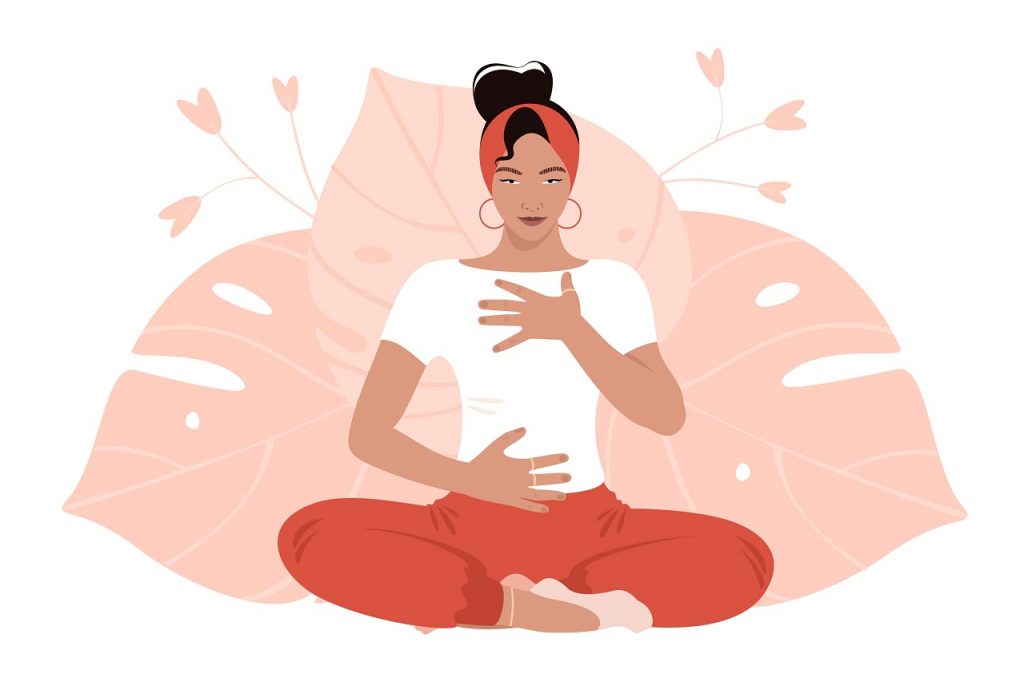
Breathing #2: Why Is Abdominal Breathing Important?

abdominal breathing

In my previous article, I spoke about breathing through the nose. In this article, let me take it a bit deeper and speak about abdominal breathing. It is observed that many of us breathe through our chest and our breathing is therefore shallow. 

This issue compounds when you are awake, in the office, working on something important, tense, or under stress and hyperventilate. Shallow breathing compounded with hyperventilation leads to SUBOPTIMAL gas exchange. 

We take so much care about nutrition and food, but we need to know how to burn it. Same as filling Premium Petrol, as well as knowing optimal driving techniques! Unburnt or sub-optimally burnt food is responsible for weight gain, diabetes and so many chronic lifestyle illnesses. 

The goal of good nutrition is that it is absorbed well and burnt well. So, right breathing is equally, if not more, important than eating the right food. 

Take this simple test to know how you breathe

  • Lie on your back with your knees bent
  • Place one hand or a small book on your chest and the other on your stomach.
  • Breathe normally, observe what is rising – the chest or the abdomen 

Observe which is rising up and down. If it is your chest, you are shallow breathing and if it is the abdomen more than the chest, you may be closer to what is the right breathing.

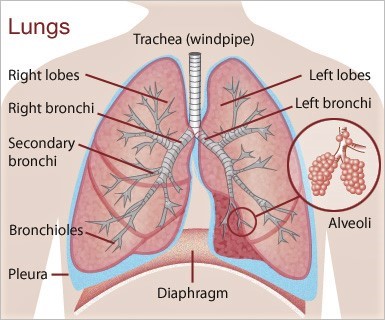
See the picture below to understand why this is important

Lungs are narrow at the top and wide at the bottom – sort of “Inverted V” shape. The blood flow at the bottom of the lungs is approx. 10 times than the top.

Most of the bunch of grapes (alveoli) which are the instruments of gas exchange (topic to be explained later) is at the bottom of the lungs. Now, if you breathe through your chest, you are leaving more than 60% of your lung’s “installed capacity” unused. 

CFOs will know that unused installed capacity is costly! Diaphragmatic breathing gives you High Return on Inhaled Air (investment)! Simple. You can observe animals breathing, for example observe a Cow – they breathe through the abdomen only. Somewhere in evolution, the modern human has forgotten the art of breathing.

The Additional Advantages Of Abdominal Breathing 

  • Abdomen movement helps the movement of lymphatic fluids – unlike the blood, there is no pump for lymphatic fluids. Only muscular movement acts as a pump
  • Abdomen movement also continuously massages the parts of stomach like liver and intestine
  • Abdominal movement makes it easy and lighter for your heart to pump blood

Shallow breathing leaves air behind in the lower parts of the lung, making it vulnerable to easy infection. So, why don’t we use the abdomen for breathing and benefit from optimal gas exchange which in turn helps in supplying efficient fuel (oxygen) to burn the food you are eating?

If you want to make diaphragmatic breathing into a habit, you can follow Conscious Breathing classes by Anders Olsson or Wim Hof method (which I follow) or from any Yoga Guru.

We hope this article on abdominal breathing helps you. Do leave your thoughts in the comments below. For more on breathing, check out Healthy Reads or get these tips directly from your GOQii Coach by subscribing to personalized coaching here: https://goqiiapp.page.link/bsr 

Breathe Right & #BeTheForce 
August 15, 2021 By Akanksha Khullar 1 Comment

How To Identify a Weak Immune System and Fix It

weak immune systemThe immune system is a complex system of blood cells and organs and it protects the body from harmful germs that can cause illness. If a person is frequently getting infections, they might have a weak immune system. In some cases, people have a weak immune system which makes them prone to frequent infections. White blood cells, antibodies, and other components including organs and lymph nodes make up the body’s immune system. 
How to Identify a Weak Immune System?  

You can understand if you have low immunity when you come across the following symptoms:

  • Fatigue: Feeling extremely tired, like you do when you have the flu, could mean something’s going on with your body’s defences
  • Repeated Infections: These may include infections like chronic sinus infections, ear infections, pneumonia, etc.
  • Frequent cold, cough and flu
  • Digestion issues like frequent diarrhoea, gas or constipation

Other symptoms that might show up are:

  • Autoimmune disorders like type 1 diabetes, rheumatoid arthritis, lupus etc.
  • Inflammation of the internal organs
  • Blood disorders or abnormalities such as anaemia
  • Growth and developmental delays in infants and children
  • Skin problems like rashes, itchy, dry or red skin or even white patchy skin.

How Can You Fix It? 

People who have a weak immune system can take several steps to maximize their chances of staying healthy and avoiding infections.

1. Good hygiene
Good hygiene goes a long way in protecting you from several diseases and infections. This includes washing your hands: 

  • Before, during, and after preparing meals and snacks
  • Before eating
  • After blowing the nose, sneezing or coughing
  • Before and after treating a cut or another open skin wound
  • After having contact with someone who is unwell
  • After using or helping a child use the bathroom
  • After changing a diaper
  • After touching an animal or animal food or waste
  • After touching garbage

2. Avoid people who are sick
If you have a weak immune system, avoid being too close to someone who has a cold or any other infection. Viruses can spread from person to person through contact. They can also spread via water droplets that the person expels into the air while coughing or sneezing.

3. Disinfect household objects
Germs that have the potential to cause illnesses can live on some surfaces at home such as doorknobs and remote controls. A person can reduce the number of germs that inhabit these areas by disinfecting them regularly.

4. Manage Stress
Stress can weaken the immune system and make a person susceptible to illness. Manage your stress effectively by practicing yoga, meditation or pursuing hobbies and keep your mind healthy to stay away from illnesses. 

5. Get enough Sleep
Being deprived of sleep has a similar effect on the body as stress. Lack of sleep disrupts the normal production of white blood cells, a crucial component of the body’s immune system. Therefore, adults should aim for at least 7 hours of sleep per day,

6. Eat Healthy
Eating a healthy, balanced diet can improve a person’s overall well-being. If you have a weak immune system, go for a diet which is rich in vegetables and fruits as it will provide you with plenty of antioxidants and nutrients.

7. Exercise Regularly
Regular exercise keeps the body healthy. In addition to strengthening the body, exercise facilitates the release of endorphins which reduce stress levels. However, those with weak immune systems should be careful not to push themselves too hard as this can weaken the immune system further.

8. Consider Supplements
Some vitamins and minerals affect the immune system. For instance, a person with Vitamin C deficiency can have weakened immunity. Other vitamins and minerals that can affect immune function include vitamin A, Vitamin D, Vitamin E, iron, folic acid and zinc. 

Amid this COVID-19 pandemic, you can take additional precautions and follow the guidelines set by WHO. So focus on building your immunity and stay indoors! 

For more topics on building immunity, home workouts and medical advice, tune in to GOQii Play.

To get more advice on building immunity and healthy living directly from a certified GOQii expert, subscribe to personalized coaching here: https://goqiiapp.page.link/bsr 

#BeTheForce 

August 4, 2021 By Dr. Viral Thakkar Leave a Comment

9 Steps For Building and Mainting Immunity

build immunity

In the wake of the ongoing pandemic, maintaining one’s immunity has become a must. However, even if not for any random virus flying off, one’s immunity is the biggest strength against any onslaught of a virus and bacteria. Taking care of one’s self is a lifestyle. It must be down as a means to protect one’s body. I’m writing this article touching on a few aspects of maintaining one’s immunity. Since these worked for me, I believe it might work for you all as well. Being healthy has to be imbibed in one’s lifestyle just so no virus or bacteria can affect you. 

How Do You Build Immunity?

If only maintaining immunity was as easy as popping a pill, life would have been a bed of roses.  But it’s not! You have to work for it to earn it. One’s immunity depends on the way one is born, to one’s genes! But, we are talking about factors which are in one’s hands. The thumb rule is to listen to your body, it never lies. And, most of what your grandmother said was right in terms of health… keeping all that aside, here are a few quick tips to build up your immunity.

  1. No Stress & Yes to Happiness: Stress can wreck any organ in your body. Let go and be happy. Remember, if you are stressed over Corona, you are at risk. A happy and positive person is less likely to fall sick usually.
  2. Maintain Personal Hygiene: Wash your hands with soap before and after eating, bathe, wear breathable clothing and follow all the instructions in basic science textbooks of a 2-3 class child. It will help to prevent a lot of infections!
  3. Seasonal Vegetables and Fruits: Every area is known for its own vegetables and fruits as per the season. For instance, the Saag in North India is awesome during winters. It’s a must have. And yet you get it during summers in some regions. That’s a big no! Watermelon is a fruit of the summer. It is best to have it at that time.
  4. Home cooked food is the best because there is no adulteration. It should be cooked by a healthy person who has no infectious disease, be it your maid, or a house member. I strongly believe that basic hygiene like washing hands before touching food, washing the vegetables before cutting, etc. must be followed. In fact, these are taught in our curriculum in primary sections!
  5. Back to Basics: Consume natural food, have good nutrition and avoid unnecessary medication. By natural food I mean raw vegetables and fruits. Refer to your doctor/nutritionist for your diet plan if you are unable to do so.
  6. Daadi maa ke nuskhe (Grandmother’s Secret Recipes) might just work better than medications for basic ailments like cough and cold. See what works best for your body. As a child, I remember my mother giving me ginger juice mixed with honey every day in the morning during winters. I hardly had a runny nose during childhood. When I grew up, teenage took over and the orthodox medicine said that medicine is the best cure, but it didn’t work for me. Even at this age, ginger juice and honey is my prevention from cough and cold and I’ve no idea why it works for me! Try and find what your remedy is!
  7. With respect to air borne  infections, we need to protect our body, especially the orifices from where we breathe. So for the nose, take very little cow ghee/castor oil/any kachhi ghanni (cold pressed) oil and rub it inside your nostrils. The thick ghee captures the dirt and germs in the nostrils itself. For your skin, apply virgin pressed coconut oil.
  8. Sun is a Friend: Basking in the morning sun is good. Don’t overdo it but remember that the sun is the best and the strongest natural disinfectant. So if you do not have a medical condition, and if the doctor has not advised otherwise, make the sun your friend. I do not deny the ugliness of buildings since people dry their clothes outside, but remember one’s clothes are best disinfected in the sun.
  9. Exercise: Are you a yoga person, jogger, swimmer or gymmer? See what suits your body and get into shape. Pranayam though must be followed by all.

We hope this helps you build and maintain your immunity against the coronavirus. For more articles on immunity, nutrition and the coronavirus, check out Healthy Reads. To get these tips directly from your GOQii Coach, sign up for personalized coaching here: https://goqiiapp.page.link/bsr 

Stay safe, stay healthy and #BeTheForce 

  • « Previous Page
  • 1
  • …
  • 39
  • 40
  • 41
  • 42
  • 43
  • …
  • 64
  • Next Page »

Search

Recent Posts

  • 6 Health Benefits of Playing Sports
  • Foods to Manage Blood Sugar Naturally: A Complete Guide to Better Blood Sugar Control
  • The Lazy Person’s Guide to Staying Healthy: 5 Micro-Habits That Take Less Than 2 Minutes
  • Healthy Eating: Comforting Chilli Bean Soup Recipe for the Monsoon
  • The Truth About the ‘Beer Belly’: What Alcohol Really Does to Your Metabolism

Stay Updated

Archives

  • August 2026 (8)
  • July 2026 (25)
  • June 2026 (22)
  • May 2026 (20)
  • April 2026 (24)
  • March 2026 (18)
  • February 2026 (14)
  • January 2026 (14)
  • December 2025 (19)
  • November 2025 (15)
  • October 2025 (20)
  • September 2025 (6)
  • August 2025 (6)
  • July 2025 (9)
  • June 2025 (18)
  • May 2025 (16)
  • April 2025 (22)
  • March 2025 (26)
  • February 2025 (21)
  • January 2025 (25)
  • December 2024 (22)
  • November 2024 (22)
  • October 2024 (20)
  • September 2024 (22)
  • August 2024 (27)
  • July 2024 (15)
  • June 2024 (23)
  • May 2024 (26)
  • April 2024 (27)
  • March 2024 (27)
  • February 2024 (23)
  • January 2024 (21)
  • December 2023 (14)
  • November 2023 (10)
  • October 2023 (19)
  • September 2023 (21)
  • August 2023 (16)
  • July 2023 (16)
  • June 2023 (21)
  • May 2023 (20)
  • April 2023 (19)
  • March 2023 (23)
  • February 2023 (19)
  • January 2023 (15)
  • December 2022 (11)
  • November 2022 (15)
  • October 2022 (15)
  • September 2022 (12)
  • August 2022 (9)
  • July 2022 (17)
  • June 2022 (11)
  • May 2022 (10)
  • April 2022 (6)
  • March 2022 (6)
  • February 2022 (13)
  • January 2022 (11)
  • December 2021 (7)
  • November 2021 (3)
  • October 2021 (6)
  • September 2021 (3)
  • August 2021 (8)
  • July 2021 (7)
  • June 2021 (15)
  • May 2021 (16)
  • April 2021 (10)
  • March 2021 (7)
  • February 2021 (4)
  • January 2021 (4)
  • December 2020 (3)
  • November 2020 (4)
  • October 2020 (10)
  • September 2020 (3)
  • August 2020 (3)
  • July 2020 (2)
  • June 2020 (4)
  • May 2020 (10)
  • April 2020 (12)
  • March 2020 (10)
  • February 2020 (4)
  • January 2020 (4)
  • December 2019 (3)
  • November 2019 (7)
  • October 2019 (5)
  • September 2019 (4)
  • August 2019 (9)
  • July 2019 (9)
  • June 2019 (11)
  • May 2019 (4)
  • April 2019 (8)
  • March 2019 (8)
  • February 2019 (9)
  • January 2019 (8)
  • December 2018 (9)
  • November 2018 (3)
  • October 2018 (3)
  • September 2018 (5)
  • August 2018 (10)
  • July 2018 (6)
  • June 2018 (13)
  • May 2018 (8)
  • April 2018 (17)
  • March 2018 (9)
  • February 2018 (8)
  • January 2018 (15)
  • December 2017 (12)
  • November 2017 (19)
  • October 2017 (13)
  • September 2017 (15)
  • August 2017 (4)
  • July 2017 (8)
  • June 2017 (7)
  • May 2017 (6)
  • April 2017 (8)
  • March 2017 (6)
  • February 2017 (7)
  • January 2017 (9)
  • December 2016 (10)
  • November 2016 (7)
  • October 2016 (7)
  • September 2016 (7)
  • August 2016 (11)
  • July 2016 (9)
  • June 2016 (9)
  • May 2016 (12)
  • April 2016 (17)
  • March 2016 (17)
  • February 2016 (8)
  • January 2016 (6)
  • December 2015 (2)
  • November 2015 (9)
  • October 2015 (7)
  • September 2015 (9)
  • August 2015 (11)
  • July 2015 (9)
  • June 2015 (11)
  • May 2015 (9)
  • April 2015 (13)
  • March 2015 (8)
  • February 2015 (5)
  • January 2015 (12)
  • December 2014 (14)
  • November 2014 (11)
  • October 2014 (6)
  • September 2014 (13)
  • August 2014 (12)
  • July 2014 (6)
  • June 2014 (2)
  • May 2014 (7)
  • April 2014 (4)

From Burnout to Balance: How Dr. Ranjit Reclaimed His Health

Dr Ranjit Bhatt has spent years tending to others. A practising doctor in Odisha, his days were packed with patients, surgeries, and emergencies. From the outside, it looked like a life lived in service. But on the inside, something wasn’t right. “I had no … [Read More...]

From Shimla’s Slopes to Chandigarh’s Sidewalks: Surinder Kaur Bhalla’s Journey from Chaos to Control

Some journeys start with a plan. Others begin with a stumble literally. Surinder Bhalla, a government professional, born and raised in the scenic hill town of Shimla, had always lived a life of movement. “In Shimla, you walked everywhere,” she reflects. “Walking was never an exercise. It was just life.” But after shifting to Chandigarh, […]

“I’ve Challenged Myself to Live 100 Years” – The Story of Chandubhai Savani’s Second Chance at Life

At 67, most people start slowing down. Not Chandubhai Savani. A resident of Surat, Chandubhai, thought life was on track. “My life was going well till I had my bypass surgery,” he says. That surgery, back in 2021, was a wake-up call.  Medication was routine, but exercise wasn’t. His diet? What he calls ‘normal.’ “I […]

Ananda Mukherjee Health Story

From Terminal Illness To Complete Wellness! Ananda Mukherjee Health Story

As we observe World Cancer Day under the powerful theme ‘United by Unique’ (2025-2027)**, we are reminded that every individual’s journey with cancer is distinct, yet united by shared resilience, hope, and the collective fight against this disease. This theme places people at the centre of care and their stories at the heart of the […]

  • HOME
  • HEALTHY LIVING
  • FITNESS
  • HEALTHY RECIPES
  • USER STORIES
  • KARMA
  • BUY GOQii

Copyright ©2016 GOQii