GOQii

Blog

  • HOME
  • HEALTHY LIVING
  • FITNESS
  • HEALTHY RECIPES
  • USER STORIES
  • KARMA
  • BUY GOQii

Search Results for: weight

October 26, 2015 By Parwage Alam 2 Comments

Exercises for overweight and obese people

o4 (1)


Everyone is busy in today’s life – with a packed schedules, calendars have no column for relaxation or time for doing anything good. This also translates into “No Time” for eating healthy food and for satisfying hunger we make do with all the JUNK food that is available. One of the reasons is that it is a ready to eat option. Ultimate result of eating junk food can get you one title- OBESE. With the effort and taste of 4-5 years when we reach the level of being OBESE, it is   then that we realize something is going wrong with our body. We start visiting a doctor multiple times and also start searching for options that will help us to reduce our weight and get back to on track.

o2 (1)Losing weight is hard for anyone but, not impossible if one is willing to put in that extra effort, dedication and have patience. Exercise is the key to creating a physically, mentally, and emotionally healthier body. However, at the same time some of the moves may be too painful or nearly impossible for those carrying extra weight.


With the help of Junk food restaurants, the new generation of overweight and obese adults is a plenty. If we really want our children to have healthy future with proper fitness than childhood nutrition and exercise intervention needs to be implemented as soon as possible.

Some exercise which can be done by any OBESE person, without any harm:

  1. WALKING– One of the best and basic workouts can be done by anyone, anywhere without spending a single penny, low-impact aerobic exercise. It may still be difficult to work for those who are morbidly obese, which is when baby steps need to be implemented with a walker, walking cane, or assistance. Slow walking burns extra calories for those carrying extra weight because they have to exert more energy than a normal-weight person.
  1. Exercise Ball Workouts: For a person who is OBESE, it’s uncomfortable to do the exercise in front of others, so the best solution is Exercise Ball, which is really a great help to do different workouts at home. An exercise ball will help them to do the variety of strengthening, toning, stretching and balancing exercises with support. Exercise balls can be used for abdominal crunches by lying on your back, setting your ankles onto the ball, and lifting upward with your core and both arms behind your head.

You can do:

# “Bouncing On the Ball Workout” which Target: Works core, quads, glutes, and hamstrings

# “Inner-Thigh Squeeze Workout”, which Target – Target: Strengthens inner thighs and core

# “Half Squat” with the help of Exercise Ball and wall”, which target: Strengthens abs, glutes, and hamstrings

Once you get comfortable with the ball, try incorporating it into your everyday activities, such as sitting on it while you are at the computer, eating at the dinner table, or reading a book.

  1. Aqua Aerobics:You can perform your exercise under water because while doing exercise in water, water makes you feel lighter by helping to support your body weight. It also lessens the impact on your joints. You can do swimming if you know. To get more information about this you can read my Blog “One-Stop Shop Workout – Swimming” :  http://goqii.com/blog/one-stop-shop-workout-swimming/
  1. Seated Stationary Bike: The seated or recumbent stationary bike is different than a normal upright exercise bike. It provides a backrest optimal for overweight or obese people who haven’t developed a strong enough abdominal core to hold them upright long enough. It also places less stress on your lower spine, which is a frequent problem for those with excess weight. Biking also engages different muscles than walking or running do. Alternating exercise days between biking and brisk walking will also give the body a dynamic bonus aerobic workout.
  1. Group Exercise Classes:There are chances when you do any exercise, you will get demotivated and stop giving your effort to achieve your goals. So this is the best way to motivate yourself – Join Group Exercise classes with other people who all are having a common goal, in this way everyone will motivate each other to achieve the goal. Initially, it will be difficult to achieve your goal, but with the continuous motivation and effort you will achieve your goal.

Are you still reading, it’s time to show your effort? So let’s get up, set your goal and start working towards.

Note: Please consult your Doctor before applying the upper suggestion into your routine, as an individual’s body and medical condition vary.  


June 3, 2015 By Ashwinkumar Rahate 2 Comments

It’s important to know the types of sets in weight training

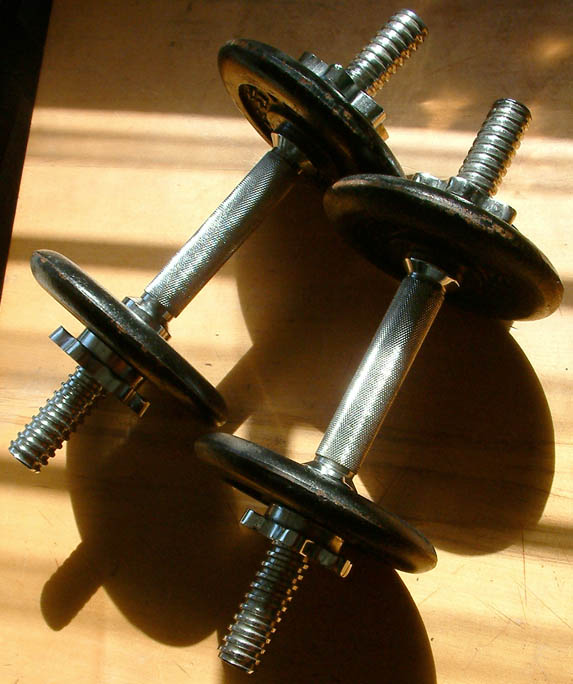
TwoDumbbells

While doing weight training we perform sets of each exercise. The set refers to the several repetitions of the exercises and repetitions refer to the number of times you perform a specific exercise. While, designing the weight training program it is very essential to decide how many sets and the repetitions.

Following are the different types of sets

  • Straight Sets:

This type of sets is usually performed by the beginners. In this type, the sets and the repetitions are reaming the same. There is no change in lifting the weight as well.

The example of the Straight Set is performing 3 sets with 15 repetitions of a particular exercise. There is no change in lifting weight.

  • Compound Sets :

Compound sets refer to targeting two exercises with the same muscle group. Example of Compound set is performing bench press dumbbells with dumbbells fly. Bench press dumbbells will target the Pectorals major while dumbbells fly focuses on the sternum pectorals.

  • Supersets:

Supersets means paring 2 exercise that work opposite muscle groups. The example of the superset is Dumbbells Chest presses followed by lats pull down. Here the Chest and the back are the opposite muscle group.

  • Tri Sets

Three different exercises performed back to back without any pause is known as a Tri sets.

The example of the Tri set is Bench Press followed by the dumbbells fly and push ups.

  • Drop Sets

In the drop set method the trainee starts with the heavy weights with low repetitions after that reduce or drop the weight and perform the repetitions (reps) till failure. For example the trainee may start peck fly with 200 lbs with 5 reps. In the next round 180 Lbs with 8 reps, The next round 150 Lbs with 10reps. The next round 130 Lbs with 12 reps. And the last round 100 labs with 10 reps.

  • Giant Sets

A series of 4 to 6 exercises done with little or no rest between movements and a rest period of 2-3 minutes between sets, often performed on either 2 opposite muscle groups like biceps and triceps or on a single body part.

Example: 

Giant Set for the Chest:

  1. Incline Barbell Press (4 to 6 Reps)
  2. Decline Barbell Press (4 to 6 Reps)
  3. Machine Chest Press (4 to 6 Reps)
  4. Peck Deck Fly (4 to 6 Reps)
  5. Floor Dips (4 to 6 Reps)
  • Pyramid Sets

It refers to the starting the first set with the lighter weight with more repetition. Gradually the trainee increases the weight and lower the reps. The rest between the sets depend on individual goal.

For Example:

Performing Leg Press

1st Set for 100 Lbs with 15 reps

2nd Set for 150 Lbs with 12 reps

3rd Set for 200 Lbs with 10 reps

4th Set for 250 Lbs with 8 reps

5th Set for 300 Lbs with 6 reps

6th Set for 350 Lbs with 4 reps

  • Reverse Pyramid Sets:

It is just opposite of pyramid sets. It refers to the starting the first set with the heavier weight with less repetition. Gradually, the trainee reduces the weight and increases the reps. The, rest between the sets depends on individual goals.

For Example 

Performing Leg Extension

1st Set for 200 Lbs with 5 reps

2nd Set for 180 Lbs with 8 reps

3rd Set for 150 Lbs with 10 reps

4th Set for 120 Lbs with 12 reps

5th Set for 100 Lbs with 15 reps

6th Set for 80 Lbs with 18 reps

These are all different types of sets which are used in weight training program. We can choose the type of the set as per the Goal.

May 7, 2015 By Ashwinkumar Rahate 3 Comments

How to Breathe Correctly During Weight Training

Lat-Pull-DownExercise is essential for good health. In exercises we often give importance to the workout pattern, form and technique as it enhances the performance.  Today, through this blog I would like to focus more on the breathing technique during Weight Training

Weight training is subject to moderate or high intense workout.  When we exercise at the end of every set the muscles lack enough oxygen and lactic acid is produced. In a short, we are unable to do more repetitions or exercise with more weight. The universal method of breathing during weight training exercise is opposite of gravitation- exhale means lifting the weight or pulling the weight and breath out  and when we come back to the starting position inhale or breath in .

Here I would like to give 2 examples

First Example is a bench press:

bench-press
Bench press is known as a pushing movement of exercise. Here we are pushing the barbells or the dumbbells opposite of the gravity so we need to exhale while pushing it up. And while we bring down the barbell or dumbbells towards gravity inhale.

The Second Example: Lat Pull Down

Now we are focusing on the pulling movement. The name of the exercise itself tells us this is the pulling movement of exercise

When we pull the Lat Pulley bar down we need to exhale because weight is going up during this phase remember opposite of gravitation exhale. Again coming back to the starting position inhale.

There are benefits of breathing right while exercising. Some of these benefits include boosting energy levels as well as metabolism. We can do our exercise with more weights; correct breathing will help us to improve our posture.

April 16, 2015 By Shimpli Patil Leave a Comment

Play smart with your insulin to maintain your weight!

diabetes to maintain weight loss


Most often we have heard about insulin only in the context of diabetes. That’s because diabetes is a condition characterized by insulin deficiency. Insulin is a hormone secreted by the beta cells of Pancreas in response to glucose released in the blood after the carbohydrate breakdown in the body. Insulin’s role is to pick up the glucose from blood and take it to the cells to feed them. Since there’s lack of insulin in a diabetic situation, the blood glucose isn’t drawn from blood to cells and therefore its levels remain high.

Insulin is barely talked about in the weight loss/weight gain segment despite it playing a huge role in it.

To understand the link between insulin and weight, we first need to understand the relationship between carbs, blood sugar and insulin. It is this connection that has massive bearing on weight loss.

There are 2 kinds of carbs- Simple and Complex. Simple carbs are the ones which are quickly broken down to glucose and result in rapid spike in blood sugar, whereas complex carbs are the slow glucose releasing carbs (do not cause blood sugar spike unlike the simple ones)

Let’s check out the mechanism of insulin and weight gain:

  • Simple carbs cause a prompt response of insulin which takes care of the sugar spike and restores the blood sugar levels. It carries the glucose to the cells where it is used for energy (fuel), and the extra is stored as glycogen in the liver (storage form of glucose). The excess glucose, over and above, gets converted into FAT!
  • When we eat a lot of simple carbs at a time, our pancreas tries its best to keep up with the massive surges in blood glucose by producing large amounts of insulin, resulting in a quick drop in blood glucose levels (i.e. hypoglycemia). This is then followed by a feeling of dizziness and weakness. It doesn’t end here, it further leads to hunger pangs and crazy cravings for sweets/refined carbs in an attempt to normalize the blood glucose level. This eventually leads to a vicious circle of eating foods high in sugar, which ultimately end up getting converted into fat.
  • If the above cycle continues for a prolonged period, and our pancreas repeatedly and constantly produces insulin in huge amounts, there will be a point when our cells start getting immune or insensitive to insulin, this state is called Insulin Resistance. The cells no longer accept glucose that insulin carries along with it. Hence, the glucose levels in the blood stay up, ultimately leading to fat storage. This fat storage mainly occurs because insulin also activates a fat storage enzyme called lipoprotein lipase.

These are exactly the reasons why Insulin is tagged as a “Lipogenic Hormone”- One that results in fat gain!

If you are keen on preventing yourself from the not-so-appealing weight/fat gain, then it’s important for you to play wisely with your insulin by doing the right thing when it comes to carb consumption.

How can we assure this? All that we have to take care is that we keep the refined and simple carb intake on the lower side. This category includes bread and bakery stuff, pizzas, burgers, sweets and desserts, polished rice and noodles, etc. Believe me, when you are busy enjoying these foods, your body is getting ready to store it as fat.

Focus more on complex carbs which include the whole grain based stuff like oatmeal, whole wheat bread, whole wheat pasta, brown/red rice, fibrous green vegetables, starchy vegetables such as potatoes, beans, peas and lentils, etc.

As the complex carbs are slow moving, they lead to slow secretion of insulin which does its job at its own sweet pace, hence there’s no issue of fat storage in this case. This allows you to feel fuller for a longer period of time, typically for up to 3 hours and thereby preventing hunger pangs and unnecessary binging.

The overall connection is a bit tricky but, once we decode this puzzle, we are sorted!

  • « Previous Page
  • 1
  • …
  • 12
  • 13
  • 14
  • 15
  • 16
  • …
  • 269
  • Next Page »

Search

Recent Posts

  • Top 10 Foods For Diabetics: What to Eat to Manage Blood Sugar
  • Why Good Nutrition Before Conception Is Crucial For Your Baby’s Health
  • 6 Tricks To Help You Make Exercise A Habit
  • World Parkinson’s Day 2026: Bridging the Care Gap & Supporting Caregivers
  • Inflammation: The Hidden Fire Behind Most Chronic Disease

Stay Updated

Archives

  • April 2026 (11)
  • March 2026 (18)
  • February 2026 (14)
  • January 2026 (14)
  • December 2025 (19)
  • November 2025 (15)
  • October 2025 (20)
  • September 2025 (6)
  • August 2025 (6)
  • July 2025 (12)
  • June 2025 (18)
  • May 2025 (16)
  • April 2025 (22)
  • March 2025 (28)
  • February 2025 (22)
  • January 2025 (25)
  • December 2024 (22)
  • November 2024 (23)
  • October 2024 (21)
  • September 2024 (23)
  • August 2024 (30)
  • July 2024 (21)
  • June 2024 (25)
  • May 2024 (30)
  • April 2024 (27)
  • March 2024 (27)
  • February 2024 (24)
  • January 2024 (21)
  • December 2023 (14)
  • November 2023 (11)
  • October 2023 (19)
  • September 2023 (22)
  • August 2023 (18)
  • July 2023 (22)
  • June 2023 (23)
  • May 2023 (24)
  • April 2023 (22)
  • March 2023 (23)
  • February 2023 (19)
  • January 2023 (15)
  • December 2022 (11)
  • November 2022 (15)
  • October 2022 (15)
  • September 2022 (12)
  • August 2022 (10)
  • July 2022 (17)
  • June 2022 (11)
  • May 2022 (10)
  • April 2022 (6)
  • March 2022 (6)
  • February 2022 (13)
  • January 2022 (11)
  • December 2021 (7)
  • November 2021 (3)
  • October 2021 (6)
  • September 2021 (3)
  • August 2021 (8)
  • July 2021 (7)
  • June 2021 (15)
  • May 2021 (16)
  • April 2021 (10)
  • March 2021 (7)
  • February 2021 (4)
  • January 2021 (4)
  • December 2020 (3)
  • November 2020 (4)
  • October 2020 (10)
  • September 2020 (3)
  • August 2020 (3)
  • July 2020 (2)
  • June 2020 (4)
  • May 2020 (10)
  • April 2020 (12)
  • March 2020 (10)
  • February 2020 (4)
  • January 2020 (4)
  • December 2019 (3)
  • November 2019 (7)
  • October 2019 (5)
  • September 2019 (4)
  • August 2019 (9)
  • July 2019 (9)
  • June 2019 (11)
  • May 2019 (4)
  • April 2019 (8)
  • March 2019 (8)
  • February 2019 (9)
  • January 2019 (8)
  • December 2018 (9)
  • November 2018 (3)
  • October 2018 (3)
  • September 2018 (5)
  • August 2018 (10)
  • July 2018 (6)
  • June 2018 (13)
  • May 2018 (8)
  • April 2018 (18)
  • March 2018 (9)
  • February 2018 (8)
  • January 2018 (15)
  • December 2017 (12)
  • November 2017 (19)
  • October 2017 (13)
  • September 2017 (15)
  • August 2017 (4)
  • July 2017 (8)
  • June 2017 (7)
  • May 2017 (6)
  • April 2017 (8)
  • March 2017 (6)
  • February 2017 (7)
  • January 2017 (9)
  • December 2016 (10)
  • November 2016 (7)
  • October 2016 (7)
  • September 2016 (7)
  • August 2016 (11)
  • July 2016 (9)
  • June 2016 (9)
  • May 2016 (12)
  • April 2016 (17)
  • March 2016 (17)
  • February 2016 (8)
  • January 2016 (6)
  • December 2015 (2)
  • November 2015 (9)
  • October 2015 (7)
  • September 2015 (9)
  • August 2015 (11)
  • July 2015 (9)
  • June 2015 (11)
  • May 2015 (9)
  • April 2015 (13)
  • March 2015 (8)
  • February 2015 (5)
  • January 2015 (12)
  • December 2014 (14)
  • November 2014 (11)
  • October 2014 (6)
  • September 2014 (13)
  • August 2014 (12)
  • July 2014 (6)
  • June 2014 (2)
  • May 2014 (7)
  • April 2014 (4)

From “Laddu Nawin” to Fit and Fierce: How a 25-Year-Old Insurance Advisor Shed 20 Kilos and Gained His Life Back

When 25-year-old Nawin Yadav from Hyderabad walked into his office every morning, he carried more than just his files and policy papers. He had the weight of fatigue, sluggish energy, and an ever-growing belly that was becoming the butt of jokes. “People … [Read More...]

“I’ve Challenged Myself to Live 100 Years” – The Story of Chandubhai Savani’s Second Chance at Life

At 67, most people start slowing down. Not Chandubhai Savani. A resident of Surat, Chandubhai, thought life was on track. “My life was going well till I had my bypass surgery,” he says. That surgery, back in 2021, was a wake-up call.  Medication was routine, but exercise wasn’t. His diet? What he calls ‘normal.’ “I […]

From Shimla’s Slopes to Chandigarh’s Sidewalks: Surinder Kaur Bhalla’s Journey from Chaos to Control

Some journeys start with a plan. Others begin with a stumble literally. Surinder Bhalla, a government professional, born and raised in the scenic hill town of Shimla, had always lived a life of movement. “In Shimla, you walked everywhere,” she reflects. “Walking was never an exercise. It was just life.” But after shifting to Chandigarh, […]

Ananda Mukherjee Health Story

From Terminal Illness To Complete Wellness! Ananda Mukherjee Health Story

As we observe World Cancer Day under the powerful theme ‘United by Unique’ (2025-2027)**, we are reminded that every individual’s journey with cancer is distinct, yet united by shared resilience, hope, and the collective fight against this disease. This theme places people at the centre of care and their stories at the heart of the […]

  • HOME
  • HEALTHY LIVING
  • FITNESS
  • HEALTHY RECIPES
  • USER STORIES
  • KARMA
  • BUY GOQii

Copyright ©2016 GOQii