GOQii

Blog

  • HOME
  • HEALTHY LIVING
  • FITNESS
  • HEALTHY RECIPES
  • USER STORIES
  • KARMA
  • BUY GOQii

Search Results for: stress

December 13, 2024 By Pallavi Barnwal 2 Comments

Facing A Low Sex-Drive? This Could Be Why!

low sex driveLate-night google searches about what could be behind a low-libido or a sudden dip in sexual appetite brings up the usual suspects: medication, stress, depression, hormonal fluctuations, poor diet and exercise and lack of sleep. Now these lifestyle factors can definitely have a huge impact on your sex life, but the truth is, a loss in sex drive runs much deeper than this.

10 Surprising Factors That May Be Killing Your Sex Drive

1. Your Bedroom
The bedroom is going to be the place where you have sex the most. Take a look around your bedroom. Is it warm and welcoming? Or is it cluttered, messy, dull and distracting? If your bedroom isn’t a place where you would generally want to spend time, then why would you want  to have sex there? Try and create a relaxing and soothing atmosphere in your bedroom. Simply keeping it tidy, and having some warm night lamps, with clean sheets can go a long way! Let your bedroom be a space that inspires sensuality and intimacy.

2. Your Cell-phone
Cell-phones can be a huge turn-off. How often have you wanted to spend time with your partner, only to find them buried in their cell-phone? Technology addictions can rewire our brain, make us irritable, distracted and hasty. It can also build resentment between partners, and make you lose out on moments that could be spent together. Maybe spend a scheduled ‘no-phone’ time with each other, or ensure that phones are off-limits during dates or quality time together. The intimacy that can come with real-life moments is bound to help in your sex life.

3. Your timing
If you’re in a long-term relationship, chances are you initiate sex at the very end of the day, right before bed. This may come as a surprise: but this is actually the worst time to have sex, because you’re both already exhausted after a long day. You may also be discouraged by the fact that having sex will then take away the time you have left for sleep. If this sounds like you, morning sex may be a great idea, or having more sex on the weekends when there is less stress to sleep on time for a work-day.

4. Sexual pain
Did you know that 1 in 3 women experience sexual pain? This could be because of stress, muscle tightness, sexual trauma, sexual shame, menstrual disorders or a lack of arousal. If you experience pain, it’s no wonder that your body wouldn’t want sex: to protect you from experiencing pain, the body adjusts by no longer craving sex. If you think this could be you, consider seeing a professional. Most sexual pain is successfully treated through a combination of medication, talk therapy and physiotherapy.

5. Self-Esteem
Your sex-drive is closely connected to how you feel about yourself and your body. If you have poor body image, or feel unworthy of love, it may manifest in an aversion to sex, touch and pleasure. A low-sex drive may be a signal from your body that you need to indulge in some radical self-care: whether it is working on your self-esteem, exercising, meditating, going for therapy, finding new hobbies or journaling; find what works for you, and let it nourish your self-esteem and sex life!

6. The initiation
An active, healthy, and happy sex life depends on communication around our sexual wants, desires, and dislikes. And the first part of communication lies in how you initiate sex.

Akshatha, who has been married for a few years spoke to us about how miscommunication during initiation affected her sex life: ‘I have a high libido, but I didn’t know how to initiate sex during the beginning of our marriage, because I thought initiation always has to come from a man. I lost many months of pleasure thinking this way. He was also a night-owl who came home late, which widened our miscommunication.’

In Akshatha’s case, it was seeing a counselor and communicating better with her partner that improved the situation. It required a lot of talking, and it is still a conversation that they revisit from time to time. Are you and your partner able to successfully initiate sex with each other? Do you know each other’s cues and signals when the other is trying to initiate sex?

Do you give each other space to decide if and how both of you want to have sex after the first hints of initiation? And do you know how to gently turn each other down, and be respectful when the other person doesn’t want sex? Ask yourself these questions, and if there are any weak links, work on them by talking to your partner!

7. Your relationship
Your sex life doesn’t exist in isolation from other things you share with your partner. If there’s been a lot of fighting, exhaustion, resentment, and/or a general feeling of being misunderstood or neglected by your partner, it’s no surprise that you wouldn’t want to have sex.

After all, we want to have sex with people who make us feel good, safe, loved, and desired. And if these feelings are breaking down in your relationship, you can’t expect your sex life to thrive. While no relationship is perfect, this may be a moment to take a step back and work on the basic trust, respect, communication, and comfort that nourishes every relationship. Couples therapy and a commitment to making things work again may help some couples get back on the right track. For other couples, this could be a sign that they need to reconsider the relationship or give it a pause. If you think your relationship is abusive, ignore all the above advice, and get help immediately.

8. Perfectionism
Many of us tend to bring perfectionism into our sex lives. We may think that a perfect, long-lasting erection is necessary, with a perfectly timed orgasm from both partners. We may watch porn and end up believing that both partners can pleasure each other perfectly without prior and ongoing communication. We may also believe that our bodies are supposed to look sleek, smooth, and perfect in every position, that we can’t make noises or faces that aren’t considered perfectly ‘sexy’ and that we’re supposed to get everything right on the first try.

Sexual perfectionism can create massive anxiety with regard to performance. And when this happens, the idea of sex itself may seem unappealing. If the stakes feel so high, why would you want to risk the humiliation of making a ‘mistake?’

This may be a good time to introspect on your insecurities and find a way to reconnect with your body in a way that focuses on pleasure, not performance. It may also suggest that you need to be open and honest with your partner about this problem. The more comfortable and intimate you feel with them, it will become easier for sex to feel like a natural progression of this connection, and not something that you have to ‘achieve’ in.

Remember, sex is human, clumsy, vulnerable, and messy. It isn’t meant to be perfect. Sex is meant to feel good: and this is much more important than how you look, sound or your ‘performance!’

9. Fear
We are told that sex is supposed to feel natural and organic, so when we find that we have to put in effort to make sex work, we may fear that something is wrong. And the more you worry about this, the harder it becomes to have and enjoy sex. If this is happening to you, first just pause and take a breath.

One of the biggest myths that sex is just ‘supposed to happen.’ In reality, the best sex requires more than just attraction: it requires honesty, trust and communication. And with our daily work lives, it may also require planning around timing and schedule. If you find that you have to put in thought and effort to make sex work with your partner, nothing is wrong with you! It’s absolutely normal. Don’t be afraid of the effort, planning or conversations that you need to have good sex with your partner.

Sex, intimacy and physical contact are deep, essential human desires for most of us. And an unhappy sex life can create intense feelings of loneliness and yearning.

As Samar, a professional in his 40s says: ‘I am extroverted, passionate and romantic by nature. I wanted so badly to feel this romance, and of course, passionate sex, after marriage. I had an arranged marriage, and soon it was clear to me that my wife was the opposite. She was determined to be a ‘wife’ and not a ‘lover.’ You may not believe it, but in my seventeen years of married life, I have never been hugged, kissed or cuddled. Sex has just been for duty, and never for love-making. It’s a painful truth that I crave for a loving hug.’

This is also why sexual compatibility is important in a relationship. How do you and your partner relate to sex? Are you comfortable discussing your fetishes, fantasies, desires and kinks? Is it similar for both of you? Do your sex drives match? And if not, how will you manage it?

These are questions worth asking before entering any long-term relationship. But even for the most sexually compatible couples, a sudden dip in libido may occur, or sometimes the sexual excitement just fizzles out. If this happens, don’t panic. It’s normal for your sex-drive to fluctuate over time. Don’t be afraid to seek help and support, and make sure that you aren’t making any of the libido-killing mistakes mentioned in this article! Be kind to yourself, and remember: sex is supposed to feel good, so don’t overthink it!

We hope this article helps you! For more on sexual wellness, tune in to LIVE sessions by our sexual wellness expert Pallavi Barnwal on GOQii Play.

#BeTheForce

December 11, 2024 By Anusha Subramanian Leave a Comment

Feeding Your Emotions? Why You Need To Stop Emotional Eating

Feeding Your Emotions? Why You Need To Stop Emotional EatingRemember the old adage – Eat to Live and not Live to Eat? We don’t always eat simply to satisfy hunger. Sometimes, we turn to food for comfort, stress relief, or as a reward. It becomes an activity we do out of habit, like nail-biting, hair twirling, or finger tapping. Recent trends show that we often turn to food in response to certain emotions. For instance, eating chocolates or sweets when we’re sad or depressed. Whether you feel angry, sad, bored, or even excited—food can act as a buffer against these emotions. But is emotional eating good for you?

Emotional eaters know it’s easier to suppress feelings with each bite rather than confront them. Unfortunately, emotional eating doesn’t solve emotional problems. It usually makes you feel worse. Afterwards, not only does the original emotional issue remain, but you also feel guilty for overeating. This compounds the problem, as you stop learning healthier ways to deal with your emotions, struggle to control your weight, and feel increasingly powerless over both food and your feelings.

Where Do You Start To Stop Emotional Eating?

Before addressing how to stop emotional eating, have you ever wondered why we turn to food when emotionally distressed? When we eat, certain chemicals are released in the body which significantly impact our emotional health. Food and mood are intricately connected. For instance, we feel sadder when hungry due to lack of neurochemicals in the brain. Through eating, we experience changes in serotonin, endorphins and dopamine levels – all of which influence mood. Sugar, for example, increases serotonin in the brain, helping us feel more balanced and stable. Anti-depressants work on a similar chemical mechanism to improve mood. So, coming back to the point – what can you do to address this?

Recognise What Triggers You To Eat Emotionally

As mentioned earlier, people eat for many reasons. Which situations, places or feelings make you turn to food for comfort? Each time you feel a craving, ask yourself, “Am I really hungry, or am I responding to something else?” If hunger isn’t the reason, identifying the real cause can be challenging.

By tracking your food intake and associated emotions regularly, you might notice patterns, such as a tendency to overeat on Mondays. Ask yourself, “What is it about Mondays that leads to overeating? Stress from getting the kids to school? Frustration over returning to work? Lack of holidays?” Notice if you tend to snack in the evenings. Is it out of boredom, loneliness, anger, sadness, anxiety, or an unhappy relationship? Once you identify your emotional eating triggers, the next step is finding healthier ways to manage your feelings.

Find Ways To Fulfil Yourself Emotionally

Understanding the cycle of emotional eating and identifying triggers is only the beginning. The next step is finding healthier alternatives to fulfill yourself emotionally.

Here are some options to try:

  • Call someone who always makes you feel better
  • Play with your kids or pets
  • Look at a favourite photo or cherished memento whenever you feel low, depressed or lonely
  • If you’re anxious, expend your energy by dancing to your favorite song or squeezing a stress ball
  • Take a brisk walk for fresh air
  • If you’re exhausted, treat yourself to a hot cup of tea, take a bath, go to a spa for a massage, or light some scented candles and wrap yourself in a warm blanket
  • Take a break or go on a weekend getaway
  • If you’re bored, read a good book, watch a show, explore the outdoors, or try an enjoyable activity like painting or playing an instrument.

Form Healthier Habits

Last step to deal with emotional eating requires long term modification i.e. healthy lifestyle habits. When you’re physically strong, relaxed, and well rested, you’re able to handle the challenges that life throws at you in a better way. But, when you’re already exhausted and overwhelmed, any little hiccup has the potential to send you off the rails and straight towards the kitchen>refrigerator>food. Exercise, sleep, and other healthy lifestyle habits will help you get through difficult times without emotional eating. Make daily exercise a priority.

Physical activity does wonders for your mood and your energy levels, and it’s also a powerful stressbuster. Give yourself permission to take at least 30 minutes every day to relax, decompress, and unwind. This is your time to take a break from your responsibilities and recharge your batteries for the next day. Connect with others. Don’t underestimate the importance of close relationships and social activities. Spending time with positive people who enhance your life will help protect you from the negative effects of stress.

With an arsenal of activities like trekking, journaling, or exploring hobbies, you can gradually overcome emotional eating. Success won’t come overnight, but accepting your mistakes and moving forward is key to breaking the cycle.

If you need help dealing with emotional eating, our experts are hereto guide you. Speak to a GOQii Coach to overcome emotional eating and achieve your weight loss goals. Subscribe for Personalised Health Coaching here.

For more tips on weight loss, explore Healthy Reads. If this article helped you or someone you know, let us know your thoughts in the comments below!

#BeTheForce

Disclaimer: The information provided in this blog is for general awareness and educational purposes only. It is not intended to replace professional medical advice, diagnosis, or treatment. Always consult a qualified healthcare provider for personalised medical guidance or concerns related to your health.

December 10, 2024 By GOQii Leave a Comment

Feeding Your Emotions? Why You Need To Stop Emotional Eating

Feeding Your Emotions? Why You Need To Stop Emotional EatingRemember the old adage – Eat to Live and not Live to Eat? We don’t always eat simply to satisfy hunger. Sometimes, we turn to food for comfort, stress relief, or as a reward. It becomes an activity we do out of habit, like nail-biting, hair twirling, or finger tapping. Recent trends show that we often turn to food in response to certain emotions. For instance, eating chocolates or sweets when we’re sad or depressed. Whether you feel angry, sad, bored, or even excited—food can act as a buffer against these emotions. But is emotional eating good for you?

Emotional eaters know it’s easier to suppress feelings with each bite rather than confront them. Unfortunately, emotional eating doesn’t solve emotional problems. It usually makes you feel worse. Afterwards, not only does the original emotional issue remain, but you also feel guilty for overeating. This compounds the problem, as you stop learning healthier ways to deal with your emotions, struggle to control your weight, and feel increasingly powerless over both food and your feelings.

Where Do You Start To Stop Emotional Eating?

Before addressing how to stop emotional eating, have you ever wondered why we turn to food when emotionally distressed? When we eat, certain chemicals are released in the body which significantly impact our emotional health. Food and mood are intricately connected. For instance, we feel sadder when hungry due to lack of neurochemicals in the brain. Through eating, we experience changes in serotonin, endorphins and dopamine levels – all of which influence mood. Sugar, for example, increases serotonin in the brain, helping us feel more balanced and stable. Anti-depressants work on a similar chemical mechanism to improve mood. So, coming back to the point – what can you do to address this?

Recognize What Triggers You To Eat Emotionally

As mentioned earlier, people eat for many reasons. Which situations, places or feelings make you turn to food for comfort? Each time you feel a craving, ask yourself, “Am I really hungry, or am I responding to something else?” If hunger isn’t the reason, identifying the real cause can be challenging.

By tracking your food intake and associated emotions regularly, you might notice patterns, such as a tendency to overeat on Mondays. Ask yourself, “What is it about Mondays that leads to overeating? Stress from getting the kids to school? Frustration over returning to work? Lack of holidays?” Notice if you tend to snack in the evenings. Is it out of boredom, loneliness, anger, sadness, anxiety, or an unhappy relationship? Once you identify your emotional eating triggers, the next step is finding healthier ways to manage your feelings.

Find Ways To Fulfill Yourself Emotionally

Understanding the cycle of emotional eating and identifying triggers is only the beginning. The next step is finding healthier alternatives to fulfill yourself emotionally.

Here are some options to try:

  • Call someone who always makes you feel better
  • Play with your kids or pets
  • Look at a favorite photo or cherished memento whenever you feel low, depressed or lonely
  • If you’re anxious, expend your energy by dancing to your favorite song or squeezing a stress ball
  • Take a brisk walk for fresh air
  • If you’re exhausted, treat yourself to a hot cup of tea, take a bath, go to a spa for a massage, or light some scented candles and wrap yourself in a warm blanket
  • Take a break or go on a weekend getaway
  • If you’re bored, read a good book, watch a show, explore the outdoors, or try an enjoyable activity like painting or playing an instrument.

Form Healthier Habits

Last step to deal emotional eating requires long term modification i.e. healthy lifestyle habits. When you’re physically strong, relaxed, and well rested, you’re able to handle the challenges that life throws at you in a better way. But, when you’re already exhausted and overwhelmed, any little hiccup has the potential to send you off the rails and straight towards the kitchen>refrigerator>food. Exercise, sleep, and other healthy lifestyle habits will help you get through difficult times without emotional eating. Make daily exercise a priority.

Physical activity does wonders for your mood and your energy levels, and it’s also a powerful stressbuster. Give yourself permission to take at least 30 minutes every day to relax, decompress, and unwind. This is your time to take a break from your responsibilities and recharge your batteries for the next day. Connect with others. Don’t underestimate the importance of close relationships and social activities. Spending time with positive people who enhance your life will help protect you from the negative effects of stress.

With an arsenal of activities like trekking, journaling, or exploring hobbies, you can gradually overcome emotional eating. Success won’t come overnight, but accepting your mistakes and moving forward is key to breaking the cycle.

If you need help dealing with emotional eating, our experts are hereto guide you. Speak to a GOQii Coach to overcome emotional eating and achieve you weight loss goals. Subscribe for Personalised Health Coaching here.

For more tips on weight loss, explore Healthy Reads. If this article helped you or someone you know, let us know your thoughts in the comments below!

#BeTheForce

December 7, 2024 By GOQii Leave a Comment

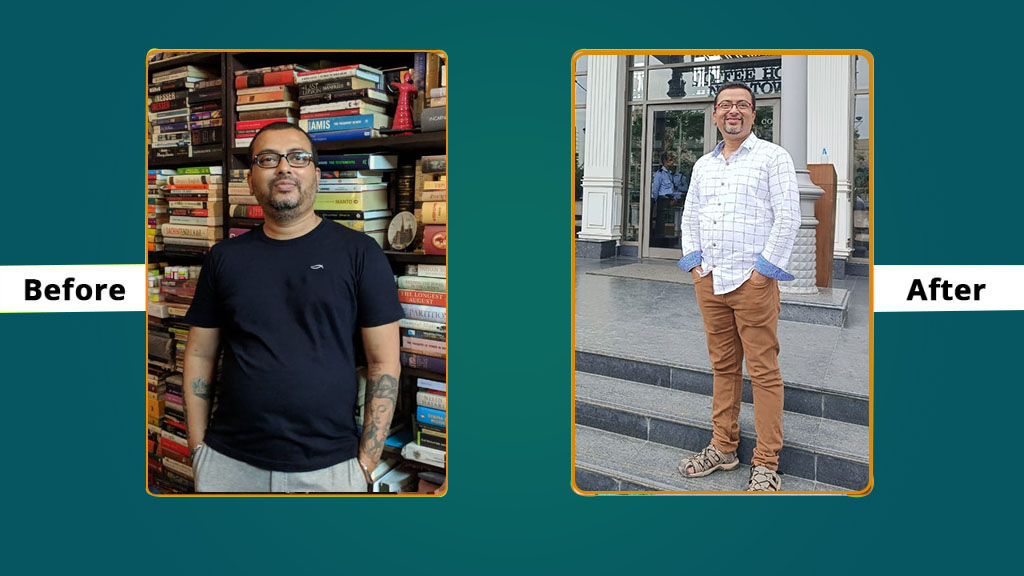
Devesh Srivastava Lowers His HbA1c from 6.7 to 5.8 With GOQii

Devesh SrivastavaHave you ever suffered from a cold or fever and thought to yourself that you can manage this? In fact, there’s a good chance that with some medication and rest, the symptoms of a cold or fever have subsided. But, when you deal with issues such as Diabetes and Hypertension, trying to manage the issue on your own might not be such a good idea. Our Player Devesh Srivastava came to realize that personalized health coaching is the best way forward!

Life Before Joining GOQii 

Devesh Srivastava is a 52 year old investment banker residing in the city of Ahmedabad. He was always keen on joining an app-based fitness solution. Back in 2014, he heard our Founder & CEO Vishal Gondal speak at an event. He says, “What he said connected well with me and I was looking forward to joining something like GOQii, but it never happened”.

While he did have a normal routine, he wanted someone to look over him and guide him towards a healthy lifestyle. He says, “Before the pandemic, things were manageable but during the pandemic, the situation was difficult as you were at home the whole time. Earlier I would walk with my friends and colleagues but then it all stopped during the lockdown. I did not have a proper routine and that created a weight issue”. 

During this time, Devesh Srivastava tried creating his own regime and restricted his diet to reduce weight. “I’ve seen other people reduce weight by doing their own things. So I decided to try as well. But, my sugar levels were not reducing,” he said. He was also on Diabetes and Hypertension medication. 

Joining GOQii and Making Lifestyle Changes 

After several trials and errors of trying to manage his health by himself, Devesh Srivastava said that he needed someone to keep a watch on his health and guide him properly. So, he came to the decision to subscribe for GOQii’s Personalised Health Coaching in November 2021. 

“The coach’s guidance worked well for me. She made simple and doable changes,” he says. Some of these changes included: 

  • Have soaked Methi seeds in the morning
  • Increase salad portion before lunch and consume fruits as mid-meal snacks 
  • Eat healthy evening snacks which include dry fruits, fruits or roasted snacks.
  • Eating an early dinner
  • Reduce carbs from dinner and replace them with fiber and protein
  • Drink green tea in the evening 
  • Begin the day with Surya Namaskar 
  • Increase steps count gradually

Apart from the above changes, his GOQii Coach kept a close watch on his food consumption, water intake, sleep and exercise, making timely corrections as per requirements. 

What Changes Did Devesh Srivastava Experience? 

Within 4 months, Devesh could experience changes in his health. As his journey continued, within 7 months he was able to lose approximately 7kg. From 80kg, he came down to 74.6kg. His waist size had reduced from 36 inches to 34 inches. 

In his current report, he found that his blood sugar and cholesterol levels had lowered down. “With Coaching, I feel better,” he says. “My stress levels are better managed. I am also able to sleep well for at least 6.5 hours daily,” he added.

What Does Coach Sakshi Agarwal Have To Say About Her Player? 

When he came onboard, he was overweight. His height is 170cm and weight was 80kg. His waist size was 36 inches and his BMI was 27.7. He was suffering from Diabetes and High Blood Pressure. His Triglyceride was also high at about 180.

Fortunately, Devesh Srivastava is a very sincere player and was always enthusiastic about taking on all the challenges I threw at him. He tried his absolute best to complete them. Within 4 months, he has made remarkable progress. 

Apart from reducing his weight and waist size, his blood sugar and cholesterol levels have also reduced. His HbA1c reduced from 6.7 to 5.8. His Triglyceride levels reduced from 180 to 148. His Blood Pressure reduced from 97fbs – 135pp to 85fbs – 119pp. 

He is quite happy with these transformations and I appreciate his positive response to my suggestions as well as his  dedicated approach to improving his lifestyle! 

Do you have a condition similar to Devesh Srivastava? You too can make a positive lifestyle change by getting the right guidance and motivation from certified experts. Join the GOQii Diabetes Care program – India’s only diabetes program that is driven by Smart Science and Personal Coaching to improve Fasting Blood Sugar (FBS), Postprandial Blood Sugar (PP), reduce HbA1c levels and let you win gold! You can subscribe here: https://store.goqii.com/diabetescare.

For more inspiring Health Stories, check out Healthy Reads.

#BeTheForce 

  • « Previous Page
  • 1
  • …
  • 48
  • 49
  • 50
  • 51
  • 52
  • …
  • 159
  • Next Page »

Search

Recent Posts

  • 6 Health Benefits of Playing Sports
  • Foods to Manage Blood Sugar Naturally: A Complete Guide to Better Blood Sugar Control
  • The Lazy Person’s Guide to Staying Healthy: 5 Micro-Habits That Take Less Than 2 Minutes
  • Healthy Eating: Comforting Chilli Bean Soup Recipe for the Monsoon
  • The Truth About the ‘Beer Belly’: What Alcohol Really Does to Your Metabolism

Stay Updated

Archives

  • August 2026 (8)
  • July 2026 (25)
  • June 2026 (22)
  • May 2026 (20)
  • April 2026 (24)
  • March 2026 (18)
  • February 2026 (14)
  • January 2026 (14)
  • December 2025 (19)
  • November 2025 (15)
  • October 2025 (20)
  • September 2025 (6)
  • August 2025 (6)
  • July 2025 (9)
  • June 2025 (18)
  • May 2025 (16)
  • April 2025 (22)
  • March 2025 (26)
  • February 2025 (21)
  • January 2025 (25)
  • December 2024 (22)
  • November 2024 (22)
  • October 2024 (20)
  • September 2024 (22)
  • August 2024 (27)
  • July 2024 (15)
  • June 2024 (23)
  • May 2024 (26)
  • April 2024 (27)
  • March 2024 (27)
  • February 2024 (23)
  • January 2024 (21)
  • December 2023 (14)
  • November 2023 (10)
  • October 2023 (19)
  • September 2023 (21)
  • August 2023 (16)
  • July 2023 (16)
  • June 2023 (21)
  • May 2023 (20)
  • April 2023 (19)
  • March 2023 (23)
  • February 2023 (19)
  • January 2023 (15)
  • December 2022 (11)
  • November 2022 (15)
  • October 2022 (15)
  • September 2022 (12)
  • August 2022 (9)
  • July 2022 (17)
  • June 2022 (11)
  • May 2022 (10)
  • April 2022 (6)
  • March 2022 (6)
  • February 2022 (13)
  • January 2022 (11)
  • December 2021 (7)
  • November 2021 (3)
  • October 2021 (6)
  • September 2021 (3)
  • August 2021 (8)
  • July 2021 (7)
  • June 2021 (15)
  • May 2021 (16)
  • April 2021 (10)
  • March 2021 (7)
  • February 2021 (4)
  • January 2021 (4)
  • December 2020 (3)
  • November 2020 (4)
  • October 2020 (10)
  • September 2020 (3)
  • August 2020 (3)
  • July 2020 (2)
  • June 2020 (4)
  • May 2020 (10)
  • April 2020 (12)
  • March 2020 (10)
  • February 2020 (4)
  • January 2020 (4)
  • December 2019 (3)
  • November 2019 (7)
  • October 2019 (5)
  • September 2019 (4)
  • August 2019 (9)
  • July 2019 (9)
  • June 2019 (11)
  • May 2019 (4)
  • April 2019 (8)
  • March 2019 (8)
  • February 2019 (9)
  • January 2019 (8)
  • December 2018 (9)
  • November 2018 (3)
  • October 2018 (3)
  • September 2018 (5)
  • August 2018 (10)
  • July 2018 (6)
  • June 2018 (13)
  • May 2018 (8)
  • April 2018 (17)
  • March 2018 (9)
  • February 2018 (8)
  • January 2018 (15)
  • December 2017 (12)
  • November 2017 (19)
  • October 2017 (13)
  • September 2017 (15)
  • August 2017 (4)
  • July 2017 (8)
  • June 2017 (7)
  • May 2017 (6)
  • April 2017 (8)
  • March 2017 (6)
  • February 2017 (7)
  • January 2017 (9)
  • December 2016 (10)
  • November 2016 (7)
  • October 2016 (7)
  • September 2016 (7)
  • August 2016 (11)
  • July 2016 (9)
  • June 2016 (9)
  • May 2016 (12)
  • April 2016 (17)
  • March 2016 (17)
  • February 2016 (8)
  • January 2016 (6)
  • December 2015 (2)
  • November 2015 (9)
  • October 2015 (7)
  • September 2015 (9)
  • August 2015 (11)
  • July 2015 (9)
  • June 2015 (11)
  • May 2015 (9)
  • April 2015 (13)
  • March 2015 (8)
  • February 2015 (5)
  • January 2015 (12)
  • December 2014 (14)
  • November 2014 (11)
  • October 2014 (6)
  • September 2014 (13)
  • August 2014 (12)
  • July 2014 (6)
  • June 2014 (2)
  • May 2014 (7)
  • April 2014 (4)

From Burnout to Balance: How Dr. Ranjit Reclaimed His Health

Dr Ranjit Bhatt has spent years tending to others. A practising doctor in Odisha, his days were packed with patients, surgeries, and emergencies. From the outside, it looked like a life lived in service. But on the inside, something wasn’t right. “I had no … [Read More...]

From Shimla’s Slopes to Chandigarh’s Sidewalks: Surinder Kaur Bhalla’s Journey from Chaos to Control

Some journeys start with a plan. Others begin with a stumble literally. Surinder Bhalla, a government professional, born and raised in the scenic hill town of Shimla, had always lived a life of movement. “In Shimla, you walked everywhere,” she reflects. “Walking was never an exercise. It was just life.” But after shifting to Chandigarh, […]

“I’ve Challenged Myself to Live 100 Years” – The Story of Chandubhai Savani’s Second Chance at Life

At 67, most people start slowing down. Not Chandubhai Savani. A resident of Surat, Chandubhai, thought life was on track. “My life was going well till I had my bypass surgery,” he says. That surgery, back in 2021, was a wake-up call.  Medication was routine, but exercise wasn’t. His diet? What he calls ‘normal.’ “I […]

Ananda Mukherjee Health Story

From Terminal Illness To Complete Wellness! Ananda Mukherjee Health Story

As we observe World Cancer Day under the powerful theme ‘United by Unique’ (2025-2027)**, we are reminded that every individual’s journey with cancer is distinct, yet united by shared resilience, hope, and the collective fight against this disease. This theme places people at the centre of care and their stories at the heart of the […]

  • HOME
  • HEALTHY LIVING
  • FITNESS
  • HEALTHY RECIPES
  • USER STORIES
  • KARMA
  • BUY GOQii

Copyright ©2016 GOQii