GOQii

Blog

  • HOME
  • HEALTHY LIVING
  • FITNESS
  • HEALTHY RECIPES
  • USER STORIES
  • KARMA
  • BUY GOQii

Search Results for: soup

December 6, 2022 By Trupti Vyas (Pandya) 7 Comments

7 Simple Winter Skincare Tips For Dull and Dry Skin

winter skincare tips

With the temperatures dipping, dry winter air zaps the moisture from your skin and leaves it dry and flaky. But it doesn’t mean you have to live with dull and dry skin all through winter. A few effective winter skincare tips and a proper skincare routine can facilitate your skincare game on point even in the chilly months. Let’s discuss some very useful skin care tips to keep your skin healthy and happy in winter.

7 Simple Winter Skincare Tips 

  1. Cover Up: Winter brings along dry and itchy skin that can be annoying to deal with it but you can prevent them from stripping away your skin’s natural oils. Always wear gloves and cover your mouth and nose with a scarf or the collar of your jacket, especially if it’s  windy. You can apply Vaseline or lip balm and sunscreen of SPF – 15 to lessen direct contact between the cold air and your skin (especially your lips) as the sun’s harmful UV rays can still cause damage in winters. 
  2. Watch your Diet: Your skin texture depends not only on external treatments but also on your food intake. A proper nutritious intake helps in rejuvenating the skin from within. Sometimes, when the skin is incredibly dry, it can also be helped by whole grains, pulses, brown rice, oatmeal and sprouts. Foods containing omega 3 fatty acids like chia seeds, almonds, walnuts, fish oil and flaxseed oil help increase blood flow to the skin, thus making it smooth and supple.
  3. Make Hydration Easy: You’ve probably been told to drink plenty of water during winter, so don’t forget the ‘drinking 8 glasses of water’ rule that applies to winter as well. 
  4. High Water Content Foods: Vit. C rich fruits like guava, papaya, Amla, oranges, lemon juice, green tea, avocado and green veggies such as spinach, beetroot or carrot, broccoli soups and stews made with broth, can also help keep your body and skin from getting too dry by synthesising collagen. Collagen is the protein that holds the skin cells together, thus promoting the generation of clear skin and a fresh complexion.
  5. Moisturize & Apply Natural Butters: Moisturizing is one the pretty basic winter skincare tips. Take it a step further by selecting moisturizers or natural butters like Shea, primrose, kokum, coconut oil or ghee, and almond butter. These can be applied to the skin after showering. Treating dry lips can also be done using a few common home ingredients like aloe vera gel and honey or Vaseline.
  6. Practice Abhyanga: Abhyanga is an important aspect of Ayurveda, a treatment that involves self-massaging the skin with oil. You can use cold-pressed oils like olive oil, sesame seed oil, mustard oil, coconut oil, almond oil and castor oil, etc. that offers a great healing treatment for dry skin, bringing comfort and balance to the entire body.
  7. Avoid Hot Baths: Always use lukewarm water instead of hot water while bathing to revive natural oil from the skin. You can also use mild soaps, bath oils or a good home-cleanser just like the top of the milk cream blended with a few teaspoons of gram flour (Besan) and a pinch of turmeric powder rather than a harsh soap which can dry out the skin. 

These are some simple Winter Skincare tips to help you keep your skin moist, supple and healthy all season long. Include the easy changes above to your everyday routine to be able to feel your best! 

We hope this article helps you. Do leave your thoughts in the comments below. To read more on how to stay healthy during winters, check out Healthy Reads or speak to an expert by subscribing for GOQii’s Personalised Health Coaching here: https://goqiiapp.page.link/bsr

#BeTheForce 

November 29, 2022 By Mrinali Dwivedi 7 Comments

5 Winter Drinks and Beverage To Keep You Warm

winter drinks

During this nice chilly winter weather, there’s nothing more warming than a hot bowl of soup or a nice healthy drink. So why not take that warm feeling to the next level with some healthy winter drinks and beverages? 

Winter is a season of abundance – abundance of holidays, festivals, love and gratitude. This abundance is extended with the availability of a variety of fresh produce and a high metabolic rate that keeps making us feel hungry. A perfect opportunity to replenish your body stores of some crucial nutrients that you might need throughout the year. This makes it even more imperative for one to opt for healthy options and make the most of it.

While hydration and drinking water or fluids is considered to be a summer thing, it is equally important to keep yourself hydrated in the winters! Winters are dry and windy, and it takes more of your body to keep your skin moist and supple. Moreover, infection rates are higher during these times and hence, it is crucial to keep up your immunity game strong. Water is a simple tool for hydration and flushing out the infectious agents from the body. However, warm fluids give an added comfort, soothing the throat, warming your insides and a very filling effect on the stomach.

5 Winter Drinks and Beverages To Keep You Warm 

1. Soup
With bountiful fresh produce, seasonal vegetables and liberty of spices and herbs, it is the most convenient time of the year to cook soups and relish a hot bowl. Gourd soups with pumpkin, bottle gourd and tomatoes; The CBT soup with carrot, beetroot and tomatoes; Dal and tomato soup that has the goodness of moong dal proteins; Lemon coriander soup; Spinach soup; Broccoli almond soup.; Mushroom soup are just a few examples from the wide array of choices for this season, as all of these vegetables are easily available during this time. It has the benefits of vitamin A from the gourds, Vitamin C from lemons, and they both help build immunity. Quercetin from tomatoes and anthocyanins from beets enhance heart health. While spinach and broccoli have the goodness of calcium and vitamin K essential in bone health. Season soups with ginger, garlic and herbs like pepper, basil and oregano; some whole spices like bay leaf, star anise. Drizzle the bowl of soup with good fat like olive oil or sesame oil and you are good for a slurpy meal. Keeps you full for long, helps in weight loss and easy on the gut. Avoid packaged and ready to eat/cook soups, they contain very little natural ingredients and are very high in sodium which causes more damage to the body than benefiting it.

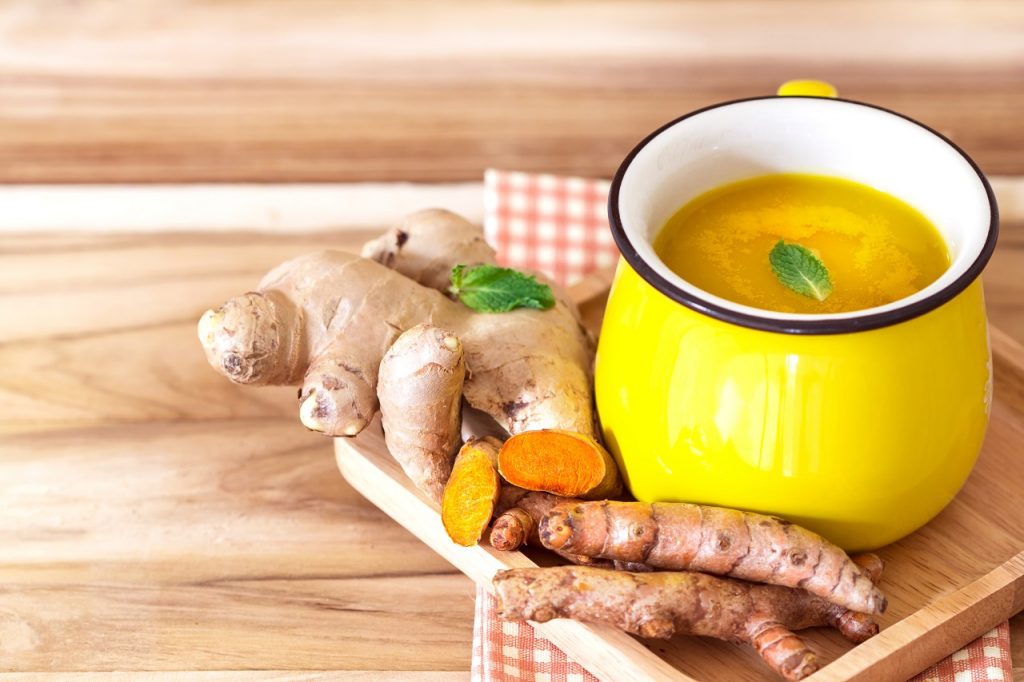
2. Spiced Turmeric Lattè
Our traditional Haldi doodh got glorified recently and became the turmeric lattè, which is simply hot milk with turmeric and a dash of cinnamon and pepper powder. It is the best remedy to find relief from sore throats and respiratory diseases. Turmeric invariably has the benefits of curcumin on heart, kidneys, helps control diabetes and wards off infections. For a subtle sweetness, one can add some honey or dates pureè. Sprinkle some dry rose petals and sliced nuts over it.

3. Hot Lemon Gingeràle
Hot water infused with lemon and ginger extract and slightly sweetened with honey gives the hot comfort of the lemon ginger water, soothes the throat and has a relaxing effect on the brain. Ginger has a compound called gingerol and the antioxidants as well as vitamin C from the lemon gives your immunity a boost. A pinch of cinnamon can enhance its flavour.

4. Black or Green Tea (variant: Kashmiri kahwa)
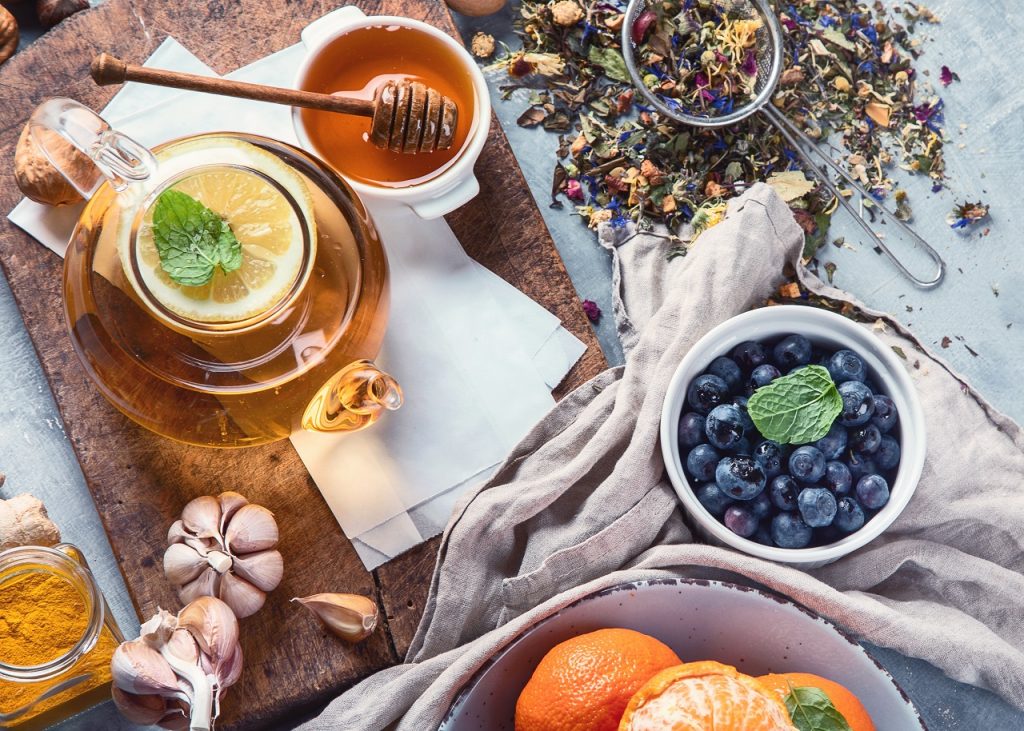
Black or green tea with a slice of lemon can be the most comforting thing ever. Black or green tea are a great source of antioxidants of the catechin family and lemons are rich in vitamin C and limonin, all involved in maintaining the metabolic rate and good blood circulation. The heaven on earth Kashmir is also home to some of the best culinary magics, and one of them is the Kahwa. Kashmiri Kahwa is Kashmiri green tea, boiled with saffron, cardamom and almonds. This drink has the ability to warm you up in the coldest of the winters, like those of Kashmir. 

5. Kaadha
It is an age-old method of curing or preventing winter diseases with a kaadha. Kaadha is a term in Ayurvedic medicine that stands for a concoction or extract of medicinal plants and herbs. Our Indian culture is blessed with a number of spices and other food additives that are not just food but have medicinal benefits too. Indigenous adjuncts and methods of cooking are appreciated worldwide. One can create a simple and beneficial kaadha at home with the following ingredients that can be easily found in any Indian household: 

  • 5-6 tulsi leaves
  • 2-3 mint leaves
  • A small piece of dalchini (cinnamon)
  • 2-3 laung (cloves)
  • 1 elaichi (cardamom)
  • 2-3 kalimiri (black pepper pearls)
  • 1 teaspoon of sauf (fennel seeds)
  • 1 teaspoon of jeera (cumin seeds) 
  • Small piece of ginger
  • Half a lemon
  • 1 teaspoon of honey

Boil all the whole spices in 1 litre of water and let it reduce to half a litre. Then slightly cool down this water, strain it and squeeze half a lemon over it, then add the honey. Sip this water throughout the day for at least 3 times a week. It will keep away common cold, sore throat, maintains your digestive health, eliminates flatus (gas) or bloating, and helps you lose weight by speeding up metabolism.

We hope these easily available winter drinks and beverages help you have a healthy winter! For more tips on staying healthy during winter, check out Healthy Reads or speak to an expert by subscribing for GOQii’s Personalised Health Coaching here: https://goqiiapp.page.link/bsr 

#BeTheForce 

October 4, 2022 By Geetika Patni Leave a Comment

Barley and Ragi: The Best Grains For Diabetes & Their Benefits

Best grains for diabetes If you’re diagnosed with Diabetes, white rice and anything made with white flour such as bread or pasta and other refined grains are off the table. This leaves us with little options. Out of these limited options, Barley and Ragi can work wonders if you want to stop those surges in blood sugar. Here’s why we think Barley and Ragi are the best grains for diabetes.

Why Are Barley and Ragi The Best Grains For Diabetes?

Barley is a wonder grain, not only for diabetics, but for everyone. This grain helps diabetics specifically because it is high in fiber content (soluble and insoluble) which makes it a low GI food. Consuming Barley will not raise your blood sugar levels like a piece of bread or a cup of polished white rice would.

If you’re wondering how Barley achieves that, it’s because of the Beta Glucan fibers in it. Thanks to these fibers, the release of sugars in the bloodstream is slowed and when consumed, it helps a person keep their sugar levels well within the target zones – for post prandial – that is post meal sugar, as well as the fasting sugar levels, which improve because consuming barley keeps you satiated for a longer duration, so you are less hungry and eat less frequently.

Moreover, Barley is a good source of magnesium which is very important for diabetics as deficiency of magnesium is known to cause insulin resistance, and a magnesium-rich diet helps in improving insulin sensitivity of cells which results in better blood sugar control. 1 cup of barley consumption covers 61% of your daily magnesium requirement.

What Is The Best Way To Consume Barley? 

Make sure to go for hull-less Barley which is the truly whole grain variety of Barley. More processed type is known as pearl Barley and may have less nutrient density as compared to hull-less Barley. The way to consume it is by adding it to soups, stuffing, flour, etc. or by having barley water more commonly known as ‘Jau Ka Pani’ which is prepared by soaking a cup of barley overnight. Adding Barley in a diabetic diet serves a lot of benefits!

How Does Ragi Help Manage Diabetes? 

If we speak of Ragi, it also comes from the millet family and contains higher amounts of calcium and phosphorus as compared to some other cereals and grains. Diabetics who have gluten resistance and cannot consume wheat or barley can opt for Ragi as it is gluten-free. Ragi also has very less cholesterol and very high antioxidant activity, which helps meet the overall nutritional requirement for a diabetic. 

However, it’s best to consume Ragi in moderation and rotate with other whole grains for best benefits on sugar control. For diabetics, the best approach to carbohydrate consumption is to stick to rotation of whole grain foods.

We hope this article on the best grains for diabetes helps you. For more on managing diabetes, check out Healthy Reads. 

For further guidance and motivation by certified experts, join the GOQii Diabetes Care program. It’s India’s only diabetes program that is driven by Smart Science and Personal Coaching to improve Fasting Blood Sugar (FBS), Postprandial Blood Sugar (PP), reduce HbA1c levels and let you win gold! You can subscribe here: https://store.goqii.com/diabetescare.

#BeTheForce 

August 12, 2022 By Tahurah Muqeem 1 Comment

Food is Your Fountain of Youth! Healthy Eating Tips for the Elderly

Healthy Eating Tips for the ElderlyAs we mentioned in our IndiaFit Report 2020: India’s Ikigai – The Secret to Longevity, there are some folks who manage to live long and healthy lives thanks to their discipline, but most people usually find their health crumbling. In old age, a human either becomes disinterested in eating or can’t manage their meals due to medical conditions which make eating difficult. There is a loss of appetite as anxiety, depression, irritability or gastric trouble become commonplace.

The body of the elderly needs to be cared for and fed with good food so that it helps in combating stress, depression, fight inflammation and pain. With the growing rate of diabetes in the mid-40s, by the time a person reaches 70-80 years of age, the damage done to the organs by diabetes or any other lifestyle disease is unpredictable.

Healthy Eating Tips for the Elderly

It is important that the elderly eat small meals at frequent intervals. The diet should be a balance of carbohydrates, proteins, fats, vitamins and minerals. In fact, the food should be appealing. Let’s see how we can incorporate all of this:

  • The diet of the elderly should contain complex carbohydrates like Wheat, Oats, Ragi, Jowar, Brown rice and should avoid refined cereals like white bread and maida.
  • Protein is a very important nutrient because there is a lot of muscle wastage that occurs in old age. Loss of skin tone, loss of skin elasticity is profound. The diet should include good sources of proteins such as lentils, dals, soybean, milk and milk products. For non-vegetarians, boiled egg whites every day is recommended. Opt for skinless chicken which can be grilled, roasted or used in soups. 
  • Healthy fats are essential to protect the heart and provide essential vitamins such as vitamin E which protects the body organs and nourishes the skin. Include soaked almonds, walnuts, dates, dried figs in the diet in the form of morning snacks. Fish like Salmon provides Omega 3 fatty acids which help fight against cancers. 
  • As we age our digestive system slows down. Many face a problem digesting fiber. While it is easy to consume salads or raw veggies, for some, it is difficult and leads to constipating, bloating or gassiness. In this case, it is better to consume vegetables which are boiled or steamed. Unstrained vegetable soups and vegetable smoothies are good options as well. 
  • Including 1-2 servings of fruits every day is crucial. Fruits not only regulate blood sugar but also provide essential minerals and vitamins to the body. 
  • The most important thing is to hydrate, hydrate, hydrate and hydrate! Especially at old age, it is more important to consume 2-3 liters of water every day. Having 1 glass of warm water immediately after waking up stimulates the body cells. For improving digestion, consuming 1 glass of warm water half an hour before and half and hour after meals is a must. 
  • Don’t forget to include anti-inflammatory foods like turmeric, ginger and cinnamon. They will help protect against bone disease and reduce joint pains while protecting the heart. Consuming ginger water in the day helps treat various digestion related issues as well. 

What’s an Ideal Meal Plan? 

If you need a roadmap or an ideal plan, here it is: 

  1. Start the day with a glass of warm water, lemon water or ginger water with half tsp of honey. 
  2. Eat a healthy breakfast consisting of oats porridge, khichdi, vegetable idli, paneer dosa or poha with a glass of milk or boiled egg white. 
  3. Mid morning should contain a fruit which can be an apple, guava, watermelon, pears, banana, papaya or you can have a mixed fruit bowl as well.
  4. Lunch should include roti or rice with 1 bowl dal, a bowl of vegetable curry, 1 salad and 1 bowl of curd. 
  5. Dinner should be the same as lunch, although, it should be lighter. Cut down the quantity of rice/roti. Eat dinner at least 2-3 hours before bed to ensure proper digestion. 
  6. Before bed, drink low fat milk to ensure good sleep and provide your body with calcium for strong bones. You can also add turmeric to it for extra benefits! 

Before you undertake this meal plan or decide to follow it religiously, you need to consult your doctor or nutritionist to check how it may affect any existing medical condition you may have. Along with all kinds of fruits, veggies and healthy foods, don’t forget to stay active! 

We hope these healthy eating tips for the elderly help you. Do share your thoughts in the comments below. To subscribe for GOQii’s personalised health coaching and get more of these tips from a GOQii Coach, click here: https://goqiiapp.page.link/bsr 

#BeTheForce 

  • « Previous Page
  • 1
  • …
  • 14
  • 15
  • 16
  • 17
  • 18
  • …
  • 32
  • Next Page »

Search

Recent Posts

  • Top 10 Foods For Diabetics: What to Eat to Manage Blood Sugar
  • Why Good Nutrition Before Conception Is Crucial For Your Baby’s Health
  • 6 Tricks To Help You Make Exercise A Habit
  • World Parkinson’s Day 2026: Bridging the Care Gap & Supporting Caregivers
  • Inflammation: The Hidden Fire Behind Most Chronic Disease

Stay Updated

Archives

  • April 2026 (11)
  • March 2026 (18)
  • February 2026 (14)
  • January 2026 (14)
  • December 2025 (19)
  • November 2025 (15)
  • October 2025 (20)
  • September 2025 (6)
  • August 2025 (6)
  • July 2025 (12)
  • June 2025 (18)
  • May 2025 (16)
  • April 2025 (22)
  • March 2025 (28)
  • February 2025 (22)
  • January 2025 (25)
  • December 2024 (22)
  • November 2024 (23)
  • October 2024 (21)
  • September 2024 (23)
  • August 2024 (30)
  • July 2024 (21)
  • June 2024 (25)
  • May 2024 (30)
  • April 2024 (27)
  • March 2024 (27)
  • February 2024 (24)
  • January 2024 (21)
  • December 2023 (14)
  • November 2023 (11)
  • October 2023 (19)
  • September 2023 (22)
  • August 2023 (18)
  • July 2023 (22)
  • June 2023 (23)
  • May 2023 (24)
  • April 2023 (22)
  • March 2023 (23)
  • February 2023 (19)
  • January 2023 (15)
  • December 2022 (11)
  • November 2022 (15)
  • October 2022 (15)
  • September 2022 (12)
  • August 2022 (10)
  • July 2022 (17)
  • June 2022 (11)
  • May 2022 (10)
  • April 2022 (6)
  • March 2022 (6)
  • February 2022 (13)
  • January 2022 (11)
  • December 2021 (7)
  • November 2021 (3)
  • October 2021 (6)
  • September 2021 (3)
  • August 2021 (8)
  • July 2021 (7)
  • June 2021 (15)
  • May 2021 (16)
  • April 2021 (10)
  • March 2021 (7)
  • February 2021 (4)
  • January 2021 (4)
  • December 2020 (3)
  • November 2020 (4)
  • October 2020 (10)
  • September 2020 (3)
  • August 2020 (3)
  • July 2020 (2)
  • June 2020 (4)
  • May 2020 (10)
  • April 2020 (12)
  • March 2020 (10)
  • February 2020 (4)
  • January 2020 (4)
  • December 2019 (3)
  • November 2019 (7)
  • October 2019 (5)
  • September 2019 (4)
  • August 2019 (9)
  • July 2019 (9)
  • June 2019 (11)
  • May 2019 (4)
  • April 2019 (8)
  • March 2019 (8)
  • February 2019 (9)
  • January 2019 (8)
  • December 2018 (9)
  • November 2018 (3)
  • October 2018 (3)
  • September 2018 (5)
  • August 2018 (10)
  • July 2018 (6)
  • June 2018 (13)
  • May 2018 (8)
  • April 2018 (18)
  • March 2018 (9)
  • February 2018 (8)
  • January 2018 (15)
  • December 2017 (12)
  • November 2017 (19)
  • October 2017 (13)
  • September 2017 (15)
  • August 2017 (4)
  • July 2017 (8)
  • June 2017 (7)
  • May 2017 (6)
  • April 2017 (8)
  • March 2017 (6)
  • February 2017 (7)
  • January 2017 (9)
  • December 2016 (10)
  • November 2016 (7)
  • October 2016 (7)
  • September 2016 (7)
  • August 2016 (11)
  • July 2016 (9)
  • June 2016 (9)
  • May 2016 (12)
  • April 2016 (17)
  • March 2016 (17)
  • February 2016 (8)
  • January 2016 (6)
  • December 2015 (2)
  • November 2015 (9)
  • October 2015 (7)
  • September 2015 (9)
  • August 2015 (11)
  • July 2015 (9)
  • June 2015 (11)
  • May 2015 (9)
  • April 2015 (13)
  • March 2015 (8)
  • February 2015 (5)
  • January 2015 (12)
  • December 2014 (14)
  • November 2014 (11)
  • October 2014 (6)
  • September 2014 (13)
  • August 2014 (12)
  • July 2014 (6)
  • June 2014 (2)
  • May 2014 (7)
  • April 2014 (4)

From “Laddu Nawin” to Fit and Fierce: How a 25-Year-Old Insurance Advisor Shed 20 Kilos and Gained His Life Back

When 25-year-old Nawin Yadav from Hyderabad walked into his office every morning, he carried more than just his files and policy papers. He had the weight of fatigue, sluggish energy, and an ever-growing belly that was becoming the butt of jokes. “People … [Read More...]

“I’ve Challenged Myself to Live 100 Years” – The Story of Chandubhai Savani’s Second Chance at Life

At 67, most people start slowing down. Not Chandubhai Savani. A resident of Surat, Chandubhai, thought life was on track. “My life was going well till I had my bypass surgery,” he says. That surgery, back in 2021, was a wake-up call.  Medication was routine, but exercise wasn’t. His diet? What he calls ‘normal.’ “I […]

From Shimla’s Slopes to Chandigarh’s Sidewalks: Surinder Kaur Bhalla’s Journey from Chaos to Control

Some journeys start with a plan. Others begin with a stumble literally. Surinder Bhalla, a government professional, born and raised in the scenic hill town of Shimla, had always lived a life of movement. “In Shimla, you walked everywhere,” she reflects. “Walking was never an exercise. It was just life.” But after shifting to Chandigarh, […]

Ananda Mukherjee Health Story

From Terminal Illness To Complete Wellness! Ananda Mukherjee Health Story

As we observe World Cancer Day under the powerful theme ‘United by Unique’ (2025-2027)**, we are reminded that every individual’s journey with cancer is distinct, yet united by shared resilience, hope, and the collective fight against this disease. This theme places people at the centre of care and their stories at the heart of the […]

  • HOME
  • HEALTHY LIVING
  • FITNESS
  • HEALTHY RECIPES
  • USER STORIES
  • KARMA
  • BUY GOQii

Copyright ©2016 GOQii