GOQii

Blog

  • HOME
  • HEALTHY LIVING
  • FITNESS
  • HEALTHY RECIPES
  • USER STORIES
  • KARMA
  • BUY GOQii

Search Results for: portion control

May 26, 2024 By Geetika Patni 8 Comments

Mindful Eating: The best habit ever!

Mindful-eating

Most humans eat more than their bodies require. Especially with the massive choice of culinary delights available, the eye appealing desserts, the way food is plated etc…it works on our minds to a level that we crave it. And that’s OK. Everyone loves good food too, who doesn’t.

The problem is, we eat too much of it and there reaches a point when the body does not know what to do with the crazy amounts of food we eat, so when you see your belly/tummy, mid riff, waist starting to expand, that’s your body telling you, ‘you are eating too much’. 

What next? Fad Diets? Time and again it has been proved that fad diets don’t work. With a fad diet plan, you will lose weight – and gain it back eventually, and in between you may end up even damaging your metabolism, digestion and your wonderful relationship with food.

But then isn’t it true? that ‘Abs are made in the Kitchen’ and that ‘Weight Management is 70% nutrition’. Indeed it is! The hidden answer to this dilemma lies in – Mindful Eating.

mindful-eating

Technical definition says, “Mindful eating is allowing yourself to become aware of the positive and nurturing opportunities that are available through food selection and preparation by respecting your own inner wisdom”. 

In easier terms – It is an art of staying aware of, not only-what you are eating, but also how you are eating. In this article, I’ll help you understand the broad prospects of nurturing yourself with the art of mindful eating. And to do so, let’s first understand the contradiction – Mindless eating.

You are eating mindless when you are –

1) Overeating (Unable to practice portion control) –

Over eating is the most common act of mindless eating and in my experience, 90% of the players who want to lose weight – overeat during one or the other meal.

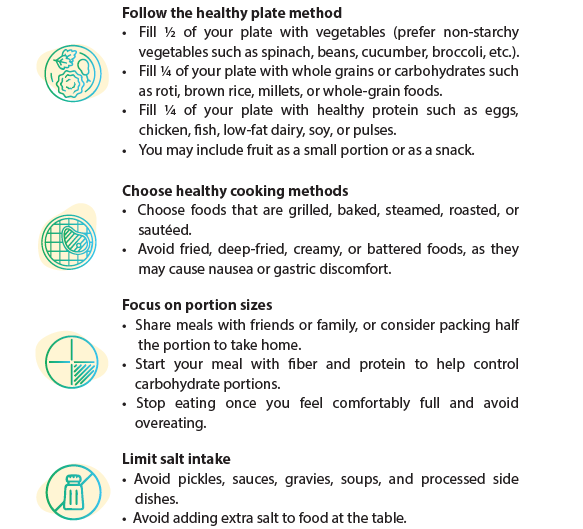
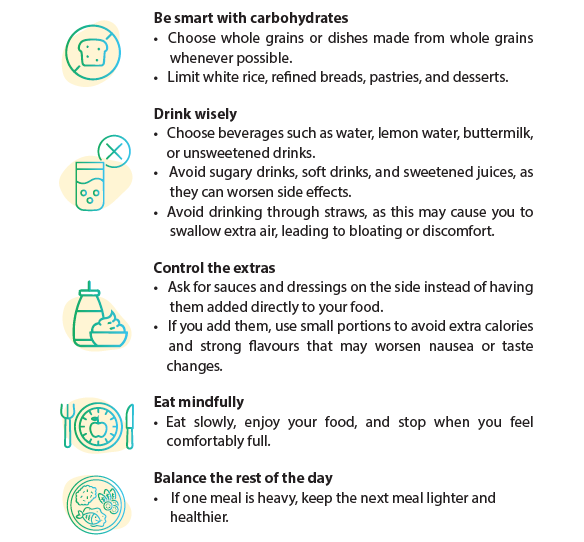
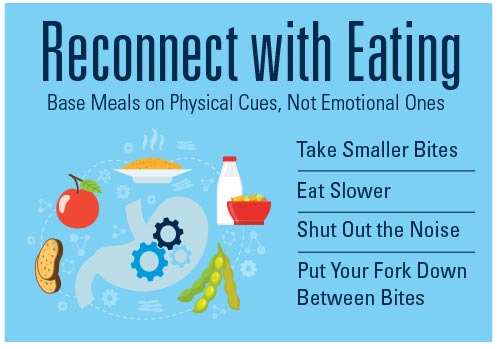
Portion control is very important but why is practicing portion control so difficult? That’s because we miss recognizing the internal cues our body provides (and yes it does send those signals!) to make us stop eating when it’s time. And why does this happen? That’s because we fail to pay attention to the task we are doing, in this context it is – eating. Implementing simple habits like keeping away gadgets while eating, using smaller plates, and taking a deep breath before you start your meal, can help you to practice portion control effectively.

2) Eating Fast

This one doesn’t need an example. If you are a fast eater you know it. Eating at your best speed to win a 1 minute food challenge is entirely different than doing it every day for every meal. Eating fast can also lead to weight gain and metabolic disorders like insulin resistance and arthritis. Small discomforts such as teeth bites and ulcers in the mouth, dental cavities, and acne outbursts can also be traced back to the habit of eating fast. And you may be blaming your gassy gut to your food choices, but do ponder upon if it’s related to your speed of eating too. Ideally you must aim to finish every meal in 20 minutes. This is the time range for our fullness hormones – Leptin, Ghrelin and some neuropeptides – to reach our brain and signal the satiety centre to feel full and stop eating.

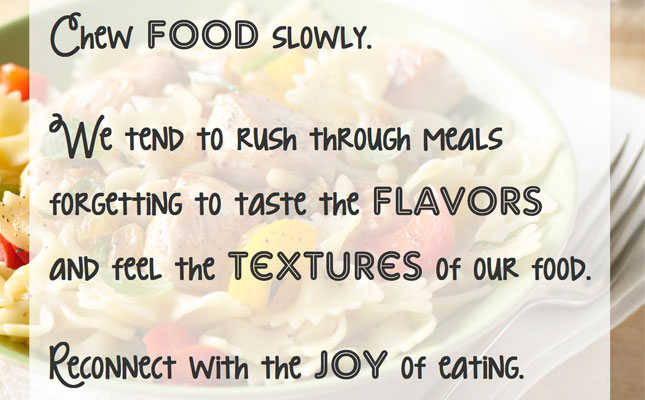
Tricks like taking an intermission break after every few bites, using your non dominant hand to eat, chewing every bite thoroughly (32 times is dramatic, I know, 20 will do), using chopsticks for a change and/or using baby forks/spoons to finish your meal, can help you learn the art of eating slow and mindfully.

3) Emotional Eating

Emotional eating is as simple as the term sounds – eating to fulfil an emotion and not the stomach. It is also termed as ‘Head hunger’. If your hunger feels sudden and urgent and you have a craving for only fries or sugary treats, you can’t stop yourself to eat and then feel guilty afterwards, it is Head hunger – caused by emotions like boredom, anger, frustration, anxiety etc.

On the other hand if you are ‘Stomach Hungry’ you will know it easily for it will come gradually and you can still postpone it. There will be a stomach growl and it will get satisfied with any food (yes even salads!) You won’t feel guilty even after eating it heartily. And best part is you’ll know when to stop when you are feeding your body (but cannot- when fuelling your emotions).

Staying mindful of your hunger triggers and enjoying the meals to nourish your system, rather than feelings, is important, as this can make or break your relationship with food. Emotional eating whereas can cultivate poor self-esteem, unwanted weight gain and the plethora of troubles related to Obesity. Overcoming emotional eating requires a good amount of practice, patience and discipline and some tricks like distraction through work to pass off the emotional storm.

4) Disconnecting 

Eating each and every food that you can lay your hands on, without making a choice is what I call as ‘Disconnecting’. That’s odd! This doesn’t correlate.

Let me explain – If you belong to a club excelling in eating each and every ‘thing’ without knowing what it can do to you, where it came from and without acknowledging the feelings it produces in you (whether good or bad) you are disconnected from your foods, your meals and your nourishment – the very thing which helps you run your day and which prevents you from sufferings and sicknesses.

Disconnecting is a very subtle mindless eating practice but has profound effect on your weight and most importantly on your vital organs and their metabolic functioning. (Like a seemingly harmless can of diet-coke can wreak havoc on your pancreas and production of Insulin!)

Moreover, as we age, the mindless habit of Disconnecting does rapid harm to our system, to the extent of jeopardizing our longevity!

Hence, it is extremely important to make the ‘connect’ with your food choices. Attempt to learn or acknowledge the ingredients of the dish you are eating, which food group it belongs to, combining it in ways you can enhance (or deplete) it’s nutritional quotient, and most importantly how you truly feel having it.

In this 5 part series on ‘Mindful Eating’, I will take you through all the aspects of Mindful eating. In the second part tomorrow I will talk about slowing down while eating, how helpful can it be and some tips to help you eat slowly.

In essence, food is meant to be enjoyed and to nourish you. Adding the seasoning of Mindful eating to it, will pique up your health and wellness quotient.

To be Continued…………………

#BeTheForce 

May 2, 2024 By GOQii Leave a Comment

10 Habits Which Are Destroying Your Health

10 bad habits destroying your healthHabits play an important role in our lives. From the time we wake up, till we hit the pillow at night, most of the things that we do during the day are wrapped up in some form of habits. Of these habits, some are towards keeping ourselves healthy and there are some habits which might be unnoticeable, but yet very harmful for us. Let’s take a look at the 10 habits that are destroying your health!

10 Habits That Are Destroying Your Health 

  1. Having fruits along with meals: We do get a good dose of carbohydrates in our regular meals and by adding extra carbohydrates, it will exceed the limit and lead to over intake of carbohydrates. It’s best to eat fruits half an hour before a meal or as mid meals.
  2. Not having our meals on time: We should always have our meals on time. Once you do that, it helps us set up our body clock according to that specific meal time so that digestion and nutrient absorption happens at the same time every day and it won’t go off track.
  3. Skipping breakfast or any other meals: Skipping our meals, especially breakfast, is not a good idea. It may lead to muscle loss, fatigue and irritation, among other health issues, as there might not be any energy and glucose to keep us going during a hectic day.
  4. Having a heavy dinner: The calories and carbs which we have during dinner will not be utilized at night. So when we sleep, all of it is turned into fat and stored in the body. Always keep your dinner light.
  5. Less water intake: may lead to dehydration and that can directly affect our immunity, which in turn can be the cause for many diseases. At least 2 to 3 liters of water in a day is must!
  6. Keeping a long gap between your meals: Keeping long gaps between meals leads to overeating our next meal. It will also slow down our BMR so that we eat more and that is the cause for weight gain.
  7. Chewing your food fast: We should always take at least 20 minutes to complete a meal. Chewing fast will not help in absorption and breakdown of the nutrients in the food that we eat.
  8. Having processed foods: Processed foods which contain sugar, white flour or corn flour, may risk us with water retention in our body and will also increase our salt intake because of the preservatives.
  9. Confusing thirst with hunger: Sometimes when we feel thirsty we may confuse it with hunger and start eating an untimely meal, so it’s best to first feel, recognize and keep yourself hydrated so that we don’t feel hungry because of less water intake.
  10. Overeating: can easily go unnoticed and this can cause problems like weight gain and obesity. This is often regarded as an eating disorder. If you are a binge eater, it’s time to make some changes. Maintaining portion control is the best way to eat mindfully.

So sit back and check if these habits are a part of your lifestyle and change them for the best! If you have difficulty breaking a habit or need that extra dose of motivation, reach out to an expert by subscribing to GOQii’s Personalised Health Coaching here.

Do let us know your thoughts in the comments below!

#BeTheForce 

April 19, 2024 By Roopa Tandur Leave a Comment

12 Low Glycemic Index Fruits For Diabetics

glycemic indexDiabetes is a condition that impairs the body’s ability to process blood glucose, also called blood sugar. Blood glucose, which is sugar concentration, is our main source of energy and comes from the food we eat. Insulin, a hormone made by the pancreas, helps glucose from food get into our cells to be used for energy. Absence or insufficient production of insulin, or an inability of the body to properly use insulin causes diabetes. The glycemic index (GI) tells us how quickly foods containing carbohydrates affect our blood sugar level when eaten

  • Low GI foods: 55 or below
  • Moderate GI foods: 56 to 69
  • High GI foods: 70 and above

Fruits With Low Glycemic Index 

The lower the GI score, the more slowly the rise in blood sugar, which can help the body manage post-meal changes better. Most whole fruits have low to moderate GI levels. Many fruits are also packed with antioxidants, micronutrients and fiber as well. Here are a few low GI fruits which diabetics can have without worrying about the sudden rise in blood sugar levels post consumption:

  1. Cherries: are high in potassium and packed with antioxidants, which will give your immune system a boost. Because cherries are not available fresh all round the year, they can be processed before storing them for a long time. Cherries contain anthocyanins that give the cherries its colour, also boost cells insulin production by 50%.
  2. Pears: are a good source of fiber and provide 20% of our daily recommended fiber intake. Pears can be enjoyed as fresh fruit or gently baked. More interesting is they can also be included in salads for a good twist.
  3. Oranges: are good sources of Vitamin C, folate and potassium. There is also plenty of healthy fiber in an orange which takes longest to break down and digest. This enables slow release of sugar into the bloodstream, which would further ensure that your blood glucose levels are stable for a long period of time
  4. Strawberries: Strawberries are a good source of Vitamin C, they help in improving immunity, fight against certain types of cancer and improve metabolism, promoting weight loss. Strawberries give you more Vitamin C than an orange when taken in the same quantity. They also have a low glycemic index, hence, it is slowly released in the bloodstream as glucose.
  5. Grapefruits: are citrus-based fruits with a glycemic index of 25. They are packed with a range of vitamins and minerals. They have a bitter to sour taste and can be taken as whole fruit or made into juice. Grape fruit is a very good source of Vitamin A and C. It helps improve immunity and helps maintain healthy functioning of the heart and is good for digestion. 
  6. Guava: is a very healthy food choice for diabetics, as it can easily be included in snacks without the fear of sudden raise in blood sugar levels. It is a very good source of fiber which helps relieve constipation, which is a common complaint of many diabetics. Having this fruit regularly can easily lower the chance of developing Type II Diabetes.
  7. Watermelon: is a good source of Potassium. Foods high in potassium improves functioning of vital organs like the heart and kidney. People with diabetes easily observe that their uric acid levels are higher. This can be prevented by including watermelon in their diet which improves kidney functioning and reduces uric acid levels and further damage of the kidneys. Water melons are also a good source of lycopene which prevents nerve damage which is a common complaint of people with diabetes.
  8. Papaya: is a great fruit choice for diabetics as it is available round the year and can be incorporated in the diet very easily. Papayas have a host of nutrients and antioxidants, which when consumed, reduce the risk of heart disease, cancer, lowers BP and also aids good digestion. Papaya is also a good source of fiber and helps lower blood glucose levels and manage diabetes.
  9. Grapes: are a good choice of fruit for diabetes as it helps reduce blood sugar levels easily. They come in many colours and varieties, you can have them easily between meals as snacks and can be included in many dishes for its tangy taste. Grapes are a rich source of a phytochemical called Resveratrol which keeps a check on how the body secretes and uses insulin in response to blood glucose levels.
  10. Avocado: Adding a serving of avocado to your diet may help you lose weight, lower cholesterol, and increase insulin sensitivity. Avocados are low in carbohydrates, which mean they have little effect on blood sugar levels. One half of a small avocado contains about 5.9 grams of carbohydrate and 4.6 grams of fiber. They are also packed with healthy fats which give you a feeling of fullness for a longer time, thereby supporting weight loss and increasing insulin sensitivity. 
  11. Kiwi: Many researchers have proved that including Kiwi in your diet helps lower blood sugar levels. Kiwis are loaded with Vitamin A, C, E and fiber which makes it a good choice of fruits for diabetics. Kiwi also helps relieve insomnia which many people with diabetes complain due to long term diabetes and anxiety. 
  12. Black Jamun: This fruit has a bitter taste and is one of the best fruits for people suffering from diabetes. It not only controls your blood sugar level but also enhances the insulin activity and sensitivity. This fruit can be included in the form of juice or powder as well, which is equally beneficial in managing blood sugar levels.

No matter which fruit one includes, portion control is important. While it can vary depending on the size and type of the fruit, in general, one portion of fruit which is one piece of whole fruit or 1/2 cup of sliced fruit contains around 15 grams of carbohydrates, which is considered as one carbohydrate serving. 

We hope this article on Low Glycemic Index Fruits for Diabetics helps you! Do leave your thoughts in the comments below. For more on Diabetes, check out our other articles on Healthy Reads. To help you manage Diabetes and get expert advice on nutrition, exercise, sleep and well being – all aimed at reducing your HbA1C Levels, subscribe for the GOQii Diabetes Care Program here.

#BeTheForce 

November 20, 2023 By Ragul Vijaykumar Leave a Comment

Plant-based Nutrition: The Pros, Cons and Nutritional Know-How

You may have noticed that in the recent times, there has been a significant surge in the adoption of vegan and plant-based diets. These dietary preferences are celebrated for their numerous merits, which encompass health benefits, sustainability, and ethical reasoning. However, as with any lifestyle shift, there are certain hurdles to overcome.

In this blog post, we will delve into the advantages and potential obstacles associated with vegan and plant-based diets. Furthermore, we will provide valuable insights on how to ensure an adequate intake of essential nutrients such as protein, iron, calcium, and more, enabling you to maintain a well-rounded and satisfying plant-based lifestyle.

Plant-based Diets:

Plant-based diets are gaining favor due to their health perks, ethical alignment, and eco-friendly nature. Rooted in plant-derived foods while minimizing or eliminating animal products, these diets promote health and reduce environmental impact. Embracing this shift means choosing wellness for oneself and a sustainable future for the planet.

Common Vegetarian Diets:

  • Vegan Diet: Excludes all animal products, including meat, dairy, fish, eggs, and usually honey.
  • Lacto-Vegetarian Diet: Excludes meat, fish, poultry, and eggs but includes dairy foods like milk, cheese, yoghurt, and butter.
  • Lacto-Ovo Vegetarian Diet: Includes eggs and dairy products but excludes meat and fish.
  • Ovo-Vegetarian Diet: Excludes meat, poultry, seafood, and dairy foods but can take eggs.
  • Pesco-Vegetarian (Pescatarian) Diet: Includes fish, dairy, and eggs but excludes meat.
  • Semi-Vegetarian (Flexitarian) Diet: Primarily vegetarian but occasionally including small quantities of meat, dairy, eggs, poultry, or fish.

Pros of a Plant-Based Diet:

  1. High Nutrient Density: Plant-based diets are rich in vitamins, minerals, and antioxidants found in fruits, vegetables, and whole grains, which promote overall health and reduce disease risk.
  2. Low in Saturated Fat: They naturally contain minimal saturated fats, reducing the risk of heart disease.
  3. Fiber-Rich: Plant-based diets are high in fiber, aiding digestion, promoting satiety, and regulating blood sugar levels.
  4. Low Cholesterol: Eliminating or reducing animal products lowers dietary cholesterol intake, benefiting heart health.

Cons of a Plant-Based Diet:

  1. Risk of Deficiencies: Careful planning is required to ensure adequate intake of Vitamin B12, Iron, Calcium, and Omega-3 Fatty Acids, as these nutrients are less abundant in plant-based foods.
  2. Potential for Processed Foods: Some plant-based alternatives are heavily processed and may be high in sugar, sodium, or unhealthy fats.
  3. Caloric Density: Plant-based diets can be calorically dense due to nuts, seeds, and oils, potentially leading to weight gain if portion control is not maintained.
  4. Nutrient Variability: The nutrient content of plant foods can vary, so it’s important to diversify food choices to obtain a full range of nutrients.

Macro – Micronutrients:

Plant-based diets, especially vegan ones that exclude all animal products, raise valid concerns about nutritional adequacy. Plant foods often contain less absorbable micronutrients like Iron, Vitamin A, and Zinc compared to animal products. However, a well-rounded vegan diet with diverse plant foods can still provide recommended levels of these essential micronutrients.

Here are some important nutrient food sources in vegan and plant-based diets:

  • Protein: Plant-based sources such as legumes, tofu, and nuts can provide ample protein, and a well-balanced vegan diet can meet protein requirements.
  • Iron: Leafy greens like spinach and iron-fortified cereals are essential sources of plant-based iron, which should be consumed with Vitamin C-rich foods for optimal absorption.
  • Calcium: Fortified plant-based milk and calcium-set tofu are key sources of calcium, crucial for maintaining bone health in vegan and plant-based diets.
  • Vitamin A (beta-carotene): Beta-carotene-rich vegetables like sweet potatoes contribute to Vitamin A intake, essential for vision and immune function in these diets.
  • Zinc: Foods like legumes and nuts are vital Zinc sources in plant-based diets, supporting immune function and overall health when included in regular meals.

In conclusion, plant-based diets offer numerous health and environmental benefits. However, it’s crucial to pay attention to your nutrient intake. Diversify your plant-based foods to maintain good health and effectively prevent or manage diseases. If you opt for a vegan lifestyle, thoughtful meal planning becomes essential to ensure you’re meeting your micronutrient needs.

We hope this article helps you. For further information or guidance, reach out to our certified experts by subscribing to GOQii’s Personalised Health Coaching here.

  • « Previous Page
  • 1
  • …
  • 5
  • 6
  • 7
  • 8
  • 9
  • …
  • 34
  • Next Page »

Search

Recent Posts

  • Social Health and Longevity: Why Relationships Matter as Much as Diet
  • Top 10 Foods For Diabetics: What to Eat to Manage Blood Sugar
  • Why Good Nutrition Before Conception Is Crucial For Your Baby’s Health
  • 6 Tricks To Help You Make Exercise A Habit
  • World Parkinson’s Day 2026: Bridging the Care Gap & Supporting Caregivers

Stay Updated

Archives

  • April 2026 (12)
  • March 2026 (18)
  • February 2026 (14)
  • January 2026 (14)
  • December 2025 (19)
  • November 2025 (15)
  • October 2025 (20)
  • September 2025 (6)
  • August 2025 (6)
  • July 2025 (12)
  • June 2025 (18)
  • May 2025 (16)
  • April 2025 (22)
  • March 2025 (28)
  • February 2025 (22)
  • January 2025 (25)
  • December 2024 (22)
  • November 2024 (23)
  • October 2024 (21)
  • September 2024 (23)
  • August 2024 (30)
  • July 2024 (21)
  • June 2024 (25)
  • May 2024 (30)
  • April 2024 (27)
  • March 2024 (27)
  • February 2024 (24)
  • January 2024 (21)
  • December 2023 (14)
  • November 2023 (11)
  • October 2023 (19)
  • September 2023 (22)
  • August 2023 (18)
  • July 2023 (22)
  • June 2023 (23)
  • May 2023 (24)
  • April 2023 (22)
  • March 2023 (23)
  • February 2023 (19)
  • January 2023 (15)
  • December 2022 (11)
  • November 2022 (15)
  • October 2022 (15)
  • September 2022 (12)
  • August 2022 (10)
  • July 2022 (17)
  • June 2022 (11)
  • May 2022 (10)
  • April 2022 (6)
  • March 2022 (6)
  • February 2022 (13)
  • January 2022 (11)
  • December 2021 (7)
  • November 2021 (3)
  • October 2021 (6)
  • September 2021 (3)
  • August 2021 (8)
  • July 2021 (7)
  • June 2021 (15)
  • May 2021 (16)
  • April 2021 (10)
  • March 2021 (7)
  • February 2021 (4)
  • January 2021 (4)
  • December 2020 (3)
  • November 2020 (4)
  • October 2020 (10)
  • September 2020 (3)
  • August 2020 (3)
  • July 2020 (2)
  • June 2020 (4)
  • May 2020 (10)
  • April 2020 (12)
  • March 2020 (10)
  • February 2020 (4)
  • January 2020 (4)
  • December 2019 (3)
  • November 2019 (7)
  • October 2019 (5)
  • September 2019 (4)
  • August 2019 (9)
  • July 2019 (9)
  • June 2019 (11)
  • May 2019 (4)
  • April 2019 (8)
  • March 2019 (8)
  • February 2019 (9)
  • January 2019 (8)
  • December 2018 (9)
  • November 2018 (3)
  • October 2018 (3)
  • September 2018 (5)
  • August 2018 (10)
  • July 2018 (6)
  • June 2018 (13)
  • May 2018 (8)
  • April 2018 (18)
  • March 2018 (9)
  • February 2018 (8)
  • January 2018 (15)
  • December 2017 (12)
  • November 2017 (19)
  • October 2017 (13)
  • September 2017 (15)
  • August 2017 (4)
  • July 2017 (8)
  • June 2017 (7)
  • May 2017 (6)
  • April 2017 (8)
  • March 2017 (6)
  • February 2017 (7)
  • January 2017 (9)
  • December 2016 (10)
  • November 2016 (7)
  • October 2016 (7)
  • September 2016 (7)
  • August 2016 (11)
  • July 2016 (9)
  • June 2016 (9)
  • May 2016 (12)
  • April 2016 (17)
  • March 2016 (17)
  • February 2016 (8)
  • January 2016 (6)
  • December 2015 (2)
  • November 2015 (9)
  • October 2015 (7)
  • September 2015 (9)
  • August 2015 (11)
  • July 2015 (9)
  • June 2015 (11)
  • May 2015 (9)
  • April 2015 (13)
  • March 2015 (8)
  • February 2015 (5)
  • January 2015 (12)
  • December 2014 (14)
  • November 2014 (11)
  • October 2014 (6)
  • September 2014 (13)
  • August 2014 (12)
  • July 2014 (6)
  • June 2014 (2)
  • May 2014 (7)
  • April 2014 (4)

From “Laddu Nawin” to Fit and Fierce: How a 25-Year-Old Insurance Advisor Shed 20 Kilos and Gained His Life Back

When 25-year-old Nawin Yadav from Hyderabad walked into his office every morning, he carried more than just his files and policy papers. He had the weight of fatigue, sluggish energy, and an ever-growing belly that was becoming the butt of jokes. “People … [Read More...]

“I’ve Challenged Myself to Live 100 Years” – The Story of Chandubhai Savani’s Second Chance at Life

At 67, most people start slowing down. Not Chandubhai Savani. A resident of Surat, Chandubhai, thought life was on track. “My life was going well till I had my bypass surgery,” he says. That surgery, back in 2021, was a wake-up call.  Medication was routine, but exercise wasn’t. His diet? What he calls ‘normal.’ “I […]

From Shimla’s Slopes to Chandigarh’s Sidewalks: Surinder Kaur Bhalla’s Journey from Chaos to Control

Some journeys start with a plan. Others begin with a stumble literally. Surinder Bhalla, a government professional, born and raised in the scenic hill town of Shimla, had always lived a life of movement. “In Shimla, you walked everywhere,” she reflects. “Walking was never an exercise. It was just life.” But after shifting to Chandigarh, […]

Ananda Mukherjee Health Story

From Terminal Illness To Complete Wellness! Ananda Mukherjee Health Story

As we observe World Cancer Day under the powerful theme ‘United by Unique’ (2025-2027)**, we are reminded that every individual’s journey with cancer is distinct, yet united by shared resilience, hope, and the collective fight against this disease. This theme places people at the centre of care and their stories at the heart of the […]

  • HOME
  • HEALTHY LIVING
  • FITNESS
  • HEALTHY RECIPES
  • USER STORIES
  • KARMA
  • BUY GOQii

Copyright ©2016 GOQii