GOQii

Blog

  • HOME
  • HEALTHY LIVING
  • FITNESS
  • HEALTHY RECIPES
  • USER STORIES
  • KARMA
  • BUY GOQii

Search Results for: mental health

March 8, 2026 By GOQii Leave a Comment

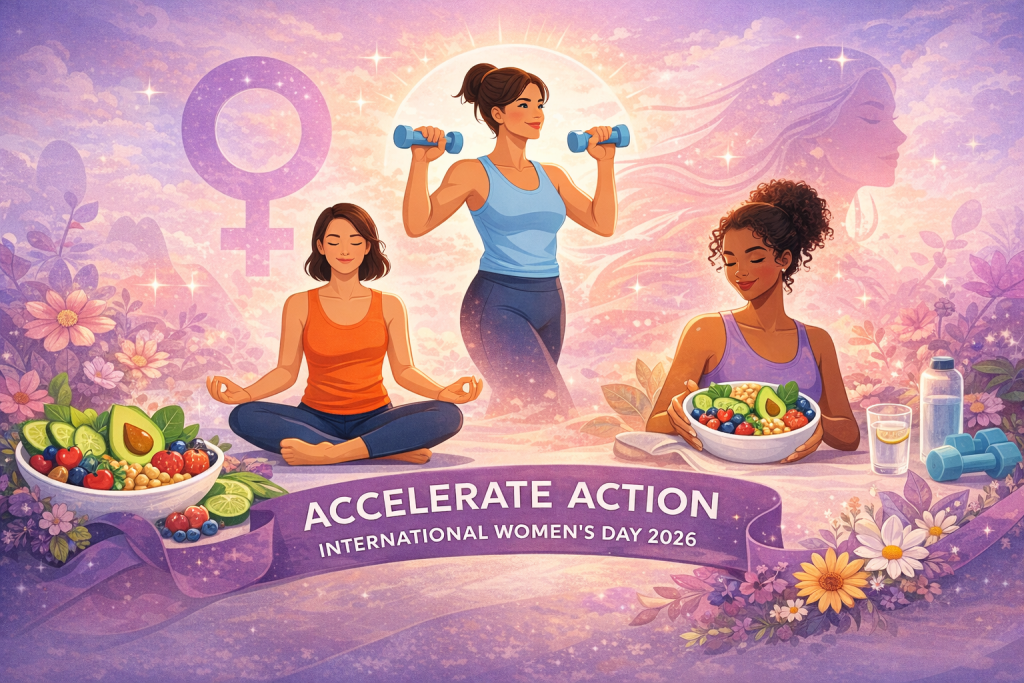
Accelerate Action for Your Health: Why Self-Care Matters This International Women’s Day

Every year, International Women’s Day is an opportunity to celebrate progress and reflect on the work that still needs to be done to achieve gender equality.

The 2026 theme, championed by UN Women, calls on individuals, institutions and communities around the world to Accelerate Action toward gender equality.

While policy change, education and economic opportunity remain critical drivers of equality, one powerful yet often overlooked area where women can accelerate progress is their own health and well-being.

Prioritising self-care for women’s health is not a luxury. It is a foundation for empowerment. When women invest in preventive health, they gain the strength, clarity and resilience needed to lead families, workplaces and communities.

At GOQii, we believe that women’s health empowerment begins with preventive care, mindful living and consistent lifestyle habits.

What Is the International Women’s Day 2026 Theme?

The theme for International Women’s Day 2026 is “Accelerate Action.”

The campaign highlights the urgency of making faster progress toward gender equality by encouraging individuals, organisations and governments to take meaningful steps that support and empower women.

One of the most powerful ways women can accelerate progress in their own lives is by taking proactive steps to protect and strengthen their health.

After all, sustainable empowerment requires energy, resilience and well-being.

Why Self-Care Matters for Women’s Health

Across cultures and generations, women have often been conditioned to place the needs of others before their own. Between professional responsibilities, caregiving roles and family commitments, personal health frequently moves to the bottom of the priority list.

However, this pattern carries long-term consequences.

Health research consistently shows that many women delay regular health check-ups, ignore early warning signs of stress or burnout, and postpone lifestyle changes because they feel they “don’t have time.”

The reality is simple:

You cannot pour from an empty cup.

Self-care is not selfish. It is strategic. When women invest in their own health, they build the physical and mental capacity needed to support others and pursue their ambitions with confidence.

Accelerating action toward equality must also mean accelerating action toward better health.

3 Ways Women Can Accelerate Action for Their Health

Empowerment does not require drastic transformation. It often begins with small, consistent actions that build long-term resilience.

Here are three practical ways women can prioritise preventive health and strengthen their well-being.

  1. Give to Your Nutrition, Gain Vitality

When life becomes busy or stressful, nutrition is often the first thing to suffer. Quick snacks, processed foods and skipped meals may seem convenient, but they gradually reduce energy levels and affect overall health.

The Action

Focus on simple, balanced meals that prioritise local, seasonal and home-cooked foods. Include a variety of colourful fruits and vegetables, whole grains, healthy proteins and adequate hydration throughout the day.

The Gain

Balanced nutrition improves immunity, stabilises energy levels and helps the body manage stress more effectively. When your body is properly nourished, you gain the vitality needed to handle professional demands, family responsibilities and personal goals without feeling drained.

  1. Give to Your Body, Gain Strength

Physical strength plays a critical role in long-term health, yet it is often underestimated when discussing women’s wellness.

Muscle strength, bone density and mobility help protect the body against lifestyle diseases, injuries and age-related decline.

The Action

Aim for daily movement. Walking 8,000–10,000 steps a day is a great start. Complement this with basic strength training, yoga or resistance exercises two to three times per week.

The Gain

Strength improves metabolism, enhances mobility and reduces the risk of chronic diseases such as diabetes, osteoporosis and cardiovascular issues. Most importantly, it builds physical resilience, allowing you to maintain independence and energy as you age.

  1. Give to Your Mind, Gain Peace

Modern lifestyles often require women to juggle multiple roles simultaneously. Without intentional pauses, this constant pressure can lead to chronic stress, sleep disruption and hormonal imbalance.

The Action

Create boundaries around your personal time. Begin your day with 10–15 minutes of mindfulness, meditation or quiet reflection. Protect your sleep schedule and aim for 7–8 hours of quality rest each night.

The Gain

Mental clarity improves emotional resilience, focus and decision-making. When the mind is calm and balanced, everyday challenges become easier to navigate and productivity naturally improves.

Small Steps Create Powerful Momentum

Accelerating action toward gender equality is a collective effort, but it is also built on individual momentum.

Every healthy choice you make choosing nourishing foods, prioritising movement, protecting your sleep or seeking guidance from a health coach contributes to a stronger foundation for the future.

Empowered women are not defined solely by professional success or social recognition. They are defined by their ability to sustain their energy, nurture their well-being and live with intention.

#BeTheForce: Take Charge of Your Wellness

When women are healthy, energised and supported, they become catalysts for change across families, workplaces and entire communities.

But transformation begins with one simple decision: prioritising your own well-being.

This International Women’s Day, take a moment to reflect on your health journey.

Schedule that pending health check-up.
Step outside for a walk.
Reconnect with your wellness goals.
Speak to your GOQii coach and take the next step toward preventive health.

Small actions today can unlock stronger possibilities tomorrow.

Stay active. Stay healthy. And #BeTheForce.

Disclaimer: The information provided in this blog is for general awareness and educational purposes only. It is not intended to replace professional medical advice, diagnosis, or treatment. Always consult a qualified healthcare provider for personalised medical guidance or concerns related to your health. Images shown are for representation purposes only and may not depict the exact recommendations or outcomes.
January 9, 2026 By Karishma Khot 2 Comments

7 Nutrition Tips For A Healthy Winter

Nutrition Tips

Everyone loves the drop in temperature the hill station vacations, sitting around a bonfire, and barbecuing delicious food. But do we really enjoy the cold and flu that often follows?

From dry skin and viral infections to the never-ending consumption of cough syrups, winter brings its own set of health challenges. While it is a season of cool breezes, it is also the peak season for the flu. Hence, it is crucial to take proactive care of your body to avoid viral fevers and congestion.

To help you navigate this season with vitality, here are 7 essential nutrition tips for a healthy winter.

  1. Keep a Check on Your Water IntakeThe most common mistake we make in winter is forgetting to drink enough water. Because the temperature is low, we don’t feel thirsty, often drinking water only to gulp down food.Why it matters: Reduced intake leads to dehydration, which damages skin health and impacts bowel movements, often leading to constipation.The Fix: Make a conscious effort to drink at least 2.5 to 3 liters of water per day, even if you aren’t thirsty. Warm water is excellent for digestion and keeping the throat clear.
  2. Build Your Immunity with Saunth (Dry Ginger)
    Common cold and flu are frequent visitors in winter. The best defense is a consistent immunity-boosting routine.The Fix: Try drinking Saunth (dry ginger) water every alternate day, preferably just before you sleep. Dry ginger contains a bioactive compound called Gingerol, which is anti-inflammatory and has potent medicinal properties to keep infections at bay.
  3. Avoid Mindless Overeating:
    As the temperature drops, the body works harder to stay warm, which often triggers cravings for hot, spicy, and fried foods. While winter makes us hungry, giving in to every craving leads to weight gain, bloating, and gastric issues.The Fix: Don’t just indulge—eat smart.

    • Swap fried snacks for steamed muthiyas, sprout poha, or idlis.
    • Replace heavy meals with hot soups, warm khichdi, and seasonal green leafy vegetables.
  4. Restrict Caffeine Intake
    Reaching for a hot cup of tea or coffee every two hours to stay warm is a bad idea. This habit spikes your sugar intake and overloads your system with caffeine.Why it matters: Caffeine is a diuretic, meaning it leads to fluid loss. Since we already struggle with hydration in winter, caffeine worsens the dehydration.The Fix: Switch to antioxidant-rich, caffeine-free options like Green Tea, Turmeric Water, Cinnamon Water, or traditional herbal teas (Kahwa).
  5. Go Seasonal
    Nature provides exactly what we need for the season. Winter produce is abundant in vitamins and minerals that boost immunity and bioavailability.The Fix: Fill your plate with the season’s best:

    • Fruits: Strawberries, Mulberries, Oranges, Chiku, Plums, and Guava.
    • Vegetables: Sarson (Mustard greens), Palak (Spinach), and root vegetables like Carrots and Sweet Potatoes.
    • Tip: A roasted sweet potato makes for a perfect, nutrient-dense evening snack!
  6. Consume Superfoods to Stay Warm
    You don’t just need a sweater to stay warm; you need internal heat (thermogenesis). Certain dried foods and spices naturally raise your body temperature.The Fix: Include these warming ingredients in your daily cooking:

    • Dry Fruits/Seeds: Anjeer (Figs), Dates, and Sesame seeds (Til).
    • Spices: Cinnamon, Peppercorn, Garlic, Cloves, Ginger, and Star Anise.
  7. Say No to Processed Soups
    In our fast-paced lives, tearing open a packet of instant soup seems easier than chopping veggies. However, packaged soups are loaded with sodium, preservatives, and thickeners that are detrimental to your health.The Fix: Blend fresh vegetables (like pumpkin, tomato, or bottle gourd) to make a fresh, preservative-free bowl of soup. It takes a few extra minutes but adds years to your health.

Winter should be about enjoying the weather, not fighting the flu. We hope these nutrition tips help you stay warm, healthy, and energized this season!

Do leave your thoughts in the comments below. For more advice on staying healthy during Winter, check out Healthy Reads or ask a GOQii Coach by subscribing for personalised health coaching here.

#BeTheForce 

Disclaimer: The information provided in this blog is for general awareness and educational purposes only. It is not intended to replace professional medical advice, diagnosis, or treatment. Always consult a qualified healthcare provider for personalised medical guidance or concerns related to your health. Images shown are for representation purposes only and may not depict the exact recommendations or outcomes.

October 21, 2025 By Vandana Juneja Leave a Comment

Maintaining a Healthy Lifestyle During Diwali: Balancing Tradition and Well-Being

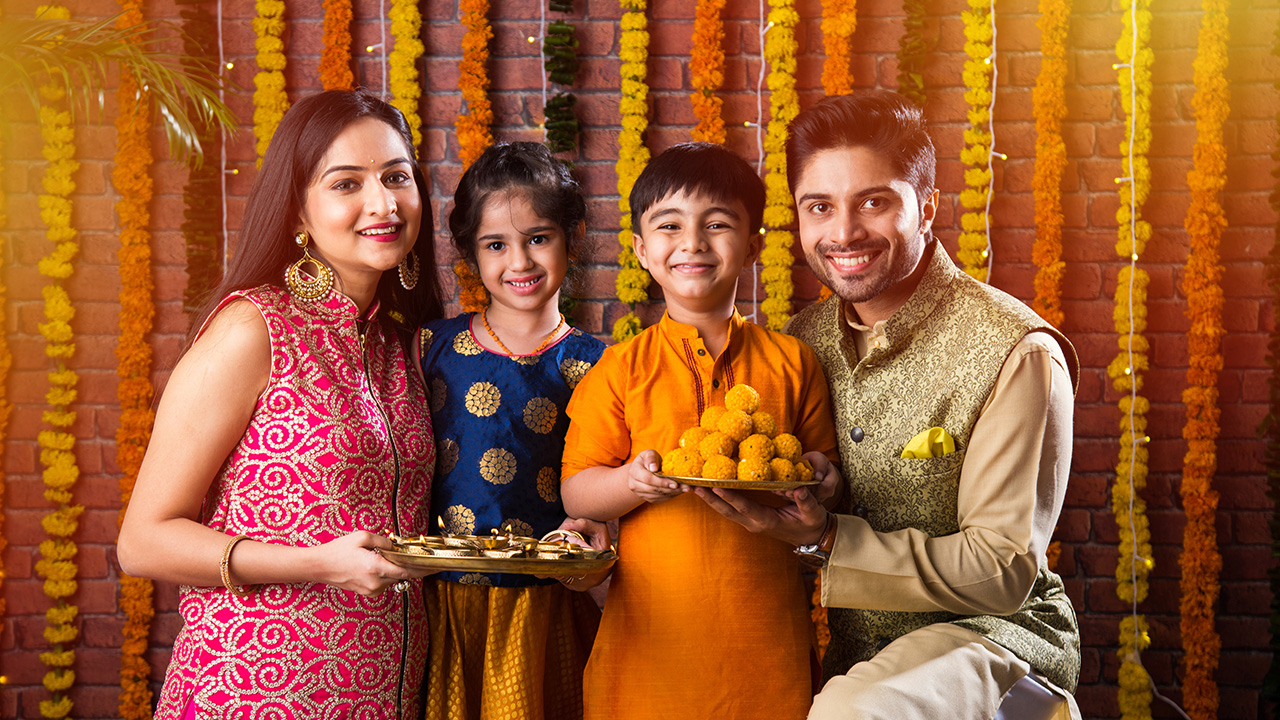
Diwali, the festival of lights, is a joyous and vibrant celebration for many. It’s a time for family gatherings, exchanging gifts, and indulging in an array of delicious sweets and snacks. However, for those committed to a healthy lifestyle, Diwali can present some challenges. The good news is that with some thoughtful planning and a mindful approach, it’s entirely possible to enjoy the festivities while still maintaining your health and well-being goals.

Set Realistic Goals

Before diving into Diwali celebrations, set realistic goals for yourself. Instead of striving for perfection, aim for moderation and balance. Understand that Diwali is a time for enjoyment and occasional indulgence, and that’s perfectly okay. Your goals should be achievable and in alignment with your overall health and fitness journey.

Educate Yourself on Nutrition

Knowledge is a powerful tool when it comes to making informed choices. Learn about the nutritional content of common festive foods and sweets. This understanding will help you practice portion control and make healthier choices during Diwali. For example, be aware that certain sweets are high in sugar and calories, while others may have healthier ingredients.

Plan and Track Your Meals

Planning your meals in advance, especially before attending Diwali gatherings, can be a game-changer. Having a balanced meal before heading to a celebration can help prevent overindulgence. Consider keeping a food diary to stay mindful of your food choices, ensuring you don’t go overboard during the festive season.

Explore Healthy Alternatives

The good news is that you can enjoy Diwali treats without feeling guilty. Many traditional sweets and snacks have healthier alternatives. For instance, you can make sweets with less sugar, healthier fats, and more nutritious ingredients. You’ll be amazed at how delicious and satisfying these healthier options can be.

Stay Active

Physical activity is an essential part of maintaining a healthy lifestyle. Even during the festive season, it’s important to continue with your exercise routine. You can even make it fun and festive. Consider activities like dancing to Diwali music, taking family walks, or participating in Diwali-themed fitness events.

Manage Stress

Diwali can be stressful for many due to various commitments and responsibilities. Stress management is vital for both your mental and physical well-being. Explore stress-reduction techniques such as meditation, deep breathing exercises, and mindfulness to help you stay calm and centered.

Seek Support

Share your health and fitness goals with friends and family who share similar aspirations. Having a support system in place can be a significant motivator. You can lean on each other for guidance and encouragement during the festive season.

Practice Mindful Eating

Mindful eating involves savoring each bite, eating slowly, and listening to your body’s hunger and fullness cues. By paying attention to what your body is telling you, you can avoid overindulging and make healthier food choices.

Reward Yourself

Consider implementing a rewards system for achieving your health and fitness goals during Diwali. Treat yourself to non-food rewards when you meet your targets. This positive reinforcement can be an excellent motivator.

Stay Accountable

Accountability is key to staying on track. Schedule regular check-ins with a fitness professional or a friend who shares your goals—having someone to report your progress to can help you remain committed to your objectives.

Think Long Term

Lastly, remember that your health and fitness journey is not limited to the festive season. Embrace the long-term benefits of a healthy lifestyle, as they contribute to your overall well-being and quality of life.

Diwali is a time to celebrate and enjoy with your loved ones. With the right approach, you can have a fantastic time while staying true to your health and fitness goals. This Diwali, celebrate the festival of lights while also celebrating your commitment to a healthier and happier you, wishing you a joyous and prosperous Diwali!

We hope you have a great Diwali, and these tips help you celebrate a happier, healthier, and guilt-free one. If these tips are beneficial to you, please let us know in the comments below. For more on healthy living, check out Healthy Reads or get additional tips directly from a GOQii Coach by subscribing to Personalised Health Coaching here.

#BeTheForce

Disclaimer: The information provided in this blog is for general awareness and educational purposes only. It is not intended to replace professional medical advice, diagnosis, or treatment. Always consult a qualified healthcare provider for personalised medical guidance or concerns related to your health. Images shown are for representation purposes only and may not depict the exact recommendations or outcomes.

June 17, 2025 By GOQii Leave a Comment

Why Longevity Must Be India’s Next Health Mission

For the first time in human history, living to 90 or even 100 is no longer a rare feat—it’s becoming the norm. But behind this celebration of longer life lies a sobering truth: we’re living longer, but not necessarily better.



Across the world, people are spending more of their later years grappling with chronic illness, frailty, and declining independence. This trend, often called the “decompression of morbidity,” is stretching health systems, straining economies, and impacting quality of life on a massive scale.

We are standing at the edge of a demographic revolution. The core challenge facing us today isn’t how to extend lifespan—we’ve already done that. The real question is: How do we extend health span?

What Is Healthspan – and Why Does It Matter

Healthspan refers to the years a person lives in good health, free from serious illness, mental decline, and disability. It’s about not just how long you live, but how well you live.

Imagine reaching the age of 80 and still being physically active, mentally sharp, and emotionally fulfilled. That’s the promise of healthy longevity—and it’s not just a dream anymore. Thanks to advances in medicine, genomics, artificial intelligence, and preventive healthcare, we now know that ageing is not fixed. It’s flexible. Malleable. Even reversible in some areas.

Science has shown that the processes that cause ageing—cellular damage, inflammation, loss of muscle and cognitive function—can be slowed, delayed, and in some cases, restored. But to turn this knowledge into reality, we need a complete shift in how we approach health.

A System Built for Sickness, Not for Longevity

Most healthcare systems today are reactive. They wait for the disease to appear, then scramble to treat it. But by the time symptoms show up, the damage is often already done.

A longevity-focused approach flips this model. It emphasises early detection, continuous monitoring, lifestyle interventions, and personalised care. Instead of simply treating illness, we need to start managing ageing itself—tracking biological age, not just the number on a birth certificate.

This requires investment not only in technology, but in rethinking everything from urban planning and public health policies to diet, exercise, and social connection. Longevity is not a pill or a procedure—it’s a lifestyle supported by a system that enables it.

The Global Wake-Up Call

The urgency is clear. Several research papers on longevity indicate that by 2050, nearly 20% of the global population of estimated 8.2 billion will be over 65, double the percentage from just a few decades ago. This isn’t a challenge for the future, it’s one we must face today.

While ageing populations have long been associated with wealthier countries, the reality has changed. The majority of the world’s older adults now live in low- and middle-income countries. Places like India, with a rapidly growing elderly population, are on the frontlines of this shift.

And yet, this is also where the greatest opportunity lies.

Why India Can Lead the Longevity Movement

India has a unique advantage in the global longevity landscape. We are a young nation, demographically speaking, but also home to over 140 million people over the age of 60, a number expected to double by 2050. This duality gives us the urgency and the scale to build solutions for both present and future generations.

But more importantly, India brings something few other countries do: a culture that already values holistic well-being. For centuries, our traditions have emphasised the balance of mind, body, and spirit through yoga, Ayurveda, meditation, and community living. These aren’t just cultural practices; they are pillars of a longevity lifestyle.

Combined with our digital innovation, scientific talent, and entrepreneurial energy, India is well-positioned to develop, test, and export models of healthy ageing that are affordable, scalable, and rooted in prevention.

The XPRIZE Signal: A $101 Million Push Toward Longevity

The global focus on healthy ageing has never been stronger, and leading this momentum is the XPRIZE Healthspan competition, a groundbreaking $101 million initiative challenging innovators worldwide to rethink what’s possible in longevity science. The mission is bold: to develop solutions that can rejuvenate the body and mind of people aged 50–80, restoring muscle strength, cognitive abilities, and immune function by at least a decade, all within just 12 months.

It’s a call to the world’s brightest minds to not just extend life, but to meaningfully turn back the biological clock.  Among the 40 global semifinalists—and the only one representing India – is GOQii’s Project Sanjeevini, an advanced health platform that seamlessly integrates artificial intelligence, genomics, and behavioural science to deliver deeply personalised, real-time care. Designed to adapt to each individual’s unique biology and lifestyle, Sanjeevini represents a bold new approach to healthy ageing on a global scale. Unlike typical wellness tools, Sanjeevini operates as a living, learning system—tracking biological markers in real time and delivering targeted interventions based on user behaviour and biology.

This kind of bold thinking is what we need more of—urgently. The longevity movement is not about extending elite access to anti-ageing tools. It’s about creating systems and environments where everyone, regardless of income or geography, can thrive in later life.

Redefining Ageing, Globally and Personally

We need to rewrite the story of ageing—from a period of decline to a time of continued growth, contribution, and vitality. A 70-year-old should not be seen as someone winding down, but as someone potentially hitting a new stride, with the support of an intelligent, personalised health system.

This isn’t science fiction. It’s a global health strategy whose time has come. India can—and must—be a leader in this transformation. Not just for its people, but for the world. Because when we invest in longevity, we’re not just adding years to life—we’re adding life to years.

#BeTheForce

  • « Previous Page
  • 1
  • …
  • 6
  • 7
  • 8
  • 9
  • 10
  • …
  • 101
  • Next Page »

Search

Recent Posts

  • 6 Health Benefits of Playing Sports
  • Foods to Manage Blood Sugar Naturally: A Complete Guide to Better Blood Sugar Control
  • The Lazy Person’s Guide to Staying Healthy: 5 Micro-Habits That Take Less Than 2 Minutes
  • Healthy Eating: Comforting Chilli Bean Soup Recipe for the Monsoon
  • The Truth About the ‘Beer Belly’: What Alcohol Really Does to Your Metabolism

Stay Updated

Archives

  • August 2026 (8)
  • July 2026 (25)
  • June 2026 (22)
  • May 2026 (20)
  • April 2026 (24)
  • March 2026 (18)
  • February 2026 (14)
  • January 2026 (14)
  • December 2025 (19)
  • November 2025 (15)
  • October 2025 (20)
  • September 2025 (6)
  • August 2025 (6)
  • July 2025 (9)
  • June 2025 (18)
  • May 2025 (16)
  • April 2025 (22)
  • March 2025 (26)
  • February 2025 (21)
  • January 2025 (25)
  • December 2024 (22)
  • November 2024 (22)
  • October 2024 (20)
  • September 2024 (22)
  • August 2024 (27)
  • July 2024 (15)
  • June 2024 (23)
  • May 2024 (26)
  • April 2024 (27)
  • March 2024 (27)
  • February 2024 (23)
  • January 2024 (21)
  • December 2023 (14)
  • November 2023 (10)
  • October 2023 (19)
  • September 2023 (21)
  • August 2023 (16)
  • July 2023 (16)
  • June 2023 (21)
  • May 2023 (20)
  • April 2023 (19)
  • March 2023 (23)
  • February 2023 (19)
  • January 2023 (15)
  • December 2022 (11)
  • November 2022 (15)
  • October 2022 (15)
  • September 2022 (12)
  • August 2022 (9)
  • July 2022 (17)
  • June 2022 (11)
  • May 2022 (10)
  • April 2022 (6)
  • March 2022 (6)
  • February 2022 (13)
  • January 2022 (11)
  • December 2021 (7)
  • November 2021 (3)
  • October 2021 (6)
  • September 2021 (3)
  • August 2021 (8)
  • July 2021 (7)
  • June 2021 (15)
  • May 2021 (16)
  • April 2021 (10)
  • March 2021 (7)
  • February 2021 (4)
  • January 2021 (4)
  • December 2020 (3)
  • November 2020 (4)
  • October 2020 (10)
  • September 2020 (3)
  • August 2020 (3)
  • July 2020 (2)
  • June 2020 (4)
  • May 2020 (10)
  • April 2020 (12)
  • March 2020 (10)
  • February 2020 (4)
  • January 2020 (4)
  • December 2019 (3)
  • November 2019 (7)
  • October 2019 (5)
  • September 2019 (4)
  • August 2019 (9)
  • July 2019 (9)
  • June 2019 (11)
  • May 2019 (4)
  • April 2019 (8)
  • March 2019 (8)
  • February 2019 (9)
  • January 2019 (8)
  • December 2018 (9)
  • November 2018 (3)
  • October 2018 (3)
  • September 2018 (5)
  • August 2018 (10)
  • July 2018 (6)
  • June 2018 (13)
  • May 2018 (8)
  • April 2018 (17)
  • March 2018 (9)
  • February 2018 (8)
  • January 2018 (15)
  • December 2017 (12)
  • November 2017 (19)
  • October 2017 (13)
  • September 2017 (15)
  • August 2017 (4)
  • July 2017 (8)
  • June 2017 (7)
  • May 2017 (6)
  • April 2017 (8)
  • March 2017 (6)
  • February 2017 (7)
  • January 2017 (9)
  • December 2016 (10)
  • November 2016 (7)
  • October 2016 (7)
  • September 2016 (7)
  • August 2016 (11)
  • July 2016 (9)
  • June 2016 (9)
  • May 2016 (12)
  • April 2016 (17)
  • March 2016 (17)
  • February 2016 (8)
  • January 2016 (6)
  • December 2015 (2)
  • November 2015 (9)
  • October 2015 (7)
  • September 2015 (9)
  • August 2015 (11)
  • July 2015 (9)
  • June 2015 (11)
  • May 2015 (9)
  • April 2015 (13)
  • March 2015 (8)
  • February 2015 (5)
  • January 2015 (12)
  • December 2014 (14)
  • November 2014 (11)
  • October 2014 (6)
  • September 2014 (13)
  • August 2014 (12)
  • July 2014 (6)
  • June 2014 (2)
  • May 2014 (7)
  • April 2014 (4)

From Burnout to Balance: How Dr. Ranjit Reclaimed His Health

Dr Ranjit Bhatt has spent years tending to others. A practising doctor in Odisha, his days were packed with patients, surgeries, and emergencies. From the outside, it looked like a life lived in service. But on the inside, something wasn’t right. “I had no … [Read More...]

From Shimla’s Slopes to Chandigarh’s Sidewalks: Surinder Kaur Bhalla’s Journey from Chaos to Control

Some journeys start with a plan. Others begin with a stumble literally. Surinder Bhalla, a government professional, born and raised in the scenic hill town of Shimla, had always lived a life of movement. “In Shimla, you walked everywhere,” she reflects. “Walking was never an exercise. It was just life.” But after shifting to Chandigarh, […]

“I’ve Challenged Myself to Live 100 Years” – The Story of Chandubhai Savani’s Second Chance at Life

At 67, most people start slowing down. Not Chandubhai Savani. A resident of Surat, Chandubhai, thought life was on track. “My life was going well till I had my bypass surgery,” he says. That surgery, back in 2021, was a wake-up call.  Medication was routine, but exercise wasn’t. His diet? What he calls ‘normal.’ “I […]

Ananda Mukherjee Health Story

From Terminal Illness To Complete Wellness! Ananda Mukherjee Health Story

As we observe World Cancer Day under the powerful theme ‘United by Unique’ (2025-2027)**, we are reminded that every individual’s journey with cancer is distinct, yet united by shared resilience, hope, and the collective fight against this disease. This theme places people at the centre of care and their stories at the heart of the […]

  • HOME
  • HEALTHY LIVING
  • FITNESS
  • HEALTHY RECIPES
  • USER STORIES
  • KARMA
  • BUY GOQii

Copyright ©2016 GOQii
