GOQii

Blog

  • HOME
  • HEALTHY LIVING
  • FITNESS
  • HEALTHY RECIPES
  • USER STORIES
  • KARMA
  • BUY GOQii

Search Results for: mental health

October 11, 2017 By Dr Ashwin Nanda Leave a Comment

The Bipolar Journey

bipolar (1) (1)

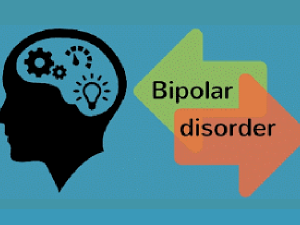
In 2013, the celebrity world across the world was shocked when they heard that Catherine Zeta-Jones of Mask of Zorro, ‘Chicago’ and ‘Ocean’s Twelve’ fame declared she was suffering from ‘Bipolar II disorder’ and had checked into a hospital for treatment. There were a lot of discussions in media related to Bipolar Disorder- a kind of mood disorder which even the elite cannot escape away from if it grips them.

Similarly, I had a patient named Jalaj (name changed) who was detected with bipolar mood disorder. He got to know of his condition in a fairly unpleasant way. It began with him having trouble in his married life due to his unexplained aggression. Initially, his parents and wife were apprehensive to consult a psychiatrist because they considered seeking help for mental health a taboo. They thought he was stressed due to the financial burden. But, eventually, when his behaviour got worse, they consulted a psychiatrist who after diagnosing declared him to be ‘Bipolar’. His family, wife and friends stood by him in his trying times and he recovered in 6 months without medication. Unfortunately, most of us consider taking anti-depressants to be a sign of mental weakness.

When fights and Jalaj’s behaviour went out of control, it was on the insistence of his wife that the family consulted a shrink for professional help. On taking Jalaj’s history, the psychiatrist found that he had suffered a bout of depression 4 years ago also which was his first episode. He was 20 years old then.

Bipolar mood disorder typically starts in early adult life, between 18 to 22 years of age. Jalaj’s first episode of depression was also for no obvious reason. His wife Dimple reported that during the two years of their married life she did feel he had a lot of mood fluctuations. These mood fluctuations are called cyclothymic mood changes in medical terminology. The person swings between a mildly good and mildly low mood throughout the day and entire life. When his father came to know of his son’s diagnosis he confirmed that Jalaj’s grandfather was also bipolar. He used to have the bout of depression every 3 years and recover from it in 6 months. Bipolar Disorder is strongly hereditary and runs in families.

Let’s understand what is Bipolar?

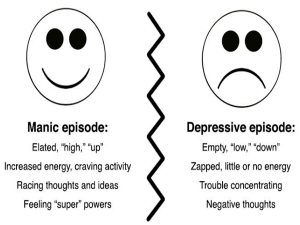
A person afflicted with bipolar mood disorder goes from mild depression into moderate and then severe depression followed by a return to normal state for few months and then goes into mild mania and then hypomania in a cyclical and periodic manner throughout adult life. The word BIPOLAR means having two extremes which are poles apart. The medical reason is that the neurotransmitters serotonin, dopamine and norepinephrine fluctuate for no explainable reason. Hence it’s a chemical imbalance.

5% of world population is estimated to be bipolar. Impulsiveness is another hallmark feature of a bipolar. They hardly think before doing most things. When in an excessive happy mode, a bipolar tends to go on a buying spree. A bipolar person is also prone to aggression, alcohol, smoking and drug addiction, hypersexuality or promiscuous behaviour in mania phase.
Bipolar image 2 (2) (1)

Treatment

Treatment for Bipolar is psychiatric counselling and regular medication to control mood swings. Jalaj was counselled by a psychiatrist who made him understand that if he doesn’t take medication he will be jeopardizing his family life and career. Bipolars need daily and regular medication to function normally. The medicines called mood stabilizers prevent the mood fluctuations and prevent mania and depression.

Jalaj takes medication as prescribed and follows up with the shrink once every 3 months. Thankfully he is leading a happy married life again and Dimple also understands what he goes through and is able to counsel him. Daily meditation also helps Jalaj deal with his mood fluctuations. 8 hrs of sound sleep is essential on a daily basis for him so that he does not lose his sanity.

It is critical that bipolars’ take treatment because there are chances of attempting suicide during a major depressive phase. Many bipolar utilize the hypomania phase to be more creative and productive and achieve professional stardom. In a way, they turn it into a gift. Bipolar can be well controlled and one can lead a healthy life. On a lighter note, a bipolar person has a happening life with lots of ups and downs.

 

October 10, 2016 By Dr Ashwin Nanda 1 Comment

SHEDDING LIGHT ON DEPRESSION

depression

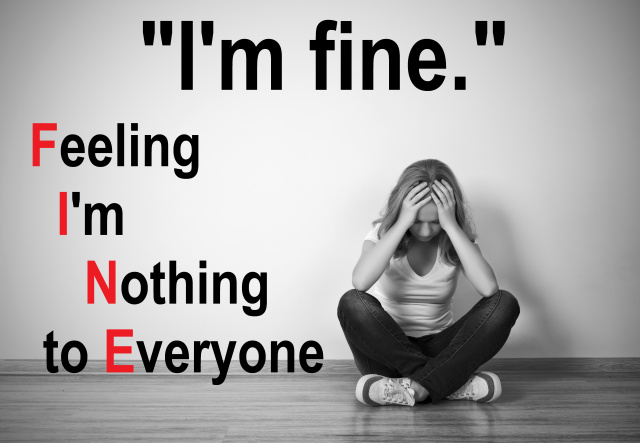
Last year, when the famous Bollywood actress Deepika Padukone opened the lid on her struggle with anxiety and depression and admitted to the world that she was on medication for the same, it became the talk of the town. Everyone started discussing mental health, there were articles in Newspapers, TV channels interviewing the actress and asking her to tell her story. Padukone became an example for many to come out and discuss their issue without fear. Why so? Because depression and mental illness isn’t usually talked about. There is shame and stigma attached to talking about depression. Today, on world health day, I would like to share some insights into depression and what needs to be done when in that situation.

My first experience in dealing with depression was when I was still in Medical school. My very close friend from medical school went through depression. It was then I realized that one needs a lot of empathy and patience to understand what someone is going through in depression. The extreme low mood during depression is such a bad feeling that no one chooses to be depressed by choice …it’s either circumstances or medical conditions that push an individual into depression.

My friend had slipped into depression due to a heart break. The impact was so huge that he withdrew himself from studies, friends and family. He slept longer than usual 8 hours, ate less and experienced terrible mood swings. He refused to talk to anyone and eventually turned suicidal. It is at this point that we had to rush him to the psychiatry department of our college hospital.

The psychiatrist talked to my friend privately for 15 minutes and then to his parents and me privately for another 10 minutes. Then, called us all in and sat us down and explained to us that my friend was suffering from an episode of major depression and medication was a must.

None of us were comfortable that he needed medication to recover from depression but, as counseled by the doctor, avoiding medicines wasn’t an option as he was feeling suicidal. Fifteen days later he started feeling better by 10% and the counselor started weekly sessions with him on the recommendation of the Psychiatrist to expedite recovery. Thankfully my friend recovered completely to his normal self in 6 months’ time and medicines and counseling were discontinued.

It is said that one in every four people suffer from anxiety and depression. According to WHO (World Health Organization) 350 million people worldwide suffer from depression in a year. By the year 2020, it will be the second most common disorder after heart disease. The chemical changes occurring in the brain during depression is a reduction in the level of Serotonin, dopamine and nor adrenaline – these are neurotransmitters (Chemicals which are produced by brain cells).

SOME COMMON SYMPTOMS OF DEPRESSION:

  1. Loss of interest / pleasure in activities which were previously enjoyable.
  2. Decreased energy.
  3. Feelings of guilt and low self – worth.
  4. Disturbed sleep and appetite.
  5. Poor concentration.
  6. Substantial impairment in the person’s ability to handle his/her daily responsibilities.
  7. At its worst it can make the person suicidal.

All symptoms are mild in the beginning and gradually increase in intensity over time.

RISK FACTORS:

  1. Genetics – If you have an immediate family member who has experienced major depression, there is a likelihood that you will also have an episode in your lifetime.
  2. Financial hardships and low education levels.
  3. Female Gender – depression is two to three times more likely in women as compared to men. Depression setting in after delivery of child occurs in some cases.
  4. Chronic illnesses like diabetes, tuberculosis, arthritis.
  5. Exposure to violence / Abuse especially in childhood.
  6. Being separated / divorced especially for men.

MANAGING DEPRESSION:

It is important to recognize depression and take it seriously. Going to a psychiatrist is a must

Mild cases can improve with counseling and psychological therapy (depending on the cause of depression, the person is taught coping mechanisms). Severe cases need anti-depressants along with psychological therapy. Self help is equally essential.

Some self help tips:

  1. Create a daily routine and try to stick to it.
  2. Exercise releases endorphins in the brain which give a feeling of happiness, hence daily exercise is a must to recover and prevent depression.
  3. Try to eat a healthy and balanced diet daily.
  4. Openly communicate with family members and loved ones about what you are experiencing to foster relationships and get support.
  5. Avoid alcohol and recreational drugs as they worsen depression.
  6. Be patient with yourself. For someone with depression even the smallest tasks can seem impossible.

Depression is treatable and plenty of help is available to assist a person cope with it and get back to leading a normal and enjoyable life.

October 4, 2016 By Dr Manali Rao 1 Comment

What is contraception?? Birth control or fertility control

csphonqik1

Why or how does it play such a major role in the betterment of a society? I have a little story to share. Like all women, my friend was also super excited about her wedding. It was the perfect match, the man was perfect with a well-paying job, loving family and most importantly he was a man with a heart of gold. Are you wondering how our discussion on contraception fits into the scheme of this here?

Let me explain. Here’s what happened! Couple of days before their big day, my friend’s to be husband made it very clear to her that he does not want to use any contraceptive. But, he did not want a child for a year at least. And, that he also did not want her to use a barrier method of contraception (female condoms) either! The other conditions laid down by her to be partner was also that she had to lose weight and remain slim for the rest of her life. This is kind of a heard story right? It does not come as a surprise.

Now, my friend was in atotal fix. There were so many terms and conditions and unfortunately she had no say in the matter. It was told to her and she had to follow it. She was not very keen on OCPs (Oral Contraceptive Pills) given their side effects like weight gain, nausea, sore or swollen breasts, lighter or heavy periods, mood changes, abdominal pain and headaches. So what other option was she left with?

IUCD (Intrauterine Contraceptive Device)-It is a small contraceptive device, often ‘T’-shaped, containing either copper or levonorgestrel, which is inserted into the uterus. They are one form of long-acting reversible contraception which are the most effective types of reversible birth control.

Was my friend aware that it is not advisable to use IUCDs unless you have conceived at least once? Nope! She wasn’t aware nor did she take any medical advice. So just to keep her husband happy, she opted for IUCD.

What happened next?!!

She started having adverse effects like excessive bleeding during menses, abdominal pain, and loss of weight and before we knew it, she looked under nourished.

What led to all this? Who was to be blamed? Was it the girl’s fault?  Or was it her husband, who had the notion that using a barrier method reduces the pleasure or the basic psyche that the girl must to do all that pleases her husband irrespective of what the consequences could be. I would say all three and most importantly it’s the lack of knowledge about contraception.

I am saddened by the thought that some people still think contraception is unnecessary as it decreases libido and that it’s a taboo. Well, trust me folks it is not so. When one uses contraception, they can avoid unwanted pregnancies and space planned pregnancies to promote optimal birth outcomes.

When a pregnancy is planned, one can start prenatal care, including increasing their intake of folic acid; work with the gynecologists to address relevant medical conditions, as well as substance abuse; and take other steps that lead to healthier outcomes for both the mother and the infant.

Pregnancies that are unplanned are more likely to be affected by delayed prenatal care, maternal depression, low birth weight, poorer childhood physical and mental health, and other complications. Breastfeeding rates are also lower after unintended pregnancies. We should also remember that most of the unintended pregnancies end in abortion, which affects both the parents psychologically and affects the mother physically.

When you look at the facts, contraception is a smart public health policy.

Of course, for some women, birth control is essential for other health reasons, including acne, fibroids, and endometriosis and to reduce problems associated with irregular or very heavy periods.

There are several methods of contraception:

Natural Family Planning (NFP): Couples can use NFP techniques like the rhythm method, basal body temperature, or the cervical mucus method to try to pinpoint when a woman is ovulating (fertile). To prevent pregnancy, sexual intercourse is to be avoided around the time of ovulation.

Other methods include barrier method (condoms), OCPs, IUCDs.

Remember, contraception plays an important role in the well-being of the family and the society as a whole.

Finally, don’t forget to consult your gynecologist for advice on the right Contraceptive method for you.

December 30, 2015 By Parwage Alam 1 Comment

10 New Year workouts for 2016

Are you planning to have some great health-related New Year resolutions? Every Year we set some resolution for ourselves for the New Year and end up with no result because of inconsistency in fulfilling the tasks.

This year let’s set some realistic goals and give a blow to our hidden talents. We always think that we’ll start the New Year with some regular exercising but due to boredom we are   unable to continue. So try new things so as to make your workouts interesting.

The easiest is to start with remembering some of those childhood games and activities that you liked and played the most. Try them out again for a change. If you cannot remember them here are some exercises which will help you to stick to your routine and you will also enjoy achieving your fitness levels.

  1. Roller-skating: Roller-skating as an exercise provides a lot of health benefits. Skating offers an effective cardiovascular workout, endurance training and strength training to build strong muscles in the pelvis and legs. Balance and coordination can also be improved by regular skating.
  1. Hula hooping: Hula hoop is when you rotate your hip round and round. I am sure everyone heir childhood would have attempted this at least once. As an exercise, I can say that hula hoop is a bona fide piece of workout equipment that can tone your thighs, abdominals, gluteals, and arms. You barely feel like you’re working out while doing Hula hoop.
  1. Dancing: Whether you like to jump or jive, tap or tango, shake your belly or your booty, dancing is one of the most enjoyable ways to get some exercise. If you dance 30 min in a day you will enjoy your day and feel very fit without realizing that you have worked out. Also, there is no age limit for the dance, anyone can dance. Regular dancing is great for fitness, maintaining strong bones, improving posture and muscle strength, increasing balance and coordination, and beating stress.

To get more information about Dancing you can check another blog written by my colleague Shimpli Patil. Let’s dance… for a better health and a better you!!

http://goqii.com/blog/lets-dance-for-a-better-health-and-a-better-you/

  1. Trampolining: Everyone likes to jump. So we can relate this exercise to the above mentioned dancing exercise. If you know how to jump, you know dancing. Jumping itself is a great exercise but if you are jumping on a hard floor, you might hurt your legs, knees, so the best option is to use Trampoline. Jump workouts on Trampoline are not only a quick way to tighten, tone and build core strength, you can also shred calories and boost cardio as effectively as going for a run — without the stress on your joints.
  2. Water exercise: As a kid most of us enjoyed playing in the water, be it in bath tub at home or in the pool. Believe me that the water exercises is a great way to stay fit without hurting your body. Water workout burns tons of calories but feels like an easy play. To know more you can read from the following link:

One-Stop Shop Workout – Swimming:

http://goqii.com/blog/one-stop-shop-workout-swimming/

  1. Cycling: I still remember that my school was approximately 8 kms away from my home and I use to travel by cycle to school every day. It was fun and the same time kept me healthy. Cycling is indeed one of the best ways to be fit. My favourite weekend activity has always been cycling and every time I would pick a new route and end up exploring the place. Cycling is the easiest way of exercise because you can ride a bicycle almost anywhere, at any time of the year, and without spending a fortune. Cycling builds strength, muscle tone, builds stamina, improves your cardiovascular fitness, improves heart health and reduces stress. This also improves the mental health.

Cycling is good for your coordination: Moving both feet around in circles while steering with both your hands and your body’s own weight is good practice for your coordination skills.

  1. Skipping: How many of us remember our childhood, when we used to skip and even had challenges among ourselves to find out who could skip the fastest. Those memories of my childhood bring back a smile on my face. I used to enjoy those skipping moments. There were several games we could play with the skipping rope and it was one of the cheapest games that one could purchase. The best part of a skipping rope was that people of all ages could use it.

You can read more on skipping in my blog – Did you know how useful a ‘SKIPPING’ rope can be?

http://goqii.com/blog/did-you-know-how-useful-a-skipping-rope-can-be/

  1. Running: As a child all of us have ran so much while playing but as we grow older all these activities somehow comes to a halt thereby forcing many to lead an unhealthy life. Nowadays running is becoming a very popular sport and a craze among many. This in turn has also led to the number of marathons being organized in a year. According to me one of your New Year resolutions could be to take up running seriously and become a runner.

Here is another blog written by my colleague Mitali on how to prepare for a marathon- Are you running the Marathon? Here is your guide to training:

http://goqii.com/blog/are-you-running-the-marathon-here-is-your-guide-to-training/

  1. Outdoor Games:It’s always best to play outdoor games. If you remember most of us from our generation would remember their times of playing in the parks but sadly nowadays kids are seldom found playing outside and are found more busy with their X-Box, video games, Ipad etc, which lead them to the unhealthy lifestyle. I would suggest you start going to park or nearest ground to play outdoor games like cricket or Foot Ball, which will then encourage your kids also to play outside. For more information about Cricket and Foot Ball, you can read my following Blog – CRICKET and FOOT BALL—Your healthy path to fitness!:

http://goqii.com/blog/cricket-and-foot-ball-your-healthy-path-to-fitness/

  1. Hiking: Hiking especially with friends: If you like to explore new places, try to go Hiking, it will help you not only to explore new places but, also increase your strength and stamina, because you have to walk on the mountain which really needs balancing. Also, while doing Hiking, you are increasing your physical and mental health, because it will give you stress relieve from your whole week work burden.

Once you have decided the resolution for your new year, try to check on it in every interval of 15 days and ask yourself one question – are you following your Resolution? If No – get back on track and then enjoy your healthy lifestyle.

  • « Previous Page
  • 1
  • …
  • 44
  • 45
  • 46
  • 47
  • 48
  • …
  • 101
  • Next Page »

Search

Recent Posts

  • 6 Health Benefits of Playing Sports
  • Foods to Manage Blood Sugar Naturally: A Complete Guide to Better Blood Sugar Control
  • The Lazy Person’s Guide to Staying Healthy: 5 Micro-Habits That Take Less Than 2 Minutes
  • Healthy Eating: Comforting Chilli Bean Soup Recipe for the Monsoon
  • The Truth About the ‘Beer Belly’: What Alcohol Really Does to Your Metabolism

Stay Updated

Archives

  • August 2026 (8)
  • July 2026 (25)
  • June 2026 (22)
  • May 2026 (20)
  • April 2026 (24)
  • March 2026 (18)
  • February 2026 (14)
  • January 2026 (14)
  • December 2025 (19)
  • November 2025 (15)
  • October 2025 (20)
  • September 2025 (6)
  • August 2025 (6)
  • July 2025 (9)
  • June 2025 (18)
  • May 2025 (16)
  • April 2025 (22)
  • March 2025 (26)
  • February 2025 (21)
  • January 2025 (25)
  • December 2024 (22)
  • November 2024 (22)
  • October 2024 (20)
  • September 2024 (22)
  • August 2024 (27)
  • July 2024 (15)
  • June 2024 (23)
  • May 2024 (26)
  • April 2024 (27)
  • March 2024 (27)
  • February 2024 (23)
  • January 2024 (21)
  • December 2023 (14)
  • November 2023 (10)
  • October 2023 (19)
  • September 2023 (21)
  • August 2023 (16)
  • July 2023 (16)
  • June 2023 (21)
  • May 2023 (20)
  • April 2023 (19)
  • March 2023 (23)
  • February 2023 (19)
  • January 2023 (15)
  • December 2022 (11)
  • November 2022 (15)
  • October 2022 (15)
  • September 2022 (12)
  • August 2022 (9)
  • July 2022 (17)
  • June 2022 (11)
  • May 2022 (10)
  • April 2022 (6)
  • March 2022 (6)
  • February 2022 (13)
  • January 2022 (11)
  • December 2021 (7)
  • November 2021 (3)
  • October 2021 (6)
  • September 2021 (3)
  • August 2021 (8)
  • July 2021 (7)
  • June 2021 (15)
  • May 2021 (16)
  • April 2021 (10)
  • March 2021 (7)
  • February 2021 (4)
  • January 2021 (4)
  • December 2020 (3)
  • November 2020 (4)
  • October 2020 (10)
  • September 2020 (3)
  • August 2020 (3)
  • July 2020 (2)
  • June 2020 (4)
  • May 2020 (10)
  • April 2020 (12)
  • March 2020 (10)
  • February 2020 (4)
  • January 2020 (4)
  • December 2019 (3)
  • November 2019 (7)
  • October 2019 (5)
  • September 2019 (4)
  • August 2019 (9)
  • July 2019 (9)
  • June 2019 (11)
  • May 2019 (4)
  • April 2019 (8)
  • March 2019 (8)
  • February 2019 (9)
  • January 2019 (8)
  • December 2018 (9)
  • November 2018 (3)
  • October 2018 (3)
  • September 2018 (5)
  • August 2018 (10)
  • July 2018 (6)
  • June 2018 (13)
  • May 2018 (8)
  • April 2018 (17)
  • March 2018 (9)
  • February 2018 (8)
  • January 2018 (15)
  • December 2017 (12)
  • November 2017 (19)
  • October 2017 (13)
  • September 2017 (15)
  • August 2017 (4)
  • July 2017 (8)
  • June 2017 (7)
  • May 2017 (6)
  • April 2017 (8)
  • March 2017 (6)
  • February 2017 (7)
  • January 2017 (9)
  • December 2016 (10)
  • November 2016 (7)
  • October 2016 (7)
  • September 2016 (7)
  • August 2016 (11)
  • July 2016 (9)
  • June 2016 (9)
  • May 2016 (12)
  • April 2016 (17)
  • March 2016 (17)
  • February 2016 (8)
  • January 2016 (6)
  • December 2015 (2)
  • November 2015 (9)
  • October 2015 (7)
  • September 2015 (9)
  • August 2015 (11)
  • July 2015 (9)
  • June 2015 (11)
  • May 2015 (9)
  • April 2015 (13)
  • March 2015 (8)
  • February 2015 (5)
  • January 2015 (12)
  • December 2014 (14)
  • November 2014 (11)
  • October 2014 (6)
  • September 2014 (13)
  • August 2014 (12)
  • July 2014 (6)
  • June 2014 (2)
  • May 2014 (7)
  • April 2014 (4)

From Burnout to Balance: How Dr. Ranjit Reclaimed His Health

Dr Ranjit Bhatt has spent years tending to others. A practising doctor in Odisha, his days were packed with patients, surgeries, and emergencies. From the outside, it looked like a life lived in service. But on the inside, something wasn’t right. “I had no … [Read More...]

From Shimla’s Slopes to Chandigarh’s Sidewalks: Surinder Kaur Bhalla’s Journey from Chaos to Control

Some journeys start with a plan. Others begin with a stumble literally. Surinder Bhalla, a government professional, born and raised in the scenic hill town of Shimla, had always lived a life of movement. “In Shimla, you walked everywhere,” she reflects. “Walking was never an exercise. It was just life.” But after shifting to Chandigarh, […]

“I’ve Challenged Myself to Live 100 Years” – The Story of Chandubhai Savani’s Second Chance at Life

At 67, most people start slowing down. Not Chandubhai Savani. A resident of Surat, Chandubhai, thought life was on track. “My life was going well till I had my bypass surgery,” he says. That surgery, back in 2021, was a wake-up call.  Medication was routine, but exercise wasn’t. His diet? What he calls ‘normal.’ “I […]

Ananda Mukherjee Health Story

From Terminal Illness To Complete Wellness! Ananda Mukherjee Health Story

As we observe World Cancer Day under the powerful theme ‘United by Unique’ (2025-2027)**, we are reminded that every individual’s journey with cancer is distinct, yet united by shared resilience, hope, and the collective fight against this disease. This theme places people at the centre of care and their stories at the heart of the […]

  • HOME
  • HEALTHY LIVING
  • FITNESS
  • HEALTHY RECIPES
  • USER STORIES
  • KARMA
  • BUY GOQii

Copyright ©2016 GOQii