GOQii

Blog

  • HOME
  • HEALTHY LIVING
  • FITNESS
  • HEALTHY RECIPES
  • USER STORIES
  • KARMA
  • BUY GOQii

Search Results for: hunger

March 5, 2025 By GOQii Leave a Comment

The Difference Between Emotional Eating & Binge Eating Disorder

Many people use food as a coping mechanism, but when does it cross the line into something more serious like Binge Eating Disorder (BED)? Let’s explore the key differences.

What is Emotional Eating?

Emotional eating is when we eat in response to feelings rather than physical hunger. It is often triggered by stress, boredom, sadness, or even happiness.

Signs of Emotional Eating:

  • Eating in response to stress, sadness, boredom, or anxiety.
  • Craving specific comfort foods (e.g., sweets, crisps, or junk food).
  • Eating even when not physically hungry.
  • Feeling temporarily better after eating, but then experiencing guilt or regret.
  • Occurs occasionally and in smaller portions.

While emotional eating is a common behaviour, it becomes a concern when it happens frequently and disrupts your relationship with food.

What is Binge Eating Disorder (BED)?

Binge Eating Disorder (BED) is a serious mental health condition characterised by frequent, uncontrollable episodes of eating large quantities of food. Unlike emotional eating, BED involves a sense of loss of control and distress around food.

Signs of Binge Eating Disorder:

  • Frequent episodes of eating large amounts of food within a short time.
  • Eating even when uncomfortably full or not hungry.
  • Feeling out of control during eating episodes.
  • Eating very quickly and secretly, due to shame or embarrassment.
  • Feeling distressed, ashamed, or guilty after binge episodes.
  • Episodes occur at least once a week for three months (as per clinical diagnosis).

Unlike emotional eating, BED is a compulsive disorder that can have serious long-term effects on both physical and mental health.

Key Differences Between Emotional Eating & Binge Eating Disorder

Factor

Emotional Eating

Binge Eating Disorder (BED)

Triggers

Stress, boredom, sadness

Can be emotional or compulsive without a clear trigger

Portion Size

Small to moderate

Large amounts of food in one sitting

Control Over Eating

Some level of control

Complete loss of control

Frequency

Occasional

Recurring (at least once a week for 3+ months)

Aftermath Feelings

Mild guilt or regret

Intense guilt, shame, distress

Eating Speed

Normal

Very fast, often secretive

Physical Consequences

Rare

Can lead to obesity, diabetes, heart issues

How to Manage Emotional Eating & Binge Eating Disorder

Whether you struggle with occasional emotional eating or suspect you may have BED, there are steps you can take to regain control of your eating habits.

  1. Recognise Your Triggers

Keep a food and mood journal to identify what emotions drive your eating habits. Do you eat when you’re stressed? Lonely? Bored? Understanding your triggers is the first step to making changes.

  1. Find Healthier Coping Mechanisms

Instead of turning to food, try activities like:

    • Exercise – A natural mood booster.
    • Journaling – Helps process emotions.
    • Meditation or Deep Breathing – Reduces stress and anxiety.
    • Social Connection – Call a friend or spend time with loved ones.
  1. Eat Mindfully
    • Pay attention to hunger cues – eat when you’re physically hungry, not emotionally hungry.
    • Practise portion control – serve food on a plate rather than eating straight from a packet.
    • Slow down while eating – chew properly and enjoy your food.
  1. Professional Help for BED
    • Cognitive Behavioural Therapy (CBT) – A proven method to change binge-eating behaviours.
    • Mindful Eating Therapy – Helps individuals reconnect with hunger and fullness cues.
    • Support Groups & Counselling – Having a support system makes recovery easier.
    • Medical Interventions – In some cases, doctors may prescribe medication to help manage BED.

Occasionally turning to food for comfort is normal, but when it becomes a frequent coping mechanism or involves loss of control, it’s important to take action. Understanding the difference between emotional eating and Binge Eating Disorder is the first step toward a healthier relationship with food.

Have you ever struggled with emotional eating? What strategies have helped you? Share in the comments!

#BeTheForce

Disclaimer: The information provided in this blog is for general awareness and educational purposes only. It is not intended to replace professional medical advice, diagnosis, or treatment. Always consult a qualified healthcare provider for personalised medical guidance or concerns related to your health.
March 1, 2025 By GOQii Leave a Comment

YOUR FOOD GUIDE – Small food changes can make your journey with USEMA smooth and successful.

How USEMA works and why diet matters?
USEMA contains semaglutide, a GLP-1 receptor agonist used to manage type 2 diabetes with obesity.

  • It works by mimicking a natural hormone (GLP-1) in the body that helps control blood sugar levels.
  • It reduces appetite and helps you feel full sooner, which supports healthy weight loss.
  • This also contributes to better metabolic control.
  • Because GLP-1 RA therapy can change how much and how often you eat, proper nutrition becomes important during treatment.

USEMA helps you:

  • Feel full faster
  • Feel full with smaller food portions
  • Stay full for longer time
  • Reduce hunger and cravings
  • Control blood sugar levels

Why nutrition matters when you are on USEMA

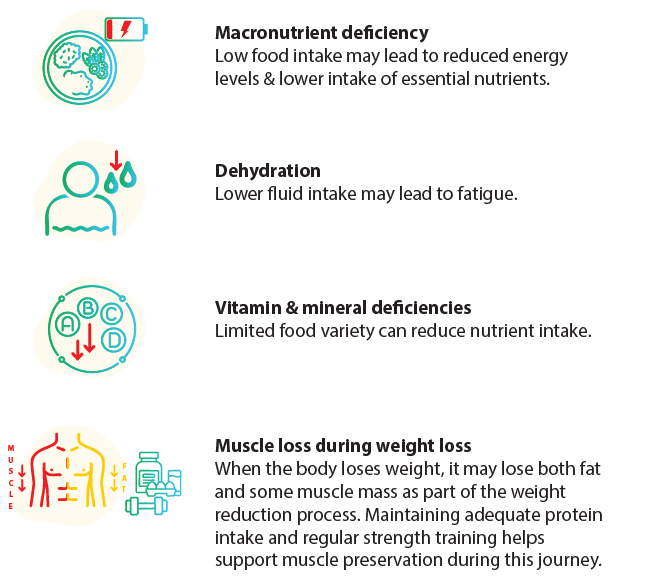
When you begin to feel full more quickly and stay satisfied for longer, it’s natural to eat less than you did before and in smaller portions. If these meals are not balanced nutritionally, you may not get all the nutrients you need.

This may lead to:

This may lead to

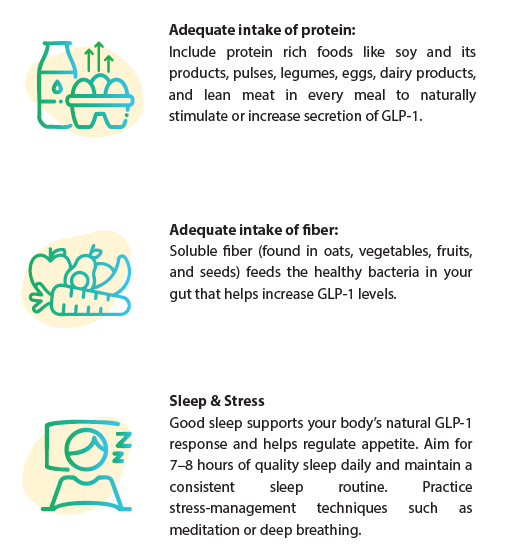
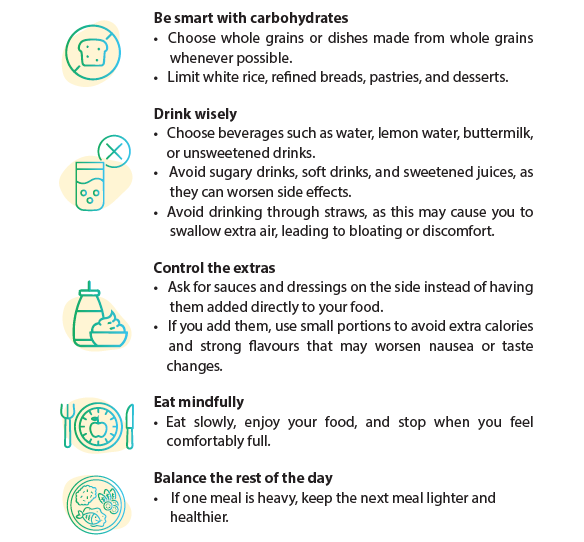
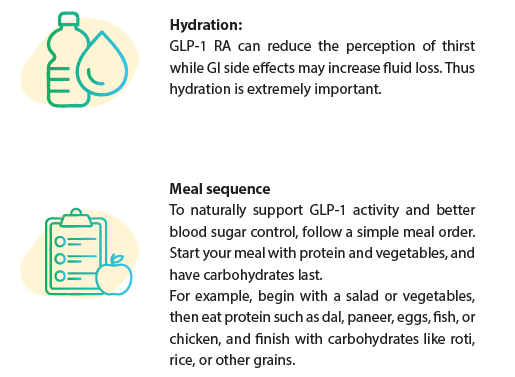
Smart habits to get the best results with USEMA


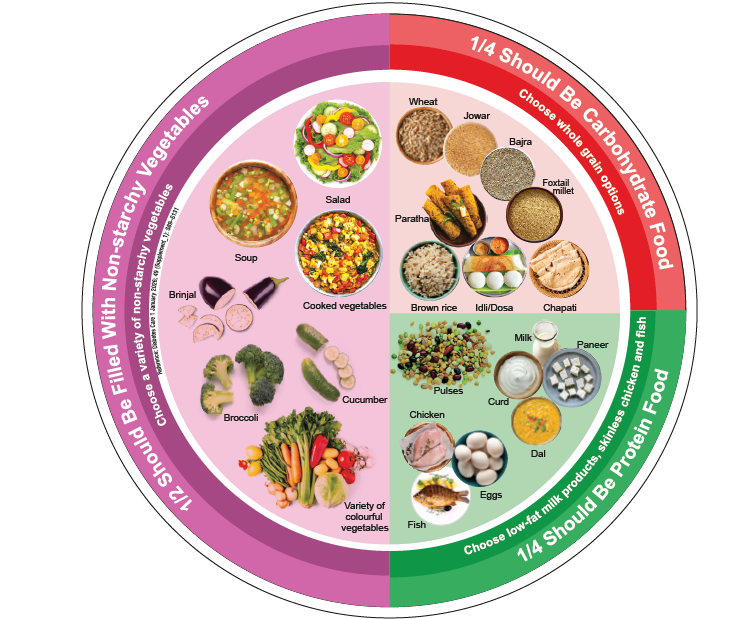
What is a healthy plate?

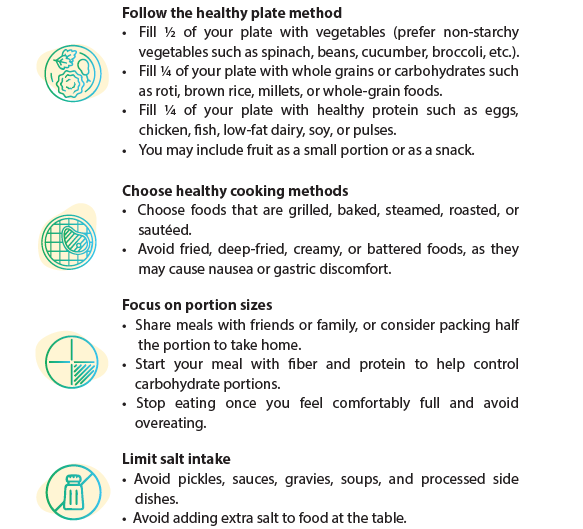
Healthy plate is a simple and practical way to plan meals that supports your overall health, energy levels, and better blood sugar control. Instead of focusing on strict calorie counting, it focuses on a well-balanced diet with the right proportions of different types of food.

Meal tips when on USEMA : (Do’s and Don’ts)

Do’s Don’ts
Consume well-balanced meals at regular intervals. Avoid fried, oily, and very spicy foods.
Drink adequate water throughout the day. Limit alcohol intake.
Limit consumption of processed foods. Avoid eating fruit with lunch or dinner.
Eat slowly and chew food thoroughly. Avoid lying down immediately after meals.
Choose fruit as a mid-morning or evening snack. Avoid heavy exercise immediately after meals.
Keep a record of your food and water intake. Do not eat in a hurry.
Choose healthier cooking methods like steaming, stir-frying, or baking rather than frying.

Importance of nutrition to protect muscle and bone health during weight loss

Protect muscle during weight loss

When you lose weight, your body loses not only fat but also some muscle mass. Muscle loss can account for about 10–25% of total weight loss. This is a natural change in the body, but it can be minimized by eating enough protein by staying physcially active and strength training.

You may have a higher risk of muscle loss if you:

  •  have inadequate protein intake
  •  are older in age
  •  are a post-menopausal woman
  •  do not perform strength or resistance exercises regularly

To protect your muscles and improve strength:

  • Eat adequate protein (about 60–75 g/day or up to 1.5 g/kg body weight per day).
  • Include high-quality protein sources such as soy products, pulses, dals, sprouts, and dairy for vegetarian options, and eggs, chicken, and fish for non-vegetarian options.
  • Include strength or resistance exercises regularly to maintain muscle mass.

Protecting bone health during weight loss

Rapid and significant weight loss (around 14% or more within 3–4 months) may also lead to some bone loss, especially in women and older adults.

Bone loss during weight reduction may depend on:

  •  How quickly you lose weight
  •  Your protein intake
  •  Your level of physical activity
  •  Your starting body weight

Loss of bone density can increase the risk of fractures and affect long-term bone health.

To keep your bones strong:

  • Ensure adequate protein intake.
  • Include nutrients important for bone health, such as calcium and vitamin D.
  • Stay physically active, especially with weight-bearing and strength exercises.

Healthy dining-out tips

Socialising and eating away from home are part of everyday life. With a few mindful choices and portion control, you can enjoy dining out occasionally. The following tips can help you make healthier and more comfortable choices while eating out.

#BeTheForce

References:

  1. Collins L, Costello RA. Glucagon-like peptide-1 receptor agonists. StatPearls [Internet]. Treasure Island (FL): StatPearls Publishing; 2024.
  2. Mozaffarian D, Agarwal M, Aggarwal M, et Nutritional priorities to support GLP-1 therapy for obesity: A joint Advisory from the American College of Lifestyle Medicine, the American Society for Nutrition, the Obesity Medicine Association, and The Obesity Society. Obesity (Silver Spring). 2025;33(8):1475-1503. doi:10.1002/oby.24336
  3. Almandoz JP, Wadden TA, Tewksbury C, et Nutritional considerations with antiobesity medications. Obesity (Silver Spring). 2024;32(9):1613-1631. doi:10.1002/oby.24067
  4. van der Klaauw AA, Keogh JM, Henning E, et al. High protein intake stimulates postprandial GLP1 and PYY release. Obesity (Silver Spring). 2013;21(8):1602-1607. doi:10.1002/oby.20154
  5. Leidy HJ, Armstrong CL, Tang M, Mattes RD, Campbell WW. The influence of higher protein intake and greater eating frequency on appetite control in overweight and obese men. Obesity (Silver Spring). 2010;18(9):1725-1732. doi:10.1038/oby.2010.45
  6. Bodnaruc, M., Prud’homme, D., Blanchet, R. et al. Nutritional modulation of endogenous glucagon-like peptide-1 secretion: a review. Nutr Metab (Lond) 13, 92 (2016). https://doi.org/10.1186/s12986-016-0153-3
  7. How to Activate GLP-1 Ohio State University. (2025 July 1). Accessed February 21, 2026.
  8. Joslin Diabetes Healthy Plate Method. Joslin Diabetes Center. Accessed December 29, 2025.
  9. Gentinetta S, Sottotetti F, Manuelli M, Cena H. Dietary Recommendations for the Management of Gastrointestinal Symptoms in Patients Treated with GLP-1 Receptor Agonist. Diabetes Metab Syndr 2024;17:4817-4824. Published 2024 Dec 19. doi:10.2147/DMSO.S494919
  10. Pamela Kushner, Carlos Campos, Aaron King, Davida Kruger, Javier Morales; Clinician Guidance on the Benefits of Healthy Nutrition and Increased Physical Activity for People With Type 2 Diabetes Following Glucagon-Like Peptide 1 Receptor Agonist Initiation. Clin Diabetes 15 December 2025; 43 (5): 681–695
  11. Figueiredo VC. Revisiting the roles of protein synthesis during skeletal muscle hypertrophy induced by Am J Physiol Regul Integr Comp Physiol. 2019;317(5):R709-R718. doi:10.1152/ajpregu.00162.2019
  12. American Diabetes Association. What can I eat? Healthy eating away from home (WCIE Participant Guide, Class               3)

.https://professional.diabetes.org/sites/default/files/media/wcie_participant_guide_class_3_lr.pdf

Disclaimer: The information provided herein is prepared based on articles provided under reference and reviewed by a qualied dietitian intended for bringing general awareness and are/is not intended to replace professional medical advice. Seek advice from the qualied health care professional before adopting the suggestions or if you have a doubt regarding your health condition. USV Private Ltd., (“USV”) disclaims all liabilities or damages arising directly or indirectly from the advisory services. Copying, circulation and distribution of this content is strictly prohibited.

January 23, 2025 By Akanksha Khullar 2 Comments

5 Easy Ways to Make Eating Healthy!

eating healthyLet’s face it! We all struggle to eat healthy sometimes and after a while, we turn to fad diets or some “miracle food” to help us ease the guilt of having eaten something unhealthy. While a lot of information is available on the internet about eating healthy, it also causes a lot of confusion as most of the content isn’t authentic and could do more harm than good. So what exactly is Eating Healthy comprised of?


Tips to Eating Healthy

To simplify what eating healthy should consist of, we’re sharing some simple tips which will help you eat healthy, clean and provide you with all the nutrients you need!

  1. Consume Whole Foods: Whole foods are foods that are unprocessed and unrefined, or processed or refined as minimum as possible to retain their nutritional value. They have a lot of fibre, good fats, no added sugar or bad fats or salt. A few examples for whole grains are whole wheat, barley, quinoa, beans, legumes and nuts, seeds, fruits, and vegetables.
  2. Go for Healthy Snacking: Healthy snacking is very important to keep energy constant throughout the day, to decrease hunger pangs and keep one away from overeating during the next meal. Healthy snacking, as per the options suggested, also refrains one from having junk foods which are high in sugars and fats that can lead to various metabolic disorders in the body like diabetes, heart ailments etc. Some healthy foods that can be included are fruits, nuts and seeds, roasted chana, peanuts, coconut water, buttermilk, lemon water, and whole wheat/multigrain sandwich with no butter or cheese.
  3. Never Skip Meals: Always make sure to have meals on time to regulate the metabolic rate of the body and keep hunger pangs away. It also keeps you energized. Hence, a 5 meal pattern should be followed i.e. breakfast, mid meal, lunch, mid meal and dinner. Ideally, try and have meals in intervals of 2-3 hours.
  4. Eat Mindfully: Whenever having a meal, try to enjoy every bite, eating slowly while savouring the taste. It takes about 20 minutes for the brain to realize that the stomach is full. If we eat a lot of food at one time and totally stuff the belly, it leads to digestion issues in the future.
  5. Go for Baked or Roasted Foods When Eating Out: During grilling or frying, several harmful compounds like Polycyclic Aromatic Hydrocarbons (PAHs), Advanced Glycation End Products (AGEs) and Heterocyclic Amines (HCAs) are formed. These compounds have been linked to diseases like cancer and heart ailments. So avoid grilled or fried foods and go for baked and roasted!

Sometimes we set ambitious healthy eating goals and get overwhelmed by it. Eating healthy is certainly not about being perfect. So, take small steps by adding the habits discussed above to your current diet regime and work towards a healthier you!

We hope this article helps. If you want diet plans or want to understand more facets of eating healthy, ask your GOQii Coach directly by subscribing to Personalised Health Coaching here.

Do leave your thoughts in the comments below!

#BeTheForce

January 9, 2025 By Palak Mittal Leave a Comment

Why Do We Feel Hungrier During Winter?

hungrier during winterIt’s normal to find a nice thick blanket, cozy up to a pillow and snack away on something warm to quell those hunger pangs that don’t seem to end during winter. This is often complemented with sudden weight gain and you’re left wondering where that excess weight came from. Well, there are several reasons for feeling hungrier during winter and we’re about to explore them.

Reasons for Feeling Hungrier During Winter

  1. High metabolism: During winter, our metabolism is quite high as the body tries to keep itself warm due to those teeth sputtering chill. The body produces more heat in order to combat the chill outside which is known as thermogenesis. To carry out this function, it requires extra calories which get burnt during the process, hence need extra food.
  2. Food Produces Heat: In cold weather, our body needs more calories to keep itself warm with the help of some involuntary activities like shivering. Hence, the body craves more food. When these extra calories start burning, it makes the body warm. Here, we need to remember not to satisfy the cravings with high sugar or high-fat foods as they raise blood sugar levels causing weight gain.
  3. Winter Comes With Multiple Choices: It’s the best time of the year for multiple reasons. One of those being food! Vegetables and fruits flood the markets. Plus, a lot of winter recipes are prepared with rich ingredients which induce weight gain. One can’t help but indulge in sweets this season brings. Not feeling hungry is definitely not an option
  4. Seasonal Affective Disorder (SAD): As the days are shorter, we generally prefer staying indoors which can lead to Vitamin D deficiency and also lower levels of serotonin (happy hormone which generates because of exposure to daylight). These deficiencies typically causes Seasonal Emotional Disturbance or Seasonal Affective Disorder – SAD : a sort of depression related to the shorter days of winter, which affects many of us. It is seen that individuals stricken from SAD crave more carbohydrates, as these facilitate the body’s use of tryptophan (amino acid) which can be converted into serotonin to spike up lower levels in the blood.
  5. Lazy Mornings: It becomes really difficult to get out of your cozy bed during winter mornings to go out for a walk, workout or even work. People prefer lying comfortably in bed, watching a TV show while binging on snacks endlessly. This increase in snacking and lack of physical activity make us gain extra kilos.

 Tips to Avoid Eating More  

  • Whenever you crave for food, try choosing some healthy options like salads, soups, sautéed veggies combined with proteins as these are high in fibre and gives a feeling of fullness.
  • Go out during the day to expose your body to the sun for some vitamin D and to boost your serotonin levels.
  • Perform your regular exercises as it helps in boosting your mood and avoids indulgence in unnecessary snacking.
  • Go out with friends or play with a pet if you are stressed. Don’t look at food as an alternative coping mechanism. 

The bottom line is – eat mindfully and enjoy winters! We hope this article helps you make healthier choices. For more winter tips, check out Healthy Reads or ask a GOQii Coach by subscribing for Personalised Health Coaching here.

#BeTheForce

  • « Previous Page
  • 1
  • …
  • 11
  • 12
  • 13
  • 14
  • 15
  • …
  • 35
  • Next Page »

Search

Recent Posts

  • Foods to Manage Blood Sugar Naturally: A Complete Guide to Better Blood Sugar Control
  • The Lazy Person’s Guide to Staying Healthy: 5 Micro-Habits That Take Less Than 2 Minutes
  • Healthy Eating: Comforting Chilli Bean Soup Recipe for the Monsoon
  • The Truth About the ‘Beer Belly’: What Alcohol Really Does to Your Metabolism
  • Benefits of Meditation: How One Daily Habit Can Transform Your Mental Wellbeing

Stay Updated

Archives

  • August 2026 (7)
  • July 2026 (25)
  • June 2026 (22)
  • May 2026 (20)
  • April 2026 (24)
  • March 2026 (18)
  • February 2026 (14)
  • January 2026 (14)
  • December 2025 (19)
  • November 2025 (15)
  • October 2025 (20)
  • September 2025 (6)
  • August 2025 (6)
  • July 2025 (9)
  • June 2025 (18)
  • May 2025 (16)
  • April 2025 (22)
  • March 2025 (26)
  • February 2025 (21)
  • January 2025 (25)
  • December 2024 (22)
  • November 2024 (22)
  • October 2024 (20)
  • September 2024 (22)
  • August 2024 (28)
  • July 2024 (15)
  • June 2024 (23)
  • May 2024 (26)
  • April 2024 (27)
  • March 2024 (27)
  • February 2024 (23)
  • January 2024 (21)
  • December 2023 (14)
  • November 2023 (10)
  • October 2023 (19)
  • September 2023 (21)
  • August 2023 (16)
  • July 2023 (16)
  • June 2023 (21)
  • May 2023 (20)
  • April 2023 (19)
  • March 2023 (23)
  • February 2023 (19)
  • January 2023 (15)
  • December 2022 (11)
  • November 2022 (15)
  • October 2022 (15)
  • September 2022 (12)
  • August 2022 (9)
  • July 2022 (17)
  • June 2022 (11)
  • May 2022 (10)
  • April 2022 (6)
  • March 2022 (6)
  • February 2022 (13)
  • January 2022 (11)
  • December 2021 (7)
  • November 2021 (3)
  • October 2021 (6)
  • September 2021 (3)
  • August 2021 (8)
  • July 2021 (7)
  • June 2021 (15)
  • May 2021 (16)
  • April 2021 (10)
  • March 2021 (7)
  • February 2021 (4)
  • January 2021 (4)
  • December 2020 (3)
  • November 2020 (4)
  • October 2020 (10)
  • September 2020 (3)
  • August 2020 (3)
  • July 2020 (2)
  • June 2020 (4)
  • May 2020 (10)
  • April 2020 (12)
  • March 2020 (10)
  • February 2020 (4)
  • January 2020 (4)
  • December 2019 (3)
  • November 2019 (7)
  • October 2019 (5)
  • September 2019 (4)
  • August 2019 (9)
  • July 2019 (9)
  • June 2019 (11)
  • May 2019 (4)
  • April 2019 (8)
  • March 2019 (8)
  • February 2019 (9)
  • January 2019 (8)
  • December 2018 (9)
  • November 2018 (3)
  • October 2018 (3)
  • September 2018 (5)
  • August 2018 (10)
  • July 2018 (6)
  • June 2018 (13)
  • May 2018 (8)
  • April 2018 (18)
  • March 2018 (9)
  • February 2018 (8)
  • January 2018 (15)
  • December 2017 (12)
  • November 2017 (19)
  • October 2017 (13)
  • September 2017 (15)
  • August 2017 (4)
  • July 2017 (8)
  • June 2017 (7)
  • May 2017 (6)
  • April 2017 (8)
  • March 2017 (6)
  • February 2017 (7)
  • January 2017 (9)
  • December 2016 (10)
  • November 2016 (7)
  • October 2016 (7)
  • September 2016 (7)
  • August 2016 (11)
  • July 2016 (9)
  • June 2016 (9)
  • May 2016 (12)
  • April 2016 (17)
  • March 2016 (17)
  • February 2016 (8)
  • January 2016 (6)
  • December 2015 (2)
  • November 2015 (9)
  • October 2015 (7)
  • September 2015 (9)
  • August 2015 (11)
  • July 2015 (9)
  • June 2015 (11)
  • May 2015 (9)
  • April 2015 (13)
  • March 2015 (8)
  • February 2015 (5)
  • January 2015 (12)
  • December 2014 (14)
  • November 2014 (11)
  • October 2014 (6)
  • September 2014 (13)
  • August 2014 (12)
  • July 2014 (6)
  • June 2014 (2)
  • May 2014 (7)
  • April 2014 (4)

From Burnout to Balance: How Dr. Ranjit Reclaimed His Health

Dr Ranjit Bhatt has spent years tending to others. A practising doctor in Odisha, his days were packed with patients, surgeries, and emergencies. From the outside, it looked like a life lived in service. But on the inside, something wasn’t right. “I had no … [Read More...]

From Shimla’s Slopes to Chandigarh’s Sidewalks: Surinder Kaur Bhalla’s Journey from Chaos to Control

Some journeys start with a plan. Others begin with a stumble literally. Surinder Bhalla, a government professional, born and raised in the scenic hill town of Shimla, had always lived a life of movement. “In Shimla, you walked everywhere,” she reflects. “Walking was never an exercise. It was just life.” But after shifting to Chandigarh, […]

“I’ve Challenged Myself to Live 100 Years” – The Story of Chandubhai Savani’s Second Chance at Life

At 67, most people start slowing down. Not Chandubhai Savani. A resident of Surat, Chandubhai, thought life was on track. “My life was going well till I had my bypass surgery,” he says. That surgery, back in 2021, was a wake-up call.  Medication was routine, but exercise wasn’t. His diet? What he calls ‘normal.’ “I […]

Ananda Mukherjee Health Story

From Terminal Illness To Complete Wellness! Ananda Mukherjee Health Story

As we observe World Cancer Day under the powerful theme ‘United by Unique’ (2025-2027)**, we are reminded that every individual’s journey with cancer is distinct, yet united by shared resilience, hope, and the collective fight against this disease. This theme places people at the centre of care and their stories at the heart of the […]

  • HOME
  • HEALTHY LIVING
  • FITNESS
  • HEALTHY RECIPES
  • USER STORIES
  • KARMA
  • BUY GOQii

Copyright ©2016 GOQii