GOQii

Blog

  • HOME
  • HEALTHY LIVING
  • FITNESS
  • HEALTHY RECIPES
  • USER STORIES
  • KARMA
  • BUY GOQii

Search Results for: hormone

May 1, 2026 By GOQii Leave a Comment

Revenge Bedtime Procrastination: Why You Stay Up Late When You’re Exhausted

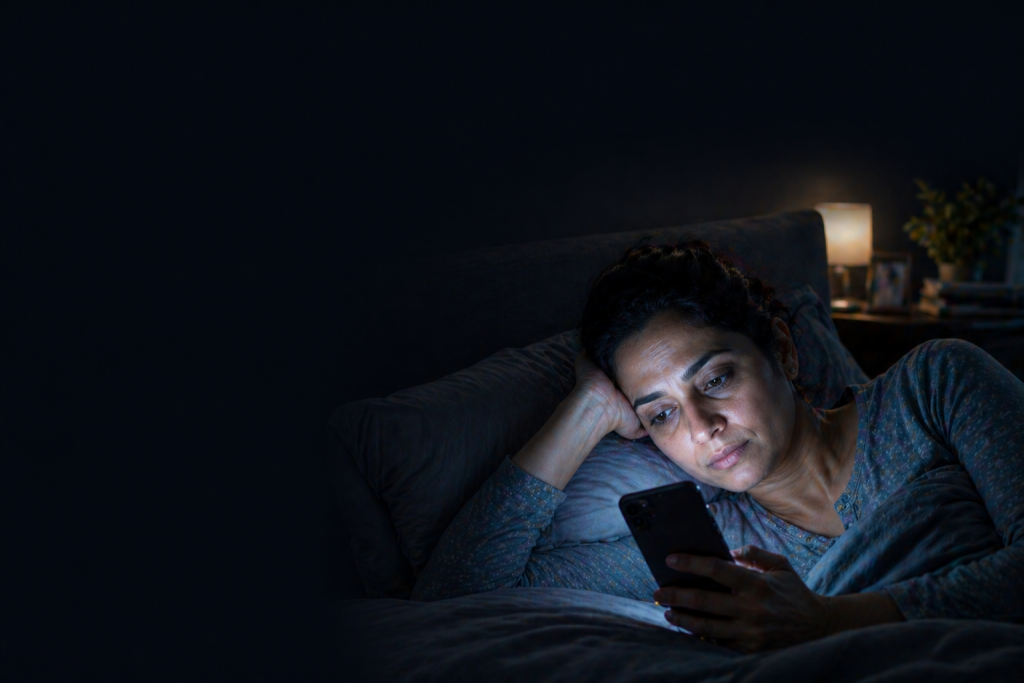
It’s 11:30 PM. Neha has been running on fumes since 7:00 AM. Meetings. Commute. Dinner. Chores.

Her body wants sleep.

So she gets into bed… and scrolls for two hours.

By 1:30 AM, she’s exhausted, guilty, and already dreading the morning.

And tomorrow night? She’ll do it again.

You’re not scrolling because you’re bored.

You’re scrolling because your day gave you nothing.

What Is Revenge Bedtime Procrastination?

The term comes from the Chinese phrase bàofùxìng áoyè used to describe people who sacrifice sleep to reclaim a sense of control over their time.

It’s not insomnia.

You can sleep. You just choose not to because midnight is the only time that feels like yours.

Midnight isn’t freedom. It’s borrowed time.

Why It Happens (The Real Driver)

Revenge bedtime procrastination is not about discipline. It’s about autonomy.

When your day is consumed by:

  • Work demands
  • Family responsibilities
  • Constant notifications

…your brain looks for a window where nobody needs anything from you. That window is night.

So you delay sleep to feel:

  • In control
  • Entertained
  • Like yourself again

It feels like self-care. It’s actually self-neglect.

The Hidden Cost of “Stolen Time”

That extra hour at night isn’t neutral. It compounds.

  1. The Cortisol Trap

Late-night stimulation keeps your body in fight-or-flight mode. As we have explored before, this constant adrenal stress and elevated cortisol leaves you feeling wired but tired. You wake up unrested even after “enough” hours in bed.

  1. Metabolic Disruption

Sleep restriction disrupts hunger hormones (ghrelin ↑, leptin ↓), increasing cravings for sugar and high-calorie foods. Sleep less → crave more → store more.

  1. Cognitive Decline

Lack of deep sleep affects:

  • Memory consolidation
  • Focus
  • Emotional regulation

That “brain fog” tomorrow? You created it last night.

  1. The Loop You Can’t See

Poor sleep → harder day → more exhaustion → more late-night scrolling. You’re stealing from tomorrow to feel alive today.

How to Break the Cycle (Without Losing “Me-Time”)

This isn’t about willpower. It’s about redistributing autonomy.

  1. Add “Me-Time” During the Day

If your entire day is transactional, your night will become compensatory. Create micro-breaks:

  • 10-minute walk alone
  • Quiet coffee without your phone
  • A short read between tasks

If you don’t claim time during the day, you’ll steal it at night.

  1. Create a Clear End to Your Day

Especially if you work from home. Build a shutdown ritual to align your circadian rhythm for better rest:

  • Change clothes
  • Dim lights
  • Take a warm shower

Signal to your brain: “Work is over.”

  1. Replace High-Dopamine With Low-Dopamine

Scrolling = erratic dopamine spikes → alert brain. Swap it for:

  • Reading fiction
  • Stretching
  • Journaling
  • Podcasts

Calm doesn’t come from stimulation. It comes from slowing down.

  1. Reduce the Friction to Sleep

Make sleep the easiest option by incorporating simple daily rituals for better sleep:

  • Keep your phone away from your pillow
  • Dim lights post 10 PM
  • Use a consistent wind-down cue
  1. Start Smaller Than You Think

Don’t jump from 2:00 AM to 10:00 PM. Start with: 👉 15 minutes earlier tonight. That’s it.

The Bottom Line

You don’t have a sleep problem. You have a life structure problem leaking into your nights.

You deserve time for yourself. But sacrificing sleep to get it is a losing trade.

You don’t need more time at night. You need a life during the day.

Revenge bedtime procrastination is a signal, not a failure. Fix the signal: reclaim small moments during the day, create boundaries, and reduce stimulation… and your nights will fix themselves.

Frequently Asked Questions (FAQs)

  1. Is revenge bedtime procrastination a sleep disorder?
    No. Unlike insomnia, you can sleep you’re choosing not to, to reclaim personal time.
  2. Who is most affected?
    High-stress professionals, parents, caregivers anyone with low daytime autonomy.
  3. Does sleep tracking help?
    Yes. Seeing sleep debt (low scores, elevated resting HR) often triggers behaviour change.

#BeTheForce

Disclaimer This content is for educational purposes only and is not medical advice. If you are dealing with chronic sleep issues, burnout, or anxiety, consult a qualified healthcare professional.

April 29, 2026 By GOQii Leave a Comment

International Dance Day: Why Dancing is the Ultimate Workout for Your Body and Mind

DancingLet’s be honest: sometimes, the sheer thought of lacing up your shoes, hitting the gym, or staring at a treadmill screen feels like a chore. When you are already exhausted from a long workday or stressed about your to-do list, finding the motivation to “workout” can be incredibly tough.
But what if your workout didn’t feel like a workout at all?

Every year on April 29th, the world celebrates International Dance Day. Created by the International Theatre Institute to revel in the universality of this art form, it is the perfect reminder that movement doesn’t have to be rigid, repetitive, or boring. Dancing is not just an expression of joy—it is a full-body, mind-healing powerhouse of a workout.

If you have been struggling to break free from a sedentary lifestyle, here is why dancing might just be the exact medicine you need.

  1. The Ultimate “Accidental” Cardio

When your favorite song comes on and you start moving to the beat, you aren’t counting reps or watching the clock. Yet, your heart rate is climbing, your lungs are working harder, and your blood is circulating faster.

Dancing is a fantastic cardiovascular workout. Depending on the intensity and style, whether it’s Bhangra, Zumba, Hip-Hop, or just jumping around your living room you can burn anywhere from 200 to 500 calories in an hour. It improves cardiovascular endurance, helping to combat the exact heart health risks associated with sitting at a desk all day.

  1. A Powerful Antidote to Stress and Anxiety

As we highlighted in the GOQii India Fit Report 2026, stress and low mood are reaching alarming levels across the country. Dancing offers an immediate, natural remedy.

When you dance, your brain releases a massive rush of endorphins (the “feel-good” hormones) while simultaneously lowering cortisol (the stress hormone). Furthermore, because dancing requires coordination and rhythm, it forces your brain to stay entirely in the present moment. It is nearly impossible to ruminate over an anxious thought or a stressful email when you are trying to catch the beat.

  1. It Builds Better Balance and Bones

Unlike walking or running, which are linear movements, dancing forces your body to move in all directions forward, backward, side-to-side, and rotational.

This multi-directional movement engages minor muscle groups that traditional workouts often miss. It sharpens your coordination, improves your posture, and actively strengthens your core. Because it is a weight-bearing activity, regular dancing also helps maintain bone density, which is crucial for preventing osteoporosis as we age.

How to Add More Dance to Your Day (No Skills Required!)

The best part about dancing? There is zero barrier to entry. You don’t need a gym membership, you don’t need expensive equipment, and you absolutely do not need to be a “good” dancer.

Here are three simple ways to celebrate International Dance Day and build more joyful movement into your routine:

  • The 10-Minute Morning Playlist: Create a playlist of 3 uplifting songs. Play them while you are making your morning tea or getting dressed, and just let yourself move. It completely changes the trajectory of your day.
  • The “Chores” Dance Party: Sweeping, folding laundry, or cooking? Put on your headphones and turn routine household chores into a mini cardio session.
  • Take a Class: If you thrive on community energy, sign up for a local Zumba, Bollywood aerobics, or salsa class. The shared energy of a group is infectious and keeps you accountable.

Our bodies were designed to move, and our minds were designed to experience joy. Dancing bridges the gap between the two.

This International Dance Day, don’t worry about burning calories, hitting a step count, or looking perfect. Just turn up the volume, let go of the stress of the day, and let your body do what it naturally wants to do.

Takeaway: Dancing is a zero-equipment, highly effective way to boost your cardiovascular health, melt away anxiety, and break the cycle of a sedentary lifestyle.

What is your absolute favorite song to dance to when nobody is watching? Tell us in the comments!

Frequently Asked Questions (FAQs)

  1. When is International Dance Day?
    International Dance Day is celebrated globally every year on April 29th. It was created by the Dance Committee of the International Theatre Institute (ITI) to celebrate the art of dance and its ability to cross all political, cultural, and ethnic barriers.
  2. Is dancing considered a good workout?
    Absolutely! Dancing is a highly effective cardiovascular workout. It elevates your heart rate, burns calories, improves lung capacity, and engages multiple muscle groups. Because it involves multi-directional movement, it also greatly improves your balance, agility, and core strength.
  3. Does dancing help with mental health?
    Dancing is a powerful mood booster. The physical exertion releases endorphins (happiness hormones) and reduces cortisol (stress hormones). Additionally, focusing on rhythm and movement helps distract the mind from anxious thoughts, acting as a form of moving meditation.

#BeTheForce #InternationalDanceDay

Disclaimer: The content provided in this blog is for educational and informational purposes only and should not be construed as professional medical advice, diagnosis, or treatment. Always consult with a qualified healthcare provider or a certified medical professional before starting any new cardiovascular exercise or fitness routine, especially if you have pre-existing joint issues, heart conditions, or other medical concerns.

April 22, 2026 By GOQii Leave a Comment

Earth Day 2026: How Healing Yourself Heals the Planet

You cannot build a healthy body on a sick planet. The air we breathe, the water we drink, and the soil that grows our food dictate our physical well-being long before we ever step foot in a gym or track our daily steps.

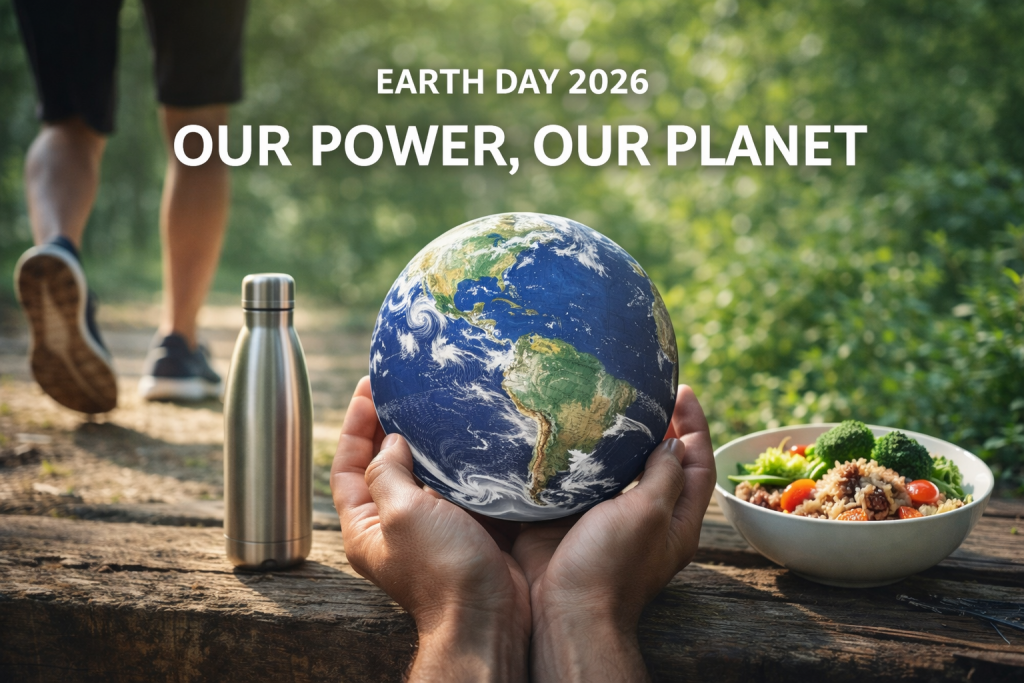
This year, on April 22nd, the global theme for Earth Day 2026 is “Our Power, Our Planet.” It is a powerful reminder that massive global change does not just come from governments and corporations; it starts with the daily choices of individuals.

At GOQii, we believe in the power of daily habits. Interestingly, the very habits that protect your metabolism, heart, and liver are the exact same habits that reduce your carbon footprint. Here is how taking your power back for your personal health simultaneously heals the planet.

Quick Takeaways: Eco-Friendly Health Habits

  • Active Commuting: Swap short drives for walking or cycling to hit your daily steps and cut emissions.
  • Plant-Forward Eating: Choose local, seasonal whole foods to boost digestion and reduce agricultural carbon footprints.
  • Ditch the Plastic: Use stainless steel or glass water bottles to protect your hormones from microplastics and save the oceans.
  • Green Exercise: Take your workouts outdoors to lower cortisol levels and build a deeper appreciation for nature.
  1. Active Commuting: Steps for You, Less Smog for the Earth

A sedentary lifestyle is a leading cause of metabolic diseases. At the same time, relying heavily on cars for short distances is a leading cause of urban air pollution. You can solve both problems with one habit: active commuting.

Choosing to walk or cycle to the local grocery store, the gym, or your office is the ultimate win-win. You effortlessly clock in your 10,000 steps, boost your cardiovascular endurance, and actively remove carbon emissions from your community’s air.

  1. Sustainable Nutrition: Eat Local, Eat Whole

Ultra-processed foods are not just harsh on your liver and gut microbiome; they are terrible for the environment. They require massive amounts of industrial energy to manufacture, package, and ship globally.

By shifting toward a diet rich in locally sourced, seasonal fruits, vegetables, and whole grains, you are doing your body a massive favor. Plant-forward diets reduce the risk of obesity, MASLD (fatty liver), and heart disease. Simultaneously, eating local reduces the “food miles” (the distance food travels to reach your plate), cutting down on greenhouse gas emissions and plastic packaging.

  1. Hydration Without Microplastics

Staying hydrated is a core pillar of preventive health, aiding in everything from kidney function to cellular repair. However, drinking out of single-use plastic bottles introduces microplastics and chemical endocrine disruptors (like BPA) into your bloodstream, which can severely impact your hormonal balance and metabolism.

Switching to a reusable stainless steel, copper, or glass bottle protects your internal health while keeping non-biodegradable plastics out of our oceans and landfills.

  1. Eco-Therapy: Mental Health and “Green Spaces”

Mental and emotional health are just as important as physical fitness. Studies show that spending time in natural green spaces whether it is a local park, a forest, or a hiking trail significantly lowers cortisol (the stress hormone), reduces anxiety, and improves sleep quality.

When you make it a habit to exercise outdoors, you naturally develop a deeper appreciation for the environment. You become more invested in protecting your local green spaces because they are actively contributing to your peace of mind.

Reclaim Your Power

The theme “Our Power, Our Planet” reminds us that we are not helpless. Every time you choose to walk instead of drive, eat a whole-food meal, or refill a reusable bottle, you are casting a vote for a healthier you and a greener earth.

To build sustainable, long-term habits that benefit both your body and your environment, connect with our experts by subscribing to GOQii’s Personalised Health Coaching here.

Frequently Asked Questions (FAQs)

  1. What is the theme for Earth Day 2026?
    The theme for Earth Day 2026 is “Our Power, Our Planet.” It focuses on how individual actions, community engagement, and a shift toward sustainable energy can collectively protect and restore the environment.
  2. How does climate change actually affect my health?
    Environmental shifts directly impact human health. Poor air quality exacerbates asthma and cardiovascular issues, rising temperatures increase the risk of heat-related illnesses, and plastic pollution introduces hormone-disrupting chemicals into our food and water supply.
  3. What is a “sustainable diet”?
    A sustainable diet is one that is healthy for you and has a low environmental impact. It generally involves eating mostly whole, plant-based foods, choosing locally grown and seasonal produce to reduce transportation emissions, and minimizing ultra-processed foods and single-use packaging.

#EarthDay2026 #OurPowerOurPlanet #BeTheForce

Disclaimer: The information provided in this article is for educational and general informational purposes only. Always consult with your physician or a certified GOQii health professional before making any significant changes to your lifestyle or diet.

April 20, 2026 By Trupti Hingad Leave a Comment

10 Tips for a Blissful Night Sleep

Improve sleep and sleep quality

How do you feel when you wake up in the morning? Every health professional must have asked you this question? Amidst our busy schedule, Sleep issues have become alarmingly common.

Here are some of the reasons why you might not be getting proper sleep:-

  1. Distracted by thoughts
  2. Waking up at 3-4am (early hour insomnia)
  3. Constant interruption—night sweats
  4. Sleeping for more than 7hours but not waking up refreshed.

Poor quality of sleep is the most underestimated factor for weight gain, menopause, mood swings, low energy levels, fatigue etc. Sleep is the most important factor of a healthy lifestyle because the body repairs and regenerates during this time. It is also the time when your brain detoxifies and gets rid of waste products. Poor sleep patterns lead to hormonal imbalance and an increase in hunger hormones. Leptin and Ghrelin are the hormones responsible for the regulation of appetite, Leptin tells the brain that you are full and Ghrelin tells the body to eat.

Guess what happens when you don’t sleep well?

Leptin decreases and Ghrelin increases making your body think that you are starving. This either wakes you up to eat in the middle of the night or makes you overeat the next day. When leptin levels are low, the thyroid gland slows down your metabolism making you feel tired and increasing fat storage. Poor sleep increases the stress hormone—cortisol in the body leading to fat storage and can also increase insulin resistance leading to diabetes.

Here are some tips to help you sleep better:-

How-to-Get-a-Better-Nights-Sleep

  1. Keep it dark: The artificial light can reduce the production of hormone—melatonin which makes it hard to fall asleep. Try to keep your bedroom black. Switch off electronic lights (alarms, mobile, TV, ipad)
  2. Nice and early to bed: Practice going to bed at the same time every day. This registers in your subconscious mind and allows you to sleep well. This helps to regulate your body clock and could help you fall asleep and stay asleep for the night.
  3. Keep gadgets away: Try to keep your room gadget free. Charge your phone or laptop in a different room if you can or keep them away from your head, shut them down or put them on Airplane mode (this will reduce the EMF’s, Electro Magnetic Frequencies, that can interfere with your sleep).
  4. Relax your mind: Stress is one of the biggest factor of not getting good sleep. Give time to your mind to switch off from daily activities and get into sleep mode. Avoid thrillers or scary news at night. Try listening to soothing music, read books, meditation or deep breathing.
  5. Relax your body: Take a hot shower before bed or try Epsom salt bath. Epsom salts are rich in Magnesium Sulphate, a known muscle relaxant and detoxifier.
  6. Avoid alcohol: Alcohol leaves you dehydrated at the middle of the night, with low blood sugar and overtaxed liver. Alcohol also messes with your production of serotonin (the precursor to melatonin).
  7. Limit caffeine intake: Caffeine is a stimulant that can keep you awake. So avoid the consumption of caffeine 4-6 hours before bedtime.
  8. Pay attention to what you eat and drink: Avoid refined carbs like pasta, white rice, bread, pastry, sugar and processed foods as it will spike blood sugar at night and may wake you up. Eating a healthy dinner allows the body to absorb proper nutrients and provides the brain with the chemical environment required to produce neurotransmitters, required to maintain adequate sleep.
  9. Hydrate well in the day:  Your sleep can be interrupted if you’re dehydrated as this stimulates cortisol, which wakes you up.
  10. Supplement: Tryptophan is a protein that helps make melatonin. Food sources include whey protein, meat, fish, dairy, nuts and seeds. L-theanine is a calming nutrient found in tea (black and green), Magnesium helps to relax the body and increase a calming neurotransmitter. You can also use Ashwagandha, chamomile, lavender tea, passion flower and lemon balm to induce sleep. Refer to this blog for more info about this supplement.

Sleep is the golden chain that ties HEALTH and our body together. So Snooze and sleep well.

We hope this article helps you. For further information or guidance, reach out to our certified experts by subscribing to GOQii’s Personalised Health Coaching here.

#BeTheForce

  • « Previous Page
  • 1
  • …
  • 5
  • 6
  • 7
  • 8
  • 9
  • …
  • 72
  • Next Page »

Search

Recent Posts

  • Foods to Manage Blood Sugar Naturally: A Complete Guide to Better Blood Sugar Control
  • The Lazy Person’s Guide to Staying Healthy: 5 Micro-Habits That Take Less Than 2 Minutes
  • Healthy Eating: Comforting Chilli Bean Soup Recipe for the Monsoon
  • The Truth About the ‘Beer Belly’: What Alcohol Really Does to Your Metabolism
  • Benefits of Meditation: How One Daily Habit Can Transform Your Mental Wellbeing

Stay Updated

Archives

  • August 2026 (7)
  • July 2026 (25)
  • June 2026 (22)
  • May 2026 (20)
  • April 2026 (24)
  • March 2026 (18)
  • February 2026 (14)
  • January 2026 (14)
  • December 2025 (19)
  • November 2025 (15)
  • October 2025 (20)
  • September 2025 (6)
  • August 2025 (6)
  • July 2025 (9)
  • June 2025 (18)
  • May 2025 (16)
  • April 2025 (22)
  • March 2025 (26)
  • February 2025 (21)
  • January 2025 (25)
  • December 2024 (22)
  • November 2024 (22)
  • October 2024 (20)
  • September 2024 (22)
  • August 2024 (28)
  • July 2024 (15)
  • June 2024 (23)
  • May 2024 (26)
  • April 2024 (27)
  • March 2024 (27)
  • February 2024 (23)
  • January 2024 (21)
  • December 2023 (14)
  • November 2023 (10)
  • October 2023 (19)
  • September 2023 (21)
  • August 2023 (16)
  • July 2023 (16)
  • June 2023 (21)
  • May 2023 (20)
  • April 2023 (19)
  • March 2023 (23)
  • February 2023 (19)
  • January 2023 (15)
  • December 2022 (11)
  • November 2022 (15)
  • October 2022 (15)
  • September 2022 (12)
  • August 2022 (9)
  • July 2022 (17)
  • June 2022 (11)
  • May 2022 (10)
  • April 2022 (6)
  • March 2022 (6)
  • February 2022 (13)
  • January 2022 (11)
  • December 2021 (7)
  • November 2021 (3)
  • October 2021 (6)
  • September 2021 (3)
  • August 2021 (8)
  • July 2021 (7)
  • June 2021 (15)
  • May 2021 (16)
  • April 2021 (10)
  • March 2021 (7)
  • February 2021 (4)
  • January 2021 (4)
  • December 2020 (3)
  • November 2020 (4)
  • October 2020 (10)
  • September 2020 (3)
  • August 2020 (3)
  • July 2020 (2)
  • June 2020 (4)
  • May 2020 (10)
  • April 2020 (12)
  • March 2020 (10)
  • February 2020 (4)
  • January 2020 (4)
  • December 2019 (3)
  • November 2019 (7)
  • October 2019 (5)
  • September 2019 (4)
  • August 2019 (9)
  • July 2019 (9)
  • June 2019 (11)
  • May 2019 (4)
  • April 2019 (8)
  • March 2019 (8)
  • February 2019 (9)
  • January 2019 (8)
  • December 2018 (9)
  • November 2018 (3)
  • October 2018 (3)
  • September 2018 (5)
  • August 2018 (10)
  • July 2018 (6)
  • June 2018 (13)
  • May 2018 (8)
  • April 2018 (18)
  • March 2018 (9)
  • February 2018 (8)
  • January 2018 (15)
  • December 2017 (12)
  • November 2017 (19)
  • October 2017 (13)
  • September 2017 (15)
  • August 2017 (4)
  • July 2017 (8)
  • June 2017 (7)
  • May 2017 (6)
  • April 2017 (8)
  • March 2017 (6)
  • February 2017 (7)
  • January 2017 (9)
  • December 2016 (10)
  • November 2016 (7)
  • October 2016 (7)
  • September 2016 (7)
  • August 2016 (11)
  • July 2016 (9)
  • June 2016 (9)
  • May 2016 (12)
  • April 2016 (17)
  • March 2016 (17)
  • February 2016 (8)
  • January 2016 (6)
  • December 2015 (2)
  • November 2015 (9)
  • October 2015 (7)
  • September 2015 (9)
  • August 2015 (11)
  • July 2015 (9)
  • June 2015 (11)
  • May 2015 (9)
  • April 2015 (13)
  • March 2015 (8)
  • February 2015 (5)
  • January 2015 (12)
  • December 2014 (14)
  • November 2014 (11)
  • October 2014 (6)
  • September 2014 (13)
  • August 2014 (12)
  • July 2014 (6)
  • June 2014 (2)
  • May 2014 (7)
  • April 2014 (4)

From Burnout to Balance: How Dr. Ranjit Reclaimed His Health

Dr Ranjit Bhatt has spent years tending to others. A practising doctor in Odisha, his days were packed with patients, surgeries, and emergencies. From the outside, it looked like a life lived in service. But on the inside, something wasn’t right. “I had no … [Read More...]

From Shimla’s Slopes to Chandigarh’s Sidewalks: Surinder Kaur Bhalla’s Journey from Chaos to Control

Some journeys start with a plan. Others begin with a stumble literally. Surinder Bhalla, a government professional, born and raised in the scenic hill town of Shimla, had always lived a life of movement. “In Shimla, you walked everywhere,” she reflects. “Walking was never an exercise. It was just life.” But after shifting to Chandigarh, […]

“I’ve Challenged Myself to Live 100 Years” – The Story of Chandubhai Savani’s Second Chance at Life

At 67, most people start slowing down. Not Chandubhai Savani. A resident of Surat, Chandubhai, thought life was on track. “My life was going well till I had my bypass surgery,” he says. That surgery, back in 2021, was a wake-up call.  Medication was routine, but exercise wasn’t. His diet? What he calls ‘normal.’ “I […]

Ananda Mukherjee Health Story

From Terminal Illness To Complete Wellness! Ananda Mukherjee Health Story

As we observe World Cancer Day under the powerful theme ‘United by Unique’ (2025-2027)**, we are reminded that every individual’s journey with cancer is distinct, yet united by shared resilience, hope, and the collective fight against this disease. This theme places people at the centre of care and their stories at the heart of the […]

  • HOME
  • HEALTHY LIVING
  • FITNESS
  • HEALTHY RECIPES
  • USER STORIES
  • KARMA
  • BUY GOQii

Copyright ©2016 GOQii


