GOQii

Blog

  • HOME
  • HEALTHY LIVING
  • FITNESS
  • HEALTHY RECIPES
  • USER STORIES
  • KARMA
  • BUY GOQii

Search Results for: food

April 8, 2026 By Kusum Soni Leave a Comment

Do Grains Cause a Leaky Gut? Unpacking the Science and Solutions

leaky gutIf you are suffering from chronic diarrhea, constipation, gas, or bloating coupled with a poor immune system, your issue might be more than just something to do with “what you ate last night.” There is a fair chance that you might be experiencing something known as a leaky gut.

What is a Leaky Gut?

A Leaky Gut, as the phrase suggests, literally means that the gut or intestine is “leaking.”

Technically speaking, the permeability of the intestinal mucosa increases. As a result, a protein called Zonulin is released, and consequently, bacteria, toxins, digestive metabolites, and bacterial toxins leak through the intestinal wall and into the bloodstream.

This increases the toxic build-up in the body, which can manifest across various systems, including the skin, colon, hormones, lungs, liver, lymph, and kidneys. Symptoms often present as bloating, diarrhea, and constipation. This can also trigger an autoimmune response, potentially linking to conditions like rheumatoid arthritis, lupus, Celiac disease, migraines, a weak immune system, and hormonal imbalances.

While the exact cause of a leaky gut is heavily debated, potential triggers include a poor diet, chronic stress, toxin overload, and imbalances in the gut microbiome (dysbiosis).

The Role of Grains: Essential Nutrients or Hidden Hazards?

General dietary guidelines advise us to eat adequate amounts of whole grain products daily, promoting them as the fiber-rich foundation of a healthy diet.

Grains are undeniably the main source of our energy for daily activities and brain function. They supply us with Vitamin B Complex and vital minerals like Zinc, Chromium, Iron, Calcium, Magnesium, and Manganese that power numerous biochemical reactions in our bodies.

However, the question remains: Are all grains necessary, or can they sometimes be harmful?

Alongside their nutrients, grains and legumes also contain certain anti-nutritional compounds. For some individuals, these chemicals can trigger inflammation and negatively affect gut health.

What are the Anti-Nutritional Compounds in Grains? 

  1. Gluten

Gluten is the main structural protein complex found in grains like wheat, rye, and barley. It is incredibly widespread in modern diets due to the heavy intake of processed and refined flour products like bread, cakes, pastries, sauces, ready meals, and breakfast cereals.

  • The Impact: For a person with gluten sensitivity, ingesting gluten significantly increases intestinal permeability immediately after consumption.
  • The Science: Studies demonstrate that daily consumption of wheat products can contribute to chronic inflammation. Gliadin (a component of gluten) can release Zonulin and wheat germ agglutinin, which actively increase intestinal permeability and trigger the immune system.
  1. Lectins

Grains contain different types of lectins, but not all are harmful. The problematic ones are Agglutinins and Prolamins.

  • Agglutinins: These act as a natural insecticide to protect crops. To get a higher crop yield, some grains are genetically modified (GM) to produce more of these natural insecticides, which in turn can make the grain highly inflammatory for human digestion.
  • Prolamins: These are tough to digest. Most grains contain a Prolamin similar in structure to gluten (e.g., Orzenin in rice, Avenin in oats, or Gliadins in wheat).
  1. Phytates and Phytic Acid

Found in the seeds of grains, Phytates and Phytic Acid inhibit the digestion and absorption of crucial minerals specifically zinc, iron, and calcium by binding to them in the gut.

  • The Impact: A small amount of Phytates usually does not cause a problem if you are getting adequate nutrients elsewhere. However, if grains form the vast majority of your staple diet, mineral deficiencies can result, directly impacting your immune system.

5 Ways to Manage a Leaky Gut

If you suspect your gut needs healing, here are actionable, science-backed steps you can take to support your intestinal health:

  1. Choose Naturally Gluten-Free Grains: Opt for grains like bajra, rice, maize, and certified gluten-free oats. However, always read nutritional labels! Many commercial “gluten-free” products are packed with food additives, preservatives, and added sugar, which can further damage the gut lining.
  2. Prepare Your Grains Properly: Go for non-GMO and heirloom varieties of seeds. To make them easier to digest, soak your grains overnight in water mixed with a little lemon juice or apple cider vinegar. Sprouting and slow-cooking also activate Phytase, an enzyme that naturally breaks down harmful Phytates.
  3. Chew Your Food Thoroughly: Digestion begins in the mouth. Do not rush through your meals. Chew slowly and thoroughly so that smaller food particles can be easily digested and absorbed by the intestines.
  4. Adopt an Anti-Inflammatory Diet: Fill your plate with colourful fresh fruit, vegetables, seeds, soaked nuts, plant proteins (like beans and lentils), and oily fish. Simultaneously, cut out refined sugar, processed foods, red meat, and alcohol.
  5. Replenish with Fermented Foods: Introduce natural probiotics to rebuild your gut microbiome. Try incorporating curd, traditional fermented pickles, sauerkraut, kefir, or kombucha into your daily routine.

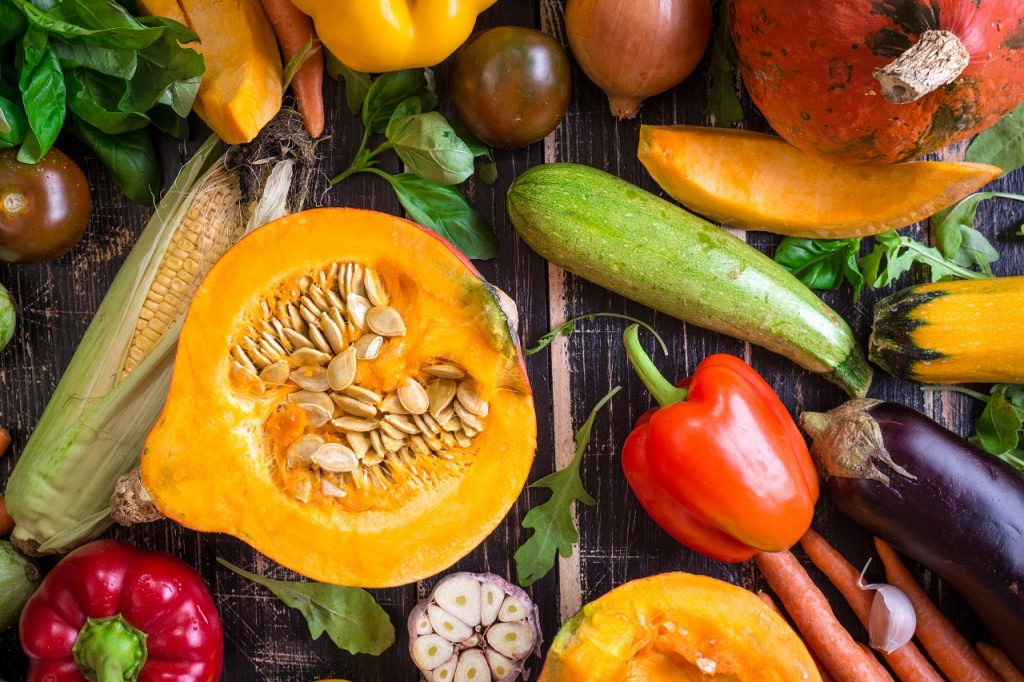
A Note on Nightshades and Autoimmunity: Vegetables from the nightshade family (Solanaceae)—such as tomatoes, peppers, eggplant (brinjal), and potatoes—are high in lectins that can irritate the gut lining, and these lectins do not break down during cooking. Those dealing with severe autoimmune diseases may want to experiment with avoiding these vegetables.

If grains are your primary staple food, they may be obstructing your digestion and contributing to gut permeability. For those with confirmed autoimmune diseases or severe gluten sensitivity, it is often wise to completely exclude grains, pseudo-grains, legumes, and nightshades temporarily. Once the intestinal gaps heal and symptoms disappear, you may be able to reintroduce these foods occasionally.

(Note: Medically, “Leaky Gut Syndrome” is often considered a hypothetical or unrecognized condition by some mainstream medical bodies, though intestinal permeability is a recognized scientifically studied phenomenon. Always consult a healthcare professional for chronic digestive issues.)

We hope this article helps you! Do leave your thoughts and questions in the comments below! For further guidance on elimination diets and gut health, speak to a certified expert by subscribing to GOQii’s Personalised Health Coaching here.

#BeTheForce 

Disclaimer: The information provided in this article is for educational and informational purposes only and is not intended as medical advice, diagnosis, or treatment. Medically, “Leaky Gut Syndrome” is often considered a hypothetical condition by some mainstream medical bodies, though increased intestinal permeability is a recognized scientific phenomenon. Always consult with a qualified healthcare professional, gastroenterologist, or registered dietitian before making any significant changes to your diet especially eliminating entire food groups like grains or nightshades or if you are experiencing chronic digestive or autoimmune symptoms.

April 4, 2026 By Neha Sharma Leave a Comment

Healthy Recipes For Kids: Healthy Twist On Pizza & Rolls

healthy recipes for kids“In all this world, there is nothing so beautiful as a happy child.” – L. Frank Baum

We can define happiness in many terms, but for a child, a healthy child is the happiest one. Healthy eating is vital for the overall growth and development of a child. Albeit, it is not a one-off process; it is a habit that has to be developed from early childhood.

Proper nutrition protects children from chronic diseases, builds strong immunity, and keeps them happy and active in the long run. The core aspects of healthy eating for children are not entirely different from adults both need the right nutrients in the right quantities.

1. Healthy Veggie Pizza 

Say goodbye to “blank calories” and hello to a colorful, nutrient-dense pizza that kids will actually love to eat.

What You Will Need:

For the Dough: 

  • Wheat flour: 150 gm
  • Boiled & mashed Spinach: 50 gm
  • Boiled & mashed beetroot: 50 gm
  • Oil: 2 tsp
  • Salt: ½ tsp

For the Dressing & Toppings :

  • Hung curd: 50 gm
  • Tomato sauce: 50 gm
  • Mixed herbs: 1 tsp
  • Grated carrot: 50 gm
  • Chopped capsicum: 50 gm
  • Boiled chopped corns: 50 gm
  • Cottage cheese (Paneer): 100 gm (finely chopped) 

Method of Preparation

  1. Prepare the Dough: Create two separate doughs one using the mashed spinach and the other using the beetroot. Roll them out into two slightly big and thick chapattis.
  2. Pre-cook: These colorful chapattis can be baked or partially cooked on a tawa like a normal roti.
  3. Add the Base: Spread one layer of fresh hung curd and one layer of tomato sauce evenly over the bases.
  4. Decorate: Spread all the veggies and paneer one by one. Do this in a fun, interesting pattern that appeals to kids!
  5. Season: Sprinkle mixed herbs, salt, and a little bit of cheese on top.
  6. Cook: Bake this chapati pizza in an oven or cook it covered in a kadai for 4-5 minutes until the cheese melts.
  7. Serve: Enjoy hot with an extra side of hung curd dip or tomato sauce!

2. Tangy Protein Rolls 

A fantastic way to curb evening hunger pangs while sneaking in a powerful dose of protein and hidden veggies.

What You Will Need:

For the Wrap (Chilla):

  • Overnight soaked Moong Dal: 100 gm
  • Rice Flour: 2 tsp

For the Filling:

  • Boiled potatoes: 2 (medium)
  • Boiled & mashed peas: 50 gm
  • Cottage cheese (Paneer): 100 gm
  • Grated carrot: 100 gm
  • Chopped capsicum (mixed colors): 100 gm
  • Finely chopped onion: 50 gm
  • Chopped cashews and raisins: 1 tsp
  • Grated fresh coconut: 1-2 tsp

For the Tempering & Flavor:

  • Cumin seeds: ½ tsp
  • Mustard seeds: ½ tsp
  • Curry leaves: 6-7 leaves
  • Sesame seeds: 1 tsp
  • Dry mango powder (Amchur): ½ tsp
  • Tomato sauce: 2-3 tsp
  • Salt: ½ tsp
  • Oil: 2-3 tsp

Method of preparation:

  1. Prepare the Batter: Grind the soaked moong dal into a coarse paste. Add the rice flour, mix well, and set the batter aside for 5-10 minutes.
  2. Temper the Spices: In a pan, heat the oil. Add cumin seeds, mustard seeds, curry leaves, and chopped onion. Sauté until the onions turn slightly pink.
  3. Cook the Filling: Add all the chopped veggies one by one. Mix in the dry mango powder, salt, grated coconut, sesame seeds, and chopped nuts. Sauté everything together for 2-3 minutes.
  4. Shape the Filling: Once slightly cooled, roll the veggie mixture into cylindrical, hotdog-like shapes.
  5. Make the Wrap: Pour a ladle of the moong dal batter onto a hot tawa to make a thin chilla (crepe).
  6. Assemble: Place one veggie “hotdog” in the center of the cooked chilla, apply some tomato sauce, roll it up tightly, and serve!

Health Benefits: Why These Recipes are a Win-Win

  • 100% Safe & Homemade: You control the ingredients, ensuring absolute safety and hygiene for your kids.
  • Nutrient-Dense vs. Empty Calories: Regular commercial pizza is often junk food loaded with empty calories. This version is super healthy, utilizing wheat flour, spinach, and beetroot to provide essential vitamins and minerals.
  • Smart Swaps: Using hung curd blended with a little tomato sauce is a fantastic, gut-friendly alternative to heavy, processed mayonnaise or cheese spreads.
  • High in Protein & Bone Support: Moong dal is an excellent source of plant-based protein. Sesame seeds are fantastic for supporting growing bone health.
  • Kid-Approved Aesthetics: These recipes satisfy the emotional aspect of eating for kids. The natural food coloring from the beetroot and spinach makes them look vibrant, exciting, and exactly like the “outside food” they crave!

We hope you enjoy these Healthy Recipes For Kids. Do try them out, upload your pics on social media or the GOQii Arena and tag us! For more healthy recipes, check out Healthy Reads.  

To get more personalized advice on recipes, nutrition, and diet tips for your child’s development, subscribe to GOQii Personalised Health Coaching here. 

#BeTheForce

Disclaimer: The information and recipes provided in this blog are for general educational and informational purposes only and are not intended as professional medical or clinical nutritional advice. Every child’s nutritional needs, growth patterns, and tolerances are unique. Always consult with your pediatrician or a qualified healthcare professional before making significant changes to your child’s diet, especially if they have known food allergies, sensitivities, or pre-existing health conditions.

March 25, 2026 By GOQii Leave a Comment

Biological Age vs. Chronological Age: How to Measure Your True Vitality

Two women of different ages running together with equal energy, illustrating how biological age can differ from chronological ageWe all celebrate birthdays, but the number of candles on your cake tells a very incomplete story about your health.

In the longevity space, we differentiate between two crucial numbers. Your chronological age is simply the exact number of years you have been alive since birth. It goes in one direction, at a constant speed, and there is absolutely nothing you can do to change it.

Your biological age, however, is the true age of your cells, organs, and tissues. Depending on your lifestyle, your biological age can be years sometimes even decades older or younger than your chronological age. The most exciting part? Unlike your chronological age, your biological age is malleable. You possess the power to slow it down, stop it, and in some cases, even reverse it.

What is Epigenetics? The Science of Cellular Ageing

To understand how biological age works, we have to look at a field of science called epigenetics.

Think of your DNA as the hardware of a computer. The genetic code you were born with cannot be fundamentally altered. Epigenetics, however, is the software. It controls how your genes are “expressed” meaning it determines which genes are turned on (like those that promote cellular repair and vitality) and which are turned off (like those that drive inflammation and disease).

Your daily behaviours act as the programmer. Every meal you eat, the quality of your sleep, your stress levels, and your daily movement all send epigenetic signals to your DNA, telling your body whether to accelerate the ageing process or slow it down.

How to Measure Your True Vitality

You cannot manage what you do not measure. So, how do we actually find out what our biological age is? Today, there are a few primary ways to calculate your true cellular vitality:

  1. Epigenetic Clocks (DNA Methylation) – This is the gold standard in longevity science. Through a simple blood or saliva test, scientists can measure chemical tags on your DNA (called methylation). This provides a highly accurate molecular snapshot of how fast your body is ageing on a cellular level.
  2. Biomarker Blood Panels – You do not always need a cutting-edge DNA test. Routine blood work can provide a fantastic estimate of your biological age. By looking at markers of inflammation (like hs-CRP), metabolic health (like HbA1c and fasting insulin), and liver function, a healthcare professional can determine if your internal organs are performing optimally for your age group.
  3. Functional Fitness Metrics – Your physical capability is a massive indicator of true vitality. Metrics like your VO2 max (how efficiently your body uses oxygen during exercise), your grip strength, and your ability to balance on one leg for 10 seconds are highly correlated with a lower biological age and a longer healthspan.

Practical Ways to Lower Your Biological Age

If you want to widen the gap between your chronological age and your biological age, your daily habits must support cellular repair.

  • Prioritise Anti-Inflammatory Nutrition: Chronic inflammation drives epigenetic ageing. Focus on a diet rich in colourful antioxidants, high-quality proteins, and healthy fats. Minimise ultra-processed foods and refined sugars, which create oxidative stress and accelerate cellular damage.
  • Build Lean Muscle Mass: Muscle is the organ of longevity. Engaging in regular resistance training not only improves your functional fitness metrics but also improves how your body processes glucose, significantly reducing your metabolic age.
  • Optimise Deep Sleep: Deep sleep is when the body does its profound cellular repair and clearing of toxins. If you are chronically sleep-deprived, your cells remain in a state of stress, which triggers epigenetic markers that speed up the ageing process. Aim for 7 to 8 hours of high-quality rest each night.

Your chronological age is just a number on a calendar. Your biological age is a reflection of your choices. Choose vitality.

#BeTheForce

Frequently Asked Questions (FAQs)

  1. What is the main difference between biological and chronological age?
    Your chronological age is the exact number of years you have been alive, which cannot be changed. Your biological age refers to the physiological condition of your cells and organs. Through healthy lifestyle habits, your biological age can actually be much younger than your chronological age.
  2. Can you really reverse your biological age?
    Yes. While you cannot stop the clock on your chronological age, emerging science in epigenetics shows that targeted lifestyle interventions such as improved nutrition, consistent exercise, stress management, and better sleep can positively alter gene expression and actually reduce your biological age over time.
  3. What is the most accurate way to measure biological age?
    The most advanced and accurate method currently available is measuring DNA methylation through an “epigenetic clock” test (usually a blood or saliva test). However, standard comprehensive blood panels and functional fitness assessments (like testing your VO2 max or grip strength) also provide highly reliable indicators of your overall cellular vitality.

Disclaimer: GOQii is committed to providing accurate, up-to-date, and comprehensive health information. This article is intended for informational purposes only and should not be used as a substitute for professional medical advice, diagnosis, or treatment. Always consult a qualified healthcare professional before starting or changing any diet or fitness programme. Individual results may vary.

March 24, 2026 By GOQii Leave a Comment

Sustaining the “GLP-1 Glow”: Nutrition for Skin and Tissue Elasticity

While genetics certainly play a role, your daily lifestyle and nutrition are the primary drivers of how your skin handles this massive physical transformation.

The Science of Skin Elasticity

Your skin relies on two main structural proteins: Collagen (which provides firmness and structure) and Elastin (which provides bounce and flexibility).

When we lose weight rapidly, the subcutaneous fat “padding” underneath the skin disappears quickly. If the body doesn’t have the right raw materials to actively repair and tighten the skin’s scaffolding, we see what the media has dubbed “Ozempic face” or general loose skin.

However, when you are on GLP-1 therapy (or any accelerated weight loss journey), you have a unique opportunity to support your skin from the inside out. By focusing heavily on nutrient density, you can maintain that healthy “GLP-1 glow” even as the weight drops away.

Your Skin-Support Protocol

Here are the four non-negotiable nutritional pillars to keep your skin tight, hydrated, and glowing:

  1. Hydration (Beyond the Glass) Skin elasticity requires deep “internal moisture.” This doesn’t just mean drinking litres of plain water; it means eating hydrating foods. Cucumbers, watermelon, and oranges provide structured water and are packed with Vitamin C—a crucial biological co-factor required for your body to produce collagen.
  2. Amino Acid Loading Remember the concept of the “Protein Ceiling”? This is exactly where it helps your skin. Collagen is made entirely of amino acids (specifically glycine, proline, and hydroxyproline). If you consistently hit your daily protein targets, you are literally providing the bricks needed to rebuild your skin’s foundation. (Note: Be sure to hyperlink “Protein Ceiling” to your previous GOQii blog!)
  3. The Power of Omega-3s Think of healthy fats as a natural lubricant for your skin cells. Omega-3s found in wild salmon, walnuts, chia, and flaxseeds keep your skin barrier incredibly strong. They help lock in moisture and prevent that dull, “sallow” look that can sometimes accompany severe calorie deficits.
  4. Vitamin C and Antioxidants Rapid weight loss causes your body to process a lot of cellular waste, which can temporarily increase oxidative stress. Loading up on colourful berries and dark leafy greens helps neutralise the “free radicals” that actively break down collagen.

The GOQii Pro-Tip: Do not skip your daily moisturiser or sunscreen, but remember that 90% of your skin’s health actually happens in the gut. A high-protein, antioxidant-rich, whole-food diet is the absolute best anti-ageing serum money can buy.

#BeTheForce

Frequently Asked Questions (FAQs)

  1. Can diet and nutrition really tighten loose skin after rapid weight loss? While severe cases of loose skin may eventually require medical intervention, nutrition plays a massive, non-negotiable role in improving tissue elasticity. By consistently consuming sufficient protein, omega-3 fatty acids, and vitamin C, you provide your body with the exact raw materials it needs to rebuild collagen and elastin fibres naturally from the inside out.
  2. Do GLP-1 medications directly cause “Ozempic face” and skin sagging? No, the medications themselves do not directly damage your skin or cause “Ozempic face.” The sagging is simply a physical result of rapid fat loss. When the subcutaneous fat (the padding beneath the skin) diminishes much faster than the skin can naturally shrink, it leads to a hollowed or loose appearance. Prioritising a nutrient-dense protocol helps counteract this effect by strengthening the skin’s structural scaffolding.
  3. How long does it take for skin elasticity to improve during a weight loss programme? Skin is a living, regenerating organ, and its standard cellular turnover cycle takes roughly 28 to 42 days. However, rebuilding deep structural collagen takes more time. If you strictly follow a hydration and high-protein protocol, you can expect to see noticeable improvements in skin bounce, hydration, and firmness within 3 to 6 months of consistent healthy habits.

Disclaimer: GOQii is committed to providing accurate, up-to-date, and comprehensive health information. This article is intended for informational purposes only and should not be used as a substitute for professional medical advice, diagnosis, or treatment. Always consult a qualified healthcare professional before starting or changing any medication. Individual responses to treatment may vary.

  • « Previous Page
  • 1
  • …
  • 26
  • 27
  • 28
  • 29
  • 30
  • …
  • 252
  • Next Page »

Search

Recent Posts

  • International Dance Day: Why Dancing is the Ultimate Workout for Your Body and Mind
  • Summer Health Hazards You Need To Be Aware Of (And How to Prevent Them)
  • Sitting Too Much? Here’s How It’s Shortening Your Life
  • Everything You Need to Know About Malaria
  • 3 Super Simple Ways to Overcome Anxiety Induced Procrastination

Stay Updated

Archives

  • April 2026 (23)
  • March 2026 (18)
  • February 2026 (14)
  • January 2026 (14)
  • December 2025 (19)
  • November 2025 (15)
  • October 2025 (20)
  • September 2025 (6)
  • August 2025 (6)
  • July 2025 (12)
  • June 2025 (18)
  • May 2025 (16)
  • April 2025 (22)
  • March 2025 (28)
  • February 2025 (21)
  • January 2025 (25)
  • December 2024 (22)
  • November 2024 (23)
  • October 2024 (21)
  • September 2024 (23)
  • August 2024 (30)
  • July 2024 (21)
  • June 2024 (25)
  • May 2024 (28)
  • April 2024 (27)
  • March 2024 (27)
  • February 2024 (24)
  • January 2024 (21)
  • December 2023 (14)
  • November 2023 (10)
  • October 2023 (19)
  • September 2023 (22)
  • August 2023 (18)
  • July 2023 (22)
  • June 2023 (23)
  • May 2023 (24)
  • April 2023 (19)
  • March 2023 (23)
  • February 2023 (19)
  • January 2023 (15)
  • December 2022 (11)
  • November 2022 (15)
  • October 2022 (15)
  • September 2022 (12)
  • August 2022 (10)
  • July 2022 (17)
  • June 2022 (11)
  • May 2022 (10)
  • April 2022 (6)
  • March 2022 (6)
  • February 2022 (13)
  • January 2022 (11)
  • December 2021 (7)
  • November 2021 (3)
  • October 2021 (6)
  • September 2021 (3)
  • August 2021 (8)
  • July 2021 (7)
  • June 2021 (15)
  • May 2021 (16)
  • April 2021 (10)
  • March 2021 (7)
  • February 2021 (4)
  • January 2021 (4)
  • December 2020 (3)
  • November 2020 (4)
  • October 2020 (10)
  • September 2020 (3)
  • August 2020 (3)
  • July 2020 (2)
  • June 2020 (4)
  • May 2020 (10)
  • April 2020 (12)
  • March 2020 (10)
  • February 2020 (4)
  • January 2020 (4)
  • December 2019 (3)
  • November 2019 (7)
  • October 2019 (5)
  • September 2019 (4)
  • August 2019 (9)
  • July 2019 (9)
  • June 2019 (11)
  • May 2019 (4)
  • April 2019 (8)
  • March 2019 (8)
  • February 2019 (9)
  • January 2019 (8)
  • December 2018 (9)
  • November 2018 (3)
  • October 2018 (3)
  • September 2018 (5)
  • August 2018 (10)
  • July 2018 (6)
  • June 2018 (13)
  • May 2018 (8)
  • April 2018 (18)
  • March 2018 (9)
  • February 2018 (8)
  • January 2018 (15)
  • December 2017 (12)
  • November 2017 (19)
  • October 2017 (13)
  • September 2017 (15)
  • August 2017 (4)
  • July 2017 (8)
  • June 2017 (7)
  • May 2017 (6)
  • April 2017 (8)
  • March 2017 (6)
  • February 2017 (7)
  • January 2017 (9)
  • December 2016 (10)
  • November 2016 (7)
  • October 2016 (7)
  • September 2016 (7)
  • August 2016 (11)
  • July 2016 (9)
  • June 2016 (9)
  • May 2016 (12)
  • April 2016 (17)
  • March 2016 (17)
  • February 2016 (8)
  • January 2016 (6)
  • December 2015 (2)
  • November 2015 (9)
  • October 2015 (7)
  • September 2015 (9)
  • August 2015 (11)
  • July 2015 (9)
  • June 2015 (11)
  • May 2015 (9)
  • April 2015 (13)
  • March 2015 (8)
  • February 2015 (5)
  • January 2015 (12)
  • December 2014 (14)
  • November 2014 (11)
  • October 2014 (6)
  • September 2014 (13)
  • August 2014 (12)
  • July 2014 (6)
  • June 2014 (2)
  • May 2014 (7)
  • April 2014 (4)

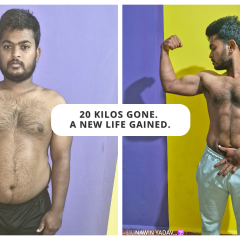
From “Laddu Nawin” to Fit and Fierce: How a 25-Year-Old Insurance Advisor Shed 20 Kilos and Gained His Life Back

When 25-year-old Nawin Yadav from Hyderabad walked into his office every morning, he carried more than just his files and policy papers. He had the weight of fatigue, sluggish energy, and an ever-growing belly that was becoming the butt of jokes. “People … [Read More...]

“I’ve Challenged Myself to Live 100 Years” – The Story of Chandubhai Savani’s Second Chance at Life

At 67, most people start slowing down. Not Chandubhai Savani. A resident of Surat, Chandubhai, thought life was on track. “My life was going well till I had my bypass surgery,” he says. That surgery, back in 2021, was a wake-up call.  Medication was routine, but exercise wasn’t. His diet? What he calls ‘normal.’ “I […]

From Shimla’s Slopes to Chandigarh’s Sidewalks: Surinder Kaur Bhalla’s Journey from Chaos to Control

Some journeys start with a plan. Others begin with a stumble literally. Surinder Bhalla, a government professional, born and raised in the scenic hill town of Shimla, had always lived a life of movement. “In Shimla, you walked everywhere,” she reflects. “Walking was never an exercise. It was just life.” But after shifting to Chandigarh, […]

Ananda Mukherjee Health Story

From Terminal Illness To Complete Wellness! Ananda Mukherjee Health Story

As we observe World Cancer Day under the powerful theme ‘United by Unique’ (2025-2027)**, we are reminded that every individual’s journey with cancer is distinct, yet united by shared resilience, hope, and the collective fight against this disease. This theme places people at the centre of care and their stories at the heart of the […]

  • HOME
  • HEALTHY LIVING
  • FITNESS
  • HEALTHY RECIPES
  • USER STORIES
  • KARMA
  • BUY GOQii

Copyright ©2016 GOQii