GOQii

Blog

  • HOME
  • HEALTHY LIVING
  • FITNESS
  • HEALTHY RECIPES
  • USER STORIES
  • KARMA
  • BUY GOQii

Search Results for: food

July 22, 2014 By Satish Kurapaty 2 Comments

Healthy Indian Street Foods

healthy-snacking
It’s called the dream city and no wonder that lakhs of people enter this city on a daily basis mesmerised by its glitz and glamour, seeking opportunities to make it big here. One thing that’s good about the city of Mumbai is nobody goes hungry in this city. Whatever time of the day you can always find something to eat here. Being a cosmopolitan city it offers one variety of cuisines which are found locally around every nook and corner of the city.

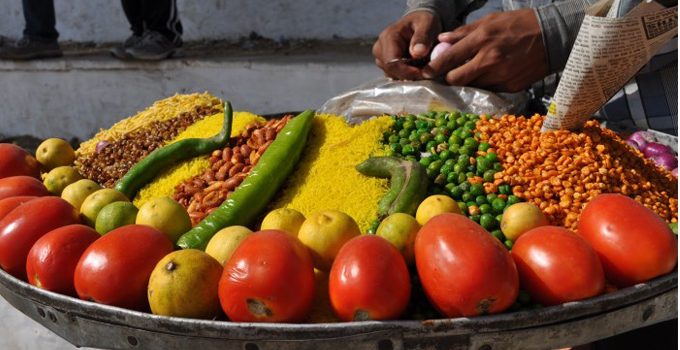
One of the main attractions of this city is its street foods. They are cheaper, quicker, delicious and easily accessible.  For some individuals, streets foods are preferable choice but for some they are unhealthy and unhygienic. It is considered unhygienic more during the monsoons. But, I would say street foods are not always bad or so called junk if the choice made is smarter.

Here are some smart choices one can opt for in order to satisfy sudden tummy growls.

Vegetable Toast Sandwich: One can surely opt for this (preferably brown bread) because it has enough vegetables such as tomatoes, onions, cucumber etc. Also toasting will reduce the number of microorganisms and make it safer. Even the cheese added on it can be a good source of protein if sodium is not a concern.

Idli/dosa and Sambhar: This fermented dish has goodness of protein and carbohydrates. Sambar includes lentils and vegetable. It’s an ideal choice for breakfast.

Masala Chana chat: This hot Channa (boiled kabuli channa or even chickpea) chat is a meal by itself. It’s loaded with protein and fibre. Adding vegetables added to it makes it more palatable and a healthy choice.

Momos: Rice covered steamed Momos packed with vegetable or meat, can never be unhealthy. The varieties of filling in the Momos available can satisfy the likes of people with different taste. Steamed is better than fried Momos.

Roasted peanuts and groundnuts: These are easily available handy chunks which can be popped in anytime like travelling, walking etc.

Fruit and vegetable juices: They rescue your thirst and are any day better choice than aerated drinks. These juices when consumed in the natural form (i.e. without sugar and unstrained) are good source to hydrate your body.

Fruit platter: It’s a platter loaded with antioxidants and fibre. The platter consists of variety of seasonal fruits and makes you feel full. This can be a choice over chips especially during fast.

Dabeli : It is like a sandwich, spicy potato mixture with different chutneys is spread between buns. And garnished with fine nylon sev, chopped onions, spicy peanuts and pomegranate seeds.

If you feel like indulging in street food make a smart choice and go for it. As I mentioned in my earlier blog (http://goqii.com/blog/eating-right-even-while-partying/) Keep GPRS rule (Grilled. Poached. Roasted. Steam) in mind.


June 6, 2014 By Ami Shah 1 Comment

What is Food Faddism – Crash Dieting?

Crash Diet

Food faddism is gaining lot of importance in today’s culture, influenced more from western culture. What do you mean by food faddism or in other words ‘Crash Dieting’? It means, temporary way to lose weight in a quick manner for a short duration!

As a nutritionist, I have come across many people longing for such diets, and when asked the reason why do they want to go in for such diets, they don’t have any specific reasoning. Like one individual who I was consulting came to me saying she just finds these crash diets quiet interesting and so out of curiosity, she just wants to give it a try! Another said, she has to surprise her hubby on his birthday by slimming down. Likewise, another said, she has to shed   five kilos in a span of ten days and get in shape, as her wedding is due soon.

I personally got intrigued to find out more about these crash diets and why do people indulge in them. In the yester years doctors recommended these diets to their patients from a therapeutic point of view to lose weight People are also influenced by the fact that some well-known celebrities have tried such diets and have succeeded and thus today these diets have become a trend.

Research indicates that these diets are very traditional by origin and dates back to eighteenth century. But, lately has gained lot of attention as people are getting worried about their so called ‘health’.

So what are these fad diets? There are plenty of them and one new one comes up every day such as cabbage soup diet, blood group diet, grape fruit diet, acai berry diet, Mediterranean diet and so on. I would like to take you through few of the popular ones

General Motor diet: It is commonly known as GM diet. One always thought GM diet was a diet where you ate genetically modified fruits and vegetables. But, no GM diet is a weight loss management plan developed by the General Motors Corporation to help keep their employees stay in shape. It is supposed to be followed for seven days. The pattern of the diet (Indianized version)  is listed below:

  • Day 1. All fruits. All kinds of fruit may be consumed except for bananas. 10-12 glasses of water should be consumed throughout the day.
  • Day 2. All vegetables. All sorts of vegetables may be consumed during the second day. Potatoes may be served during breakfast to boost energy levels
  • Day 3. Mixture of fruits and vegetables. A mix of fruits and vegetables may be consumed on Day 3, together with 10-12 glasses of water. Bananas are still not allowed in this day.
  • Day 4. Banana and milk. Skim milk and banana, together with the GM wonder soup or any type of vegetable soup may be served on this day.
  • Day 5. Brown rice, curd and tomatoes. Soybean curd or 1 cup of brown rice may be used as a substitute for beef, or a cup of cottage cheese
  • Day 6. Brown rice and vegetables. On Day 6, brown rice or other beef substitute will be matched with vegetables, but potatoes are still restricted. It is best to consume cottage cheese and soybean curd in vegetable bowls.
  • Day 7. Brown rice, vegetables and fruits. Two cups of brown rice may be consumed together with unlimited servings of vegetables and fruits. Fruit juice may also be taken along with 8-10 glasses of water.


  1. 1.       Atkin’s Diet: This diet was discovered by Robert Atkins to resolve his own issue of being overweight. It is a very low carbohydrate diet and high protein diet. the first phase ‘induction’ which  includes only 20gms of carbohydrates followed by other phase ‘on going weight loss’ wherein you can incorporate slowly add more vegetables, and you can include seeds, nuts, legumes, berries and other fruit, wine and other low-carb alcohol, and whole grains.
  2. 2.      South beach diet: The South Beach Diet is a diet plan designed by cardiologist Arthur Agatston and dietician Marie Almon. Although the original purpose of the diet was to prevent heart disease in Dr. Agatston’s own patients in the early 2000s, this diet focuses on eating right amount of carbohydrate and fats. It has three phases, you eat normal portion sizes in Phase 1, but all carbohydrate is restricted. This is the strictest phase in the diet and will last for two weeks. It emphasizes lean meats, such as chicken, turkey, fish, and shellfish. Low-Glycemic-index vegetables are allowed as well as low-fat cheese, nuts, eggs. In Phase 2, some of the banned foods are slowly introduced. You should remain on it until you lost your desired amount of weight. Phase 3 is for maintenance and should be followed for life.
  3. 3.      Weight watchers diet: Weight Watchers International is an international company based in the United States that offers various products and services to assist weight loss and maintenance. It was founded by Jean Nidetch. The core philosophy behind Weight Watchers programs is to use a science-driven approach to help participants lose weight by forming helpful habits, eating smarter, getting more exercise and providing support.

I quiet fail to understand why people follow such diets blindly and believe in the figures that pop up on weighing scale? I have never understood this obsession to lose weight especially losing two to three kilos in short duration. They get happy seeing their weight reducing. But, what about gaining those back? When you are dieting, you are almost starving your body; also it does not get enough nutrients which the body requires. The first thing that the body loses while dieting is muscles and water (which are two most crucial elements for maintaining body metabolism). Muscles and water are easy to lose and that’s the reason why you lose weight.

The fat in the body which is the culprit stays behind and is very difficult to lose! The moment they come back to the normal routine (stop dieting) they gain extra fat than what they already   had which can be dangerous in the long term. Most really don’t care about the after effects that these crash diets can cause so long as they see their see their weight going down!

Being a professional nutritionist, I would never recommend such fad diets. I recommend that one should balance their lifestyle with proper nutrition and physical activity.

April 28, 2026 By Aruna Bhatia 4 Comments

Summer Health Hazards You Need To Be Aware Of (And How to Prevent Them)

summer health hazardsIndian summers were always hot, but they are increasingly turning lethal. Studies indicate that average temperatures across many districts in India are projected to rise by two degrees Celsius over the next few decades.

With the heat index climbing, our population is exposed to a much higher risk of seasonal illnesses. Surviving the summer is no longer just about staying indoors; it is about actively managing your body’s response to extreme heat.

Here are the 3 most common summer health hazards you need to watch out for, along with practical ways to prevent and manage them.

  1. Dehydration: The Silent Energy Killer

Dehydration occurs when more water and fluids leave the body (through sweat and urine) than enter it. Because the human body is roughly 75% water, even a slight drop in hydration levels can disrupt your entire system.

  • Symptoms to Watch For: Increased thirst, profound fatigue, blurred vision, sudden headaches, dark-colored urine, and muscle cramps.

How can you prevent it?

  • The Hydration Formula: Always make sure you drink enough water. A good rule of thumb is to drink approximately 35ml per kilogram of your body weight daily during these scorching months.
  • Smart Replenishments: Plain water is great, but replacing lost electrolytes is even better. Opt for coconut water, aloe vera juice, amla juice, vegetable juice, buttermilk (chaas), or sugarcane juice.
  • Dilute Your Sugars: If you are drinking fruit juices or commercial electrolyte drinks, dilute them to half-strength with water to moderate your sugar and salt intake.
  • What to Avoid: Limit drinks containing alcohol or high amounts of caffeine (like strong coffee or energy drinks), as these act as diuretics and actually dehydrate the body further.

2. Heat Stroke: A True Medical Emergency

Heat stroke (or sunstroke) occurs from extreme, prolonged exposure to heat and sunlight. Your body loses its ability to regulate its core temperature, which can spike to dangerous levels in a matter of minutes.

  • Symptoms to Watch For: Dizziness, nausea, a throbbing headache, vomiting, flushed/dry skin (lack of sweating), rapid breathing, and fainting.

How can you prevent it?

  • Dress Smart: Choose lightweight, light-colored, loose-fitting, and breathable cotton clothing.
  • Time Your Outings: Stay indoors during peak sunlight hours (typically 12:00 PM to 4:00 PM). Schedule your outdoor activities or workouts for the early morning or late evening.
  • Pre-Hydrate: Take a good amount of fluids and hydrate well before stepping out into the sun, not just after.
  • Natural Coolants: If you feel mildly overheated, settling teas like chamomile, peppermint, or fennel seeds work wonders. Traditional Indian coolers like Aam Panna are exceptional for rapidly cooling the body and restoring lost electrolytes.

3. Food Poisoning: The Heat Breeds Bacteria

Summer heat drastically raises the risk of food-borne diseases. Food poisoning cases peak during these months because bacteria multiply much faster in warm, humid weather.

  • Symptoms to Watch For: Severe stomach cramps, nausea, vomiting, diarrhea, and a low-grade fever.

How can you prevent it?

  • Mind What You Eat Raw: Eat only freshly cut salads and fruits. Do not consume raw food that has been sitting out in the open for hours at a buffet or street vendor.
  • The 2-Hour Rule: Do not leave cooked food outside for long. Try to refrigerate all leftovers as soon as the steam stops rising from them (ideally within two hours of cooking).
  • Consume Quickly: Make sure you eat only well-cooked food and try to consume it as soon as possible once it’s prepared.

Ample rest, rigorous hydration, eating light, and moving your body safely are your best defenses against summer health hazards. Prevention remains the absolute key, as a lack of awareness is the primary reason these easily preventable hazards turn near-fatal.

Takeaway: Don’t wait until you are thirsty to drink water, avoid the midday sun, and refrigerate your food promptly. A little preparation guarantees a safe and healthy summer!

Want us to cover more seasonal hazards? Did we miss out on your favorite summer health tip? Let us know in the comments below!

Get more summer safety tips here or speak directly to a GOQii Coach by subscribing for Personalised Health Coaching here. 

Frequently Asked Questions (FAQs)

  1. How much water should I drink during the Indian summer?
    While 8 glasses a day is a common baseline, a more accurate formula during extreme heat is to drink approximately 35ml of water per kilogram of your body weight. For example, if you weigh 60 kg, you should aim for at least 2.1 liters of hydrating fluids, increasing this amount if you are sweating heavily outdoors.
  2. What is the difference between heat exhaustion and heat stroke?
    Heat exhaustion is the precursor to a heat stroke and involves heavy sweating, weakness, and a rapid pulse. If left untreated, it progresses to a heat stroke, where the body completely stops sweating, the skin becomes hot and dry, and the person may lose consciousness. Heat stroke is a severe medical emergency requiring immediate hospitalization.
  3. Why is food poisoning more common in the summer?
    Bacteria thrive in warm, moist environments. During the summer, the “danger zone” for food (the temperature range where bacteria multiply fastest) is easily reached if food is left un-refrigerated. Food left on a counter can spoil rapidly, making prompt refrigeration essential.

#BeTheForce 

Disclaimer: The content provided in this blog is for educational and informational purposes only and should not be construed as professional medical advice, diagnosis, or treatment. Heat stroke and severe dehydration are medical emergencies. If you or someone else experiences fainting, extreme confusion, or an inability to keep fluids down, seek emergency medical assistance immediately. Always consult with a qualified healthcare provider for personalized medical advice.

April 22, 2026 By GOQii Leave a Comment

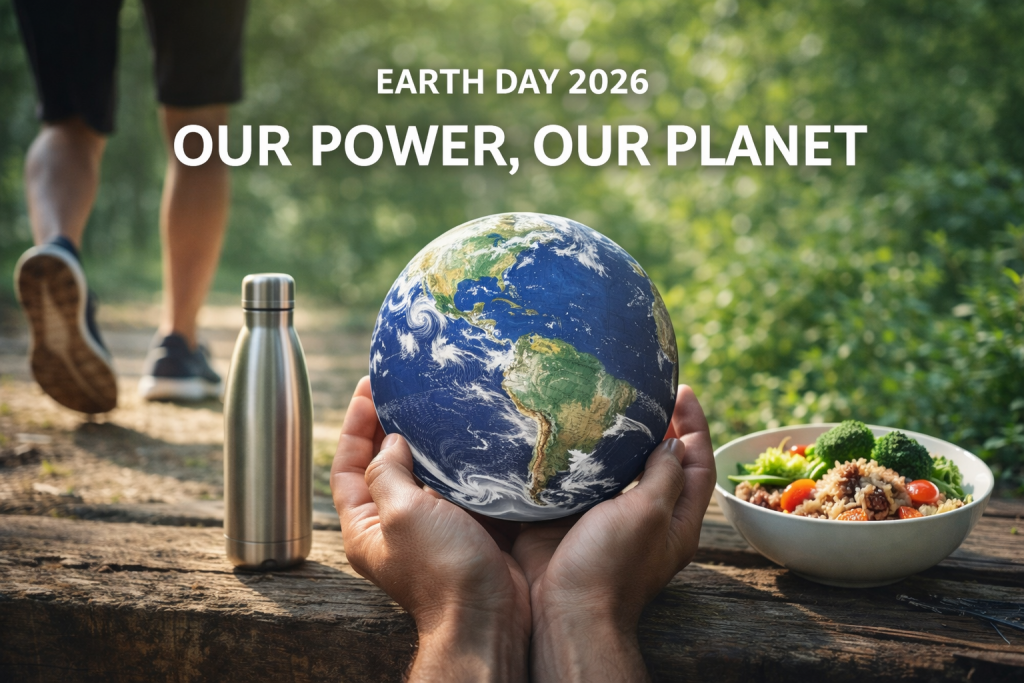
Earth Day 2026: How Healing Yourself Heals the Planet

You cannot build a healthy body on a sick planet. The air we breathe, the water we drink, and the soil that grows our food dictate our physical well-being long before we ever step foot in a gym or track our daily steps.



This year, on April 22nd, the global theme for Earth Day 2026 is “Our Power, Our Planet.” It is a powerful reminder that massive global change does not just come from governments and corporations; it starts with the daily choices of individuals.

At GOQii, we believe in the power of daily habits. Interestingly, the very habits that protect your metabolism, heart, and liver are the exact same habits that reduce your carbon footprint. Here is how taking your power back for your personal health simultaneously heals the planet.

Quick Takeaways: Eco-Friendly Health Habits

  • Active Commuting: Swap short drives for walking or cycling to hit your daily steps and cut emissions.
  • Plant-Forward Eating: Choose local, seasonal whole foods to boost digestion and reduce agricultural carbon footprints.
  • Ditch the Plastic: Use stainless steel or glass water bottles to protect your hormones from microplastics and save the oceans.
  • Green Exercise: Take your workouts outdoors to lower cortisol levels and build a deeper appreciation for nature.
  1. Active Commuting: Steps for You, Less Smog for the Earth

A sedentary lifestyle is a leading cause of metabolic diseases. At the same time, relying heavily on cars for short distances is a leading cause of urban air pollution. You can solve both problems with one habit: active commuting.

Choosing to walk or cycle to the local grocery store, the gym, or your office is the ultimate win-win. You effortlessly clock in your 10,000 steps, boost your cardiovascular endurance, and actively remove carbon emissions from your community’s air.

  1. Sustainable Nutrition: Eat Local, Eat Whole

Ultra-processed foods are not just harsh on your liver and gut microbiome; they are terrible for the environment. They require massive amounts of industrial energy to manufacture, package, and ship globally.

By shifting toward a diet rich in locally sourced, seasonal fruits, vegetables, and whole grains, you are doing your body a massive favor. Plant-forward diets reduce the risk of obesity, MASLD (fatty liver), and heart disease. Simultaneously, eating local reduces the “food miles” (the distance food travels to reach your plate), cutting down on greenhouse gas emissions and plastic packaging.

  1. Hydration Without Microplastics

Staying hydrated is a core pillar of preventive health, aiding in everything from kidney function to cellular repair. However, drinking out of single-use plastic bottles introduces microplastics and chemical endocrine disruptors (like BPA) into your bloodstream, which can severely impact your hormonal balance and metabolism.

Switching to a reusable stainless steel, copper, or glass bottle protects your internal health while keeping non-biodegradable plastics out of our oceans and landfills.

  1. Eco-Therapy: Mental Health and “Green Spaces”

Mental and emotional health are just as important as physical fitness. Studies show that spending time in natural green spaces whether it is a local park, a forest, or a hiking trail significantly lowers cortisol (the stress hormone), reduces anxiety, and improves sleep quality.

When you make it a habit to exercise outdoors, you naturally develop a deeper appreciation for the environment. You become more invested in protecting your local green spaces because they are actively contributing to your peace of mind.

Reclaim Your Power

The theme “Our Power, Our Planet” reminds us that we are not helpless. Every time you choose to walk instead of drive, eat a whole-food meal, or refill a reusable bottle, you are casting a vote for a healthier you and a greener earth.

To build sustainable, long-term habits that benefit both your body and your environment, connect with our experts by subscribing to GOQii’s Personalised Health Coaching here.

Frequently Asked Questions (FAQs)

  1. What is the theme for Earth Day 2026?
    The theme for Earth Day 2026 is “Our Power, Our Planet.” It focuses on how individual actions, community engagement, and a shift toward sustainable energy can collectively protect and restore the environment.
  2. How does climate change actually affect my health?
    Environmental shifts directly impact human health. Poor air quality exacerbates asthma and cardiovascular issues, rising temperatures increase the risk of heat-related illnesses, and plastic pollution introduces hormone-disrupting chemicals into our food and water supply.
  3. What is a “sustainable diet”?
    A sustainable diet is one that is healthy for you and has a low environmental impact. It generally involves eating mostly whole, plant-based foods, choosing locally grown and seasonal produce to reduce transportation emissions, and minimizing ultra-processed foods and single-use packaging.

#EarthDay2026 #OurPowerOurPlanet #BeTheForce

Disclaimer: The information provided in this article is for educational and general informational purposes only. Always consult with your physician or a certified GOQii health professional before making any significant changes to your lifestyle or diet.

  • « Previous Page
  • 1
  • …
  • 24
  • 25
  • 26
  • 27
  • 28
  • …
  • 252
  • Next Page »

Search

Recent Posts

  • International Dance Day: Why Dancing is the Ultimate Workout for Your Body and Mind
  • Summer Health Hazards You Need To Be Aware Of (And How to Prevent Them)
  • Sitting Too Much? Here’s How It’s Shortening Your Life
  • Everything You Need to Know About Malaria
  • 3 Super Simple Ways to Overcome Anxiety Induced Procrastination

Stay Updated

Archives

  • April 2026 (23)
  • March 2026 (18)
  • February 2026 (14)
  • January 2026 (14)
  • December 2025 (19)
  • November 2025 (15)
  • October 2025 (20)
  • September 2025 (6)
  • August 2025 (6)
  • July 2025 (12)
  • June 2025 (18)
  • May 2025 (16)
  • April 2025 (22)
  • March 2025 (28)
  • February 2025 (21)
  • January 2025 (25)
  • December 2024 (22)
  • November 2024 (23)
  • October 2024 (21)
  • September 2024 (23)
  • August 2024 (30)
  • July 2024 (21)
  • June 2024 (25)
  • May 2024 (28)
  • April 2024 (27)
  • March 2024 (27)
  • February 2024 (24)
  • January 2024 (21)
  • December 2023 (14)
  • November 2023 (10)
  • October 2023 (19)
  • September 2023 (22)
  • August 2023 (18)
  • July 2023 (22)
  • June 2023 (23)
  • May 2023 (24)
  • April 2023 (19)
  • March 2023 (23)
  • February 2023 (19)
  • January 2023 (15)
  • December 2022 (11)
  • November 2022 (15)
  • October 2022 (15)
  • September 2022 (12)
  • August 2022 (10)
  • July 2022 (17)
  • June 2022 (11)
  • May 2022 (10)
  • April 2022 (6)
  • March 2022 (6)
  • February 2022 (13)
  • January 2022 (11)
  • December 2021 (7)
  • November 2021 (3)
  • October 2021 (6)
  • September 2021 (3)
  • August 2021 (8)
  • July 2021 (7)
  • June 2021 (15)
  • May 2021 (16)
  • April 2021 (10)
  • March 2021 (7)
  • February 2021 (4)
  • January 2021 (4)
  • December 2020 (3)
  • November 2020 (4)
  • October 2020 (10)
  • September 2020 (3)
  • August 2020 (3)
  • July 2020 (2)
  • June 2020 (4)
  • May 2020 (10)
  • April 2020 (12)
  • March 2020 (10)
  • February 2020 (4)
  • January 2020 (4)
  • December 2019 (3)
  • November 2019 (7)
  • October 2019 (5)
  • September 2019 (4)
  • August 2019 (9)
  • July 2019 (9)
  • June 2019 (11)
  • May 2019 (4)
  • April 2019 (8)
  • March 2019 (8)
  • February 2019 (9)
  • January 2019 (8)
  • December 2018 (9)
  • November 2018 (3)
  • October 2018 (3)
  • September 2018 (5)
  • August 2018 (10)
  • July 2018 (6)
  • June 2018 (13)
  • May 2018 (8)
  • April 2018 (18)
  • March 2018 (9)
  • February 2018 (8)
  • January 2018 (15)
  • December 2017 (12)
  • November 2017 (19)
  • October 2017 (13)
  • September 2017 (15)
  • August 2017 (4)
  • July 2017 (8)
  • June 2017 (7)
  • May 2017 (6)
  • April 2017 (8)
  • March 2017 (6)
  • February 2017 (7)
  • January 2017 (9)
  • December 2016 (10)
  • November 2016 (7)
  • October 2016 (7)
  • September 2016 (7)
  • August 2016 (11)
  • July 2016 (9)
  • June 2016 (9)
  • May 2016 (12)
  • April 2016 (17)
  • March 2016 (17)
  • February 2016 (8)
  • January 2016 (6)
  • December 2015 (2)
  • November 2015 (9)
  • October 2015 (7)
  • September 2015 (9)
  • August 2015 (11)
  • July 2015 (9)
  • June 2015 (11)
  • May 2015 (9)
  • April 2015 (13)
  • March 2015 (8)
  • February 2015 (5)
  • January 2015 (12)
  • December 2014 (14)
  • November 2014 (11)
  • October 2014 (6)
  • September 2014 (13)
  • August 2014 (12)
  • July 2014 (6)
  • June 2014 (2)
  • May 2014 (7)
  • April 2014 (4)

From “Laddu Nawin” to Fit and Fierce: How a 25-Year-Old Insurance Advisor Shed 20 Kilos and Gained His Life Back

When 25-year-old Nawin Yadav from Hyderabad walked into his office every morning, he carried more than just his files and policy papers. He had the weight of fatigue, sluggish energy, and an ever-growing belly that was becoming the butt of jokes. “People … [Read More...]

“I’ve Challenged Myself to Live 100 Years” – The Story of Chandubhai Savani’s Second Chance at Life

At 67, most people start slowing down. Not Chandubhai Savani. A resident of Surat, Chandubhai, thought life was on track. “My life was going well till I had my bypass surgery,” he says. That surgery, back in 2021, was a wake-up call.  Medication was routine, but exercise wasn’t. His diet? What he calls ‘normal.’ “I […]

From Shimla’s Slopes to Chandigarh’s Sidewalks: Surinder Kaur Bhalla’s Journey from Chaos to Control

Some journeys start with a plan. Others begin with a stumble literally. Surinder Bhalla, a government professional, born and raised in the scenic hill town of Shimla, had always lived a life of movement. “In Shimla, you walked everywhere,” she reflects. “Walking was never an exercise. It was just life.” But after shifting to Chandigarh, […]

Ananda Mukherjee Health Story

From Terminal Illness To Complete Wellness! Ananda Mukherjee Health Story

As we observe World Cancer Day under the powerful theme ‘United by Unique’ (2025-2027)**, we are reminded that every individual’s journey with cancer is distinct, yet united by shared resilience, hope, and the collective fight against this disease. This theme places people at the centre of care and their stories at the heart of the […]

  • HOME
  • HEALTHY LIVING
  • FITNESS
  • HEALTHY RECIPES
  • USER STORIES
  • KARMA
  • BUY GOQii

Copyright ©2016 GOQii