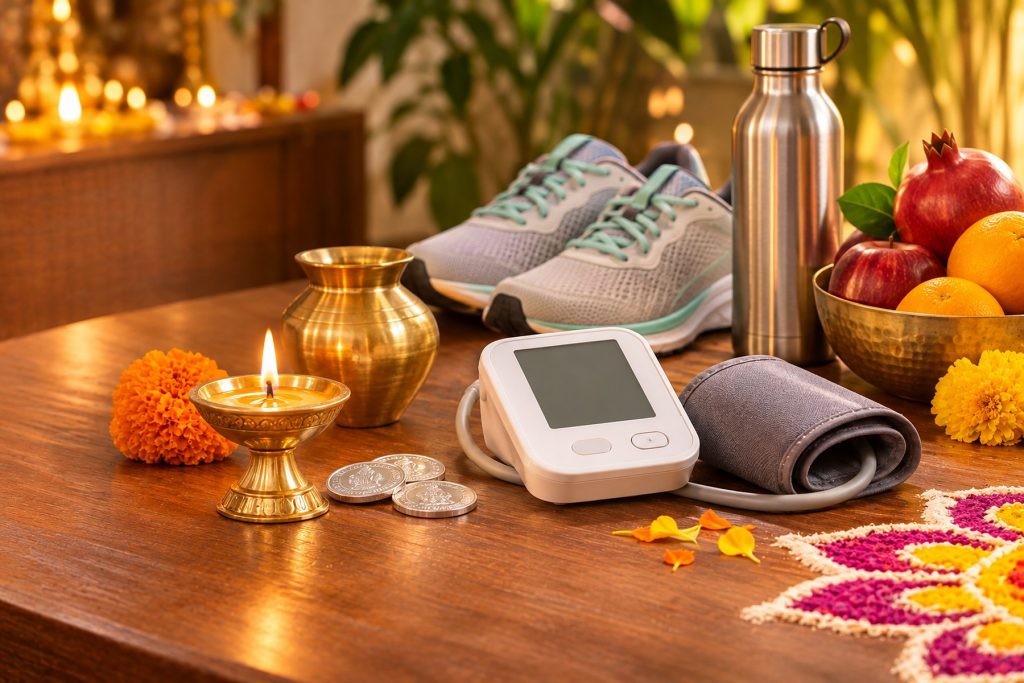
 Dhanteras, which falls on Friday 6 November this year, is the day millions of families buy gold, silver, utensils or something new for the home, as a sign of prosperity for the year ahead. But the festival has another meaning that’s easy to forget. It honours Lord Dhanvantari, revered as the physician of the gods and associated with Ayurveda, a reminder that good health is the real wealth.
So this Dhanteras, alongside the coins and kitchenware, why not invest in your health too? It doesn’t have to cost much. Some of the best investments are a few routine tests, a handful of genuinely useful health buys, and habits that cost nothing at all.
At a glance
- The best returns come from prevention: catching high blood pressure, raised blood sugar or high cholesterol early, before they cause problems.
- Book the check-ups you’re due for: blood pressure, blood sugar, cholesterol and age-appropriate cancer screening.
- Buy wisely: a validated upper-arm blood pressure monitor, good walking shoes or a water bottle can be worth more than expensive gadgets or supplements.
- The free habits matter most: walking, sleep, home-cooked food, staying tobacco-free and time with people you love.
- Give health as a gift: a check-up voucher, a fruit basket or an activity tracker can go further than another box of sweets.
1. Invest in check-ups
Many of the conditions that lead to heart attacks, strokes and kidney disease, such as high blood pressure, type 2 diabetes and high cholesterol, cause no symptoms for years. A simple test is often the only way to know. And in India, the numbers are large: the national ICMR–INDIAB study found that over 11% of adults have diabetes, 15.3% have prediabetes and 35.5% have high blood pressure, and many don’t know it.
Checks most adults should keep up to date:
| Check | Who and how often (typical guidance) |
| Blood pressure | Every adult, at least once a year from your 30s, more often if it’s raised |
| Blood sugar (fasting glucose or HbA1c) | From age 30, or earlier if you’re overweight or diabetes runs in your family; repeat every 1–3 years depending on your results |
| Cholesterol (lipid profile) | Every few years from your 20s or 30s, more often if raised or if heart disease runs in your family |
| Weight and waist | Once or twice a year at home or at the doctor |
| Cancer screening | Cervical, breast and bowel screening at the ages your doctor or national programme advises; a mouth check if you use tobacco |
| Eyes and teeth | Regular dental check-ups; an eye test every couple of years, and yearly if you have diabetes |
Indians tend to develop diabetes and heart disease at younger ages and at lower body weights than many other populations, so starting checks in your 30s, or earlier with a family history, makes sense.
Where to get them:
- Government health centres: Ayushman Arogya Mandirs and other government facilities offer screening for adults aged 30 and above for blood pressure, diabetes and oral, breast and cervical cancer.
- Your employer or health insurance: many company health plans and insurance policies include a free annual check-up. It’s worth checking your policy before you pay for one.
- Diagnostic labs: most offer home sample collection, which makes it easier to get tests done for older parents.
- A tax benefit: under the old tax regime, payments for preventive health check-ups for yourself and your family can be claimed under Section 80D, up to ₹5,000 within the overall 80D limit, and even cash payments count. Check with your tax adviser for your situation.
A word on “full-body” packages: big check-up packages with dozens of tests aren’t always better. Unnecessary tests, such as cancer markers or scans in people without symptoms, can cause false alarms and worry. Ask your doctor which tests suit your age and history.
2. Health buys that are worth the money
If you’re shopping this Dhanteras anyway, these purchases can earn their keep:
- A validated, upper-arm blood pressure monitor. Home readings help you and your doctor spot and manage high blood pressure. The British Heart Foundation advises choosing an independently validated, upper-arm monitor with a cuff that fits snugly, sit quietly with your back supported, and take two readings a few minutes apart.
- Steel or clay cookware and a good non-stick pan, which let you cook with less oil. Steel and brass utensils are a traditional Dhanteras buy anyway.
- Comfortable walking shoes. If they get you walking every day, they’re the best fitness equipment you’ll buy.
- An activity tracker or step counter, if you’ll actually use it. A 2025 review in The Lancet Public Health found that about 7,000 steps a day, compared with 2,000, was linked to a much lower risk of early death, heart disease and dementia. Many of us need the nudge: a Lancet Global Health study found that nearly half of Indian adults (49.4%) weren’t active enough in 2022, rising to 57% among women.
- A reusable water bottle to help you drink more water and fewer sugary drinks.
- A digital thermometer and a basic first-aid kit, especially if you have children or older parents at home.
- For diabetes: a glucometer, if your doctor wants you to check your sugar at home.
Think twice before spending on:
- Multivitamins and “immunity boosters” for healthy adults. The US Preventive Services Task Force found insufficient evidence that multivitamins prevent heart disease or cancer, and it recommends against beta-carotene and vitamin E supplements. Take supplements only for a specific need your doctor has identified.
- Detox kits, “fat-burning” products and miracle gadgets that promise quick results.
- Expensive equipment you won’t use. A treadmill that becomes a clothes rack is no investment.
3. Free habits with the best returns
The biggest health “investments” cost nothing, and like a good savings plan, they pay off when you keep them up.
- Move every day. The WHO recommends at least 150 minutes of moderate activity a week, such as brisk walking, plus muscle-strengthening on two days. Short bouts count too.
- Sleep 7–9 hours. Regular sleep supports your weight, mood, blood sugar and immunity.
- Eat mostly home-cooked food, with plenty of vegetables, fruit, pulses and whole grains, and less salt, sugar and fried food.
- Stay tobacco-free, and drink less alcohol, or none.
- Manage stress. A few minutes of slow breathing each day can help; try these breathing exercises to relieve anxiety.
- Stay connected. Time with family and friends, which festivals are all about, is good for your mental and physical health.
This Diwali season, our guide to maintaining a healthy lifestyle during Diwali has more ideas for enjoying the festivities without overdoing it.
4. Give the gift of health
The Diwali gifting season is a chance to share health, not just sweets:
- A health check-up voucher for parents or grandparents
- A fruit and dry-fruit basket instead of another box of mithai
- Homemade, lighter snacks, such as our baked and air-fried namkeen
- A blood pressure monitor for an older relative, with a promise to help them use it
- Walking shoes, a yoga mat or an activity tracker for someone trying to get fitter
- Your time: a family walk, an evening without screens, or a promise to accompany a parent to their check-up
The bottom line
Dhanteras celebrates prosperity, and there’s no greater wealth than good health. This year, alongside the gold and the new utensils, book the check-up you’ve been putting off, buy something that helps you look after yourself, and commit to one free habit, like a daily walk, that will pay you back for years. That’s an investment worth making.
Pro Tip: Use the GOQii App to track your steps, sleep and blood pressure readings in one place, and set reminders for your next check-up. Your GOQii Personalised Health Coach can help you turn your Dhanteras resolution into a habit that lasts.
Frequently asked questions
What is the health significance of Dhanteras?
Dhanteras honours Lord Dhanvantari, revered as the physician of the gods and associated with Ayurveda. It’s a good reminder that health is the greatest wealth, and a natural time to invest in check-ups and healthy habits.
What health check-ups should I get every year?
Most adults should check their blood pressure at least once a year and keep up with blood sugar and cholesterol tests every few years, more often if results are borderline. Add age-appropriate cancer screening, dental check-ups and eye tests. Your doctor can tailor this to your age and family history.
Is a full-body check-up package worth it?
Not always. Large packages often include tests that aren’t needed for healthy people and can cause false alarms. It’s usually better to ask your doctor which tests suit your age, risk factors and family history.
Which blood pressure monitor should I buy for home use?
Choose an independently validated monitor that measures at the upper arm, with a cuff that fits your arm snugly. Take readings sitting quietly with your back supported and your arm resting on a table.
Should I buy multivitamins for my family?
Most healthy people who eat a varied diet don’t need a multivitamin. There’s insufficient evidence that multivitamins prevent heart disease or cancer. Take supplements only if your doctor finds a specific need, such as low vitamin D, B12 or iron.
How many steps a day should I aim for?
Around 7,000 steps a day is linked to a much lower risk of early death and heart disease than 2,000 steps, and more is generally better. The WHO recommends at least 150 minutes of moderate activity a week.
What are good health gifts for Diwali?
A health check-up voucher, a fruit or dry-fruit basket, homemade lighter snacks, a blood pressure monitor for older relatives, or walking shoes and an activity tracker all make thoughtful gifts.
#BeTheForce
Disclaimer: The information provided in this blog is for general awareness and educational purposes only. It is not intended to replace professional medical advice, diagnosis, or treatment. Always consult a qualified healthcare provider for personalised medical guidance or concerns related to your health.




Leave a Reply