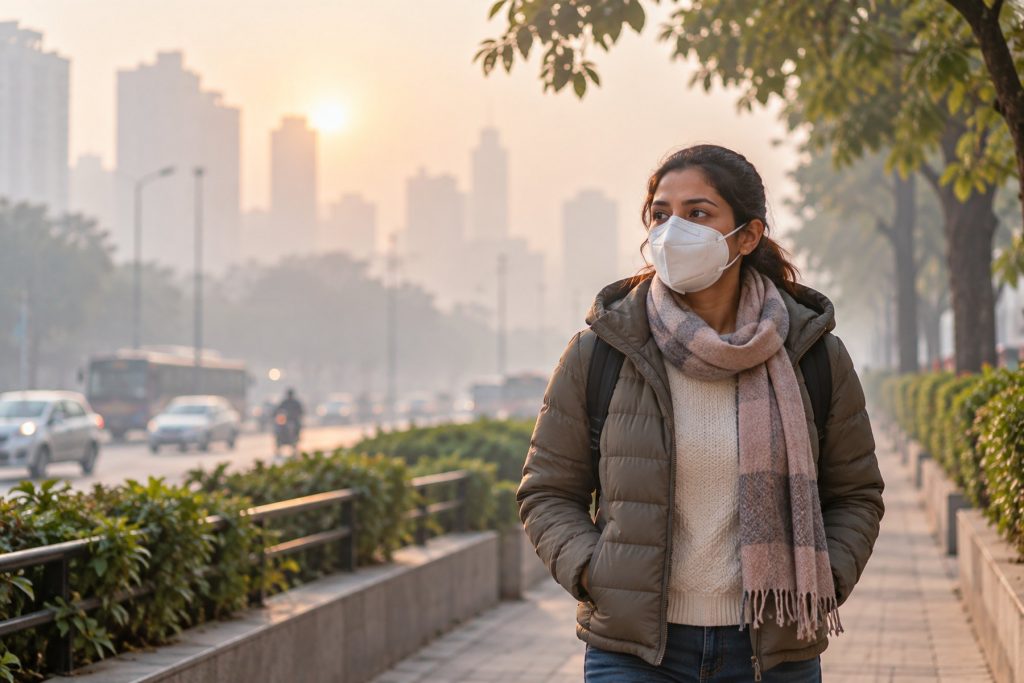
 Every winter, much of North India wakes up to a grey haze that stings the eyes and catches in the throat. But polluted air isn’t only a Delhi problem. Traffic fumes in London, wildfire smoke in California and Canada, coal and dust in parts of China and Africa, and smoke from cooking fires in millions of homes all affect the air we breathe. According to the World Health Organization, 99% of the world’s population lives in places where air quality falls short of its guidelines.
You can’t control the air outside, but you can reduce how much of it you breathe in. This guide explains what’s in polluted air, how it affects your lungs, heart and more, and the practical steps that actually help.
At a glance
- It’s the world’s biggest environmental health risk: air pollution contributed to about 9 million deaths in 2023, nearly 9 in 10 of them from heart disease, stroke, lung disease and other non-communicable diseases.
- Fine particles (PM2.5) are the main concern: they’re small enough to reach deep into the lungs and the bloodstream.
- It affects the heart as much as the lungs: short spells of high pollution can trigger heart attacks and strokes in people at risk.
- Check the AQI daily and plan outdoor time around it.
- What helps: a well-fitted N95 or FFP2 mask outdoors on bad days, a HEPA air purifier in the room you use most, and cutting indoor smoke.
- What doesn’t: cloth masks, jaggery “lung cleanses” and detox drinks.
What’s in polluted air?
Air pollution is a mix of particles and gases from vehicles, industry, power plants, construction dust, crop and rubbish burning, wildfires and household fuels. The main ones to know:
- 5: fine particles less than 2.5 micrometres across, about 30 times thinner than a human hair. They’re the most harmful because they travel deep into the lungs and can enter the bloodstream.
- PM10: coarser particles such as dust and pollen, which mostly irritate the nose, throat and airways.
- Nitrogen dioxide (NO₂): mainly from traffic, especially diesel engines. It inflames the airways.
- Ozone (O₃): forms when sunlight reacts with other pollutants, so it peaks on hot, sunny afternoons.
In 2021, the WHO made its air quality guidelines much stricter, because evidence showed harm at lower levels than previously thought.
| Pollutant | WHO 24-hour guideline | WHO annual guideline |
| PM2.5 | 15 µg/m³ | 5 µg/m³ |
| PM10 | 45 µg/m³ | 15 µg/m³ |
| NO₂ | 25 µg/m³ | 10 µg/m³ |
To put that in context, PM2.5 in some cities, including parts of North India, can reach 10 to 20 times the 24-hour guideline on bad winter days. As the American Heart Association has put it, there is no known “safe” level of PM2.5; lower is always better.
Indoor air counts too. Around 2.1 billion people still cook with wood, dung, crop waste, coal or kerosene, and household air pollution was linked to about 3.2 million deaths in 2020. Incense, mosquito coils, frying, cigarette smoke and burning candles also add to indoor PM2.5.
How air pollution affects your body
Lungs and airways. In the short term, polluted air can cause coughing, a scratchy throat, wheezing and breathlessness, and it can set off asthma attacks and COPD flare-ups. Over years, it’s linked to reduced lung function, chronic obstructive pulmonary disease (COPD), lung infections and lung cancer, including in people who have never smoked.
Heart and blood vessels. This is the part many people don’t realise. Fine particles promote inflammation, raise blood pressure and make blood more likely to clot. An American Heart Association scientific statement concluded that PM2.5 exposure over hours to days can trigger heart attacks, strokes and irregular heartbeats in susceptible people, and that long-term exposure shortens life expectancy. Air pollution is now one of the leading risk factors for stroke worldwide; read our guide on how to spot the signs of a stroke and act FAST.
Brain and beyond. Research also links long-term exposure to type 2 diabetes, low birth weight and preterm birth, and dementia. The State of Global Air 2025 report estimated that air pollution-related dementia caused over 625,000 deaths in 2023.
Who is most at risk?
- Children, whose lungs are still developing and who breathe faster
- Older adults
- Pregnant women
- People with asthma, COPD, heart disease, previous stroke or diabetes
- Outdoor workers, such as traffic police, street vendors, delivery riders and construction workers
- People who cook with solid fuels or live near busy roads
Read the AQI before you step out
The Air Quality Index (AQI) turns pollutant levels into one number and a colour, so you can see at a glance how risky the air is today. Most weather apps show it, and countries publish official readings: SAMEER and the CPCB website in India, AirNow in the US, and the Met Office and UK-AIR in the UK.
Scales differ between countries, so always read the category label, not just the number. India’s national AQI, for example, uses six bands:
| AQI | Category | Possible health impact |
| 0–50 | Good | Minimal |
| 51–100 | Satisfactory | Minor breathing discomfort for sensitive people |
| 101–200 | Moderate | Breathing discomfort for people with lung or heart disease |
| 201–300 | Poor | Breathing discomfort for most people on prolonged exposure |
| 301–400 | Very poor | Respiratory illness on prolonged exposure |
| 401–500 | Severe | Serious effects even in healthy people |
Using it day to day:
- Good to moderate: normal activity for most people. If you have asthma or heart disease, watch for symptoms in the moderate range.
- Poor: cut down on long or strenuous outdoor exercise; sensitive groups should move it indoors.
- Very poor or severe: keep outdoor time short, wear a well-fitted N95 or FFP2 mask if you must go out, and keep indoor air as clean as possible.
Pollution usually peaks in the early morning and late evening in winter, when cold, still air traps it near the ground. Ozone is the exception, peaking on sunny afternoons.
How to protect yourself: what actually works
Outdoors
Choose the right mask, and wear it properly. On high-pollution days, an N95, FFP2 or KN95 respirator can filter most fine particles, but only if it seals well. Experts advise choosing a snug size: the mask should pull in slightly when you breathe in and puff out when you breathe out. If air leaks around the edges, you’re breathing unfiltered air. Beards stop a good seal. Surgical masks offer some protection, and cloth masks very little. Masks with a valve protect the wearer but not people nearby. Respirators aren’t designed for young children, and people with heart or lung disease should check with their doctor, as breathing through one takes more effort.
Keep exercising, but be smart about it. Physical activity is so good for you that, in modelling of cities around the world, its benefits outweighed the harm from pollution in most places. In very polluted cities, though, the safe amount of outdoor cycling dropped to around 45 minutes a day. On bad days:
- move workouts indoors, or exercise when AQI is lowest (often late morning or early afternoon in winter)
- walk or run in parks or on quieter streets, away from heavy traffic
- choose lower-intensity activity, as you breathe in more air when you push hard
Movement also helps your mood through the gloomy smog season; read more on how exercise impacts mental health.
On the road: in a car, keep the windows up and set the air to recirculate in heavy traffic.
Indoors
- Close windows and doors when outdoor AQI is poor or worse, and air your home when the air is better, usually around midday.
- Use a HEPA air purifier in the room where you spend the most time, usually the bedroom. In one study, HEPA air cleaners roughly halved indoor PM2.5. Choose one sized for your room (check its clean air delivery rate, or CADR), keep doors closed while it runs, and change filters on time. Avoid ozone-producing “ionisers”.
- Cut indoor smoke: don’t smoke indoors, and cut back on incense, dhoop, mosquito coils and candles on bad days.
- Cook cleaner: use LPG, PNG or electric cooking where possible, switch on the kitchen chimney or exhaust fan, and keep lids on pans.
- Clean with a damp cloth or mop rather than sweeping, which stirs up dust.
If you have asthma, COPD or heart disease, keep reliever and regular medicines handy, follow your action plan, and talk to your doctor before the smog season about whether your treatment needs adjusting.
Food, remedies and myths
Every smog season brings forwards and messages promising that a food or drink will “clean your lungs”. Here’s what the evidence says.
- Jaggery (gur): the claim rests mainly on a 1994 study in rats exposed to coal dust. A pulmonologist quoted by Business Standard notes there’s no human trial showing jaggery cleans human lungs. It’s still sugar, so enjoy it as a treat, not a treatment.
- Detox drinks, kadhas and “lung cleanses”: your lungs clear particles with their own natural defences. No drink or herb has been shown to remove inhaled pollution, and some herbal products can interact with medicines.
- Steam inhalation: may soothe a blocked nose or irritated throat for a while, but it doesn’t remove particles from the lungs. Take care to avoid scalds, especially with children.
- Plants as air purifiers: houseplants are pleasant, but you’d need an impractical number to make a measurable difference to PM2.5.
What a healthy diet can do: eating plenty of fruit, vegetables, pulses, nuts and whole grains supports your body’s antioxidant defences and overall heart and lung health. It’s a sensible foundation, but it can’t replace reducing exposure. Researchers are studying supplements such as vitamins C and E and omega-3 fats, but none is a proven shield, so don’t rely on them, and check with your doctor before starting any.
When to see a doctor
Mild throat irritation or a cough on smoggy days is common. See a doctor if you notice:
- a cough that lasts more than three weeks, or coughing up blood
- breathlessness, wheezing or chest tightness that’s new or getting worse
- asthma or COPD symptoms that need your reliever inhaler more often than usual
- a child who is breathing fast, wheezing or struggling to feed
Get emergency help immediately (call 108 or 112 in India, 999 in the UK, or 911 in the US) for:
- severe breathlessness, or lips or face turning blue
- chest pain or pressure, especially if it spreads to the arm, jaw or back
- signs of a stroke: a drooping face, a weak arm or slurred speech
The bottom line
Air pollution harms the heart as much as the lungs, and nobody is fully immune to it. You can’t clean the air outside on your own, but you can lower your exposure: check the AQI daily, time your outdoor activity, wear a well-fitted N95 when the air is bad, keep one room clean with a HEPA purifier, and cut smoke at home. Keep blood pressure, cholesterol and conditions like asthma under control too, because a healthy heart and lungs cope better on bad-air days. And skip the miracle cures; the basics are what work.
Pro Tip: On high-AQI days, swap your outdoor walk for an indoor workout and track it in the GOQii App so your activity streak doesn’t slip. Your GOQii Personalised Health Coach can help you plan indoor routines and heart-healthy habits for the smog season.
Frequently asked questions
How does air pollution affect your health?
Air pollution, especially fine particles called PM2.5, irritates the airways, triggers asthma and COPD flare-ups and, over time, is linked to lung disease and lung cancer. It also raises the risk of heart attacks and strokes, and it has been linked to diabetes, dementia and problems in pregnancy.
What is a safe AQI level?
The lower the better. AQI categories of good or satisfactory are safe for most people, while people with asthma or heart disease may notice symptoms in the moderate range. From poor upwards, limit time outdoors. There is no known completely safe level of PM2.5.
Which mask is best for air pollution?
A well-fitted N95, FFP2 or KN95 respirator filters most fine particles. It must seal snugly around your nose and mouth to work. Surgical masks give some protection, and cloth masks very little.
Should I exercise outdoors when pollution is high?
On poor, very poor or severe AQI days, move exercise indoors or keep it short and gentle, away from traffic. On cleaner days, the benefits of outdoor exercise outweigh the risks for most people.
Do air purifiers really work?
HEPA air purifiers can substantially lower indoor PM2.5. In one study, they roughly halved it. Choose one sized for your room, keep windows and doors closed while it runs, and replace the filters on time.
Does jaggery clean your lungs from pollution?
There’s no human evidence that jaggery cleans the lungs. The claim comes mainly from an old study in rats. Jaggery is still sugar, so it’s best enjoyed in small amounts rather than as a remedy.
Who is most at risk from air pollution?
Children, older adults, pregnant women, people with asthma, COPD, heart disease or diabetes, outdoor workers and people who cook with solid fuels are most at risk and should take extra precautions on high-pollution days.
#BeTheForce
Disclaimer: The information provided in this blog is for general awareness and educational purposes only. It is not intended to replace professional medical advice, diagnosis, or treatment. Always consult a qualified healthcare provider for personalised medical guidance or concerns related to your health.




Leave a Reply