GOQii

Blog

  • HOME
  • HEALTHY LIVING
  • FITNESS
  • HEALTHY RECIPES
  • USER STORIES
  • KARMA
  • BUY GOQii

July 14, 2026 By GOQii 11 Comments

Planks: The Quick and Easy Way to Stay Fit!

Benefits of PlanksThe Big Question: Can one simple exercise strengthen your core, improve posture, build full-body stability, and fit into even the busiest schedule?

Between work deadlines, family commitments, and daily responsibilities, finding time to exercise isn’t always easy. While many people believe they need long gym sessions to stay fit, the truth is that a few minutes of focused movement can make a meaningful difference.

One exercise that consistently delivers excellent results is the plank. It requires no equipment, very little space, and can be performed almost anywhere. More importantly, it engages multiple muscle groups simultaneously, making it one of the most effective bodyweight exercises for improving strength, stability, and overall fitness. Whether you’re just beginning your fitness journey or looking to level up your workouts, planks deserve a permanent place in your routine.

Why Are Planks So Effective?

Unlike standard crunches or sit-ups, which mainly target the front abdominal muscles, planks activate your entire core while recruiting muscles throughout your entire body to fight against gravity. A correctly performed plank works your:

  • Rectus abdominis: The front abdominal muscles.
  • Transverse abdominis: The deep core muscles that wrap around your spine.
  • Obliques: The side abdominal muscles.
  • Lower back and Glutes: The posterior chain that supports your pelvis.
  • Shoulders and Chest: For upper body stability.
  • Quadriceps and Hip Stabilizers: To keep your lower body rigid and aligned.

These muscles work seamlessly together to stabilize your spine, improve your movement efficiency, and support everyday activities—from safely lifting heavy groceries to climbing a steep flight of stairs.

8 Powerful Benefits of Planks

  1. Builds Foundational Core Strength

Your core acts as the body’s foundation. A stronger core supports better physical movement, protects your spine, and improves performance during everyday activities and sports.

  1. Improves Posture naturally

Weak core muscles often contribute to slouching and poor posture. Regular planks strengthen the specific muscles that keep your shoulders, back, and hips properly aligned, helping you stand taller and sit more comfortably.

  1. Supports Spinal Stability

Strong core muscles help distribute forces more evenly across your spine, reducing unnecessary strain on your lower back. While planks are not a medical treatment for chronic back pain, they are a vital part of a balanced exercise program for improving spinal stability.

  1. Improves Balance and Coordination

Maintaining a plank challenges your body’s ability to remain stable. This improves your baseline balance, coordination, and body awareness—skills that become increasingly important as we age.

  1. Enhances Athletic Performance

Whether you run, cycle, swim, play sports, or lift weights, a stronger core improves the transfer of force between your upper and lower body, making all movement more efficient and powerful.

  1. Increases Muscular Endurance

Unlike explosive, high-impact exercises, planks build endurance by training your muscles to maintain tension over a sustained period of time. This helps you perform daily physical activities with far less fatigue.

  1. Requires Zero Equipment

One of the biggest advantages of planks is their universal accessibility. You don’t need a gym membership, a bench, or expensive equipment—just enough floor space to stretch out.

  1. Saves Valuable Time

A focused plank routine lasting just 5 to 10 minutes can engage nearly every major muscle group in your body, making it the ideal workout for busy lifestyles.

How to Perform the Perfect Forearm Plank

Proper form is infinitely more important than how long you can hold the position. Follow these structural steps to get it right:

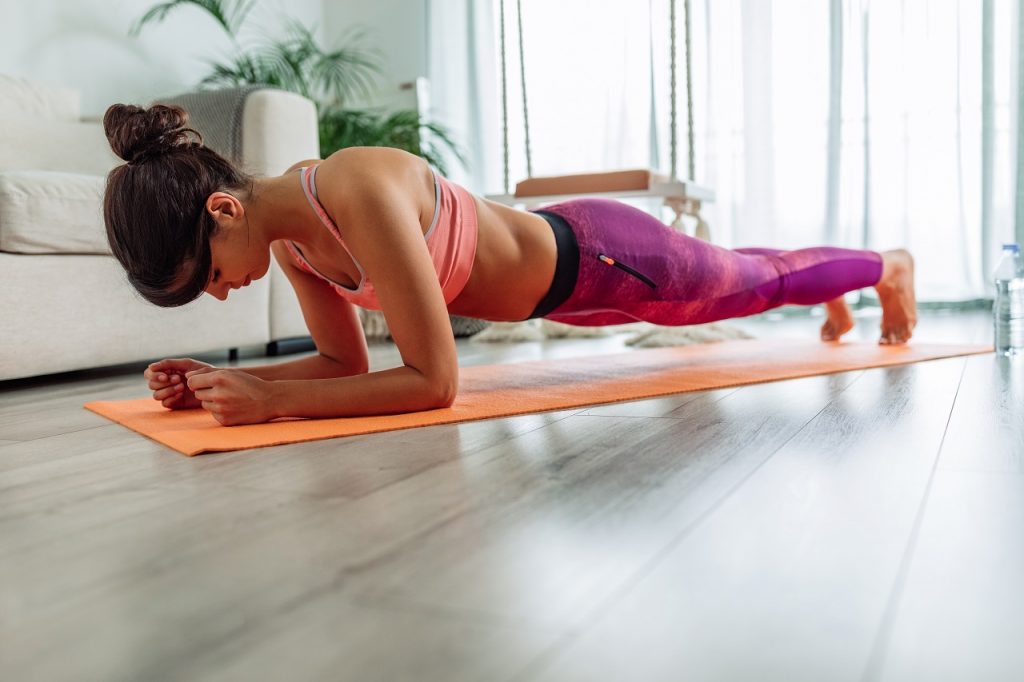
  • Lie face down on a yoga mat or comfortable floor surface.
  • Position your elbows directly beneath your shoulders.
  • Keep your forearms parallel to each other or gently clasp your hands together.
  • Extend your legs straight out behind you and lift up onto your toes.
  • Tighten your abdominal muscles intensely, as though preparing for a punch.
  • Squeeze your glutes tightly to stabilize your pelvis.
  • Keep your ribs pulled down and avoid arching your lower back.
  • Maintain one straight, rigid line from your head down to your heels.
  • Keep your neck neutral by looking at the floor slightly ahead of your hands.
  • Breathe normally throughout the exercise—do not hold your breath!

Remember: Good form for 20 seconds always beats a 2-minute hold with poor technique.

5 Plank Variations to Challenge Yourself

As your core gets stronger, you need to challenge it in new planes of motion. Here are five excellent variations to incorporate:

Plank Variation Difficulty Primary Target Area Execution
Side Plank Intermediate Obliques, shoulders, and hip stabilizers. Support yourself on one forearm with feet stacked. Lift hips to form a straight line.
Reverse Plank Intermediate Glutes, hamstrings, shoulders, and upper back. Sit with legs extended, place palms behind you, and lift hips up into a straight line.
Dynamic Plank Intermediate Core control and shoulder mobility. From a forearm plank, push hips high into an inverted “V”, then slowly lower back down.
Plank to Push-Up Advanced Upper-body strength and anti-rotational stability. Move from forearms to hands (high plank) one arm at a time, then back down.
Plank Jacks Advanced Core training combined with cardiovascular conditioning. In a high plank, jump your feet wide apart and back together, keeping your torso stable.

New to Planks? Your 4-Week Starter Plan

If you’re new to planks, do not worry about holding the position for a full minute on your first attempt. Try this simple, progressive schedule:

Timeline Goal per Set Sets to Complete
Week 1 15–20 seconds 3 Sets
Week 2 20–30 seconds 3 Sets
Week 3 30–45 seconds 3 Sets
Week 4 45–60 seconds 3 Sets

Progress gradually and only move to the next week if you can maintain excellent, pain-free technique.

Reality Check: Can Planks Help You Lose Belly Fat?

One of the biggest fitness myths in the industry is that planks specifically burn belly fat. The reality is different.

Planks strengthen your abdominal muscles and massively improve core stability, but they cannot spot-reduce fat from one specific area of the body. Fat loss only occurs when you combine regular physical activity with balanced nutrition to maintain a calorie deficit over time. Think of planks as the tool that builds and strengthens the muscles beneath the fat, while your overall diet and lifestyle determine how much body fat you actually lose.

Common Plank Mistakes to Avoid

Even seasoned athletes make these structural errors. Check your form and avoid:

❌ Holding your breath during the isometric hold.

❌ Letting your hips sag toward the floor (strains the lower back).

❌ Raising your hips too high into the air (removes tension from the core).

❌ Looking straight up or ahead instead of keeping your neck neutral.

❌ Positioning your elbows too far in front of your shoulders.

❌ Prioritizing a longer hold time over proper structural alignment.

Who Should Modify or Avoid Planks?

While planks are generally safe and highly effective for most healthy individuals, you should consult your healthcare provider or a physiotherapist before performing them if you have:

  • Recent shoulder or wrist injuries.
  • An active hernia.
  • Severe or chronic lower back pain.
  • Recent abdominal surgery.
  • Pregnancy (certain modified variations are required for safety).

Stop immediately if you experience sharp, shooting pain during the exercise.

You don’t need an hour-long, exhausting workout to become a stronger, healthier version of yourself. Planks are one of the simplest, most effective, and most accessible exercises for improving core strength, posture, balance, and functional fitness. The key isn’t holding the longest plank possible—it is maintaining proper form and practicing consistently. Just a few minutes several times a week can make a highly noticeable difference to your overall strength and stability!

Pro Tip: Consistency builds results. Use the GOQii App to track your workouts, activity levels, and progress over time. Your GOQii Personalised Health Coach can recommend exercises suited to your fitness level and help you build a sustainable routine.

Frequently Asked Questions (FAQs)

  1. Are planks better than traditional crunches?

Both exercises have their place, but planks engage multiple muscle groups simultaneously (including the back, glutes, and shoulders) and improve overall functional core stability, whereas crunches strictly isolate the front abdominal muscles.

  1. How long should absolute beginners hold a plank?

Most beginners should start with 15 to 30 seconds while focusing entirely on maintaining proper form. Gradually increase the duration by 5–10 seconds as your core strength improves.

  1. Can doing planks every day reduce my belly fat?

No. Planks strengthen your core muscles but cannot specifically burn fat from your belly. Fat loss depends on your overall nutrition, daily physical activity, and sustaining a healthy calorie balance.

  1. Is it safe to do planks every single day?

Many people can safely perform planks daily if they use proper technique and do not overtrain. However, your muscles need time to recover, so if you experience deep muscle soreness, take a rest day or alternate with other forms of exercise. Listen to your body!

Disclaimer: This article is intended for educational and informational purposes only and should not be considered medical advice. Consult a qualified healthcare provider or certified fitness professional before beginning a new exercise program, particularly if you have an existing medical condition, injury, or concerns about your physical health.

#BeTheForce

April 13, 2026 By Priyanka Mangla 10 Comments

6 Tricks To Help You Make Exercise A Habit

exercise a habitMore often than not, when you’ve begun a new exercise routine to get in shape, your intentions don’t always match your actions. You begin to realize there’s a big gap between having an intention of achieving something and actually doing the work to fulfil that intention.

There’s no need to beat yourself up about it. There’s always a way to bridge that gap! Let’s look at a few practical tricks that can help you finally make exercise a lifelong habit.

How to Make Exercise a Habit 

  1. Set a Goal and Send a Reminder to Yourself:
    I wanted to exercise because I always wanted to stay fit like a soldier this was my goal. I set a reminder on my phone for 5 AM labelled, “Stay fit like a soldier.” This served as my morning alarm as well. Setting a goal where you actively remind yourself every day will never let you sleep without ensuring that you got your movement in.
  2. Challenge a Friend:
    The day you plan to start exercising, challenge a friend. I texted my friend, “Hey, in the next 30 days, I am going to increase my stamina from a 6/10 to a 10/10.” Believe me, having an accountability partner means they will never let you forget that you need to exercise daily!
  3. Use the 21/90 Rule:
    This rule says that it takes 21 days to create a habit, and it takes 90 days to create a lifestyle. Commit to not skipping a day for 21 straight days. In these 3 weeks, exercise will become your habit. Once you are able to do it, you will naturally continue doing it for another 90 days.
  4. Reward Yourself With 1 Rest Day:
    Keep 1 day as your “rest day.” This is incredibly important for your muscle recovery, and having a scheduled break gives you something to look forward to after a week of hard work.
  5. Make It Pleasurable:
    The music of your choice will do the magic! Create a playlist that pumps you up so you will love your exercise without getting bored. This is actually something I do and enjoy a lot. Maintaining your self-motivation is much easier when the journey is actually fun.
  6. Take Baby Steps:Last, but certainly the most useful trick: When I started exercising, I had full “josh” (enthusiasm). I forgot to count the sets and reps and just exercised with lots of energy. I had in mind that the more I do, the sooner I will get the results.

    But the reverse happened. I had no energy for Day 2. This served as a vital lesson doing too much in the beginning leads to burnout, which inevitably leads to quitting the habit. The key is to start with light-intensity beginner workouts for just 15-30 minutes. Our only aim right now is to be regular.

    “One workout at a time. One day at a time. One meal at a time.” – Chalene Johnson

    Now that you’re aware of these simple tricks, let’s aim at making exercise a habit! Enjoy your exercise to enjoy the glow of good health.

Frequently Asked Questions (FAQs)

  1. How long does it actually take to make exercise a habit?
    A popular framework is the 21/90 rule. It suggests that it takes 21 days of consistent effort to form a new habit, and 90 days to integrate that habit into a permanent lifestyle change.
  2. Why do I keep quitting my workout routine after the first few days?
    Most people quit because they start with too much intensity. Pushing yourself too hard on day one often leads to severe muscle soreness and burnout by day two. The secret to consistency is taking baby steps start with 15 to 30 minutes of light exercise and slowly build your stamina.
  3. Are rest days necessary when trying to build a daily fitness habit?
    Absolutely. Taking at least one rest day a week is crucial for muscle recovery and preventing physical and mental burnout. A rest day allows your body to repair itself, making you stronger for your next workout.

If this article helped you, let us know your thoughts in the comments below. You can read more articles on motivation and fitness here. If you want to be consistent or begin working out, get the right guidance from an expert through a live, interactive, fun-fueled session on GOQii PRO. Book a class now through the GOQii App.  

#BeTheForce!

Disclaimer: The information provided in this article is for educational and general informational purposes only. Always consult with a physician or a certified fitness professional before starting any new exercise routine, especially if you have pre-existing health conditions or injuries.

November 25, 2025 By Arooshi Garg Leave a Comment

Is It Possible To Lose Weight Through Diet?

is it possible to lose weight through dietWhen it comes to weight loss, the first thing that comes to mind is slaving away on the treadmill, going for long jogs or joining a gym. But apart from physical activity, there are other factors that influence weight loss like nutrition, quality of sleep and how well you manage stress. Let’s look at some nutritional factors and determine if it is possible to lose weight through diet. 

1. Burning more calories than you consume
The most helpful approach for weight loss is to reduce the number of calories you eat and increase the number of calories you burn through physical activity. One should aim on getting into a negative calorie balance. i.e. you eat less calories and burn more calories and give a chance to stored fats to get metabolized. This can be achieved by taking small steps such as cutting down on carbs, while increasing protein rich food in your diet to meet the daily nutrition requirements. Avoiding packaged foods, high salt and sugar foods, and focussing more on seasonal fruits, vegetables and local native millets can go a long way.

2. Calorie Deficit and What You Need To Keep In Mind
Our body weight is determined by the amount of calories we consume as food and the amount of calories we burn through physical activities. If you’re gaining weight over time, most likely your daily calorie intake is more than the number of calories you are burning through your daily activities.

In order to counteract this, it is important to cut back on calorie intake and burn more calories. Over a period of time, this strategy helps in burning the stored fats and ultimately helps in weight loss. For instance, there are 7,700kcals of energy in 1kg of fat. That means in order to burn 1kg of fat, you should have a calorie deficit of 7,700 i.e. either burn this through exercise or eat less calories on a daily basis. A combination of both these ways is most successful and stable over a long period of time. Changing our eating habits along with regular exercise is the most effective way to lose weight over a period of time. It is also the best way to ensure that the weight does not bounce back with slight deviations.

3. Balancing Diet With Activity
One needs a proper combination of diet, cardio workouts and weight training. Diet definitely plays a huge role in managing weight, however, without proper training or physical activity, the weight lost will keep bouncing back. So one needs proper calorie burn though cardio activities and also lean muscle gain that can happen through weight training.

4. Include More Fiber In Your Diet
Fiber is extremely important in a weight loss journey. Fiber makes up the bulk of your meals. It helps in keeping you full for longer – not starving or feeling hungry all the time is extremely important in a weight loss journey. Eating more fiber also prevents spikes in blood sugar levels. Soluble fiber present in oats, apples, carrots and beans forms a gel-like structure in the gut and slows the absorption of sugars which helps in preventing fat build up.

Is It Possible To Lose Weight Through Diet Alone? 

A simple answer to this would be no. It is not possible to lose weight through diet alone. By eating lesser calories, you are creating a deficit but usually it is not sufficient to lose weight. Even if one loses weight by extreme dieting or food restriction, the weight quickly bounces back as what you have lost in a short period is just body water and muscle. In order to have sustainable weight loss, it is important to combine calorie deficit through reduced dietary intake and also a minimum 60 minutes’ combination of daily cardio and strength or weight training workouts to lose fat and gain lean muscle.

We hope this article helps you! For more on weight loss, check out Healthy Reads. To get expert advice and guidance on weight loss, reach out to our experts by subscribing for personalised health coaching here.

#BeTheForce

Disclaimer: The information provided in this blog is for general awareness and educational purposes only. It is not intended to replace professional medical advice, diagnosis, or treatment. Always consult a qualified healthcare provider for personalised medical guidance or concerns related to your health. Images shown are for representation purposes only and may not depict the exact recommendations or outcomes.
October 28, 2025 By GOQii 9 Comments

How Important Is Cardio For Weight Loss?

cardio and weight lossYou are well aware of the fact that you lose weight when you burn more calories irrespective of how much you eat. The best way to lose weight is to follow a combination of cardio, strength training and a healthy diet.

Cardio is one of the key components because:

  • You burn more calories at one time.
  • Getting your heart rate into your target heart rate zone means your blood is pumping, you’re breathing hard, and you’re sweating and burning calories.
  • You can easily add intensity to increase your calorie burn. With cardio, it’s easy to increase your calorie burn with small changes, for instance running or walking faster, jumping higher, climbing hills or trying new activities that your body isn’t used to.
  • It adds to your overall calorie deficit. Burning calories with exercise means you don’t have to cut as many calories from your diet.
  • You can do cardio most days of the week. With strength training, your muscles require rest to recover and grow stronger. Cardio can be done most days of the week without worrying about injury or over-training.

The Best Cardio Exercises

While you know that cardio is important for weight loss, which exercises are best and how much do you really need for weight loss?

The truth is, there really isn’t any best cardio exercise. The best activity is the one you’ll do on a regular basis. So, finding something you like is critical to reaching your weight loss goals. That said, some exercises offer more intensity than others.

  • Impact activities: Exercises that involve some impact, like walking, will usually boost your heart rate quicker than no-impact activities like swimming or cycling.
  • High impact activities: High impact, or exercises that involve running or jumping, will often burn more calories than lower impact things like walking.
  • Whole body activities: When you involve both the upper and lower body, such as an aerobic activity which is also is known as cross training, it’s often easier to get the heart rate up and burn more calories.

That doesn’t mean you shouldn’t bother with low impact exercise. Both types of activities offer opportunities to burn calories and doing both gives you a well-rounded cardiovascular endurance development.

To get an idea of just how much cardio can do for you, check out the following list of common exercises. Below is the number of calories burned for a 150-pound person in 30 minutes:

  1. Step aerobics: 340 calories
  2. Stationary bike: 238 calories
  3. Swimming: 270 calories
  4. Walking 4 mph: 170 calories
  5. Running 5 mph: 270 calories
  6. kickboxing: 400 calories

Everything from walking to kickboxing can burn a significant number of calories!

How Much Do You Need?

It’s tough to know exactly how much cardio we need for weight loss. The American College of Sports Medicine and the American Heart Association recommend about 60 minutes of moderate to vigorous intensity activity on most days of the week. But, the truth is how much cardio you need varies from person to person and depends on factors such as:

  • How many calories you eat
  • How hard you exercise
  • Metabolism, age and gender
  • Fitness levels
  • Body fat percentage and weight
  • Exercise schedule

That said, here are some tips for setting up an effective cardio program:

  1. If you’re a beginner, start with 3 days of the cardio exercise of your choice, working at a level you can handle.
  2. Add time each week to work your way up to 30 to 45 minutes of continuous exercise.
  3. As you get stronger, try interval training once a week to help boost endurance and burn more calories.
  4. Work your way up to 5 to 6 days of cardio and try to vary what you do and how hard you work.

It will help you lose weight but it is most effective when combined with strength training and a healthy, low-calorie diet and adequate rest.

How Much Do You Need To Build Muscle?

You may think you shouldn’t do cardio exercise if you’re trying to gain muscle. But, cardio isn’t just for weight loss. It also helps condition the heart and lungs and promotes health and well-being. If your goal is to gain muscle, you won’t need tons of cardio. But, doing at least three 20-minute sessions a week won’t hurt your goals and will help you reap the benefits of cardio without burning too many calories. These are some simple necessities for cardio in weight loss. After reading this, I am sure all your misconceptions about weight training and weight loss are cleared!

If you want to begin working out or want to take your workouts to the next level, book a GOQii PRO class through the GOQii App and join our certified experts for a live, interactive session.

For more on weight loss, click here. Do let us know your thoughts in the comments below.

#BeTheForce 

Disclaimer: The information provided in this blog is for general awareness and educational purposes only. It is not intended to replace professional medical advice, diagnosis, or treatment. Always consult a qualified healthcare provider for personalised medical guidance or concerns related to your health. Images shown are for representation purposes only and may not depict the exact recommendations or outcomes.

  • 1
  • 2
  • 3
  • …
  • 17
  • Next Page »

Search

Recent Posts

  • How to Improve Sleep Quality Naturally: 12 Science-Backed Tips for Better Sleep
  • Immunity-Boosting Kadhas: Why Natural Defense Matters During the Monsoon
  • Healthy Eating: Crispy Monsoon Corn Tikkis
  • Antenatal Exercises: Your Guide to a Fit and Healthy Pregnancy
  • Managing Type 2 Diabetes: Dietary Choices and Lifestyle Adjustments for Better Blood Sugar Control

Stay Updated

Archives

  • July 2026 (23)
  • June 2026 (22)
  • May 2026 (20)
  • April 2026 (24)
  • March 2026 (18)
  • February 2026 (14)
  • January 2026 (14)
  • December 2025 (19)
  • November 2025 (15)
  • October 2025 (20)
  • September 2025 (6)
  • August 2025 (6)
  • July 2025 (10)
  • June 2025 (18)
  • May 2025 (16)
  • April 2025 (22)
  • March 2025 (26)
  • February 2025 (21)
  • January 2025 (25)
  • December 2024 (22)
  • November 2024 (22)
  • October 2024 (20)
  • September 2024 (22)
  • August 2024 (28)
  • July 2024 (16)
  • June 2024 (23)
  • May 2024 (26)
  • April 2024 (27)
  • March 2024 (27)
  • February 2024 (23)
  • January 2024 (21)
  • December 2023 (14)
  • November 2023 (10)
  • October 2023 (19)
  • September 2023 (22)
  • August 2023 (16)
  • July 2023 (18)
  • June 2023 (21)
  • May 2023 (20)
  • April 2023 (19)
  • March 2023 (23)
  • February 2023 (19)
  • January 2023 (15)
  • December 2022 (11)
  • November 2022 (15)
  • October 2022 (15)
  • September 2022 (12)
  • August 2022 (9)
  • July 2022 (17)
  • June 2022 (11)
  • May 2022 (10)
  • April 2022 (6)
  • March 2022 (6)
  • February 2022 (13)
  • January 2022 (11)
  • December 2021 (7)
  • November 2021 (3)
  • October 2021 (6)
  • September 2021 (3)
  • August 2021 (8)
  • July 2021 (7)
  • June 2021 (15)
  • May 2021 (16)
  • April 2021 (10)
  • March 2021 (7)
  • February 2021 (4)
  • January 2021 (4)
  • December 2020 (3)
  • November 2020 (4)
  • October 2020 (10)
  • September 2020 (3)
  • August 2020 (3)
  • July 2020 (2)
  • June 2020 (4)
  • May 2020 (10)
  • April 2020 (12)
  • March 2020 (10)
  • February 2020 (4)
  • January 2020 (4)
  • December 2019 (3)
  • November 2019 (7)
  • October 2019 (5)
  • September 2019 (4)
  • August 2019 (9)
  • July 2019 (9)
  • June 2019 (11)
  • May 2019 (4)
  • April 2019 (8)
  • March 2019 (8)
  • February 2019 (9)
  • January 2019 (8)
  • December 2018 (9)
  • November 2018 (3)
  • October 2018 (3)
  • September 2018 (5)
  • August 2018 (10)
  • July 2018 (6)
  • June 2018 (13)
  • May 2018 (8)
  • April 2018 (18)
  • March 2018 (9)
  • February 2018 (8)
  • January 2018 (15)
  • December 2017 (12)
  • November 2017 (19)
  • October 2017 (13)
  • September 2017 (15)
  • August 2017 (4)
  • July 2017 (8)
  • June 2017 (7)
  • May 2017 (6)
  • April 2017 (8)
  • March 2017 (6)
  • February 2017 (7)
  • January 2017 (9)
  • December 2016 (10)
  • November 2016 (7)
  • October 2016 (7)
  • September 2016 (7)
  • August 2016 (11)
  • July 2016 (9)
  • June 2016 (9)
  • May 2016 (12)
  • April 2016 (17)
  • March 2016 (17)
  • February 2016 (8)
  • January 2016 (6)
  • December 2015 (2)
  • November 2015 (9)
  • October 2015 (7)
  • September 2015 (9)
  • August 2015 (11)
  • July 2015 (9)
  • June 2015 (11)
  • May 2015 (9)
  • April 2015 (13)
  • March 2015 (8)
  • February 2015 (5)
  • January 2015 (12)
  • December 2014 (14)
  • November 2014 (11)
  • October 2014 (6)
  • September 2014 (13)
  • August 2014 (12)
  • July 2014 (6)
  • June 2014 (2)
  • May 2014 (7)
  • April 2014 (4)

From Burnout to Balance: How Dr. Ranjit Reclaimed His Health

Dr Ranjit Bhatt has spent years tending to others. A practising doctor in Odisha, his days were packed with patients, surgeries, and emergencies. From the outside, it looked like a life lived in service. But on the inside, something wasn’t right. “I had no … [Read More...]

From Shimla’s Slopes to Chandigarh’s Sidewalks: Surinder Kaur Bhalla’s Journey from Chaos to Control

Some journeys start with a plan. Others begin with a stumble literally. Surinder Bhalla, a government professional, born and raised in the scenic hill town of Shimla, had always lived a life of movement. “In Shimla, you walked everywhere,” she reflects. “Walking was never an exercise. It was just life.” But after shifting to Chandigarh, […]

“I’ve Challenged Myself to Live 100 Years” – The Story of Chandubhai Savani’s Second Chance at Life

At 67, most people start slowing down. Not Chandubhai Savani. A resident of Surat, Chandubhai, thought life was on track. “My life was going well till I had my bypass surgery,” he says. That surgery, back in 2021, was a wake-up call.  Medication was routine, but exercise wasn’t. His diet? What he calls ‘normal.’ “I […]

Ananda Mukherjee Health Story

From Terminal Illness To Complete Wellness! Ananda Mukherjee Health Story

As we observe World Cancer Day under the powerful theme ‘United by Unique’ (2025-2027)**, we are reminded that every individual’s journey with cancer is distinct, yet united by shared resilience, hope, and the collective fight against this disease. This theme places people at the centre of care and their stories at the heart of the […]

  • HOME
  • HEALTHY LIVING
  • FITNESS
  • HEALTHY RECIPES
  • USER STORIES
  • KARMA
  • BUY GOQii

Copyright ©2016 GOQii