GOQii

Blog

  • HOME
  • HEALTHY LIVING
  • FITNESS
  • HEALTHY RECIPES
  • USER STORIES
  • KARMA
  • BUY GOQii

July 23, 2025 By Farida Gohil Leave a Comment

Late Lunching can slow Weight Loss…

Late Lunching can slow Weight Loss…
A new study suggests that if you’re trying to lose weight, it’s not just about how many calories you consume but also when you consume them. If lunch is your biggest meal of the day and you tend to eat it later, you may lose weight more slowly and lose less of it overall.

In other words, the later you eat your main meal, the harder it is to lose weight. This is the conclusion reached by researchers from Brigham and Women’s Hospital (BWH) and Tufts University in Boston (US), and the University of Murcia in Spain. Their findings were published in the International Journal of Obesity.

Frank Scheer, senior author of the study and Director of the Medical Chronobiology Program at BWH, stated:

“This is the first large-scale prospective study to demonstrate that the timing of meals predicts weight-loss effectiveness.”

He added:

“Our results indicate that late eaters displayed a slower weight-loss rate and lost significantly less weight than early eaters suggesting that the timing of large meals could be an important factor in a weight-loss programme.”

Why This Study Matters

While there is significant evidence from animal studies linking meal timing to weight regulation, there has been limited data in humans. That’s what made this study so compelling.

The researchers analysed data from 420 overweight individuals enrolled in a 20-week weight-loss programme in Murcia, Spain. Here, lunch is typically the main meal of the day, accounting for about 40% of total daily calorie intake.

Participants had an average age of 42, and the group was evenly split between men and women. About half were “early eaters” (lunch before 3 PM) and half were “late eaters” (lunch after 3 PM).

Key Findings

  • Early eaters lost significantly more weight than late eaters.
  • Late eaters experienced a slower rate of weight loss and showed lower insulin sensitivity a known risk factor for type 2 diabetes.
  • These differences were not explained by:
    • Total calorie intake
    • Energy expenditure
    • Appetite-regulating hormones (leptin and ghrelin)
    • Sleep duration
    • Presence of the “clock gene” (linked to weight management difficulty)

Interestingly, while breakfast and dinner timings made little difference, the study found that:

  • Late eaters tended to be “evening types”
  • They ate smaller breakfasts
  • They were more likely to skip breakfast altogether

What This Means for You

According to lead author Marta Garaulet, Professor of Physiology at the University of Murcia:

“Timing of food intake may play a significant role in humans. Weight-loss programmes should consider not only calorie intake and macronutrient distribution, but also the timing of food.”

This study focused on a Mediterranean-style diet where lunch is the main meal. In countries like the UK or US where snacking contributes up to 25% of daily calories applying these findings directly may be more complex.

If you’re struggling to lose weight, consider when you’re eating, not just what or how much. Eating your main meal earlier in the day could improve your metabolic health and help you shed kilos more effectively.

Want to learn more about nutrition and fat loss? Browse Healthy Reads. Or get personalised guidance from a GOQii Coach by subscribing here.

#BeTheForce 

Disclaimer: The information provided in this blog is for general awareness and educational purposes only. It is not intended to replace professional medical advice, diagnosis, or treatment. Always consult a qualified healthcare provider for personalised medical guidance or concerns related to your health. Images shown are for representation purposes only and may not depict the exact recommendations or outcomes.

June 25, 2025 By GOQii 5 Comments

Hidden Hunger: Are You Suffering From It?

hidden hunger - are you suffering from it? Rita, a 22-year-old student, loves to snack – especially on quick, tasty, and readily available junk food. Over time, she gained excess weight. But what bothered her more was how constantly tired and dull she felt. A routine health check-up revealed nutrient deficiencies – something she found hard to believe. After all, she was eating enough… wasn’t she?
But like many of us today, Rita was suffering from Hidden Hunger.

What Is Hidden Hunger?

The World Health Organization (WHO) defines Hidden Hunger as a deficiency of micronutrients – the essential vitamins and minerals our body needs in small amounts. These micronutrients play a crucial role in:

  • Enzyme and hormone production
  • Metabolism
  • Tissue repair and maintenance

Despite eating sufficient calories, if your meals lack nutrient density, your body can still be undernourished. This form of malnutrition is often unseen – hence the name Hidden Hunger.

How Do You Know If You Have Hidden Hunger?

You don’t need to look ill to be deficient. Common symptoms include:

  • Constant tiredness and low energy
  • Poor focus and brain fog
  • Dull skin or hair
  • Low immunity
  • General disinterest in daily activity

Left untreated, long-term deficiencies can impair cognitive function, physical development, and overall well-being.

The Modern Diet Dilemma

In today’s time-poor, convenience-driven world, it’s easy to fill up on ultra-processed foods – high in sugar, salt, and calories, but low in actual nutrition. These “empty calorie” foods are designed to taste good, not nourish us.

If this sounds familiar, you’re not alone. Hidden Hunger affects not just developing nations, but increasingly, urban populations worldwide.

Rebuilding With a Balanced Diet

The best way to overcome Hidden Hunger is to eat a varied, balanced diet that includes all major food groups. Here’s a breakdown:

Food Group Key Nutrients
Whole Cereals, Pulses & Millets B vitamins, Iron, Selenium (especially in unrefined forms)
Dairy & Meat Products Vitamin B12, Iron, Calcium, Zinc, Iodine, Vitamin A
Fruit & Vegetables Vitamin C, Folate, Beta Carotene, Potassium, Magnesium, Phytochemicals (antioxidants)
Nuts & Oilseeds Magnesium, Zinc, Healthy fats, Vitamin E, other fat-soluble vitamins

Also, avoid skipping meals and choose nutrient-dense snacks like roasted seeds, mixed nuts, yoghurt, or fresh fruit.

Small Changes, Big Impact

Start by evaluating your meals – are you relying too much on convenience foods? Make a conscious effort to include more whole foods, natural produce, and variety. Over time, this simple shift can transform your energy, mood, and overall health.

If you’re unsure where to begin, consider speaking to a qualified expert.

Subscribe to GOQii’s Personalised Health Coaching for guidance on creating balanced meals tailored to your lifestyle and health goals.

For more topics on weight loss and managing your health, check out Healthy Reads.

#BeTheForce

Disclaimer: The information provided in this blog is for general awareness and educational purposes only. It is not intended to replace professional medical advice, diagnosis, or treatment. Always consult a qualified healthcare provider for personalised medical guidance or concerns related to your health. Images shown are for representation purposes only and may not depict the exact recommendations or outcomes.

March 1, 2025 By GOQii Leave a Comment

YOUR FOOD GUIDE – Small food changes can make your journey with USEMA smooth and successful.

How USEMA works and why diet matters?
USEMA contains semaglutide, a GLP-1 receptor agonist used to manage type 2 diabetes with obesity.

  • It works by mimicking a natural hormone (GLP-1) in the body that helps control blood sugar levels.
  • It reduces appetite and helps you feel full sooner, which supports healthy weight loss.
  • This also contributes to better metabolic control.
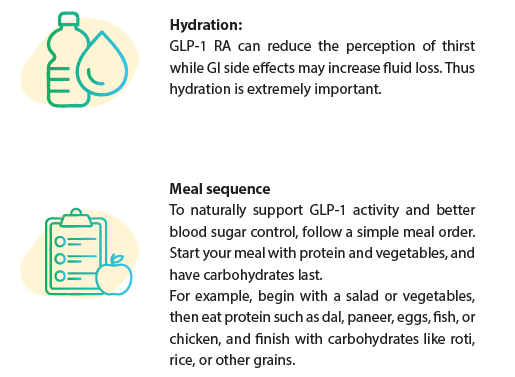
  • Because GLP-1 RA therapy can change how much and how often you eat, proper nutrition becomes important during treatment.

USEMA helps you:

  • Feel full faster
  • Feel full with smaller food portions
  • Stay full for longer time
  • Reduce hunger and cravings
  • Control blood sugar levels

Why nutrition matters when you are on USEMA

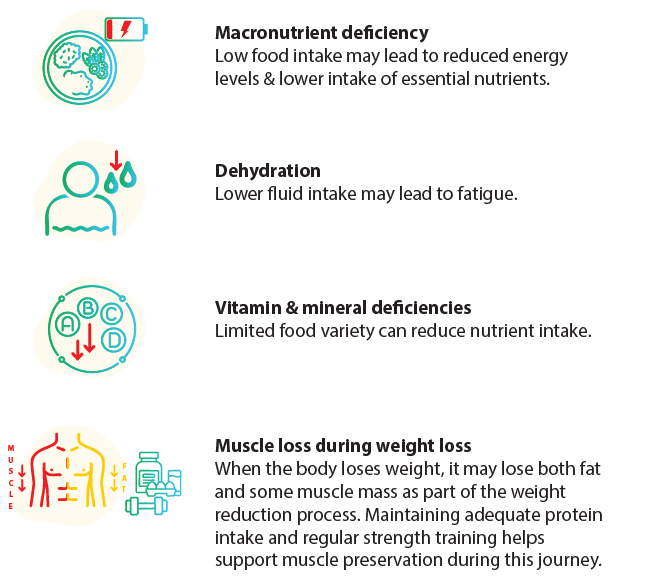
When you begin to feel full more quickly and stay satisfied for longer, it’s natural to eat less than you did before and in smaller portions. If these meals are not balanced nutritionally, you may not get all the nutrients you need.

This may lead to:

This may lead to

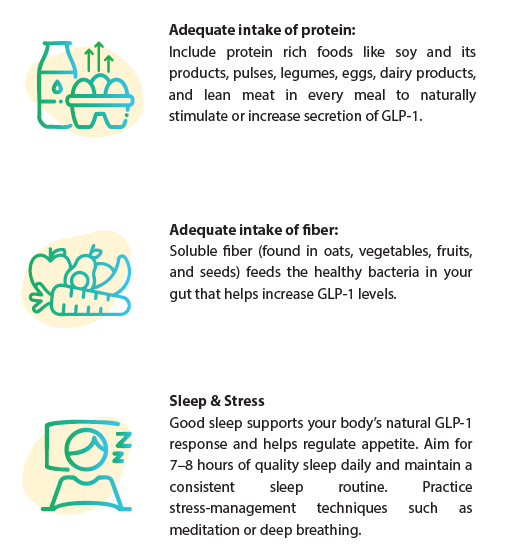
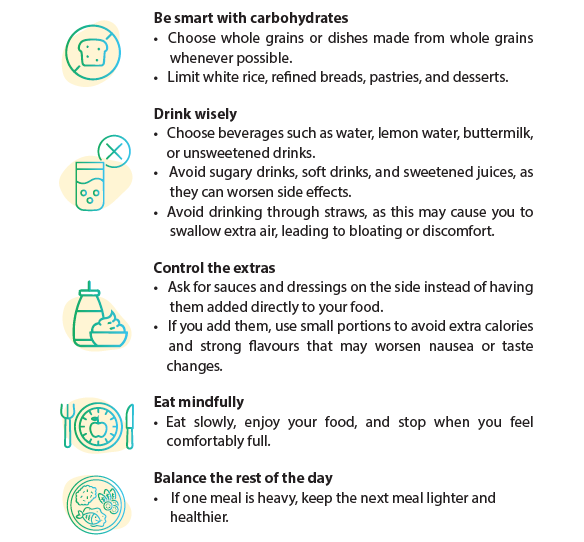
Smart habits to get the best results with USEMA


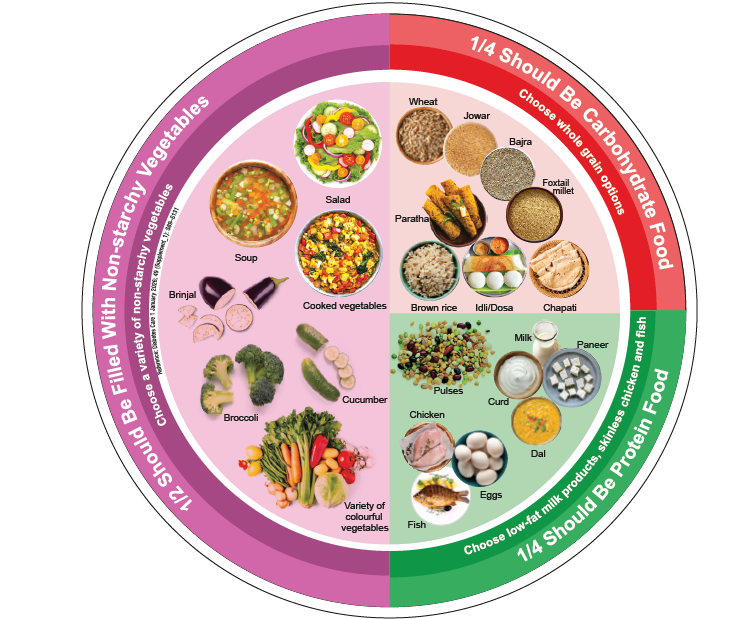
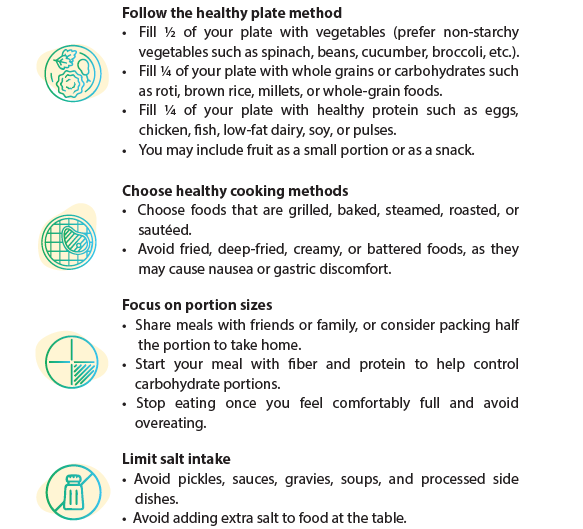
What is a healthy plate?

Healthy plate is a simple and practical way to plan meals that supports your overall health, energy levels, and better blood sugar control. Instead of focusing on strict calorie counting, it focuses on a well-balanced diet with the right proportions of different types of food.

Meal tips when on USEMA : (Do’s and Don’ts)

Do’s Don’ts
Consume well-balanced meals at regular intervals. Avoid fried, oily, and very spicy foods.
Drink adequate water throughout the day. Limit alcohol intake.
Limit consumption of processed foods. Avoid eating fruit with lunch or dinner.
Eat slowly and chew food thoroughly. Avoid lying down immediately after meals.
Choose fruit as a mid-morning or evening snack. Avoid heavy exercise immediately after meals.
Keep a record of your food and water intake. Do not eat in a hurry.
Choose healthier cooking methods like steaming, stir-frying, or baking rather than frying.

Importance of nutrition to protect muscle and bone health during weight loss

Protect muscle during weight loss

When you lose weight, your body loses not only fat but also some muscle mass. Muscle loss can account for about 10–25% of total weight loss. This is a natural change in the body, but it can be minimized by eating enough protein by staying physcially active and strength training.

You may have a higher risk of muscle loss if you:

  •  have inadequate protein intake
  •  are older in age
  •  are a post-menopausal woman
  •  do not perform strength or resistance exercises regularly

To protect your muscles and improve strength:

  • Eat adequate protein (about 60–75 g/day or up to 1.5 g/kg body weight per day).
  • Include high-quality protein sources such as soy products, pulses, dals, sprouts, and dairy for vegetarian options, and eggs, chicken, and fish for non-vegetarian options.
  • Include strength or resistance exercises regularly to maintain muscle mass.

Protecting bone health during weight loss

Rapid and significant weight loss (around 14% or more within 3–4 months) may also lead to some bone loss, especially in women and older adults.

Bone loss during weight reduction may depend on:

  •  How quickly you lose weight
  •  Your protein intake
  •  Your level of physical activity
  •  Your starting body weight

Loss of bone density can increase the risk of fractures and affect long-term bone health.

To keep your bones strong:

  • Ensure adequate protein intake.
  • Include nutrients important for bone health, such as calcium and vitamin D.
  • Stay physically active, especially with weight-bearing and strength exercises.

Healthy dining-out tips

Socialising and eating away from home are part of everyday life. With a few mindful choices and portion control, you can enjoy dining out occasionally. The following tips can help you make healthier and more comfortable choices while eating out.

#BeTheForce

References:

  1. Collins L, Costello RA. Glucagon-like peptide-1 receptor agonists. StatPearls [Internet]. Treasure Island (FL): StatPearls Publishing; 2024.
  2. Mozaffarian D, Agarwal M, Aggarwal M, et Nutritional priorities to support GLP-1 therapy for obesity: A joint Advisory from the American College of Lifestyle Medicine, the American Society for Nutrition, the Obesity Medicine Association, and The Obesity Society. Obesity (Silver Spring). 2025;33(8):1475-1503. doi:10.1002/oby.24336
  3. Almandoz JP, Wadden TA, Tewksbury C, et Nutritional considerations with antiobesity medications. Obesity (Silver Spring). 2024;32(9):1613-1631. doi:10.1002/oby.24067
  4. van der Klaauw AA, Keogh JM, Henning E, et al. High protein intake stimulates postprandial GLP1 and PYY release. Obesity (Silver Spring). 2013;21(8):1602-1607. doi:10.1002/oby.20154
  5. Leidy HJ, Armstrong CL, Tang M, Mattes RD, Campbell WW. The influence of higher protein intake and greater eating frequency on appetite control in overweight and obese men. Obesity (Silver Spring). 2010;18(9):1725-1732. doi:10.1038/oby.2010.45
  6. Bodnaruc, M., Prud’homme, D., Blanchet, R. et al. Nutritional modulation of endogenous glucagon-like peptide-1 secretion: a review. Nutr Metab (Lond) 13, 92 (2016). https://doi.org/10.1186/s12986-016-0153-3
  7. How to Activate GLP-1 Ohio State University. (2025 July 1). Accessed February 21, 2026.
  8. Joslin Diabetes Healthy Plate Method. Joslin Diabetes Center. Accessed December 29, 2025.
  9. Gentinetta S, Sottotetti F, Manuelli M, Cena H. Dietary Recommendations for the Management of Gastrointestinal Symptoms in Patients Treated with GLP-1 Receptor Agonist. Diabetes Metab Syndr 2024;17:4817-4824. Published 2024 Dec 19. doi:10.2147/DMSO.S494919
  10. Pamela Kushner, Carlos Campos, Aaron King, Davida Kruger, Javier Morales; Clinician Guidance on the Benefits of Healthy Nutrition and Increased Physical Activity for People With Type 2 Diabetes Following Glucagon-Like Peptide 1 Receptor Agonist Initiation. Clin Diabetes 15 December 2025; 43 (5): 681–695
  11. Figueiredo VC. Revisiting the roles of protein synthesis during skeletal muscle hypertrophy induced by Am J Physiol Regul Integr Comp Physiol. 2019;317(5):R709-R718. doi:10.1152/ajpregu.00162.2019
  12. American Diabetes Association. What can I eat? Healthy eating away from home (WCIE Participant Guide, Class               3)

.https://professional.diabetes.org/sites/default/files/media/wcie_participant_guide_class_3_lr.pdf

Disclaimer: The information provided herein is prepared based on articles provided under reference and reviewed by a qualied dietitian intended for bringing general awareness and are/is not intended to replace professional medical advice. Seek advice from the qualied health care professional before adopting the suggestions or if you have a doubt regarding your health condition. USV Private Ltd., (“USV”) disclaims all liabilities or damages arising directly or indirectly from the advisory services. Copying, circulation and distribution of this content is strictly prohibited.

December 24, 2024 By Luke Coutinho 3 Comments

Holiday Health Tip: It’s All In The Chew!

Holiday Health Tip: It's All In The ChewIt’s precisely between this week and January 1st when people tend to put on most of their weight. There are two reasons for this – The crazy festive season filled with weddings and parties followed by Christmas, New Year’s Eve and the tendency to let loose during this time, with the justification that they’ll start fresh with ‘healthy new year resolutions’ in January.


  • What if I told you that you could enjoy this season and it wouldn’t impact your weight?
  • What if I told you snacking on a cookie or dessert occasionally wouldn’t effect your weight goals?
  • What if you could eat rice, roti (Indian flat bread), and bread at lunch and dinner without it impacting your weight or health?
  • What if you could enjoy this festive season, have loads of fun, eat your favorite foods and still maintain your health and weight?

The human body is a miracle, and we are living examples of this miracle. The way our brain and body function, blood flow, smell, feelings, emotions, the ability to recover from the deadliest of diseases and the ability of our cells to heal and repair – is nothing short of extraordinary. Every day, trillions of cells in our body work non-stop to fight off germs and bacteria that could otherwise make us very sick or even threaten our lives. This miracle is called immunity.

Our stomach produces enough acid to dissolve a razor blade. Such is the power of our digestive system. So what’s an ice-cream, chocolate bar, or cookie going to do when it enters our stomachs? Our body is made to digest even the toughest foods. Red meat, for instance, is hard to digest, but the body will break it down. Vegetarians don’t escape either—cellulose in vegetables is extremely difficult to break down, but the body eventually does the job. This is one reason vegetarians may experience more flatulence than non-vegetarians.

The body can break down meats, vegetables and desserts alike! The secret lies in the ‘chew’. Food tastes so good because you’re meant to enjoy it—slow down and savor it, not just rush it to your stomach.

How Does Chewing Thoroughly Help? 

Chewing your food thoroughly is actually the first step in the complex process of digestion, and if you compromise this process, a common mistake, it can affect your overall health.

We have teeth not just to smile for a pretty picture but primarily to tear down and break up food into small bits. Saliva mixes with these small bits, further softening them.

Let’s dive into the basics:

Why Should You Chew Your Food Thoroughly? 

When you chew, more saliva gets produced and your saliva contains enzymes that break down FATS and CARBS. Yes!!! Digestion starts in the MOUTH! By the time your food reaches your stomach, it’s already processed by enzymes, making it easier for your stomach to complete the digestion process.

  • You feel light
  • You feel full for a longer period of time.
  • You reduce flatulence, gas, indigestion and burping.
  • You learn to savor and enjoy the taste of your food.
  • Your body absorbs all the goodness of your food (vitamins, minerals) better.
  • You eat just the amount your body needs to maintain or achieve a healthy weight.

Imagine all the times you’ve gobbled down your food. You’re left with undigested chunks sitting in your stomach, causing gas, discomfort, and increasing the chances of food converting to fat.

Chew your food. Enjoy a dessert, but eat it slowly and savor it. Over time, you’ll learn not to overindulge. The more you chew your food, the cleaner you keep your intestines, stomach and colon because the body can cleanse itself more effectively when digestion happens correctly. Say goodbye to constipation, fatigue, and migraines.

Try This Exercise Today!

At your next meal, eat slowly. Take a spoonful of food, chew it several times, savor the flavor and taste, then swallow. Put your spoon down before taking the next bite.

You’ll find yourself getting fuller quickly and will naturally eat less. This habit helps you save calories over time. Eventually, you’ll serve yourself smaller portions—fewer calories mean better health, a longer life, and a healthy weight.

Take one serving spoon less at every meal, chew thoroughly, and eat slowly. You’ll find that this is enough. All these saved portions add up to a significant calorie reduction, helping you lose fat and feel healthier.

Most diseases are caused by overeating. Even if you think your portions are appropriate, eating too quickly can lead to overconsumption. Chewing thoroughly ensures you eat mindfully, eliminating the need for restrictive diets.

Meal times are sacred—they’re your personal moments to nourish and care for your body. Respect this time, as it’s essential for keeping you healthy and strong.

This is a lifestyle change and if you master it, you can enjoy all your favorite foods in moderation.

We hope this article helps you make that lifestyle change. For more tips like this, check out Healthy Reads or ask a GOQii Coach by subscribing for Personalised Health Coaching here.

#BeTheForce

  • 1
  • 2
  • 3
  • Next Page »

Search

Recent Posts

  • World Blood Donor Day: The Lifesaving Gift That Science Still Cannot Create
  • From Shimla’s Slopes to Chandigarh’s Sidewalks: Surinder Kaur Bhalla’s Journey from Chaos to Control
  • Yoga and Hormonal Health: What the Science Says
  • Are You Overtraining? 6 Signs Your Body Needs More Recovery
  • Cortisol and Chronic Stress: What Your Body Is Trying to Tell You

Stay Updated

Archives

  • June 2026 (13)
  • May 2026 (20)
  • April 2026 (24)
  • March 2026 (18)
  • February 2026 (14)
  • January 2026 (14)
  • December 2025 (19)
  • November 2025 (15)
  • October 2025 (20)
  • September 2025 (6)
  • August 2025 (6)
  • July 2025 (11)
  • June 2025 (18)
  • May 2025 (16)
  • April 2025 (22)
  • March 2025 (27)
  • February 2025 (21)
  • January 2025 (25)
  • December 2024 (22)
  • November 2024 (23)
  • October 2024 (21)
  • September 2024 (23)
  • August 2024 (30)
  • July 2024 (20)
  • June 2024 (25)
  • May 2024 (28)
  • April 2024 (27)
  • March 2024 (27)
  • February 2024 (23)
  • January 2024 (21)
  • December 2023 (14)
  • November 2023 (10)
  • October 2023 (19)
  • September 2023 (22)
  • August 2023 (18)
  • July 2023 (22)
  • June 2023 (23)
  • May 2023 (20)
  • April 2023 (19)
  • March 2023 (23)
  • February 2023 (19)
  • January 2023 (15)
  • December 2022 (11)
  • November 2022 (15)
  • October 2022 (15)
  • September 2022 (12)
  • August 2022 (10)
  • July 2022 (17)
  • June 2022 (11)
  • May 2022 (10)
  • April 2022 (6)
  • March 2022 (6)
  • February 2022 (13)
  • January 2022 (11)
  • December 2021 (7)
  • November 2021 (3)
  • October 2021 (6)
  • September 2021 (3)
  • August 2021 (8)
  • July 2021 (7)
  • June 2021 (15)
  • May 2021 (16)
  • April 2021 (10)
  • March 2021 (7)
  • February 2021 (4)
  • January 2021 (4)
  • December 2020 (3)
  • November 2020 (4)
  • October 2020 (10)
  • September 2020 (3)
  • August 2020 (3)
  • July 2020 (2)
  • June 2020 (4)
  • May 2020 (10)
  • April 2020 (12)
  • March 2020 (10)
  • February 2020 (4)
  • January 2020 (4)
  • December 2019 (3)
  • November 2019 (7)
  • October 2019 (5)
  • September 2019 (4)
  • August 2019 (9)
  • July 2019 (9)
  • June 2019 (11)
  • May 2019 (4)
  • April 2019 (8)
  • March 2019 (8)
  • February 2019 (9)
  • January 2019 (8)
  • December 2018 (9)
  • November 2018 (3)
  • October 2018 (3)
  • September 2018 (5)
  • August 2018 (10)
  • July 2018 (6)
  • June 2018 (13)
  • May 2018 (8)
  • April 2018 (18)
  • March 2018 (9)
  • February 2018 (8)
  • January 2018 (15)
  • December 2017 (12)
  • November 2017 (19)
  • October 2017 (13)
  • September 2017 (15)
  • August 2017 (4)
  • July 2017 (8)
  • June 2017 (7)
  • May 2017 (6)
  • April 2017 (8)
  • March 2017 (6)
  • February 2017 (7)
  • January 2017 (9)
  • December 2016 (10)
  • November 2016 (7)
  • October 2016 (7)
  • September 2016 (7)
  • August 2016 (11)
  • July 2016 (9)
  • June 2016 (9)
  • May 2016 (12)
  • April 2016 (17)
  • March 2016 (17)
  • February 2016 (8)
  • January 2016 (6)
  • December 2015 (2)
  • November 2015 (9)
  • October 2015 (7)
  • September 2015 (9)
  • August 2015 (11)
  • July 2015 (9)
  • June 2015 (11)
  • May 2015 (9)
  • April 2015 (13)
  • March 2015 (8)
  • February 2015 (5)
  • January 2015 (12)
  • December 2014 (14)
  • November 2014 (11)
  • October 2014 (6)
  • September 2014 (13)
  • August 2014 (12)
  • July 2014 (6)
  • June 2014 (2)
  • May 2014 (7)
  • April 2014 (4)

From Shimla’s Slopes to Chandigarh’s Sidewalks: Surinder Kaur Bhalla’s Journey from Chaos to Control

Some journeys start with a plan. Others begin with a stumble literally. Surinder Bhalla, a government professional, born and raised in the scenic hill town of Shimla, had always lived a life of movement. “In Shimla, you walked everywhere,” she reflects. … [Read More...]

From “Laddu Nawin” to Fit and Fierce: How a 25-Year-Old Insurance Advisor Shed 20 Kilos and Gained His Life Back

When 25-year-old Nawin Yadav from Hyderabad walked into his office every morning, he carried more than just his files and policy papers. He had the weight of fatigue, sluggish energy, and an ever-growing belly that was becoming the butt of jokes. “People had even started calling me Laddu Nawin,” he says with a laugh, but […]

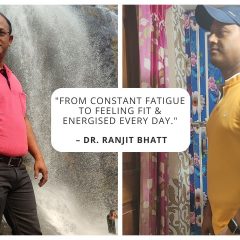
From Burnout to Balance: How Dr. Ranjit Reclaimed His Health

Dr Ranjit Bhatt has spent years tending to others. A practising doctor in Odisha, his days were packed with patients, surgeries, and emergencies. From the outside, it looked like a life lived in service. But on the inside, something wasn’t right. “I had no control over my schedule. I’d sleep late, eat at odd hours, […]

Ananda Mukherjee Health Story

From Terminal Illness To Complete Wellness! Ananda Mukherjee Health Story

As we observe World Cancer Day under the powerful theme ‘United by Unique’ (2025-2027)**, we are reminded that every individual’s journey with cancer is distinct, yet united by shared resilience, hope, and the collective fight against this disease. This theme places people at the centre of care and their stories at the heart of the […]

  • HOME
  • HEALTHY LIVING
  • FITNESS
  • HEALTHY RECIPES
  • USER STORIES
  • KARMA
  • BUY GOQii

Copyright ©2016 GOQii