
GOQii

Blog

  • HOME
  • HEALTHY LIVING
  • FITNESS
  • HEALTHY RECIPES
  • USER STORIES
  • KARMA
  • BUY GOQii

March 10, 2026 By GOQii Leave a Comment

The Sleep-Metabolism Connection: Why Rest is Your Best GLP-1 Partner

When we think about GLP-1 therapy, we usually think about what happens in the kitchen or at the gym. But some of the most important work happens while you are fast asleep. Have you noticed a change in your sleep patterns since starting your journey? Or perhaps you’ve found that on nights you sleep poorly, your “food noise” seems to whisper a little louder the next day?

The Biology of the Midnight Reset

GLP-1 is a metabolic powerhouse, but it doesn’t work in a vacuum. It interacts closely with your circadian rhythm the internal clock that tells your body when to burn energy and when to store it.

When you are on this therapy, your body is undergoing a massive internal renovation. This requires energy. If you aren’t getting 7–9 hours of quality sleep, your body produces more ghrelin (the hunger hormone) and cortisol (the stress hormone). High cortisol can actually work against your GLP-1 medication, making it harder for the hormone to regulate your blood sugar and appetite effectively.

Mastering Your GLP-1 Sleep Hygiene

To ensure your body has the “downtime” it needs to repair muscle and burn fat, try these GOQii-approved sleep strategies:

  • The 3-Hour Buffer: Because GLP-1 slows down gastric emptying, lying down with a full stomach can lead to acid reflux or “heavy” discomfort. Aim to finish your last meal at least 3 hours before bed to give your stomach a head start.
  • Cool and Dark: Your metabolic rate is shifting, which can sometimes lead to changes in body temperature. Keep your bedroom slightly cooler (18∘C is the sweet spot) to help your body drop its core temperature for deep sleep.
  • Magnesium Magic: As we discussed in our fiber blog, magnesium is a friend to the digestive system, but it’s also a natural relaxant. Incorporating magnesium-rich foods or a supplement (after consulting your healthcare provider) in the evening can help calm the nervous system.
  • Morning Light Exposure: To keep your GLP-1 signals sharp, get 10 minutes of natural sunlight as soon as you wake up. This “sets” your clock and ensures your hormones are firing at the right time.

Tip: Sleep isn’t “time off” it’s a clinical requirement for weight loss. Treat your bedtime with the same discipline you treat your protein intake.

#BeTheForce

Disclaimer: GOQii is committed to providing accurate, up-to-date, and comprehensive health information. This article is intended for informational purposes only and should not be used as a substitute for professional medical advice, diagnosis, or treatment. Always consult a qualified healthcare professional before starting or changing any medication. Individual responses to treatment may vary.
February 25, 2026 By GOQii Leave a Comment

The Fiber Gap: Managing Digestion on GLP-1 Therapy

One of the most remarkable things about GLP-1 therapy is how it slows down “gastric emptying.” This is the magic behind the feeling of fullness it keeps food in your stomach longer, sending a constant signal to your brain that you are satisfied. However, a slower stomach means your digestive tract needs a different kind of support to keep things moving.
In the world of nutrition, fiber is usually the hero. But when your system is moving at a slower pace, not all fiber is your friend. This is what we call the “Fiber Gap.”

Soluble vs. Insoluble: Know the Difference

On a standard diet, we are told to eat lots of “roughage” think raw kale, bran, and heavy seeds. This is insoluble fiber. It’s like a broom that sweeps through your system. However, when digestion is slowed by GLP-1, too much “broom” can lead to bloating, gas, and discomfort.

Instead, you need to prioritize soluble fiber. This type of fiber dissolves in water to create a gel-like substance. It’s much gentler on a slow-moving gut and helps maintain a healthy microbiome without causing a “traffic jam” in your intestines.

Closing the Gap Safely

To keep your gut happy while on GLP-1 therapy, follow these digestive guidelines:

  • Peeled and Cooked: Raw vegetable skins can be tough to break down. Try peeling your apples and carrots, and steam your greens instead of eating them raw. This “pre-digests” the fiber, making it easier for your stomach to handle.
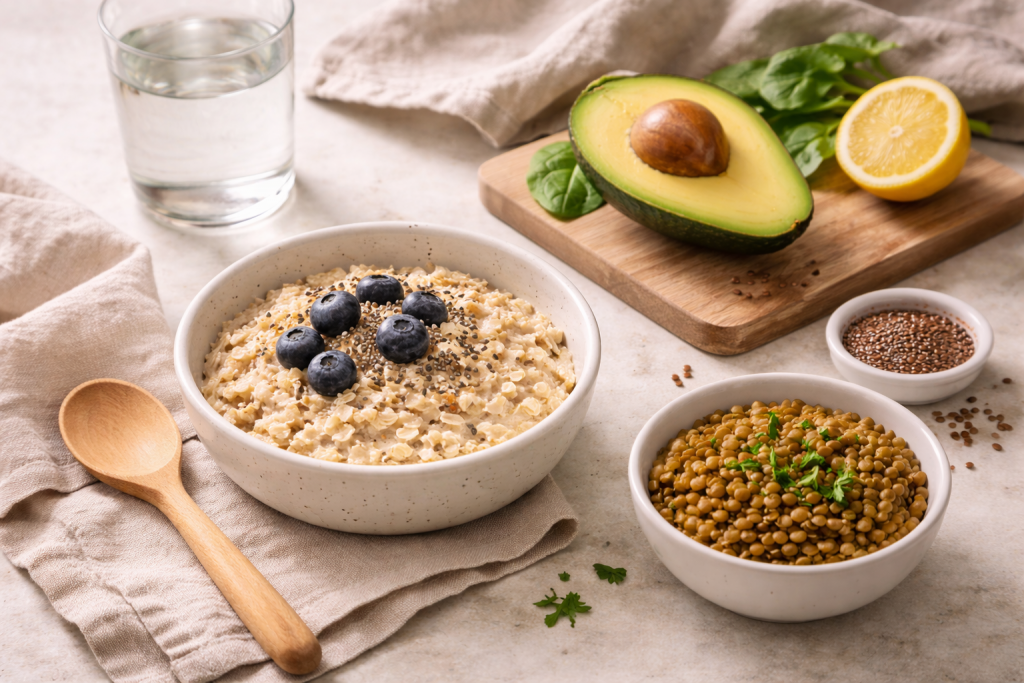
  • Focus on the “Gel” Builders: Incorporate oats, chia seeds, lentils, and avocados. These provide soluble fiber that moves smoothly through the digestive tract.
  • The Hydration Equation: Fiber is a sponge. If you eat fiber without drinking enough water, it will sit in your gut and harden. For every extra gram of fiber you add, make sure you’re adding an extra glass of water.
  • Natural Movement: Gentle movement, like a 15-minute post-meal walk, works in tandem with fiber to encourage “peristalsis” the natural contractions of your intestines.

Tip: If you experience significant slowing, try adding a tablespoon of ground flaxseeds to your morning yogurt. It’s a gentle, natural way to bridge the fiber gap without the bloat.

#BeTheForce

Disclaimer: GOQii is committed to providing accurate, up-to-date, and comprehensive health information. This article is intended for informational purposes only and should not be used as a substitute for professional medical advice, diagnosis, or treatment. Always consult a qualified healthcare professional before starting or changing any medication. Individual responses to treatment may vary.

February 21, 2026 By GOQii Leave a Comment

When Favorites Fade: Navigating Taste and Texture Changes on GLP-1

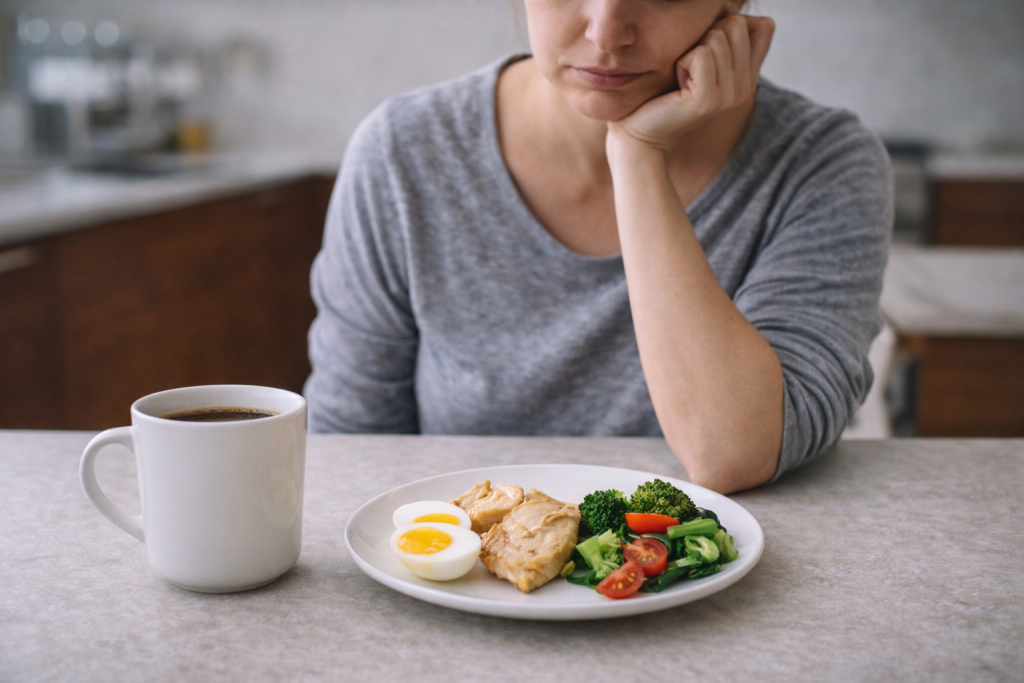
Have you noticed that your morning cup of coffee, once the highlight of your day, now tastes metallic or overly bitter? Or perhaps the thought of a juicy steak something you used to love now makes you feel slightly uneasy?
If you are on GLP-1 therapy, you aren’t imagining things. This phenomenon is known as “sensory-specific satiety” and texture aversion. It’s a fascinating, albeit sometimes frustrating, part of how your body’s chemistry is being rewritten for the better.

The Brain-Gut Rewiring

GLP-1 is a hormone that talks directly to the “reward center” of your brain (the mesolimbic system). This is the area responsible for cravings and the “pleasure” we get from high-fat or high-sugar foods. When you increase your GLP-1 levels, the brain’s dopamine response to certain foods changes. Essentially, the “volume” on food cravings is turned down.

Because your brain is no longer seeking a “hit” from food, your taste buds become more sensitive. Subtle bitterness or heavy textures that you used to ignore become much more apparent. This is why many people on this journey find themselves gravitating toward “cleaner,” simpler flavors.

Practical Strategies for Sensory Shifts

If you are struggling with taste changes or aversions, use these tactics to stay nourished:

  • Modify Temperatures: Aversions are often linked to the strong aromas of hot food. If a steaming dinner feels overwhelming, try “cold plates.” Chilled chicken salad, Greek yogurt bowls, or cold grain salads are often much better tolerated.
  • The “Neutral” Pivot: If bold flavors are off the table, stick to a “beige but healthy” palette for a few days. Foods like oats, cottage cheese, bananas, and sourdough bread provide nutrition without overwhelming the senses.
  • Hydration Hacks: Many find that plain water starts to taste “different.” Try infusing your water with mint, cucumber, or frozen berries. The subtle change can override the metallic taste some experience.
  • Check Your Zinc Levels: Sometimes, a persistent metallic taste can be linked to mineral shifts. Ensure you’re eating zinc-rich foods like pumpkin seeds or chickpeas, or speak to a coach about a multivitamin.

Tip: Don’t panic if you lose your “joy” for food temporarily. Think of this as a biological “reset button.” You are moving away from emotional eating and toward intuitive, functional nutrition.

#BeTheForce

Disclaimer: GOQii is committed to providing accurate, up-to-date, and comprehensive health information. This article is intended for informational purposes only and should not be used as a substitute for professional medical advice, diagnosis, or treatment. Always consult a qualified healthcare professional before starting or changing any medication. Individual responses to treatment may vary.

August 2, 2025 By Anusha Subramanian Leave a Comment

Why Resistance Training Matters More Than Ever on GLP-1 Therapy

Starting GLP-1 therapy can feel like a breakthrough. After years of battling weight, countless diets, and the exhausting cycle of losing and regaining weight, medications like semaglutide and liraglutide often offer something many people have never experienced before: a sense of control. Hunger fades, cravings quieten, and for once, weight starts to come down steadily. It’s not an exaggeration to say it can feel life-changing.



But here’s something most people aren’t told when they start: while the kilos may be dropping, not all that weight loss is necessarily fat. You could also be losing something your body desperately needs muscle. And this is where resistance training becomes a game-changer.

So, What’s Happening When You’re on GLP-1 Medications?

These drugs work by slowing digestion and helping you feel fuller for longer, which naturally leads to eating less. This calorie deficit drives the weight loss. But here’s the catch: when your body receives fewer calories, it doesn’t always discriminate. Yes, it burns fat but unless you’re actively working to protect it, your body may also start breaking down lean muscle for energy.

And that’s a problem worth paying attention to. Losing muscle is bad news for your metabolism, your strength, and your long-term health.

Why You Must Focus on Muscle While Losing Fat

Muscle is metabolically active tissue. Simply put:

  • It helps you burn more calories, even at rest
  • It supports posture, mobility, and everyday function
  • It protects against injury as you age
  • It’s essential for healthy ageing and longevity

When you lose weight with GLP-1 medications without strength training, your body may sacrifice muscle as well as fat. Over time, this can slow your metabolism making further weight loss harder and weight maintenance even tougher.

What Is Resistance Training?

Resistance training is all about giving your muscles a reason to stay. Every time you challenge them with weights, bands, or just your bodyweight your body gets the message: muscle matters. It says, “Don’t burn this muscle. I need it.”

That’s why resistance training is so important, especially when you’re eating less. It helps your body burn fat while preserving lean mass. Think of it as the ideal partner to your GLP-1 medication.

But What If the Gym Isn’t Your Thing?

No worries. You don’t need fancy equipment or a gym membership to start building strength. Here’s how to integrate resistance training into your week:

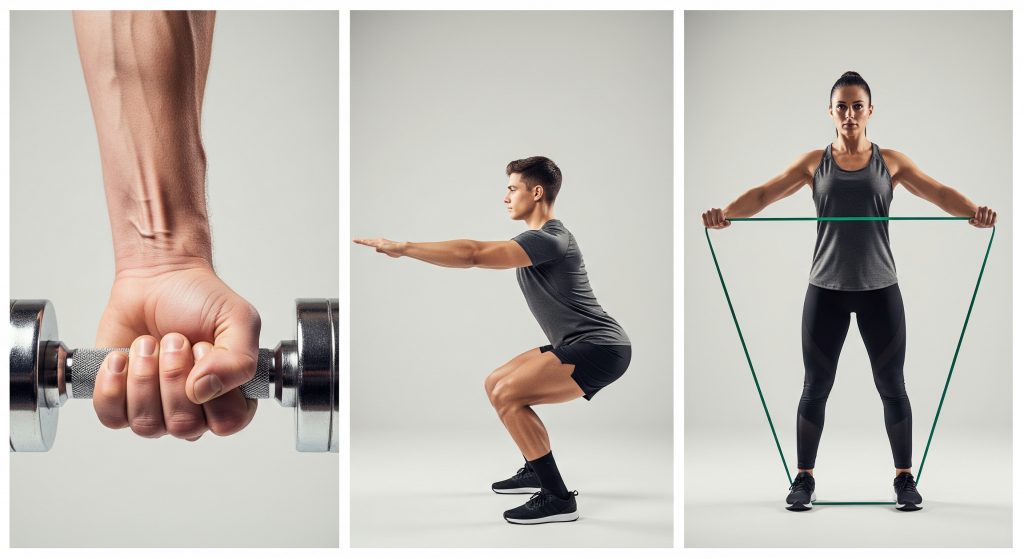
  • Use your bodyweight

Squats, lunges, push-ups, and glute bridges are effective — and require no equipment.

  • Grab a resistance band

Lightweight, portable, and surprisingly powerful for full-body workouts.

  • Get creative


Use water bottles, backpacks, or heavy books in place of weights. Try bicep curls, shoulder presses, or loaded squats.

  • Keep it short
    Two to three sessions a week, just 15–20 minutes each, is enough to signal your body to retain muscle.

You don’t need to train like a bodybuilder. You just need to move your muscles regularly.

Benefits of Resistance Training on GLP-1 Therapy

Here’s why strength training even at home matters during your GLP-1 journey:

  • Preserves lean muscle mass
  • Prevents metabolic slowdown
  • Improves body composition (think firm and toned, not just smaller)
  • Boosts insulin sensitivity and blood sugar control
  • Enhances mood, energy, and mental clarity

Start small. Stay consistent. Focus on progress, not perfection. With resistance training, you’re not just losing weight — you’re gaining strength and long-term resilience.

Move to Protect Your Muscles

GLP-1 medications can help you lose weight but resistance training ensures you lose fat, not strength.

So if you’re on GLP-1 therapy, remember:

  • Prioritise protein
  • Move your muscles
  • Celebrate non-scale victories

Because in the long run, preserving muscle is what will keep your metabolism strong, your body capable, and your health thriving.

#BeTheForce

Disclaimer: The information provided in this blog is for general awareness and educational purposes only. It is not intended to replace professional medical advice, diagnosis, or treatment. Always consult a qualified healthcare provider for personalised medical guidance or concerns related to your health. Images shown are for representation purposes only and may not depict the exact recommendations or outcomes.

  • 1
  • 2
  • Next Page »

Search

Recent Posts

  • Top 10 Foods For Diabetics: What to Eat to Manage Blood Sugar
  • Why Good Nutrition Before Conception Is Crucial For Your Baby’s Health
  • 6 Tricks To Help You Make Exercise A Habit
  • World Parkinson’s Day 2026: Bridging the Care Gap & Supporting Caregivers
  • Inflammation: The Hidden Fire Behind Most Chronic Disease

Stay Updated

Archives

  • April 2026 (11)
  • March 2026 (18)
  • February 2026 (14)
  • January 2026 (14)
  • December 2025 (19)
  • November 2025 (15)
  • October 2025 (20)
  • September 2025 (6)
  • August 2025 (6)
  • July 2025 (12)
  • June 2025 (18)
  • May 2025 (16)
  • April 2025 (22)
  • March 2025 (28)
  • February 2025 (22)
  • January 2025 (25)
  • December 2024 (22)
  • November 2024 (23)
  • October 2024 (21)
  • September 2024 (23)
  • August 2024 (30)
  • July 2024 (21)
  • June 2024 (25)
  • May 2024 (30)
  • April 2024 (27)
  • March 2024 (27)
  • February 2024 (24)
  • January 2024 (21)
  • December 2023 (14)
  • November 2023 (11)
  • October 2023 (19)
  • September 2023 (22)
  • August 2023 (18)
  • July 2023 (22)
  • June 2023 (23)
  • May 2023 (24)
  • April 2023 (22)
  • March 2023 (23)
  • February 2023 (19)
  • January 2023 (15)
  • December 2022 (11)
  • November 2022 (15)
  • October 2022 (15)
  • September 2022 (12)
  • August 2022 (10)
  • July 2022 (17)
  • June 2022 (11)
  • May 2022 (10)
  • April 2022 (6)
  • March 2022 (6)
  • February 2022 (13)
  • January 2022 (11)
  • December 2021 (7)
  • November 2021 (3)
  • October 2021 (6)
  • September 2021 (3)
  • August 2021 (8)
  • July 2021 (7)
  • June 2021 (15)
  • May 2021 (16)
  • April 2021 (10)
  • March 2021 (7)
  • February 2021 (4)
  • January 2021 (4)
  • December 2020 (3)
  • November 2020 (4)
  • October 2020 (10)
  • September 2020 (3)
  • August 2020 (3)
  • July 2020 (2)
  • June 2020 (4)
  • May 2020 (10)
  • April 2020 (12)
  • March 2020 (10)
  • February 2020 (4)
  • January 2020 (4)
  • December 2019 (3)
  • November 2019 (7)
  • October 2019 (5)
  • September 2019 (4)
  • August 2019 (9)
  • July 2019 (9)
  • June 2019 (11)
  • May 2019 (4)
  • April 2019 (8)
  • March 2019 (8)
  • February 2019 (9)
  • January 2019 (8)
  • December 2018 (9)
  • November 2018 (3)
  • October 2018 (3)
  • September 2018 (5)
  • August 2018 (10)
  • July 2018 (6)
  • June 2018 (13)
  • May 2018 (8)
  • April 2018 (18)
  • March 2018 (9)
  • February 2018 (8)
  • January 2018 (15)
  • December 2017 (12)
  • November 2017 (19)
  • October 2017 (13)
  • September 2017 (15)
  • August 2017 (4)
  • July 2017 (8)
  • June 2017 (7)
  • May 2017 (6)
  • April 2017 (8)
  • March 2017 (6)
  • February 2017 (7)
  • January 2017 (9)
  • December 2016 (10)
  • November 2016 (7)
  • October 2016 (7)
  • September 2016 (7)
  • August 2016 (11)
  • July 2016 (9)
  • June 2016 (9)
  • May 2016 (12)
  • April 2016 (17)
  • March 2016 (17)
  • February 2016 (8)
  • January 2016 (6)
  • December 2015 (2)
  • November 2015 (9)
  • October 2015 (7)
  • September 2015 (9)
  • August 2015 (11)
  • July 2015 (9)
  • June 2015 (11)
  • May 2015 (9)
  • April 2015 (13)
  • March 2015 (8)
  • February 2015 (5)
  • January 2015 (12)
  • December 2014 (14)
  • November 2014 (11)
  • October 2014 (6)
  • September 2014 (13)
  • August 2014 (12)
  • July 2014 (6)
  • June 2014 (2)
  • May 2014 (7)
  • April 2014 (4)

From “Laddu Nawin” to Fit and Fierce: How a 25-Year-Old Insurance Advisor Shed 20 Kilos and Gained His Life Back

When 25-year-old Nawin Yadav from Hyderabad walked into his office every morning, he carried more than just his files and policy papers. He had the weight of fatigue, sluggish energy, and an ever-growing belly that was becoming the butt of jokes. “People … [Read More...]

“I’ve Challenged Myself to Live 100 Years” – The Story of Chandubhai Savani’s Second Chance at Life

At 67, most people start slowing down. Not Chandubhai Savani. A resident of Surat, Chandubhai, thought life was on track. “My life was going well till I had my bypass surgery,” he says. That surgery, back in 2021, was a wake-up call.  Medication was routine, but exercise wasn’t. His diet? What he calls ‘normal.’ “I […]

From Shimla’s Slopes to Chandigarh’s Sidewalks: Surinder Kaur Bhalla’s Journey from Chaos to Control

Some journeys start with a plan. Others begin with a stumble literally. Surinder Bhalla, a government professional, born and raised in the scenic hill town of Shimla, had always lived a life of movement. “In Shimla, you walked everywhere,” she reflects. “Walking was never an exercise. It was just life.” But after shifting to Chandigarh, […]

Ananda Mukherjee Health Story

From Terminal Illness To Complete Wellness! Ananda Mukherjee Health Story

As we observe World Cancer Day under the powerful theme ‘United by Unique’ (2025-2027)**, we are reminded that every individual’s journey with cancer is distinct, yet united by shared resilience, hope, and the collective fight against this disease. This theme places people at the centre of care and their stories at the heart of the […]

  • HOME
  • HEALTHY LIVING
  • FITNESS
  • HEALTHY RECIPES
  • USER STORIES
  • KARMA
  • BUY GOQii

Copyright ©2016 GOQii



