GOQii

Blog

  • HOME
  • HEALTHY LIVING
  • FITNESS
  • HEALTHY RECIPES
  • USER STORIES
  • KARMA
  • BUY GOQii

Search Results for: weight

March 6, 2017 By Luke Coutinho 2 Comments

Lifestyle Change: Key to Good Health

GOQiiEcosystem

If there is any solution that has ever worked with any of my patients or clients over the last 10 years, it’s a lifestyle change. Be it cancer, weight loss, or just feeling better about one’s self, a lifestyle change has always provided the most effective and sustainable result.

Restrictive diets have never worked, in fact, they lead to collateral damage like depression, frustration, yo-yo and a feeling of deprivation. If you are eating an ice-cream or chocolate, eat it with love, enjoy it, or don’t eat it at all. GOQii’s coaches will coach you to do just that. They will coach you to eat mindfully, they will help you set up goals, encourage great habits and break down the bad ones.People have started measuring their worth with the wrong scale. The weighing scale dictates to people for beautiful or healthy they are or should be, and that’s so wrong.

The GOQii dream is to change the world. There are millions of people out there, struggling with their health and lifestyle. Most are lost and have no clue what’s right and what they should do to be healthy and fit. It doesn’t help that there is so much information and research out there that just confuses us even more.

The GOQii eco-system is designed out of passion and with an intention to change people lives, make a difference, add value and evoke change in people. It’s based on simplicity and believes that motivation is the energy for action. We can do anything when we are motivated. GOQii ties in Karma, ‘giving back to our communities, it’s such a self-fulfilling feeling when you know you can give back to society through an action that is making you healthier. This ecosystem ties in all of this and more.

Our coaches come from diverse backgrounds of nutrition, sports, fitness and other fields and go through a comprehensive training on behavior, nutrition, fitness and motivation. Our training material is designed by experts from Stanford University and Yale and delivered by professional trainers.

As an individual, there are only a handful of people I can professionally help in a day. Through GOQii, we can reach out to millions. Research today has proved that even if the unhealthiest person makes as little as one lifestyle change in a month, they are on the road to rejuvenation and better health.

February 17, 2017 By Dr Darshana Salve 2 Comments

Blood should circulate – Donate Blood!

blood-donation

We only understand the importance of blood donation when someone close to us is in need of it. A few days back my cousin contacted me to know the availability of blood for her friend’s father who met with an accident. Unfortunately, we lost him due to excess blood loss. We know of this incident because it’s a dear friend’s father but, on a daily basis there are so many such cases where there is loss of death due to non-availability of blood.

Statistics show that roughly every year in India there are 234 million major operations, 63 million trauma-induced surgeries, 31 million cancer-related procedures and 10 million pregnancy related complications which require blood transfusions.

Apart from these there are also disorders like sickle cell anemia, thalassemia and hemophilia that require repeated blood transfusions.

One of the main reasons for lack of blood is, many people are skeptical about blood donation. They have fears of contracting infections during blood donation, fear of the needle or feeling weak after blood donation. Human body approximately has 4.7-5.5 L of blood, out of it only 350/ 450 ml of blood is withdrawn during blood donation drives and it takes only a day or two to replenish the fluid volume in the body and three months for the regeneration of red cells to donate more blood.

There is no substitute for human blood. Blood cannot be manufactured – it can only come from
volunteer donors like you and me. One blood donation can save 3 lives. But, unfortunately only 1 % of volunteer donors come forward to donate blood and majority of the blood donation comes from replacement donors.

Blood Donation Camp

Replacement donors are friends and relatives of a patient who donate blood as replacement for the blood given to the patient.

At times, these replacement donors (friends and relatives) are more likely to harm the recipients by hiding or overlooking the many don’ts of donation.

Though voluntary self-referral to donate without citing reasons is widely accepted, replacement donors rarely adhere to it either to hide their high-risk behavior or due to pressure to meet the immediate demand for certain units of blood. As a result, the prevalence of HIV, hepatitis B, and hepatitis C is much higher among family donors when compared to voluntary donors, according to a 2012 study published in the Asian Journal of Transfusion Science.

Donation of safe blood can be achieved only when replacement donors are replaced by healthy volunteer donors to meet ‘over 95 per cent of blood requirement’. This can be done through increased awareness, providing appropriate facilities for people to donate blood, and improved donor retention.

While donating blood always be truthful about your health status!

Do not donate blood if you have any of these conditions

  • Cold / fever in the past 1 week.
  • Under treatment with antibiotics or any other medication.
  • Cardiac problems, hypertension, epilepsy, diabetes (on insulin therapy), history of cancer, chronic kidney or liver disease, bleeding tendencies, venereal disease etc.
  • Major surgery in the last 6 months.
  • Vaccination in the last 24 hours.
  • Miscarriage in the last 6 months or have been pregnant / lactating in the last one year.
  • Had fainting attacks during last donation.
  • Have regularly received treatment with blood products.
  • Shared a needle to inject drugs/ have history of drug addiction.
  • Had sexual relations with different partners or with a high risk individual.
  • Tested positive for antibodies to HIV.
  • If you are Underweight ( below 50 KGs)

Pregnancy and Menstrual Cycle

  • Females should not donate blood during pregnancy and lactation.
  • Females should not donate blood if they are having heavy menstrual flow or menstrual cramps.

Do donate blood if…

  • You are between age group of 18-60 years.
  • Weight is 50 kgs or more.
  • Hemoglobin is 12.5 gm% minimum.
  • Last blood donation was 3 months earlier.
  • You are healthy and have not suffered from malaria, typhoid or other transmissible disease in the recent past.

It’s time that we take up the responsibility to do voluntary blood donation. Donate Blood without waiting for a call.

February 10, 2017 By Anusha Subramanian Leave a Comment

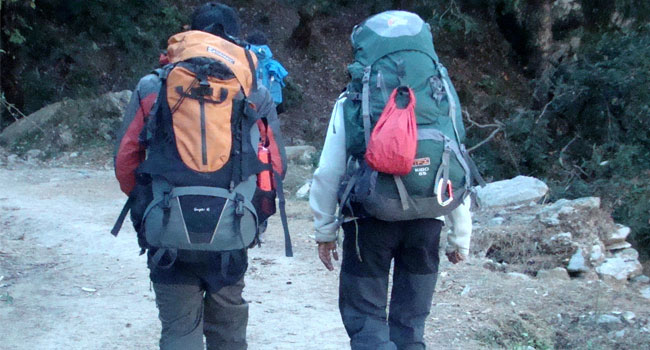
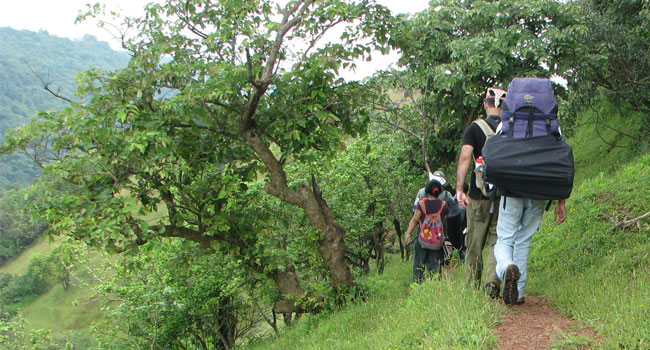
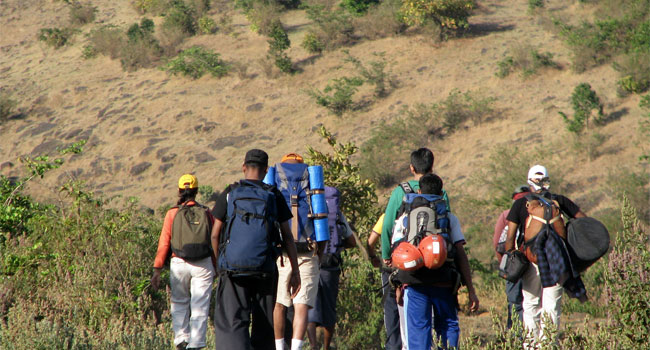
How to train for High Altitude Trekking?

high-altitude-trekking

Almost a decade ago when I started trekking in the Himalayas, it was just a few enthusiasts who did this. It was not considered normal and people were under the impression that this is meant for only those who were super fit. Trekking is normally associated with arduous trudging on some hard and uneven ground, climbing and walking on moraines and all that’s associated with laborious tasks amidst hostile environments with bare shelter, food and clothing essentials.

While trekking you might come across situations where you are stuck and most times hit by the sheer untouched beauty of a picture perfect image that embeds itself permanently in your memory as you are exposed to the wilderness for a longer duration in a day. This beauty can be seldom enjoyed while in a car.

Having said this, trekking is not tough. If you know to walk then you can trek as well. But, this does not mean that one ventures into unknown territories on their own to explore the unknown. Walking along a trail around with a backpack does not require exceptional skills but does require certain amount of physical fitness, planning, the right clothes, shoes and above all old common sense.

For high altitude trekking it requires much more physical and mental preparation. At higher altitudes, the air is thinner, there is less available oxygen and it becomes more difficult to breathe. There are serious risks involved with high-altitude hiking, including altitude sickness, acute mountain syndrome that can lead to pulmonary or cerebral edema, all of which can result in death.

Therefore, before you go on a high-altitude hike, you need to train your body to work efficiently and effectively in environments with less oxygen.

How to Train for High Altitude Hiking

Here are few steps that will help train for high altitude:

** Begin training at least four tosix months in advance. This is especially important if you plan to hike at altitudes of more than 14,000 feet.

**See a doctor for a medical checkup in the early stages of training to ensure that high-altitude hiking is a safe and recommended activity for your age and physical condition.

** Hike as often as possible. The best thing you can do to prepare for higher-altitude hikes is to hike closer home as often as you can and at higher altitudes if available. Start gradually, increasing the distance and altitude of your treks with each week of training so that your body and lungs can become accustomed to functioning at increasing levels of altitude.

** Participate in interval training. Interval training is a method of training the cardiovascular system by elevating the heart rate significantly and then allowing it to recover for a period before elevating it again.

** Interval training could consist of running sprints, running hills or using the interval setting on a treadmill or exercise bike. Choose one day of the week for interval training and doing six repetitions of whatever exercise you have chosen. Each week, increase the intensity by running a faster sprint or a steeper hill. You also can train with your back pack with about 6 kgs in it to add weight and simulate the weight that you might be carrying during the high-altitude hike.

** For trekking you should work on developing a breathing rhythm and deep breathing. Your ability to control and conserve your breath and expand your breathing capacity will come in handy when the oxygen supply is reduced. Developing a breathing/stepping rhythm will prevent you from overexerting yourself at higher elevations. It also recommends practicing deep breathing on training hikes.Whenever you begin to feel breathless, concentrate on taking deep breaths and smaller steps until a more normal breathing pattern returns.Yoga asanas such as Kapalbhati, Vastrika, Anulom Vilom all of which entail breathing exercises.

** Lastly, you could also train with professionals who are trained in mountaineering to learn few basic techniques and nuances that may help while trekking.

My final advice: Try not to skip your work out if you can help it. Your safety and success depends on an how fit you are.

January 24, 2017 By Priyanka Shah 18 Comments

Benefits of Pre-Planning your meals: failing to plan is planning to fail

1

Travelling for me has always been a bane not because I do not like travelling but, largely due to the fact that my meals just go for a toss and me going ravenous at the sight of food when I reach my destination. I would end up eating like I’ve never seen food before and then curse myself for the next three days. We all can relate to this even in our day-to-day life. How many of us come back home after a long day at work and raid the fridge. The reason-most of us either do not have the time or the willingness to carry food from home, how much ever of a ‘health freak’ you claim yourself to be. I am sure many of you reading this blog would identify with me on this aspect.

Ever wondered why this shift in behavioural pattern? – The answer is simple enough – Lack of planning! When it comes to eating well, meal planning is one of the easiest things you can do to set yourself up for success. While even the thought of it can be considered a chore to add onto your “to-do list,” this is one chore that should be at the top of that list!

Think of it as – planning your budget for the forthcoming week. Without planning your expenses based on your most recent earnings, there would be a high possibility ofyou going overboard with your spending and later putting yourself on a guilt trip. Same is the case with food planning. You certainly do not want to fall into thevicious trap of – overeat – feel guilty – get on a diet – punish yourself to exercise – starve – think that you have lost those unnecessary pounds – overeat again.

Planning your meals well ahead of time brings with it certain benefits difficult for us to overlook.

Here are some of them you are most likely to be able to relate to –

Make healthier choices– Planning your meals well ahead of time helps you take control of your personal nutritional needs. There are rare chances of you then reaching out to convenience foods like ready to eat foods, quick fixes like those creamy or sugar laden biscuits and cakes or fall prey to emotional eating.

Satiety cues are kept under control – The simplest of the food choices made by you (something as simple as dal rice) keeps you feeling satiated enough to prevent any hunger pangs or sweet cravings from setting in especially later in the evening. And, if you get this right, your weight loss concerns are taken care of!

Prevents bloating & acidity –Out of 10 people, 5 complain of acidity issues, bloating and other digestion related problems. Why is this? The main cause being, untimely meals especially due to faulty planning.

Slim chances of eating beyond your capacity –When you know that all your meals are taken care of for a particular day, it so happens and is my personal experience too, that you tend to relish and at the same time practice ‘mindful eating’ at all times when you sit down to eat. As you are tuned in to your stomach you know where exactly to stop the act of eating. End result? You end up feeling so much lighter and are ready and eagerly await your next meal within 2 hours!

Staying committed to your ‘cheat day’- We all set a weekly ‘cheat day’ for ourselves but, how many of us stick to it? If you are successful at planning your meals right, there are high chances of you sticking to this week long commitment!

In short, ‘planning’ your meals allows you to take control of yourself and your nutritional needs leaving you feeling so much better about yourself because you not only end up losing oodles of inches but, you are eating so much more than ever before!

  • « Previous Page
  • 1
  • …
  • 236
  • 237
  • 238
  • 239
  • 240
  • …
  • 273
  • Next Page »

Search

Recent Posts

  • World IBD Day 2026: Why IBD Is More Than Just a Gut Problem
  • World Hypertension Day 2026: The Silent Killer & 5 Natural Ways to Lower Your Blood Pressure
  • Eat Healthy At Work: Quick & Easy Snacks You Can Eat In The Office
  • The Great Summer Mango Debate: Can You Eat Mangoes While Trying to Lose Weight?
  • Metabolic Flexibility: Why Your Body Struggles to Burn Fat Efficiently

Stay Updated

Archives

  • May 2026 (15)
  • April 2026 (24)
  • March 2026 (18)
  • February 2026 (14)
  • January 2026 (14)
  • December 2025 (19)
  • November 2025 (15)
  • October 2025 (20)
  • September 2025 (6)
  • August 2025 (6)
  • July 2025 (12)
  • June 2025 (18)
  • May 2025 (16)
  • April 2025 (22)
  • March 2025 (27)
  • February 2025 (21)
  • January 2025 (25)
  • December 2024 (22)
  • November 2024 (23)
  • October 2024 (21)
  • September 2024 (23)
  • August 2024 (30)
  • July 2024 (21)
  • June 2024 (25)
  • May 2024 (28)
  • April 2024 (27)
  • March 2024 (27)
  • February 2024 (24)
  • January 2024 (21)
  • December 2023 (14)
  • November 2023 (10)
  • October 2023 (19)
  • September 2023 (22)
  • August 2023 (18)
  • July 2023 (22)
  • June 2023 (23)
  • May 2023 (22)
  • April 2023 (19)
  • March 2023 (23)
  • February 2023 (19)
  • January 2023 (15)
  • December 2022 (11)
  • November 2022 (15)
  • October 2022 (15)
  • September 2022 (12)
  • August 2022 (10)
  • July 2022 (17)
  • June 2022 (11)
  • May 2022 (10)
  • April 2022 (6)
  • March 2022 (6)
  • February 2022 (13)
  • January 2022 (11)
  • December 2021 (7)
  • November 2021 (3)
  • October 2021 (6)
  • September 2021 (3)
  • August 2021 (8)
  • July 2021 (7)
  • June 2021 (15)
  • May 2021 (16)
  • April 2021 (10)
  • March 2021 (7)
  • February 2021 (4)
  • January 2021 (4)
  • December 2020 (3)
  • November 2020 (4)
  • October 2020 (10)
  • September 2020 (3)
  • August 2020 (3)
  • July 2020 (2)
  • June 2020 (4)
  • May 2020 (10)
  • April 2020 (12)
  • March 2020 (10)
  • February 2020 (4)
  • January 2020 (4)
  • December 2019 (3)
  • November 2019 (7)
  • October 2019 (5)
  • September 2019 (4)
  • August 2019 (9)
  • July 2019 (9)
  • June 2019 (11)
  • May 2019 (4)
  • April 2019 (8)
  • March 2019 (8)
  • February 2019 (9)
  • January 2019 (8)
  • December 2018 (9)
  • November 2018 (3)
  • October 2018 (3)
  • September 2018 (5)
  • August 2018 (10)
  • July 2018 (6)
  • June 2018 (13)
  • May 2018 (8)
  • April 2018 (18)
  • March 2018 (9)
  • February 2018 (8)
  • January 2018 (15)
  • December 2017 (12)
  • November 2017 (19)
  • October 2017 (13)
  • September 2017 (15)
  • August 2017 (4)
  • July 2017 (8)
  • June 2017 (7)
  • May 2017 (6)
  • April 2017 (8)
  • March 2017 (6)
  • February 2017 (7)
  • January 2017 (9)
  • December 2016 (10)
  • November 2016 (7)
  • October 2016 (7)
  • September 2016 (7)
  • August 2016 (11)
  • July 2016 (9)
  • June 2016 (9)
  • May 2016 (12)
  • April 2016 (17)
  • March 2016 (17)
  • February 2016 (8)
  • January 2016 (6)
  • December 2015 (2)
  • November 2015 (9)
  • October 2015 (7)
  • September 2015 (9)
  • August 2015 (11)
  • July 2015 (9)
  • June 2015 (11)
  • May 2015 (9)
  • April 2015 (13)
  • March 2015 (8)
  • February 2015 (5)
  • January 2015 (12)
  • December 2014 (14)
  • November 2014 (11)
  • October 2014 (6)
  • September 2014 (13)
  • August 2014 (12)
  • July 2014 (6)
  • June 2014 (2)
  • May 2014 (7)
  • April 2014 (4)

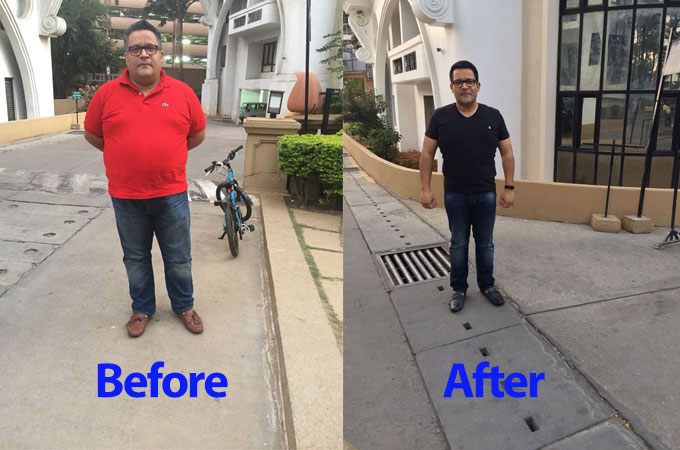
From “Laddu Nawin” to Fit and Fierce: How a 25-Year-Old Insurance Advisor Shed 20 Kilos and Gained His Life Back

When 25-year-old Nawin Yadav from Hyderabad walked into his office every morning, he carried more than just his files and policy papers. He had the weight of fatigue, sluggish energy, and an ever-growing belly that was becoming the butt of jokes. “People … [Read More...]

“I’ve Challenged Myself to Live 100 Years” – The Story of Chandubhai Savani’s Second Chance at Life

At 67, most people start slowing down. Not Chandubhai Savani. A resident of Surat, Chandubhai, thought life was on track. “My life was going well till I had my bypass surgery,” he says. That surgery, back in 2021, was a wake-up call.  Medication was routine, but exercise wasn’t. His diet? What he calls ‘normal.’ “I […]

From Shimla’s Slopes to Chandigarh’s Sidewalks: Surinder Kaur Bhalla’s Journey from Chaos to Control

Some journeys start with a plan. Others begin with a stumble literally. Surinder Bhalla, a government professional, born and raised in the scenic hill town of Shimla, had always lived a life of movement. “In Shimla, you walked everywhere,” she reflects. “Walking was never an exercise. It was just life.” But after shifting to Chandigarh, […]

Ananda Mukherjee Health Story

From Terminal Illness To Complete Wellness! Ananda Mukherjee Health Story

As we observe World Cancer Day under the powerful theme ‘United by Unique’ (2025-2027)**, we are reminded that every individual’s journey with cancer is distinct, yet united by shared resilience, hope, and the collective fight against this disease. This theme places people at the centre of care and their stories at the heart of the […]

  • HOME
  • HEALTHY LIVING
  • FITNESS
  • HEALTHY RECIPES
  • USER STORIES
  • KARMA
  • BUY GOQii

Copyright ©2016 GOQii