GOQii

Blog

  • HOME
  • HEALTHY LIVING
  • FITNESS
  • HEALTHY RECIPES
  • USER STORIES
  • KARMA
  • BUY GOQii

Search Results for: food

February 25, 2023 By Navnee Garg 3 Comments

Healthy Fats vs. Unhealthy Fats: Weight Loss, Heart Health & More

healthy fats

“Fat” used to be a bad word in nutrition. Years ago, your doctor might have recommended that you limit or avoid fat in your diet. You will be surprised to know that all fats aren’t bad. In fact, some ‘healthy fats’ lower your cholesterol level and help keep you healthy.

What are Dietary Fats?

Dietary fats are essential to give your body energy and to support cell growth. They also help protect your organs and help keep your body warm. Fats help your body absorb some nutrients and produce important hormones too. Your body definitely needs fat.

Healthy Fats vs Unhealthy Fats

Since fats are an important part of a healthy diet, rather than adopting a low-fat diet, it’s more important to focus on eating more beneficial “good” fats and limiting harmful “bad” fats.

1. Monounsaturated fats and polyunsaturated fats are known as the “good fats” or “healthy fats” because they are good for your heart, your cholesterol, and your overall health. Adding more of these healthy fats to your diet may help to make you feel more satisfied after a meal, reducing hunger and thus promoting weight loss.

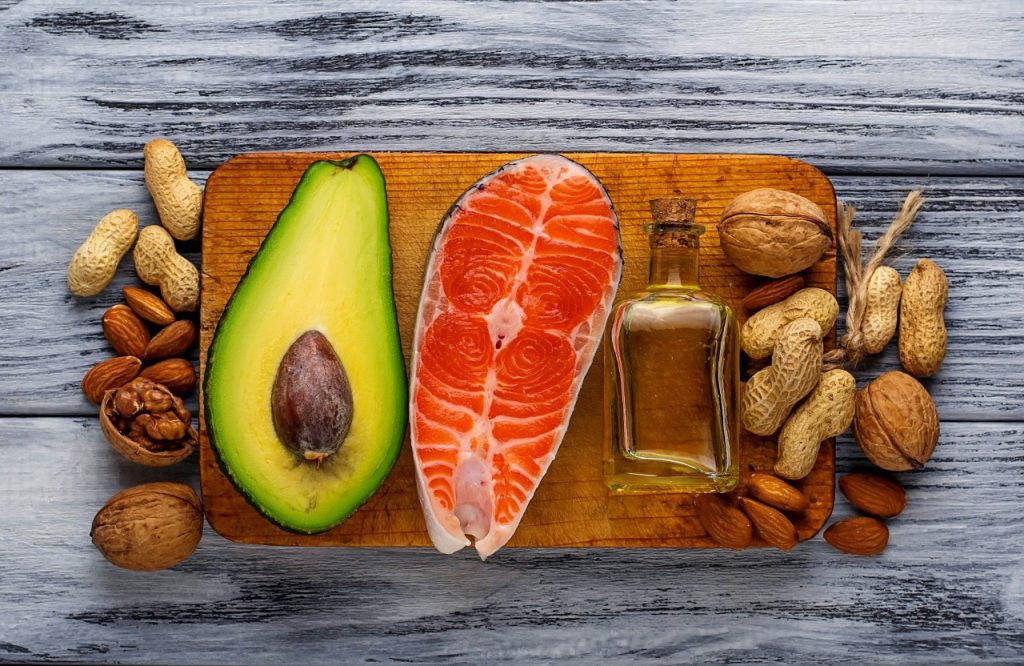
Sources: Olives, Avocado, Nuts, Peanut butter, flaxseed, walnut, soymilk, tofu.

2. Unhealthy or “Bad” fat are the Trans Fats. Small amounts of naturally occurring Trans Fats can be found in meat and dairy products but it is artificial Trans Fats that are considered dangerous. This is the worst type of fat since it not only raises bad LDL cholesterol but also lowers good HDL levels.

Sources: Commercially-baked pastries, cookies, doughnuts, muffins, cakes, pizza dough, Fried foods (French fries, fried chicken, chicken nuggets, breaded fish), Anything containing hydrogenated or partially hydrogenated vegetable oil, even if it claims to be “Trans Fat-Free”.

3. Saturated fats, while not as harmful as Trans Fats, can raise bad LDL cholesterol and too much can negatively impact heart health, so it’s best consumed in moderation.

Sources: Red meat, butter, ice cream, chicken skin.

Tips to Add More Healthy Fats to Your Diet

Instead of obsessively counting fat grams, aim for a diet rich in a variety of vegetables, fruit, nuts, and beans, with two or more weekly servings of fatty fish, moderate amounts of dairy, small amounts of red meat, and only occasional fried or processed meals.

  1. Say NO to Trans Fats from your diet. Check food labels for Trans Fats. Limiting commercially-baked goods and fast food can go a long way.
  2. Limit your intake of saturated fats by replacing some of the red meat you eat with beans, nuts, poultry, and fish, and switching from whole milk dairy to lower fat versions.
  3. Prefer Omega-3 Fats: Include a variety of fish sources as well as plant sources such as walnuts, ground flax seeds, flaxseed oil, canola oil, and soybean oil.
  4. Cook With Olive Oil: Use olive oil for stovetop cooking rather than butter, stick margarine, or lard. For baking, try canola oil.
  5. Eat More Avocados: Try them in sandwiches or salads. Along with being loaded with heart- and brain-healthy fats, they make for a filling meal.
  6. Go Nuts: You can add nuts to vegetable dishes, use them instead of breadcrumbs on chicken or fish, or make your own trail mix with nuts, seeds, and dried fruit.
  7. Snack on Olives: Olives are high in healthy monounsaturated fats and make for a low-calorie snack.
  8. Dress Your Own Salad: Commercial salad dressings are often high in unhealthy fat or added sugars. Create your own healthy dressings with olive, flaxseed, or sesame oils.

Want to know some Healthy Fat based recipes? Stay tuned for the next part of the article!

We hope this article helps you make more informed decisions on eating healthy fats. Do leave your thoughts in the comments below. For more on nutrition, check out Healthy Reads or speak to a GOQii Coach by subscribing for Personalised Health Coaching here.

#BeTheForce
February 22, 2023 By Richa Athavale 9 Comments

Why You Should Avoid Eating A Heavy Dinner

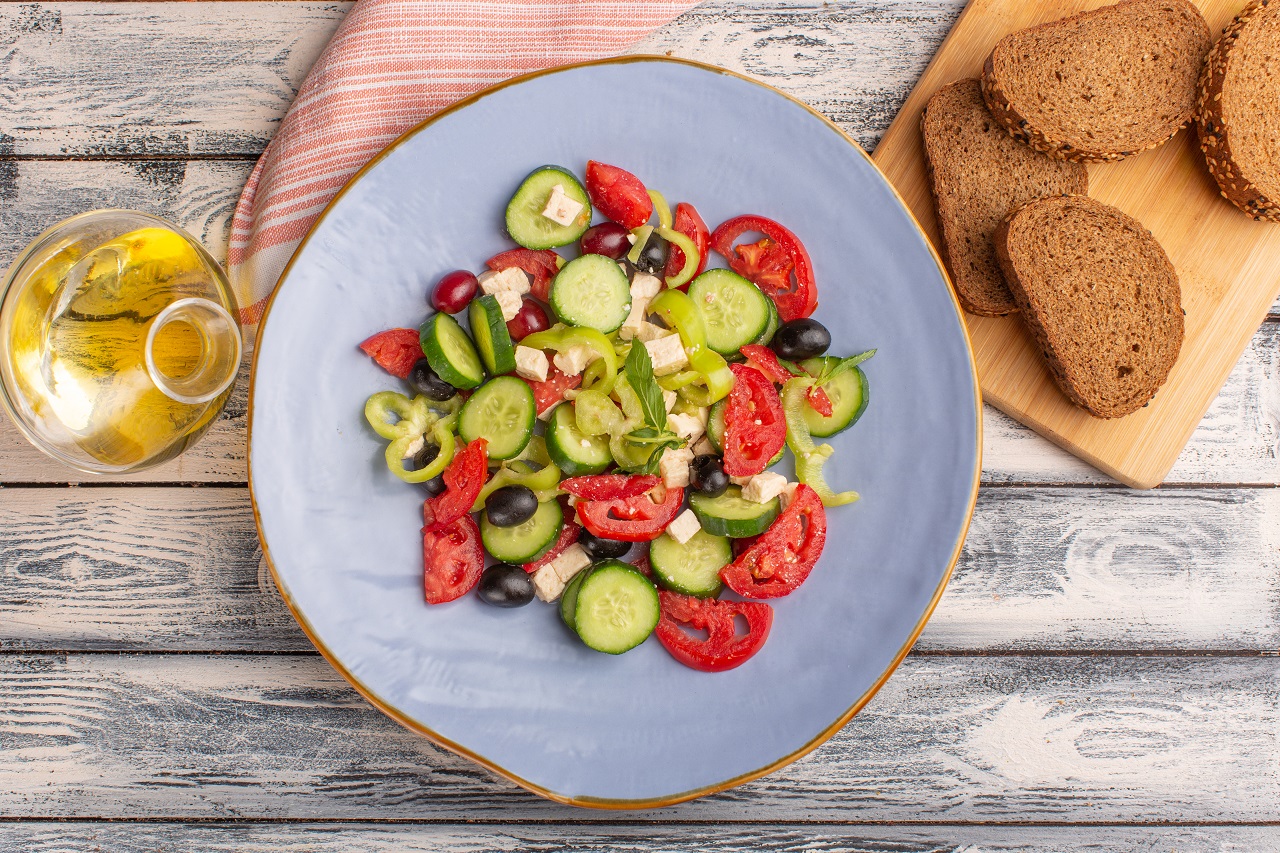
Avoid eating a heavy dinner “I am not losing any weight in spite of following a healthy routine,” said one of my Players. “What did you eat for dinner yesterday?”  I asked. He replied saying, “2 Rotis, 1 bowl of Rice, Dal, Subzi, 1 bowl of salad (as you have told) and 2 small gulab jamun,” I was quick in pointing out that the answer to his weight loss issue was his heavy dinner.
Why Should You Avoid A Heavy Dinner?

Our body works on a simple principle of demand and supply. Whenever we are more active, we need more energy. Hence, we need to eat more – which means having a heavy breakfast, a good lunch and mid meal snacks, help you stay active.

Whereas, when we aren’t quite active, we require less energy. From the time we begin our day, till night, our activity levels lower gradually (unless you work in night shifts). We really don’t require much energy when we’re going to relax post dinner and ultimately sleep. Which means, we do not need to eat as much because we won’t be burning that food for energy. If you consume more food than your body needs at night, it’s a simple recipe for weight gain!

Having a lighter dinner aids digestion and helps you better utilise the nutrients. It is advisable to have a 2 hour gap before hitting the sack. This is one way to avoid that unnecessary fat and weight gain! In order to do this, you need a plan. If you’re not in a habit of having frequent meals, and you avoid an evening snack, you’ll tend to eat more at dinner. Also, understand the psychological effect when you haven’t eaten anything post lunch, barring that cup of tea! You’ll end up feasting because your brain is telling you that you are hungry.

Some Benefits Of Eating A Light Dinner 

  1. Aids in digestion and induces good sleep
  2. You will be able to get up fresh the next morning
  3. Helps in faster gut clearing
  4. Helps reducing fat & weight
  5. Reduces risk of lifestyle diseases like Type II Diabetes, Hypertension, High cholesterol, etc.
  6. Helps in reducing PCOD & Hypothyroidism
  7. Improves metabolism

The ideal time for dinner is near sunset 6.30- 7 pm. If you can’t manage it, then simply split your dinner between 2-3 small meals. Have an evening meal between 5-7 pm.  Ideally, at the time you feel hungry post Lunch. Eat Roti,Rice, Bhakri, or whole wheat bread etc. which is carbohydrate based for the first meal. Keep the lighter part for the next one i.e. 8-10 pm. Try to keep dinner low in carbs and more in proteins & fibers as this will prevent excess calories, give you proteins for muscle building throughout the night, and enough fiber will help in gut clearing.

You can try –

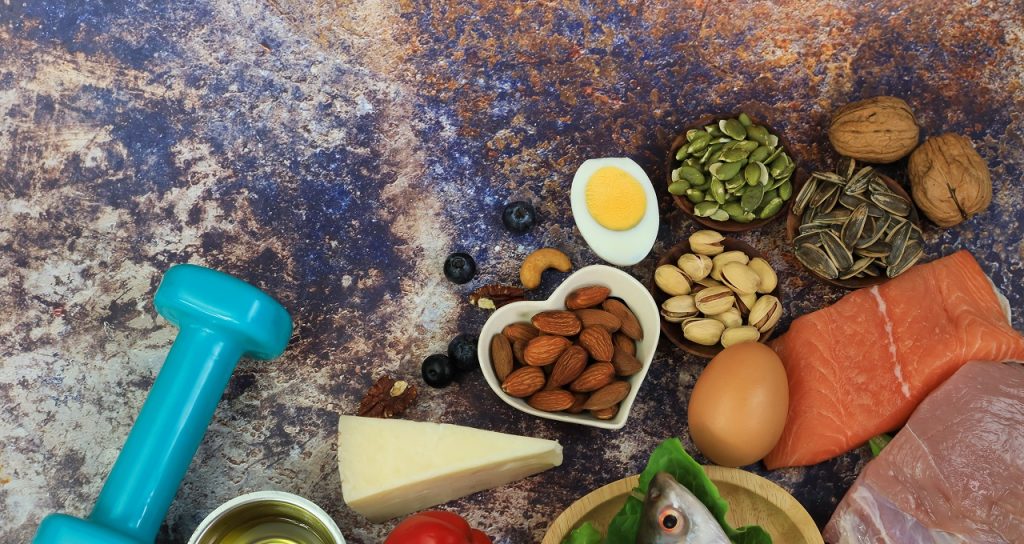
Proteins: Eggs, Chicken, Paneer, Dal, Sprouts, Usal, Curd, Yogurt, Soya, or Tofu mixed with
Fiber: Soups, salads, stir fried veggies, raita, or raw veggies, etc.

It can be as simple as curd rice, Khichdi- Kadhi, etc. But, watch the carbohydrate quantity. Avoid having fruits at this time as they contain fructose which is a simple sugar. If you feel hungry again at night, drink a glass of milk with turmeric powder or a bowl of soup/salads or a few nuts.

We hope this article helps you! For more tips on healthy living and making lifestyle changes, click here or speak to an expert by subscribing for GOQii’s Personalised Health Coaching here.

Disclaimer: This article was written keeping people who are trying to lose weight and fat in mind. This may not be appropriate for growing children, teenagers, underweight people, and/or people with medical conditions. Before making any changes to your diet, consult your doctor, nutritionist or dietitian. 

#BeTheForce

February 20, 2023 By Farhat Khan 3 Comments

How Does Omega 3 Help Muscle Building and Recovery

Omega 3

As we all know Omega 3 fatty acids are essential fats required by our body & we must get it from diet because our body cannot produce them on its own. There are 3 most important types of fatty acids which are:

  1. Alpha Linolenic Acid (ALA)
  2. Docosahexaenoic Acid (DHA)
  3. Eicosapentaenoic Acid (EPA)

Among this ALA is mostly found in plant oil like Flaxseeds oil, Soya bean and canola oils. While DHA & EPA are found in Animal food, mostly in fish and other sea foods. Our body can convert a small amount of ALA into DHA & EPA but it’s still not the optimum amount requirement by the body.

We all connect Omega 3’s with heart & brain health but we neglect the fact that it is essential for athletes and for people to lead an active lifestyle. Yes, from protecting our heart and brain, it plays a vital role in blood vessels, lungs, immune system, endocrine system and easing recovery after a workout.

As we know, protein is the main nutrient for athletes or sports persons, regardless of the workout whether it is weight lifting, cycling, running, swimming or muscle building. But do we know that Omega 3 fatty acids are equally involved in muscle protein synthesis? It is the process our body goes through to convert the protein we take, into fuel which is required by the muscles to grow, repair and stay strong after a workout. Having a good level of these fatty acids in your muscles during exercise seems to help muscle growth and recovery.

Food Sources for Omega 3

We can get adequate amount of Omega 3 fatty acids by eating variety of foods such as

  • Fish & other sea foods: Especially cold water fish such as Salmon, Tuna, Mackerel, Herring and Sardines
  • Plant oils: Flaxseeds oil, soya bean oil & canola oil
  • Nuts & seeds: Chia seeds, walnuts & flaxseeds
  • Some fortified foods also contain Omega 3’s. These include yogurt, milk, soy beverages, eggs and juices.

Why Do We Need Omega 3 Fatty Acids Before a Workout? 

  • It Improves endurance
  • Helps one perform better
  • Builds muscle
  • Helps increase lean body mass and decrease fat mass
  • Improves recovery time by reducing Inflammation

It’s common to feel sore post a workout. In fact, some people start to feel sore and stiff 2 days after a heavy workout. This is referred to as Delayed Onset Muscles Soreness (DOMS). It can affect workout motivation and performance and is caused by inflammation in muscle cells. Omega 3 helps inhibit the onset of DOMS and additionally helps in temporary muscle strength loss as well, improving workout performance.

Omega 3s increase muscles building response to amino acid (protein) & insulin too – both of which are normally released by the body during exercise. It means the more Omega 3 we have, the better the chances are in maintaining muscles and rebuilding them.

With increase in age, we can see progressive loss of muscle mass. It becomes more difficult to maintain and build muscles. The main cause can be a decreased response to both resistance training and protein intake. The Anti inflammatory properties of Omega 3 plays a role here by enhancing muscle sensitivity to protein and resistance training that will allow for greater gains in muscle size and strength with increasing age.

Omega 3 fatty acids can also help in decreasing the need for oxygen during exercise, which means that the body will work more efficiently and require less energy for the workout. This will directly help in improving recovery time.

Omega 3 fatty acids also play a great role for the person whose goal is to lose weight. Omega 3 fatty acids can help you burn fat by using it as energy. Here, the thumb rule is the more omega 3s you have, the better your body will function as it burns more fat for energy as you exercise.

Requirement

Requirement of Omega 3 fatty acids changes from person to person. Athletes and people who live an active lifestyle tend to have higher omega 3 needs than the average person. The required range varies from 1g to 8g per day of EPA & DHA. It is also advised to take it before an exercise session for better results.

We hope this article helps you! Do leave your thoughts and queries in the comments below! For more on fitness and nutrition, click here or speak to an expert by subscribing for GOQii’s Personalised Health Coaching here.  

#BeTheForce 

February 19, 2023 By Urvi Gohil 1 Comment

Healthy Eating: Beetroot Mix Dal Dosa

beetroot mix dal dosa

Depending on your preferences, beetroot can be the most loved or most hated vegetable on your plate. Now, whether you hate it or love it, you can’t deny the fact that beetroots are extremely healthy for you! They are packed with essential vitamins and minerals. Beetroots are low in calories, help reduce blood pressure and improve digestive health, among many other benefits.

Enriching your normal day meals with a superfood always fetches you more nutrients! Today, let’s make beetroot more interesting than it already is by preparing this beetroot mix dal dosa! It is packed with protein and all the nourishment from beetroots!

Let’s get started.

What you will need:

  • Chana Dal – 2 tbsp
  • Moong Dal – 2 tbsp
  • Toor Dal – 2 tbsp
  • Urad Dal – 2 tbsp
  • Rice – 2 tbsp
  • Shredded beetroot – 1 medium sized
  • Garlic – 5-6
  • Shredded Ginger – 1 tsp
  • Green Chillies – 2
  • Finely Chopped Coriander – ½ cup
  • Jeera (cumin seeds) – 1 tsp
  • Salt to taste
  • Oil

How to Prepare

  1. Take a bowl and mix all dals and rice after washing them thoroughly. Add 1 cup of water to it and soak for 4-6 hrs.
  2. Once soaked, remove excess water and blend it together in a mixer and make a smooth paste. Add 2 tsp of water if required. Keep the batter aside in a bowl.
  3. Now, add beetroot, green chillies, jeera, ginger and garlic in a blender jar and blend it all without adding any water.
  4. Mix the beetroot paste with blended pulses thoroughly.
  5. Add salt and coriander to the batter and allow it to settle for 10-15 min.
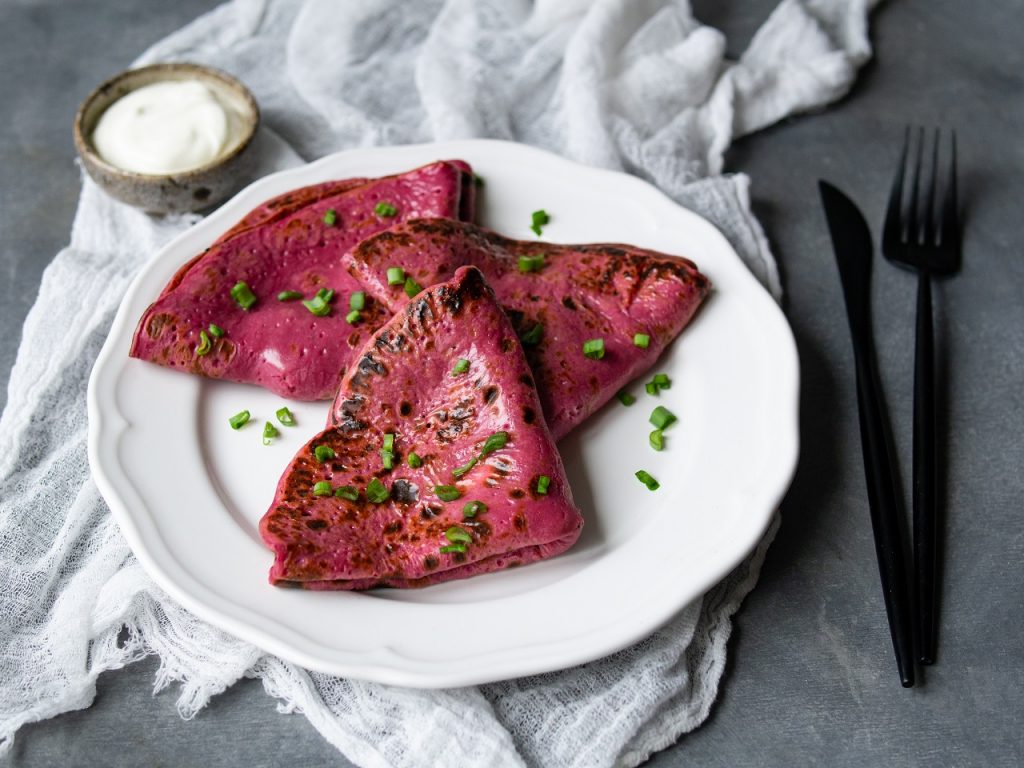
  6. Now heat a nonstick pan, brush some oil and using a spatula, spread the hot pink batter on the pan. After cooking it on one side, flip it over.
  7. Serve it hot with coconut chutney.

Highlights of the Beetroot Mix Dal Dosa:

  • Best way to start your day! The proteins keep you full and beetroot gives you all the essential vitamins and minerals such as folate, manganese, potassium, iron, Vitamin C along with very important nitrates. These nitrates help in reducing blood pressure.
  • It is a must to try for kids as the color fascinates them.
  • Also instead of beetroot you can incorporate blanched spinach or even carrots.

Did you find this recipe new and exciting? Will you try it? Let us know in the comments below!

For more healthy recipes, click here or reach out to an expert by subscribing for GOQii’s Personalised Health Coaching.

#BeTheForce

  • « Previous Page
  • 1
  • …
  • 115
  • 116
  • 117
  • 118
  • 119
  • …
  • 245
  • Next Page »

Search

Recent Posts

  • 12 Tips For a Healthy Christmas Week
  • How to Survive Festive Celebrations Without the Extra Pounds: A Low-Carb Guide for Healthier Living
  • How to Use Mounjaro: Essential Guidelines for Your Weekly Dose
  • Water Intake Pre, During and Post Workout
  • India Leads in Longevity: GOQii Sanjeevini Named Top 40 in $101M XPRIZE

Stay Updated

Archives

  • December 2025 (12)
  • November 2025 (15)
  • October 2025 (20)
  • September 2025 (6)
  • August 2025 (6)
  • July 2025 (12)
  • June 2025 (18)
  • May 2025 (16)
  • April 2025 (22)
  • March 2025 (23)
  • February 2025 (22)
  • January 2025 (26)
  • December 2024 (23)
  • November 2024 (25)
  • October 2024 (22)
  • September 2024 (24)
  • August 2024 (31)
  • July 2024 (21)
  • June 2024 (26)
  • May 2024 (31)
  • April 2024 (27)
  • March 2024 (29)
  • February 2024 (26)
  • January 2024 (25)
  • December 2023 (15)
  • November 2023 (11)
  • October 2023 (20)
  • September 2023 (22)
  • August 2023 (20)
  • July 2023 (22)
  • June 2023 (24)
  • May 2023 (24)
  • April 2023 (24)
  • March 2023 (23)
  • February 2023 (20)
  • January 2023 (16)
  • December 2022 (12)
  • November 2022 (15)
  • October 2022 (15)
  • September 2022 (12)
  • August 2022 (10)
  • July 2022 (17)
  • June 2022 (11)
  • May 2022 (10)
  • April 2022 (6)
  • March 2022 (6)
  • February 2022 (13)
  • January 2022 (12)
  • December 2021 (7)
  • November 2021 (3)
  • October 2021 (6)
  • September 2021 (3)
  • August 2021 (8)
  • July 2021 (7)
  • June 2021 (15)
  • May 2021 (16)
  • April 2021 (10)
  • March 2021 (7)
  • February 2021 (4)
  • January 2021 (4)
  • December 2020 (3)
  • November 2020 (4)
  • October 2020 (10)
  • September 2020 (3)
  • August 2020 (3)
  • July 2020 (2)
  • June 2020 (4)
  • May 2020 (10)
  • April 2020 (12)
  • March 2020 (10)
  • February 2020 (4)
  • January 2020 (4)
  • December 2019 (3)
  • November 2019 (7)
  • October 2019 (5)
  • September 2019 (4)
  • August 2019 (9)
  • July 2019 (9)
  • June 2019 (11)
  • May 2019 (4)
  • April 2019 (9)
  • March 2019 (8)
  • February 2019 (9)
  • January 2019 (8)
  • December 2018 (9)
  • November 2018 (3)
  • October 2018 (3)
  • September 2018 (5)
  • August 2018 (10)
  • July 2018 (6)
  • June 2018 (13)
  • May 2018 (8)
  • April 2018 (18)
  • March 2018 (9)
  • February 2018 (8)
  • January 2018 (15)
  • December 2017 (12)
  • November 2017 (19)
  • October 2017 (13)
  • September 2017 (15)
  • August 2017 (4)
  • July 2017 (8)
  • June 2017 (7)
  • May 2017 (6)
  • April 2017 (8)
  • March 2017 (6)
  • February 2017 (7)
  • January 2017 (9)
  • December 2016 (10)
  • November 2016 (7)
  • October 2016 (7)
  • September 2016 (7)
  • August 2016 (11)
  • July 2016 (9)
  • June 2016 (9)
  • May 2016 (12)
  • April 2016 (17)
  • March 2016 (17)
  • February 2016 (8)
  • January 2016 (6)
  • December 2015 (2)
  • November 2015 (9)
  • October 2015 (7)
  • September 2015 (9)
  • August 2015 (11)
  • July 2015 (9)
  • June 2015 (12)
  • May 2015 (9)
  • April 2015 (13)
  • March 2015 (8)
  • February 2015 (5)
  • January 2015 (12)
  • December 2014 (14)
  • November 2014 (11)
  • October 2014 (6)
  • September 2014 (13)
  • August 2014 (12)
  • July 2014 (6)
  • June 2014 (2)
  • May 2014 (7)
  • April 2014 (5)

From “Laddu Nawin” to Fit and Fierce: How a 25-Year-Old Insurance Advisor Shed 20 Kilos and Gained His Life Back

When 25-year-old Nawin Yadav from Hyderabad walked into his office every morning, he carried more than just his files and policy papers. He had the weight of fatigue, sluggish energy, and an ever-growing belly that was becoming the butt of jokes. “People … [Read More...]

“I’ve Challenged Myself to Live 100 Years” – The Story of Chandubhai Savani’s Second Chance at Life

At 67, most people start slowing down. Not Chandubhai Savani. A resident of Surat, Chandubhai, thought life was on track. “My life was going well till I had my bypass surgery,” he says. That surgery, back in 2021, was a wake-up call.  Medication was routine, but exercise wasn’t. His diet? What he calls ‘normal.’ “I […]

From Shimla’s Slopes to Chandigarh’s Sidewalks: Surinder Kaur Bhalla’s Journey from Chaos to Control

Some journeys start with a plan. Others begin with a stumble literally. Surinder Bhalla, a government professional, born and raised in the scenic hill town of Shimla, had always lived a life of movement. “In Shimla, you walked everywhere,” she reflects. “Walking was never an exercise. It was just life.” But after shifting to Chandigarh, […]

Ananda Mukherjee Health Story

From Terminal Illness To Complete Wellness! Ananda Mukherjee Health Story

As we observe World Cancer Day under the powerful theme ‘United by Unique’ (2025-2027)**, we are reminded that every individual’s journey with cancer is distinct, yet united by shared resilience, hope, and the collective fight against this disease. This theme places people at the centre of care and their stories at the heart of the […]

  • HOME
  • HEALTHY LIVING
  • FITNESS
  • HEALTHY RECIPES
  • USER STORIES
  • KARMA
  • BUY GOQii

Copyright ©2016 GOQii



