GOQii

Blog

  • HOME
  • HEALTHY LIVING
  • FITNESS
  • HEALTHY RECIPES
  • USER STORIES
  • KARMA
  • BUY GOQii

May 15, 2018 By Dr. Viral Thakkar 9 Comments

Strong as a Diamond! Vajrasana  

VAJRASANA_YOGA

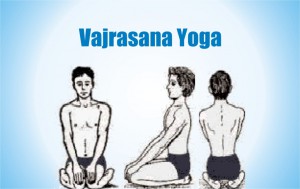
Ever wondered why zen masters sit on their knees? Karate and other martial arts masters also to sit in that “uncomfortable” position- the ‘vajrasana’.  Vajrasana is a kneeling pose; vajra is a Sanskrit word meaning diamond or thunderbolt. Asana means pose. This diamond pose is also called Adamantine Pose.

Usually, breathing exercises like Pranayama, Kapalabhati, and Anulon Vilom are done sitting in this position. Many masters also prefer this position for meditation.

vajrasana

This is how you do it..

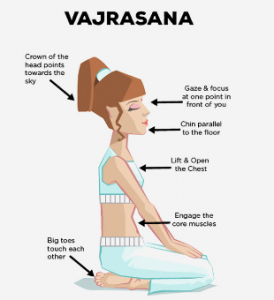
 Kneel down, stretching your lower legs backwards and keeping them together. Your big toes should touch each other.

  1. Gently lower your body such that your buttocks are resting on your heels and your thighs on your calf muscles.
  2. Place your hands on your knees, and set your gaze forward with your head absolutely straight.
  3. Turn your attention to your breathing. Be fully aware of how you breathe and carefully observe as you inhale and exhale.
  4. You could close your eyes to concentrate on your breathing and to calm your mind.

As a beginner, when you assume this position, it is likely that your legs will pain. If this happens, all you need to do is undo the asana, and stretch your legs forward. You can try to stay in vajrasana for a minimum of 5 to 10 minutes and extend the time as per your comfort.

Work slowly and gradually on bettering the strength of the lower back muscles before you go deeper into the pose or increasing the duration. Once the lower back is strengthened, the strain on the breath is decreased. Also, do not push yourself more than your body can take, the benefits of the pose are minimized.

This asana is one of the few asanas which can and should be practised post a meal since it promotes proper digestion.

While this is one of the easiest and safest asanas to practice, however, keep the following in mind:

  1. Do not practice this asana if you have a knee problem or have undergone surgery in your knees recently; Or if you have intestinal ulcers, hernia, or any other problems related to the large or small intestine. If you are very keen, seek advice from your doctor/ yoga practitioner.
  2. If you are pregnant, keep your knees slightly apart to avoid putting pressure on your abdomen.
  3. If you are suffering from any spinal column ailments on the lower vertebrae, it is best to avoid this pose.

 Practice this asana because

  1. It improves digestion. It regulates blood circulation in the lower pelvic region. Sitting on your legs reduces the blood flow in the legs and increases it in the digestive area, therefore increasing the efficiency of the digestive system. Better digestion prevents GERD- Gastro-Esophageal Reflux Disease and acidity.
  2. With the regular practice of vajrasan one can get relief from constipation and flatulence.
  3. It strengthens the back and relieves patients suffering from lower back problems and sciatica.
  4. It strengthens the pelvic muscles too. It positively impacts the urinary and reproductive systems.

According to Ayurveda, one of the major nerves in the human body is also named Vajra Nadi (Nadi means nerve). Vajra Nadi is connected with the genitourinary system which is responsible for regulating sexual energy in human body. Hence practising this yoga pose for an extended duration of time may make a person control his/her sexual energy for spiritual aims.

  1. It strengthens muscles and nerves almost curing varicose pains.
  2. It helps to ease out labour pains and also reduces menstrual cramps. It is a safe asana to perform during pregnancy.
  3. This asana is one of the best ones to assume when you wish to go into a meditative state since it is an upright pose.
  4. According to Ayurvedic Sciences, there are marm points in our body. These points impact different parts of the body when we assume different positions. While sitting in vajrasana, katikatarun marm is stimulated. This impacts the spine and stomach releasing the pain in the spine and improves digestion.

Make a habit to practice this asana at least post your meals and become ‘diamond’ strong!


February 2, 2017 By Dr. Viral Thakkar 6 Comments

Surya Namaskar-The 12 Commandments of Sun!

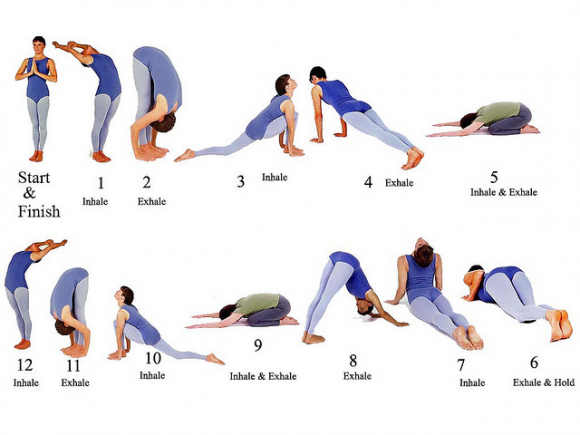
surya-namaskarAvinash, 40 years is hypertensive, diabetic and obese. He has a hectic lifestyle that involves lots of travel. His dietary habits are ill-disciplined and there is no physical activity. He visited me to tell him a mantra which can be followed easily and anywhere for his health. There are many people like Avinash who are concerned about their health but a busy lifestyle is a huge road-block to pursue anything. For such people the practice of Surya Namaskar- Sun Salutation is an ideal habit to inculcate. It is a dynamic exercise which can be done by anyone, at any age and the time required to practise this is not more than 10-15minutes.
Sun is the basic source of energy on the basis of which everyone exists. The importance of sun and the energy it provides is revered in various traditions. The energy of the sun has tremendous healing power, if tapped in the right way the results are miraculous in physical and mental ailments.

  1. Pranamasan- Stand erect with feet together. Join the palms together in front of the chest in a ‘namaste’ pose. Usually your hands will fall around your heart. Inhale and exhale slowly and gradually. This posture helps to induce a state of relaxation, calmness, gratitude and love.
  1. Hastauttanasana- Join your hands together again, inhaling stretch both arms above the head, palms facing upward. Arch the back and stretch the whole body backwards. This posture stretches the chest and the abdomen and lifts the energy to the upper parts of the body propelled by inhalation. It is an excellent stretch for the back muscles making it stronger.
  1. Padahastasana – Bend the body down while exhaling and keep the spine straight. Keep the legs straight and perpendicular to the ground. The knees should ideally be straight; don’t force yourself, but try to touch your feet. In due course you will!

This posture impacts the abdominal organs- liver, kidneys, pancreas, adrenals, uterus and ovaries. The power of digestion increases and female disorders such as prolapse and menstrual irregularities are relieved. A healthy flow of blood is sent to the spinal nerves as they are stretched and toned. The hamstring muscles at the back of the thigh and calf muscles are stretched and toned.

  1. Ashwa Sanchalanasana – While inhaling, extend the left leg back and drop the knee to the ground. The right knee is bent and kept between the hands and the right foot placed flat on the ground. Lift the spine and open the chest. Concentrate at the eyebrow center. This posture tones the abdominal organs and gives flexibility to the leg muscles during stretching. It is a balancing posture because the spine lengthens upwards while the hands are grounded.
  1. Parvatasana (Mountain posture)- On the exhalation bring the right leg back to join with the left leg. Simultaneously raise the buttocks and lower the head between the arms, so that the body forms a triangle with the floor and you look like a mountain! Try to place the heels flat on the ground.

This posture strengthens the nerves and muscles in the arms and legs, stretches the calf muscles and Achilles’ tendons and makes the spine straight and taut. It relieves varicose veins and tones spinal nerves. Parvatasana pulls up all the abdominal, pelvic and side muscles, stretches the spine and ribs, loosens the hips, stretches and exercises the usually inactive waist zone and helps to reduce a fat, flabby and protruding abdomen. It also aids correct breathing.

  1. Ashtanga Namaskara – Exhaling gently drop both knees to the ground and slowly slide the body down at an angle as you bring the chest and chin to the ground. All eight limbs – toes, knees, chest, hands and chin touch the floor. The buttocks are kept up. You can hold your breath. This posture develops the chest and strengthens arms. It sends additional blood to this area helping to rejuvenate the nerves. It works and improves the muscles of all the 8 limbs involved.
  1. Bhujangasana- On the inhalation, lower the hips while pushing the chest forward and upward with the hands, until the spine is fully arched and the head is facing up. The knees and lower abdomen remain above the floor. This pose expands the all organs of the chest and abdomen, relieving many ailments such as asthma, constipation, indigestion, kidney and liver problems. It is very helpful in relieving tension in the back muscles and spinal nerves.

From here on, you will do the poses in a reverse action.

  1. Parvatasana (Mountain posture) Exhale and get back to posture 5
  1. Ashwa Sanchalanasana- Inhale and swing the right leg forward between the hands. The left leg remains back. Resume posture 4. 
  1. Padahastasana (Hand to foot posture)- Exhaling, bring the left foot forward. Join both legs and resume posture 3
  1. Hastauttanasana (Raised arm posture)- Inhale, raise the trunk up and bend backward. Resume posture 2
  1. Pranamasana (Salutation posture)- Straighten the body and bring your hands in front of the chest. Resume posture 1.

These simple set of 12 exercise postures ensures that you begin your day with a bang! As a Doctor who understands the science of human body, I believe these set of exercises are a boon. Every posture in Surya Namaskar has a corresponding effect on our internal organs as described above. For best results, one should practise these steps with deep inhalation and exhalation. You can also do each pose quickly and have 2-3 cycles of Namaskar, but for best results, take deep breaths- 5-8 for each pose.

It is not only beneficial for the physical body, but it leads to mental and spiritual growth if done regularly. In ancient literature even Patanjali describes it as a complete exercise- involving every muscle, joint and organs. It balances all the systems of human body- it rejuvenates the cells of the body leading to an ideal health state. The above mentioned benefits are just a few of the huge list of advantages.

Salute the Sun! Salute your Health!

Surya Namaskar is a set of 12 poses (steps), if performed in sequence every day with correct breathing is the best gift one can give to one’s own self. Ideally, these poses should be done empty stomach, at the time or just before sunrise. I will introduce you to each of these poses and the significance of each.

June 24, 2016 By Trupti Hingad 2 Comments

Best Yoga Asanas for Hypothyrodism

3

One of the biggest battle for most people is ‘Weight Loss’. 90 % of the people are stressed and spend sleepless nights over not losing weight. The question in most individual’s mind is despite doing exercise and eating right why is it that I am unable to lose weight or maintain it?

Healthy foods, controlled portion sizes, regular exercise and peaceful sleep — these are the ingredients for losing weight.

One of the reason for not being able to lose weight could also be –Hypothyroidism, a condition where your thyroid gland function is impaired. Underactive thyroid gland plays a vital role in affecting the weight reduction journey.

It’s difficult for someone with hypothyroidism to lose or maintain a healthy weight balance as T3, the active thyroid hormone is low. T3 is a powerful hormone that regulates the body’s metabolism. The most important thing you can do for weight loss and for your overall health —is to get proper treatment for your hypothyroidism.

Losing weight is never easy, but, people can control it and shouldn’t struggle to lose weight. However, making a few dietary changes and regular exercise or Yoga may help in weight loss.

Here are some of the important yoga asanas which boosts the function of your thyroid gland and helps in weight loss.

To learn more about making positive changes in life get GOQii Subscription.

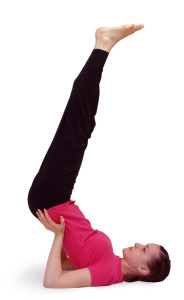
1.  VIPRITKARNI:

It is a Mudra.Viprit means: reverse and karni means “by which”. Viparitakarni helps to balance the functioning of thyroid and eases the complication caused by hypoactive thyroid. This is also one of the important Asanas for thyroid disorder. This can be done for 2minutes maximum.It is also called as half shoulder stand.

Method: 

Lie down on your back. Arms alongside of the body. As you inhale bend your knees and raise the legs and buttocks. Bring the palms under your hips to support the buttocks. Elbows remain on the floor. Straighten the legs vertically upwards. Relax the muscles of feet, legs, and hips. Shoulder and neck relaxed on the mat. Breathe normal. Remain in the position for few seconds and gradually increase it to 1-2min. Exhale, bend the knees towards your forehead and slowly lower the buttocks and legs and return to the starting position.

Limitation: Avoid with High BP and dizziness

viparita_karani_mudra-184x300

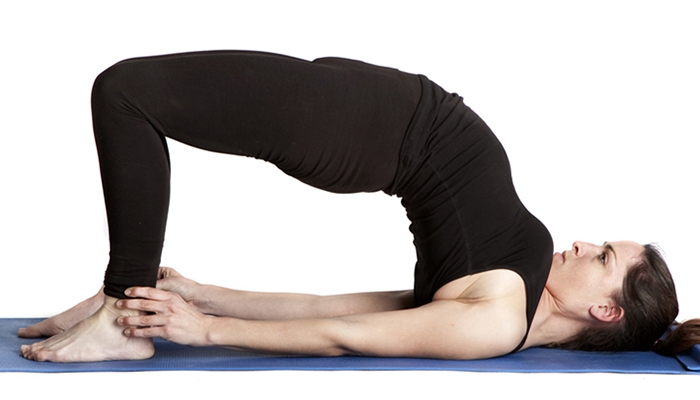
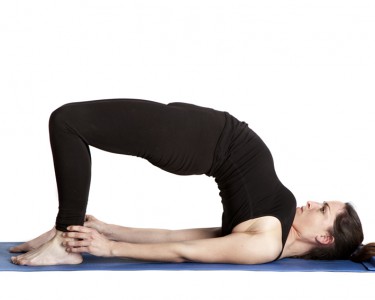
2. SETUBHANDASANA (BRIDGE POSE)

This asana provides appropriate stretch on the back and suitable massage to the neck. It helps to regulate the functions of thyroid gland thereby helpful in releasing thyroxin hormone.This can be done for 2-3 min maximum.

Lie flat on your back with arms at your sides, palms down. Bend your knees and place your feet flat on the floor. Keep your feet hip width apart, parallel to each other, and as close to the buttocks as possible. Simultaneously, press your upper arms and feet into the floor and begin lifting your hips towards the ceiling. Try to distribute your weight equally on the inside and outside of your feet.

Now, move your breastbone towards your chin, keeping your chin lifted only slightly as not to flatten the back of the neck. Firm your tailbone in towards the pubis and move your pubis slightly towards the belly. In order to keep the lower back extended, keep the knees over the ankles, perpendicular to the floor. Your buttocks should be firm, but not clasped.

Lift your hips as high as you are able without breaking position. If you are having trouble holding posture, you can clasp your hands behind your back and firm you arms into the floor, shoulder blades shifted down along the spine. Hold this pose for 5 to 15 breaths.

To come out of Bridge Pose, release on an exhalation, rolling your spine slowly down onto the floor.

Limitations: Avoid doing this pose if you are suffering from neck and back injuries.

setu-bandhasana

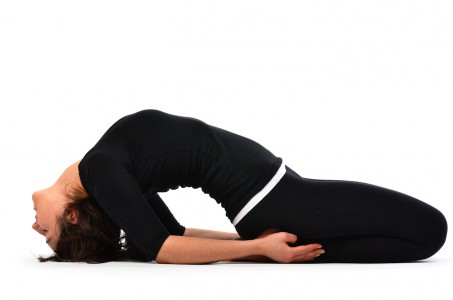
3. MATSYASANA (Fish pose):

Matsya means fish, in the final pose, the asana take the form of fish. Hence the name is Matsyasana. Matsyasana provides adequate stretching to the neck region thereby stimulate the thyroid gland. It increases blood supply to trunk and neck region.

This can be done for 1-2 minute maximum

Method:

Sit in Padmasana, lean back,using elbow and arms to help balance yourself, until your had rest comfortably on the mat and your body forms a low arc. Use a low cushion for comfort at first, if necessary. Now extend your arms and grasp your toes on either side. Breathe normal. Rest till you can hold the posture. Exhale using the support of elbow come to the original position.

Limitations: Knee joint problems, piles, dislocation of knee joints.

5732d9a9ab3cd

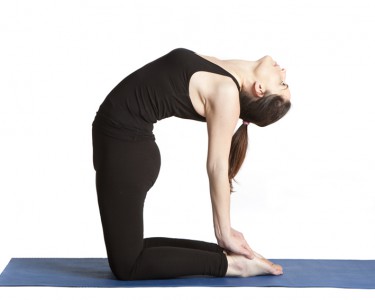
4. USTRASANA (Camel pose): This can be done maximum for 2 minutes.

Method: This asana also give stretch to the neck.

Assume a sitting posture as in kneeling. Support the body on the toes and knees and gradually lean backward, after having fixed the arms from behind, the palms to the ground, the fingers pointing outward and the thumbs towards the toes. Keep arms straight then slowly life the pelvis while taking in the breath. Press the body above the waist slowly both outward and upward, throwing the neck downward. Breathe normal. Exhaling slowly come back to original position.

Limitations: Those who have undergone any recent operation at the chest or abdomen, people with hernia problems, severe hypertension and low back must be cautious.

MG_8461-as-Smart-Object-1

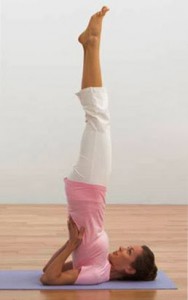
5.  SARVANGASANA (Shoulder stand pose): Sarvangasana is the most important pose to stimulate thyroid gland and control thyroxin. This is the most effective yoga pose where blood flow from legs to head region due to its inverted condition thereby helps in curing of thyroid. This can be done maximum for 3 minutes.

Method:

Lie flat on the back with the feet together, the arms by the sides, and palms flat on the ground.Using the arms as levers, raise the legs and back to a vertical position.

Bend the elbows and use the arms as props to steady the back by pressing it with the palms.The trunk and legs should extend straight up, forming a right angle with the neck, the chest pressing against the chin.

Limitations: Excess obesity, Myopia, severe spinal problems, pregnancy.

sarvangasana9

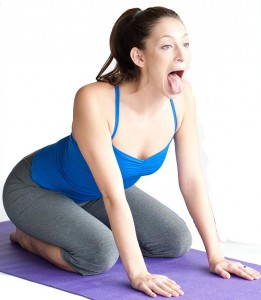
6. SIMHASANA: Simhasana or the Lion Pose resembles a squatting lion in the final pose. In Sanskrit, ‘Simha’ means ‘Lion’ and ‘asana’ means ‘pose. It is an excellent pose for thyroid gland.

Sit in the kneeling position or Vajrasana. Move the knees apart so that they make almost a right angle between them.Tuck your palms, under your thighs. The palms should face downwards and point towards the body. An alternate way is to keep the palms on the knees stretched and spread wide apart.

Bend forward slightly, resting the weight of the body on the arms.Now, tilt the head backwards. Keep the eyes wide open. Open your mouth and draw the tongue forward and downwards as much as you can.

Gaze at the space between the eyebrows with eyes wide open. This is called Bhrumadhya Drishti. In Hatha Yoga Pradeepika, an alternate gaze for the eyes is given as Nasikagra Drishti or gazing at the tip of the nose.

Breathe normally and deeply in this position. During exhalation make a sound ‘ahhh…’, to imitate the breathing of a lion with tongue outside. You may also roar like a lion, few times in this position. Relax your muscles in the back, abdomen and chest in the final position.

Remain in this final position for as long as comfortable.In some variations, the tongue can also be moved from side to side making the sound ‘ahhh…’

Limitations: For those with weak knee or ankle joints, this asana should be practiced with caution.

This can be practiced for maximum 3 minutes.

Diet is equally important and utmost care should be paid to it. I have herewith chalked out diet tips which is a mix of yogic and modern diet.

Simhasana-yoga-pose

Yogic Diet tips for thyroid disorders

  • Diet with high fiber content should be taken.
  • Avoid excess eating of fats and carbohydrates.
  • Give more and more thrust on green and leafy vegetables.
  • Focus on eating seasonal fruits.
  • Ginger greatly enhances thyroid function. Chew ginger or have ginger tea.
  • Black walnut contains iodine, which nourishes the thyroid gland.
  • Foods like curd, fish, meat, eggs, radish, and oatmeal contain good amount of iodine. So take these foods regularly to control thyroid problems
  • It is recommended that you have Gomutra (Cow urine):Its anti-inflammatory, Anti- Bacterial, antibiotic and antimicrobial. It acts as an antidote. 10-15drops can be taken on an empty stomach in the morning. It works best if taken with Ashwagandha.
  • Bask in Sun: take sunlight /sun bath between 7am -8am.
  • Have 1 tbsp cold pressed virgin Coconut oil. It improves the function of thyroid hormone
  • Take foods such as carrots, pumpkin, sprouts, spinach, wheat grass seaweeds because of its iodine content.

Thyroid diet prevention & precaution

  • Cruciferous veggies can be eaten in limited quantity and should be cooked.Non veg foods such as fish —healthy omega 3 fatty acids present in oily fishes like salmon, tuna, sardines can be eaten. Even eggs are healthy protein rich options to be taken in meals.
  • Spicy foods should by far be avoided as they are tamasic and interferes with keeping the mind calm and in a balance state which is very necessary to deal emotionally with the people having thyroid.
  • Refined and Preserved foods should be avoided to keep the weight in check.
  • Caffiene should be avoided because it hampers the healing properties of thyroid medications. 

Begin with these yoga practices and maintain your thyroid hormones function and achieve a successful weight loss. Bring on a “new you” with these yoga Asanas.

Please Note: Sarvangasana and Vipritkarni needs to practice under guidance.

January 7, 2016 By Rimjhim Chaturvedi Leave a Comment

Chandranamaskar – Moon Salutation

Chandra-Namaskar-e1437139210173

All of us have heard of Suryanamaskar (Sun Salutions) but not many know about Chandranamaskar or moon salutations. Though not as popular as Suryanamaskar, it does offer powerful benefits of its own. A sequence of 17 yoga asanas, the moon salutation is a good warm up before your yoga practice or a cool down for your evening restorative yoga session.

Difference between Suryanamaskar and Chandranamaskar :-

Moon salutation is to honor the femininity in nature. One of the key differences is that moon salutation is always done in a slow and relaxed manner. Chandranamaskar is done only 4-5 times at once unlike the Suryanamaskar which is a set of 12 rounds . In Chandranamaskar, one starts at the left and moves on to the right whereas in Suryanamaskar we start on the right side. This is because the left side represents ‘ida naadi’ ( Ida is the left channel. Ida is white, feminine, cold, represents the moon and is associated with the river Ganga (Ganges).

Originating in Muladhara or the root chakra, Ida ends up in the left nostril) which represents the moon and the right side represents the ‘pingala naadi’ which represents the sun. ( Pingala is the right channel. Pingala is red, masculine, hot, represents the sun and is associated with the river Yamuna. Originating in Muladhara, Pingala ends up in the right nostril).

Although it can be practiced at almost any time of the day, the best time would be in the evenings, around sunset or when the moon is up. The moon phases affect everything on the earth that contains two elements – salt and water.

Benefits of moon salutation: Practicing the moon salutation on days of the full moon can help balance fiery energies and calm you down if you are feeling stressed or hyper excited. It also helps channel your creative energies. The physical benefits include stretching and strengthening of the muscles of the thighs, calves, pelvis and ankles. The focus mainly remains on the lower body.

There are several variations of the moon salutation, each different from the other. What I am sharing below is a traditional form of Chandranamaskar.

Steps in Chandranamaskar or Moon Salutations:

Chandra Namaskar Sequence

1. Tadasana: Mountain pose– Stand with your feet together, body aligned with breath. Bring the palms into namaskar position, stretch the hands above the head and lengthen the spine. Stay in this position and take a few breaths before you move to the next.

2. Chandrasana: Side stretch pose- Inhale deeply and as you exhale bend to the left side. You can feel a gentle stretch on your right. Be careful to not tilt forward or back.

3. Utkata konasana: Victory squat- Return to the centre, step the feet apart and turned slightly out. Inhale and as you exhale bend your knees, bringing the thighs parallel to the ground. Keep the forearm at 90 degrees to the arms and palms facing you. It helps strengthen the back and thighs.

4. Utthita tadasana: Five pointed star- Simply raise yourself from the squatting position and straighten the elbows. Hands parallel to the ground. Relax the shoulders and chest.

5. Trikonasana: Triangle pose– Step the left foot out and slide down to the left side. Extend the right hand up. This helps improve flexibility of the spine and corrects misalignment of shoulders.

6. Parsvottanasana: Hand to knee pose- Bring the head to touch the left knee. Relax both the hands down on the left foot. This asana helps to improve posture and sense of balance. It also improves digestion and lengthens the muscles on the back of the leg.

7. Left side lunge: Bend both the knees and move into lunge on the left side. Keep looking to your left.

8. Forward facing lunge: Straighten the knee and do a forward facing lunge. Bring both the hands in front on the floor.

9. Malasana: Squat with the feet firmly on the floor and the palms joined in front of you. Maintaining your balance with the feet down and the spine extended may be a bit of challenge. ‘Mal’ in Sanskrit means impurity. Regular practice of this asana helps to improve bowel movements, hence the name.

10. Forward facing lunge: Repeat step 8 but this time bend the right knee and straighten the left.

11. Right side lunge: Bend both the knees and move into lunge on the right side. Keep looking to your right.

12. Parsvottanasana: Straighten both knees and bring your head to rest on the right knee, both hands near right foot.

13. Trikonasana – same as mentioned above 

14.Utthita Tadasana – same as mentioned earlier 

15. Utkata Konasana – same as mentioned earlier 

16. Tiryaka Tadasana: Hands in namaskar position, extended overhead, bend to your right.

17.Tadasana: Conclude one sequence, returning to where you began.

Calm down with these asanas while surrendering to the beauty of the moon !


  • « Previous Page
  • 1
  • …
  • 6
  • 7
  • 8
  • 9
  • Next Page »

Search

Recent Posts

  • Calming Your Mind: Breathing Techniques for ADHD
  • Healthy Oats & Besan Pancake Recipe for a Nutritious Breakfast
  • Why Small Misunderstandings Become Big Fights – And How Couples Can Handle Them Better
  • The Benefits of Micro-Workouts: Why Small Exercise Snacks Lower Sedentary Risk
  • Train Hard, Sleep Well: The Recovery Secret Most People Ignore

Stay Updated

Archives

  • June 2026 (18)
  • May 2026 (20)
  • April 2026 (24)
  • March 2026 (18)
  • February 2026 (14)
  • January 2026 (14)
  • December 2025 (19)
  • November 2025 (15)
  • October 2025 (20)
  • September 2025 (6)
  • August 2025 (6)
  • July 2025 (11)
  • June 2025 (18)
  • May 2025 (16)
  • April 2025 (22)
  • March 2025 (27)
  • February 2025 (21)
  • January 2025 (25)
  • December 2024 (22)
  • November 2024 (23)
  • October 2024 (20)
  • September 2024 (23)
  • August 2024 (29)
  • July 2024 (20)
  • June 2024 (25)
  • May 2024 (27)
  • April 2024 (27)
  • March 2024 (27)
  • February 2024 (23)
  • January 2024 (21)
  • December 2023 (14)
  • November 2023 (10)
  • October 2023 (19)
  • September 2023 (22)
  • August 2023 (18)
  • July 2023 (22)
  • June 2023 (23)
  • May 2023 (20)
  • April 2023 (19)
  • March 2023 (23)
  • February 2023 (19)
  • January 2023 (15)
  • December 2022 (11)
  • November 2022 (15)
  • October 2022 (15)
  • September 2022 (12)
  • August 2022 (10)
  • July 2022 (17)
  • June 2022 (11)
  • May 2022 (10)
  • April 2022 (6)
  • March 2022 (6)
  • February 2022 (13)
  • January 2022 (11)
  • December 2021 (7)
  • November 2021 (3)
  • October 2021 (6)
  • September 2021 (3)
  • August 2021 (8)
  • July 2021 (7)
  • June 2021 (15)
  • May 2021 (16)
  • April 2021 (10)
  • March 2021 (7)
  • February 2021 (4)
  • January 2021 (4)
  • December 2020 (3)
  • November 2020 (4)
  • October 2020 (10)
  • September 2020 (3)
  • August 2020 (3)
  • July 2020 (2)
  • June 2020 (4)
  • May 2020 (10)
  • April 2020 (12)
  • March 2020 (10)
  • February 2020 (4)
  • January 2020 (4)
  • December 2019 (3)
  • November 2019 (7)
  • October 2019 (5)
  • September 2019 (4)
  • August 2019 (9)
  • July 2019 (9)
  • June 2019 (11)
  • May 2019 (4)
  • April 2019 (8)
  • March 2019 (8)
  • February 2019 (9)
  • January 2019 (8)
  • December 2018 (9)
  • November 2018 (3)
  • October 2018 (3)
  • September 2018 (5)
  • August 2018 (10)
  • July 2018 (6)
  • June 2018 (13)
  • May 2018 (8)
  • April 2018 (18)
  • March 2018 (9)
  • February 2018 (8)
  • January 2018 (15)
  • December 2017 (12)
  • November 2017 (19)
  • October 2017 (13)
  • September 2017 (15)
  • August 2017 (4)
  • July 2017 (8)
  • June 2017 (7)
  • May 2017 (6)
  • April 2017 (8)
  • March 2017 (6)
  • February 2017 (7)
  • January 2017 (9)
  • December 2016 (10)
  • November 2016 (7)
  • October 2016 (7)
  • September 2016 (7)
  • August 2016 (11)
  • July 2016 (9)
  • June 2016 (9)
  • May 2016 (12)
  • April 2016 (17)
  • March 2016 (17)
  • February 2016 (8)
  • January 2016 (6)
  • December 2015 (2)
  • November 2015 (9)
  • October 2015 (7)
  • September 2015 (9)
  • August 2015 (11)
  • July 2015 (9)
  • June 2015 (11)
  • May 2015 (9)
  • April 2015 (13)
  • March 2015 (8)
  • February 2015 (5)
  • January 2015 (12)
  • December 2014 (14)
  • November 2014 (11)
  • October 2014 (6)
  • September 2014 (13)
  • August 2014 (12)
  • July 2014 (6)
  • June 2014 (2)
  • May 2014 (7)
  • April 2014 (4)

From Shimla’s Slopes to Chandigarh’s Sidewalks: Surinder Kaur Bhalla’s Journey from Chaos to Control

Some journeys start with a plan. Others begin with a stumble literally. Surinder Bhalla, a government professional, born and raised in the scenic hill town of Shimla, had always lived a life of movement. “In Shimla, you walked everywhere,” she reflects. … [Read More...]

From “Laddu Nawin” to Fit and Fierce: How a 25-Year-Old Insurance Advisor Shed 20 Kilos and Gained His Life Back

When 25-year-old Nawin Yadav from Hyderabad walked into his office every morning, he carried more than just his files and policy papers. He had the weight of fatigue, sluggish energy, and an ever-growing belly that was becoming the butt of jokes. “People had even started calling me Laddu Nawin,” he says with a laugh, but […]

From Burnout to Balance: How Dr. Ranjit Reclaimed His Health

Dr Ranjit Bhatt has spent years tending to others. A practising doctor in Odisha, his days were packed with patients, surgeries, and emergencies. From the outside, it looked like a life lived in service. But on the inside, something wasn’t right. “I had no control over my schedule. I’d sleep late, eat at odd hours, […]

Ananda Mukherjee Health Story

From Terminal Illness To Complete Wellness! Ananda Mukherjee Health Story

As we observe World Cancer Day under the powerful theme ‘United by Unique’ (2025-2027)**, we are reminded that every individual’s journey with cancer is distinct, yet united by shared resilience, hope, and the collective fight against this disease. This theme places people at the centre of care and their stories at the heart of the […]

  • HOME
  • HEALTHY LIVING
  • FITNESS
  • HEALTHY RECIPES
  • USER STORIES
  • KARMA
  • BUY GOQii

Copyright ©2016 GOQii