 Irregular periods. Acne that doesn’t settle. Hair growing where you don’t want it, or thinning where you do. Weight that seems harder to shift than it should be. For many women, these are the first signs of PCOS, one of the most common hormonal conditions there is. The WHO estimates it affects 10 to 13% of women of reproductive age, and up to 70% of them don’t know they have it.
PCOS also attracts a lot of confusing and sometimes harmful advice: cut out all carbs, go gluten-free, you’ll never get pregnant, you only have it if you’re overweight. Most of this isn’t backed by evidence.
This guide covers what the latest international guideline actually recommends on diet and exercise, the health checks that matter, and the myths you can safely let go of.
At a glance
- New name: In May 2026, PCOS was officially renamed polyendocrine metabolic ovarian syndrome (PMOS), to reflect that it’s a whole-body hormonal and metabolic condition, not a problem of ovarian cysts. Both names will be used for a while.
- It’s common: It affects about 1 in 10 women of reproductive age, and most don’t know they have it.
- There’s no single “PCOS diet”. The international guideline finds no evidence that any one diet works better than another. Balanced, mostly unprocessed meals you can stick to matter more.
- Movement helps, whatever your weight. Aim for 150 to 300 minutes of moderate activity a week, plus muscle-strengthening on two days.
- Weight loss isn’t the whole story. For people carrying extra weight, losing 5 to 10% can help regulate periods, but healthy habits help even without weight loss.
- Check the long-term risks. PCOS raises the risk of type 2 diabetes, heart disease, sleep apnoea, anxiety and depression, so regular checks matter.
- Many myths don’t hold up. Women of any size can have PCOS, you don’t need cysts to be diagnosed, and most women with PCOS can get pregnant.
What is PCOS (now PMOS)?
Polycystic ovary syndrome is a long-term hormonal condition. It often involves higher levels of androgens (hormones such as testosterone), irregular or absent ovulation, and insulin resistance, where the body needs more insulin to keep blood sugar in check.
In May 2026, after 14 years of work and input from more than 14,000 patients and health professionals, an international consortium announced in The Lancet that the condition is being renamed polyendocrine metabolic ovarian syndrome (PMOS). The old name suggested the problem was ovarian cysts, but there’s actually no increase in abnormal cysts. The new name is being phased in over three years, so you’ll see both terms. This article uses PCOS because it’s still the name most people know.
Common signs
According to the WHO, symptoms can include:
- irregular, absent, heavy or painful periods
- difficulty getting pregnant
- excess hair on the face or body
- thinning hair on the scalp
- acne or oily skin
Many women also notice weight gain, particularly around the waist, and changes in mood. Some develop darker, velvety patches of skin on the neck, armpits or groin (acanthosis nigricans), which is a sign of insulin resistance. Symptoms vary a lot from person to person.
How it’s diagnosed
Adults are usually diagnosed when they have at least two of these three features, after other causes have been ruled out: signs of high androgens (on blood tests or as excess hair, acne or hair loss), irregular or absent periods, and polycystic-looking ovaries on an ultrasound scan or a raised anti-Müllerian hormone (AMH) level. In teenagers, the 2023 international guideline advises against using ultrasound or AMH within eight years of the first period, because irregular cycles and many follicles are normal during puberty. Your doctor will also check for conditions that can look similar, such as thyroid problems or a raised prolactin level.
Why lifestyle matters
There’s no cure, but PCOS can be managed well. The WHO notes that healthy eating and regular physical activity benefit all women with PCOS, even when they don’t lead to weight loss. Lifestyle changes can improve insulin resistance, periods, mood and long-term heart and metabolic health, and they work alongside any medicines your doctor recommends. To learn more about the symptoms, read our guide to the symptoms of PCOS.
Diet for PCOS: what actually helps
Search online and you’ll find keto plans, gluten-free plans, dairy-free plans and “PCOS detox” programmes. The 2023 international guideline, which reviewed the evidence, found no evidence to support any one type of diet over another. As Jean Hailes for Women’s Health puts it, there’s no single diet that suits every woman with PCOS. What matters most is a balanced pattern you can keep up.
Build balanced meals
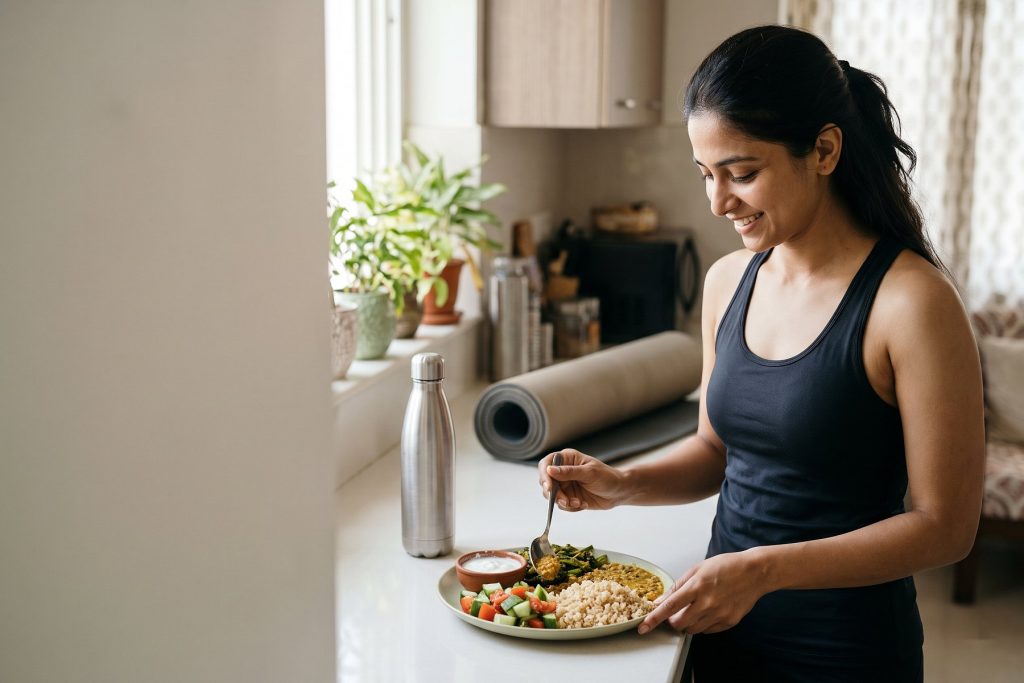
- Fill half your plate with vegetables and add fruit through the day. Their fibre helps keep blood sugar steadier.
- Choose whole grains and fibre-rich carbs such as millets (jowar, bajra, ragi), brown rice, whole-wheat roti, oats, dals, rajma and chana, rather than maida, white bread and large portions of white rice.
- Include protein at each meal, such as dal, paneer, curd, eggs, fish, chicken, tofu or sprouts. It helps you feel full for longer.
- Pick healthy fats like nuts, seeds and small amounts of cooking oil, and limit deep-fried foods, vanaspati and bakery snacks.
- Cut back on sugary drinks and sweets. Packaged juices, sweetened chai and coffee, colas and mithai add a lot of sugar quickly.
- Eat at regular times. Long gaps followed by large meals can make energy and cravings harder to manage.
If weight loss is one of your goals
Not everyone with PCOS needs to lose weight. If you’re carrying extra weight, losing 5 to 10% of your body weight can help regulate periods for some women, and it can improve insulin resistance. That’s 3.5 to 7 kg for someone who weighs 70 kg. The guideline suggests a tailored calorie deficit rather than extreme diets, and Jean Hailes notes that weight can be harder to lose with PCOS, so be patient with yourself. Crash diets and long fasts often backfire and are hard to sustain.
The guideline also notes that many women with PCOS face weight stigma, and that eating disorders and disordered eating should be considered regardless of weight. If food feels like a constant battle, or you’re restricting, bingeing or feeling guilty after eating, talk to your doctor. Support is available.
What about supplements?
Inositol is popular, but the guideline found it has limited clinical benefits for ovulation, excess hair or weight. It may be considered based on personal preference, but discuss it with your doctor first, especially if you’re trying to conceive or take other medicines. Be wary of products that promise to “cure” or “reverse” PCOS.
Exercise for PCOS: how much and what kind
Regular activity improves insulin sensitivity, mood, sleep and heart health, and it helps whether or not your weight changes. The 2023 international guideline recommends that adults aim for:
- 150 to 300 minutes a week of moderate activity, such as brisk walking, cycling, swimming or dancing, or 75 to 150 minutes of vigorous activity, such as running, skipping or a fast-paced class
- muscle-strengthening on two non-consecutive days a week, such as bodyweight exercises, resistance bands, weights or yoga that works your muscles
If that sounds like a lot, remember that every bit counts. Short sessions of 10 minutes or more add up, and some activity is always better than none.
Make it stick
- Start where you are. If you’re inactive now, a 10-minute walk after meals is a good first step. Building up gradually reduces injuries and helps the habit last.
- Mix it up. Combine cardio with strength work. Strength training builds muscle, which uses more glucose and helps with insulin resistance.
- Sit less. Short walking breaks during long desk or screen sessions help, even if you exercise regularly.
- Choose what you enjoy. There’s no single best type of exercise for PCOS. The one you’ll do most weeks is the right one.
- Track your progress beyond the scale. Notice energy, sleep, mood, cycle regularity and how your clothes fit.
Because PCOS raises the risk of type 2 diabetes, our World Diabetes Day guide to early action is also worth a read: the same habits that lower diabetes risk help with PCOS.
Beyond diet and exercise: sleep, stress and health checks
Look after your sleep and mood
Poor sleep makes cravings, energy and blood sugar harder to manage, and PCOS is linked to a higher risk of sleep apnoea. Aim for a regular bedtime and wake time, and tell your doctor if you snore loudly, stop breathing during sleep or feel exhausted during the day.
PCOS is also linked to anxiety, depression and poor body image. The international guideline recommends that doctors screen all adults with PCOS for depression and anxiety. If you’re struggling, say so. Talking therapies, support groups and practical stress-reduction such as breathing exercises can all help.
Health checks that matter
According to the WHO, PCOS increases the long-term risk of type 2 diabetes, high blood pressure, high cholesterol, heart disease, fatty liver disease, sleep apnoea, diabetes in pregnancy and, with long gaps between periods, thickening of the womb lining (endometrial hyperplasia) and endometrial cancer. Ask your doctor about:
- Blood sugar: The guideline recommends checking it at diagnosis in all adults and teenagers with PCOS, with the oral glucose tolerance test (OGTT) the most accurate option, then rechecking every one to three years depending on your other risk factors. If you’re planning a pregnancy or are pregnant, ask about early glucose testing, because diabetes in pregnancy is more common with PCOS.
- Blood pressure, cholesterol and weight or waist size at regular check-ups.
- Mood: screening for depression and anxiety.
- Your periods: if you go three months or more without a period, or have bleeding between periods, see your doctor. They’ll rule out pregnancy and may suggest treatment to protect the womb lining.
Treatments your doctor may suggest
Lifestyle changes are the foundation, but medicines can help with specific symptoms. The WHO notes that combined oral contraceptive pills can regulate cycles and may reduce acne and unwanted hair. The pill isn’t suitable for everyone, for example women who have migraine with aura or high blood pressure, or who smoke and are over 35, so your doctor will check first. The guideline says metformin should be considered for adults with a BMI of 25 or more. For women trying to conceive, letrozole is now the first-choice tablet to help ovulation, and other fertility treatments are available if needed. Your doctor will tailor treatment to your symptoms and goals.
When to see a doctor
See a doctor or gynaecologist if you have irregular or missed periods, excess hair growth, persistent acne, scalp hair thinning, or you’ve been trying to get pregnant for 12 months without success (or six months if you’re over 35).
PCOS myths vs facts
Myth: PCOS means you have cysts on your ovaries. Fact: Despite the name, cysts aren’t required for a diagnosis, and there’s no increase in abnormal cysts. What an ultrasound may show are many small, immature follicles. That misunderstanding is one reason the condition is being renamed PMOS.
Myth: Only women who are overweight get PCOS. Fact: PCOS affects women of all sizes. Doctors at AIIMS Delhi have noted that girls with normal or low weight can have it too, sometimes called “lean PCOS”. Women who aren’t overweight can still have insulin resistance and a higher risk of diabetes and heart disease than women without PCOS, so the same health checks apply.
Myth: If you have PCOS, you can’t get pregnant. Fact: PCOS is a common cause of fertility problems, but it doesn’t mean infertility. Many women with PCOS conceive naturally, and Jean Hailes stresses that those who take longer are not infertile. Most can be helped with lifestyle changes and treatments such as tablets that help ovulation.
Myth: There’s a special PCOS diet, and you must cut out gluten, dairy or all carbs. Fact: The international guideline found no evidence that any one diet is better than another. Unless you have coeliac disease or a diagnosed intolerance, there’s no need to cut out whole food groups. Focus on the quality and balance of your meals.
Myth: Supplements or a detox can cure PCOS. Fact: There’s no cure for PCOS. Even inositol, one of the most studied supplements, has only limited benefits. Products that promise a cure or quick reversal are selling false hope.
Myth: If your periods are regular on the pill, the PCOS has gone. Fact: The pill can regulate bleeding and ease acne and hair growth, but it treats symptoms rather than the underlying condition. Healthy habits and regular health checks still matter.
Myth: PCOS is only about periods and fertility. Fact: PCOS is a lifelong hormonal and metabolic condition. It affects blood sugar, heart health, sleep and mental health, which is why the new name, PMOS, highlights its metabolic side.
Pro Tip
Track more than your weight. Note your cycle dates, energy, sleep, mood, skin and activity for a few months, and take that record to your doctor. It makes patterns easier to spot and appointments more useful. The GOQii App helps you log your steps, sleep, food and weight in one place. A GOQii Personalised Health Coach can help you build a balanced eating and activity routine that suits your life, without crash diets or guilt.
Frequently asked questions
What is the best diet for PCOS?
There’s no single best diet. The 2023 international PCOS guideline found no evidence that any one type of diet works better than another. A balanced pattern with plenty of vegetables, whole grains, pulses, protein and healthy fats, and less sugar and refined food, is a good base. Choose an approach you can stick to.
Why was PCOS renamed PMOS?
In May 2026, an international consortium announced in The Lancet that polycystic ovary syndrome is being renamed polyendocrine metabolic ovarian syndrome (PMOS). The old name suggested the problem was ovarian cysts, but the condition is a lifelong hormonal and metabolic disorder affecting many body systems. The new name is being phased in over three years.
How much exercise should I do if I have PCOS?
The international guideline recommends 150 to 300 minutes of moderate activity, or 75 to 150 minutes of vigorous activity, each week, plus muscle-strengthening on two non-consecutive days. Any activity helps, and it benefits PCOS even without weight loss.
Can you have PCOS if you’re not overweight?
Yes. PCOS affects women of all sizes. Women with a normal or low weight, sometimes described as having lean PCOS, can still have insulin resistance and a higher risk of type 2 diabetes and heart disease, so they need the same health checks.
Can I get pregnant if I have PCOS?
Yes, most women with PCOS can get pregnant. Some conceive without any help, and for those who take longer, lifestyle changes and fertility treatments are often effective. See a doctor if you’ve been trying for 12 months, or six months if you’re over 35.
Does losing weight help PCOS?
For people carrying extra weight, losing 5 to 10% of body weight can help regulate periods and improve insulin resistance. But healthy eating and exercise help even when weight doesn’t change, and crash diets are best avoided.
Can PCOS be cured?
There’s no cure, but PCOS can be managed well. Lifestyle changes, medicines such as the combined pill or metformin, and regular checks for diabetes, heart health and mood can control symptoms and lower long-term risks.
#BeTheForce
Disclaimer: The information provided in this blog is for general awareness and educational purposes only. It is not intended to replace professional medical advice, diagnosis, or treatment. Always consult a qualified healthcare provider for personalised medical guidance or concerns related to your health.
Leave a Reply