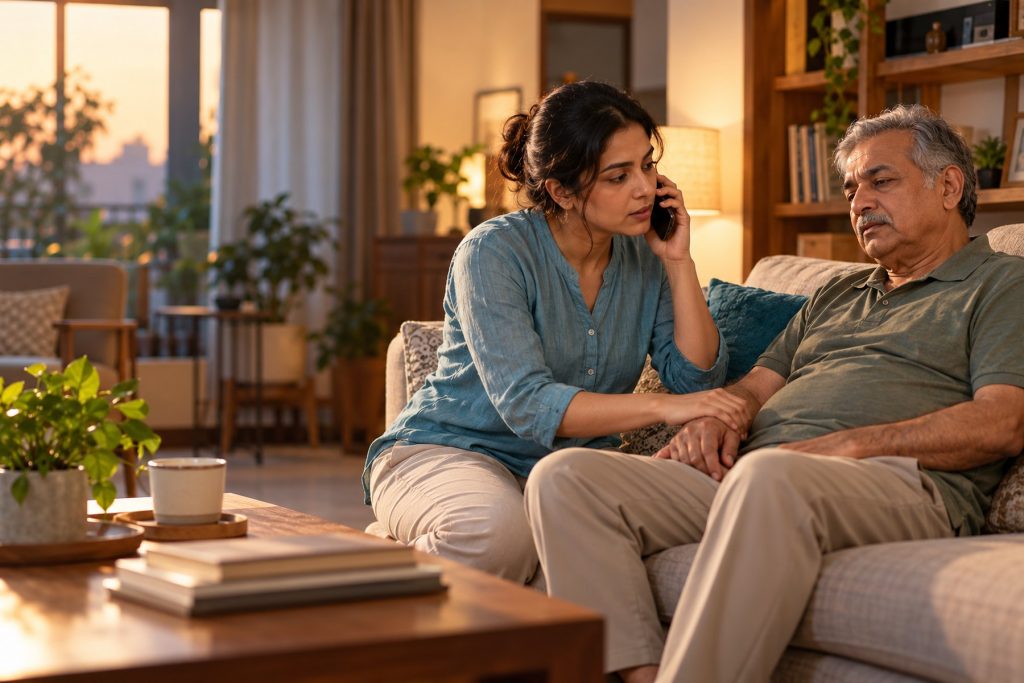
 Your father is at the dinner table and halfway through a sentence his words come out jumbled. One corner of his mouth droops. A minute later he says he feels fine and wants to lie down. What do you do?
For a stroke, what you do next, and how quickly, can decide whether someone recovers or lives with lasting disability. Yet many families in India wait to see if things settle, call a relative first, or give a tablet at home. Precious hours are lost.
World Stroke Day, held every year on 29 October and led by the World Stroke Organization, is about changing that. Its message is simple: learn the signs of a stroke and act fast to get emergency care. This guide explains how to spot a stroke, what to do in the first few minutes, and the everyday steps that can lower your risk.
At a glance
- Stroke is common: globally, 1 in 4 adults over 25 will have a stroke in their lifetime.
- India’s burden is rising: India recorded over 25 million new strokes in 2021, about 51% more than in 1990.
- It isn’t only an older person’s illness: in an ICMR registry, about 1 in 7 stroke patients was under 45.
- Learn BE FAST: Balance, Eyes, Face, Arms, Speech, Time to call for help.
- Every minute counts: clot-busting treatment generally works best within 4.5 hours of symptoms starting, but in India only about 1 in 5 patients reaches hospital in that window.
- Most strokes are linked to risks you can change: high blood pressure is the biggest one, so know your numbers.
What is a stroke?
A stroke happens when the blood supply to part of the brain is cut off. Without oxygen and nutrients, brain cells in that area begin to die within minutes. That’s why a stroke is a medical emergency, in the same way a heart attack is.
There are two main types:
- Ischaemic stroke: a clot blocks an artery supplying the brain. This is the most common type worldwide. In India’s national stroke registry, it made up about 60% of cases.
- Haemorrhagic stroke: a blood vessel in or around the brain bursts and bleeds. In the same registry, bleeding inside the brain accounted for about 34% of strokes, a higher share than is typical in many high-income countries.
This difference matters in an emergency. The two types can look identical from the outside, and only a brain scan can tell them apart. Treatments that dissolve a clot could make a bleed worse, which is why nobody should give medicine at home “just in case”.
What about a mini-stroke (TIA)?
A transient ischaemic attack, or TIA, is caused by a temporary blockage. Its symptoms are the same as a stroke but they pass, usually within minutes to a few hours and always within 24 hours.
It’s tempting to brush a TIA off because the person feels normal again. Don’t. The NHS describes a TIA as a warning sign that a full stroke may follow soon. At the time, no one can tell whether symptoms will pass or turn into a stroke, so treat every episode as an emergency. If symptoms have already passed and you didn’t get help, see a doctor the same day.
Know the signs: BE FAST
Stroke symptoms come on suddenly. The best-known memory aid is FAST. Many hospitals now teach an extended version, BE FAST, which adds balance and eye problems that FAST alone can miss.
| Letter | Look for |
| B – Balance | Sudden dizziness, loss of balance or coordination, trouble walking |
| E – Eyes | Sudden blurred or double vision, or loss of sight in one or both eyes |
| F – Face | One side of the face droops; ask them to smile |
| A – Arms | One arm is weak or numb; ask them to raise both arms and see if one drifts down |
| S – Speech | Slurred or jumbled speech, or difficulty finding or understanding words |
| T – Time | Time to call an ambulance immediately, and note the time symptoms started |
Other warning signs
The NHS also lists:
- sudden weakness or numbness down one side of the body, including a leg
- confusion or memory loss
- a sudden, severe headache
- feeling or being sick
You don’t need all the signs. Even one sudden symptom is enough to act. And if symptoms go away, still get emergency help: it could be a TIA.
Women and younger adults
Women have the classic symptoms too, but a review of studies found they were somewhat more likely to also report headache or fatigue. These less specific symptoms can delay recognition, so don’t let them distract from a drooping face, weak arm or slurred speech.
Younger people often assume a stroke can’t happen to them, and symptoms get put down to stress, migraine or tiredness. In India’s national stroke registry, 13.8% of patients were under 45. Age is no reason to wait.
Why speed matters so much
During a typical untreated ischaemic stroke, the brain is estimated to lose about 1.9 million nerve cells every minute. Doctors sum this up as “time is brain”.
The main emergency treatments are time-limited:
- Clot-busting medicine (thrombolysis): for suitable patients with an ischaemic stroke, it is usually given within 4.5 hours of symptoms starting, and the earlier the better.
- Clot removal (thrombectomy): a specialist threads a thin tube through an artery to pull out a large clot. In carefully selected patients, it can help up to 24 hours after symptoms begin, but it’s only available at some hospitals.
Both need a brain scan first to rule out bleeding. This is where India loses most ground. In the ICMR registry, only 20.1% of patients reached hospital within 4.5 hours, 37.8% arrived more than a day later, and just 4.6% of those with an ischaemic stroke received clot-busting treatment. Late arrival was the main reason eligible patients missed out.
What to do if you suspect a stroke
Do
- Call an ambulance straight away. In India, dial 108 (the free emergency ambulance service in most states) or 112, the national emergency number. Say clearly that you think it is a stroke.
- Note the time symptoms started, or the last time the person was seen well. If they woke up with symptoms, it’s the time they went to sleep. Doctors need this to decide on treatment.
- Head for a hospital that can treat stroke. If you have to travel yourself, go to the nearest hospital with a CT scan and emergency stroke care, not a local clinic. It helps to find out now which hospitals near you offer this.
- Keep the person safe and comfortable. If they are drowsy or vomiting, lay them on their side with the head slightly raised and loosen tight clothing.
- Take their medicines list with you, especially blood thinners, and any recent reports.
- Start CPR if they become unresponsive and are not breathing normally.
Don’t
- Don’t give aspirin or any other medicine. If the stroke is a bleed, a blood thinner could make it worse.
- Don’t give food or water, not even a sip. A stroke can affect swallowing, and food or liquid can go into the lungs.
- Don’t wait to see if it passes, or call family members before calling for help.
- Don’t let the person drive, even if they insist they are fine.
- Don’t try home remedies, such as pricking fingers or applying pressure points. They waste time that the brain doesn’t have.
Lowering your risk: the factors you can change
Some stroke risks can’t be changed, such as age, family history or a past stroke. But most of the risk lies elsewhere. The Global Burden of Disease study estimates that 84% of the global stroke burden is linked to risk factors that can be modified. The large INTERSTROKE study across 32 countries reached a similar conclusion: ten modifiable factors accounted for about 90% of stroke risk.
1. Blood pressure: the biggest one
High blood pressure is the single most important risk factor for stroke worldwide, and it usually causes no symptoms. In India’s stroke registry, nearly 3 in 4 patients had hypertension. Meanwhile, NFHS-5 found raised blood pressure in about 22.5% of women and around a quarter of men aged 15 and over, and many people don’t know they have it.
What helps: get your blood pressure checked at least once a year from adulthood, and more often if it is raised. If your doctor prescribes medicine, take it every day, even when you feel well. Stopping it on your own is a common, and risky, mistake.
2. Salt
Eating too much salt raises blood pressure. The WHO advises adults to have less than 5 g of salt a day, about one level teaspoon, and most Indians eat well above this. Much of it comes from pickles, papad, namkeen, sauces, instant noodles and restaurant food, not just the salt shaker. Cooking with less salt, tasting before adding more, and using lemon, herbs and spices for flavour all add up.
3. Tobacco in any form
Smoking and smokeless tobacco both damage blood vessels. In the ICMR registry, 22.6% of stroke patients smoked and 28.5% used smokeless tobacco such as gutka or khaini. Quitting lowers your risk, whatever your age, and the national tobacco quitline (1800-11-2356) offers free support.
4. Diabetes and cholesterol
Diabetes was present in over a quarter of patients in the Indian registry, and high LDL (“bad”) cholesterol is among the top five global risk factors. Both can be picked up by simple blood tests. If you have either, keeping them in your target range with your doctor’s guidance lowers stroke risk.
5. An irregular heartbeat
Atrial fibrillation (AF) is an irregular, often fast, heart rhythm that can let clots form in the heart and travel to the brain. It makes a stroke about five times more likely. If you notice palpitations or an irregular pulse, see a doctor; treatment, often with blood thinners, can greatly reduce the risk.
6. Diet, weight and activity
A diet built around vegetables, fruit, whole grains and pulses, with less fried and ultra-processed food, supports healthy blood pressure, cholesterol and weight. Regular movement helps all three. Aim for at least 150 minutes of moderate activity, such as brisk walking, each week; it can lift your mood too.
7. Alcohol and stress
Heavy drinking raises blood pressure and the risk of both types of stroke; less is better, and none is safest. Long-term stress was also among INTERSTROKE’s risk factors, so making time to recover matters.
8. Air pollution
Outdoor and household air pollution are both among the top five global risk factors for stroke, and this is especially relevant in India as winter smog sets in. On high-pollution days, limit outdoor exercise, especially near traffic, and use cleaner cooking fuels where possible.
Life after a stroke
Recovery looks different for everyone. Some people recover within days or weeks; for others, it can take months or years, and some changes may be lasting.
Rehabilitation is part of treatment, not an optional extra. Depending on what the stroke has affected, it may include:
- physiotherapy to rebuild strength, balance and movement
- speech and language therapy for speaking, understanding and swallowing
- occupational therapy to manage daily tasks such as dressing, cooking and getting back to work
- support for memory, concentration, tiredness, low mood and anxiety, which are common and treatable after a stroke
Ask the treating team for a clear rehab plan before discharge, and keep practising the exercises at home. Progress can continue well after the first few months.
Preventing a second stroke
Anyone who has had a stroke or TIA is at higher risk of another one. The same steps that prevent a first stroke matter even more now: take prescribed medicines (such as blood thinners, blood pressure and cholesterol medicines) regularly, keep follow-up appointments, stop tobacco, and stay as active as you safely can.
For caregivers
In India, much of stroke care happens at home, usually by family. Caring for someone after a stroke can be tiring and lonely. Learn the basics from the therapy team, share tasks within the family, and look after your own sleep, food and health too. If you feel low or overwhelmed, Tele-MANAS (14416) offers free, confidential support.
The bottom line
A stroke gives little warning, but it does give signs. Learn BE FAST and share it with your family, especially older parents and the people who care for them. If you see even one sudden sign, call 108 or 112 straight away, note the time, and don’t give medicine, food or water. Then take care of the risks you can control, starting with knowing your blood pressure. This World Stroke Day, a few minutes spent learning the signs could give someone their life back.
Pro Tip: Use the GOQii App to log your blood pressure, steps, sleep and meals, so you and your doctor can see the trends that matter. Your GOQii Personalised Health Coach can help you build steady habits, from cutting back on salt to moving more and quitting tobacco.
Frequently asked questions
What are the first signs of a stroke?
Stroke symptoms start suddenly. Use BE FAST: loss of Balance, Eye or vision problems, Face drooping, Arm weakness, Speech difficulty, and Time to call an ambulance. Sudden numbness on one side, confusion or a severe headache can also be signs.
What should I do if someone is having a stroke?
Call an ambulance immediately on 108 or 112 and say you suspect a stroke. Note the time symptoms started. Don’t give aspirin, any other medicine, food or water, and don’t wait to see whether symptoms improve.
Should I give aspirin to someone having a stroke?
No. Some strokes are caused by bleeding in the brain, and aspirin could make bleeding worse. Only a brain scan in hospital can show which type of stroke it is, so leave all medicines to the doctors.
What is the golden hour for a stroke?
The sooner treatment starts, the better. Clot-busting medicine is usually given within 4.5 hours of symptoms starting, and some patients can have a clot removed up to 24 hours later. Getting to hospital within the first hour gives the best chance of treatment.
Can young people have a stroke?
Yes. In India’s national stroke registry, about 1 in 7 stroke patients was under 45. High blood pressure, tobacco, diabetes and some heart conditions can cause strokes at younger ages, so never dismiss sudden symptoms because of age.
What is a mini-stroke, and is it serious?
A mini-stroke, or transient ischaemic attack (TIA), causes stroke symptoms that go away within 24 hours. It is serious because it can be a warning that a full stroke may follow soon. Get emergency help even if symptoms pass.
How can I reduce my risk of stroke?
Most stroke risk is linked to factors you can change. Check and control your blood pressure, eat less salt, avoid all tobacco, stay active, limit alcohol, and manage diabetes, cholesterol and any irregular heartbeat with your doctor.
#BeTheForce
Disclaimer: The information provided in this blog is for general awareness and educational purposes only. It is not intended to replace professional medical advice, diagnosis, or treatment. Always consult a qualified healthcare provider for personalised medical guidance or concerns related to your health.




Leave a Reply