
GOQii

Blog

  • HOME
  • HEALTHY LIVING
  • FITNESS
  • HEALTHY RECIPES
  • USER STORIES
  • KARMA
  • BUY GOQii

October 18, 2024 By Navnee Garg 3 Comments

When Not Eating Becomes a Disease: What Anorexia Really Does to You or Someone You Love

Anorexia Nervosa

Following healthy habits is good. It’s always nice to have a plan for healthy eating and follow it steadily with discipline. But what happens when you overindulge in a dieting plan? As we all know, anything in excess is bad and the same goes for dieting or having an unhealthy obsession with losing weight which may make one do things that can cause more damage than good. Having said that, I’d like to highlight an eating disorder that I recently came across called Anorexia Nervosa.

What is Anorexia Nervosa?

Anorexia Nervosa is an eating disorder which is characterized by low body weight, fear of gaining weight, and a distorted perception of weight. This means that despite having normal body weight, these people feel that they are overweight, or even if they will eat a bite extra, they feel that they will suddenly gain weight. So they prefer being on a very low calorie diet, prefer restricted foods, focusing excessively on the portion they eat. They also try to control their weight by vomiting after eating, or misusing laxatives, diet aids, diuretics or even enemas. At times, they also try to lose weight by excessive exercising just post consuming meals.

Nervosa is not about calorie counting, it is more about one’s psychological aspect which can be extremely dangerous or even life threatening to try to cope up with emotional distress. Anorexic people often tend to equate thinness with self worth.

What Are The Symptoms?

The most evident physical symptom of Nervosa is Starvation, and let us not confuse it with conscious eating. Apart from it, it also includes some emotional and behavioural issues which include unrealistic perception of one’s own body in terms of being fat or fear of gaining weight.

It is difficult to notice the signs and symptoms among the people, but there are few alarming signs which can be noticed by near and dear ones like low body weight, or thin appearance, abnormal blood counts, fatigue, dizziness, and insomnia, thinning of hair, blue discoloration of fingers, irregular bowel movements, irregular heart rhythms, and dehydration.

Also some emotional and behavioural symptoms would include:

  • Skipping meals or refusing to eat
  • Making excuses like denial for hunger, or unwell
  • Avoiding to eat in public
  • Social withdrawal
  • Irritability and Insomnia

Diagnosis 

Though it is difficult to diagnose Anorexia Nervosa at an early stage, the American Psychiatric Association’s (APA’s) Diagnostic and Statistical Manual of Mental Disorders has set diagnosis criteria for people prone to being Anorexic.

  1. Restricted calorie intake as per the requirement of the body in terms of age, height, gender and physical health.
  2. Misconception of being overweight, despite being actually underweight.
  3. A full medical history can also help to reach the outcome

Treatment and Recovery

Treatment includes some medications, nutritional counseling, psychotherapy and family counseling as well which would depend on one’s level of being anorexic. Generally people refuse to accept that they fall in the category but a proper counseling session can help one recover soon.

There is no harm in Being Picky about putting food in your mouth, but this should be done in certain limits by working on calorie counting, or choosing the healthiest option and not in excessive fear to gain weight. The body needs fuel as well to work its system out. The correct way to lose weight is by eating healthy and exercising regularly, and not “DIETING”. Long term anorexia nervosa can lead to serious medical issues like low bone density, anemia, or some gastrointestinal issues as well.

So, if you feel any such symptoms, or you know someone prone to it, do share the article with them, and we at GOQii are always there to help you recover in whatever best way possible.

Did you find this article helpful? Do leave your thoughts and queries in the comments below and do share it on the GOQii Arena in the GOQii app with your friends! 

#BeTheForce 

Disclaimer: The information provided in this blog is for general awareness and educational purposes only. It is not intended to replace professional medical advice, diagnosis, or treatment. Always consult a qualified healthcare provider for personalised medical guidance or concerns related to your health.


October 7, 2024 By Pradnya Shinde 4 Comments

5 Powerful Ways Of Meditation

powerful ways of meditationWe know that meditation is very very good for health, especially mental health. But sometimes, we get confused about what exactly to do. So here’s a guide to help you begin. Try these powerful ways of meditation to improve your health and wellbeing! 

Powerful Ways Of Meditation 

1. Concentrative Meditation
As the word suggests, you are supposed to concentrate on one point so you won’t think about other things. When thoughts are scattered, it creates no impact, but sharp attention is a powerful tool. One way to do it is to focus on your own breathing cycle. See how you inhale through the nose, how you feel inside the body and how you exhale. Another way is to focus on sounds like any word or phrase or the sound of a bell. You can also focus on a candle’s flame. Sit in front of the candle, look at the flame and close your eyes. Behold the picture of the flame in front of your mind. When the picture fades, open your eyes and repeat the process.

2. Contemplative Meditation
Instead of trying to stop thinking, contemplative meditation includes focusing on a single thought. Instead of too many different thoughts, it’s thinking about one subject and one thought with complete awareness of the thought. For this, you can contemplate any sentence from a religious scripture or contemplate objects like a flower or a tree. Think about the shape of a particular flower.

Another way is asking a question to yourself, believing in your inner instinct and waiting for an answer to come up. The questions can be:

  • What am I looking for?
  • What is it I am resisting?
  • Knowing I will die, how should I live?
  • What is my greatest mission?
  • What do I love?
  • What do I have fear of?
  • Who am I?

3. Witness Meditation
Watch your thoughts as if it’s a movie. Let the thoughts come, simply observe them, but do not react or try to reject. Be neutral. This is called being the witness of your thoughts. What does it do? It reduces your attachment from your thoughts. You no longer feel pain with those repetitive thoughts. This is a great technique to let go of resentment from the past.

4. Chanting Mantra
Chanting mantras repeatedly is one way of meditation. Mantra is a sanskrit word. Man means mind and Tra means release. Mantra is supposed to be a set of words which releases your mind from all it’s anxieties. It has been said that chanting mantras provides spiritual growth. But make sure you are paying attention, because that is all what we want. You can chant OM or Gayatri Mantra.

5. Movement Meditation
If you think you can’t sit at one place and focus, practice meditation through body movements. Self defense practices like Tai chi and Qigong are used as a form of meditation for a very long time. Yoga is one excellent example of movement meditation. Yoga involves being fully aware of your breathing and understanding the basic nature of self. But not only this, we can also practice meditation through simply walking or dancing. Just be attentive, pay close attention to your steps, body movements and surroundings.

Next time, when you sit to meditate, you can try something new. Keep it mind, sometimes we might get a little restless but be patient. Don’t get frustrated. Slowly get back to your point of concentration.

We hope these 5 powerful ways of meditation help you! Do leave your thoughts and experiences in the comments below. For more on meditation and yoga, check out Healthy Reads or for further guidance, speak to a certified expert by subscribing to GOQii’s Personalised Health Coaching here.

#BeTheForce 

Disclaimer: The information provided in this blog is for general awareness and educational purposes only. It is not intended to replace professional medical advice, diagnosis, or treatment. Always consult a qualified healthcare provider for personalised medical guidance or concerns related to your health.

September 21, 2024 By Dr Manali Rao 1 Comment

Everything You Need to Know about Alzheimer’s

alzheimer's dayIf you’ve read ‘The Notebook’ by Nicholas Parks, later adapted into a film by the same name, you might have a fair idea of what Alzheimer’s really is. The book is centered around Allie and Noah, an all-time romantic couple. There’s a beautiful scene in the film where Noah, who is an old man now, narrates a story to Allie about a couple and how their love blossomed through hardships. Amazed by this story, Allie only realizes later that this story is about them. Noah read this to her as he had promised before the disease set in. The disease was Alzheimer’s!


shutterstock_574038220

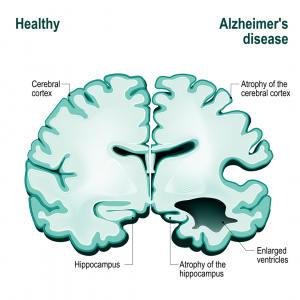
Alzheimer’s is a progressive neurological disorder which results in memory loss, personality changes, global cognitive dysfunction and functional impairments. It is the leading cause of dementia in the elderly. The disease begins at a slow rate. Initially, it captures the brain and slowly overcomes human thoughts, activities, and language as well. People start having trouble in remembering things and the one evident sign is forgetting the names of people.

What Causes Alzheimer’s?

The exact etiology is unknown, but a few risk factors can be marked out.

  • Age: Incidence and prevalence increases after the age of 60
  • Family History: First-degree relatives at greater risk
  • Genetic: ApoEepsilon 4 gene
  • Lack of Sleep
  • Regular and high consumption of junk food

Clinical Features 

  1. Progressive memory loss and decline of higher mental functions
    Example: problem-solving small issues, confusion in time, date and month, the problem faced in doing family activities of daily routine, misplacing things, poor judgment and problem in speaking and writing as well
  2. Difficulty in naming and understanding what others are speaking
  3. Apraxia: The inability to carry out skilled motor activities, inability to recognize objects, places and people
  4. Behavioral changes: Agitation, aggression, wandering and persecutory delusions, loss of insight, depression
  5. Loss of inhibition leading to inappropriate social behavior
  6. In advanced stages, a person may be mute, inactive and can succumb to different infections
  7. Inability to recognize color and visual picture
  8. In case there is an underlying cause, additional clinical features may be present

Management

The most important management for Alzheimer’s is support – Physical, mental and moral support from family members and caregivers.

  • Antioxidants (Vitamin E) can slow the decline of cognitive function
  • Drugs like anticholinesterase inhibitors (like donepezil, rivastigmine, galantamine), memantine, N-methyl-D aspartate (NMDA) receptor antagonist
  • Ginkgo biloba, a plant extract has been shown to be useful
  • Treatment of the underlying cause, if any

3-7

Alzheimer’s and Ayurveda

According to the principles of Ayurveda, Alzheimer’s is caused as a result of the imbalance in vata – this imbalance is quite common as a person begins to grow in age. It affects the vata – in the tissues of the central nervous system of the body – mainly the brain which then slowly becomes imbalanced.

Treatment begins with a Vata balancing diet. Withania Somnifera (Ashwagandha) in the powdered form along with either ghee or milk is included in the patient’s daily diet. This helps charge and soothe the Vata. Herbs such as Brahmi and Ashwagandha that serve as nerve tonics are mainly used.

An oil massage daily, prior to a bath is also considered significant in this form of treatment. Ayurveda specialized preparations for Alzheimer’s treatment that are made from rice have proved highly beneficial to the patients besides providing the required nutrients to the old age person.

How Can Turmeric Help?

Turmeric or Haldi, as it’s known in Hindi, is a part of almost every Indian recipe. It is known all over the world for its antibacterial, anti-inflammatory, anti-tumor, anti-spasmodic, anti-allergic properties and hence is used in medicines, cosmetics etc.

Curcumin that is found in turmeric has radical scavenging properties thereby preventing damage that can be caused to the cells of our body by free radicals. Alzheimer’s alleviation could be based upon the ability of curcumin to combat the development of amyloid plaque (accumulation of protein) in the brain leading to inflammation and impairment of cells.

Prevention

There’s no real guarantee when it comes to preventing Alzheimer’s. The only way to minimize your chances is by living a healthy and balanced lifestyle.

  1. Make sure you don’t stop learning new things. Continuous learning like a musical instrument, a new language or any subject that you didn’t have knowledge about keeps the memory intact.
  2. Forget your phone and start memorizing important numbers like bank accounts, mobile numbers, life insurance/investment policy numbers, credit and debit card numbers, passwords and recalling them when needed is an easy way of jogging your memory.
  3. Make sure you get your hands on challenging puzzles like Sudoku, different crosswords, etc.
  4. Consumption of antioxidants via diet/supplements is helpful in preserving memory function.

We hope this blog helped you lean more about Alzheimer’s and what we can do in case a loved one is ever affected by it. Do leave your thoughts in the comments below!

For more informative topics, check out Healthy Reads or speak to an expert by subscribing for Personalised Health Coaching here.

#BeTheForce

Disclaimer: The information provided in this blog is for general awareness and educational purposes only. It is not intended to replace professional medical advice, diagnosis, or treatment. Always consult a qualified healthcare provider for personalised medical guidance or concerns related to your health.

September 18, 2024 By Gitanjali Bahl 2 Comments

Healthy Habits to Reduce Stress

stress reduction

Ever felt like you don’t have the time to eat, exercise, or interact with friends and family? Have deadlines and responsibilities chained you down in more ways than one? Do you spend most of your time at work with little activity? Are all these situations creating a stressful environment and draining your energy and mental health?

If your answer to the above was a yes, it is time you addressed these issues. Coping with expectations at work and at home can be taxing. While these are important, remember that nothing is worth sacrificing your health.

The simplest way to reduce stress is to keep your mind at ease and your body healthy with simple lifestyle changes and time management. Letting go of bad habits and introducing a few healthy tweaks can help you rekindle your relationship with your mind and body!

Here are a few changes you can make to reduce stress:

  • Start Your Day with Breathing Exercises or Meditation: Practicing different forms of Pranayama or  basic stretches can reduce stress and keep you energized throughout the day.
  • Plan Your Tasks: Spend some time planning your day to stay organized and avoid last-minute rushes that could lead to stress.
  • Limit Gadget Use: Use gadgets only for work or as and when necessary. Overindulgence in gadgets can lead to depression and cut you off from the real world. Set specific times for usage and avoid them at least an hour or two before sleep.
  • Set Alarms for Water Intake: Dehydration can affect cortisol levels, a stress hormone that impacts both mind and body. Staying hydrated can help reduce stress.
  • Walk Whenever Possible: If your workplace is within walking distance, opt to walk or cycle instead of driving. Walking releases endorphins, elevates your mood, and improves heart rate. Choose stairs over escalators or elevators as it is the best and easiest form of exercise!
  • Take Breaks: Spend time with family, friends and loved ones. A healthy social life fosters deeper connections and make life more meaningful.
  • Plan a Trip or Vacation: Whether with others or solo, a change in environment can boost creativity, positivity, and help you exchange new thoughts and ideas.
  • Eat Fruits Daily: Different fruits provide various nutrients that help reduce stress. For example, Bananas have Tryptophan, Avocados have Vitamin B, Sweet Potatoes have Potassium and Magnesium, all of which help lower stress levels.
  • Indulge in Hobbies: No matter how busy you are, hobbies help you relax. Whether it’s a sport, music, traveling, or painting, setting time aside for your passions will enrich your life.

Remember the old saying, “All work and no play makes Jack a dull boy”? It’s true! Take time for yourself. If you’re only working and not playing, are you really living? Your work targets can be achieved, and your relationships with friends and family can be sustained—but only if you prioritize your health. Make your physical and mental well-being a priority!

Want to learn more about managing stress? Check out Healthy Reads or ask a GOQii Coach by subscribing for Personalised Health Coaching here.

#BeTheForce

Disclaimer: The information provided in this blog is for general awareness and educational purposes only. It is not intended to replace professional medical advice, diagnosis, or treatment. Always consult a qualified healthcare provider for personalised medical guidance or concerns related to your health.

  • « Previous Page
  • 1
  • 2
  • 3
  • 4
  • 5
  • 6
  • …
  • 16
  • Next Page »

Search

Recent Posts

  • PCOS and Anxiety: Discover Relief with the 54321 Technique
  • Navigating the Maze of Nutrition: Finding Clarity Amidst Confusion
  • Get children active and keep them healthy
  • What Gestational Diabetes Can Do To You & Your Unborn Child
  • Breathing – A Forgotten Art

Stay Updated

Archives

  • December 2025 (4)
  • November 2025 (15)
  • October 2025 (20)
  • September 2025 (6)
  • August 2025 (6)
  • July 2025 (12)
  • June 2025 (18)
  • May 2025 (16)
  • April 2025 (23)
  • March 2025 (23)
  • February 2025 (22)
  • January 2025 (26)
  • December 2024 (26)
  • November 2024 (25)
  • October 2024 (22)
  • September 2024 (24)
  • August 2024 (31)
  • July 2024 (21)
  • June 2024 (26)
  • May 2024 (31)
  • April 2024 (27)
  • March 2024 (29)
  • February 2024 (26)
  • January 2024 (25)
  • December 2023 (15)
  • November 2023 (11)
  • October 2023 (22)
  • September 2023 (22)
  • August 2023 (20)
  • July 2023 (22)
  • June 2023 (24)
  • May 2023 (24)
  • April 2023 (24)
  • March 2023 (23)
  • February 2023 (20)
  • January 2023 (16)
  • December 2022 (12)
  • November 2022 (15)
  • October 2022 (15)
  • September 2022 (12)
  • August 2022 (10)
  • July 2022 (17)
  • June 2022 (11)
  • May 2022 (10)
  • April 2022 (6)
  • March 2022 (6)
  • February 2022 (13)
  • January 2022 (12)
  • December 2021 (7)
  • November 2021 (3)
  • October 2021 (6)
  • September 2021 (3)
  • August 2021 (8)
  • July 2021 (7)
  • June 2021 (15)
  • May 2021 (16)
  • April 2021 (10)
  • March 2021 (7)
  • February 2021 (4)
  • January 2021 (4)
  • December 2020 (3)
  • November 2020 (4)
  • October 2020 (10)
  • September 2020 (3)
  • August 2020 (3)
  • July 2020 (2)
  • June 2020 (4)
  • May 2020 (10)
  • April 2020 (12)
  • March 2020 (10)
  • February 2020 (4)
  • January 2020 (4)
  • December 2019 (3)
  • November 2019 (7)
  • October 2019 (5)
  • September 2019 (4)
  • August 2019 (9)
  • July 2019 (9)
  • June 2019 (11)
  • May 2019 (4)
  • April 2019 (9)
  • March 2019 (8)
  • February 2019 (9)
  • January 2019 (8)
  • December 2018 (9)
  • November 2018 (3)
  • October 2018 (3)
  • September 2018 (5)
  • August 2018 (10)
  • July 2018 (6)
  • June 2018 (13)
  • May 2018 (8)
  • April 2018 (18)
  • March 2018 (9)
  • February 2018 (8)
  • January 2018 (15)
  • December 2017 (12)
  • November 2017 (19)
  • October 2017 (13)
  • September 2017 (15)
  • August 2017 (4)
  • July 2017 (8)
  • June 2017 (7)
  • May 2017 (6)
  • April 2017 (8)
  • March 2017 (6)
  • February 2017 (7)
  • January 2017 (9)
  • December 2016 (10)
  • November 2016 (7)
  • October 2016 (7)
  • September 2016 (7)
  • August 2016 (11)
  • July 2016 (9)
  • June 2016 (9)
  • May 2016 (12)
  • April 2016 (17)
  • March 2016 (17)
  • February 2016 (8)
  • January 2016 (6)
  • December 2015 (2)
  • November 2015 (9)
  • October 2015 (7)
  • September 2015 (9)
  • August 2015 (11)
  • July 2015 (9)
  • June 2015 (12)
  • May 2015 (9)
  • April 2015 (13)
  • March 2015 (8)
  • February 2015 (5)
  • January 2015 (12)
  • December 2014 (14)
  • November 2014 (11)
  • October 2014 (6)
  • September 2014 (13)
  • August 2014 (12)
  • July 2014 (6)
  • June 2014 (2)
  • May 2014 (7)
  • April 2014 (5)

From “Laddu Nawin” to Fit and Fierce: How a 25-Year-Old Insurance Advisor Shed 20 Kilos and Gained His Life Back

When 25-year-old Nawin Yadav from Hyderabad walked into his office every morning, he carried more than just his files and policy papers. He had the weight of fatigue, sluggish energy, and an ever-growing belly that was becoming the butt of jokes. “People … [Read More...]

“I’ve Challenged Myself to Live 100 Years” – The Story of Chandubhai Savani’s Second Chance at Life

At 67, most people start slowing down. Not Chandubhai Savani. A resident of Surat, Chandubhai, thought life was on track. “My life was going well till I had my bypass surgery,” he says. That surgery, back in 2021, was a wake-up call.  Medication was routine, but exercise wasn’t. His diet? What he calls ‘normal.’ “I […]

From Shimla’s Slopes to Chandigarh’s Sidewalks: Surinder Kaur Bhalla’s Journey from Chaos to Control

Some journeys start with a plan. Others begin with a stumble literally. Surinder Bhalla, a government professional, born and raised in the scenic hill town of Shimla, had always lived a life of movement. “In Shimla, you walked everywhere,” she reflects. “Walking was never an exercise. It was just life.” But after shifting to Chandigarh, […]

Ananda Mukherjee Health Story

From Terminal Illness To Complete Wellness! Ananda Mukherjee Health Story

As we observe World Cancer Day under the powerful theme ‘United by Unique’ (2025-2027)**, we are reminded that every individual’s journey with cancer is distinct, yet united by shared resilience, hope, and the collective fight against this disease. This theme places people at the centre of care and their stories at the heart of the […]

  • HOME
  • HEALTHY LIVING
  • FITNESS
  • HEALTHY RECIPES
  • USER STORIES
  • KARMA
  • BUY GOQii

Copyright ©2016 GOQii



