GOQii

Blog

  • HOME
  • HEALTHY LIVING
  • FITNESS
  • HEALTHY RECIPES
  • USER STORIES
  • KARMA
  • BUY GOQii

April 21, 2026 By GOQii Leave a Comment

The New Annual Health Check: Tests That Actually Matter After 35

Most people wait for symptoms before they take their health seriously. The problem is after 35, many of the biggest risks develop silently, long before symptoms appear.

For many, an annual health check still means cholesterol, fasting sugar, and perhaps an ECG. That may have been sufficient years ago, but it no longer reflects how modern health risks develop.

You may feel completely normal and still be developing insulin resistance, fatty liver, or gradual muscle loss. Preventive healthcare has evolved and your annual check-up needs to evolve with it. Understanding how daily habits influence long-term health is equally important, especially when it comes to building consistency in exercise and lifestyle routines.

Studies show that a large number of adults with early metabolic risk remain undiagnosed for years because routine tests fail to capture these silent changes.

Who Should Prioritise These Tests?

These tests are especially important if you:

  • Have a sedentary lifestyle
  • Have a family history of diabetes or heart disease
  • Carry excess abdominal fat
  • Experience fatigue despite “normal” reports

If any of these apply to you, your standard check-up may not be enough.

  1. Body Composition, Not Just BMI

BMI only tells you your weight relative to height. It does not distinguish between fat and muscle, which means it often misses underlying risk.

Body composition analysis provides a clearer assessment by measuring:

  • Body fat percentage
  • Visceral fat
  • Muscle mass

A normal BMI with high visceral fat is often where risk is missed.

Visceral fat—especially around the abdomen is strongly linked to heart disease and diabetes. It is also closely associated with chronic inflammation, which often develops silently and accelerates disease risk.

Assess annually where possible, especially if you are making lifestyle changes.

  1. Cardiorespiratory Fitness and VO₂ Max

VO₂ max reflects how efficiently your body uses oxygen during physical activity. It is one of the strongest predictors of long-term health and survival.

Higher fitness levels are associated with:

  • Lower cardiovascular risk
  • Better metabolic health
  • Reduced risk of early mortality

Fitness level often predicts health outcomes more accurately than weight alone.

While lab testing offers precision, many fitness trackers provide reasonable estimates. Clinical treadmill tests can also be used.

Track this every 1–2 years to monitor improvement or decline.

  1. Liver Health and Fatty Liver Screening

Fatty liver disease is rising rapidly, even among individuals who do not consume alcohol.

A basic liver function test may indicate elevated enzymes, but an abdominal ultrasound provides a clearer assessment of fat accumulation.

Fatty liver is often the first visible sign of deeper metabolic dysfunction. In many cases, this overlaps with early inflammatory changes that go unnoticed for years.

It is strongly linked to:

  • Insulin resistance
  • Central obesity
  • Elevated triglycerides

If you fall into these categories, consider screening annually or as advised by your doctor.

  1. Vitamin D, B12 and Ferritin

Micronutrient deficiencies are common and often overlooked, yet they can significantly impact overall health.

Key markers include:

  • Vitamin D – supports bone health and immunity
  • Vitamin B12 – essential for nerve function and energy
  • Ferritin – reflects iron stores and can explain fatigue

These do not need to be tested every year for everyone, but checking at least once after 35, especially if you have symptoms or dietary restrictions is sensible.

  1. HbA1c, Not Just Fasting Sugar

Fasting blood sugar provides a snapshot of your glucose levels at a single point in time.

HbA1c reflects your average blood sugar over the past three months, making it a more reliable indicator of early metabolic changes.

As a general guideline:

  • Below 5.7% → normal
  • 5.7%–6.4% → prediabetes
  • Above 6.5% → diabetes

If you are over 35 especially with a sedentary lifestyle or family history testing annually is advisable. Managing blood sugar effectively also depends on consistent lifestyle habits, not just test results.

Track Trends, Not Just Reports

A single abnormal value does not define your health. What matters more is the direction over time.

Ask yourself:

  • Is your HbA1c slowly rising each year?
  • Is visceral fat increasing?
  • Is your fitness declining?

These patterns often appear long before disease is diagnosed.

Preventive health is about early correction, not late intervention. Long-term consistency is often influenced by environment, routines, and even social health and behavioural patterns.

Save your reports. Compare annually. Adjust early.

The most dangerous health changes are the ones you don’t feel.

After 35, the goal is no longer to react to disease it is to detect risk early and stay ahead of it.

Preventive health works best when data is combined with daily guidance, habit tracking, and personalised support through a connected health ecosystem.

Because the earlier you see it,
the easier it is to change it.

Frequently Asked Questions (FAQs)

  1. What tests should you do annually after 35?

After 35, annual health checks should go beyond basic tests and include body composition, HbA1c, liver health screening, and key metabolic markers. These tests help detect early risk factors that may not show symptoms.

  1. Is BMI enough to assess health risk?

No. BMI does not differentiate between fat and muscle. A person can have a normal BMI but still carry high visceral fat, which increases the risk of heart disease and diabetes. Body composition is a more accurate indicator.

  1. Why is HbA1c better than fasting sugar?

Fasting sugar reflects glucose levels at a single point in time, while HbA1c shows average blood sugar over the past three months. This makes it more reliable for identifying early metabolic changes.

  1. How often should you check for fatty liver?

If you have risk factors such as central obesity, high triglycerides, or insulin resistance, screening for fatty liver annually or as advised by a doctor is recommended.

  1. What is VO₂ max and why is it important?

VO₂ max measures how efficiently your body uses oxygen during exercise. It is a strong predictor of cardiovascular health and long-term survival, often more indicative than weight alone.

  1. Do all these tests need to be done every year?

Not necessarily. Some tests like HbA1c and body composition may be tracked annually, while others like vitamin levels can be checked periodically based on symptoms and risk factors.

#BeTheForce

Disclaimer: This article is intended for general informational and educational purposes only and should not be considered medical advice. The tests mentioned may not be necessary for everyone and should be undertaken based on individual health needs and medical history. Always consult a qualified healthcare professional before making decisions about medical tests, diagnosis, or treatment. GOQii provides preventive health guidance and lifestyle coaching and does not offer clinical diagnosis or medical treatment.

April 7, 2026 By GOQii Leave a Comment

World Health Day 2026: The Years You’re Losing Without Knowing

We don’t get sick overnight.

We drift into it slowly, quietly and call it normal.

This is exactly why this year’s World Health Day theme – “Together for health. Stand with science.” matters.

Because the problem isn’t that we don’t know what to do.
It’s that we act too late.

The Reality We’re Avoiding

India is living longer than ever before.

But here’s what we don’t talk about:

We’re also spending more of those years managing poor health.

Data from the newly released India Fit Report 2026 highlights a clear pattern—health decline isn’t sudden. It builds over time, often without obvious warning.

On average, nearly 12 years of life are impacted by reduced health, chronic conditions, or loss of function.

Not at the end.
Across life.

This Isn’t Ageing. It’s Accumulation

Most people think health breaks down later.

It doesn’t.

It builds gradually:

  • Habits form early
  • Biology adapts silently
  • Symptoms show up last

Lifestyle diseases are not events. They are timelines.

What Science Actually Shows

Science doesn’t just tell us what happens.
It explains why.

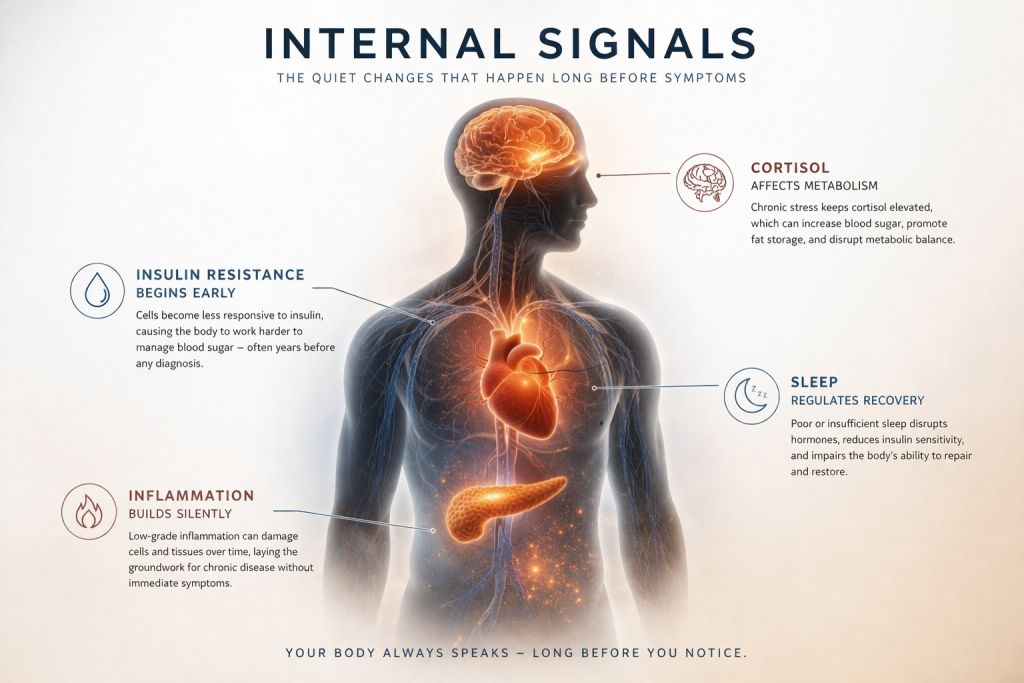
Long before diagnosis, the body shows signals:

  • Insulin resistance begins before blood sugar rises
  • Chronic stress elevates cortisol, impacting metabolism and heart health
  • Poor sleep disrupts hormone balance, recovery, and appetite regulation
  • Inflammation builds quietly, increasing long-term risk

These changes are not theoretical.

They are:

  • measurable
  • trackable
  • and most importantly, modifiable

What gets measured early can be managed early.

The Real Problem Isn’t Disease. It’s Delay

Nothing feels urgent.

  • No pain
  • No disruption
  • No immediate consequence

So nothing changes.

And that’s where the real damage happens.

The problem isn’t awareness.
It’s delay.

Where the Real Opportunity Lies

A large part of the population today sits in a grey zone:

  • Not sick
  • Not fully healthy

Functioning but fragile.

This is where outcomes are still flexible.

Because at this stage:

  • risks can be reversed
  • habits can be corrected
  • trajectories can change

But only if action is taken early.

What It Means to “Stand With Science”

It doesn’t mean doing more.

It means doing things earlier and doing them consistently.

  • Acting on signals, not symptoms
  • Using data instead of assumptions
  • Focusing on patterns, not quick fixes

Because most long-term health outcomes are shaped before they are diagnosed.

See the Data Behind This Shift

The India Fit Report 2026 brings together large-scale behavioural insights to show how everyday habits are shaping long-term health outcomes.

Download the full report here. 

We are not losing years at the end of life.

We are losing them every day, in ways that feel normal, until they aren’t.

This World Health Day:

Don’t wait for symptoms.
Start acting earlier.

Because the goal isn’t just to live longer.

It’s to stop losing the years that matter.

#BeTheForce

Disclaimer: The information provided in this article is for general awareness and educational purposes only. It should not be considered medical advice. Individual health needs and responses may vary. Readers are advised to consult a qualified healthcare professional before making any health-related decisions or changes to treatment, diet, or lifestyle.

Frequently Asked Questions (FAQs)

  1. What is the difference between lifespan and healthspan?
    Lifespan refers to how long you live, while healthspan refers to how many of those years are lived in good health.
  2. What causes loss of healthy years?
    Poor sleep, chronic stress, inactivity, and metabolic changes contribute to long-term health decline before symptoms appear.
  3. Can lifestyle diseases be prevented early?
    Yes. Many conditions like diabetes and heart disease develop gradually and can be delayed or prevented with early intervention.

March 21, 2026 By GOQii Leave a Comment

The Future of Longevity in India: Why Healthspan is the New Lifespan

For decades, the ultimate goal of modern medicine was simple: help people live longer. And by most metrics, we have succeeded. Thanks to advancements in medical science and technology, the average life expectancy in India has surged over the past few decades. But as we celebrate these extra years on our calendars, a new, more urgent question has emerged: Are we actually living better, or are we just taking longer to die?

This question is actively reshaping the landscape of Longevity in India. The conversation is no longer just about adding years to our lives; it is about adding life to our years. Welcome to the era where Healthspan is the new Lifespan.

The Lifespan Paradox in India

Lifespan refers to the total number of years a person is alive. Healthspan, on the other hand, refers to the period of life spent in good health, free from chronic diseases and debilitating age-related conditions.

Currently, India is facing a “Lifespan Paradox.” While we are living longer, a significant portion of our later years is often spent battling lifestyle conditions like Type 2 diabetes, cardiovascular diseases, and declining mobility. If a person lives to be 85 but spends the last 15 years managing severe chronic illnesses, their lifespan is long, but their healthspan is critically compromised.

Why Healthspan is the New Focus

The future of healthcare is shifting from reactive (treating you when you get sick) to preventive (optimizing your health so you don’t get sick in the first place). Here is why focusing on healthspan is the ultimate longevity strategy:

  • Quality over Quantity: A high healthspan means you retain your independence, cognitive function, and physical mobility well into your 70s, 80s, and beyond. It means playing with your grandchildren, traveling, and living actively, rather than being confined to hospital visits.
  • Economic Impact: Chronic disease management takes a massive financial toll on families. Maximizing healthspan reduces long-term medical costs and reliance on the healthcare system.
  • Mental and Emotional Wellbeing: Physical decline takes a heavy toll on mental health. Maintaining vitality protects against age-related depression and cognitive decline.

The Future of Longevity in India: Proactive, Not Reactive

The longevity landscape in India is undergoing a massive transformation, driven by technology and a growing awareness of preventive wellness:

  • Wearable Technology & Data: Devices like GOQii smart trackers are putting the power of continuous monitoring into the hands of the consumer. Tracking your sleep architecture, resting heart rate, and daily movement is the first step in extending your healthspan.
  • Personalised Nutrition: The one-size-fits-all diet is dead. The future is about understanding how your unique biology responds to food, focusing on blood sugar management, and preventing metabolic syndrome.
  • Focus on Muscle Mass: Sarcopenia (the age-related loss of muscle mass) is a silent healthspan killer. The fitness narrative in India is successfully shifting from just “losing weight” to building lean muscle and improving bone density through strength training.

4 Ways to Maximize Your Healthspan Today

You do not need to wait for futuristic anti-aging pills to start increasing your healthspan. The foundation is built on daily habits:

  1. Prioritize Metabolic Health: Limit refined sugars and processed foods. A stable blood sugar level is one of the strongest predictors of a long, disease-free life.
  2. Move for Mobility, Not Just Calorie Burn: Incorporate strength training to protect your joints and maintain muscle mass, alongside daily steps for cardiovascular health.
  3. Protect Your Sleep: Deep sleep is when your brain clears out toxins and your cells repair themselves. Chronic sleep deprivation directly accelerates biological aging.
  4. Manage Chronic Stress: Prolonged cortisol exposure creates systemic inflammation in the body, which is the root cause of almost all age-related diseases. Daily meditation or mindfulness is a non-negotiable longevity tool.

Frequently Asked Questions (FAQs)

What is the difference between lifespan and healthspan?
Lifespan is the total number of years you live, regardless of your health condition. Healthspan is the number of years you live in optimal health, free from chronic disease and physical decline.

Can you increase your healthspan at any age?
Yes. Whether you are 30 or 60, adopting preventive lifestyle habits such as strength training, a nutrient-dense diet, and stress managementcan immediately begin to improve your metabolic health and increase your functional years.

How is longevity tracking changing in India?
With the rise of preventive healthcare ecosystems and smart wearables, Indians can now track their biological age, heart health, and sleep quality in real-time, allowing for early interventions long before chronic diseases develop.

Are you ready to optimize your healthspan and take control of your future? For personalized guidance on nutrition, fitness, and healthy aging, consult a certified expert by subscribing to GOQii’s Personalised Health Coaching here.

#BeTheForce

Disclaimer: The information provided in this blog is for general awareness and educational purposes only. It is not intended to replace professional medical advice, diagnosis, or treatment. Always consult a qualified healthcare provider for personalised medical guidance or concerns related to your health. Images shown are for representation purposes only and may not depict the exact recommendations or outcomes.

January 28, 2026 By GOQii Leave a Comment

The Hidden Longevity Divide in India: How Urban Health Expectations Are Declining

The life expectancy in India has steadily increased over the years. We live longer lives compared to our past generations, and that is something to be proud of. However, a hidden reality lies beneath these figures.



The years that remain free from illness known as Healthy Life Expectancy haven’t increased at the same rate as our lifespan.

World Health Organisation (WHO) data from 2021 indicates that our healthy life expectancy at birth was approximately 58 years, a slight increase from 54 years in 2000, despite our overall life expectancy rising much faster.

The implication is clear: Urban Indians are living an increasingly larger portion of their lives afflicted by diseases. We aren’t just adding years to life; we are adding years of life with conditions like diabetes, hypertension, and cardiac issues.

To understand the forces creating this hidden divide and how to close it, let’s look at the “Four Horsemen” of urban health.

  1. Pollution: The Invisible Ager

The air pollution problem in India is vast. According to the landmark Global Burden of Disease (GBD) Study, an estimated 1.67 million deaths in India were associated with air pollution.

The effects of breathing toxic air in cities like Delhi, Mumbai, and Kolkata are not restricted to the lungs. It leads to systemic inflammation, accelerating ageing from within. It increases the risk of:

  • Heart attacks and strokes
  • Insulin resistance
  • Metabolic disturbances

Toxic air is an everyday stress factor that your body fights 24/7.

  1. The Urban Plate: Stuffed with Calories, Starved of Nutrients

The food environment in our cities has transformed. Traditional, home-cooked meals are being replaced by ultra-processed foods, sugary drinks, and industrial bakery products.

These foods interfere with your metabolism long before you see changes on the weighing scale. They cause spikes in insulin and inflammation—major drivers of Metabolic Syndrome.

In select cities, over 30% of the adult population faces metabolic syndrome (a combination of obesity, hypertension, and high cholesterol). This isn’t just a statistic; it is a warning that the disease burden looms large.

  1. The “Sitting” Epidemic

Physical inactivity is a public health crisis. Worldwide, almost 31% of adults do not fulfil the lowest standards of physical activity. In India, the urban corporate culture of long commutes and desk jobs exacerbates this.

Inactivity accelerates:

  • Glucose metabolism deterioration
  • Muscle wasting
  • Obesity

A 30-minute workout is great, but it cannot fully reverse the consequences of sitting in a chair for 10 hours. We need to move throughout the day, not just at the gym.

  1. The Reactive Trap: Late Diagnosis

The most devious aspect of this health shift is its timing. Issues like fatty liver or insulin resistance can lie latent for years before symptoms appear.

Most urban Indians visit a doctor only after symptoms develop. This “reactive approach” means we miss the golden window for early intervention and reversal.

Flipping the Script: How Digital Health Can Help

Here is where the picture stops being dark. Digital health isn’t just a tech trend; it is the tool we need to close the longevity gap.

  • Wearables & AI: Continuous Glucose Monitors (CGM) and fitness trackers make invisible patterns visible. You can see exactly how that samosa or that stressful meeting affects your body in real-time.
  • Upstream Care: We need to move from episodic care (hospital visits) to daily awareness. Postponing the progression of diabetes by even a few years can drastically improve your quality of life.

Conclusion: From “Living Longer” to “Living Well”

There is a strong urge to celebrate increased life expectancy, but a lifespan without vitality is not a success. A nation that lives longer but stays sick for longer incurs a heavy cost—both financial and physical.

Closing this gap demands broad changes: cleaner cities, better food choices, and intelligent workplaces. But it also requires you.

India’s hidden longevity divide is not inevitable. It is the consequence of choices we can change. The goal is to ensure your Healthspan (years of health) increases at the same rate as your Lifespan.

That is the point when “to live longer” will finally mean “to live well.”

Ready to close the gap and take control of your healthspan? Reach out to our certified experts by subscribing to GOQii’s Personalised Health Coaching here.

#BeTheForce

Disclaimer: The information provided in this blog is for general awareness and educational purposes only. It is not intended to replace professional medical advice, diagnosis, or treatment. Always consult a qualified healthcare provider for personalised medical guidance or concerns related to your health.

  • 1
  • 2
  • Next Page »

Search

Recent Posts

  • Revenge Bedtime Procrastination: Why You Stay Up Late When You’re Exhausted
  • The GOQii India Fit Report 2026: Unmasking the Gender Health Divide
  • International Dance Day: Why Dancing is the Ultimate Workout for Your Body and Mind
  • Summer Health Hazards You Need To Be Aware Of (And How to Prevent Them)
  • Sitting Too Much? Here’s How It’s Shortening Your Life

Stay Updated

Archives

  • May 2026 (1)
  • April 2026 (24)
  • March 2026 (18)
  • February 2026 (14)
  • January 2026 (14)
  • December 2025 (19)
  • November 2025 (15)
  • October 2025 (20)
  • September 2025 (6)
  • August 2025 (6)
  • July 2025 (12)
  • June 2025 (18)
  • May 2025 (16)
  • April 2025 (22)
  • March 2025 (28)
  • February 2025 (21)
  • January 2025 (25)
  • December 2024 (22)
  • November 2024 (23)
  • October 2024 (21)
  • September 2024 (23)
  • August 2024 (30)
  • July 2024 (21)
  • June 2024 (25)
  • May 2024 (28)
  • April 2024 (27)
  • March 2024 (27)
  • February 2024 (24)
  • January 2024 (21)
  • December 2023 (14)
  • November 2023 (10)
  • October 2023 (19)
  • September 2023 (22)
  • August 2023 (18)
  • July 2023 (22)
  • June 2023 (23)
  • May 2023 (24)
  • April 2023 (19)
  • March 2023 (23)
  • February 2023 (19)
  • January 2023 (15)
  • December 2022 (11)
  • November 2022 (15)
  • October 2022 (15)
  • September 2022 (12)
  • August 2022 (10)
  • July 2022 (17)
  • June 2022 (11)
  • May 2022 (10)
  • April 2022 (6)
  • March 2022 (6)
  • February 2022 (13)
  • January 2022 (11)
  • December 2021 (7)
  • November 2021 (3)
  • October 2021 (6)
  • September 2021 (3)
  • August 2021 (8)
  • July 2021 (7)
  • June 2021 (15)
  • May 2021 (16)
  • April 2021 (10)
  • March 2021 (7)
  • February 2021 (4)
  • January 2021 (4)
  • December 2020 (3)
  • November 2020 (4)
  • October 2020 (10)
  • September 2020 (3)
  • August 2020 (3)
  • July 2020 (2)
  • June 2020 (4)
  • May 2020 (10)
  • April 2020 (12)
  • March 2020 (10)
  • February 2020 (4)
  • January 2020 (4)
  • December 2019 (3)
  • November 2019 (7)
  • October 2019 (5)
  • September 2019 (4)
  • August 2019 (9)
  • July 2019 (9)
  • June 2019 (11)
  • May 2019 (4)
  • April 2019 (8)
  • March 2019 (8)
  • February 2019 (9)
  • January 2019 (8)
  • December 2018 (9)
  • November 2018 (3)
  • October 2018 (3)
  • September 2018 (5)
  • August 2018 (10)
  • July 2018 (6)
  • June 2018 (13)
  • May 2018 (8)
  • April 2018 (18)
  • March 2018 (9)
  • February 2018 (8)
  • January 2018 (15)
  • December 2017 (12)
  • November 2017 (19)
  • October 2017 (13)
  • September 2017 (15)
  • August 2017 (4)
  • July 2017 (8)
  • June 2017 (7)
  • May 2017 (6)
  • April 2017 (8)
  • March 2017 (6)
  • February 2017 (7)
  • January 2017 (9)
  • December 2016 (10)
  • November 2016 (7)
  • October 2016 (7)
  • September 2016 (7)
  • August 2016 (11)
  • July 2016 (9)
  • June 2016 (9)
  • May 2016 (12)
  • April 2016 (17)
  • March 2016 (17)
  • February 2016 (8)
  • January 2016 (6)
  • December 2015 (2)
  • November 2015 (9)
  • October 2015 (7)
  • September 2015 (9)
  • August 2015 (11)
  • July 2015 (9)
  • June 2015 (11)
  • May 2015 (9)
  • April 2015 (13)
  • March 2015 (8)
  • February 2015 (5)
  • January 2015 (12)
  • December 2014 (14)
  • November 2014 (11)
  • October 2014 (6)
  • September 2014 (13)
  • August 2014 (12)
  • July 2014 (6)
  • June 2014 (2)
  • May 2014 (7)
  • April 2014 (4)

From “Laddu Nawin” to Fit and Fierce: How a 25-Year-Old Insurance Advisor Shed 20 Kilos and Gained His Life Back

When 25-year-old Nawin Yadav from Hyderabad walked into his office every morning, he carried more than just his files and policy papers. He had the weight of fatigue, sluggish energy, and an ever-growing belly that was becoming the butt of jokes. “People … [Read More...]

“I’ve Challenged Myself to Live 100 Years” – The Story of Chandubhai Savani’s Second Chance at Life

At 67, most people start slowing down. Not Chandubhai Savani. A resident of Surat, Chandubhai, thought life was on track. “My life was going well till I had my bypass surgery,” he says. That surgery, back in 2021, was a wake-up call.  Medication was routine, but exercise wasn’t. His diet? What he calls ‘normal.’ “I […]

From Shimla’s Slopes to Chandigarh’s Sidewalks: Surinder Kaur Bhalla’s Journey from Chaos to Control

Some journeys start with a plan. Others begin with a stumble literally. Surinder Bhalla, a government professional, born and raised in the scenic hill town of Shimla, had always lived a life of movement. “In Shimla, you walked everywhere,” she reflects. “Walking was never an exercise. It was just life.” But after shifting to Chandigarh, […]

Ananda Mukherjee Health Story

From Terminal Illness To Complete Wellness! Ananda Mukherjee Health Story

As we observe World Cancer Day under the powerful theme ‘United by Unique’ (2025-2027)**, we are reminded that every individual’s journey with cancer is distinct, yet united by shared resilience, hope, and the collective fight against this disease. This theme places people at the centre of care and their stories at the heart of the […]

  • HOME
  • HEALTHY LIVING
  • FITNESS
  • HEALTHY RECIPES
  • USER STORIES
  • KARMA
  • BUY GOQii

Copyright ©2016 GOQii