GOQii

Blog

  • HOME
  • HEALTHY LIVING
  • FITNESS
  • HEALTHY RECIPES
  • USER STORIES
  • KARMA
  • BUY GOQii

Search Results for: stroke

April 28, 2026 By Aruna Bhatia 4 Comments

Summer Health Hazards You Need To Be Aware Of (And How to Prevent Them)

summer health hazardsIndian summers were always hot, but they are increasingly turning lethal. Studies indicate that average temperatures across many districts in India are projected to rise by two degrees Celsius over the next few decades.

With the heat index climbing, our population is exposed to a much higher risk of seasonal illnesses. Surviving the summer is no longer just about staying indoors; it is about actively managing your body’s response to extreme heat.

Here are the 3 most common summer health hazards you need to watch out for, along with practical ways to prevent and manage them.

  1. Dehydration: The Silent Energy Killer

Dehydration occurs when more water and fluids leave the body (through sweat and urine) than enter it. Because the human body is roughly 75% water, even a slight drop in hydration levels can disrupt your entire system.

  • Symptoms to Watch For: Increased thirst, profound fatigue, blurred vision, sudden headaches, dark-colored urine, and muscle cramps.

How can you prevent it?

  • The Hydration Formula: Always make sure you drink enough water. A good rule of thumb is to drink approximately 35ml per kilogram of your body weight daily during these scorching months.
  • Smart Replenishments: Plain water is great, but replacing lost electrolytes is even better. Opt for coconut water, aloe vera juice, amla juice, vegetable juice, buttermilk (chaas), or sugarcane juice.
  • Dilute Your Sugars: If you are drinking fruit juices or commercial electrolyte drinks, dilute them to half-strength with water to moderate your sugar and salt intake.
  • What to Avoid: Limit drinks containing alcohol or high amounts of caffeine (like strong coffee or energy drinks), as these act as diuretics and actually dehydrate the body further.

2. Heat Stroke: A True Medical Emergency

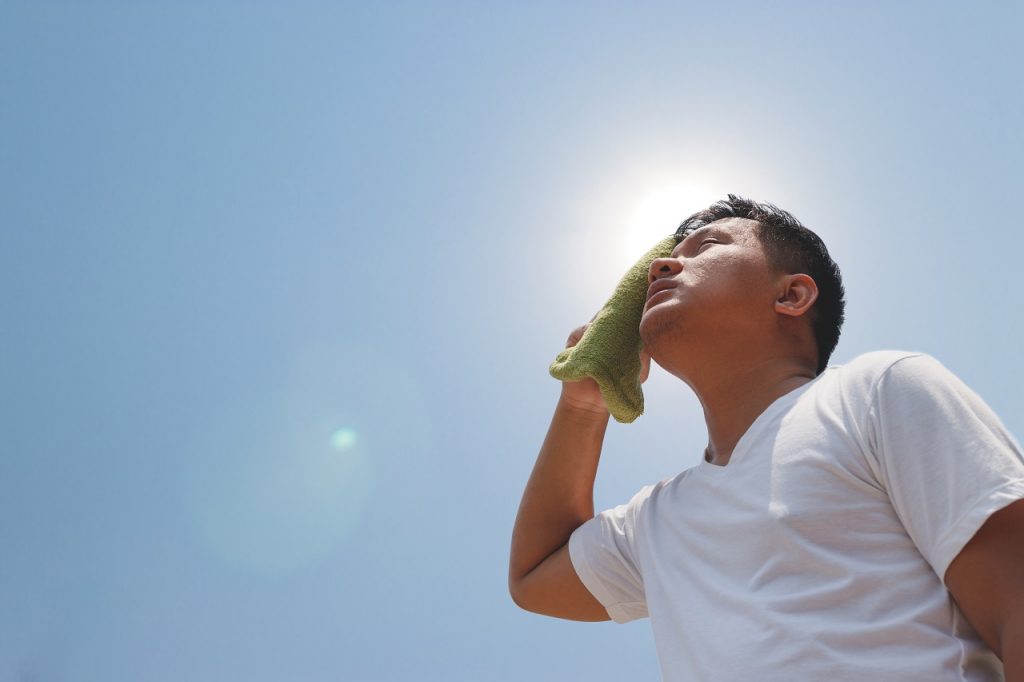
Heat stroke (or sunstroke) occurs from extreme, prolonged exposure to heat and sunlight. Your body loses its ability to regulate its core temperature, which can spike to dangerous levels in a matter of minutes.

  • Symptoms to Watch For: Dizziness, nausea, a throbbing headache, vomiting, flushed/dry skin (lack of sweating), rapid breathing, and fainting.

How can you prevent it?

  • Dress Smart: Choose lightweight, light-colored, loose-fitting, and breathable cotton clothing.
  • Time Your Outings: Stay indoors during peak sunlight hours (typically 12:00 PM to 4:00 PM). Schedule your outdoor activities or workouts for the early morning or late evening.
  • Pre-Hydrate: Take a good amount of fluids and hydrate well before stepping out into the sun, not just after.
  • Natural Coolants: If you feel mildly overheated, settling teas like chamomile, peppermint, or fennel seeds work wonders. Traditional Indian coolers like Aam Panna are exceptional for rapidly cooling the body and restoring lost electrolytes.

3. Food Poisoning: The Heat Breeds Bacteria

Summer heat drastically raises the risk of food-borne diseases. Food poisoning cases peak during these months because bacteria multiply much faster in warm, humid weather.

  • Symptoms to Watch For: Severe stomach cramps, nausea, vomiting, diarrhea, and a low-grade fever.

How can you prevent it?

  • Mind What You Eat Raw: Eat only freshly cut salads and fruits. Do not consume raw food that has been sitting out in the open for hours at a buffet or street vendor.
  • The 2-Hour Rule: Do not leave cooked food outside for long. Try to refrigerate all leftovers as soon as the steam stops rising from them (ideally within two hours of cooking).
  • Consume Quickly: Make sure you eat only well-cooked food and try to consume it as soon as possible once it’s prepared.

Ample rest, rigorous hydration, eating light, and moving your body safely are your best defenses against summer health hazards. Prevention remains the absolute key, as a lack of awareness is the primary reason these easily preventable hazards turn near-fatal.

Takeaway: Don’t wait until you are thirsty to drink water, avoid the midday sun, and refrigerate your food promptly. A little preparation guarantees a safe and healthy summer!

Want us to cover more seasonal hazards? Did we miss out on your favorite summer health tip? Let us know in the comments below!

Get more summer safety tips here or speak directly to a GOQii Coach by subscribing for Personalised Health Coaching here. 

Frequently Asked Questions (FAQs)

  1. How much water should I drink during the Indian summer?
    While 8 glasses a day is a common baseline, a more accurate formula during extreme heat is to drink approximately 35ml of water per kilogram of your body weight. For example, if you weigh 60 kg, you should aim for at least 2.1 liters of hydrating fluids, increasing this amount if you are sweating heavily outdoors.
  2. What is the difference between heat exhaustion and heat stroke?
    Heat exhaustion is the precursor to a heat stroke and involves heavy sweating, weakness, and a rapid pulse. If left untreated, it progresses to a heat stroke, where the body completely stops sweating, the skin becomes hot and dry, and the person may lose consciousness. Heat stroke is a severe medical emergency requiring immediate hospitalization.
  3. Why is food poisoning more common in the summer?
    Bacteria thrive in warm, moist environments. During the summer, the “danger zone” for food (the temperature range where bacteria multiply fastest) is easily reached if food is left un-refrigerated. Food left on a counter can spoil rapidly, making prompt refrigeration essential.

#BeTheForce 

Disclaimer: The content provided in this blog is for educational and informational purposes only and should not be construed as professional medical advice, diagnosis, or treatment. Heat stroke and severe dehydration are medical emergencies. If you or someone else experiences fainting, extreme confusion, or an inability to keep fluids down, seek emergency medical assistance immediately. Always consult with a qualified healthcare provider for personalized medical advice.
April 23, 2026 By GOQii Leave a Comment

The GOQii India Fit Report 2026: Why Living Longer Isn’t Enough Anymore

“India is living longer than ever before. That should be a moment of national pride, and it is. But here’s the uncomfortable truth: living longer is not the same as living well. For too many Indians, the last 10 to 12 years of life are spent fighting preventable disease, relying on medication, or depending on family for the simplest daily tasks. That is not the future any of us want.” – Vishal Gondal, Founder & CEO, GOQii
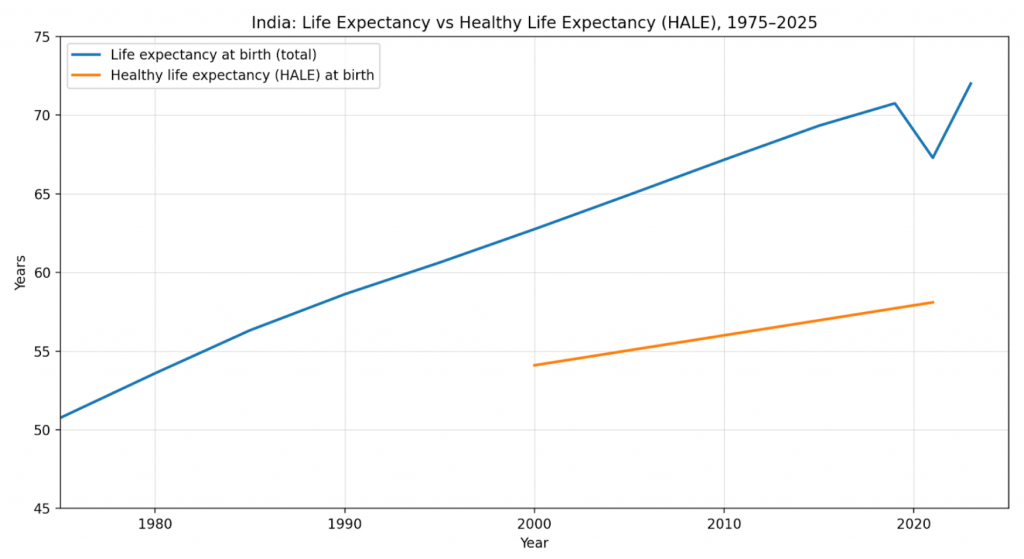
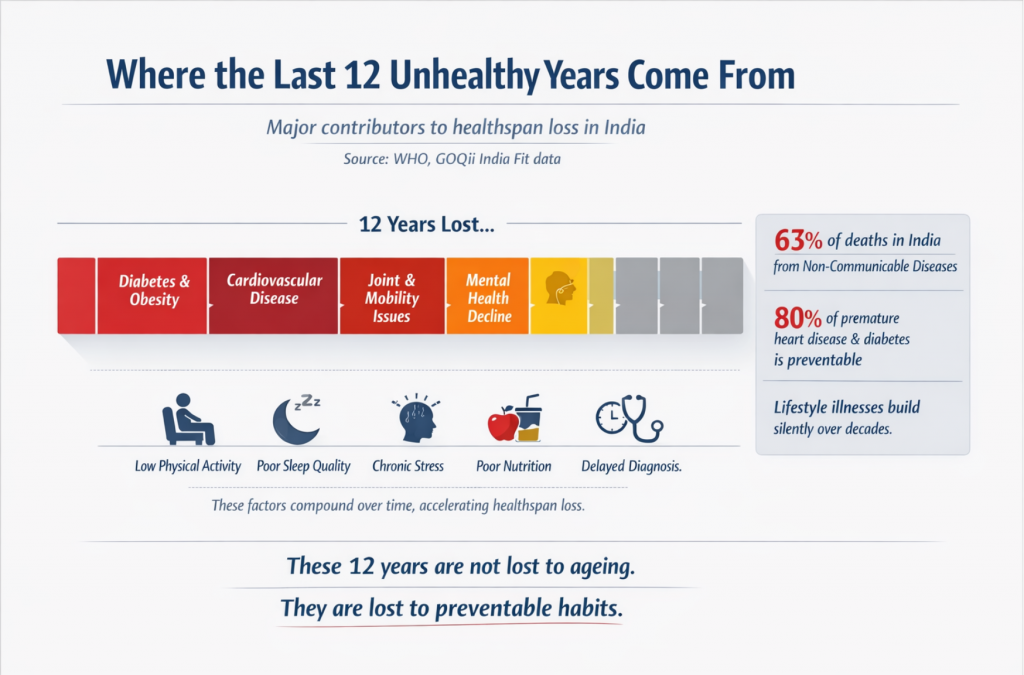
India stands at a pivotal moment in its health journey. In 1975, the average Indian lived to 52. Today, life expectancy has crossed 70, adding nearly two extra decades within a single generation. However, the newly released GOQii India Fit Report 2026 reveals an uncomfortable reality: while lifespan has increased, our “healthspan” the years we live in good physical, mental, and emotional health has not kept pace.

It is time to rethink what healthy ageing actually looks like in modern India.

Quick Takeaways: The Healthspan Gap

  • The 12-Year Deficit: Life expectancy in India is ~70.4 years , but Healthy Life Expectancy (HALE) is only ~59 years. Indians lose almost 12 years of healthy life to chronic illness or disability.
  • The Ageing Population: By 2050, one in five Indians, nearly 300 million people, will be over 60.
  • The True Threat: 63% of deaths in India are from Non-Communicable Diseases (NCDs).
  • The Good News: 80% of premature heart disease and diabetes is entirely preventable.

What is the Healthspan Gap?

Ageing itself is a sign of progress. The real challenge we face is unhealthy ageing. The healthspan gap is the distance between how long we live and how well we live.
This gap does not happen by accident. We reward productivity and punish rest. Stress, poor sleep, sedentary work, and irregular diets have been completely normalised. Healthcare remains treatment-centric rather than prevention-led.

The Life-Stage Map: Healthspan is Not Built at 60

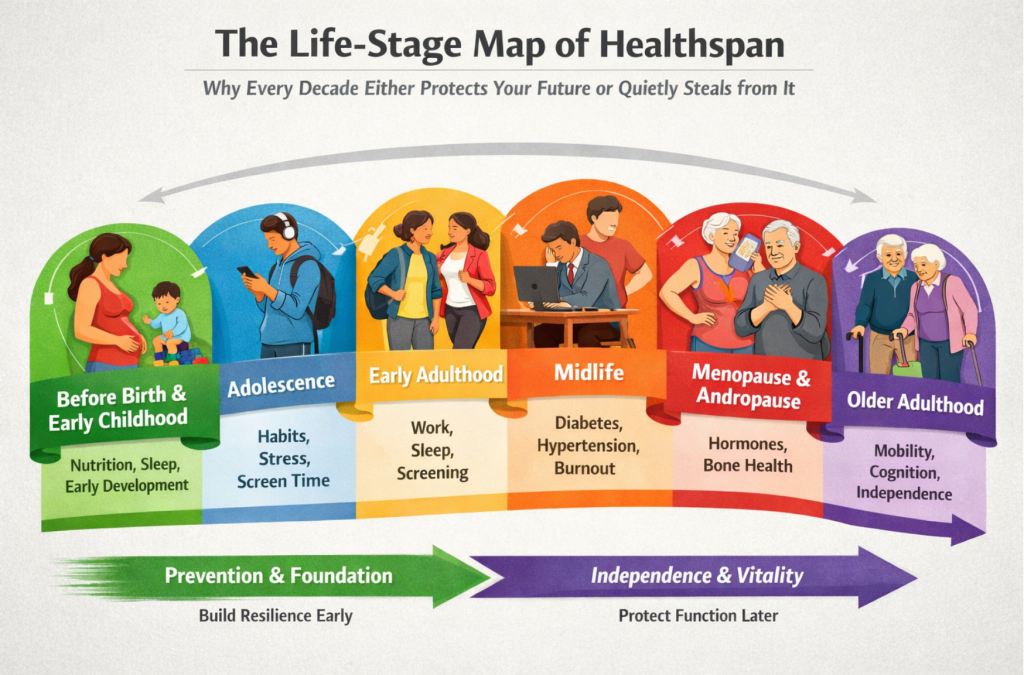
Perhaps the biggest misconception about lifestyle disease is that it is an old-age issue. Healthspan is not built at 60. It is built quietly and cumulatively across decades. Here is how healthspan is won or lost at every stage of life:
  • Adolescence (Where Habits Harden): This is the period when risks like long sedentary time, sleep disruption, poor diets, and emotional stress quietly rise. Health behaviours begin to harden into identity.
  • Early Adulthood (The “I’m Fine” Decade): In our 20s and 30s, weight gain feels manageable and poor sleep feels like a phase. Yet, this is exactly when insulin resistance, rising blood pressure, and inflammation begin to quietly accumulate .
  • Midlife (The Tipping Point): For most Indians, working life is the biggest driver of healthspan loss. Midlife is where silent epidemics like diabetes, hypertension, obesity, and high cholesterol begin to surface.
  • Menopause and Andropause: For women, the menopause transition changes metabolism, muscle mass, bone density, cardiovascular risk, sleep quality, and emotional regulation. Without guidance, it leads to accelerated weight gain and bone loss; with guidance, it can become a powerful health stabiliser.
  • Older Adulthood (Independence is the Goal): Old age does not automatically lead to decline. The most meaningful measures of healthy ageing here are functional: Can you walk independently? Can you climb stairs without fear?

The Rise of “Silent” Epidemics and Multi-Morbidity

The illnesses shortening our healthspan rarely announce themselves with sudden panic. High blood pressure rarely causes discomfort until it damages the heart, kidneys, or brain. High cholesterol builds arterial plaque silently over years.

The true threat is how these conditions compound over time, a process known as multi-morbidity. It follows a predictable chain: Sedentary Lifestyle → Weight Gain, Obesity → Diabetes Risk → Heart Disease. By the time multiple conditions take hold, healthspan shrinks rapidly.

The Hidden Costs of Ignoring Healthspan

When healthspan is neglected, the costs are borne not just by individuals but by families, workplaces, and the national economy:

  • The Caregiving Burden: Chronic illness in older age often shifts care responsibility to family members, most commonly women. This unpaid caregiving leads to lost income and emotional burnout.
  • Workforce Exits: Early onset of lifestyle diseases forces many adults to exit the workforce years before retirement age.
  • Healthcare Strain: Managing advanced diabetes, heart disease, kidney failure, and stroke consumes far more resources than preventing them.

Reclaim Your Healthspan

The GOQii India Fit Report 2026 calls for a decisive shift: from lifespan as a metric to healthspan as a goal.

Prevention does not require extreme discipline or perfect routines. It requires consistency. Ten minutes of daily movement is more powerful than an hour once a week, and stable sleep routines outperform weekend recovery. Healthspan is shaped by what you do on your most average days.

Are you ready to see where you stand and how you can protect your future?

Click Here to Download the GOQii India Fit Report 2026 to explore the complete data, uncover national trends on stress, sleep, and nutrition, and learn how to take charge of your health today.

Frequently Asked Questions (FAQs)

  1. What is the difference between lifespan and healthspan?

Lifespan refers to the total number of years a person lives. Healthspan refers to the number of those years lived in good physical, mental, and emotional health, free from chronic disease and disability. While India’s life expectancy is ~70.4 years, our healthy life expectancy is only ~59 years.

  1. What are the biggest threats to healthspan in India?

The biggest threats are “silent epidemics” or non-communicable diseases (NCDs) like diabetes, hypertension, obesity, and high cholesterol. These are heavily driven by lifestyle factors such as chronic stress, sedentary behavior, and poor sleep.

  1. When should I start worrying about healthy ageing?

Healthy ageing begins long before retirement. Habits formed in adolescence and early adulthood (like sleep routines and daily movement) dictate your metabolic risk in midlife. The earlier you focus on preventive health, the longer your healthspan will be.

#BeTheForce

Disclaimer: The content provided in this blog, including all statistics, insights, and recommendations, is based on the findings of the GOQii India Fit Report 2026 . This information is intended for educational and general informational purposes only and should not be construed as professional medical advice, diagnosis, or treatment. Every individual’s health journey is unique. Always consult with a qualified healthcare provider or a certified medical professional before making any significant changes to your diet, exercise routine, sleep schedule, or lifestyle, especially if you have pre-existing medical conditions.

April 17, 2026 By GOQii Leave a Comment

Social Health and Longevity: Why Relationships Matter as Much as Diet

When we think about living longer, the focus usually falls on diet, exercise and medical tests. However, one of the most important predictors of long-term health is often overlooked, our relationships. Over the past two decades, research has consistently shown that loneliness and social isolation are linked to higher risks of heart disease, stroke, depression and premature death. In some cases, the impact of chronic loneliness has been found to be comparable to smoking.

In simple terms, connection is not just a social need. It is a health requirement.

Loneliness and the Heart

Humans are biologically wired for connection. When that connection is missing, the body experiences it as stress. Over time, this leads to measurable physiological changes such as:

  • Elevated cortisol (stress hormone) levels
  • Increased blood pressure
  • Higher levels of systemic inflammation

These changes significantly increase the risk of cardiovascular disease.

Loneliness also affects daily behaviour. People who feel disconnected are more likely to:

  • Sleep poorly
  • Exercise less
  • Eat irregularly

This means the impact of loneliness is not just emotional it directly affects physical health. On the other hand, strong relationships act as a buffer. They help regulate stress, improve recovery, and support overall resilience.

Community as Protection

In regions where people tend to live longer, one common factor stands out strong social networks. Regular interaction through shared meals, gatherings and routines creates a sense of belonging and stability.

Being part of a community encourages consistency in daily habits. For example:

  • You are more likely to go for a walk when someone is waiting for you.
  • You are more likely to stick to routines when they are shared.
  • You are more likely to stay motivated when others are involved.

Social support also improves resilience, helping individuals cope better with illness, stress and life transitions.

The Power of Group Movement

Physical activity becomes easier to maintain when it is social. Activities such as:

  • Walking groups
  • Yoga classes
  • Cycling communities
  • Outdoor treks

…offer more than just exercise. They create shared experiences, making routines more enjoyable and sustainable.

Studies show that people who exercise in groups are more likely to stay consistent compared to those who work out alone.

Even digital communities can help through:

  • Regular check-ins
  • Shared challenges
  • Coaching support

Shared Habits Build Consistency

Health behaviours are easier to maintain when they are reinforced socially. Some common examples include:

  • Family meals improving dietary consistency
  • Friends checking in on activity levels
  • Group challenges increasing accountability

Shared routines reduce decision fatigue and make healthy habits easier to sustain over time.

Building Your Health Circle

You do not need a large social network. A few meaningful connections are enough. Simple ways to strengthen your social health include:

  • Scheduling regular time with friends
  • Joining a fitness or walking group
  • Participating in community events
  • Volunteering for a cause
  • Staying connected with family
  • Engaging in group-based health challenges

Consistency in connection matters more than frequency.

The Bigger Picture

Diet, exercise and sleep are all essential for long-term health. However, relationships influence how consistently we follow through on these behaviours.

Social health helps:

  • Reduce stress
  • Improve emotional balance
  • Strengthen adherence to healthy routines

It supports both mental and physical wellbeing.

Longevity is not built in isolation. It is shaped not just by what you do, but also by who you share your life with.

If you want to invest in long-term health, do not focus only on your habits. Pay attention to your relationships as well. Because sometimes, the strongest predictor of health is not what’s on your plate but who is sitting across from you.

Frequently Asked Questions (FAQs)

  1. How does loneliness actually affect physical health?
    When humans feel chronically isolated, the body registers it as a state of threat. This triggers a constant release of stress hormones like cortisol, which leads to higher blood pressure, increased inflammation, and a significantly higher risk of cardiovascular diseases over time.
  2. Is a digital or online community as effective as an in-person one?
    Yes! While in-person connection is wonderful, active digital communities where members share goals, participate in challenges, and check in on each other’s progress provide high levels of accountability, emotional support, and motivation that effectively boost social health.
  3. Do I need a large group of friends to be socially healthy?
    Not at all. Social health is about the quality of your connections, not the quantity. Having just two or three deep, meaningful relationships where you feel truly seen and supported is enough to provide the health-boosting benefits of social connection.

To better manage your lifestyle with the right guidance, community support, and daily motivation from certified experts, subscribe to GOQii’s Personalised Health Coaching here.

#BeTheForce 

Disclaimer: The information provided in this article is for educational and general informational purposes only. It is not intended to serve as professional medical or psychological advice. Always consult with your physician, mental health professional, or a certified GOQii health coach before making any significant changes to your lifestyle or health routine. If you are experiencing severe isolation, chronic stress, or depression, please reach out to a qualified healthcare provider.

March 11, 2026 By Luke Coutinho 9 Comments

Caution: Smoking is Injurious to health!!

No Smoking

With No Smoking Day upon us, there is no better time to evaluate the true impact of this habit. We are all incredibly familiar with this warning. Research consistently indicates that smoking is the number one cause of preventable death globally. By now, most of us are acutely aware of the severe toll it takes on the body.

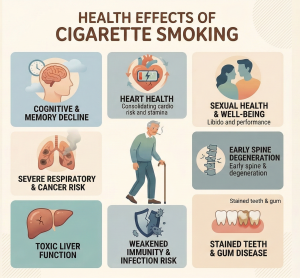
Chronic smoking is directly linked to:

  • Cardiovascular disease
  • Impotence, lack of sexual desire, and inability to perform
  • Various forms of cancer
  • A weakened immune system
  • Severely stained teeth
  • Early degeneration of bones (especially the spine)
  • Reduced lung function and capacity
  • Liver toxicity
  • Reduced stamina and endurance
  • Premature aging

Besides the above, there are several benefits of kicking the butt, apart from of course saving loads of money and time.

Interesting fact: 75% to 85% of smokers want to quit, but simply don’t know how, or find the withdrawal process too daunting.

One of the main reasons it is so hard to stop is because the dangers of continuing, and the benefits of quitting, seem very far away. However, your body begins to heal almost instantly.

The Healing Timeline: What Happens Right Now?

Here is a timeline detailing the immediate and long-term effects of quitting smoking, showing exactly how your body recovers minute by minute, and year by year.

  • In 20 minutes: Your blood pressure and heart rate will drop back down to normal levels.
  • In 8 hours: The carbon monoxide (a toxic gas) levels in your bloodstream will drop by half. Oxygen levels will return to normal, and your metabolism will begin to stabilize.
  • In 48 hours: Your chances of having a heart attack will have already decreased. All nicotine will have left your body. You will also notice your sense of taste and smell returning to normal levels.
  • In 72 hours: Your bronchial tubes will relax. You will notice an increase in your energy levels and lung volume.
  • In 2 weeks: Your blood circulation will increase, and it will continue to improve over the next 10 weeks.
  • In 3 to 9 months: Coughs, wheezing, and breathing problems will dissipate as your lung capacity improves by an impressive 10%.
  • In 1 year: Your risk of suffering a heart attack will have dropped by half compared to a smoker.
  • In 5 years: Your risk of having a stroke returns to that of a non-smoker.
  • In 10 years: Your risk of developing lung cancer will have dropped to that of a non-smoker.
  • In 15 years: Your overall risk of a heart attack will have entirely returned to that of someone who has never smoked.

You have far more immediate benefits to look forward to than you might realize. The healing starts the moment you put out your last cigarette. Make this No Smoking Day the day you finally kick the habit. Quit now!

Nutritional Support for Smokers

If you are currently smoking or in the process of quitting, nutritional support is vital. Smokers should ensure they take Vitamin C regularly, as smoking heavily depletes the body’s natural levels of this crucial antioxidant. Additionally, regular consumption of Curcumin (turmeric extract) is known to help clear nicotine patches from the lungs and is widely studied for its role in possible cancer prevention.

#BeTheForce

Disclaimer: GOQii is committed to providing accurate, up-to-date, and comprehensive health information. This article is intended for informational purposes only and should not be used as a substitute for professional medical advice, diagnosis, or treatment. Always consult a qualified healthcare professional before starting or changing any medication or supplement. Individual responses to treatment may vary.

  • « Previous Page
  • 1
  • 2
  • 3
  • 4
  • …
  • 27
  • Next Page »

Search

Recent Posts

  • The GOQii India Fit Report 2026: Unmasking the Gender Health Divide
  • International Dance Day: Why Dancing is the Ultimate Workout for Your Body and Mind
  • Summer Health Hazards You Need To Be Aware Of (And How to Prevent Them)
  • Sitting Too Much? Here’s How It’s Shortening Your Life
  • Everything You Need to Know About Malaria

Stay Updated

Archives

  • April 2026 (24)
  • March 2026 (18)
  • February 2026 (14)
  • January 2026 (14)
  • December 2025 (19)
  • November 2025 (15)
  • October 2025 (20)
  • September 2025 (6)
  • August 2025 (6)
  • July 2025 (12)
  • June 2025 (18)
  • May 2025 (16)
  • April 2025 (22)
  • March 2025 (28)
  • February 2025 (21)
  • January 2025 (25)
  • December 2024 (22)
  • November 2024 (23)
  • October 2024 (21)
  • September 2024 (23)
  • August 2024 (30)
  • July 2024 (21)
  • June 2024 (25)
  • May 2024 (28)
  • April 2024 (27)
  • March 2024 (27)
  • February 2024 (24)
  • January 2024 (21)
  • December 2023 (14)
  • November 2023 (10)
  • October 2023 (19)
  • September 2023 (22)
  • August 2023 (18)
  • July 2023 (22)
  • June 2023 (23)
  • May 2023 (24)
  • April 2023 (19)
  • March 2023 (23)
  • February 2023 (19)
  • January 2023 (15)
  • December 2022 (11)
  • November 2022 (15)
  • October 2022 (15)
  • September 2022 (12)
  • August 2022 (10)
  • July 2022 (17)
  • June 2022 (11)
  • May 2022 (10)
  • April 2022 (6)
  • March 2022 (6)
  • February 2022 (13)
  • January 2022 (11)
  • December 2021 (7)
  • November 2021 (3)
  • October 2021 (6)
  • September 2021 (3)
  • August 2021 (8)
  • July 2021 (7)
  • June 2021 (15)
  • May 2021 (16)
  • April 2021 (10)
  • March 2021 (7)
  • February 2021 (4)
  • January 2021 (4)
  • December 2020 (3)
  • November 2020 (4)
  • October 2020 (10)
  • September 2020 (3)
  • August 2020 (3)
  • July 2020 (2)
  • June 2020 (4)
  • May 2020 (10)
  • April 2020 (12)
  • March 2020 (10)
  • February 2020 (4)
  • January 2020 (4)
  • December 2019 (3)
  • November 2019 (7)
  • October 2019 (5)
  • September 2019 (4)
  • August 2019 (9)
  • July 2019 (9)
  • June 2019 (11)
  • May 2019 (4)
  • April 2019 (8)
  • March 2019 (8)
  • February 2019 (9)
  • January 2019 (8)
  • December 2018 (9)
  • November 2018 (3)
  • October 2018 (3)
  • September 2018 (5)
  • August 2018 (10)
  • July 2018 (6)
  • June 2018 (13)
  • May 2018 (8)
  • April 2018 (18)
  • March 2018 (9)
  • February 2018 (8)
  • January 2018 (15)
  • December 2017 (12)
  • November 2017 (19)
  • October 2017 (13)
  • September 2017 (15)
  • August 2017 (4)
  • July 2017 (8)
  • June 2017 (7)
  • May 2017 (6)
  • April 2017 (8)
  • March 2017 (6)
  • February 2017 (7)
  • January 2017 (9)
  • December 2016 (10)
  • November 2016 (7)
  • October 2016 (7)
  • September 2016 (7)
  • August 2016 (11)
  • July 2016 (9)
  • June 2016 (9)
  • May 2016 (12)
  • April 2016 (17)
  • March 2016 (17)
  • February 2016 (8)
  • January 2016 (6)
  • December 2015 (2)
  • November 2015 (9)
  • October 2015 (7)
  • September 2015 (9)
  • August 2015 (11)
  • July 2015 (9)
  • June 2015 (11)
  • May 2015 (9)
  • April 2015 (13)
  • March 2015 (8)
  • February 2015 (5)
  • January 2015 (12)
  • December 2014 (14)
  • November 2014 (11)
  • October 2014 (6)
  • September 2014 (13)
  • August 2014 (12)
  • July 2014 (6)
  • June 2014 (2)
  • May 2014 (7)
  • April 2014 (4)

From “Laddu Nawin” to Fit and Fierce: How a 25-Year-Old Insurance Advisor Shed 20 Kilos and Gained His Life Back

When 25-year-old Nawin Yadav from Hyderabad walked into his office every morning, he carried more than just his files and policy papers. He had the weight of fatigue, sluggish energy, and an ever-growing belly that was becoming the butt of jokes. “People … [Read More...]

“I’ve Challenged Myself to Live 100 Years” – The Story of Chandubhai Savani’s Second Chance at Life

At 67, most people start slowing down. Not Chandubhai Savani. A resident of Surat, Chandubhai, thought life was on track. “My life was going well till I had my bypass surgery,” he says. That surgery, back in 2021, was a wake-up call.  Medication was routine, but exercise wasn’t. His diet? What he calls ‘normal.’ “I […]

From Shimla’s Slopes to Chandigarh’s Sidewalks: Surinder Kaur Bhalla’s Journey from Chaos to Control

Some journeys start with a plan. Others begin with a stumble literally. Surinder Bhalla, a government professional, born and raised in the scenic hill town of Shimla, had always lived a life of movement. “In Shimla, you walked everywhere,” she reflects. “Walking was never an exercise. It was just life.” But after shifting to Chandigarh, […]

Ananda Mukherjee Health Story

From Terminal Illness To Complete Wellness! Ananda Mukherjee Health Story

As we observe World Cancer Day under the powerful theme ‘United by Unique’ (2025-2027)**, we are reminded that every individual’s journey with cancer is distinct, yet united by shared resilience, hope, and the collective fight against this disease. This theme places people at the centre of care and their stories at the heart of the […]

  • HOME
  • HEALTHY LIVING
  • FITNESS
  • HEALTHY RECIPES
  • USER STORIES
  • KARMA
  • BUY GOQii

Copyright ©2016 GOQii


