GOQii

Blog

  • HOME
  • HEALTHY LIVING
  • FITNESS
  • HEALTHY RECIPES
  • USER STORIES
  • KARMA
  • BUY GOQii

Search Results for: mindful eating

April 12, 2025 By GOQii Leave a Comment

The Importance of Keeping a Food Diary for Diabetes Control

Managing diabetes goes beyond just watching your sugar intake—it requires a deeper understanding of how different foods affect your blood sugar levels. One of the most effective and simple tools to gain this insight is keeping a food diary.

By consistently tracking what you eat and drink, you become more aware of your habits, make better dietary choices, and stay committed to a low-carb lifestyle. Whether your goal is to stabilise blood glucose levels or reverse type 2 diabetes, a food diary can be a true game-changer.

Why Keep a Food Diary?

  1. Increases Awareness
    A food diary helps you become more mindful of your eating patterns. When you pause to write down or record your meals, it strengthens the connection between what you eat and how you feel—mentally and physically.
  1. Identifies Hidden Carbs
    Packaged or processed foods often contain hidden sugars or carbs that can spike blood sugar levels. Logging your food intake allows you to spot these culprits, helping you make more informed, low-carb choices.
  1. Tracks Carb Intake
    If you’re following a low-carb diet (60–130g per day), keeping count matters. A food diary ensures you stay within your daily carb targets, making it easier to keep your glucose levels in check.
  1. Reveals Patterns and Triggers
    A food diary can highlight emotional eating, late-night snacking, or certain foods that cause unexpected glucose spikes. By recognising these patterns, you’re better equipped to manage cravings or avoid setbacks.
  1. Measures Progress
    Seeing how your food choices affect your energy, mood, and glucose readings over time can be incredibly motivating. It’s proof that your effort is working—even if the changes are slow and steady.
  1. Boosts Accountability
    Knowing you’ll be logging your meals encourages better choices. Whether you’re tracking meals for yourself or sharing them with a health professional, food diaries bring a sense of ownership to your journey.

How to Maintain a Food Diary

It doesn’t need to be complicated. Choose a method that suits your lifestyle and comfort:

  • ✍️ Handwritten Journal – Use a simple notebook to jot down what you eat, when you eat, and portion sizes. It’s a classic but effective approach.
  • 📲 Nutrigenius on the GOQii App – Snap a photo of your meal and upload it directly. This visual log is quick, intuitive, and allows your coach to give you targeted guidance based on what you’re actually eating.

The key is consistency, not perfection. Whether you prefer pen and paper or digital tracking, stick with what works for you.

Following a low-carb diet is one of the most effective strategies for managing—and in many cases, reversing—type 2 diabetes. But success depends on staying aware and accountable, and that’s where a food diary truly shines.

By tracking your meals, identifying patterns, and monitoring your progress, you gain control over your health in a very real, empowering way. Remember—small steps every day add up to big changes over time.

So grab your journal or open the app. Every meal you track is a step towards a healthier, more balanced you.

#BeTheForce

March 22, 2025 By Trupti Hingad 3 Comments

7 Tips To Help You Drink Water The Right Way

7 tips to help you drink water the right way World Water Day 2025 is a timely reminder of the value water holds in our lives—not just globally, but personally. While this year’s theme focuses on glacier preservation, we often overlook a key question: Are we drinking water in the best possible way for our health?

We all know hydration is important. But how you drink water matters just as much as how much you drink. Water is a vital life force—it fuels digestion, flushes out toxins, supports metabolism, and keeps every cell functioning. Yet, many of us are unaware that drinking water incorrectly can impact our health.

How To Drink Water The Right Way 

Let’s explore 7 essential tips to help you hydrate better, smarter, and more mindfully every day.

  1. Sit Down to Drink Water
    When you stand and drink water you upset the balance of fluids in the body and this may lead to more accumulation of fluids in the joints. When you sit and drink, your muscles and nervous system is relaxed and you absorb it nicely. Also, kidney pace of filtration is good when you sit and drink water
  2. Sip, Don’t Gulp Large Quantities
    Avoid drinking large amounts of water in one go. Gulping too much too quickly can block air intake into your lungs and put undue pressure on your heart and lungs. Instead, sip water slowly throughout the day—this helps your body absorb and utilise it more effectively.
  3. Avoid Ice-Cold Water
    Cold or chilled water may feel refreshing, but it disrupts digestion by cooling the internal fire needed to digest food properly. Cold water also reduces blood flow to various organs and can lead to issues like constipation. Try to drink room temperature or warm water instead—it aids digestion, supports metabolism, and even helps control cholesterol levels.
  4. Listen to Your Body’s Thirst Cues
    Your body is smart—it tells you when it’s low on water. Dark yellow urine, dry lips, dry tongue, and persistent fatigue are signs of dehydration. Clear or pale urine means you’re well-hydrated. Pay attention to these signs and hydrate accordingly.
  5. Start Your Day with Water
    Drinking a glass of water first thing in the morning helps flush out toxins and cleanses your digestive system. It supports smoother bowel movements and kickstarts your metabolism—setting a healthy tone for the rest of the day.
  6. Store Water the Right Way
    Traditionally, water stored in copper or silver vessels is believed to balance the body’s energies by positively charging the water. Copper is known for its antioxidant and antibacterial properties, while silver is believed to have a cooling effect on the digestive system.While copper and silver vessels might not be common everywhere, you can opt for glass or stainless steel bottles as safe and eco-friendly alternatives to plastic. These options are free from harmful chemicals like BPA and help maintain the water’s purity.
  7. Drinking Water Isn’t Just to Quench Thirst
    Water is essential for replenishing lost minerals and salts, especially after sweating or physical activity. It hydrates muscles and joints, supports digestion, maintains fluid balance, and prevents acidity. Make water a daily habit of recovery and rejuvenation, not just a thirst response.

Drinking water the right way is about more than just hitting your daily quota. By being mindful of how and when you drink water—and how you store it—you can improve digestion, boost energy, and support overall well-being.

Let this World Water Day inspire a renewed appreciation for water—not only as a global resource but as a vital part of our personal health.

💧 How do you ensure you stay hydrated daily? Share your tips in the comments below!

#BeTheForce

Disclaimer: The information provided in this blog is for general awareness and educational purposes only. It is not intended to replace professional medical advice, diagnosis, or treatment. Always consult a qualified healthcare provider for personalised medical guidance or concerns related to your health.

March 18, 2025 By GOQii Leave a Comment

Obesity & Its Impact on Your Health: Why It’s More Than Just Weight

Obesity is often seen as just a number on the scales, but in reality, it’s far more than that. It’s a complex health condition that affects every aspect of your well-being, from your heart to your mental health. In a world where fast food is abundant, sedentary lifestyles are the norm, and stress levels are constantly high, obesity has become a growing global concern.
But here’s the good news—it’s preventable and reversible with the right lifestyle changes. Let’s explore how obesity affects your health, what causes it, and, most importantly, how you can take control of your body and well-being.

What is Obesity?

Obesity is defined as having an excess amount of body fat that poses health risks. A common way to measure it is the Body Mass Index (BMI), which calculates weight in relation to height:

BMI Categories:

  • Healthy weight: 18.5 – 24.9
  • Overweight: 25 – 29.9
  • Obese: 30 or above

However, BMI doesn’t tell the full story—where the fat is stored matters too. Visceral fat (fat around the organs) is more harmful than subcutaneous fat (under the skin), increasing the risk of serious diseases.

How Obesity Impacts Your Health

Carrying excess weight isn’t just about appearance—it’s about how your body functions. Here’s how obesity can impact your health:

  1. Increases the Risk of Chronic Diseases

Obesity is linked to some of the most serious health conditions, including:

  • Heart Disease & High Blood Pressure – Excess fat increases strain on the heart, leading to hypertension and an increased risk of heart attacks and strokes.
  • Type 2 Diabetes – Obesity is a key driver of insulin resistance, making blood sugar levels harder to control.
  • Liver Disease (Fatty Liver) – Excess fat can accumulate in the liver, leading to inflammation and scarring (cirrhosis).
  • Certain Cancers – Studies show obesity is linked to an increased risk of cancers, including breast, colon, and liver cancer.
  1. Impacts Mental Health & Well-being

Obesity isn’t just about physical health—it affects mental and emotional well-being too. Many individuals with obesity experience:

  • Low self-esteem & body image concerns
  • Increased risk of anxiety & depression
  • Social stigma & discrimination

The mind-body connection is real, and feeling good about yourself plays a huge role in overall health.

  1. Affects Joint & Bone Health

Excess weight puts extra pressure on your joints, particularly in the knees, hips, and lower back, increasing the risk of:

  • Osteoarthritis (joint wear and tear)
  • Chronic back pain
  • Reduced mobility & flexibility
  1. Disrupts Sleep & Increases Fatigue

Obesity is a leading cause of sleep apnoea, a condition where breathing repeatedly stops and starts during sleep. This can lead to:

  • Poor-quality sleep & daytime fatigue
  • Increased risk of heart disease
  • Difficulty concentrating & lower productivity

Quality sleep is essential for energy levels, brain function, and overall health.

What Causes Obesity?

While diet and lack of exercise play major roles, obesity is often a combination of multiple factors:

  1. Poor Diet Choices – High-calorie, processed, and sugary foods contribute to weight gain.
  2. Lack of Physical Activity – A sedentary lifestyle means fewer calories burned, leading to excess fat storage.
  3. Genetics & Metabolism – Some individuals are genetically predisposed to store fat more easily.
  4. Hormonal Imbalances – Conditions like hypothyroidism & PCOS can make weight management harder.
  5. Stress & Emotional Eating – Many people turn to food as a way to cope with stress, boredom, or emotions.

Understanding these factors is key to making sustainable lifestyle changes.

How to Prevent & Manage Obesity

The best approach to tackling obesity is a holistic lifestyle change—not just crash diets or quick fixes. Here’s how to take control of your health:

  1. Eat Mindfully & Nutrient-Dense Foods 🍏
    • Swap processed foods for whole, natural foods.
    • Focus on lean proteins, healthy fats, and fibre-rich foods.
    • Reduce sugar & refined carbs—they spike insulin and lead to fat storage.
    • Practise portion control and avoid emotional eating.
  1. Move More, Sit Less 🏃‍♀️
    • Aim for 30-45 minutes of movement daily—it doesn’t have to be intense! Walking, cycling, yoga, or swimming all help.
    • Strength training boosts metabolism and burns fat long after exercise.
    • Take the stairs, stand more, and find ways to be active throughout the day.
  1. Prioritise Sleep & Stress Management 😴
    • Get 7-9 hours of quality sleep—it helps regulate hunger hormones.
    • Practise relaxation techniques like meditation, deep breathing, or journaling.
    • Avoid late-night snacking—it often leads to unnecessary calorie intake.
  1. Stay Hydrated 💧
    • Drinking enough water helps digestion, metabolism, and fat loss.
    • Sometimes, thirst is mistaken for hunger—stay hydrated to avoid overeating.
  1. Seek Professional Support If Needed
    • A nutritionist, doctor, or health coach can create a personalised plan.
    • Mental health support can help with emotional eating and motivation.
    • Consider a buddy system—staying accountable makes a difference!

Obesity isn’t just about weight—it’s about long-term health, energy, and well-being. The good news is that even small lifestyle changes can make a big difference.

✅ Start with one healthy habit at a time.
✅ Focus on progress, not perfection.
✅ Remember—your body is capable of amazing things!

💬 Have you made changes to improve your health? Share your journey in the comments!

#BeTheForce

Disclaimer: The information provided in this blog is for general awareness and educational purposes only. It is not intended to replace professional medical advice, diagnosis, or treatment. Always consult a qualified healthcare provider for personalised medical guidance or concerns related to your health.

March 1, 2025 By GOQii Leave a Comment

YOUR FOOD GUIDE – Small food changes can make your journey with USEMA smooth and successful.

How USEMA works and why diet matters?
USEMA contains semaglutide, a GLP-1 receptor agonist used to manage type 2 diabetes with obesity.

  • It works by mimicking a natural hormone (GLP-1) in the body that helps control blood sugar levels.
  • It reduces appetite and helps you feel full sooner, which supports healthy weight loss.
  • This also contributes to better metabolic control.
  • Because GLP-1 RA therapy can change how much and how often you eat, proper nutrition becomes important during treatment.

USEMA helps you:

  • Feel full faster
  • Feel full with smaller food portions
  • Stay full for longer time
  • Reduce hunger and cravings
  • Control blood sugar levels

Why nutrition matters when you are on USEMA

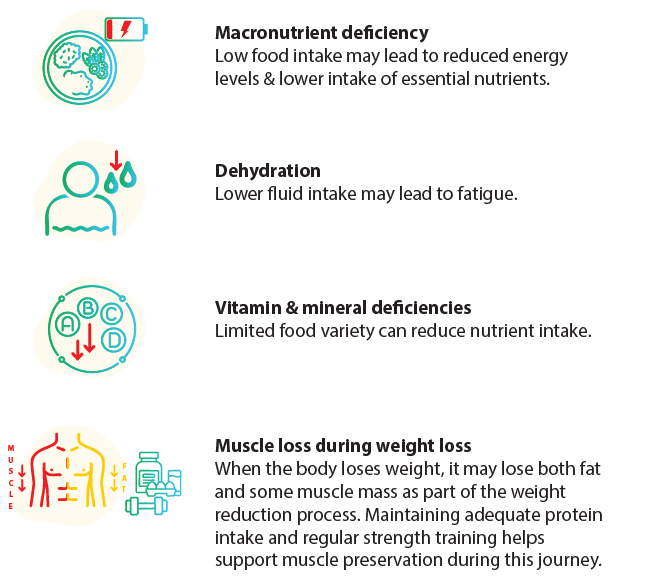
When you begin to feel full more quickly and stay satisfied for longer, it’s natural to eat less than you did before and in smaller portions. If these meals are not balanced nutritionally, you may not get all the nutrients you need.

This may lead to:

This may lead to

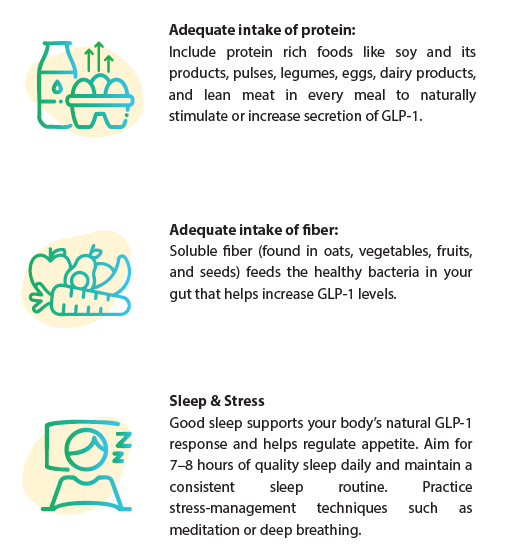
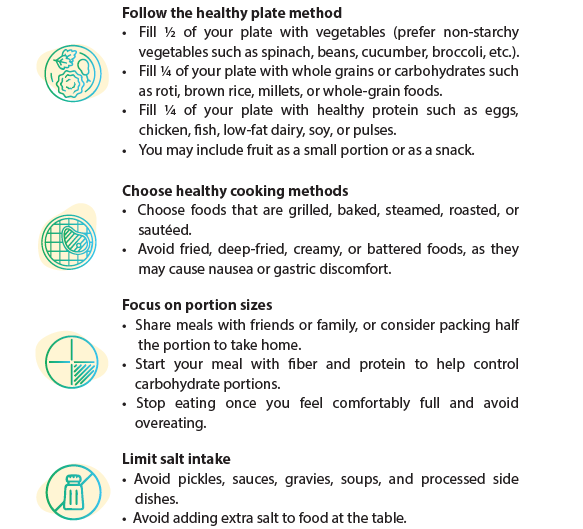
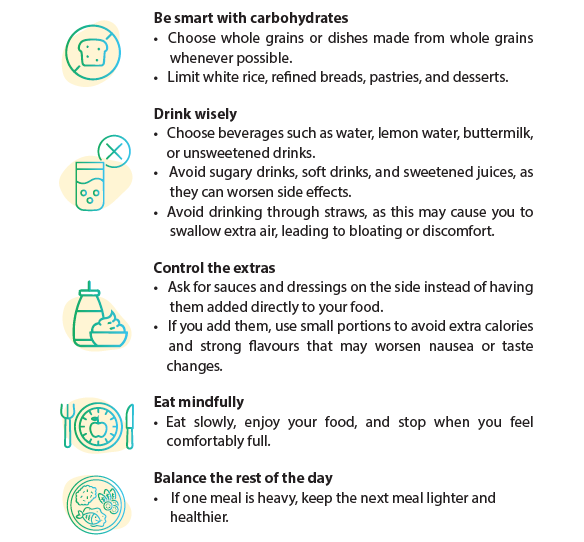
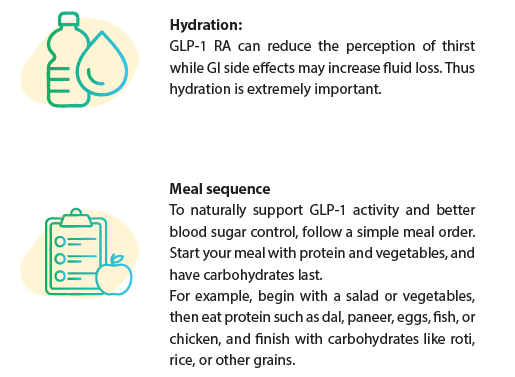
Smart habits to get the best results with USEMA


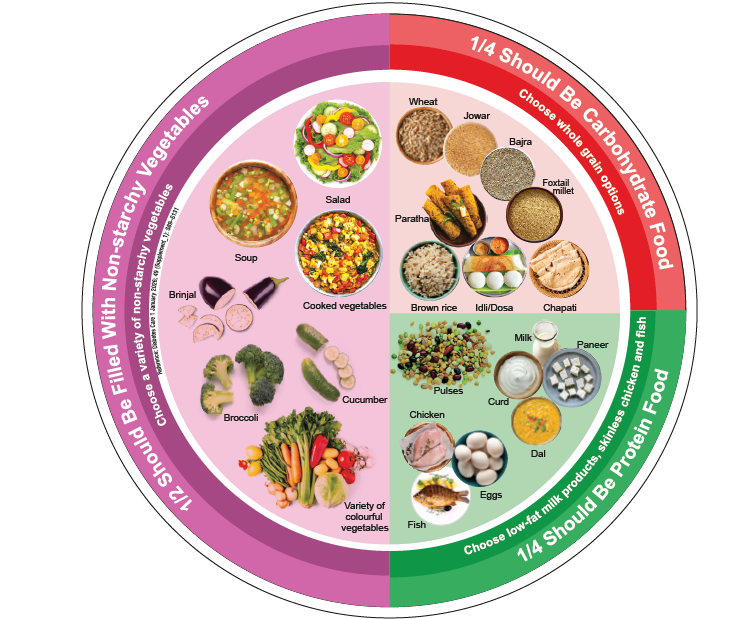
What is a healthy plate?

Healthy plate is a simple and practical way to plan meals that supports your overall health, energy levels, and better blood sugar control. Instead of focusing on strict calorie counting, it focuses on a well-balanced diet with the right proportions of different types of food.

Meal tips when on USEMA : (Do’s and Don’ts)

Do’s Don’ts
Consume well-balanced meals at regular intervals. Avoid fried, oily, and very spicy foods.
Drink adequate water throughout the day. Limit alcohol intake.
Limit consumption of processed foods. Avoid eating fruit with lunch or dinner.
Eat slowly and chew food thoroughly. Avoid lying down immediately after meals.
Choose fruit as a mid-morning or evening snack. Avoid heavy exercise immediately after meals.
Keep a record of your food and water intake. Do not eat in a hurry.
Choose healthier cooking methods like steaming, stir-frying, or baking rather than frying.

Importance of nutrition to protect muscle and bone health during weight loss

Protect muscle during weight loss

When you lose weight, your body loses not only fat but also some muscle mass. Muscle loss can account for about 10–25% of total weight loss. This is a natural change in the body, but it can be minimized by eating enough protein by staying physcially active and strength training.

You may have a higher risk of muscle loss if you:

  •  have inadequate protein intake
  •  are older in age
  •  are a post-menopausal woman
  •  do not perform strength or resistance exercises regularly

To protect your muscles and improve strength:

  • Eat adequate protein (about 60–75 g/day or up to 1.5 g/kg body weight per day).
  • Include high-quality protein sources such as soy products, pulses, dals, sprouts, and dairy for vegetarian options, and eggs, chicken, and fish for non-vegetarian options.
  • Include strength or resistance exercises regularly to maintain muscle mass.

Protecting bone health during weight loss

Rapid and significant weight loss (around 14% or more within 3–4 months) may also lead to some bone loss, especially in women and older adults.

Bone loss during weight reduction may depend on:

  •  How quickly you lose weight
  •  Your protein intake
  •  Your level of physical activity
  •  Your starting body weight

Loss of bone density can increase the risk of fractures and affect long-term bone health.

To keep your bones strong:

  • Ensure adequate protein intake.
  • Include nutrients important for bone health, such as calcium and vitamin D.
  • Stay physically active, especially with weight-bearing and strength exercises.

Healthy dining-out tips

Socialising and eating away from home are part of everyday life. With a few mindful choices and portion control, you can enjoy dining out occasionally. The following tips can help you make healthier and more comfortable choices while eating out.

#BeTheForce

References:

  1. Collins L, Costello RA. Glucagon-like peptide-1 receptor agonists. StatPearls [Internet]. Treasure Island (FL): StatPearls Publishing; 2024.
  2. Mozaffarian D, Agarwal M, Aggarwal M, et Nutritional priorities to support GLP-1 therapy for obesity: A joint Advisory from the American College of Lifestyle Medicine, the American Society for Nutrition, the Obesity Medicine Association, and The Obesity Society. Obesity (Silver Spring). 2025;33(8):1475-1503. doi:10.1002/oby.24336
  3. Almandoz JP, Wadden TA, Tewksbury C, et Nutritional considerations with antiobesity medications. Obesity (Silver Spring). 2024;32(9):1613-1631. doi:10.1002/oby.24067
  4. van der Klaauw AA, Keogh JM, Henning E, et al. High protein intake stimulates postprandial GLP1 and PYY release. Obesity (Silver Spring). 2013;21(8):1602-1607. doi:10.1002/oby.20154
  5. Leidy HJ, Armstrong CL, Tang M, Mattes RD, Campbell WW. The influence of higher protein intake and greater eating frequency on appetite control in overweight and obese men. Obesity (Silver Spring). 2010;18(9):1725-1732. doi:10.1038/oby.2010.45
  6. Bodnaruc, M., Prud’homme, D., Blanchet, R. et al. Nutritional modulation of endogenous glucagon-like peptide-1 secretion: a review. Nutr Metab (Lond) 13, 92 (2016). https://doi.org/10.1186/s12986-016-0153-3
  7. How to Activate GLP-1 Ohio State University. (2025 July 1). Accessed February 21, 2026.
  8. Joslin Diabetes Healthy Plate Method. Joslin Diabetes Center. Accessed December 29, 2025.
  9. Gentinetta S, Sottotetti F, Manuelli M, Cena H. Dietary Recommendations for the Management of Gastrointestinal Symptoms in Patients Treated with GLP-1 Receptor Agonist. Diabetes Metab Syndr 2024;17:4817-4824. Published 2024 Dec 19. doi:10.2147/DMSO.S494919
  10. Pamela Kushner, Carlos Campos, Aaron King, Davida Kruger, Javier Morales; Clinician Guidance on the Benefits of Healthy Nutrition and Increased Physical Activity for People With Type 2 Diabetes Following Glucagon-Like Peptide 1 Receptor Agonist Initiation. Clin Diabetes 15 December 2025; 43 (5): 681–695
  11. Figueiredo VC. Revisiting the roles of protein synthesis during skeletal muscle hypertrophy induced by Am J Physiol Regul Integr Comp Physiol. 2019;317(5):R709-R718. doi:10.1152/ajpregu.00162.2019
  12. American Diabetes Association. What can I eat? Healthy eating away from home (WCIE Participant Guide, Class               3)

.https://professional.diabetes.org/sites/default/files/media/wcie_participant_guide_class_3_lr.pdf

Disclaimer: The information provided herein is prepared based on articles provided under reference and reviewed by a qualied dietitian intended for bringing general awareness and are/is not intended to replace professional medical advice. Seek advice from the qualied health care professional before adopting the suggestions or if you have a doubt regarding your health condition. USV Private Ltd., (“USV”) disclaims all liabilities or damages arising directly or indirectly from the advisory services. Copying, circulation and distribution of this content is strictly prohibited.

  • « Previous Page
  • 1
  • …
  • 22
  • 23
  • 24
  • 25
  • 26
  • …
  • 35
  • Next Page »

Search

Recent Posts

  • Foods to Manage Blood Sugar Naturally: A Complete Guide to Better Blood Sugar Control
  • The Lazy Person’s Guide to Staying Healthy: 5 Micro-Habits That Take Less Than 2 Minutes
  • Healthy Eating: Comforting Chilli Bean Soup Recipe for the Monsoon
  • The Truth About the ‘Beer Belly’: What Alcohol Really Does to Your Metabolism
  • Benefits of Meditation: How One Daily Habit Can Transform Your Mental Wellbeing

Stay Updated

Archives

  • August 2026 (7)
  • July 2026 (25)
  • June 2026 (22)
  • May 2026 (20)
  • April 2026 (24)
  • March 2026 (18)
  • February 2026 (14)
  • January 2026 (14)
  • December 2025 (19)
  • November 2025 (15)
  • October 2025 (20)
  • September 2025 (6)
  • August 2025 (6)
  • July 2025 (9)
  • June 2025 (18)
  • May 2025 (16)
  • April 2025 (22)
  • March 2025 (26)
  • February 2025 (21)
  • January 2025 (25)
  • December 2024 (22)
  • November 2024 (22)
  • October 2024 (20)
  • September 2024 (22)
  • August 2024 (28)
  • July 2024 (15)
  • June 2024 (23)
  • May 2024 (26)
  • April 2024 (27)
  • March 2024 (27)
  • February 2024 (23)
  • January 2024 (21)
  • December 2023 (14)
  • November 2023 (10)
  • October 2023 (19)
  • September 2023 (21)
  • August 2023 (16)
  • July 2023 (16)
  • June 2023 (21)
  • May 2023 (20)
  • April 2023 (19)
  • March 2023 (23)
  • February 2023 (19)
  • January 2023 (15)
  • December 2022 (11)
  • November 2022 (15)
  • October 2022 (15)
  • September 2022 (12)
  • August 2022 (9)
  • July 2022 (17)
  • June 2022 (11)
  • May 2022 (10)
  • April 2022 (6)
  • March 2022 (6)
  • February 2022 (13)
  • January 2022 (11)
  • December 2021 (7)
  • November 2021 (3)
  • October 2021 (6)
  • September 2021 (3)
  • August 2021 (8)
  • July 2021 (7)
  • June 2021 (15)
  • May 2021 (16)
  • April 2021 (10)
  • March 2021 (7)
  • February 2021 (4)
  • January 2021 (4)
  • December 2020 (3)
  • November 2020 (4)
  • October 2020 (10)
  • September 2020 (3)
  • August 2020 (3)
  • July 2020 (2)
  • June 2020 (4)
  • May 2020 (10)
  • April 2020 (12)
  • March 2020 (10)
  • February 2020 (4)
  • January 2020 (4)
  • December 2019 (3)
  • November 2019 (7)
  • October 2019 (5)
  • September 2019 (4)
  • August 2019 (9)
  • July 2019 (9)
  • June 2019 (11)
  • May 2019 (4)
  • April 2019 (8)
  • March 2019 (8)
  • February 2019 (9)
  • January 2019 (8)
  • December 2018 (9)
  • November 2018 (3)
  • October 2018 (3)
  • September 2018 (5)
  • August 2018 (10)
  • July 2018 (6)
  • June 2018 (13)
  • May 2018 (8)
  • April 2018 (18)
  • March 2018 (9)
  • February 2018 (8)
  • January 2018 (15)
  • December 2017 (12)
  • November 2017 (19)
  • October 2017 (13)
  • September 2017 (15)
  • August 2017 (4)
  • July 2017 (8)
  • June 2017 (7)
  • May 2017 (6)
  • April 2017 (8)
  • March 2017 (6)
  • February 2017 (7)
  • January 2017 (9)
  • December 2016 (10)
  • November 2016 (7)
  • October 2016 (7)
  • September 2016 (7)
  • August 2016 (11)
  • July 2016 (9)
  • June 2016 (9)
  • May 2016 (12)
  • April 2016 (17)
  • March 2016 (17)
  • February 2016 (8)
  • January 2016 (6)
  • December 2015 (2)
  • November 2015 (9)
  • October 2015 (7)
  • September 2015 (9)
  • August 2015 (11)
  • July 2015 (9)
  • June 2015 (11)
  • May 2015 (9)
  • April 2015 (13)
  • March 2015 (8)
  • February 2015 (5)
  • January 2015 (12)
  • December 2014 (14)
  • November 2014 (11)
  • October 2014 (6)
  • September 2014 (13)
  • August 2014 (12)
  • July 2014 (6)
  • June 2014 (2)
  • May 2014 (7)
  • April 2014 (4)

From Burnout to Balance: How Dr. Ranjit Reclaimed His Health

Dr Ranjit Bhatt has spent years tending to others. A practising doctor in Odisha, his days were packed with patients, surgeries, and emergencies. From the outside, it looked like a life lived in service. But on the inside, something wasn’t right. “I had no … [Read More...]

From Shimla’s Slopes to Chandigarh’s Sidewalks: Surinder Kaur Bhalla’s Journey from Chaos to Control

Some journeys start with a plan. Others begin with a stumble literally. Surinder Bhalla, a government professional, born and raised in the scenic hill town of Shimla, had always lived a life of movement. “In Shimla, you walked everywhere,” she reflects. “Walking was never an exercise. It was just life.” But after shifting to Chandigarh, […]

“I’ve Challenged Myself to Live 100 Years” – The Story of Chandubhai Savani’s Second Chance at Life

At 67, most people start slowing down. Not Chandubhai Savani. A resident of Surat, Chandubhai, thought life was on track. “My life was going well till I had my bypass surgery,” he says. That surgery, back in 2021, was a wake-up call.  Medication was routine, but exercise wasn’t. His diet? What he calls ‘normal.’ “I […]

Ananda Mukherjee Health Story

From Terminal Illness To Complete Wellness! Ananda Mukherjee Health Story

As we observe World Cancer Day under the powerful theme ‘United by Unique’ (2025-2027)**, we are reminded that every individual’s journey with cancer is distinct, yet united by shared resilience, hope, and the collective fight against this disease. This theme places people at the centre of care and their stories at the heart of the […]

  • HOME
  • HEALTHY LIVING
  • FITNESS
  • HEALTHY RECIPES
  • USER STORIES
  • KARMA
  • BUY GOQii

Copyright ©2016 GOQii