GOQii

Blog

  • HOME
  • HEALTHY LIVING
  • FITNESS
  • HEALTHY RECIPES
  • USER STORIES
  • KARMA
  • BUY GOQii

Search Results for: ginger

April 13, 2022 By Luke Coutinho 2 Comments

Ginger and How It Can Benefit You

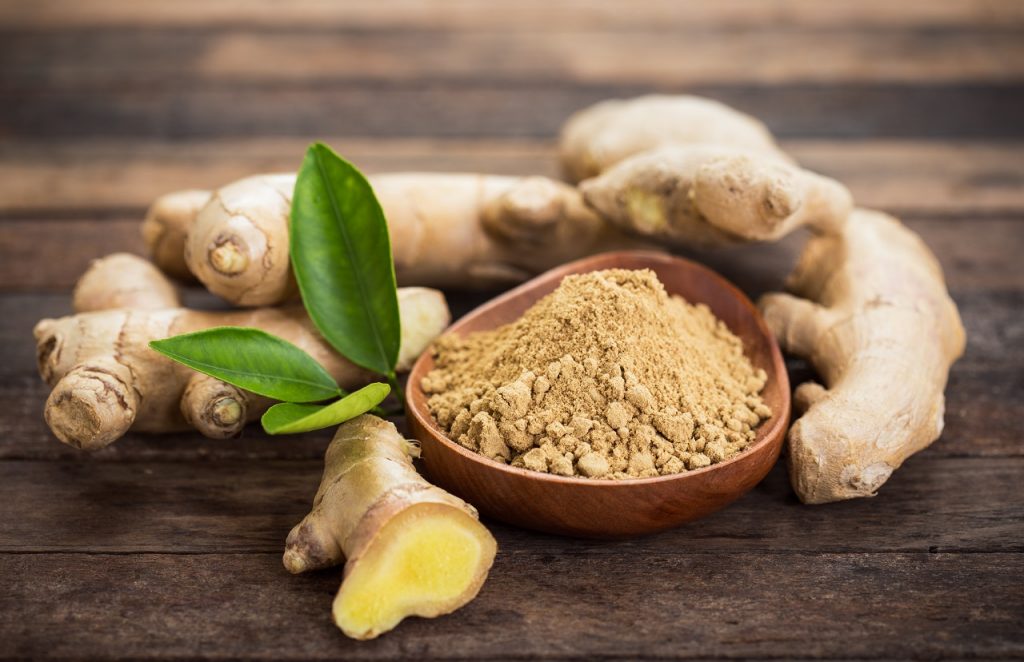
GingerGinger is native to India and China. It has been important in Chinese medicine for many centuries, and is mentioned in the writings of Confucius as well. It is also named in the Koran – the sacred book of the Muslims, indicating it was known in Arab countries as far back as 650 A.D. It was one of the earliest spice known in Western Europe, used since the ninth century. It became so popular in Europe that it was included in every table setting, like salt and pepper.

A common article of medieval and Renaissance trade, it was one of the spices used against the plague. In English pubs and taverns in the nineteenth century, barkeepers put out small containers of ground ginger, for people to sprinkle into their beer — the origin of ginger ale. In order to ’gee up’ a lazy horse, it is the time-honored practice of Sussex farmers to apply a pinch of ginger to the animal’s backside.

Ginger has long been ascribed aphrodisiac powers, taken either internally or externally. It is mentioned in the Kama Sutra, and in the Melanesian Islands of the South Pacific it is employed ‘to gain the affection of a woman’. Conversely, in the Philippines it is chewed to expel evil spirits. Ginger is a known diaphoretic, meaning it causes one to sweat. It was recorded that Henry VIII instructed the mayor of London to use ginger’s diaphoretic qualities as a plague medicine.

I can go on about the amazing health benefits of this root. Over the last few years, I have used and shared this remedy with so many clients and friends for so many conditions, and it has never failed to produce the desired results.

Be it any ailment such as the following

  • Flu
  • Common cold and cough
  • Stomach pain
  • Menstrual cycle pain
  • PMS
  • Digestive disorders
  • Cancer ( building immunity and cellular health)
  • Headaches and migraine
  • Lowering cholesterol
  • Controlling high blood pressure
  • Boosting immunity and cellular health
  • Arthritis, joint and bone pain
  • Ginger has anti-aging properties
  • Ginger stimulates blood rush to sexual organs

How Can You Best Consume Ginger? 

You can use ginger in food or just have it plain. I like it best in a cup of warm herbal brew. You can try this simple and healing herbal brew:

  1. Boil a 1-inch piece of washed and peeled ginger in water for  10 minutes with 2 cloves
  2. Add a slightly split cardamom (optionally, you can also add fresh lemongrass or fresh basil for flavor)
  3. Simmer for 15 minutes
  4. Strain and pour into a mug.
  5. Add 2 pinches of powdered cinnamon, 1 tsp of organic raw honey or jaggery
  6. Sip it hot!

This drink will boost your immunity and make you feel better almost instantly! Make it part of your lifestyle.

Disclaimer:  Always check with your doctor especially if you are pregnant or have gall stone issues, before using ginger.

We hope the article helps you! For more on nutrition and healthy living, check out Healthy Reads. To get these tips directly from a GOQii Coach, subscribe for personalized health coaching here: https://goqiiapp.page.link/bsr

#BeTheForce 

April 10, 2026 By GOQii Leave a Comment

Inflammation: The Hidden Fire Behind Most Chronic Disease

Most people track cholesterol.
Many monitor blood sugar.

Very few think about inflammation.

And yet, chronic low-grade inflammation is now recognised as one of the most important underlying drivers of modern disease linking heart disease, diabetes, fatty liver, arthritis and even cognitive decline.

Think of it as a slow, internal fire.
Not something you feel immediately but something that quietly damages tissues over time.

What Is Chronic Inflammation?

Inflammation, in itself, is not the problem.

It is a natural defence mechanism. When you cut your finger or fight an infection, inflammation helps the body heal.

The issue begins when this response does not switch off.

Poor sleep, chronic stress, excess abdominal fat, smoking and diets high in ultra-processed foods can keep the body in a constant low-grade inflammatory state. This is often silent. There are no obvious symptoms.

But over time, the cumulative effect increases the risk of chronic disease.

What Does CRP Actually Tell You?

C-reactive protein (CRP) is a widely used blood marker that reflects inflammation in the body.

A more sensitive version, high-sensitivity CRP (hs-CRP), is commonly used to assess cardiovascular risk.

In general terms:

  • Below 1 mg/L → low risk
  • 1–3 mg/L → moderate risk
  • Above 3 mg/L → higher inflammatory burden

CRP does not diagnose a specific condition.
It indicates that the body is under physiological stress.

For meaningful interpretation, CRP should always be viewed alongside other markers such as blood glucose, lipid profile and body composition not in isolation.

Visceral Fat: More Than Stored Energy

Not all body fat behaves the same way.

Visceral fat- the fat stored deep around internal organs is metabolically active. It releases inflammatory chemicals directly into the bloodstream.

This is why central fat accumulation is strongly associated with:

  • cardiovascular disease
  • insulin resistance
  • type 2 diabetes

Importantly, you do not need to appear overweight to carry excess visceral fat. Even individuals with a “normal” weight may have elevated metabolic risk if they are sedentary or have poor lifestyle habits.

Reducing visceral fat is one of the most effective ways to lower chronic inflammation.

Ultra-Processed Foods and Oxidative Stress

Diet plays a central role in inflammation.

Ultra-processed foods typically high in refined carbohydrates, industrial oils and additives can lead to repeated blood sugar spikes and increased oxidative stress.

Oxidative stress damages cells and perpetuates inflammation.

Frequent consumption of:

  • packaged snacks
  • sugary beverages
  • deep-fried foods

combined with low physical activity creates a cycle that reinforces metabolic dysfunction over time.

Simple, Evidence-Based Ways to Reduce Inflammation

You do not need extreme interventions.
Consistency matters more than intensity.

  1. Walk after meals
    A 10–15 minute walk improves glucose regulation and reduces post-meal metabolic stress.
  2. Strength train regularly
    Resistance training improves insulin sensitivity and helps reduce visceral fat.
  3. Focus on whole foods
    Prioritise vegetables, fruits, lentils, nuts and seeds.
  4. Use traditional anti-inflammatory ingredients
    Turmeric, ginger and garlic offer well-documented benefits.
  5. Include omega-3 fats
    Sources such as fatty fish, flaxseeds and walnuts support both cardiovascular and cognitive health.
  6. Protect your sleep
    Poor sleep is a major driver of inflammation and hormonal imbalance.

Why This Matters

Chronic disease does not develop overnight.
It builds gradually often through processes like inflammation that go unnoticed for years.

Understanding inflammation helps connect the dots between conditions that are often treated separately:

  • heart disease
  • diabetes
  • obesity
  • cognitive decline

In many cases, they share the same underlying mechanisms.

The goal is not to eliminate inflammation entirely that is neither possible nor necessary.

The goal is to reduce the constant internal load.

To lower the heat.
Gradually. Consistently.

Because long-term health is not defined by one decision,
but by the patterns you repeat every day.

We hope this article helps you understand the silent signals your body might be sending. Do you have questions about managing inflammation, or have you noticed positive changes after adopting any of these habits? Drop your thoughts in the comments below! For personalized guidance on interpreting your health markers and building an anti-inflammatory lifestyle, speak to a certified expert by subscribing to GOQii’s Personalised Health Coaching here.

Frequently Asked Questions (FAQs)

1. What are the most common symptoms of chronic inflammation?
Unlike acute inflammation (which shows as visible redness or swelling), chronic inflammation is often “silent” and internal. However, common subtle warning signs include persistent fatigue, unexplained joint or muscle pain, stubborn weight gain (especially visceral fat around the belly), frequent digestive issues like bloating, and brain fog.

2. What is the best blood test to check for inflammation in the body?
The most common and reliable blood marker used by doctors to assess systemic inflammation and cardiovascular risk is the High-sensitivity C-reactive protein (hs-CRP) test. Generally, an hs-CRP level below 1 mg/L indicates low risk, while a level above 3 mg/L suggests a high inflammatory burden.

3. What foods cause the most inflammation?
Ultra-processed foods are the primary dietary drivers of chronic inflammation. This includes items high in refined sugars, high-fructose corn syrup, refined carbohydrates (like white bread and pastries), deep-fried foods, and industrial seed oils. These foods trigger rapid blood sugar spikes and oxidative stress, keeping the body’s inflammatory response constantly active.

4. How fast can you reduce inflammation with diet and lifestyle changes?
While chronic inflammation builds up over years, your body responds quickly to positive changes. Simple interventions—like taking a 15-minute walk after meals to control blood sugar, cutting out sugary beverages, and prioritizing 7-8 hours of sleep—can begin lowering inflammatory markers like hs-CRP within a few weeks to a few months.

5. Can regular exercise help reduce inflammation?
Yes. While intense, over-training can temporarily increase acute stress, regular and moderate exercise is highly anti-inflammatory. Strength training specifically helps burn away metabolically active visceral fat (which actively releases inflammatory chemicals), while daily movement improves insulin sensitivity and circulation.

#BeTheForce

Disclaimer: The information provided in this article is for educational and general informational purposes only and is not intended to serve as professional medical advice, diagnosis, or treatment. Inflammatory markers like hs-CRP must be interpreted by a qualified medical professional in the context of your overall health profile. Always consult with your doctor, physician, or a registered clinical dietitian before making significant changes to your diet, starting a new exercise routine, or if you are experiencing symptoms of chronic illness.

March 18, 2026 By Urvi Gohil 1 Comment

Healthy Eating: Vegetable Stuffed Ragi Paratha

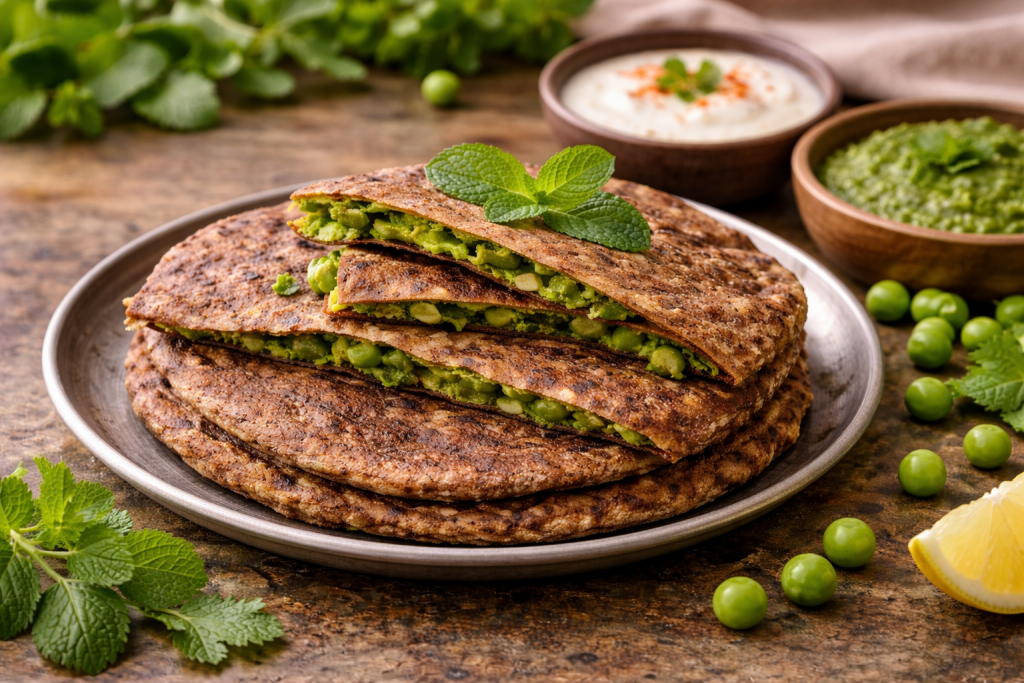
Looking for a nutritious millet-based breakfast that is both healthy and satisfying? This Vegetable Stuffed Ragi Paratha is a wholesome alternative to regular wheat parathas. Packed with calcium, fibre and essential minerals, ragi (finger millet) supports bone health, digestion and sustained energy throughout the day.
Adding vegetables to the stuffing further enhances the nutritional value, making this dish a balanced breakfast for both adults and children. While the colour may appear slightly darker than regular parathas, the health benefits make it absolutely worth trying.

Vegetable Stuffed Ragi Paratha – Quick Recipe

Prep Time: 15 minutes
Cook Time: 15 minutes
Total Time: 30 minutes
Servings: 3–4 parathas
Meal Type: Healthy Breakfast
Cuisine: Indian

Nutritional Highlights

  • High in calcium for bone strength
  • Rich in dietary fibre for digestion
  • Helps support blood sugar balance
  • Promotes satiety and weight management

Ingredients

For the Dough

  • 1 cup ragi flour
  • 1 cup water
  • Salt to taste

For the Vegetable Stuffing

  • ½ cup cooked peas
  • ½ cup shredded carrot
  • ¼ tsp cumin seeds (jeera)
  • ¼ tsp mustard seeds
  • 1 tsp finely chopped ginger
  • 1 tsp chopped curry leaves
  • 1 tsp lemon juice
  • 2 tbsp chopped coriander leaves
  • 1–2 green chillies
  • Oil for cooking

 How to Prepare the Vegetable Stuffing

  1. In a mixer grinder, blend cooked peas, cumin seeds and green chillies into a coarse paste.
  2. Heat 1 tsp oil in a pan.
  3. Add mustard seeds and allow them to crackle.
  4. Add chopped ginger and curry leaves and sauté briefly.
  5. Add the pea mixture along with shredded carrot and salt.
  6. Cook for a few minutes. If the mixture becomes dry, add a little water.
  7. Turn off the flame and add lemon juice and chopped coriander leaves.

Set the stuffing aside.

How to Prepare the Ragi Dough

  1. Heat 1 cup water in a pan and add salt.
  2. Once hot, add ragi flour and switch off the flame.
  3. Mix thoroughly using a spatula.
  4. Allow the mixture to rest for 5–7 minutes.
  5. Once cooled slightly, knead it into a soft dough.

How to Assemble and Cook the Paratha

  1. Divide the dough into equal-sized balls.
  2. Flatten each ball slightly.
  3. Dust with flour and roll into a thin paratha using plastic paper.
  4. Place vegetable stuffing evenly over one paratha.
  5. Wet the edges slightly and place another paratha over it.
  6. Seal the edges and gently roll again.
  7. Heat a pan or tawa and lightly brush with oil.
  8. Cook the paratha until golden brown.
  9. Flip and cook the other side evenly.

Serve hot with curd, raita or chutney.

Why Ragi Is a Super Millet for Daily Nutrition

Ragi (finger millet) is widely recognised as one of the most nutritious grains. It contains significantly higher calcium than most cereals and is naturally rich in fibre, iron and plant-based protein.

Including ragi in breakfast helps:

  • support bone health
  • improve digestion
  • maintain stable energy levels
  • promote satiety for weight management

Millets like ragi are increasingly recommended as part of a balanced diet because of their nutritional density and metabolic benefits.

Nutritional Benefits of Vegetable Stuffed Ragi Paratha

Supports Bone Health

Ragi is an excellent source of calcium, which is essential for maintaining strong bones and teeth.

Helps Maintain Stable Blood Sugar

Ragi has a relatively low glycaemic index and releases energy slowly, which may help manage blood sugar levels.

Improves Digestive Health

The fibre content in ragi and vegetables supports healthy digestion and gut function.

Supports Weight Management

High fibre foods promote fullness, helping reduce unnecessary snacking.

Tips to Make This Recipe Even Healthier

  • Use minimal oil while cooking the paratha.
  • Add vegetables such as spinach, beetroot or capsicum to increase nutrient density.
  • Serve with probiotic-rich curd to support gut health.
  • Pair with fresh mint chutney instead of processed sauces.

Frequently Asked Questions

Is ragi paratha healthy?

Yes. Ragi paratha is rich in calcium, fibre and essential minerals that support bone health, digestion and sustained energy.

Can ragi help with weight management?

Ragi is high in dietary fibre and promotes satiety, which may help reduce overeating and support healthy weight management.

Is ragi good for people with diabetes?

Ragi has a relatively low glycaemic index and releases energy slowly, which may help maintain stable blood sugar levels when eaten in moderate portions.

Including millets like ragi in everyday meals is a simple way to improve the nutritional quality of your diet. This Vegetable Stuffed Ragi Paratha combines the goodness of ragi with the benefits of vegetables, making it a nourishing breakfast option for the entire family.

Try this recipe as part of your breakfast routine and enjoy a healthy start to your day!

Did you enjoy this recipe? Try it out and share your thoughts in the comments below! For more healthy recipes, nutrition tips and personalised wellness guidance, connect with a GOQii Coach through our Personalised Health Coaching program here.

#BeTheForce

Disclaimer: The information provided in this blog is for general awareness and educational purposes only. It is not intended to replace professional medical advice, diagnosis, or treatment. Always consult a qualified healthcare provider for personalised medical guidance or concerns related to your health. Images shown are for representation purposes only and may not depict the exact recommendations or outcomes.

February 2, 2026 By GOQii Leave a Comment

The Longevity Plate: A Guide to Assembling a Functional Diet at 80 Years Old

Most dietary advice seems to be fixated on labels: “keto”, “vegan”, “paleo”, “low fat”, “high protein”, “clean eating.”



But let’s be honest. If your actual aim in eating better is to be 80 years old and still be able to climb stairs, carry groceries, get up from the floor, and travel with confidence, then you must look at food through another filter.

Longevity food isn’t about looking like you’re following a strict plan on Instagram. It is about defending two things that ageing takes first: Muscle Mass and Metabolic Flexibility.

The meal that helps you accomplish that objective is not deserving of a name. It is deserving of a structure.

Here are the 5 Non-Negotiables for a longevity plate. These can be incorporated into an everyday Indian diet without turning your kitchen into a laboratory.

  1. Protein Target: Your “Retirement Fund”

Past middle age, muscle tissue has a purpose that reaches beyond strength. It is your glycogen storehouse, your stabiliser, and your protector against frailty. Older people actually need more protein than the standard recommendations.

While studies suggest at least 1.0 to 1.2 g/kg/day for those over 65, it should be higher if you are physically active.

Make It Practical:

  • Target a protein intake of 25 to 35 grams in a major meal most days.
  • Do not flood the dinner plate. Distribute protein throughout the day to send your body the repeated signal to build muscle.

Indian Plate Examples:

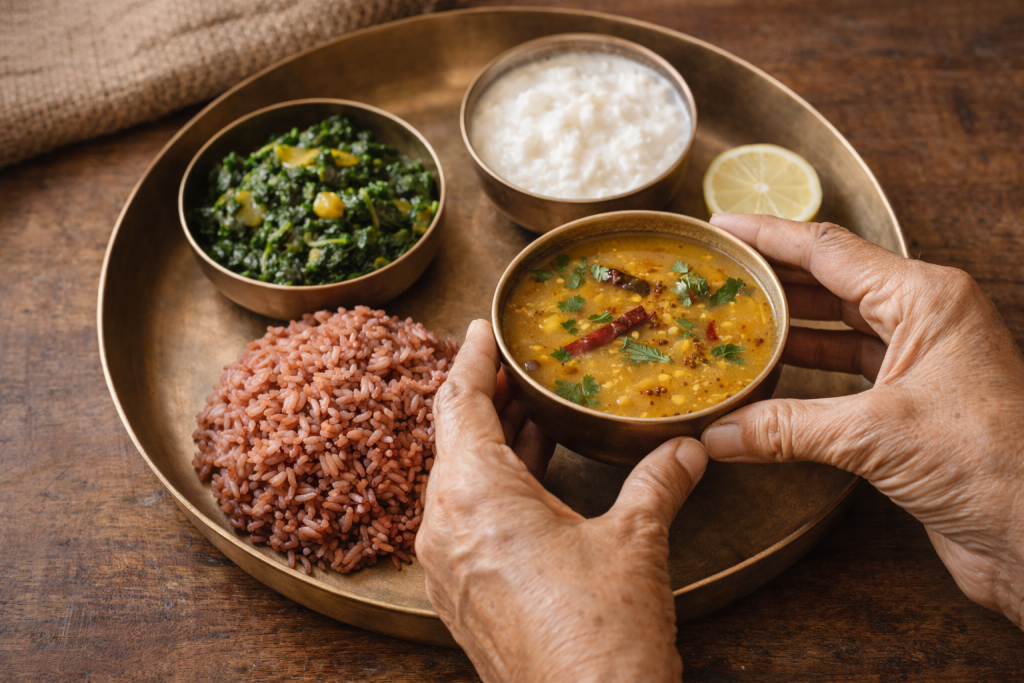
  • Dal + Curd: Add a bowl of sabzi and top with a tsp of roasted seeds or peanuts.
  • Paneer or Tofu Bhurji: Mix with veggies and have with one roti.
  • Eggs: Scrambled with sautéed greens and a serving of sprouts.
  • Non-Veg: Fish or chicken with plenty of curry veggies; go easy on the rice/roti.
  1. Colour Variety: Micronutrients Run the System

To make a longevity plate look like it’s had a life, you must include greens, reds, oranges, and purple foods. Colour is a shortcut for diversity in nutrients—polyphenols, carotenoids, and folate—that support your heart, brain, and immune system.

Make It Practical:

  • Aim for 3 colours in a single meal (not just in a week).
  • Use what is local and seasonal. It is less expensive and more nutritious.

Indian Plate Examples:

  • Palak or methi, tomato, and carrots in one mixed sabzi.
  • Beetroot raita with cucumber and sautéed capsicum.
  • Vegetable sambar with drumstick, pumpkin, and brinjal.
  • Fruits: Berries are great, but so are Guava, Amla, Jamun, and Pomegranate.
  1. Slow Carbs: Stable Sugar Protects Your Future Self

Carbs don’t make you fat. Fast, refined carbs are the problem. They act like sugar in your system, forcing insulin levels on a rollercoaster ride. Harvard guidelines specifically recommend whole grains over refined ones to prevent rapid blood sugar spikes.

Make It Practical:

  • Choose one slow carb per meal, NOT five sources of carbs in one sitting.
  • This is not calorie counting. This is glycaemic common sense.

Better Slow Carb Choices:

  • Millets (Jowar, Bajra, Ragi), Brown Rice, Quinoa, or Oats.
  • Legumes: Chana, Rajma, Lobia, and Lentils (these count as both protein and slow carbs!).
  • Sweet potato instead of white bread/aloo when you can.
  1. Anti-Inflammatory Spices: Managing the “Background Noise”

Low-grade chronic inflammation is associated with almost every age-related disease. Spices won’t replace medical treatment, but they are the simplest, most powerful daily “input” you can make.

Curcumin (in Turmeric) has been clinically proven to fight oxidative stress.

Make It Practical:

  • Consume Turmeric + Black Pepper + Fat (ghee/oil) regularly. The pepper helps absorption by 2000%.
  • Think of spices as everyday protective maintenance, not just flavour.

Easy Additions:

  • Ginger-Garlic paste in generous amounts for curries.
  • Cinnamon in your morning oats or curd bowl.
  • Jeera, Ajwain, Hing for digestion.
  1. Fermented Foods: Train Your Gut

If you wish to age well, you must have a gut that is resilient to stress, antibiotics, and travel. A Stanford Medicine study revealed that a high-fermented-food diet increased microbiome diversity and reduced inflammation.

Make It Practical:

  • Add a little bit a day. You don’t need a massive “cleanse.”
  • “Fermented food is not about a trend. It is about resilience.”

Indian Friendly Options:

  • Curd, Chaas, Lassi (without added sugar).
  • Idli & Dosa batter (properly fermented).
  • Kanji: The traditional tangy probiotic drink made from black carrots/beetroot and mustard seeds.

Putting It All Together: The Check-In

Do this quick check at each main meal:

  1. Where is my Protein?
  2. Where are my Colours?
  3. What is my Slow Carb (and is it portioned)?
  4. Did I add Spices?
  5. Where is the Fermented part?

You will notice something: This method crowds out ultra-processed foods without you having to fight yourself.

Eat For Capability, Not Control

The biggest nutrition myth is that ageing is controlled by willpower. It is controlled by systems.

The Longevity Plate is a system you can replicate in any city, any cuisine, and at any price range. Put that plate together most days of the week, and you’re not just eating for the next weigh-in. You’re eating for the “You” at 80 who still has a life to live.

Need help building a diet plan that fits your lifestyle? Reach out to our certified experts by subscribing to GOQii’s Personalised Health Coaching here.

#BeTheForce

Disclaimer: The information provided in this blog is for general awareness and educational purposes only. It is not intended to replace professional medical advice, diagnosis, or treatment. Always consult a qualified healthcare provider for personalised medical guidance or concerns related to your health.

  • 1
  • 2
  • 3
  • …
  • 45
  • Next Page »

Search

Recent Posts

  • Top 10 Foods For Diabetics: What to Eat to Manage Blood Sugar
  • Why Good Nutrition Before Conception Is Crucial For Your Baby’s Health
  • 6 Tricks To Help You Make Exercise A Habit
  • World Parkinson’s Day 2026: Bridging the Care Gap & Supporting Caregivers
  • Inflammation: The Hidden Fire Behind Most Chronic Disease

Stay Updated

Archives

  • April 2026 (11)
  • March 2026 (18)
  • February 2026 (14)
  • January 2026 (14)
  • December 2025 (19)
  • November 2025 (15)
  • October 2025 (20)
  • September 2025 (6)
  • August 2025 (6)
  • July 2025 (12)
  • June 2025 (18)
  • May 2025 (16)
  • April 2025 (22)
  • March 2025 (28)
  • February 2025 (22)
  • January 2025 (25)
  • December 2024 (22)
  • November 2024 (23)
  • October 2024 (21)
  • September 2024 (23)
  • August 2024 (30)
  • July 2024 (21)
  • June 2024 (25)
  • May 2024 (30)
  • April 2024 (27)
  • March 2024 (27)
  • February 2024 (24)
  • January 2024 (21)
  • December 2023 (14)
  • November 2023 (11)
  • October 2023 (19)
  • September 2023 (22)
  • August 2023 (18)
  • July 2023 (22)
  • June 2023 (23)
  • May 2023 (24)
  • April 2023 (22)
  • March 2023 (23)
  • February 2023 (19)
  • January 2023 (15)
  • December 2022 (11)
  • November 2022 (15)
  • October 2022 (15)
  • September 2022 (12)
  • August 2022 (10)
  • July 2022 (17)
  • June 2022 (11)
  • May 2022 (10)
  • April 2022 (6)
  • March 2022 (6)
  • February 2022 (13)
  • January 2022 (11)
  • December 2021 (7)
  • November 2021 (3)
  • October 2021 (6)
  • September 2021 (3)
  • August 2021 (8)
  • July 2021 (7)
  • June 2021 (15)
  • May 2021 (16)
  • April 2021 (10)
  • March 2021 (7)
  • February 2021 (4)
  • January 2021 (4)
  • December 2020 (3)
  • November 2020 (4)
  • October 2020 (10)
  • September 2020 (3)
  • August 2020 (3)
  • July 2020 (2)
  • June 2020 (4)
  • May 2020 (10)
  • April 2020 (12)
  • March 2020 (10)
  • February 2020 (4)
  • January 2020 (4)
  • December 2019 (3)
  • November 2019 (7)
  • October 2019 (5)
  • September 2019 (4)
  • August 2019 (9)
  • July 2019 (9)
  • June 2019 (11)
  • May 2019 (4)
  • April 2019 (8)
  • March 2019 (8)
  • February 2019 (9)
  • January 2019 (8)
  • December 2018 (9)
  • November 2018 (3)
  • October 2018 (3)
  • September 2018 (5)
  • August 2018 (10)
  • July 2018 (6)
  • June 2018 (13)
  • May 2018 (8)
  • April 2018 (18)
  • March 2018 (9)
  • February 2018 (8)
  • January 2018 (15)
  • December 2017 (12)
  • November 2017 (19)
  • October 2017 (13)
  • September 2017 (15)
  • August 2017 (4)
  • July 2017 (8)
  • June 2017 (7)
  • May 2017 (6)
  • April 2017 (8)
  • March 2017 (6)
  • February 2017 (7)
  • January 2017 (9)
  • December 2016 (10)
  • November 2016 (7)
  • October 2016 (7)
  • September 2016 (7)
  • August 2016 (11)
  • July 2016 (9)
  • June 2016 (9)
  • May 2016 (12)
  • April 2016 (17)
  • March 2016 (17)
  • February 2016 (8)
  • January 2016 (6)
  • December 2015 (2)
  • November 2015 (9)
  • October 2015 (7)
  • September 2015 (9)
  • August 2015 (11)
  • July 2015 (9)
  • June 2015 (11)
  • May 2015 (9)
  • April 2015 (13)
  • March 2015 (8)
  • February 2015 (5)
  • January 2015 (12)
  • December 2014 (14)
  • November 2014 (11)
  • October 2014 (6)
  • September 2014 (13)
  • August 2014 (12)
  • July 2014 (6)
  • June 2014 (2)
  • May 2014 (7)
  • April 2014 (4)

From “Laddu Nawin” to Fit and Fierce: How a 25-Year-Old Insurance Advisor Shed 20 Kilos and Gained His Life Back

When 25-year-old Nawin Yadav from Hyderabad walked into his office every morning, he carried more than just his files and policy papers. He had the weight of fatigue, sluggish energy, and an ever-growing belly that was becoming the butt of jokes. “People … [Read More...]

“I’ve Challenged Myself to Live 100 Years” – The Story of Chandubhai Savani’s Second Chance at Life

At 67, most people start slowing down. Not Chandubhai Savani. A resident of Surat, Chandubhai, thought life was on track. “My life was going well till I had my bypass surgery,” he says. That surgery, back in 2021, was a wake-up call.  Medication was routine, but exercise wasn’t. His diet? What he calls ‘normal.’ “I […]

From Shimla’s Slopes to Chandigarh’s Sidewalks: Surinder Kaur Bhalla’s Journey from Chaos to Control

Some journeys start with a plan. Others begin with a stumble literally. Surinder Bhalla, a government professional, born and raised in the scenic hill town of Shimla, had always lived a life of movement. “In Shimla, you walked everywhere,” she reflects. “Walking was never an exercise. It was just life.” But after shifting to Chandigarh, […]

Ananda Mukherjee Health Story

From Terminal Illness To Complete Wellness! Ananda Mukherjee Health Story

As we observe World Cancer Day under the powerful theme ‘United by Unique’ (2025-2027)**, we are reminded that every individual’s journey with cancer is distinct, yet united by shared resilience, hope, and the collective fight against this disease. This theme places people at the centre of care and their stories at the heart of the […]

  • HOME
  • HEALTHY LIVING
  • FITNESS
  • HEALTHY RECIPES
  • USER STORIES
  • KARMA
  • BUY GOQii

Copyright ©2016 GOQii