GOQii

Blog

  • HOME
  • HEALTHY LIVING
  • FITNESS
  • HEALTHY RECIPES
  • USER STORIES
  • KARMA
  • BUY GOQii

Search Results for: sex

July 31, 2025 By GOQii 6 Comments

Common Myths About Exercise & Nutrition

Nutrition and Exercise myths and factsIn the quest to lead a healthier and fitter life, we do end up reading and talking a lot about it. While exchanging information is good, the kind of information you exchange also matters. Are we following the right advice? Is this correct? Can this be verified? Is this information about nutrition and exercise coming from a trusted source?

There is no harm in reading about nutrition and exercise and following through, provided that it comes from a reliable source. Doing your own research on a topic can save you from following myths and sabotaging your own journey.

Keeping that in mind, let’s explore some common myths around exercise and nutrition.

Myth #1: Some Fruits Shouldn’t Be Given to Diabetic & Weight Loss Cases

Fact: Mango, Grapes, Chikoo and Bananas are often considered as enemies for diabetics and weight loss cases, considering their natural sugar content. Yes, I agree they are naturally loaded with sugar content, although best in class when it comes to nutrients. One should always consider the nutrients in a food rather than the natural sugar content or calories.

These food, when consumed at the right time and right quantity, provide fruitful benefits! For instance, Mango being high on Fiber, when consumed as an in-between meal gives you fullness and makes you not munch on the otherwise unhealthy stuff. Studies have proven that Mangoes have anti-inflammatory & antioxidant properties, which help obese people lose weight and in turn is helpful to diabetics. Bananas‘ high levels of B6 helps Type 2 Diabetics due to its anti-glycatic properties.

Myth #2: Rice is Fattening

Fact: Rice is high on carbohydrates and not high on Fat. When taken in right quantities and timing, it will get utilized by the body and will not end up being stored in the form of Fat. Again, rice is not responsible for weight gain. It is how our body processes food and reacts to excessive food, irrespective of whether that food is Rice, Quinoa, Oats, Whole Wheat or even Protein.

The best way to eat rice is to combine it with some protein source or fiber. For instance, Rice + Dal or Rice+ Fish Curry. Timing is equally important. You can have rice post a workout for your lunch, wherein your body can burn it off during the rest of the day. We can enjoy it for dinner too, provided the dinner is around 7-7.30pm.

Myth #3: Spot Reduction

Fact: There is nothing like spot reduction! As and when we lose or gain weight, it happens overall and not in one place. When we lose, it is as per the fat cells in the specific area which may have a tendency to lose more or gain more, depending upon your genes. When we train our muscles to be stronger, body burns more to repair and maintain them. While doing so, it does not take fat from the local area, it will take fat from all over to burn.

Myth #4: Ghee (Homemade Butter) Makes One Fat

Fact: Homemade Cow’s Milk Butter (Ghee) contains CLA (Conjugated Linoleic Acid) which helps you mobilize the stubborn fat in your body to help you energize. It has added benefits like anti-ageing, sexual vitality, healthy skin and eyes, etc. Want to lose weight? Add a spoon of homemade ghee to the plate.

Myth #5: Multigrain Biscuits and Fat-Free Snacks Are Healthy

Fact: We often get fooled with the marketing gimmicks that Multigrain is healthy, fat-free is the best snack, etc. If we get into more details, we can clearly see the facts. Just turn the packet of these foods around and read the label. The ingredient list goes in a descending order of the content of the food and the first ingredient is wheat, which we end up thinking to be whole wheat, where as it is the processed form of wheat which is Maida.

Majority of the contents are not healthy, it is just that they are given fancy names to fool us like Demerara Sugar, which is actually just normal sugar. The marketing names used are often the least in the percentage in the food, like Ragi, Multigrain, Oats, etc.

Myth #6: More Cups of Green Tea = More Fat Burned

Fact: Green tea, when taken in the right quantity and at the right time, can help you burn fat. This is due to its caffeine content. When people have it in larger amounts like 6-8 cups or more in a day, it ends up making them dehydrated and acidic. Rather than increasing the metabolism, it slows it down.  Thus, there is no extra ‘burning’ that will happen if one has it more. As we always say, anything in excess is not good, even if it is healthy.

Myth #7: Skipping Meals Helps One Lose Fat

Fact: Skipping meals will make you lose weight for sure. Although there is a difference between weight loss and fat loss. What do we do when our mom is not at home to give us food and we are very hungry and you cannot place an order for food?  We look for easy options at home to kill the hunger, right?

Our body does the same when we skip meals. It will look out for options within the body. The easiest one is the muscle glycogen storage, it will opt for that first and when one loses muscle content, there is a loss in body weight too, as muscle weighs a lot naturally. Although, metabolism goes down and fat content remains the same or increases. Skipping meals helps you lose precious muscle content while the fat still sticks around, in fact, increases too at times. 

Myth #8: Only Running Helps in Weight Loss & Maintenance

Fact: Running is a great sport/exercise. It has its own high due to the endorphin rush it gives you, especially when running outside. No doubt it gives you great results with regards to weight loss, although it is majorly muscle loss that happens if the pre and post run meal is not taken care of.

If one keeps running for a long time without strengthening workouts, they are bound to lose more and more muscle. Thus, weight loss will surely be seen but not in a healthy way. Later, when one stops running, they will gain all that weight quickly as the metabolism is low. Running will help one lose fat only when combined with strengthening workouts over the week.

Myth #9: Eating Extra Protein Helps Build Muscles

Fact: Given the fact that muscles need protein to survive, everyone assumes if you have extra protein, the body will keep it only for the muscles. This is not the case. At any given point, our body will take as much as required and the rest goes in to excess. Let that be Carbohydrates, Proteins or Fats. Whatever is excess and that which the body doesn’t require will go to storage, which is fat.

Myth #10: Lifting Weights Isn’t a Good Way to Lose Weight Because It’ll Make Me Bulk Up

Fact: Weight training will break your muscle and repair it back to be a little stronger and denser than the last time. Yes! This process will add up on your body weight but not fat.  You will start adding bulk depending upon the type of training you take and the type of nutrition support you have. The bulk up can happen only if you aim at it and train accordingly. If we are not looking at bulking up, one can train as per that. For instance, lesser weights and basic reps of 15-20.

Myth #11: Physical Activity Only Counts If I Do It for Longer Periods of Time

Fact: Workouts done the right way, at the right time, give us the right benefits! Some have a notion that if one trains for longer hours, the results will be better and faster. When one trains for longer hours, our body starts secreting Cortisol, which is a stress hormone. Due to excess cortisol, the body will store more fat and start losing muscle. This will in turn make metabolism slower. Thus, the quality of workout matters rather than the timings.

Myth #12: People Who Are Thin Don’t Need Exercise

Fact: One exercises because they want to be healthy and fit, not to lose weight. Majority think only those who want to lose weight need to workout. Everyone needs to workout. However, the type of exercise and its intensity will vary depending upon the person’s health and fitness goals. Thin people need to aim at gaining muscles. Often, thin people have the same percentage of fat as the person who actually looks fat. This is because the person who looks thin usually has least amount of muscles and thus, the body weight is lesser (as muscles are very dense).

Myth #13: If You Binge and Detox Later, It Nullifies The Binging.

Fact: This is like punishing your body! First you eat a lot and then you make it starve by detox methods or working out for hours. Rather than doing this, while eating out, one can practice mindful eating. Mindful eating involves chewing well and enjoying the food. It will end up in portion control too as your mind knows where to stop. If you binge, you eat fast. You eat the food with guilt and later punish it. Which is completely wrong! By practicing mindful eating we can eat out and not punish the body. We do need a detox at times to cleanse toxins but not as a punishment for binging.

If this article helped you identify myths and clear all your doubts on nutrition and exercise with facts, let us know in the comments below! You can find more articles on making a healthier lifestyle change here.

To bust more myths and get the right information from a certified expert, speak to a GOQii Coach by subscribing for Personalised Health Coaching here.

#BeTheForce

Disclaimer: The information provided in this blog is for general awareness and educational purposes only. It is not intended to replace professional medical advice, diagnosis, or treatment. Always consult a qualified healthcare provider for personalised medical guidance or concerns related to your health. Images shown are for representation purposes only and may not depict the exact recommendations or outcomes.

July 22, 2025 By Neha Goyal 6 Comments

Why Does Your Body Look Different From Others? We’ve Got the Answer!

Have you ever wondered why a friend or neighbour, who’s the same age, height and weight as you, appears leaner? Or why they fit into size M clothes while you need size L- even if the numbers look similar? The answer lies in Body Composition.

What is Body Composition?

Body composition refers to the percentages of fat, bone, water and muscle in the human body. Two individuals of the same sex and weight may look completely different because they have different amounts of fat and lean mass.

In physical fitness, body composition is important because muscular tissue takes up less space than fat tissue. So it’s not just your weight that determines how lean you look – it’s the ratio of fat to muscle and other lean tissues.

body composition

What is Body Composition Analysis (BCA)?

As rates of overweight and obesity continue to rise, Body Composition Analysis is gaining traction as a more accurate way to assess health than simply looking at weight or BMI. Unlike weight scales or BMI charts, BCA tells you how much of your body is fat versus lean tissue such as muscle, water, bone, and organs.

Lean tissue is metabolically active, meaning it burns calories even when you’re at rest. So a person with more lean mass generally has a higher metabolism.

Why Should You Measure It?

Health experts agree: excess body fat increases the risk of numerous conditions including:

  • High blood pressure
  • High cholesterol and triglycerides
  • Type 2 diabetes
  • Heart disease
  • Breathing difficulties
  • Gallbladder disease
  • And more

Measuring body composition provides better insights than weight alone. It’s common to assume that “thin” means “healthy,” but that’s not always true. Being thin refers to weighing less than average, while leanness refers to a healthier ratio of muscle to fat. You can be thin and still have high body fat (sometimes called “skinny fat”).

body composition

Benefits of BCA

Understanding your body composition helps you and your healthcare providers in several ways:

  • Establishes a baseline for nutrition and obesity treatment
  • Supports targeted plans for muscle gain and fat loss
  • Tracks fat loss and muscle gain from diet and exercise
  • Gives insights into your metabolic rate and hydration levels
  • Highlights fat distribution, which can signal hormonal imbalances
  • Measures dangerous visceral fat (fat around organs)
  • Helps assess bone health and risk for osteoporosis
  • Identifies personal long-term health risks

How Do You Measure Body Composition?

There are several ways to estimate your body fat percentage, either at home, at the gym, or via a medical professional. Common methods include:

  1. Body Circumference Measurements:This involves measuring body parts like the waist, hips, and neck to estimate fat levels. It’s simple, affordable and useful for tracking changes over time. However, it may be inaccurate for certain body shapes and fat distributions.body composition
  1. Skinfold Calipers:Calipers measure the thickness of skin and subcutaneous fat in specific areas such as the triceps, abdomen, and shoulder blades. It’s affordable and quick but requires some practice and anatomical knowledge.body composition
  1. Bioelectrical Impedance Analysis:This method sends a small electrical current through your body via a handheld or scale-based device. Since fat resists electrical flow more than muscle or water, the drop in current gives an estimate of body fat percentage. It’s convenient and non-invasive, but hydration levels can affect accuracy.body composition

Advanced (But Less Accessible) Methods

Some highly accurate methods are available in medical or research settings but are expensive and less accessible:

  • Dual-energy X-ray absorptiometry (DEXA)
  • Hydrostatic weighing
  • Air displacement plethysmography (e.g. Bod Pod)
  • 3D body scanning
  • MRI or Spectroscopy
  • Isotopic dilution

When to Measure

No matter the method, it’s best to measure body composition first thing in the morning, on an empty stomach, after using the toilet. This helps reduce variation due to hydration, food intake, or daily activities.

Body composition helps explain why people with the same weight may look or feel very different. It’s a far more insightful indicator of health than the number on a scale.

Want to learn more about nutrition and fat loss? Browse Healthy Reads. Or get personalised guidance from a GOQii Coach by subscribing here.

#BeTheForce 

Disclaimer: The information provided in this blog is for general awareness and educational purposes only. It is not intended to replace professional medical advice, diagnosis, or treatment. Always consult a qualified healthcare provider for personalised medical guidance or concerns related to your health. Images shown are for representation purposes only and may not depict the exact recommendations or outcomes.

February 14, 2025 By Pallavi Barnwal 1 Comment

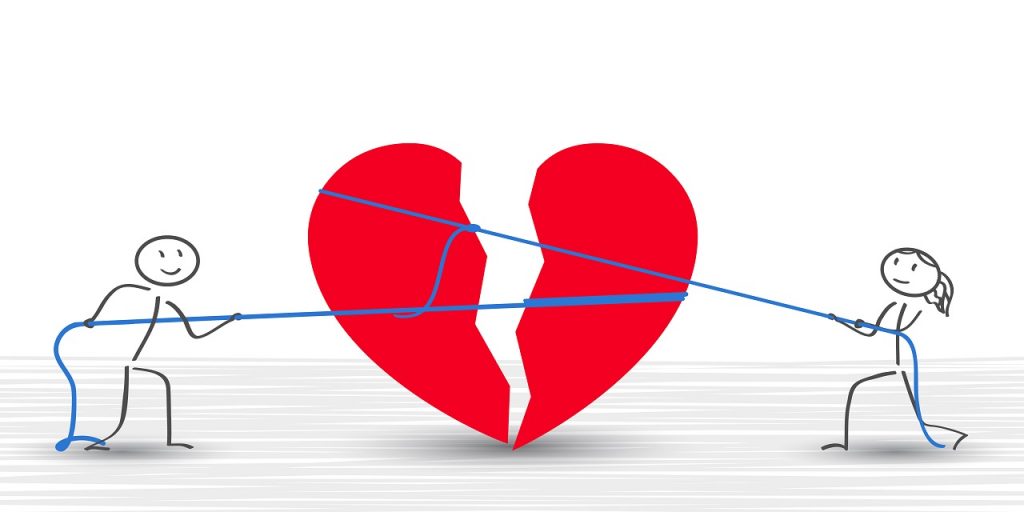
4 Effective Tips For Managing Couple Conflicts

4 effective tips to solving couple conflictsHow many times have we fought in our intimate relationships with our partner? Definitely more than a few times. Couple conflicts, in themselves, are not unhealthy. They give us an opportunity to look at the areas of the relationship that need the most attention. For instance, a conflict about one partner not helping with housework highlights feelings of being left out and alone in life’s mundane struggles. While there are countless reasons couples fight or disagree, these conflicts act like a muslin cloth, filtering out the impurities that affect the relationship.

All relationships, including successful ones, experience conflicts. It’s unavoidable. Fortunately, it’s not the presence of conflict but how it’s managed that predicts the success or failure of a relationship. We say “manage” conflict rather than “resolve” because relationship conflict is natural and has functional, positive aspects that provide opportunities for growth and understanding. Additionally, some problems can’t be solved due to natural personality differences between partners.

Couple Conflicts and How To Manage Them 

1. Criticism
We criticize our partner when they fail to live up to our expectations. But criticism is different than a complaint. The latter is about specific issues, whereas the former is an attack on your partner at the core of their character. In effect, you are dismantling their whole being when you criticize. For instance:

Complaint: “You reached almost an hour late for our lunch.”

Criticism: “Punctuality is an issue with you. You are never on time. You never think of me, you are that forgetful, you’re just selfish.

The problem with criticism is that, it makes the victim feel assaulted, rejected, and hurt. It often causes the perpetrator and victim to fall into a vicious pattern where criticism reappears with greater frequency and intensity, which eventually leads to contempt.

Antidote to Criticism – Gentle Start-Up: A complaint focuses on a specific incident, but criticism attacks a person’s very character. The antidote for criticism is to focus on the complaint without blame. Avoid saying “you”, which can indicate blame, and instead talk about your feelings using “I” statements and express what you need in a positive way.

Rephrasing the above complaint in this manner, you can say, “I was really eager to meet you today at lunch. Off late, we haven’t been able to spend a lot of time together and I felt disappointed when I did not see you on time”.

2. Contempt
Contempt goes far beyond criticism. While criticism attacks your partner’s character, contempt assumes a position of moral superiority over them. When we contempt someone, we are truly mean — we treat them with disrespect, call them names, and mock them with sarcasm. The target of contempt is made to feel worthless.

I will quote a real example of contempt from my relationship when the man said on the issue of his lack of libido that I am a sexual pervert (tharak). While I reacted to this insinuation, also putting blame on his character, both of us had our own learnings from the episode. I resorted to criticism and he resorted to contempt.

Antidote to Contempt: is to build a culture of appreciation and respect in your relationship. Remember the tip – Small Things Often: If you regularly express appreciation, gratitude, affection, and respect for your partner, you’ll create a positive home in your relationship that acts as a buffer for negative feelings. The more positive you feel, the less likely that you’ll feel or express contempt!

3. Defensiveness
We become defensive when we feel accused, we fish for accuses and play the innocent victim so that our partner will back off. Unfortunately, these excuses never work. Our excuses just tell our partner that we don’t take their concerns seriously and we won’t take responsibility for our mistakes.

Question: Did you not see that I was attending this important official call and you put the pressure cooker on, it was making whistles and disturbing me

Defensive response: It’s okay, even other people would enjoy the sound of whistles.

Antidote to Defensiveness: Take Responsibility: Defensiveness is self-protection in the form of innocent victimhood to keep off a perceived attack. Most people become defensive when they are being criticized, but the problem is that being defensive never solves the problem at hand. Defensiveness is an indirect way of blaming your partner. You mean that the problem isn’t me, it’s you. Thus, the problem is not resolved and the conflict escalates further. The antidote is to accept responsibility, specific to the conflict.

4. Stonewalling
Stonewalling occurs when the person withdraws from the interaction, shuts down, and stops responding to their partner. Rather than confronting the issues with their partner, people who stonewall can make avoiding maneuvers such as turning away, acting busy, stop talking or showing distracting behaviors like scrolling on the phone while you talk to them or spending too much time sleeping. Stonewalling is like a flight or fight response and puts couples under a lot of emotional pressure.

Antidote to Stonewalling – Practice Physiological Self-Soothing: If you feel like withdrawing or shutting off in a conflict, take a break. Allow your body to physiologically calm down by doing an activity of interest such as walk in the park, cooking your favorite dish, getting ready, doing anything you like. Inform your partner that you need some time for yourself and then return to the discussion in a rational and respectful way.

We hope this article on managing couple conflicts helps you form a stronger connection with your partner! Do leave your thoughts in the comments below. For more articles by our Sexual Wellness Expert Pallavi Barnwal, check out Healthy Reads.

#BeTheForce 

January 30, 2025 By Pallavi Barnwal Leave a Comment

Is Your Relationship Abusive?

abusive relationshipShweta Mishra, aged 21, met her ex-boyfriend at a friend’s party. They soon became close and started seeing each other. The guy had recently gotten out of one relationship and used to get very abusive at times. He would get drunk and talk about his ex-girlfriend which badly affected her self-esteem, to the point where she started considering herself ugly. He would also call her names and say that she was with him only because she wanted money. She started doubting her own attractiveness and self-worth slowly. His abusive behaviour did not end there. He would get jealous if she talked to any other guy and even forbid her to talk to the attractive ones.

He would try to touch her inappropriately when he was drunk which she detested. One day, it got much worse than the other days. He was badly drunk and started touching her inappropriately. She had started hating the smell of alcohol to the point that it made her nauseous. She said a repeated no but he went on groping her. That night she had the worst breakdown ever. The worst part was that he blamed her for being frigid and difficult the next day and told her that now she would make him the bad guy.

Shweta started having a series of breakdowns where she would hate herself. She started scratching herself as she felt ‘dirty’ and ‘ugly’. She would feel his face on her body and want to cut herself. Finally, she decided to walk out of the relationship to preserve herself. But even after months, she still has trust-issues in relationships. She had several episodes of breakdowns even after that when she hurt herself to ease the pain.

Does the above scenario sound familiar? Have you been mistaking an abusive relationship for ‘love’? If so, read on.

Love in young age is full of hormones, tumultuous changes, confusion and chaos. Adolescents and young adults often find themselves lost when it comes to finding out information on safe sex practices or healthy relationships. Popular media promotes eve-teasing, stalking, possessiveness and ownership behaviour as ‘love’. With increasing peer pressure to have a girlfriend or a boyfriend, a young mind which is already grappling with questions of self-worth is seduced with the idea of having someone as a partner. Most victims choose to continue being in abusive relationships just to avoid the shame of ‘breaking-up’. The communication gap between parents and children while growing up makes the situation even more difficult.

So how do you recognise these signs of abuse?

Emotional abuse or psychological abuse is categorized by a pattern of behaviour that leaves another person feeling isolated, degraded or worthless. It is a way for the abuser to maintain power and control in the relationship. Psychological pain can be just as bruising as a slap or punch, even if it leaves no physical mark. Let us talk about these in detail.

  • Intimidation: can be subtle and includes veiled or indirect threats. The partner could be watching each movement, checking on your whereabouts, checking your phone or springing up on you unexpectedly. This can have a damaging effect on a person’s overall sense of safety and lead to anxiety.
  • Explicit Threats: Sometimes, intimidation is not so subtle. We all know the infamous acid attacks on the victims who had the courage to say no to their spurned lovers. There are far too many instances of the partner threatening the girl with self-harm or suicide in case she leaves him.
  • Slut Shaming: This is another form of abuse which could leave the abused trapped, unwanted and ashamed. ‘If you don’t go out with me, I will tell everyone what we did in bed.’ Worse, the abuser could get explicit photos or videos of the abused and blackmail the partner into doing things they might not be ready for.
  • Name Calling: Abuser might call the partner ugly, fat, dark, stupid or similar such which eventually leads them to believe that it is true. The sense of self in teenage years is still fragile and such behaviour might lead to withdrawal and depression.
  • The Silent Treatment: Sometimes the abuser might use non-communication as a form of punishment to coerce the other partner. They might completely ignore the partner till they give in to their wishes. There are abusers who refuse to acknowledge the presence of their partners in public and are responsive when alone.
  • Constant Criticism: ‘You can’t wear that!’ or ‘You cannot hang out with those friends’ or ‘You cannot go there’ is something which abusers use to erode the self-esteem of the other person. This may make one feel unacceptable and feel bad about themselves.
  • Sexual Abuse: Any sexual contact or activity with an intimate partner that makes a person feel uncomfortable, with the purpose of controlling through fear, threats, coercion, manipulation or violence. This may be with or without the presence of physical violence at the time of the act or within the relationship. These happen mostly as there is lack of parental consent and the victims do not want to talk about it due to fear, guilt and shame. The victims could be both men and women, young adults who are in same-sex relationship, all ages – tween and upwards. Most such victims who were forced to have sex are less likely to use condoms. The perpetrator is frequently an intimate partner. Date rapes, forced oral sex, unwanted touching – all constitute part of sexual abuse.

If you have faced any of the above, it might be time to walk out of the relationship. This is not always easy but try talking to someone you trust – a friend, sibling or trustworthy adult. And always remember – IT IS NOT YOUR FAULT.

We hope this article helps you! Do leave your thoughts in the comments below. For more articles by our Sexual Wellness Expert Pallavi Barnwal, check out Healthy Reads.

#BeTheForce 

Disclaimer: Reader discretion is advised. This content is for an older, mature audience who seek to improve their health and wellness. GOQii is not responsible for any misrepresentation of this information.

  • « Previous Page
  • 1
  • 2
  • 3
  • 4
  • 5
  • 6
  • …
  • 18
  • Next Page »

Search

Recent Posts

  • 6 Health Benefits of Playing Sports
  • Foods to Manage Blood Sugar Naturally: A Complete Guide to Better Blood Sugar Control
  • The Lazy Person’s Guide to Staying Healthy: 5 Micro-Habits That Take Less Than 2 Minutes
  • Healthy Eating: Comforting Chilli Bean Soup Recipe for the Monsoon
  • The Truth About the ‘Beer Belly’: What Alcohol Really Does to Your Metabolism

Stay Updated

Archives

  • August 2026 (8)
  • July 2026 (25)
  • June 2026 (22)
  • May 2026 (20)
  • April 2026 (24)
  • March 2026 (18)
  • February 2026 (14)
  • January 2026 (14)
  • December 2025 (19)
  • November 2025 (15)
  • October 2025 (20)
  • September 2025 (6)
  • August 2025 (6)
  • July 2025 (9)
  • June 2025 (18)
  • May 2025 (16)
  • April 2025 (22)
  • March 2025 (26)
  • February 2025 (21)
  • January 2025 (25)
  • December 2024 (22)
  • November 2024 (22)
  • October 2024 (20)
  • September 2024 (22)
  • August 2024 (27)
  • July 2024 (15)
  • June 2024 (23)
  • May 2024 (26)
  • April 2024 (27)
  • March 2024 (27)
  • February 2024 (23)
  • January 2024 (21)
  • December 2023 (14)
  • November 2023 (10)
  • October 2023 (19)
  • September 2023 (21)
  • August 2023 (16)
  • July 2023 (16)
  • June 2023 (21)
  • May 2023 (20)
  • April 2023 (19)
  • March 2023 (23)
  • February 2023 (19)
  • January 2023 (15)
  • December 2022 (11)
  • November 2022 (15)
  • October 2022 (15)
  • September 2022 (12)
  • August 2022 (9)
  • July 2022 (17)
  • June 2022 (11)
  • May 2022 (10)
  • April 2022 (6)
  • March 2022 (6)
  • February 2022 (13)
  • January 2022 (11)
  • December 2021 (7)
  • November 2021 (3)
  • October 2021 (6)
  • September 2021 (3)
  • August 2021 (8)
  • July 2021 (7)
  • June 2021 (15)
  • May 2021 (16)
  • April 2021 (10)
  • March 2021 (7)
  • February 2021 (4)
  • January 2021 (4)
  • December 2020 (3)
  • November 2020 (4)
  • October 2020 (10)
  • September 2020 (3)
  • August 2020 (3)
  • July 2020 (2)
  • June 2020 (4)
  • May 2020 (10)
  • April 2020 (12)
  • March 2020 (10)
  • February 2020 (4)
  • January 2020 (4)
  • December 2019 (3)
  • November 2019 (7)
  • October 2019 (5)
  • September 2019 (4)
  • August 2019 (9)
  • July 2019 (9)
  • June 2019 (11)
  • May 2019 (4)
  • April 2019 (8)
  • March 2019 (8)
  • February 2019 (9)
  • January 2019 (8)
  • December 2018 (9)
  • November 2018 (3)
  • October 2018 (3)
  • September 2018 (5)
  • August 2018 (10)
  • July 2018 (6)
  • June 2018 (13)
  • May 2018 (8)
  • April 2018 (18)
  • March 2018 (9)
  • February 2018 (8)
  • January 2018 (15)
  • December 2017 (12)
  • November 2017 (19)
  • October 2017 (13)
  • September 2017 (15)
  • August 2017 (4)
  • July 2017 (8)
  • June 2017 (7)
  • May 2017 (6)
  • April 2017 (8)
  • March 2017 (6)
  • February 2017 (7)
  • January 2017 (9)
  • December 2016 (10)
  • November 2016 (7)
  • October 2016 (7)
  • September 2016 (7)
  • August 2016 (11)
  • July 2016 (9)
  • June 2016 (9)
  • May 2016 (12)
  • April 2016 (17)
  • March 2016 (17)
  • February 2016 (8)
  • January 2016 (6)
  • December 2015 (2)
  • November 2015 (9)
  • October 2015 (7)
  • September 2015 (9)
  • August 2015 (11)
  • July 2015 (9)
  • June 2015 (11)
  • May 2015 (9)
  • April 2015 (13)
  • March 2015 (8)
  • February 2015 (5)
  • January 2015 (12)
  • December 2014 (14)
  • November 2014 (11)
  • October 2014 (6)
  • September 2014 (13)
  • August 2014 (12)
  • July 2014 (6)
  • June 2014 (2)
  • May 2014 (7)
  • April 2014 (4)

From Burnout to Balance: How Dr. Ranjit Reclaimed His Health

Dr Ranjit Bhatt has spent years tending to others. A practising doctor in Odisha, his days were packed with patients, surgeries, and emergencies. From the outside, it looked like a life lived in service. But on the inside, something wasn’t right. “I had no … [Read More...]

From Shimla’s Slopes to Chandigarh’s Sidewalks: Surinder Kaur Bhalla’s Journey from Chaos to Control

Some journeys start with a plan. Others begin with a stumble literally. Surinder Bhalla, a government professional, born and raised in the scenic hill town of Shimla, had always lived a life of movement. “In Shimla, you walked everywhere,” she reflects. “Walking was never an exercise. It was just life.” But after shifting to Chandigarh, […]

“I’ve Challenged Myself to Live 100 Years” – The Story of Chandubhai Savani’s Second Chance at Life

At 67, most people start slowing down. Not Chandubhai Savani. A resident of Surat, Chandubhai, thought life was on track. “My life was going well till I had my bypass surgery,” he says. That surgery, back in 2021, was a wake-up call.  Medication was routine, but exercise wasn’t. His diet? What he calls ‘normal.’ “I […]

Ananda Mukherjee Health Story

From Terminal Illness To Complete Wellness! Ananda Mukherjee Health Story

As we observe World Cancer Day under the powerful theme ‘United by Unique’ (2025-2027)**, we are reminded that every individual’s journey with cancer is distinct, yet united by shared resilience, hope, and the collective fight against this disease. This theme places people at the centre of care and their stories at the heart of the […]

  • HOME
  • HEALTHY LIVING
  • FITNESS
  • HEALTHY RECIPES
  • USER STORIES
  • KARMA
  • BUY GOQii

Copyright ©2016 GOQii