GOQii

Blog

  • HOME
  • HEALTHY LIVING
  • FITNESS
  • HEALTHY RECIPES
  • USER STORIES
  • KARMA
  • BUY GOQii

May 15, 2024 By GOQii Leave a Comment

Understanding and Managing Atopic Dermatitis Triggers

Do relentless red, itchy, and parched patches frequently mar your skin, perhaps across your face or hidden in the bends of your body? Are allergies your constant, unwelcome companions, manifesting as persistent runny noses, morning sneezes, or reactions to certain foods? Or maybe you find yourself combatting the tell-tale wheeze of asthma? If these experiences resonate with you, it’s time to uncover the layers of Atopic Dermatitis (AD).



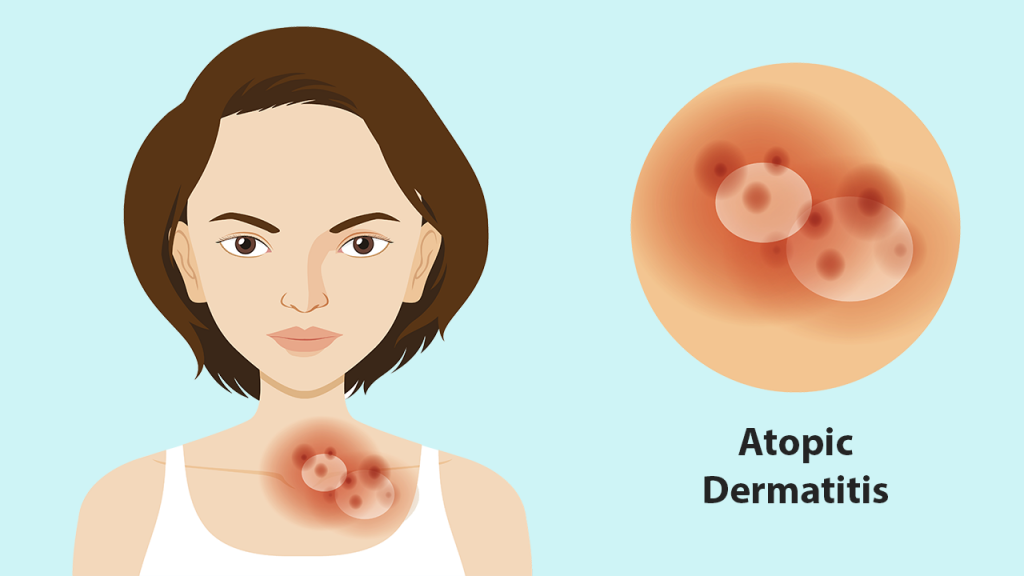
Atopic Dermatitis, a specific form of eczema, commonly makes its debut in childhood and can persist well into adult years in some cases. This condition is visually marked by red, inflamed, and dry and itchy eczematous lesions on the face & body. The origins of AD are complex, rooted in a combination of genetic predispositions and environmental elements, and it behaves in a cycle of exacerbations and calm.

This condition is best described as chronic and relapsing, which means that there may be periods of flareups (disease aggravation) and remissions (disease free period). Early diagnosis & therapeutic intervention play a crucial role in disease remission.

Understanding and identifying what ignites AD is critical. Triggers vary widely—some dwell within the body like a compromised skin barrier, while others lurk in our surroundings, such as dietary allergens or the sun’s harsh rays, climatic changes, physical exertion and sweating. These triggers can be very specific and subjective and recognising these culprits is pivotal. Thus, keeping a detailed skin diary can be instrumental in mastering an individual’s condition. It will really aid in disease control and management. These triggers if not monitored, lead to a FLARE.

A flare-up, or ‘flare’, signifies a severe intensification of symptoms that disrupts life and demands immediate medical attention. In such phases, the skin’s plight worsens: redness ravages, and itchiness intensifies, often leading to infected, weeping wounds.

This event often hampers the individual’s quality of life. Thus, trigger management and flare prevention are two very important parts in treating AD. But there’s a beacon of hope. Through meticulous trigger management and prevention strategies, flare-ups can be mitigated or reduced. Simple adjustments to one’s lifestyle and dietary habits can pave the way to managing this irksome condition.

With the collaborative efforts of a dermatologist, a dietician or nutritionist, and a physician, the goal is not just to treat but to transform lives. The objective is clear – enhance the quality of life through prolonged remission, navigating each individual towards a smoother journey with Atopic Dermatitis.

We hope this article helps you. For further information or guidance, reach out to your GOQii Skin Coach.

#BeTheForce

Reference – Girolomoni G, Busà VM. Flare management in atopic dermatitis: from definition to treatment. Ther Adv Chronic Dis. 2022 Jan 13;13:20406223211066728. doi: 10.1177/20406223211066728. PMID: 35070252; PMCID: PMC8771745.

Kolb L, Ferrer-Bruker SJ. Atopic Dermatitis. [Updated 2023 Aug 8]. In: StatPearls [Internet]. Treasure Island (FL): StatPearls Publishing; 2024 Jan-. Availabatopic-dermatitis-triggers-managementle from: https://www.ncbi.nlm.nih.gov/books/NBK448071

April 29, 2024 By Madhu Soni 4 Comments

Dance Your Way To Good Health on International Dance Day!

Dancing

We are all well aware that April 29 is celebrated as International Dance Day. Did you know that it is celebrated to mark the birth anniversary of Jean George Noverre – the creator of Modern Ballet?

If you’re wondering whether International Dance Day is just another addition to the various days that are being celebrated worldwide, then you’re in for a surprise. Dance and good health are closely knitted. You can, in fact, reap a surplus of health benefits from dancing.

From celebrations to harvest rituals, dance has always been an integral part of the human culture. In India, the legacy of dance dates back to 5000 years. The Hindu mythology speaks volumes of Lord Shiva as Natraja – the Lord of the Dance. The Divine Raslila by Lord Krishna, Radha Rani and the Gopis in Vrindavan or Lord Ganesha’s dance to express joy.

Not just in India, but in any part of the world, dancing has always been a source of delight and ecstasy. It‘s a way to express joys, sorrows and communicate emotions or a story with grace.

As it is International Dance Day, let’s take a look at various dance forms and how they can keep you healthy!

1. Ballet

This graceful dance originated during the Italian Renaissance in the 15th Century. The dance moves slowly at first and then picks up the pace to classical music with dramatic interpretation. Perhaps the main features of this dance are standing on the toes and the arms held out in an extended curve. As a result, these dancers have significant strength in their hamstrings, glutes, calves and feet. The turnout of the leg at the hip socket joint is another key element in Ballet which helps develop strong gluteal muscles. Ballet ensures posture alignment and joint flexibility. Ballet trainees are taught to engage their core to achieve alignment, balance and prevent injuries.

2. Bharatanatyam

Bharatanatyam is a classical solo Temple Dance from Southern India. The dance has impressive gesture and excellent footwork. It is based on Hindu religious themes. This dance form tones the arms, legs and the core. It also increases stamina, flexibility and balance. The steps and eye movements increase concentration and coordination skills. Rolling of the eyes is a good exercise for the eye muscles. It’s a great way to have a healthy heart and stay fit.

3. Belly Dance

The mesmerizing belly dance of the mysterious Middle East is an impressive and expressive dance form! It has admirers and followers all around the world. This dance originated in Egypt and has complex movements of the Torso. Dancing gracefully and fluidly is possible only when you have a strong core. Contrary to its name, Belly Dance also employs the larger and smaller muscles of the abdomen, pelvis, spine, neck, glutes and the upper arm.

4. Zumba

Zumba is the latest fitness craze which has swept youngsters as well as the elderly off their feet! It was accidentally invented when Albert “Beto” Perez, an aerobics instructor forgot to carry his tape and played the available Latin music and infused this dance with aerobics and Eureka! Zumba was born! It provides a great workout for the entire body, engaging each and every muscle group. It‘s a high-intensity cardio exercise which keeps metabolism high. Besides this, Zumba also increases endurance.

5. Salsa

Salsa is a dance and musical style with deep Caribbean and African roots. Although it was popular in Latin America, it has gained popularity in Europe and Asia too! Salsa is a partner dance which features a series of hip movement, twirls and other dance moves. This dance virtually engages all the major muscle groups. The glutes, hamstrings, quadriceps, calves and core area are exercised aggressively in order to perform the various step sequences.

6. Bollywood Dance

If I had to pin down the exact number of dance forms which comprise the Bollywood Dance, it would be as difficult as gauging how many shades of blue makes the sky.

Initially, Bollywood Dance was inspired by classical and folk dances of the various states in India. Over the years, Bollywood Dance has evolved. Now there are professional choreographers who have introduced Disco, Hip-Hop, Freestyle Dancing, Belly Dancing and so on.

Bollywood Dancing is a great aerobic exercise which engages the whole body. It is a fun way to tone up the body as most of the dance movements help strengthen the core and calves. And last but not the least, it’s a great stress buster.

How Does Dancing Help Your Health?

  • It is a great activity for those with cardiovascular disease as it helps increase lung capacity
  • Dance aids in boosting memory and preventing dementia as you grow older
  • It improves flexibility and helps in maintaining body balance and coordination
  • Dancing solo, with a partner or in a group is said to reduce stress. Symptoms of depression are much lower with people who sway to the rhythm
  • It is a popular way to stay fit and active. Most fitness clubs have already included dance in their fitness regime
  • It also improves one’s confidence and self-esteem

Although dance can be performed by anyone, keep a few things in mind:

  • Consult your Doctor if you have any medical conditions or obesity
  • Warm up and stretch before dancing
  • If you are a beginner, don’t push yourself too hard
  • Keep yourself well hydrated
  • Rest in between sessions

Whether you’re a busy person, multi-tasking or a senior citizen, age is just a number when you dance to the music you like! If you want to start dancing for health, tune in to some of our coaches on GOQii Pro and find a good mix of Zumba, Strong by Zumba, Aerobics and Belly Dancing! Download the GOQii app to get started.

Do you know of any other dance form that provides a multitude of health benefits? Share them with us in the comments below!

#BeTheForce

March 30, 2024 By GOQii 3 Comments

GOQii Doctor Consultations: All You Need to Know!

GOQii DoctorWouldn’t it be great to have a doctor assess your health or medical conditions online? Imagine having an online consultation with a doctor who is familiar with your issues, knows your medical history and is proficient enough to tackle the issues with simple lifestyle changes. You don’t have to look far! All you need to do is download the GOQii app and subscribe to get your own GOQii Doctor!

How Does It Work?

With the GOQii Doctor, users can have an online consultation. Before you begin with the consultation, an appointment is scheduled. GOQii Doctors acquaint themselves with the patient’s history, medical conditions and current lifestyle. Patients can also share their blood reports.

With this info, the consult with patients becomes thorough, which further promotes follow-ups and new appointments. After detailed research, if the issue is in the patient’s lifestyle, the GOQii Doctor can suggest lifestyle changes that will help. A GOQii Doctor will not prescribe medicines online.

What Can the GOQii Doctor Help With?

A GOQii Doctor can help you with a myriad of disorders. The issues handled by a GOQii Doctor fall in the following categories:

  • General Medicine: fever, cough, cold, weakness, fatigue, headache, anaemia, etc.
  • Lifestyle Medicine: weight management, stamina and immunity building, sleep issues, etc.
  • Endocrinology: Diabetes, thyroid, PCOD, Vitamin D deficiency, Osteoporosis, etc.
  • Orthopaedics: Joint pains, knee/back pain, exercise-induced injuries, spondylitis, etc.
  • Mental Health: Depression, anxiety, anger management, OCD, etc.
  • Cardiovascular: Heart care, high cholesterol, hypertension, etc.
  • Gastroenterology: Gut care, acidity, constipation, irritable bowel syndrome, GERD, etc.
  • Dermatology: Skincare, acne, hair fall, rashes, psoriasis, eczema, etc.
  • Gynaecology: Women’s health, pregnancy, fibroids, menses, menopause, etc.
  • Ophthalmology: Eye health, blurring of vision, retinopathy, etc.
  • Other cases like piles, kidney stones, prostatomegaly, oral care, etc.

According to the IndiaFit Report, there has been an increase in the number of consultations for sexual health. As consults happen over a call, it is much easier for people to clarify their doubts on an issue considered a taboo otherwise.

Chronic disorders such as diabetes, high cholesterol, thyroid and gut issues like acidity, constipation are the most sought after in the list of appointments. Poor and unhealthy lifestyle is the reason for these disorders and closely inspecting and making small alterations in the patient’s routine helps in providing long term benefits.

Do you agree that online consultation is the need of the hour? Want to know what else a GOQii Doctor can do for you? Drop us a message in the comments below!

#BeTheForce

February 4, 2024 By GOQii Leave a Comment

Equality in Healing: Overcoming Global Challenges in Cancer Treatment

World Cancer DayAccess to essential health services is a huge challenge for at least half the world’s population, according to a report from the World Bank and WHO. Many households are pushed into poverty as they have to pay for healthcare from their own pockets. This is especially true for cancer, a disease that many people are denied basic care for, although we live in a time where there are amazing advancements in cancer prevention, diagnostics and treatment.

The equity gap is costing people lives as those who need cancer care face barriers at every turn. Factors such as income, education, location and discrimination based on age, gender, ethnicity, sexual orientation, disability and lifestyle affect cancer care negatively. So do risk factors such as tobacco, diet or environmental hazards.

Barriers That Affect Cancer Care Gender Norms and Discrimination:

Women and girls face discrimination because of stereotypes and expected gender roles. Men also face challenges because of social norms surrounding masculinity, which stop them from taking life-saving procedures such as surgery for early prostate cancer, for fear of incontinence or impotence.

Socioeconomic Status: Poverty is a major obstacle to proper care as many people cannot pay for or access screening and treatment services. The ways of prevention and knowledge among these communities are also low.

Age Discrimination: Older individuals are greatly underrepresented in the research that establishes the standards for cancer treatment. Many older women with breast cancer get less chemotherapy than their younger counterparts. More than 70% of deaths caused by prostate cancer happen in men above the age of 75. Age should not affect the quality of care one gets.

Rural-Urban Divide: Where one lives, should not affect if one will live. Rural patients are often diagnosed at later stages and are less likely to get suitable treatment. The financial cost of traveling to a place where one can get treatment and getting the right treatment can be too much.

Homophobia, Transphobia & Related Discrimination: Around the world, the lesbian, gay, bisexual, transgender, queer and intersex (LGBTQAI) community face aggression and discrimination. They are also likely to face lack of awareness or bias from health practitioners.

These barriers to cancer care are only some of the ways in which people can be denied of cancer care. But these barriers can be removed. The first step is to acknowledge this inequality, question our own beliefs and prejudices, listen to the views of people living with cancer and fight these gaps when we see them.

What Leaders and Governments Can Do To Improve Cancer Care:  

Leaders and governments have a vital role in enhancing cancer care and closing the equity gap. Here are some of the steps they can take:

Improve the health system and make cancer services more accessible and affordable, especially in low- and middle-income countries and rural areas. This can be done by investing in infrastructure, equipment, human resources, and supply chains, as well as offering universal health coverage and social protection schemes

  1. Reduce and manage cancer risk factors, such as tobacco, alcohol, unhealthy diet, physical inactivity, and environmental pollution, by enacting effective policies and regulations. These include taxing harmful products, restricting their promotion, enforcing smoke-free and labeling laws, and promoting healthy habits.
  2. Support and apply research and innovation in cancer prevention, diagnosis, treatment, and care. This involves funding and facilitating studies, trials, and technology, and promoting collaboration and knowledge sharing among researchers, practitioners, and policymakers.
  3. Empower and involve people and communities in cancer care and advocacy, and meet their voices and needs. This involves educating on cancer prevention and early detection, providing psychosocial and palliative care, and supporting civil society organizations and patient groups that work for cancer causes.

By taking these steps, leaders and governments can make a change in enhancing cancer care and saving lives. They can also help achieve the global goals and targets set by the World Health Organization and the United Nations, such as the 2030 Agenda for Sustainable Development and the Global Action Plan for the Prevention and Control of Noncommunicable Diseases.

#BeTheForce

Image courtesy: https://worldcancerday.org
  • « Previous Page
  • 1
  • 2
  • 3
  • 4
  • 5
  • 6
  • …
  • 31
  • Next Page »

Search

Recent Posts

  • Navigating the Maze of Nutrition: Finding Clarity Amidst Confusion
  • Get children active and keep them healthy
  • What Gestational Diabetes Can Do To You & Your Unborn Child
  • Breathing – A Forgotten Art
  • The Incredible Benefits Of Milk You Might Not Know

Stay Updated

Archives

  • December 2025 (3)
  • November 2025 (15)
  • October 2025 (20)
  • September 2025 (6)
  • August 2025 (6)
  • July 2025 (12)
  • June 2025 (18)
  • May 2025 (16)
  • April 2025 (23)
  • March 2025 (23)
  • February 2025 (22)
  • January 2025 (26)
  • December 2024 (26)
  • November 2024 (25)
  • October 2024 (22)
  • September 2024 (24)
  • August 2024 (31)
  • July 2024 (21)
  • June 2024 (26)
  • May 2024 (31)
  • April 2024 (27)
  • March 2024 (29)
  • February 2024 (26)
  • January 2024 (25)
  • December 2023 (15)
  • November 2023 (11)
  • October 2023 (22)
  • September 2023 (22)
  • August 2023 (20)
  • July 2023 (22)
  • June 2023 (24)
  • May 2023 (24)
  • April 2023 (24)
  • March 2023 (23)
  • February 2023 (20)
  • January 2023 (16)
  • December 2022 (12)
  • November 2022 (15)
  • October 2022 (15)
  • September 2022 (12)
  • August 2022 (10)
  • July 2022 (17)
  • June 2022 (11)
  • May 2022 (10)
  • April 2022 (6)
  • March 2022 (6)
  • February 2022 (13)
  • January 2022 (12)
  • December 2021 (7)
  • November 2021 (3)
  • October 2021 (6)
  • September 2021 (3)
  • August 2021 (8)
  • July 2021 (7)
  • June 2021 (15)
  • May 2021 (16)
  • April 2021 (10)
  • March 2021 (7)
  • February 2021 (4)
  • January 2021 (4)
  • December 2020 (3)
  • November 2020 (4)
  • October 2020 (10)
  • September 2020 (3)
  • August 2020 (3)
  • July 2020 (2)
  • June 2020 (4)
  • May 2020 (10)
  • April 2020 (12)
  • March 2020 (10)
  • February 2020 (4)
  • January 2020 (4)
  • December 2019 (3)
  • November 2019 (7)
  • October 2019 (5)
  • September 2019 (4)
  • August 2019 (9)
  • July 2019 (9)
  • June 2019 (11)
  • May 2019 (4)
  • April 2019 (9)
  • March 2019 (8)
  • February 2019 (9)
  • January 2019 (8)
  • December 2018 (9)
  • November 2018 (3)
  • October 2018 (3)
  • September 2018 (5)
  • August 2018 (10)
  • July 2018 (6)
  • June 2018 (13)
  • May 2018 (8)
  • April 2018 (18)
  • March 2018 (9)
  • February 2018 (8)
  • January 2018 (15)
  • December 2017 (12)
  • November 2017 (19)
  • October 2017 (13)
  • September 2017 (15)
  • August 2017 (4)
  • July 2017 (8)
  • June 2017 (7)
  • May 2017 (6)
  • April 2017 (8)
  • March 2017 (6)
  • February 2017 (7)
  • January 2017 (9)
  • December 2016 (10)
  • November 2016 (7)
  • October 2016 (7)
  • September 2016 (7)
  • August 2016 (11)
  • July 2016 (9)
  • June 2016 (9)
  • May 2016 (12)
  • April 2016 (17)
  • March 2016 (17)
  • February 2016 (8)
  • January 2016 (6)
  • December 2015 (2)
  • November 2015 (9)
  • October 2015 (7)
  • September 2015 (9)
  • August 2015 (11)
  • July 2015 (9)
  • June 2015 (12)
  • May 2015 (9)
  • April 2015 (13)
  • March 2015 (8)
  • February 2015 (5)
  • January 2015 (12)
  • December 2014 (14)
  • November 2014 (11)
  • October 2014 (6)
  • September 2014 (13)
  • August 2014 (12)
  • July 2014 (6)
  • June 2014 (2)
  • May 2014 (7)
  • April 2014 (5)

From “Laddu Nawin” to Fit and Fierce: How a 25-Year-Old Insurance Advisor Shed 20 Kilos and Gained His Life Back

When 25-year-old Nawin Yadav from Hyderabad walked into his office every morning, he carried more than just his files and policy papers. He had the weight of fatigue, sluggish energy, and an ever-growing belly that was becoming the butt of jokes. “People … [Read More...]

“I’ve Challenged Myself to Live 100 Years” – The Story of Chandubhai Savani’s Second Chance at Life

At 67, most people start slowing down. Not Chandubhai Savani. A resident of Surat, Chandubhai, thought life was on track. “My life was going well till I had my bypass surgery,” he says. That surgery, back in 2021, was a wake-up call.  Medication was routine, but exercise wasn’t. His diet? What he calls ‘normal.’ “I […]

From Shimla’s Slopes to Chandigarh’s Sidewalks: Surinder Kaur Bhalla’s Journey from Chaos to Control

Some journeys start with a plan. Others begin with a stumble literally. Surinder Bhalla, a government professional, born and raised in the scenic hill town of Shimla, had always lived a life of movement. “In Shimla, you walked everywhere,” she reflects. “Walking was never an exercise. It was just life.” But after shifting to Chandigarh, […]

Ananda Mukherjee Health Story

From Terminal Illness To Complete Wellness! Ananda Mukherjee Health Story

As we observe World Cancer Day under the powerful theme ‘United by Unique’ (2025-2027)**, we are reminded that every individual’s journey with cancer is distinct, yet united by shared resilience, hope, and the collective fight against this disease. This theme places people at the centre of care and their stories at the heart of the […]

  • HOME
  • HEALTHY LIVING
  • FITNESS
  • HEALTHY RECIPES
  • USER STORIES
  • KARMA
  • BUY GOQii

Copyright ©2016 GOQii