GOQii

Blog

  • HOME
  • HEALTHY LIVING
  • FITNESS
  • HEALTHY RECIPES
  • USER STORIES
  • KARMA
  • BUY GOQii

October 3, 2017 By Trupti Hingad Leave a Comment

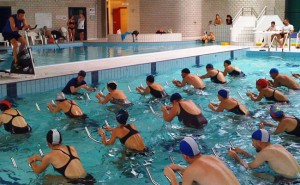
Burn fat with pool workouts-Part 1

water spinning 2

Today, to counter their stress filled lifestyle, people are shifting their focus to health and fitness. There are many fitness methods that one can adopt such as running, cycling swimming, yoga, aerobics etc. Most of these are popular among people who are taking to fitness or are already into fitness. However, there is a new form of exercise- Aquatic exercise and Aqua aerobics that is getting popular.

Aqua aerobics or exercise arrived almost over two decades ago but, it has gained popularity in India only 5-6 years ago. Aqua aerobics uses the buoyancy of water coupled with your own body weight as a training tool to build endurance and get into shape.

Aquatic exercise is a low impact exercise that takes the pressure off your bones, joints and muscles. Water offers natural resistance which helps to strengthen the muscles. It provides almost 14% more resistance than air, which means your muscles get more toned in water and there is almost no impact on the bones, joints and muscles.

Why Aqua exercise?

You weigh only 10% of your body weight when you are in the water. When a person weighing 100kg or who has arthritis in joints or cannot do any exercise while on land due to the gravitational pull, as he enters the water, the load is lifted off the joints and he can do exercise without any pain.

For elderly who have difficulty in walking, sitting and moving, this is the best way to work out and stay fit. And, the best part is you can do these exercises even if you don’t know how to swim.

Aquatic exercise has amazing benefits: Here is a list

  • It improves muscle endurance and strength. Pool water provides resistance which strengthens the muscles and boosts cardio intensity and improves flexibility.
  • Water exercise is good for people with joint injuries or infections or who have had a recent surgery –great way to stay fit and shorten recovery time and heal faster.
  • A pool workout gives better balance, agility and endurance.
  • Pool workouts are great fat burners. You can burn much higher level of calories in a shorter time in the pool. You can burn about 400-500calories in one hour.
  • Working out in the pool doesn’t feel like an arduous task, you enjoy doing it and thus there are higher chances that you will stick to this routine. Since aquatic exercise is a low impact exercise there is no age bar for it. Water is therapeutic and removes the pain. Water has a healing effect and can distress the body and mind too!
  • Water resistance is not only for muscles, in fact, water pressure actually works with your blood as well and enables good blood circulation decreasing blood pressure and keeps the heart also in good condition.
  • Aqua aerobics can satisfy that need to feel cool in warmer temperatures while still enabling us to exercise.

Aqua exercises have a great bonding effect as it can be done together and there are positive benefits to be derived from these workouts.

Precautions for the Pool Workout:

Before starting any pool exercise program, always check with your physician to make sure pool exercises are right for you.

Here are some tips to get you started:

  • Water shoes will help to provide traction on the pool floor.
  • Water level can be waist or chest high. This way your feet will have good contact with the pool floor and your leg muscles will be able to support some of your weight.
  • Use a Styrofoam noodle or floatation belt/vest to keep you afloat in deeper water.
  • Slower movements in the water will provide less resistance than faster movements.
  • You can use webbed water gloves, Styrofoam weights, inflated balls, or kickboards for increased resistance.
  • Never push your body through pain during any exercise.

Although you will not notice that you sweat with pool exercises, it is still important to drink plenty of water. Drink water before and after your water workout to avoid dehydration

In my next blog..I will share the various pool workouts and procedure to do it. Stay tuned!


September 3, 2017 By Vrushali Athavle 11 Comments

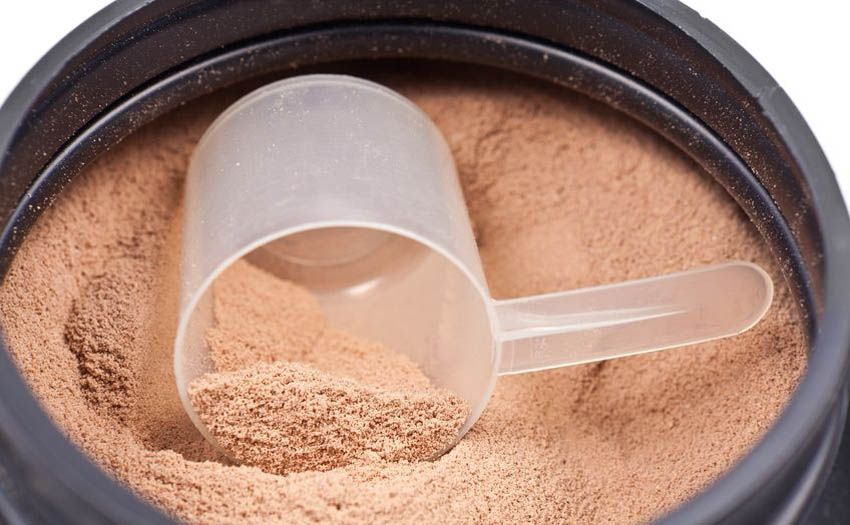
Know your Protein Powders!

Protein Powder

This blog is in continuation to my previous blog ‘Protein is not just about quantity, it’s also about quality’. If you missed it here is a link Protein is not just about quantity. It’s also about quality. I am never in favour of proteins powders but, if really required you can take them as supplements as an addition to the diet you eat. I emphasize on this because the focus of any diet should be food. Whole food is often preferable to powders because it can offer a whole spectrum of nutrients that powders cannot.

Protein powders are easy and convenient source of complete and high quality protein but these powders are devoid of other nutrients like fiber, vitamins and minerals which are got from our natural food items.

Calculate your protein requirement. See if you can meet them through your diet. Only if you are unable to give yourself the required quality and quantity of proteins then you should think to opt for protein supplements.

Choosing the protein powders: A tricky part

The tricky part is trying to pick a GOOD protein powder that will contribute to muscle gain and not break the bank.

Protein powders are basically divided into two categories:

  • Animal source protein which include milk protein derivatives like whey and casein, beef and egg white protein.
  • Vegetable source protein include soy, rice, pea, hemp and sprouted grain proteins


1. A) ANIMAL PROTEINS


Whey protein:

It is derived from milk. The protein portion of whole milk consists of 20% whey protein. It is most popular protein powder because of its taste, high quality and economically too it’s very convenient.


Whey protein comes in two varieties, whey concentrate and whey isolate.


Whey Concentrate

  • This is a good source of protein powder that is absorbed at a moderate pace.
  • It can be used both pre and post workout but typically it is good to include it as snack in between meals.
  • It has low lactose level that is well tolerated by most lactose-sensitive people. It has trivial amounts of fat and carbs relative to your overall nutrient intake.


Whey Isolate

  • It is one of the quickest absorbing proteins
  • Whey isolate is virtually fat-free for those wishing to eliminate as much fat from their diet as possible. It is typically lactose free for those few individuals who are very sensitive to the low-lactose levels found in whey concentrate
  • Isolates are great pre and post workout as they are absorbed quickly and can supply the muscle the nutrients needed to help recover and grow.


Casein or Milk Protein

  • Casein constitutes 80 percent of milk protein.
  • It takes longer digestion period as compared to whey concentrate and isolate.
  • Its takes about 5 to 7 hours to fully breakdown and this is one of the reasons for not consuming it post workout.
  • Before bed if you take in casein protein your body keeps absorbing and utilizing the nutrients even while you sleep. People also use casein during the day to help stay full and to keep a constant supply of protein in your body to supply the muscles with proper nutrition for hours after drinking the shake.


Egg protein:

  • Like milk proteins, egg white is also naturally very low in fat and carbs.
  • Egg white protein is cholesterol-free and an excellent choice for those who wish to avoid dairy products.


  1. B) PLANT PROTEINS:


They are derived from a variety of sources, including peas, hemp, sprouts, and grains. They’re rich in vitamins and minerals, and often provide antioxidants, amino acids, fiber and more. They are typically suitable for vegetarian or vegan diets. They’re also well tolerated by lactose-sensitive individuals.

Soy Protein

  • It is the only plant-based protein considered to be a high-quality protein, containing all the essential amino acids in the ratios needed to support growth and development
  •  It is loaded with glutamine and arginine which helps to dilate blood vessels and allows nutrition to get into the muscles quicker.
  • This type of protein can be used both pre and post workout or anytime throughout the day if needed to get in a meal/snack containing protein.

Conclusion

There are many different options of protein for you to choose from. Natural source of protein is the best but, based on your height, ideal weight and intensity of workout you may need to add a protein supplement into your diet. It is safe to take protein supplements if they are monitored properly as per your requirement. Getting all your protein from powders is not the best idea, as it could potentially restrict your intake of vitamins and minerals from other foods.


While there are no particular risks to consuming protein powder every day, you should not exceed your daily protein needs.  If you can meet your protein needs with whole foods, it’s the best thing. But, when you’re crunched for time, protein supplements can be your biggest ally.

May 23, 2017 By Azra Faizan 22 Comments

Why you need to strengthen your core?

plank-variations

‘You need to work on strengthening the core’

‘Why not start with some core strengthening exercises’

How often have you heard this line from a fitness trainer/doctor/health coach??

Now, how many of you know exactly what the core is??  My guess would be ‘we have a general idea, though not sure’

So let me try and explain first, what ‘the core’ is…

I do not want to bore you with the scientific names of the muscles consisting of the core, which I’m sure nobody would understand and everybody would just scroll over.

So to make it simple, the core of the body is broadly considered to be the torso.

It is a complex series of muscles, extending far beyond your abs, including everything besides your arms and legs. The major muscles of the core reside in the area of the belly and the mid and lower back, and peripherally include the hips, the shoulders and the neck.

Untitled

It is incorporated in almost every movement of the human body. Functional movements are highly dependent on this part of the body, and lack of core muscular development can result in a predisposition to injury.

The core forms a sturdy central link between your upper and lower body. Much like the trunk of a tree, core muscles need to be strong yet flexible. A weak or inflexible core drains power from many movements and can make it downright difficult to do some.

Functions:

  1. Contains and protects the internal organs –You will notice that this part of your body (core) doesn’t have many bones, except for the spine and some floating ribs, yet it contains many important internal organs that need to be kept safe and sound. Without the bony structure to rely on, the entire area needs to be wrapped up tightly to maintain the integrity of its contents. So I like to think of our core musculature as a tightly wrapped package protecting the internal organs.
  1. Ensures greater mobility of the spine and trunk –Because of the way our core musculature is organized, it allows a great range of movement in the trunk. It allows us to bend forward, backwards, sideways, twist and do combinations of those.
  • Stabilizes the top part of the body over the bottom part- the core determines to a large part a person’s posture. In all, the human anatomy is built to take force upon the bones and direct autonomic force, through various joints, in the desired direction. The core muscles align the spine, ribs, and pelvis of a person to resist a specific force, whether static or dynamic.
  1. Controls the pelvic-lumbar relationship – The core is used to stabilize the thorax and the pelvis during dynamic movement and it also provides internal pressure to expel substances such as urine (continence),feces, air, vomit and also for labor and childbirth in women,

Core Stability:

In essence, core stability means ‘stability of the spine’, ‘core strength’ is the ability to support your spine and keep your body stable and balanced.  It is the strength that allows you to perform manual tasks safely and effectively in everyday life.

There are “five different components of core stability: strength, endurance, flexibility, motor control, and function”. Without motor control and function, the other three components are useless, like a fish flopping out of water no matter how strong you are or how much endurance you have.

I like to believe that core strength is as vital as most of the major organs in the body, let me tell you why –

  • Muscular tone helps blood circulate more effectively once it’s pumped from your heart. Core muscles are no exception, and when your core is strong you can notice an improvement in blood circulation.
  • Core stability promotes healthierdigestion. The digestive system contains a lot of blood vessels and when the core area is stagnant, the whole digestive system may feel more sluggish too. You may see increased bloating, discomfort, and indigestion associated with meals. The digestive system also contains a large and essential part of the immune system. Core strength can help support your body’s immunity too as it rounds out healthy digestion and circulation.
  • Because the diaphragm is located near the core, core strength promotes deeper and higher quality breathing.
  • Because the pelvis is located near the core, women may find relief from cramps and PMS around the menstrual cycle after strengthening core muscles. Women use their core muscles during labor and delivery too, and having a strong core, help in an easier labor.
  • Finally, the physical balance that comes from supporting your core can extend to yourmental-emotional health as well. Physical balance promotes a sense of calm, steadiness, and support.

How to Measure your core strength –

Let’s end with a fun activity!!

Let’s all of us measure our core strength, this way even people with regular exercise (including me) will know where we stand and how much further we need to work for a strong core..

Core Muscle Strength & Stability Test was designed by Brian Mackenzie, a senior athletics coach with UK Athletics, the United Kingdom’s National Governing body for Track and Field Athletics.

Preferably use a mat for performing this test, to get accurate results.

  1. Position a stop watch where you can easily see it
  2. Start in the Plank Exercise Position (elbows on the ground)
    Hold for 60 seconds
  3. Lift your right arm off the ground, Hold for 15 seconds
  4. Return your right arm to the ground and lift the left arm off the ground, Hold for 15 seconds
  5. Return your left arm to the ground and lift the right leg off the ground, Hold for 15 seconds
  6. Return your right leg to the ground and lift the left leg off the ground, Hold for 15 seconds
  7. Lift your left leg and right arm off the ground. Hold for 15 seconds
  8. Return you left leg and right arm to the ground
  9. Lift your right leg and left arm off the ground, Hold for 15 seconds
  10. Return to the Plank Exercise Position (elbows on the ground), Hold this position for 30 seconds

Results

  • Good Core Strength
    If you can complete the test fully, you have good core strength.
  • Poor Core Strength
    if you cannot complete the test fully, your core strength needs improvement.
    Poor core strength results in unnecessary torso movement and swaying during all other athletic movements. People with poor core strength are  more likely to suffer from back injuries, and the likelihood of other peripheral injuries also increases in those with a weak core

This results in wasted energy and poor biomechanics.

If you are unable to complete the test practice the routine three or four times each week until you improve.

By comparing your results over time, you will note improvements or declines in core strength.

March 22, 2017 By Trishala Chopra 32 Comments

All you need to know about whey protein!

560183-milk

The more people are getting concerned about their health, more brands of whey proteins are being introduced in the market.

Being a consumer, you have the right to know about what is going inside your body. You might have heard a lot about whey protein, but are you aware about what exactly it is?

Everybody who talks about whey protein have mixed reactions. When I tell my players about whey protein, I get a list of questions!

Why do I need whey protein?

What is the other option for whey protein?

Is taking supplement good for health?

Will whey protein affect my kidney?

I am okay with all these questions because there are many healthcare sites having mixed opinions about whey protein.

Let’s not be judgemental about anything.

It’s not even correct to call ‘whey protein’ as a supplement because it does occur in natural food sources as well!

This blog will help you clear your doubts about whey protein!

What is whey and where do we get it from?

  • Whey is derived from animal milk.
  • Milk protein is divided into 2- Whey (20% of the protein in milk) and casein (80% of the protein in milk)
  • Whey protein is said to be a complete source of protein as it contains all essential amino acids (These amino acids are not produced by the human body so it must be supplemented through diet) which are required by the human body.
  • Whey protein is water soluble while casein protein is insoluble in water.

What are the natural food sources in which whey protein is present?

  • Ricotta cheese
  • Milk
  • Yogurt

There are different supplements available in the market which has different brand names and components in it. Let’s understand what are those types of whey proteins listed on the supplements?

1.  Whey protein concentrate

  • Whey protein concentrate is also labelled as WPC.
  • WPC label is only given to those supplements which has 90% or less than 90% of protein by weight.

How to read the label of the protein supplement to understand if it is WPC or something else?

  • Check the protein % on the label. If it is less than 90% then it is WPC.
  • The ingredients which are listed on the top of the label are in more quantities as compared to the ones which are mentioned at the bottom of the nutritional label.
  • For example, if a supplement box has 40% WPC84 written on it, this means that the supplement has 84% of the WPC and rest all the ingredients is a combination of lactose, milk derivatives, minerals and fats.

Advantages of choosing WPC: –

  • It is cheaper as compared to the other types of whey protein and fits in the budgets of fitness freaks.

Disadvantages of choosing WPC: –

  • It has low bioavailability.
  • Supplements with WPC contains lactose or milk derivatives in it which cannot be used by lactose intolerant people.

2. Whey protein isolate

  • Whey protein isolate is also labelled as WPI.
  • It is the purest form of protein which eliminates all the lactose and fats present.
  • WPI label is only given to those supplements which has 90% or more than 90% of protein by weight.

Advantages of choosing WPI: –

  • Its high-end techniques are used to eliminate the lactose and fats which makes WPI the purest form of protein.
  • As there is no lactose in it, lactose intolerant people can choose this supplement.

Disadvantages of choosing WPI: –

  • It is expensive.
  • As it has no carbohydrates and fats, the taste often becomes an issue for the people.

3.  Whey protein hydrolysate or blends

  • They are the blend of WPC and WPI which mostly commonly available in the market.
  • The cost for these blends are neutral. It depends on the ratio of WPC and WPI.

Advantage of choosing whey protein hydrolysate or blends: –

  • Neutral cost. Neither too expensive nor too cheap.

Disadvantage of choosing whey protein hydrolysate or blends: –

  • WPC: WPI ratios can be misleading so as explained above, which ingredient comes first is more in the supplement as compared to the one which comes at the bottom. 

How does whey protein work in the body?

  • Whey protein is a complete source of protein having all essential amino acids including leucine. Leucine is a very important amino acid when it comes to muscle building and toning of the body. Thus, whey becomes the most popular source of protein!
  • Bioavailability (Ability of animal to utilize that protein in the body) of whey is very high as compared to other protein sources!

Let’s have a look: –

Protein sources

Bioavailability
WPI 159
WPC 104
Whole egg 100
Milk 91
Cheese 84
Fish 82
Chicken 79
Soya 74
Casein 71
Yogurt 68
Egg white 88
Oatmeal 58
  • The above table shows that whey protein has the highest bioavailability, which becomes the most favourite protein of all times!

How much whey protein you need every day?

  • A healthy adult requires 0.8-1g per kg body weight protein in a day depending on the physical activity. If you are into intense working out like athletes and sports person, the protein intake can go up to 1.5 g to 2g/per kg of body weight in a day.
  • For example, an average man with sedentary lifestyle whose weight is 60kgs requires 0.8 g per kg body weight per day.

So, it is calculated as,

Weight x requirement of protein as per physical activity= Ideal protein intake per day.

As per the above example,

60 x 0.8= 48g per day.

  • Protein can be obtained from natural sources as well. If the person can get the ideal protein intake through natural foods, then he might not require a supplement for the same.
  • But if the person is a vegetarian, he might need to add up a supplement because vegetarian sources have low bioavailability as compared to non-vegetarian sources.
  • Fitting his/her ideal protein requirement, 1-2 scoops per day can be taken to complete the requirement.
  • If a person does heavy workout, he might need to alter his intake of whey protein depending upon the meal pattern he follows.

     “Keep a check on your protein intake, overdoing anything won’t help!”

What are the benefits of whey protein?

  • There is a myth that whey protein leads to weight gain but that is not true. On the contrary, whey protein helps in weight loss (It has fat loss enhancing property).
  • It helps in muscle building.
  • It helps in faster recovery post workout.
  • It promotes growth of lean tissue mass.
  • It improves muscle protein synthesis.
  • It boosts immune function.
  • It helps in controlling sugar cravings.
  • It has high bioavailability as explained above.

What are the side effects of whey protein?

  • Like a coin, everything has 2 sides. With benefits, whey protein also has some side effects.
  • Bloating, upset stomach, increased bowel movements are some side effects of whey protein.
  • You need to check yourself for allergies before starting off with whey protein.
  • Check your total protein requirement before including whey protein in your list!


PS: – Whey protein is soluble in water so if in case it doesn’t dissolve in water, that protein supplement is not a right choice then! Read the label before choosing any supplement for you.

  • « Previous Page
  • 1
  • …
  • 28
  • 29
  • 30
  • 31
  • 32
  • …
  • 43
  • Next Page »

Search

Recent Posts

  • World IBD Day 2026: Why IBD Is More Than Just a Gut Problem
  • World Hypertension Day 2026: The Silent Killer & 5 Natural Ways to Lower Your Blood Pressure
  • Eat Healthy At Work: Quick & Easy Snacks You Can Eat In The Office
  • The Great Summer Mango Debate: Can You Eat Mangoes While Trying to Lose Weight?
  • Metabolic Flexibility: Why Your Body Struggles to Burn Fat Efficiently

Stay Updated

Archives

  • May 2026 (15)
  • April 2026 (24)
  • March 2026 (18)
  • February 2026 (14)
  • January 2026 (14)
  • December 2025 (19)
  • November 2025 (15)
  • October 2025 (20)
  • September 2025 (6)
  • August 2025 (6)
  • July 2025 (12)
  • June 2025 (18)
  • May 2025 (16)
  • April 2025 (22)
  • March 2025 (27)
  • February 2025 (21)
  • January 2025 (25)
  • December 2024 (22)
  • November 2024 (23)
  • October 2024 (21)
  • September 2024 (23)
  • August 2024 (30)
  • July 2024 (21)
  • June 2024 (25)
  • May 2024 (28)
  • April 2024 (27)
  • March 2024 (27)
  • February 2024 (24)
  • January 2024 (21)
  • December 2023 (14)
  • November 2023 (10)
  • October 2023 (19)
  • September 2023 (22)
  • August 2023 (18)
  • July 2023 (22)
  • June 2023 (23)
  • May 2023 (22)
  • April 2023 (19)
  • March 2023 (23)
  • February 2023 (19)
  • January 2023 (15)
  • December 2022 (11)
  • November 2022 (15)
  • October 2022 (15)
  • September 2022 (12)
  • August 2022 (10)
  • July 2022 (17)
  • June 2022 (11)
  • May 2022 (10)
  • April 2022 (6)
  • March 2022 (6)
  • February 2022 (13)
  • January 2022 (11)
  • December 2021 (7)
  • November 2021 (3)
  • October 2021 (6)
  • September 2021 (3)
  • August 2021 (8)
  • July 2021 (7)
  • June 2021 (15)
  • May 2021 (16)
  • April 2021 (10)
  • March 2021 (7)
  • February 2021 (4)
  • January 2021 (4)
  • December 2020 (3)
  • November 2020 (4)
  • October 2020 (10)
  • September 2020 (3)
  • August 2020 (3)
  • July 2020 (2)
  • June 2020 (4)
  • May 2020 (10)
  • April 2020 (12)
  • March 2020 (10)
  • February 2020 (4)
  • January 2020 (4)
  • December 2019 (3)
  • November 2019 (7)
  • October 2019 (5)
  • September 2019 (4)
  • August 2019 (9)
  • July 2019 (9)
  • June 2019 (11)
  • May 2019 (4)
  • April 2019 (8)
  • March 2019 (8)
  • February 2019 (9)
  • January 2019 (8)
  • December 2018 (9)
  • November 2018 (3)
  • October 2018 (3)
  • September 2018 (5)
  • August 2018 (10)
  • July 2018 (6)
  • June 2018 (13)
  • May 2018 (8)
  • April 2018 (18)
  • March 2018 (9)
  • February 2018 (8)
  • January 2018 (15)
  • December 2017 (12)
  • November 2017 (19)
  • October 2017 (13)
  • September 2017 (15)
  • August 2017 (4)
  • July 2017 (8)
  • June 2017 (7)
  • May 2017 (6)
  • April 2017 (8)
  • March 2017 (6)
  • February 2017 (7)
  • January 2017 (9)
  • December 2016 (10)
  • November 2016 (7)
  • October 2016 (7)
  • September 2016 (7)
  • August 2016 (11)
  • July 2016 (9)
  • June 2016 (9)
  • May 2016 (12)
  • April 2016 (17)
  • March 2016 (17)
  • February 2016 (8)
  • January 2016 (6)
  • December 2015 (2)
  • November 2015 (9)
  • October 2015 (7)
  • September 2015 (9)
  • August 2015 (11)
  • July 2015 (9)
  • June 2015 (11)
  • May 2015 (9)
  • April 2015 (13)
  • March 2015 (8)
  • February 2015 (5)
  • January 2015 (12)
  • December 2014 (14)
  • November 2014 (11)
  • October 2014 (6)
  • September 2014 (13)
  • August 2014 (12)
  • July 2014 (6)
  • June 2014 (2)
  • May 2014 (7)
  • April 2014 (4)

From “Laddu Nawin” to Fit and Fierce: How a 25-Year-Old Insurance Advisor Shed 20 Kilos and Gained His Life Back

When 25-year-old Nawin Yadav from Hyderabad walked into his office every morning, he carried more than just his files and policy papers. He had the weight of fatigue, sluggish energy, and an ever-growing belly that was becoming the butt of jokes. “People … [Read More...]

“I’ve Challenged Myself to Live 100 Years” – The Story of Chandubhai Savani’s Second Chance at Life

At 67, most people start slowing down. Not Chandubhai Savani. A resident of Surat, Chandubhai, thought life was on track. “My life was going well till I had my bypass surgery,” he says. That surgery, back in 2021, was a wake-up call.  Medication was routine, but exercise wasn’t. His diet? What he calls ‘normal.’ “I […]

From Shimla’s Slopes to Chandigarh’s Sidewalks: Surinder Kaur Bhalla’s Journey from Chaos to Control

Some journeys start with a plan. Others begin with a stumble literally. Surinder Bhalla, a government professional, born and raised in the scenic hill town of Shimla, had always lived a life of movement. “In Shimla, you walked everywhere,” she reflects. “Walking was never an exercise. It was just life.” But after shifting to Chandigarh, […]

Ananda Mukherjee Health Story

From Terminal Illness To Complete Wellness! Ananda Mukherjee Health Story

As we observe World Cancer Day under the powerful theme ‘United by Unique’ (2025-2027)**, we are reminded that every individual’s journey with cancer is distinct, yet united by shared resilience, hope, and the collective fight against this disease. This theme places people at the centre of care and their stories at the heart of the […]

  • HOME
  • HEALTHY LIVING
  • FITNESS
  • HEALTHY RECIPES
  • USER STORIES
  • KARMA
  • BUY GOQii

Copyright ©2016 GOQii