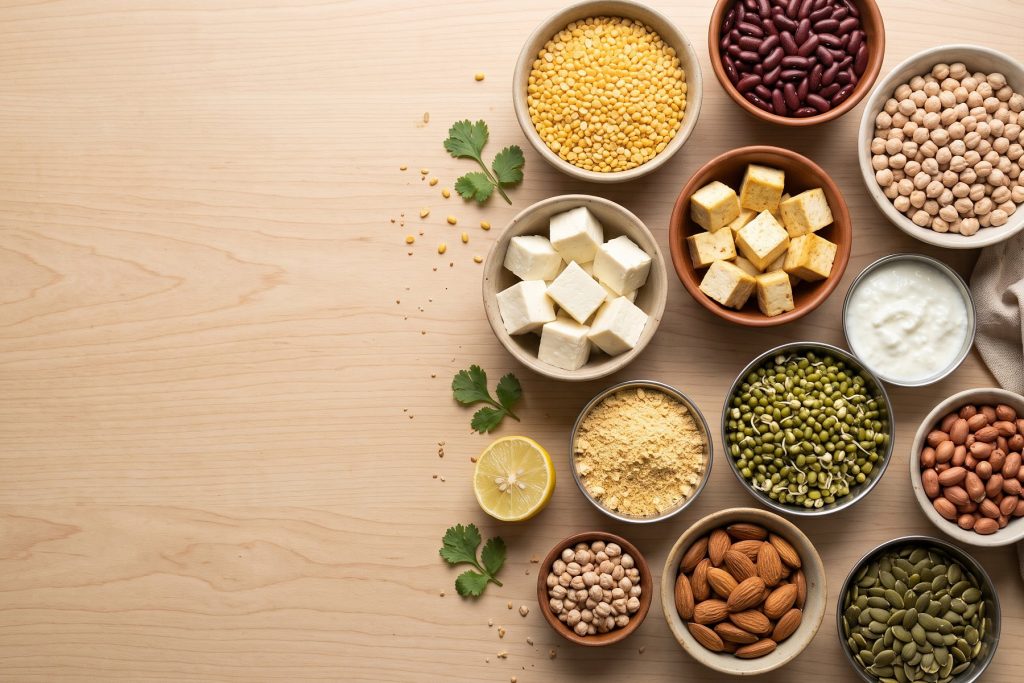
 “But where do you get your protein?” If you’re vegetarian, you’ve probably been asked this more times than you can count. The honest answer is that a well-planned vegetarian diet can easily meet your protein needs. The catch is that many of us, vegetarian or not, don’t plan for it. A typical Indian plate is heavy on rice or roti and light on dal, curd and other protein foods.
This guide covers how much protein you actually need, the best vegetarian sources and how much protein each one provides, how to combine foods for better-quality protein, and what a protein-rich vegetarian day looks like, using familiar Indian foods.
At a glance
- How much you need: India’s ICMR-NIN guidelines recommend 0.83 g of protein per kg of body weight a day for healthy adults. That’s about 50 g for someone weighing 60 kg.
- Most people fall short: Average intake in India is around 0.66 g per kg, below the recommendation.
- Best vegetarian sources: dals and pulses, soya, paneer and tofu, milk, curd and hung curd, sattu, nuts and seeds, and eggs if you eat them.
- Combine for quality: Eating cereals and pulses together, like dal-chawal or khichdi, gives your body a better mix of amino acids.
- Spread it out: Include a protein food at every meal rather than relying on one big serving.
- Food first: Healthy people can meet their needs from food. Protein supplements aren’t recommended unless a doctor or dietitian advises them.
- Watch your B12: Vegetarians, and especially vegans, are at higher risk of low vitamin B12, so ask your doctor about testing.
Why protein matters, and how much you need
Protein is made of amino acids, the building blocks your body uses to build and repair muscle, skin, hair and organs. It’s also needed to make enzymes, hormones and antibodies, and it helps you feel full after meals.
The ICMR-NIN Dietary Guidelines for Indians recommend 0.83 g of protein per kg of body weight a day for healthy adults, but average intake is only around 0.66 g per kg.
| Body weight | Approximate protein a day |
| 50 kg | 42 g |
| 60 kg | 50 g |
| 70 kg | 58 g |
| 80 kg | 66 g |
Some people need more, including pregnant and breastfeeding women, older adults, very active people and those recovering from illness or surgery. If you have kidney or liver disease, your needs may be different, so check with your doctor or dietitian before increasing your protein.
The best vegetarian protein sources
The table below shows approximate protein per typical serving, based on standard food composition data. Actual amounts vary by brand, recipe and portion size.
| Food | Typical serving | Protein (approx.) |
| Soya chunks (dry weight) | 30 g | 15 g |
| Paneer | 100 g | 18 g |
| Tofu (firm) | 100 g | 12 to 15 g |
| Cooked chana, rajma or lobia | 1 katori (150 g) | 12 g |
| Cooked dal (moong, masoor, toor) | 1 katori (150 g) | 7 to 9 g |
| Hung curd or Greek-style yoghurt | 100 g | 9 to 10 g |
| Pumpkin seeds | 30 g | 9 g |
| Sattu (roasted chana flour) | 4 tbsp (40 g) | 8 g |
| Milk | 1 glass (250 ml) | 8 g |
| Quinoa (cooked) | 1 cup (185 g) | 8 g |
| Peanuts | 30 g | 7 g |
| Egg (if you eat eggs) | 1 large | 6 g |
| Almonds | 30 g (about 20 almonds) | 6 g |
| Sprouted moong | 1 cup (100 g) | 4 to 7 g |
| Curd | 1 katori (150 g) | 5 g |
| Whole-wheat roti | 1 medium | 3 g |
Pulses and legumes
Dals, chana, rajma, lobia and moong are the backbone of vegetarian protein in India. They also provide fibre, iron, folate and potassium. Make sure your serving is a proper katori, not a few spoonfuls of thin dal. Sprouting makes pulses quicker to cook and easy to add to salads, chaat and parathas.
Soya and tofu
Soya chunks are one of the most concentrated vegetarian proteins, and soya contains all the essential amino acids. Tofu is a versatile, lower-fat alternative to paneer that works in bhurji, stir-fries and curries.
Dairy: paneer, curd, hung curd and milk
Dairy provides good-quality protein along with calcium. Paneer is protein-rich but also high in saturated fat, so keep portions moderate, especially if you’re watching your weight or cholesterol. Hung curd has more protein than regular curd, because much of the whey is drained out, and makes an excellent dip, raita or spread.
Sattu
Sattu, roasted Bengal gram flour popular in Bihar, Jharkhand and Uttar Pradesh, is an affordable, filling source of protein and fibre. Stir it into a drink with water, lemon and roasted cumin, or use it in parathas and chillas.
Nuts and seeds
Peanuts, almonds, walnuts and pumpkin, sunflower, flax and chia seeds add protein, healthy fats and minerals. They’re also calorie-dense, so a small handful (about 30 g) is a sensible daily portion.
Eggs (for eggetarians)
If you eat eggs, they’re one of the easiest, most affordable sources of high-quality protein.
Whole grains
Whole wheat, millets, oats and quinoa contribute smaller amounts of protein, but because we eat them often, they add up across the day. For more ideas, see our guide to meat substitutes and why they matter.
Getting good-quality protein on a vegetarian diet
Proteins are made of 20 amino acids, nine of which your body can’t make and must get from food. Most animal foods, and soya, contain all nine in good amounts. Many plant foods are low in one or two:
- Cereals (rice, wheat, millets) tend to be low in lysine.
- Pulses (dals, beans) tend to be low in methionine.
Eating the two together fills each other’s gaps. That’s why traditional combinations like dal-chawal, khichdi, rajma-rice, idli-sambar and roti with dal work so well. The ICMR-NIN guidelines suggest combining cereals and pulses in about a 3:1 ratio. You don’t need to combine them at every single meal, as long as you eat a variety across the day.
A sample protein-rich vegetarian day
This example provides roughly 75 to 80 g of protein, comfortably above the 50 to 58 g that most adults weighing 60 to 70 kg need. Smaller appetites can drop the mid-morning drink or halve the paneer.
| Meal | Example | Protein (approx.) |
| Breakfast | 2 moong dal chillas with 100 g hung curd | 19 g |
| Mid-morning | 1 glass of milk or a sattu drink | 8 g |
| Lunch | 2 rotis, 1 katori rajma, salad and 1 katori curd | 23 g |
| Evening | A handful of roasted chana and peanuts (30 g) | 7 g |
| Dinner | Vegetable pulao with 75 g tofu or paneer, and 1 katori dal | 22 to 25 g |
If you eat eggs, swapping the breakfast chillas for an egg bhurji or an omelette with toast works just as well.
Practical tips for more vegetarian protein
- Add a protein food to every meal. Breakfast is often the weakest meal. Try besan or moong chillas, paneer or tofu bhurji, sprouts poha, or curd with your paratha.
- Upgrade your snacks. Swap biscuits and namkeen for roasted chana, peanuts, sprouts chaat, a sattu drink or a bowl of curd.
- Thicken your dal. A thicker, larger katori of dal provides far more protein than a watery one.
- Mix flours. Add besan, soya flour or sattu to your roti or paratha dough.
- Pair grains with pulses at main meals: dal-chawal, khichdi, rajma-rice, idli-sambar.
Do you need protein powder?
Usually not. The ICMR-NIN guidelines state that a healthy diet can meet the protein needs of healthy people, and don’t recommend protein supplements for them. Many powders also contain added sugar and other additives. Supplements may sometimes help in specific situations, such as illness or recovery, but only when a doctor or dietitian advises them.
Don’t forget vitamin B12
Vitamin B12 is found almost only in animal foods, so vegetarians, and especially vegans, are at higher risk of deficiency. A review of Indian studies found that about 65% of vegetarians had inadequate B12 levels. Milk, curd, paneer and eggs provide some B12. If you’re vegetarian, especially if you’re pregnant, older, have diabetes and take metformin, or feel unusually tired or have tingling in your hands or feet, ask your doctor about a B12 test and whether you need a supplement.
Vegetarian protein myths
Myth: You can’t get enough protein without meat. Fact: A varied vegetarian diet with pulses, dairy, soya, nuts and seeds can meet the needs of most healthy adults.
Myth: Plant protein is incomplete, so it doesn’t count. Fact: Most plant proteins are lower in one or two amino acids, but eating a variety of foods across the day, such as cereals with pulses, provides all the amino acids you need.
Myth: More protein is always better. Fact: Beyond your needs, extra protein is used for energy or stored. Very high intakes from supplements aren’t necessary for most people, and people with kidney disease may need to limit protein.
Pro Tip
Check your plate, not just your intentions. For a few days, note what protein food you had at each meal. Most people find one meal, often breakfast or the evening snack, has none at all, and fixing that one gap makes the biggest difference. The GOQii App lets you log your meals and see how much protein you’re getting. A GOQii Personalised Health Coach can help you plan vegetarian meals that meet your protein needs and fit your tastes, budget and health goals.
Frequently asked questions
How much protein does a vegetarian need a day?
The same as anyone else. India’s ICMR-NIN guidelines recommend 0.83 g of protein per kg of body weight a day for healthy adults, which is about 50 g for someone weighing 60 kg. Pregnant and breastfeeding women, older adults and very active people may need more.
Which vegetarian food has the most protein?
Soya chunks are among the most concentrated vegetarian sources, with about 15 g of protein in a 30 g dry serving. Paneer, tofu, chana, rajma, hung curd, pumpkin seeds and sattu are also good sources.
Can vegetarians get complete protein?
Yes. Soya and dairy contain all the essential amino acids. Other plant foods may be low in one or two, but eating cereals and pulses together, such as dal-chawal, khichdi or idli-sambar, and a variety of foods across the day provides all the amino acids you need.
Is paneer a healthy source of protein?
Paneer is rich in protein and calcium, with about 18 g of protein per 100 g. It’s also high in saturated fat, so keep portions moderate and balance it with other protein sources such as dal, curd, tofu and legumes.
Do vegetarians need protein powder?
Most healthy vegetarians don’t. India’s ICMR-NIN guidelines say a balanced diet can meet protein needs and don’t recommend protein supplements for healthy people. They may be useful in specific situations, such as illness or recovery, if a doctor or dietitian advises them.
How can vegetarians add more protein to breakfast?
Try moong or besan chillas, paneer or tofu bhurji, sprouts poha, a bowl of curd or hung curd, a glass of milk, a sattu drink, or eggs if you eat them.
Are vegetarians at risk of vitamin B12 deficiency?
Yes. Vitamin B12 is found mainly in animal foods, so vegetarians and especially vegans are at higher risk. Include milk, curd and paneer, or eggs if you eat them, and ask your doctor about a B12 test, particularly if you’re pregnant, older or take metformin.
#BeTheForce
Disclaimer: The information provided in this blog is for general awareness and educational purposes only. It is not intended to replace professional medical advice, diagnosis, or treatment. Always consult a qualified healthcare provider for personalised medical guidance or concerns related to your health.




Leave a Reply