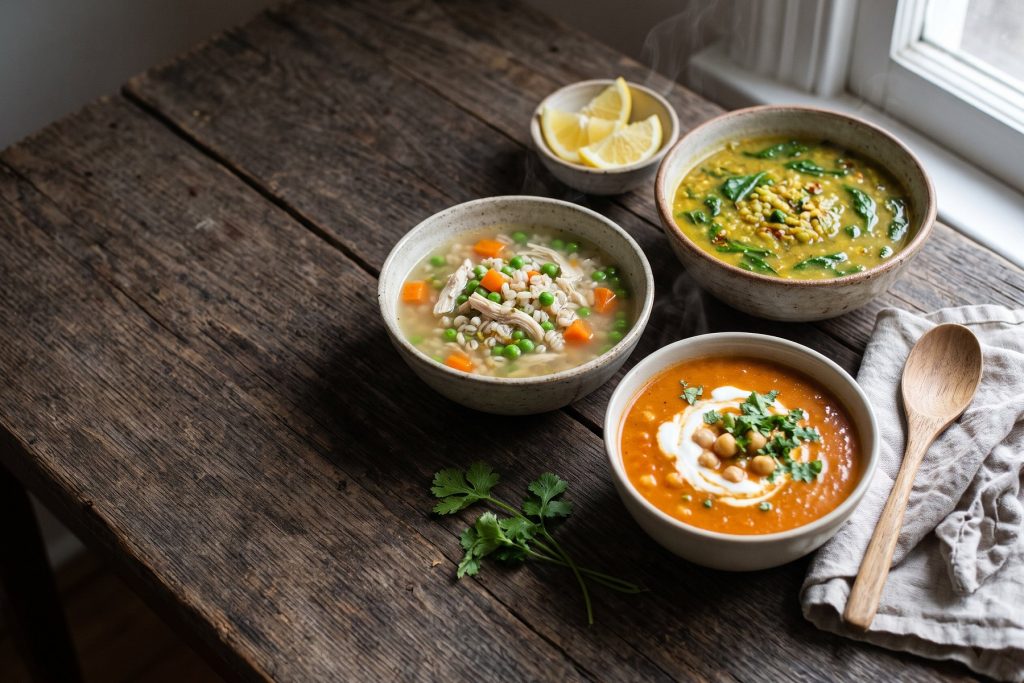
 There’s something about a steaming bowl of soup on a cold evening. It warms your hands, fills the kitchen with the smell of garlic, ginger and cumin, and feels like the easiest kind of comfort food. But many soups, especially thin vegetable broths or creamy restaurant versions, leave you hungry an hour later.
The fix is protein. Adding dal, chicken or chickpeas turns a light starter into a satisfying meal that keeps you full for longer. These three warming soups are simple to make with everyday Indian ingredients, take about 30 to 45 minutes, and provide roughly 14 to 26 g of protein per bowl.
At a glance
- Three soups, three protein sources: a vegetarian moong dal and spinach soup, a chicken, vegetable and barley soup, and a spiced chickpea and tomato soup topped with hung curd.
- Protein per bowl: about 14 g, 26 g and 17 g respectively (estimated, serves 4).
- Why protein matters: India’s dietary guidelines recommend 0.83 g of protein per kg of body weight a day for adults, and most Indians eat less. Spreading it across meals is easier than catching up at dinner.
- Make it a meal: Pair each soup with a slice of whole-grain toast, a millet roti or a side salad.
- Batch-cook safely: Refrigerate leftovers within two hours, eat within three to four days, and reheat until piping hot.
- Go easy on salt: Use fresh garlic, ginger, herbs and lemon for flavour, and avoid salty stock cubes.
Why protein-rich soups make sense in winter
In colder months, many of us crave heavier, richer food and move a little less. A protein-rich soup gives you warmth and comfort without relying on cream, butter or fried accompaniments.
- Protein keeps you fuller for longer, which can help you avoid snacking between meals.
- Most people fall short. The ICMR-NIN dietary guidelines for Indians recommend 83 g of protein per kg of body weight a day, but average intake is around 0.66 g. For a 65 kg adult, that’s a target of about 54 g a day.
- Food beats powders. The same guidelines say a balanced diet can meet protein needs for healthy people, and don’t recommend protein supplements for them. Pulses, eggs, poultry, fish, dairy, nuts and seeds all count.
- Soups are an easy way to add vegetables and fibre to your day.
How to build a balanced bowl
- Protein: dal, chickpeas, rajma, chicken, fish, eggs, paneer, tofu or hung curd
- Vegetables: spinach, carrots, beans, peas, pumpkin, tomatoes or cabbage
- Some slow-release carbs (optional): barley, broken wheat (dalia), millets or a slice of whole-grain toast on the side
- Flavour without too much salt: garlic, ginger, cumin, pepper, turmeric, fresh herbs and a squeeze of lemon
For a lighter vegetable-based option, see our recipe for the ultimate winter soup.
Recipe 1: Moong dal and spinach soup
Vegetarian. Serves 4. Prep 10 minutes, cook 30 minutes. About 14 g protein per bowl.
A lighter, soup-style take on dal palak. Moong dal cooks quickly, is easy to digest and blends into a silky soup.
Ingredients
- 200 g split yellow moong dal, rinsed well
- 200 g spinach (palak), washed and roughly chopped
- 1 medium onion, finely chopped
- 2 medium tomatoes, chopped
- 4 garlic cloves and a 2 cm piece of ginger, finely chopped
- 2 tsp ghee or oil
- 1 tsp cumin seeds
- ½ tsp turmeric
- ½ tsp black pepper
- 2 litres water
- Salt to taste, and juice of half a lemon
Method
- Cook the dal. Pressure-cook the moong dal with the turmeric and 800 ml of the water for 2 to 3 whistles, or simmer in a covered pan for about 25 minutes until soft.
- Make the tadka. Heat the ghee or oil in a deep pan, add the cumin seeds and let them sizzle. Add the garlic, ginger and onion, and cook for 4 to 5 minutes until soft.
- Add the vegetables. Stir in the tomatoes and cook for 3 to 4 minutes until they break down, then add the spinach and cook until it just wilts.
- Add the cooked dal and the remaining water, bring to a gentle boil and simmer for 5 minutes. Season with pepper and a little salt.
- Blend (optional). For a smooth soup, blend with a hand blender, or leave it chunky.
- Squeeze in the lemon juice just before serving.
Tip: Lemon juice adds brightness and its vitamin C helps your body absorb the iron from the dal and spinach.
Recipe 2: Chicken, vegetable and barley soup
Serves 4. Prep 15 minutes, cook 45 minutes. About 26 g protein per bowl.
A hearty, home-style chicken soup with a gentle ginger and pepper warmth. Barley adds a pleasant chew and fibre, and makes it filling enough for dinner.
Ingredients
- 400 g boneless, skinless chicken breast or thigh, cut into bite-sized pieces
- 60 g pearl barley, rinsed and soaked for 30 minutes (or broken wheat/dalia)
- 2 medium carrots, diced
- 100 g French beans, chopped
- 100 g green peas (fresh or frozen)
- 1 medium onion, finely chopped
- 5 garlic cloves and a 3 cm piece of ginger, finely chopped
- 2 tsp oil
- 1 bay leaf and 4 to 5 black peppercorns
- ½ tsp freshly ground black pepper
- 5 litres water or low-salt chicken stock
- Salt to taste, a handful of chopped coriander and a squeeze of lemon
Method
- Start the base. Heat the oil in a large pot, add the bay leaf and peppercorns, then the onion, garlic and ginger. Cook for 4 to 5 minutes until soft.
- Add the chicken. Add the chicken and cook for 3 to 4 minutes, stirring, until it turns white on the outside.
- Simmer with barley. Add the drained barley and the water or stock. Bring to the boil, then cover and simmer on low heat for 25 minutes.
- Add the vegetables. Add the carrots, beans and peas, and simmer for another 10 to 12 minutes, until the barley is tender and the chicken is cooked through with no pink inside.
- Season and serve. Season with black pepper and a little salt, and finish with coriander and lemon.
Tip: Using a mix of breast and thigh gives more flavour. Skim off any foam that rises while it simmers for a clearer soup.
Vegetarian swap: Replace the chicken with 250 g firm tofu or paneer cubes, added with the vegetables, and a can of rinsed chickpeas.
Recipe 3: Spiced chickpea and tomato soup with hung curd
Vegetarian (vegan without the curd). Serves 4. Prep 10 minutes, cook 25 minutes. About 17 g protein per bowl with the curd topping.
A smoky, gently spiced soup inspired by chana masala, finished with a cool swirl of hung curd for extra protein.
Ingredients
- 480 g cooked chickpeas (about 150 g dried, soaked overnight and cooked, or 2 tins, drained and rinsed)
- 4 medium tomatoes, chopped (about 400 g)
- 1 medium onion and 1 carrot, chopped
- 4 garlic cloves and a 2 cm piece of ginger
- 2 tsp oil
- 1 tsp cumin seeds
- 1 tsp coriander powder, ½ tsp smoked paprika or Kashmiri chilli powder, ¼ tsp turmeric
- 1 litre water or low-salt vegetable stock
- Salt to taste
- To serve: 200 g hung curd (or thick Greek-style yoghurt), roasted cumin powder and chopped mint or coriander
Method
- Toast the spices. Heat the oil in a pot, add the cumin seeds and let them sizzle. Add the onion, carrot, garlic and ginger, and cook for 5 minutes.
- Cook down the tomatoes. Add the ground spices and tomatoes, and cook for 5 to 6 minutes until soft and jammy.
- Add the chickpeas (keep a handful aside for topping) and the water or stock. Simmer for 12 to 15 minutes.
- Blend until smooth or leave slightly chunky. Add a little more water if it’s too thick, and season lightly.
- Top each bowl with a generous spoon of hung curd, the reserved chickpeas, a pinch of roasted cumin and fresh herbs.
Tip: To make hung curd, tie plain curd in a clean muslin cloth and hang it in the fridge for 3 to 4 hours until thick.
Vegan swap: Skip the curd and stir in 150 g crumbled firm tofu, or top with toasted pumpkin seeds.
Nutrition at a glance
Approximate values per bowl (serves 4), estimated from standard food composition data. Actual values depend on your ingredients and portion sizes, and don’t include salt.
| Soup | Calories | Protein | Fibre |
| Moong dal and spinach | about 230 kcal | about 14 g | about 7 g |
| Chicken, vegetable and barley | about 250 kcal | about 26 g | about 6 g |
| Spiced chickpea and tomato with hung curd | about 310 kcal | about 17 g | about 11 g |
Storing, reheating and freezing
Soups are ideal for batch cooking, but large pots cool slowly, so handle leftovers carefully. Following food safety guidance:
- Cool quickly. Divide the soup into shallow or smaller containers and refrigerate within two hours of cooking.
- Eat within three to four days if refrigerated, or freeze for two to three months.
- Reheat thoroughly until the soup is steaming hot all the way through and bubbling at the edges, and only reheat what you’ll eat.
- Add toppings fresh. Add hung curd, lemon and herbs after reheating.
Easy swaps and tips
- Lower the salt: Most of the flavour here comes from garlic, ginger, spices and lemon, so you’ll need less salt than you think. Avoid stock cubes and instant soup powders, which are often very high in salt.
- Boost the protein: Stir in an extra handful of chickpeas or tofu, stir a beaten egg into the simmering chicken soup until it sets in ribbons, or top any bowl with roasted seeds.
- Make it diabetes-friendly: All three soups are high in fibre and protein. Keep portions of barley or bread modest, and pair them with a salad.
- For kidney disease: If you’ve been advised to limit protein, potassium or salt, check portion sizes with your doctor or dietitian.
Pro Tip
Cook once, eat twice. Make a big pot of one of these soups on a Sunday and portion it into containers for quick weekday dinners or lunches. Pair it with a salad or a millet roti, and you’ve got a balanced, protein-rich meal in minutes. The GOQii App lets you log your meals and see how much protein you’re getting across the day. A GOQii Personalised Health Coach can help you plan winter meals that suit your goals, whether that’s weight management, blood sugar control or building strength.
Frequently asked questions
Which soup has the most protein?
Of these three recipes, the chicken, vegetable and barley soup has the most protein, at about 26 g per bowl. The spiced chickpea and tomato soup with hung curd provides about 17 g, and the moong dal and spinach soup about 14 g.
Can soup be a complete meal?
Yes, if it includes protein, vegetables and some slow-release carbohydrate. Adding dal, chickpeas, chicken, tofu or paneer makes soup more filling, and a slice of whole-grain toast, a millet roti or a salad on the side rounds it out.
How much protein do I need a day?
India’s ICMR-NIN dietary guidelines recommend 0.83 g of protein per kg of body weight a day for healthy adults. For someone who weighs 65 kg, that’s about 54 g a day, best spread across meals. Needs can differ in pregnancy, older age, illness or kidney disease.
Are protein-rich soups good for weight loss?
They can help. Soups with protein and fibre are filling and relatively low in calories, which can make it easier to eat less overall. Avoid adding cream, butter or lots of fried toppings, and watch portion sizes of bread or rice.
How long can I keep homemade soup?
Refrigerate soup in shallow containers within two hours of cooking and eat it within three to four days, or freeze it for two to three months. Reheat until it is steaming hot all the way through.
Are these soups suitable for people with diabetes?
They’re a good fit for most people with diabetes, as they’re high in protein and fibre. Keep portions of barley, bread or rice modest, pair the soup with vegetables, and check with your doctor or dietitian if you follow a specific meal plan.
Can I make these soups vegan?
Yes. Use oil instead of ghee in the moong dal soup, swap the chicken for tofu and chickpeas, and replace the hung curd topping with crumbled tofu or toasted seeds in the chickpea soup.
#BeTheForce
Disclaimer: The information provided in this blog is for general awareness and educational purposes only. It is not intended to replace professional medical advice, diagnosis, or treatment. Always consult a qualified healthcare provider for personalised medical guidance or concerns related to your health.




Leave a Reply