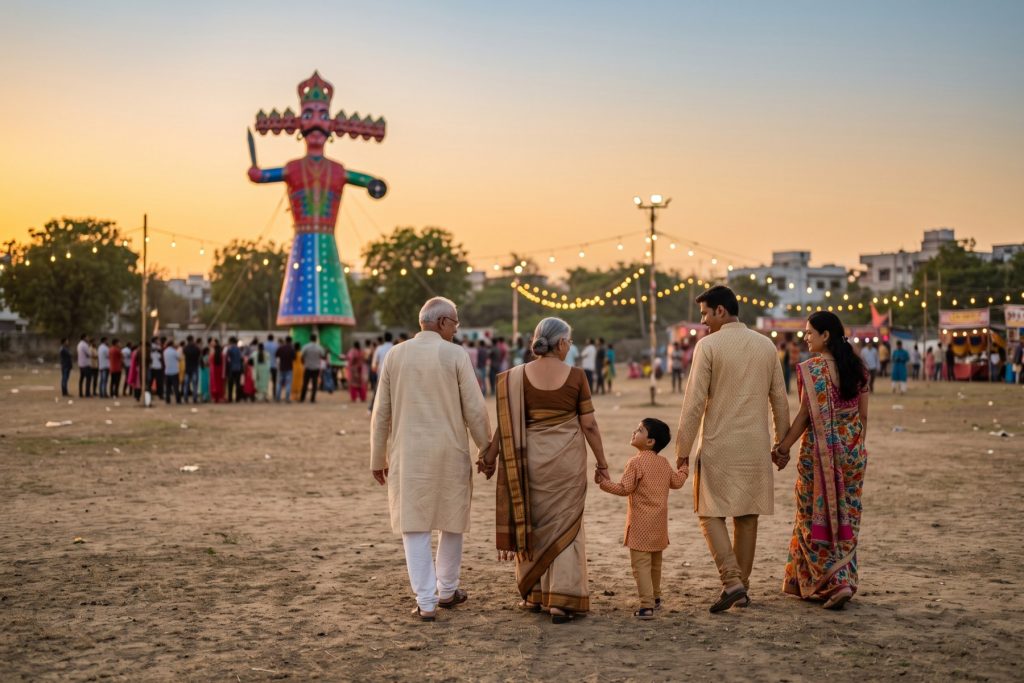
 This Dussehra, on Tuesday 20 October 2026, as Ravana’s effigy burns, pick one unhealthy habit to leave behind as well.
Dussehra, or Vijayadashami, marks the victory of good over evil: Lord Rama’s triumph over Ravana and, in many parts of India, Goddess Durga’s victory over Mahishasura. It comes at the end of nine days of Navratri, and for many families it is a day of puja, Ravan Dahan, shared meals and fresh starts.
Ravana is often shown with ten heads. In that spirit, here are ten everyday habits that quietly hold our health back, with a simple swap for each, plus practical tips for coming off the Navratri fast, enjoying festive food and staying safe at Ravan Dahan.
Dussehra at a glance
- Dussehra 2026 falls on Tuesday 20 October, the day after the nine nights of Navratri.
- Pick one habit, not ten. Small, steady changes last longer than big festive resolutions.
- Break your fast gently. Start with water, fruit and light, home-cooked food before heavier dishes.
- Enjoy the sweets, in smaller portions. Share, savour and balance them with lighter meals.
- Take care at Ravan Dahan. Keep a safe distance, and if you have asthma or a lung condition, avoid the smoke and carry your inhaler.
10 habits to leave behind this Dussehra
One for each of Ravana’s ten heads. You don’t need to tackle them all. Pick the one that matters most to you and start there.
1. Sitting for hours at a stretch
Long, unbroken sitting is linked to poorer health, and the WHO advises that everyone should limit time spent sedentary.
Swap: stand up and move for a few minutes every 30–60 minutes, and try a few simple office workouts through the day.
2. Not moving enough
The WHO recommends at least 150 minutes of moderate activity a week for adults, plus muscle-strengthening exercise.
Swap: a 30-minute brisk walk five days a week gets you there. Garba and dandiya count too.
3. Extra sugar in your chai and drinks
Sweetened chai, packaged juices and soft drinks add up fast. High sugar intake is also a major driver of fatty liver, now very common in India.
Swap: cut the sugar in your chai by half a spoon each week, and choose water, buttermilk or nimbu pani without sugar.
4. Too much salt
Pickles, papad, namkeen and restaurant food push salt intake well above the WHO’s limit of less than 5 g a day, raising the risk of high blood pressure.
Swap: taste before you add salt, and keep pickles and papad to an occasional treat.
5. Too few fruits and vegetables
The WHO recommends at least 400 g of fruit and vegetables a day, about five portions.
Swap: fill half your plate with sabzi or salad at lunch and dinner, and have one fruit as a snack.
6. Fried and packaged snacks as everyday food
Namkeen, chips and biscuits are easy to eat without noticing, and they are high in salt, sugar or fat.
Swap: keep roasted chana, nuts, makhana or fruit within reach for the 4 pm hunger.
7. Late nights and short sleep
Regular short sleep affects your mood, focus and appetite, and is linked to weight gain.
Swap: set a regular bedtime, and put your phone away 30 minutes before it.
8. Letting stress run unchecked
Ongoing stress affects sleep and blood pressure, and often pushes us towards unhealthy food.
Swap: try 5 minutes of slow breathing, a short walk or a call with a friend when the day gets heavy.
9. Tobacco and too much alcohol
Tobacco kills more than 7 million people a year worldwide, and both smoked and chewed tobacco cause serious harm. Alcohol adds to the risk of liver disease, high blood pressure and some cancers.
Swap: if you use tobacco, make Dussehra your quit date. Counselling and medication can more than double your chance of quitting, so ask your doctor or call India’s free National Tobacco Quitline on 1800-11-2356 (8 am to 8 pm, closed Mondays). If you drink, set alcohol-free days each week.
10. Skipping health check-ups
High blood pressure, diabetes and fatty liver often cause no symptoms for years.
Swap: book a basic check-up this month, covering blood pressure, blood sugar, cholesterol and a liver function test, especially if you’re over 30 or have a family history.
Breaking the Navratri fast gently
After nine days of fasting or eating only vrat foods, your body is used to smaller, simpler meals. Jumping straight to a heavy, fried festive lunch can leave you bloated and uncomfortable.
- Start with water. Drink a glass of water, coconut water or nimbu pani without much sugar.
- Begin light. Fruit, a bowl of curd, khichdi, moong dal, or a simple vegetable with roti are easy first meals.
- Add protein early. Many fasting days are low in protein. Dal, paneer, curd, eggs or sprouts help you feel steady.
- Bring back grains gradually. Have a normal portion of roti or rice, not a double one.
- Save the rich dishes for later in the day, and keep portions small.
If you have diabetes, take medicines that affect blood sugar, or are pregnant, check with your doctor about safe fasting and breaking the fast, as large swings in meals can affect blood sugar.
Enjoying festive food without overdoing it
Dussehra is a time for jalebi, fafda, kheer and family meals. You don’t need to skip them, just enjoy them with a little thought.
- Eat a proper meal before you go visiting. Arriving hungry makes it easy to fill up on sweets and fried snacks.
- Pick your favourite and skip the rest. One jalebi or one piece of mithai you really love beats a little of everything.
- Share sweets. Split a portion, or take a small piece.
- Balance the day. If lunch is heavy, keep dinner light: dal, sabzi and roti, or khichdi.
- Gift healthier. Dry fruit, roasted nuts, fresh fruit baskets or homemade laddoos with less sugar make thoughtful gifts.
- Keep moving. A family walk after the festive meal is good for digestion and for spending time together.
Staying safe at Ravan Dahan
Watching Ravana’s effigy burn is a highlight of the day, but the fireworks, smoke and crowds bring some real risks.
- Keep a safe distance from the effigy and fireworks, and follow barriers and volunteers’ instructions. Keep children close and hold their hands in crowds.
- Wear cotton clothes, not loose synthetic ones that catch fire easily.
- Avoid the smoke if you have asthma or a lung condition. A pulmonologist quoted by ETV Bharat notes that even brief exposure can set off symptoms. Watch from upwind or further back, wear an N95 mask, and keep your reliever inhaler with you.
- Keep taking your regular medicines, including preventer inhalers, even if you feel fine.
- For minor burns, hold the area under cool running water for 20 minutes, and don’t put creams, oil, butter or toothpaste on it. Cover it loosely with cling film or a clean cloth, and get medical help for large, deep or facial burns.
- Plan your way home before the crowd starts to leave, especially with children or older relatives.
The bottom line
Dussehra celebrates good winning over evil, and it’s a natural moment for a fresh start. You don’t need to change everything at once. Pick one habit from the ten, make one simple swap, and keep it going until Diwali and beyond. Enjoy the festivities, break your fast gently, and stay safe around the fire and smoke.
Pro Tip: Choose your one habit and track it in the GOQii App, whether that’s steps, sleep, water or sugar in your chai. Your GOQii Personalised Health Coach can help you turn this Dussehra’s resolution into a habit that lasts.
Frequently Asked Questions (FAQs)
- When is Dussehra in 2026?
Dussehra, also called Vijayadashami, falls on Tuesday 20 October 2026, the day after the nine nights of Navratri.
- What does Dussehra celebrate?
It marks the victory of good over evil, remembering Lord Rama’s victory over Ravana and, in many regions, Goddess Durga’s victory over Mahishasura.
- What should I eat after the Navratri fast?
Start light: water or coconut water, fruit, curd, khichdi, moong dal or a simple sabzi with roti. Add protein early, and save rich, fried dishes for later in the day in small portions.
- How can I enjoy festive sweets without overeating?
Eat a proper meal before visiting, choose the one sweet you love most, share portions, and keep the next meal light. A family walk after the meal also helps.
- Is the smoke from Ravan Dahan harmful?
Smoke from burning effigies and fireworks can irritate the lungs, and even brief exposure can trigger symptoms in people with asthma or other lung conditions. Watch from a distance and upwind, wear an N95 mask if you are sensitive, and carry any inhaler you use.
- What should I do for a minor burn?
Hold it under cool running water for 20 minutes, and don’t apply creams, oil, butter or toothpaste. Cover it loosely with cling film or a clean cloth, and get medical help for large, deep or facial burns.
- How do I make a health resolution stick?
Pick one specific habit, such as a 30-minute walk five days a week, rather than several at once. Tie it to a set time of day, track it, and tell someone close to you so they can keep you going.
#BeTheForce
Disclaimer: The information provided in this blog is for general awareness and educational purposes only. It is not intended to replace professional medical advice, diagnosis, or treatment. Always consult a qualified healthcare provider for personalised medical guidance or concerns related to your health.




Leave a Reply