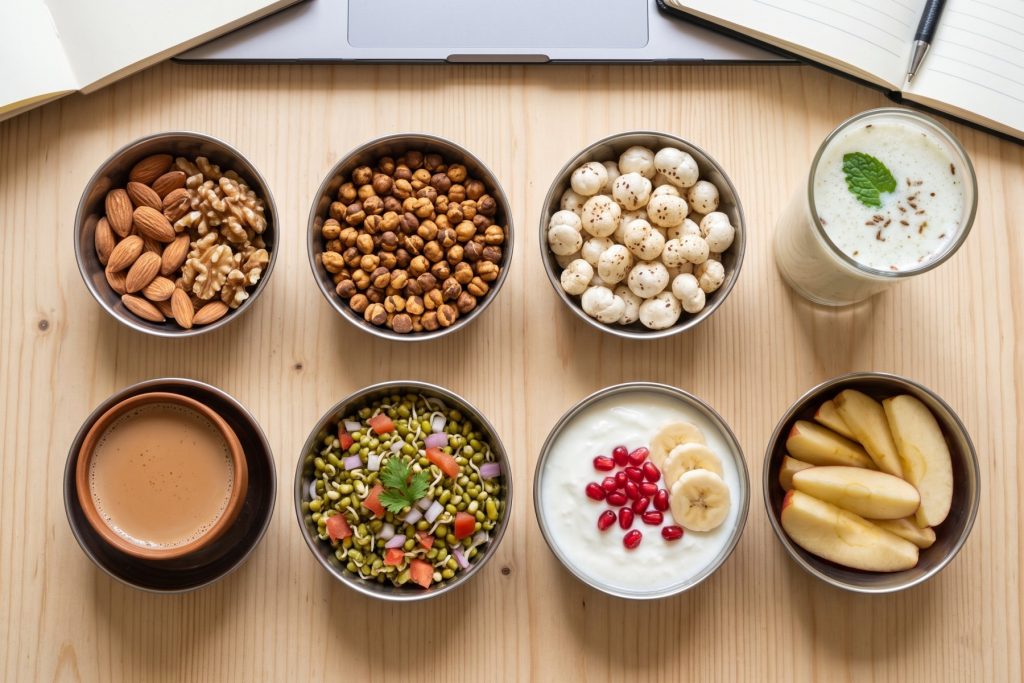
 A healthy snack doesn’t need cooking or planning. A handful of nuts, a bowl of curd with fruit or a few spoons of roasted chana takes less than five minutes and keeps you going far better than biscuits or a packet of chips.
For many of us, snack time means whatever is closest: biscuits with chai at 4 pm, namkeen from the office pantry, or something from the fridge late in the evening. Those snacks are quick, but most packaged ones are high in fat, sugar or salt, and they rarely keep you full until dinner.
This guide explains what makes a snack worth eating, gives you a list of no-cook and 5-minute Indian snacks for your desk and your kitchen, and shows simple swaps for the snacks you already reach for.
Healthy snacking at a glance
- Pair protein or fibre with your snack. Nuts, chana, curd, sprouts, fruit and vegetables keep you fuller than biscuits or chips.
- Keep it small. A snack should tide you over to your next meal, not replace it. Use a small bowl, not the packet.
- Plan it. Stock your desk drawer and fridge with good options so the office pantry isn’t your only choice.
- Read the label on packaged snacks. Many “healthy” snacks are high in sugar, salt or fat.
- Watch what you drink with it. Two or three cups of sweetened chai a day add up in sugar.
What makes a snack healthy
A good snack does a simple job: it keeps you comfortable until your next meal and adds something useful to your day. Four things help.
- Protein or fibre. Foods such as nuts, roasted chana, sprouts, curd, paneer, eggs, fruit and vegetables are more filling than refined snacks, so you’re less likely to keep reaching back into the packet.
- A sensible portion. Even healthy snacks add up. A small handful of nuts, one fruit or a small bowl of chana is usually enough.
- Whole foods first. Snacks you put together from basic ingredients are usually lower in salt, sugar and fat than packaged ones.
- A snack is most useful when there is a long gap between meals, such as mid-afternoon. If you’re not actually hungry, a glass of water or a short walk may be all you need.
What to watch in packaged snacks
India’s dietary guidelines advise limiting ultra-processed foods, which are often high in fat, sugar and salt and low in fibre. Biscuits, namkeen, chips, instant noodles and many “health” bars fall into this group. The guidelines treat more than about 25 g of added sugar or 5 g of salt a day as above the healthy range, and the WHO advises limiting salty snacks and pre-packaged fried and baked foods.
When you do buy a packaged snack, check the label:
- Sugar: look at sugar per serving and the ingredients list. Sugar, jaggery, honey, glucose and syrups near the top mean it is a sweet snack, whatever the front of the pack says.
- Salt or sodium: namkeen and chips can carry a large share of your daily salt in one packet.
- Fat: watch for palm oil, “hydrogenated” or “partially hydrogenated” fats, and frying as the main cooking method.
- Serving size: many packets contain two or three servings. Check what the numbers refer to.
Words like “multigrain”, “baked”, “natural” or “no added sugar” don’t make a snack healthy on their own. The label tells you more than the front of the pack.
12 healthy snacks you can make in 5 minutes
No-cook snacks for your desk
These keep for days without a fridge, so they’re easy to stock at work.
| Snack | Portion | Why it works |
| Mixed nuts (almonds, walnuts, peanuts) | A small handful, about 20–30 g | Protein, fibre and healthy fats. Eating about 20 g of nuts a day is linked to a lower risk of heart disease. Choose unsalted. |
| Roasted chana | 2–3 tablespoons | High in protein and fibre, cheap and filling. Mix with a few peanuts for variety. |
| Roasted makhana | A small bowl | Light and crunchy. Roast at home with a little ghee and spices, or check the salt on packaged ones. |
| Whole fruit | 1 medium fruit, or a bowl of seasonal fruit | Banana, apple, guava, orange or pear travel well. Whole fruit is more filling than juice. |
| Fruit with peanut butter | 1 fruit with 1 tablespoon peanut butter | Apple or banana slices with a little unsweetened peanut butter add protein and fat to keep you full. |
| Puffed rice bhel | A small bowl | Murmura with chopped onion, tomato, cucumber, roasted peanuts and lemon. Skip the sev and sweet chutney. |
5-minute snacks at home
| Snack | Portion | Why it works |
| Curd with fruit and seeds | A small bowl of plain curd, fruit, 1 teaspoon seeds | Protein and calcium from curd, fibre from fruit. Use plain curd rather than flavoured, which is often sweetened. |
| Sprouts chaat | A small bowl | Moong sprouts with onion, tomato, cucumber, lemon and chaat masala. Steam the sprouts lightly if you prefer them cooked. |
| Boiled eggs | 1–2 eggs | Boil a batch and keep them in the fridge for up to a few days. Add pepper and a pinch of salt. |
| Paneer or tofu cubes | A small bowl | Sauté briefly with pepper, chaat masala or a little chutney. High in protein. |
| Vegetable sticks with dip | A bowl of carrot, cucumber and capsicum with 2 tablespoons hummus or hung-curd dip | Crunchy, filling and very low in calories. |
| Masala chaas | 1 glass | Buttermilk with roasted jeera, mint and a pinch of salt. A good swap for a second cup of chai, especially in hot weather. |
Simple snack swaps
You don’t have to give up the snacks you enjoy. Swapping the ones you eat most often makes the biggest difference.
| Instead of | Try | What changes |
| Biscuits with chai | A handful of nuts or roasted chana with chai | Less sugar and refined flour, more protein |
| Namkeen or bhujia | Roasted chana, peanuts or makhana | Much less salt and fried fat |
| Potato chips | Puffed rice bhel or vegetable sticks with a dip | Lower in salt and fat, more fibre |
| Packaged fruit juice | A whole fruit | More fibre, less sugar, more filling |
| Flavoured yoghurt | Plain curd with fresh fruit | Far less added sugar |
| Samosa or pakora | Sprouts chaat or a boiled egg | Not deep-fried, more protein |
| Sweetened chai, third cup | Masala chaas or water | Less sugar and caffeine late in the day |
| “Health” or granola bar | A banana with a few nuts | Fewer added sugars and syrups |
Making healthy snacking a habit
The easiest way to snack well is to make the healthy option the closest one.
Stock your desk drawer
- Unsalted nuts and roasted chana in small boxes, portioned for the week
- Roasted makhana or puffed rice in an airtight jar
- One or two pieces of whole fruit, brought in each morning
- A water bottle you refill through the day
Stock your fridge at home
- Plain curd and a few boiled eggs
- Washed and cut vegetable sticks in a box with a lid
- Sprouts, hummus or hung-curd dip
- Seasonal fruit where you can see it
Snack with intention
- Check you’re hungry. Thirst, tiredness and boredom can feel like hunger. Try water first, or take a short walk.
- Portion it out. Put your snack in a bowl and put the packet away.
- Step away from the screen. Eating while working or scrolling makes it easy to eat more than you meant to.
- Notice stress snacking. If you find yourself reaching for food when you’re stressed rather than hungry, our guide on why stress triggers unhealthy eating explains what is going on and how to break the cycle.
- Go easy late at night. If you snack after dinner, keep it light, such as curd, fruit or a glass of warm milk.
The bottom line
Healthy snacking is mostly about having the right food within reach. Keep nuts, roasted chana, fruit and curd where you’ll see them, pair your snack with protein or fibre, keep portions small, and read the label on anything packaged. Five minutes is all it takes, and the payoff is steadier energy through the afternoon and less temptation from the biscuit jar.
Pro Tip: Use the GOQii App to log your snacks for a week. It’s an easy way to spot patterns, such as the 4 pm biscuits or the late-night fridge visit. Your GOQii Personalised Health Coach can help you plan snacks that suit your routine, tastes and health goals.
Frequently Asked Questions (FAQs)
- Is snacking between meals healthy?
It can be. A planned snack helps when there is a long gap between meals and stops you arriving at dinner very hungry. It is less helpful if you snack out of habit or boredom, or if the snack is mostly sugar, salt or fried food.
- What is a good portion size for a snack?
Think small: a handful of nuts (about 20–30 g), one fruit, a small bowl of chana or curd, or 1–2 eggs. A snack should keep you going until your next meal, not replace it.
- What are good high-protein snacks?
Roasted chana, nuts, sprouts, paneer or tofu cubes, plain curd, buttermilk and boiled eggs are all simple Indian options. Eggs are an easy source of good-quality protein if you eat them.
- Are packaged “healthy” snacks a good choice?
Some are, many aren’t. Words like “baked”, “multigrain” or “no added sugar” don’t guarantee a healthy snack. Check the label for sugar, salt and fat, and look at the serving size.
- How many nuts should I eat a day?
A small handful, about 20–30 g, is a good amount. Large studies link around 20 g a day with a lower risk of heart disease. Choose unsalted nuts and keep the portion in check, as nuts are high in calories.
- Is makhana a healthy snack?
Roasted makhana is a light, crunchy snack that is easy to make at home with a little ghee and spices. Packaged versions can be high in salt or flavourings, so check the label.
- What can I snack on at night?
If you’re genuinely hungry after dinner, choose something light such as plain curd, a piece of fruit, a few nuts or a glass of warm milk. Avoid heavy, fried or very sweet snacks close to bedtime.
#BeTheForce
Disclaimer: The information provided in this blog is for general awareness and educational purposes only. It is not intended to replace professional medical advice, diagnosis, or treatment. Always consult a qualified healthcare provider for personalised medical guidance or concerns related to your health.




Leave a Reply