GOQii

Blog

  • HOME
  • HEALTHY LIVING
  • FITNESS
  • HEALTHY RECIPES
  • USER STORIES
  • KARMA
  • BUY GOQii

February 25, 2023 By Navnee Garg 3 Comments

Healthy Fats vs. Unhealthy Fats: Weight Loss, Heart Health & More

healthy fats

“Fat” used to be a bad word in nutrition. Years ago, your doctor might have recommended that you limit or avoid fat in your diet. You will be surprised to know that all fats aren’t bad. In fact, some ‘healthy fats’ lower your cholesterol level and help keep you healthy.

What are Dietary Fats?

Dietary fats are essential to give your body energy and to support cell growth. They also help protect your organs and help keep your body warm. Fats help your body absorb some nutrients and produce important hormones too. Your body definitely needs fat.

Healthy Fats vs Unhealthy Fats

Since fats are an important part of a healthy diet, rather than adopting a low-fat diet, it’s more important to focus on eating more beneficial “good” fats and limiting harmful “bad” fats.

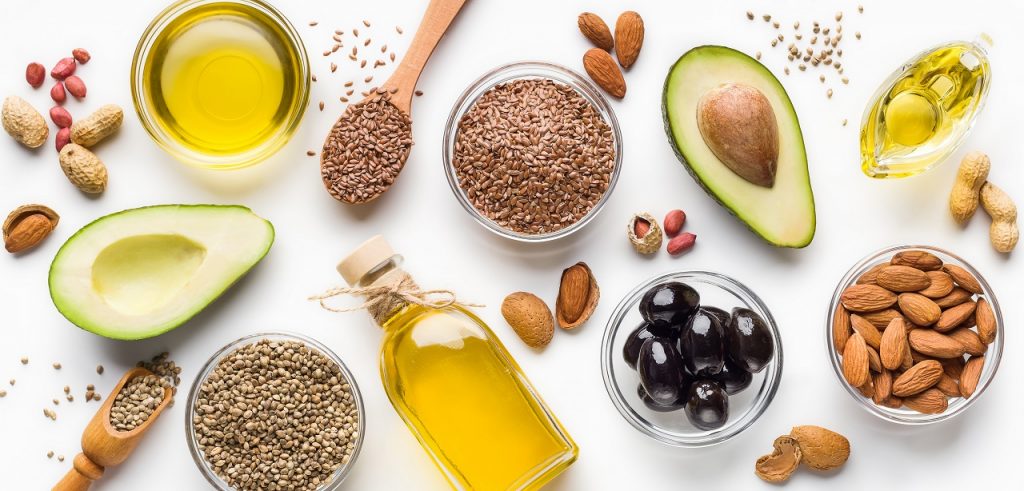
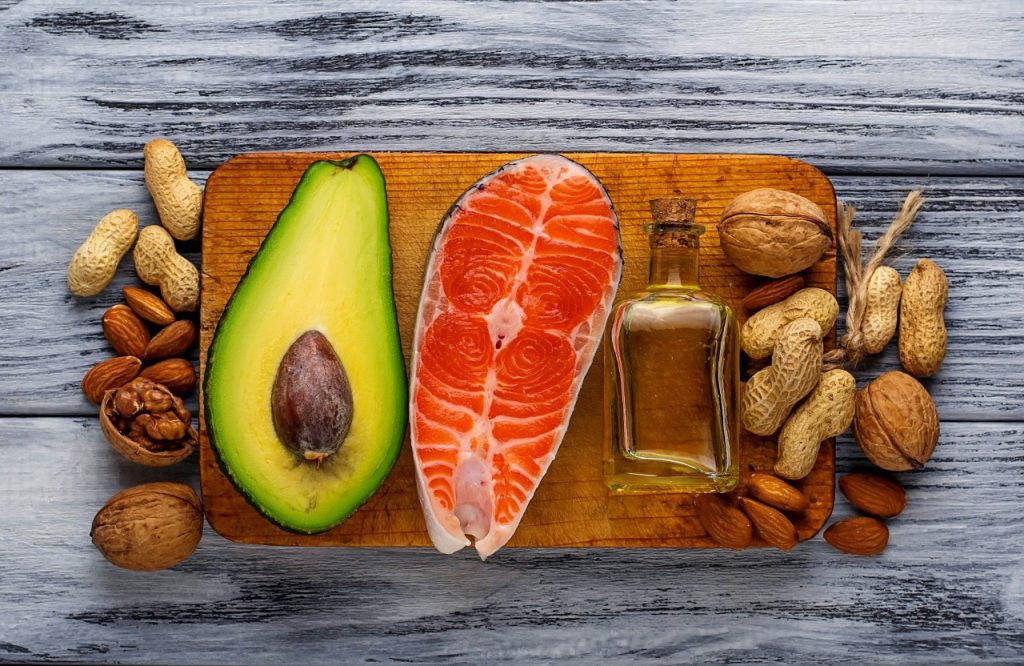
1. Monounsaturated fats and polyunsaturated fats are known as the “good fats” or “healthy fats” because they are good for your heart, your cholesterol, and your overall health. Adding more of these healthy fats to your diet may help to make you feel more satisfied after a meal, reducing hunger and thus promoting weight loss.

Sources: Olives, Avocado, Nuts, Peanut butter, flaxseed, walnut, soymilk, tofu.

2. Unhealthy or “Bad” fat are the Trans Fats. Small amounts of naturally occurring Trans Fats can be found in meat and dairy products but it is artificial Trans Fats that are considered dangerous. This is the worst type of fat since it not only raises bad LDL cholesterol but also lowers good HDL levels.

Sources: Commercially-baked pastries, cookies, doughnuts, muffins, cakes, pizza dough, Fried foods (French fries, fried chicken, chicken nuggets, breaded fish), Anything containing hydrogenated or partially hydrogenated vegetable oil, even if it claims to be “Trans Fat-Free”.

3. Saturated fats, while not as harmful as Trans Fats, can raise bad LDL cholesterol and too much can negatively impact heart health, so it’s best consumed in moderation.

Sources: Red meat, butter, ice cream, chicken skin.

Tips to Add More Healthy Fats to Your Diet

Instead of obsessively counting fat grams, aim for a diet rich in a variety of vegetables, fruit, nuts, and beans, with two or more weekly servings of fatty fish, moderate amounts of dairy, small amounts of red meat, and only occasional fried or processed meals.

  1. Say NO to Trans Fats from your diet. Check food labels for Trans Fats. Limiting commercially-baked goods and fast food can go a long way.
  2. Limit your intake of saturated fats by replacing some of the red meat you eat with beans, nuts, poultry, and fish, and switching from whole milk dairy to lower fat versions.
  3. Prefer Omega-3 Fats: Include a variety of fish sources as well as plant sources such as walnuts, ground flax seeds, flaxseed oil, canola oil, and soybean oil.
  4. Cook With Olive Oil: Use olive oil for stovetop cooking rather than butter, stick margarine, or lard. For baking, try canola oil.
  5. Eat More Avocados: Try them in sandwiches or salads. Along with being loaded with heart- and brain-healthy fats, they make for a filling meal.
  6. Go Nuts: You can add nuts to vegetable dishes, use them instead of breadcrumbs on chicken or fish, or make your own trail mix with nuts, seeds, and dried fruit.
  7. Snack on Olives: Olives are high in healthy monounsaturated fats and make for a low-calorie snack.
  8. Dress Your Own Salad: Commercial salad dressings are often high in unhealthy fat or added sugars. Create your own healthy dressings with olive, flaxseed, or sesame oils.

Want to know some Healthy Fat based recipes? Stay tuned for the next part of the article!

We hope this article helps you make more informed decisions on eating healthy fats. Do leave your thoughts in the comments below. For more on nutrition, check out Healthy Reads or speak to a GOQii Coach by subscribing for Personalised Health Coaching here.

#BeTheForce

February 23, 2023 By Trupti Hingad 4 Comments

Which Is The Best Sleep Position?

Best Sleep PositionEvery wondered which is the best sleep position? The position you sleep in plays a vital role in improving the quality of your sleep. How do you sleep? Do you prefer sleeping on your back, side or stomach? Sleeping in the wrong position can have detrimental effects on your health. Let’s take a deeper look into these problems. Poor sleep posture could potentially cause back and neck pain, fatigue, sleep apnea, muscle cramping, impaired circulation, headaches, heartburn, tummy troubles, and even premature wrinkles.

What Is The Best Sleep Position? 

  1. Sleeping On Your Stomach: About 7% of people sleep on their stomach. In this position, the neck and spine are not in a neutral position and this can put pressure on nerves and cause numbness, tingling, and nerve pain. It is best to choose another sleep position if you are a stomach sleeper. If you can’t break the habit, prop your forehead up on a pillow, so your head and spine remain in a neutral position and you have room to breathe.
  2. Sleeping On Your Back: on a regular basis may lead to lower back pain. If you have any existing pain, it can make the pain worse. Sleeping on your back if you suffer from snoring or sleep apnea may aggravate these conditions. Snoozing on your back can cause the tongue to block the breathing tube, making it a dangerous position for those who suffer from sleep apnea. Sleeping on your back with your head slightly elevated is the best sleep position for people suffering from heartburn. Also, this position does not lead to neck pain, like your neck, back and spine is in a neutral position.
  3. Soldier Position: In this position, the person sleeps on his/her back with hands close to the body. Approximately 8% of people sleep this way and this is not a good position to sleep in for people who snore. This position may also prevent you from getting a restful night’s sleep.
  4. Starfish Position: People who sleep in a starfish position sleep on their backs with their arms up over their head. Approximately 5% of people sleep this way. Compared to people who sleep on their backs, people who sleep in the starfish position are more prone to snoring and sleep problems.
  5. Sleeping On The Side: Approximately 41% of people sleep this way, curled up on their sides with their knees bent. This is one of the best positions, also good for pregnant women because it facilitates circulation to both mom and the fetus. The position may be good for those who snore and also helps decrease acid reflux since your spine is elongated. It also wards off back and neck pain. This position may lead to wrinkles because half of your face pushes against a pillow, so use soft, silken pillows to avoid wrinkles on the face.
  6. Fetal Position: Side sleepers who sleep with their legs bent and curled toward their torsos are the ones who sleep in the so-called fetal position. If sleeping this way hurts your hips, placing a pillow between your knees may help relieve the pressure. This position can leave you feeling a bit sore in the morning, particularly if you have arthritis in your joints or back. Prevent these woes by straightening out your body as much as you can, instead of tucking your chin into your chest and pulling your knees up high.

Sleeping positions which might help if you have sleeping issues

  • Do you snore? If you do, it is best to sleep on your side to minimize the risk of snoring. Sleeping on your back may aggravate snoring. If you can’t break the habit and want to sleep on your back, stack a few pillows underneath your head to reduce the risk of snoring.
  • Does your back hurt? Sleeping on your stomach or back, may aggravate your pain. Switch to side sleeping to minimize your risk of back pain. For further relief, put a pillow between your knees to keep your hips in alignment.
  • Are you pregnant? Sleeping on your stomach or back will be uncomfortable or impossible. You will be most comfortable sleeping on your side. Favour your left side to maximize circulation for both you and your baby. Placing a pillow under your belly can help relieve back pain.

So choose your sleeping position wisely and have a good mattress accompanied by soft pillows to wake up fresh and healthy! We hope this article helps you. Share your favorite sleeping position in the comments below! For more on sleep, click here or speak to an expert by subscribing for GOQii’s Personalised Health Coaching here: https://goqiiapp.page.link/bsr

#BeTheForce 

February 22, 2023 By Richa Athavale 9 Comments

Why You Should Avoid Eating A Heavy Dinner

Avoid eating a heavy dinner “I am not losing any weight in spite of following a healthy routine,” said one of my Players. “What did you eat for dinner yesterday?”  I asked. He replied saying, “2 Rotis, 1 bowl of Rice, Dal, Subzi, 1 bowl of salad (as you have told) and 2 small gulab jamun,” I was quick in pointing out that the answer to his weight loss issue was his heavy dinner.

Why Should You Avoid A Heavy Dinner?

Our body works on a simple principle of demand and supply. Whenever we are more active, we need more energy. Hence, we need to eat more – which means having a heavy breakfast, a good lunch and mid meal snacks, help you stay active.

Whereas, when we aren’t quite active, we require less energy. From the time we begin our day, till night, our activity levels lower gradually (unless you work in night shifts). We really don’t require much energy when we’re going to relax post dinner and ultimately sleep. Which means, we do not need to eat as much because we won’t be burning that food for energy. If you consume more food than your body needs at night, it’s a simple recipe for weight gain!

Having a lighter dinner aids digestion and helps you better utilise the nutrients. It is advisable to have a 2 hour gap before hitting the sack. This is one way to avoid that unnecessary fat and weight gain! In order to do this, you need a plan. If you’re not in a habit of having frequent meals, and you avoid an evening snack, you’ll tend to eat more at dinner. Also, understand the psychological effect when you haven’t eaten anything post lunch, barring that cup of tea! You’ll end up feasting because your brain is telling you that you are hungry.

Some Benefits Of Eating A Light Dinner 

  1. Aids in digestion and induces good sleep
  2. You will be able to get up fresh the next morning
  3. Helps in faster gut clearing
  4. Helps reducing fat & weight
  5. Reduces risk of lifestyle diseases like Type II Diabetes, Hypertension, High cholesterol, etc.
  6. Helps in reducing PCOD & Hypothyroidism
  7. Improves metabolism

The ideal time for dinner is near sunset 6.30- 7 pm. If you can’t manage it, then simply split your dinner between 2-3 small meals. Have an evening meal between 5-7 pm.  Ideally, at the time you feel hungry post Lunch. Eat Roti,Rice, Bhakri, or whole wheat bread etc. which is carbohydrate based for the first meal. Keep the lighter part for the next one i.e. 8-10 pm. Try to keep dinner low in carbs and more in proteins & fibers as this will prevent excess calories, give you proteins for muscle building throughout the night, and enough fiber will help in gut clearing.

You can try –

Proteins: Eggs, Chicken, Paneer, Dal, Sprouts, Usal, Curd, Yogurt, Soya, or Tofu mixed with
Fiber: Soups, salads, stir fried veggies, raita, or raw veggies, etc.

It can be as simple as curd rice, Khichdi- Kadhi, etc. But, watch the carbohydrate quantity. Avoid having fruits at this time as they contain fructose which is a simple sugar. If you feel hungry again at night, drink a glass of milk with turmeric powder or a bowl of soup/salads or a few nuts.

We hope this article helps you! For more tips on healthy living and making lifestyle changes, click here or speak to an expert by subscribing for GOQii’s Personalised Health Coaching here.

Disclaimer: This article was written keeping people who are trying to lose weight and fat in mind. This may not be appropriate for growing children, teenagers, underweight people, and/or people with medical conditions. Before making any changes to your diet, consult your doctor, nutritionist or dietitian. 

#BeTheForce

February 21, 2023 By Meenakshi Sharma 2 Comments

Are There Any Winter Superfoods?

winter superfoods“Superfoods” are foods that have a substantial amount of nutrients and very few calories. They contain a high volume of minerals, vitamins, and antioxidants. But, do winter superfoods really exist? 

Do Winter Superfoods Really Exist? 

Some winter foods do have a powerful impact but it’s your overall diet that really matters. Enriching your diet with nutrient-rich foods may help deal with issues such as joint problems, weight gain, constipation, dry skin and hair fall in winter and let you enjoy good immunity, good skin and overall good health. Let’s look at a few foods which may be considered as Winter Superfoods. 

  • Pearl Millet /Bajra: is a versatile food rich in fibre, magnesium, potassium and vitamin B. It promotes heart health, controls BP, muscle gain and helps you get dense, frizz-free hair with great volume. The high iron content plays a vital role in curing anaemia and can help to strengthen your bones as well. It is a heating grain, so it should be had in winters only. You can use Bajra to make malt, bhakri, ladoo, khichdi, cookies, uttapam, idli and dosa. 
  • Green Vegetables: Add green leafy vegetables to your meals to fight infections and boost immunity. These are excellent sources of fibre, folate and carotenoids, antioxidants, vitamins C and K and the minerals iron and calcium. Include palak, methi, sarson, pudina, moringa and green lasun to your diet. Green lasun boosts immunity and alleviates the burning sensation in hands and feet due to its anti-inflammatory properties. You can add them in rotis, dals, juices, soups and chutneys. 
  • Root Vegetables: Include all kinds of root vegetables in your diet, especially during the winter season. Sweet potatoes, broccoli, brussels sprouts, turnip and its leaves have antioxidant properties, vitamin C, are rich in beta carotene, fibre, vitamin A, and potassium. Regular consumption can help in curing constipation, improving immunity and reducing inflammation. Beets are also sources of anthocyanins, that have been linked to lower instances of heart disease, and nitrate – which improves the dilation of blood vessels. You can make soups, tikkis, sabzis or simply roast them. 
  • Seasonal Fruits: Citrus fruits are bursting with Vitamin C, fibre and antioxidants, making them ideal during winter. Citrus fruits like oranges, grapefruits, pomegranates, kiwi, guava, amla and lemons are also high in minerals and phytochemicals that help protect the body from infections and pathogens. They help in enhancing your immunity, reducing hair fall, improving skin and digestive health. Eat a fruit in the morning and the evening as a snack. If you find Amla too sour, consume it with a dash of salt and black pepper or in the form of instant powders.
  • Ghee: is an invaluable source of vitamins, minerals and healthy fats. It helps with joint lubrication, skin hydration and keeps the digestive system functioning well. It can help you boost immunity and prevent yourself from falling sick. Cook your meals in ghee or top your dal, rice, roti, etc. with it. 
  • Til/Sesame Seeds: are a good source of calcium, essential fatty acids, vitamin E and are good for bones, skin and hair. It helps you maintain body temperature and keeps you warm and energetic during winter. Add sesame seeds to your roti, chikki, gajak, ladoo and chutney.
  • Nuts: Peanuts have more protein than any nut (7g per serving), containing more than 30 essential vitamins and minerals, and are a good source of polyphenols, fibre and good fats. Daily intake of almonds and walnuts lower bad cholesterol, control blood sugar levels and reduce inflammation. They are packed with antioxidants, vitamin E and magnesium. They’re also rich in omega 3 and have anti-inflammatory properties. We can have soaked nuts, add them in ladoos, chikkis, granola bars or simply have them as snacks. 
  • Turmeric: is known as a therapeutic superfood due to its anti-bacterial, anti-fungal and anti-inflammatory properties.Turmeric can help reduce inflammation and fight infections. Make the famous “Haldi Doodh” or a pickle with fresh turmeric.
  • Honey: is another energetic superfood to look upon for winters. You can use it as a substitute for sugar. Mix honey with your tea and sip it every morning to fight cold, sore throat and other infections.
  • Gond: keeps the body warm, protects against the cold, treats cardiovascular, chronic kidney diseases, lubricates the joints and strengthens the bones. It also helps one manage menstrual problems and combat gas issues. You can turn gond into ladoo or panjiri mixture i.e. a mix of gond, wheat flour, jaggery, ghee, nuts and cardamom.
  • Garlic: is a tasty herb that has high amounts of calcium, potassium as well as certain sulphuric compounds that are good for getting rid of infections. You can make chutneys, add it to soups and dals. You can also have crushed garlic with honey in the morning.

We hope these “Winter Superfoods” help you make a positive and healthy lifestyle change. For more on winter and nutrition, click here or speak to an expert by subscribing for GOQii’s Personalised Health Coaching.

#BeTheForce 

  • « Previous Page
  • 1
  • …
  • 106
  • 107
  • 108
  • 109
  • 110
  • …
  • 202
  • Next Page »

Search

Recent Posts

  • India Leads in Longevity: GOQii Sanjeevini Named Top 40 in $101M XPRIZE
  • The Importance Of Knowing If You’re Thirsty Or Hungry
  • Best Foods To Alleviate Irritable Bowel Syndrome
  • ALL ABOUT VERTIGO!
  • PCOS and Anxiety: Discover Relief with the 54321 Technique

Stay Updated

Archives

  • December 2025 (8)
  • November 2025 (15)
  • October 2025 (20)
  • September 2025 (6)
  • August 2025 (6)
  • July 2025 (12)
  • June 2025 (18)
  • May 2025 (16)
  • April 2025 (23)
  • March 2025 (23)
  • February 2025 (22)
  • January 2025 (26)
  • December 2024 (26)
  • November 2024 (25)
  • October 2024 (22)
  • September 2024 (24)
  • August 2024 (31)
  • July 2024 (21)
  • June 2024 (26)
  • May 2024 (31)
  • April 2024 (27)
  • March 2024 (29)
  • February 2024 (26)
  • January 2024 (25)
  • December 2023 (15)
  • November 2023 (11)
  • October 2023 (20)
  • September 2023 (22)
  • August 2023 (20)
  • July 2023 (22)
  • June 2023 (24)
  • May 2023 (24)
  • April 2023 (24)
  • March 2023 (23)
  • February 2023 (20)
  • January 2023 (16)
  • December 2022 (12)
  • November 2022 (15)
  • October 2022 (15)
  • September 2022 (12)
  • August 2022 (10)
  • July 2022 (17)
  • June 2022 (11)
  • May 2022 (10)
  • April 2022 (6)
  • March 2022 (6)
  • February 2022 (13)
  • January 2022 (12)
  • December 2021 (7)
  • November 2021 (3)
  • October 2021 (6)
  • September 2021 (3)
  • August 2021 (8)
  • July 2021 (7)
  • June 2021 (15)
  • May 2021 (16)
  • April 2021 (10)
  • March 2021 (7)
  • February 2021 (4)
  • January 2021 (4)
  • December 2020 (3)
  • November 2020 (4)
  • October 2020 (10)
  • September 2020 (3)
  • August 2020 (3)
  • July 2020 (2)
  • June 2020 (4)
  • May 2020 (10)
  • April 2020 (12)
  • March 2020 (10)
  • February 2020 (4)
  • January 2020 (4)
  • December 2019 (3)
  • November 2019 (7)
  • October 2019 (5)
  • September 2019 (4)
  • August 2019 (9)
  • July 2019 (9)
  • June 2019 (11)
  • May 2019 (4)
  • April 2019 (9)
  • March 2019 (8)
  • February 2019 (9)
  • January 2019 (8)
  • December 2018 (9)
  • November 2018 (3)
  • October 2018 (3)
  • September 2018 (5)
  • August 2018 (10)
  • July 2018 (6)
  • June 2018 (13)
  • May 2018 (8)
  • April 2018 (18)
  • March 2018 (9)
  • February 2018 (8)
  • January 2018 (15)
  • December 2017 (12)
  • November 2017 (19)
  • October 2017 (13)
  • September 2017 (15)
  • August 2017 (4)
  • July 2017 (8)
  • June 2017 (7)
  • May 2017 (6)
  • April 2017 (8)
  • March 2017 (6)
  • February 2017 (7)
  • January 2017 (9)
  • December 2016 (10)
  • November 2016 (7)
  • October 2016 (7)
  • September 2016 (7)
  • August 2016 (11)
  • July 2016 (9)
  • June 2016 (9)
  • May 2016 (12)
  • April 2016 (17)
  • March 2016 (17)
  • February 2016 (8)
  • January 2016 (6)
  • December 2015 (2)
  • November 2015 (9)
  • October 2015 (7)
  • September 2015 (9)
  • August 2015 (11)
  • July 2015 (9)
  • June 2015 (12)
  • May 2015 (9)
  • April 2015 (13)
  • March 2015 (8)
  • February 2015 (5)
  • January 2015 (12)
  • December 2014 (14)
  • November 2014 (11)
  • October 2014 (6)
  • September 2014 (13)
  • August 2014 (12)
  • July 2014 (6)
  • June 2014 (2)
  • May 2014 (7)
  • April 2014 (5)

From “Laddu Nawin” to Fit and Fierce: How a 25-Year-Old Insurance Advisor Shed 20 Kilos and Gained His Life Back

When 25-year-old Nawin Yadav from Hyderabad walked into his office every morning, he carried more than just his files and policy papers. He had the weight of fatigue, sluggish energy, and an ever-growing belly that was becoming the butt of jokes. “People … [Read More...]

“I’ve Challenged Myself to Live 100 Years” – The Story of Chandubhai Savani’s Second Chance at Life

At 67, most people start slowing down. Not Chandubhai Savani. A resident of Surat, Chandubhai, thought life was on track. “My life was going well till I had my bypass surgery,” he says. That surgery, back in 2021, was a wake-up call.  Medication was routine, but exercise wasn’t. His diet? What he calls ‘normal.’ “I […]

From Shimla’s Slopes to Chandigarh’s Sidewalks: Surinder Kaur Bhalla’s Journey from Chaos to Control

Some journeys start with a plan. Others begin with a stumble literally. Surinder Bhalla, a government professional, born and raised in the scenic hill town of Shimla, had always lived a life of movement. “In Shimla, you walked everywhere,” she reflects. “Walking was never an exercise. It was just life.” But after shifting to Chandigarh, […]

Ananda Mukherjee Health Story

From Terminal Illness To Complete Wellness! Ananda Mukherjee Health Story

As we observe World Cancer Day under the powerful theme ‘United by Unique’ (2025-2027)**, we are reminded that every individual’s journey with cancer is distinct, yet united by shared resilience, hope, and the collective fight against this disease. This theme places people at the centre of care and their stories at the heart of the […]

  • HOME
  • HEALTHY LIVING
  • FITNESS
  • HEALTHY RECIPES
  • USER STORIES
  • KARMA
  • BUY GOQii

Copyright ©2016 GOQii