GOQii

Blog

  • HOME
  • HEALTHY LIVING
  • FITNESS
  • HEALTHY RECIPES
  • USER STORIES
  • KARMA
  • BUY GOQii

October 24, 2026 By Urvi Gohil Leave a Comment

Healthy Eating: Vegetable and Paneer Kathi Roll

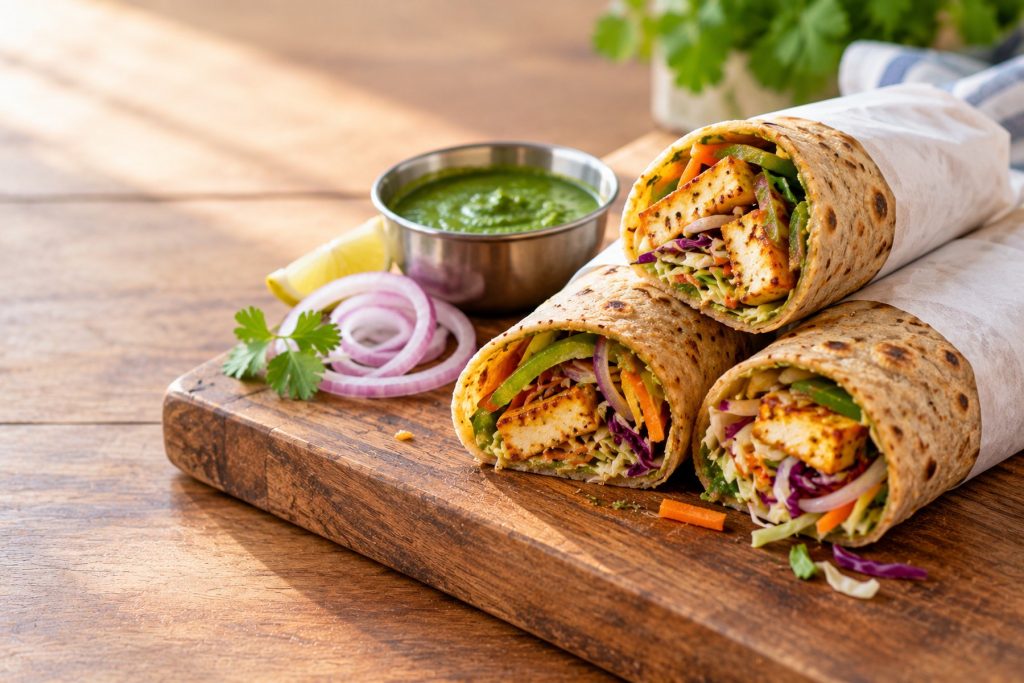
The kathi roll started life as Kolkata street food: a flaky, often fried paratha wrapped around skewered fillings. This home version keeps the flavour and the fun, but swaps the paratha for whole wheat chapatis (leftovers work perfectly) and fills them with a colourful mix of vegetables and spiced paneer. It takes about 25 minutes, packs well for lunch, and is the kind of meal both children and adults happily eat.

At a glance

  • Makes: 3 rolls (serves 3 as a light meal, or 2 with a side salad)
  • Time: about 10 minutes to prep and 15 minutes to cook
  • Why it works: whole wheat chapati and vegetables bring fibre; paneer and curd bring protein and calcium.
  • Use up leftovers safely: chapatis that were refrigerated within 2 hours and are a day or two old are ideal. Warm them on a tawa so they fold without cracking.
  • Keep the salt in check: the chutney and chaat masala are already salty, so taste before adding more.
  • Easy swaps: tofu for a dairy-free roll, egg for a classic Kolkata-style roll, or ragi or jowar rotis for a millet twist.

Vegetable and paneer kathi roll recipe

  • Makes: 3 rolls | Prep: 10 minutes | Cook: 15 minutes

    Ingredients

    For the filling

    • 150 g paneer, cut into thin strips or crumbled (about 1 cup)
    • 1 medium onion, thinly sliced (keep a quarter aside, raw, for topping)
    • 1 medium carrot, cut into thin strips
    • 1 medium capsicum, thinly sliced
    • 1 cup shredded cabbage
    • 1 medium tomato, deseeded and sliced
    • 2 tsp oil
    • 1 tsp ginger-garlic paste
    • ½ tsp turmeric (haldi)
    • ½–1 tsp red chilli powder, to taste
    • ½ tsp garam masala
    • 1 tsp roasted cumin (jeera) powder
    • Salt, to taste (go easy: see the tip below)
    • A squeeze of lemon

    For the spread and assembly

    • 3 whole wheat chapatis (leftover or fresh)
    • 3 tbsp mint-coriander chutney
    • 3 tbsp thick curd (hung curd works best)
    • ½ tsp chaat masala

    Method

    1. Make the spread. Mix the chutney and curd in a small bowl. Don’t add salt yet; the chutney usually has enough.
    2. Cook the vegetables. Heat the oil in a wide pan on medium heat. Sauté the ginger-garlic paste for 30 seconds, then add the onion and cook for 2–3 minutes until soft. Add the carrot, capsicum and cabbage and stir-fry for 3–4 minutes, so they soften but keep some crunch.
    3. Add the spices and paneer. Stir in the tomato, turmeric, chilli powder, garam masala and cumin powder. Cook for a minute, then add the paneer and toss gently for 2–3 minutes until heated through. Taste, add a little salt only if needed, and finish with a squeeze of lemon.
    4. Warm the chapatis. Heat each chapati on a hot tawa for 20–30 seconds on each side so it’s soft and pliable.
    5. Spread a third of the chutney-curd mix over each chapati. Spoon a third of the filling in a line slightly off-centre, top with a few raw onion slices and a pinch of chaat masala.
    6. Roll and serve. Fold in the bottom edge, then roll tightly. Wrap the lower half in butter paper or foil to hold it together. Serve warm, with extra chutney or a salad on the side.

What makes this a healthier kathi roll

Whole wheat instead of a fried paratha

Street-style kathi rolls are usually made with a layered paratha cooked in plenty of oil, often with maida. Using a whole wheat chapati keeps the fibre of the whole grain and cuts out most of the added fat, while still giving you a soft, foldable wrap.

A good dose of vegetables

Each roll carries roughly half a cup of cooked vegetables, plus raw onion. Carrots provide beta-carotene, which the body converts to vitamin A; capsicum, tomato and lemon add vitamin C; and cabbage and onion add fibre. Cooking the vegetables only until tender-crisp, and adding raw onion and lemon at the end, helps keep more of the vitamin C, which is sensitive to heat.

Protein from paneer and curd

Paneer is one of the most useful vegetarian protein sources in Indian kitchens, with about 18–20 g of protein per 100 g, based on Indian food composition data. The 150 g in this recipe gives each roll around 9 g of protein from paneer alone, with a little more from the curd and chapati. Protein and fibre together help make a meal more filling than a plain chapati or a vegetable wrap on its own.

Paneer is also a good source of calcium, but full-fat paneer is high in saturated fat, at around 13–15 g per 100 g. That’s no reason to avoid it, but it’s worth keeping the portion moderate and choosing low-fat paneer, made from toned milk, if you’re watching your cholesterol or weight.

Watch the salt

Indians eat on average about 11 g of salt a day, more than twice the WHO limit of 5 g. In this recipe, the chutney, chaat masala and any salt in the filling all add up, so we’ve kept added salt optional. Taste first and add a pinch only if it’s needed.

If you have diabetes

The chapati is the main source of carbohydrate here; the vegetables, paneer and curd around it slow things down and make it a more balanced meal than a roll made with maida or potato filling. One roll with a salad or a bowl of dal is a sensible portion for most people, but needs vary, so check with your doctor or dietitian how it fits your plan.

Swaps and variations

  • Dairy-free: use firm tofu instead of paneer, and a thick plant-based yoghurt or extra chutney instead of curd.
  • Egg kathi roll: cook a thin omelette on the tawa, lay the chapati on top for a few seconds so it sticks, then fill and roll. This is closer to the classic Kolkata egg roll.
  • More plant protein: add a handful of boiled chana, rajma or steamed moong sprouts to the filling. Pulses add both protein and fibre; read more in why pulses are good for you.
  • Millet twist: use ragi or jowar rotis. They’re more fragile, so warm them gently and roll loosely.
  • Extra greens: stir a handful of chopped spinach or methi into the filling at the end.
  • Lighter paneer: use low-fat paneer, or swap half the paneer for crumbled tofu.

Leftover chapatis and lunchboxes: keep it safe

  • Leftover chapatis: cool them and put them in the fridge within 2 hours of cooking, as food safety authorities advise for leftovers, and use them within a day or two, while they’re still soft and fresh. Warm them on a tawa before rolling.
  • For the lunchbox: let the filling cool, then pack it separately from the chapatis and spread, and roll at lunchtime to avoid a soggy wrap. Paneer and curd are perishable, so use an insulated box or an ice pack if the lunch will sit for more than a couple of hours, especially in warm weather. Our meal-prep guide has more ideas for packing healthy lunches.
  • Making ahead: the filling keeps in the fridge for a day. Reheat it until it’s steaming hot all the way through.

Who should take care

  • Milk allergy: paneer and curd are dairy, so use the tofu swap.
  • Young children: cut the roll into smaller pieces and go easy on the chilli.
  • High blood pressure or kidney disease: keep the salt, chaat masala and salty chutney to a minimum, and follow any diet advice from your doctor.
  • Gluten: whole wheat chapatis contain gluten. For coeliac disease, use rotis made from certified gluten-free millet flour.

The bottom line

A kathi roll doesn’t have to be a once-in-a-while street-food treat. Made with whole wheat chapatis, plenty of vegetables, a sensible amount of paneer and a light hand with the salt, it’s a balanced, filling meal that turns yesterday’s chapatis into today’s lunch.

Pro Tip: Use the GOQii App to log your meals and see whether you’re getting enough protein and vegetables across the day. Your GOQii Personalised Health Coach can help you adapt family favourites like this one to your goals, from weight management to blood sugar control.

Frequently asked questions

Is a paneer kathi roll healthy?

It can be. A version made with a whole wheat chapati, plenty of vegetables, a moderate amount of paneer and little added oil and salt is a balanced meal with fibre, protein and calcium. Street-style rolls made with fried, maida-based parathas and heavy sauces are much higher in fat and salt.

How much protein is in a paneer kathi roll?

Paneer has about 18–20 g of protein per 100 g. In this recipe, 150 g of paneer across three rolls gives each roll around 9 g of protein from paneer, plus a little more from the curd and chapati. Adding chana or sprouts to the filling increases it further.

Can I use leftover chapatis?

Yes, leftover chapatis work well. Refrigerate them within 2 hours of cooking, use them within a day or two, and warm them on a tawa before rolling so they’re soft and don’t crack.

Is a kathi roll good for weight loss?

A homemade roll like this one can fit into a weight-loss plan, as fibre and protein help make a meal filling. Keep to one or two rolls, choose low-fat paneer if you like, and go easy on the oil and creamy sauces.

Can people with diabetes eat a kathi roll?

Most people with diabetes can include a roll like this in a balanced meal plan. The chapati is the main carbohydrate, so keep to one roll with a salad or dal, and check with your doctor or dietitian how it fits your plan.

How do I keep a kathi roll from getting soggy in a lunchbox?

Deseed the tomato, let the filling cool completely, and pack the filling, spread and chapatis separately. Roll them just before eating. Use an insulated box or ice pack, as paneer and curd are perishable.

What can I use instead of paneer?

Firm tofu works well for a dairy-free roll. You can also use eggs, boiled chana or rajma, steamed sprouts, or a mix of paneer and tofu.

#BeTheForce

Disclaimer: The information provided in this blog is for general awareness and educational purposes only. It is not intended to replace professional medical advice, diagnosis, or treatment. Always consult a qualified healthcare provider for personalised medical guidance or concerns related to your health.

October 7, 2026 By Kusum Soni 8 Comments

5 Common Habits That Cause Obesity (And How to Break Them)

obesityThe Big Question

You’ve been trying hard to lose that stubborn weight. You are making sincere efforts to eat healthy, and you sweat it out through regular physical activity. Yet, despite all your hard work, the scale just doesn’t seem to budge. You might be wondering why.

To understand the roadblock, we have to understand what obesity actually is. According to the WHO, obesity is a medical condition where excess body fat accumulates to the point that it negatively impacts health increasing the likelihood of cardiovascular diseases, Type 2 diabetes, and osteoarthritis.

But obesity isn’t just caused by a lack of exercise or an obvious love for junk food. Often, it is slowly fueled by everyday, seemingly harmless lifestyle habits.

Quick Answer: What daily habits cause obesity?

Weight gain is commonly driven by hidden everyday behaviors: eating too quickly, chronic dehydration, sleep deprivation, stocking up on processed kitchen groceries, and remaining completely sedentary for long hours outside of your workout.

5 Common Habits That Secretly Cause Weight Gain

1. Eating Too Quickly

How many times have you practically inhaled your food while on a call, rushing to a meeting, or doing a chore, without even tasting it? This unmindful practice could be making you gain fat.

  • The Science: It takes approximately 20 minutes for satiety signals to reach your brain from your stomach. Eating hurriedly overrides this mechanism, making you overeat before your brain even realizes you are full.
  • The Fix: Be conscious while eating and take smaller bites. Chewing well promotes the release of salivary and digestive enzymes, metabolizing food faster and more efficiently. Eating slowly also enhances the thermogenic effect of food and balances hormones responsible for fat oxidation.

2. Not Drinking Enough Water

It is incredibly common for people to eat healthy and stay active, yet remain overweight simply because they drink less than 1 liter of water a day.

  • The Science: An average adult is 55-60% water, but some obese individuals can be as little as 15% water. Why? Because fat tissue contains only about 10% water, while muscle tissue holds roughly 75%. Proper hydration maintains healthy muscle mass, which is directly responsible for a higher metabolic rate.
  • The Fix: Combined with physical activity, drinking at least 1.5 to 2 liters of water increases fat oxidation and acts as a zero-calorie, natural appetite suppressant. Swap sugary teas, juices, and sodas for plain water (infuse it with lemon or cucumber if you find it boring!).

3. Not Getting Enough Sleep

Sleep deprivation has become a hallmark of modern society, driven by screen time, social media, and long work hours.

  • The Science: Skimping on sleep alters your metabolism and endocrine system. It decreases insulin sensitivity, spikes evening cortisol (stress hormone) levels, and deranges your hunger hormones (ghrelin and leptin). Plus, the longer you are awake, the more you are exposed to late-night food stimuli.
  • The Fix: Prioritize 7-8 hours of quality sleep. Good rest keeps hormone levels in check, helping you eat better, exercise better, and maintain a healthy waist circumference.

4. Stocking Processed “Kitchen Grocery”

Take a look inside your kitchen cabinets. If they are filled with colorful packets of biscuits, sugary cereals, cookies, and packaged juices, you are setting yourself up for failure.

  • The Science: Processed foods cause massive spikes in blood sugar, followed by an inevitable crash. This “blood sugar roller coaster” triggers intense cravings for more high-carb foods. These items are filled with added white sugars and “empty calories” devoid of essential nutrients.
  • The Fix: Remember: A low-fat cookie is still a cookie! Aim to stock your pantry with whole foods—whole grains, healthy fats, lean proteins, fruits, and vegetables. This naturally balances your diet and lowers your daily calorie intake.

5. Long Sitting Hours (The Active Couch Potato)

More than 50% of the world’s population lives in urban areas where jobs revolve around screens and prolonged sitting.

  • The Science: Researchers have found a startling truth: one hour of intense physical exercise does not make up for the negative effects of inactivity if you spend the remaining 10-12 hours of your day sitting.
  • The Fix: Don’t throw away your morning gym session by hitting the office chair or couch for the rest of the day.
    • Stand up and move for 3-5 minutes every hour.
    • Walk while talking on your mobile phone.
    • Use the stairs instead of the elevator.
    • Keep your water bottle away from your desk so you have to get up to drink.

Pro Tip: You don’t have to overhaul all your habits at once. Use the GOQii App to track your daily water intake, sleep patterns, and step count. For the right guidance on how to lose weight and sustain it in a healthy way, speak to a certified expert by subscribing to GOQii’s Personalised Health Coaching!

Frequently Asked Questions (FAQs)

  1. Why does eating fast cause weight gain?

It takes your stomach about 20 minutes to send “I’m full” signals to your brain. When you eat too quickly, you consume far more calories than your body needs before your brain has a chance to tell you to stop.

  1. Can drinking water really help with weight loss?

Yes. Water acts as a natural, zero-calorie appetite suppressant. It also helps maintain healthy muscle mass (which boosts metabolism) and increases fat oxidation when combined with physical activity.

  1. How does sleep affect my weight?

Lack of sleep disrupts hunger hormones (increasing ghrelin, which makes you hungry, and decreasing leptin, which makes you feel full). It also decreases insulin sensitivity and raises cortisol levels, promoting fat storage.

  1. What is the problem with “low-fat” processed foods?

Many low-fat processed foods compensate for the lack of fat by adding massive amounts of refined sugar and artificial additives. These cause blood sugar spikes and crashes, leading to intense cravings and empty calorie consumption.

  1. Is a 1-hour workout enough if I sit at a desk all day?

Unfortunately, no. While a 1-hour workout is great for cardiovascular health, sitting for the remaining hours of the day slows down your metabolism significantly. You need frequent micro-movements (like standing or walking for 5 minutes every hour) to stay metabolically active.

#BeTheForce

Disclaimer: The information provided in this blog is for general awareness and educational purposes only. It is not intended to replace professional medical advice, diagnosis, or treatment. Always consult a qualified healthcare provider for personalised medical guidance or concerns related to your health.

July 4, 2026 By GOQii 3 Comments

Why High-Fibre Foods Are Essential for Better Health

high fiber mealsThe Big Question: Why should we view dietary fibre not merely as an optional remedy for constipation, but as a crucial biological manager that regulates our metabolic, cardiovascular, and immune health?
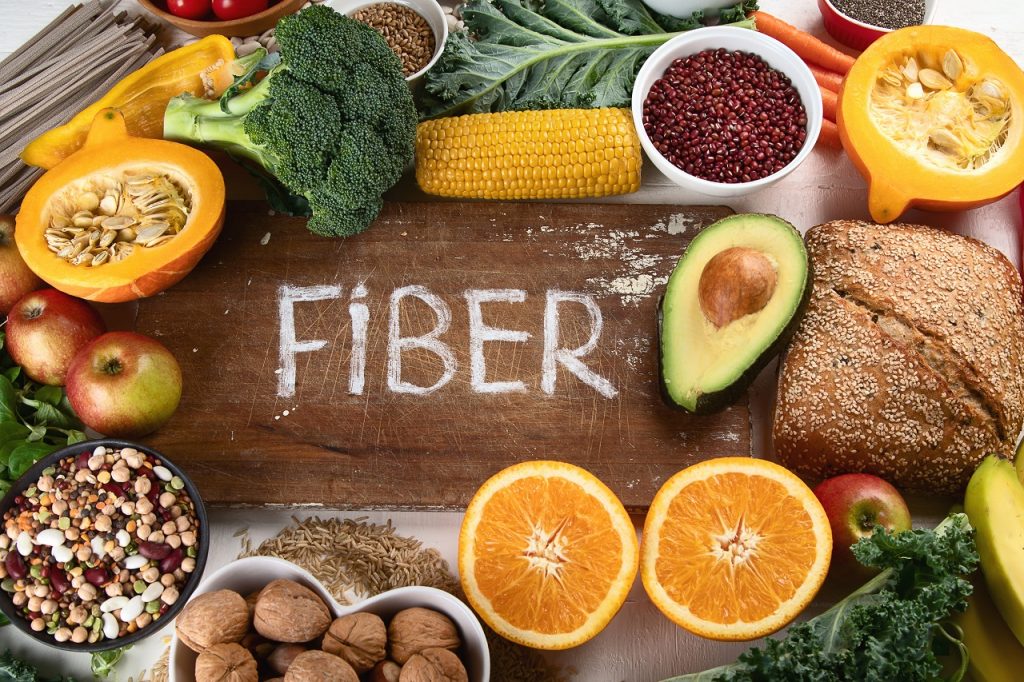
When you think of dietary fibre, constipation relief is probably the first thing that comes to mind. While fibre certainly supports healthy digestion, its benefits go far beyond keeping your bowel movements regular. A fibre-rich diet can help maintain healthy blood sugar levels, support heart health, improve gut health, aid weight management, and even strengthen your immune system.

Unfortunately, modern diets filled with refined grains, sugary snacks, and ultra-processed foods often fall short of the fibre our bodies need. The good news? Adding more fibre-rich foods to your meals doesn’t require a complete diet overhaul. A few simple changes can make a significant difference to your overall health. Let’s explore why fibre deserves a place on every plate.

What Is Dietary Fibre?

Dietary fibre is a type of carbohydrate found naturally in plant-based foods. Unlike other carbohydrates, fibre isn’t completely digested by the body. Instead, it passes through the digestive system, supporting several important functions along the way.

There are two main types of fibre:

Soluble Fibre

Soluble fibre dissolves in water to form a thick, gel-like substance that slows digestion. This helps regulate blood sugar levels, lowers bad cholesterol, and keeps you feeling full for longer.

  • Good sources include: Oats, apples, citrus fruits, barley, beans, lentils, flaxseeds, and chia seeds.

Insoluble Fibre

Insoluble fibre does not dissolve in water. Instead, it adds physical bulk to your stool and helps food move more efficiently through the digestive tract, promoting regular bowel movements.

  • Good sources include: Whole wheat, brown rice, wheat bran, broccoli, cauliflower, carrots, green beans, and nuts.

Both types of fibre are essential, and eating a colorful variety of plant-based foods helps ensure your body receives the right biological balance.

5 Critical Benefits of Eating High-Fibre Foods

  1. Supports Healthy Digestion and Peristalsis

One of fibre’s most well-known benefits is keeping your digestive system functioning smoothly. Insoluble fibre acts as a natural bulking agent, drawing moisture into the large intestine to soften and add structure to the stool. This mechanical action stimulates regular contraction waves (peristalsis), making bowel movements easier and helping prevent chronic constipation. A healthy digestive system also creates the ideal environment for optimal nutrient absorption.

  1. Helps Manage Blood Sugar Levels and Prevents Insulin Spikes

When you consume refined, stripped carbohydrates, your digestive system breaks them down almost instantly. This rapid absorption floods your bloodstream with glucose, forcing your pancreas to release massive amounts of insulin.

  • The Destructive Autopilot Loop: Refined Grains ⇒ Rapid Glucose Surge ⇒ Insulin Spike ⇒ Fat Storage & Energy Crash.
  • The Mindful Alternative Loop: High-Fibre Whole Foods ⇒ Gel Matrix Formation ⇒ Delayed Glucose Release ⇒ Stable Energy & Metabolic Protection.

Soluble fibre creates a gel-like barrier in the intestines that slows the digestion and absorption of carbohydrates, helping prevent sudden spikes in blood sugar after meals. This is especially helpful for people living with diabetes or those looking to reduce their risk of developing Type 2 diabetes.

  1. Supports Healthy Weight Management and Natural Satiety

Achieving a balanced body composition is much easier when you work with your body’s natural fullness signals. It takes your digestive tract roughly 20 minutes to synthesize and send chemical satiety signals to the brain’s hypothalamus.

Because high-fibre foods require significant mechanical chewing and take longer to digest, they naturally slow your eating pace, giving your brain enough time to register that you are full. This can naturally reduce unnecessary snacking and overeating without making you feel deprived.

  1. Promotes Heart Health and Lowers LDL Cholesterol

Soluble fibre plays a direct, protective role in your cardiovascular system. As it moves through your small intestine, it binds to cholesterol-rich bile acids, trapping them within its gel matrix so they can be eliminated from the body through the stool.

To replace these lost bile acids, your liver pulls circulating LDL (“bad”) cholesterol out of your bloodstream, naturally lowering your total cholesterol profile. A diet rich in fibre has also been associated with better blood pressure management, significantly lowering long-term cardiovascular risks.

  1. Nourishes Your Gut Microbiome and Boosts Immunity

Your digestive system is home to trillions of beneficial bacteria that play an important role in digestion, immunity, and overall health. Many fibre-rich foods act as prebiotics, providing mandatory nourishment for these beneficial gut bacteria.

When these friendly microbes ferment soluble fibre in your colon, they produce health-boosting metabolites called Short-Chain Fatty Acids (SCFAs), like butyrate. These SCFAs help maintain the structural integrity of the intestinal barrier, prevent harmful pathogens from entering the bloodstream, and contribute to overall immune system resilience.

The High-Fibre Nutrient Synergy Matrix

Food Group Component Primary Fiber Type Key Biological Target Preventative Health Outcome
Beans & Lentils Soluble Fibre Intestinal Lining & Liver Lowers circulating LDL cholesterol and supports muscle repair.
Millets & Oats Soluble & Insoluble Blood Glucose Curves Slows down carbohydrate digestion and provides steady energy.
Cruciferous Vegetables Insoluble Fibre Digestive Motility & Colon Softens stool structure to naturally prevent chronic constipation.
Flax & Chia Seeds Soluble (Mucilage) Gut Microbiome & Vascular Feeds beneficial bacteria to synthesize anti-inflammatory SCFAs.

How Much Fibre Do You Need?

Most adults living in urban environments consume less than half of their recommended daily fibre needs. As a general clinical guide:

  • Women: Around 25 grams of fibre per day
  • Men: Around 30–38 grams of fibre per day

Rather than focusing on strict numbers alone, aim to build a colorful, varied plate that naturally includes whole grains, legumes, fruits, vegetables, nuts, and seeds throughout the day.

Simple Ways to Eat More Fibre Every Day

Increasing your daily fibre intake should be a gradual, consistent process to allow your digestive tract time to adapt comfortably. Try these practical lifestyle tips:

  • Start your day with whole oats, millets, or whole-grain breakfast cereals.
  • Replace white rice with brown rice, red rice, or ancient grains occasionally.
  • Include a generous serving of lightly cooked or steamed vegetables with lunch and dinner.
  • Snack on whole seasonal fruits, raw nuts, or roasted chana (chickpeas) instead of packaged, processed snacks.
  • Add beans, sprouts, or lentils to your daily soups, salads, and curries.
  • Sprinkle ground flaxseeds or chia seeds over yogurt or healthy smoothies.
  • Choose whole fruits instead of drinking strained fruit juices, as juicing strips away the essential fiber matrix.

Dietary fibre is one of the most important nutrients for long-term health, yet it’s often overlooked in modern, convenience-driven diets. From supporting healthy digestion and maintaining stable blood sugar levels to promoting heart health, weight management, and a thriving gut microbiome, fibre plays a vital role in keeping your body functioning at its best.

The best part? Getting more fibre doesn’t require expensive supplements or complicated diets. By choosing more unrefined whole grains, fruits, vegetables, legumes, nuts, and seeds, you can naturally increase your fibre intake and enjoy lasting health benefits. Every fibre-rich meal is a step towards better health!

Pro Tip: Building healthier eating habits becomes easier when you monitor your daily nutrition. Use the GOQii App to track your meals, macro balance, and daily water intake. You can seamlessly share this health data with your GOQii Personalised Health Coach to receive customized meal plans, fiber-rich recipes, and expert lifestyle guidance tailored perfectly to help you include more whole foods in your everyday diet!

Frequently Asked Questions (FAQs)

  1. What are the best high-fibre foods to add to my daily diet?

Some of the most nutrient-dense high-fibre foods include steel-cut oats, black beans, lentils, chickpeas, apples, pears, guavas, broccoli, carrots, flaxseeds, chia seeds, raw almonds, walnuts, brown rice, and ancient millets.

  1. How exactly does dietary fibre help with weight management?

Fibre slows down the physical rate of digestion and expands within your stomach, which triggers mechanical stretch receptors that signal fullness to your brain. This naturally prolongs satiety, stabilizes blood glucose curves, and reduces unnecessary snacking and overeating without making you feel restricted.

  1. Can eating more fibre improve chronic digestion and bloating issues?

Yes. Fibre adds necessary bulk and softness to the stool, promoting regular bowel movements and preventing constipation. However, to avoid temporary gas or bloating when increasing your intake, you must add fibre to your diet gradually and accompany it with adequate fluid intake.

  1. Should I explicitly drink more water when increasing my daily fibre intake?

Yes, absolutely. Fibre acts like a natural sponge inside your digestive tract. Insoluble fibre requires water to soften stool structure, while soluble fibre needs fluids to form its protective, gel-like matrix. Increasing your fibre intake without drinking enough water can cause the waste to harden in your colon, leading to bloating, gas, and worsening constipation. Aim for 2 to 3 liters of water daily.

#BeTheForce

Disclaimer: This article is intended for educational and informational purposes only. It is not intended to replace professional medical advice, clinical nutrition diagnosis, or personalized dietary treatment. Always consult your primary care physician or a registered dietitian before making major changes to your eating habits, especially if you manage an underlying gastrointestinal condition or chronic metabolic disorder.

June 25, 2026 By GOQii Leave a Comment

10 Everyday Habits That Could Be Hurting Your Health

10 bad habits destroying your healthThe Big Question: Why do we often feel tired, sluggish, or unwell despite occasionally exercising or trying to eat clean?


The answer frequently lies in the small, automated actions we perform on autopilot. Our daily routines have a profound impact on our long-term wellness. While some micro-habits keep us sharp and energetic, others quietly disrupt our metabolism, compromise our digestion, fragment our sleep, and drain our vitality without us even realizing it.

The good news is that your biology is incredibly resilient. By identifying these sub-optimal patterns early and replacing them with conscious, lifestyle-focused alternatives, you can optimize your daily energy, lower your risk of chronic lifestyle diseases, and unlock a vastly superior quality of life.

10 Common Habits Sabotaging Your Health (And How to Fix Them)

  1. Skipping Breakfast Without a Structured Daily Plan

Breakfast provides your body with essential macronutrients and glucose after a prolonged overnight fast. Regularly skipping your morning meal without structuring your day can leave your blood sugar unstable, causing acute afternoon fatigue, cognitive irritability, and an intense surge in hunger hormones that almost guarantees overeating later in the day.

  • The Destructive Autopilot Loop: Unplanned Meal Skipping à Blood Sugar Crash àCortisol Spike à Overeating Later.
  • The Mindful Alternative Loop: Planned Balanced Meal à Flat Insulin Curve à Stable Leptin à Sustained Fullness.
  • The Healthier Habit: If you lack an appetite first thing in the morning, do not force a heavy meal, but do plan a light, macro-balanced block of fuel when you are ready to eat. Prioritize high-quality protein, complex whole grains, and fresh fruit for sustained cellular energy.
  1. Rushing and Eating Too Fast

In our fast-paced modern routines, many of us consume food while answering emails, scrolling through smartphones, or rushing between meetings. Eating too quickly bypasses the critical mechanical breakdown of food in the mouth and prevents saliva from mixing essential digestive enzymes into your meal. It takes your digestive tract roughly 20 minutes to synthesize and send chemical satiety signals (like leptin) to your brain.

  • The Healthier Habit: Intentionally slow down your pacing, chew your food thoroughly, and dedicate at least 20 minutes to enjoying your meal away from digital screens. This simple shift optimizes nutrient absorption and completely eliminates post-meal bloating and indigestion.
  1. Chronically Drinking Too Little Water

Even mild, sub-clinical dehydration thickens your blood volume, forcing your cardiovascular system to work harder. This delays cellular waste removal, impairs focus, slows down your metabolic rate, and leaves you feeling physically exhausted. Furthermore, because the signals for hunger and thirst sit right next to each other in the brain’s hypothalamus, we frequently confuse a basic cellular cry for water with an intense craving for food.

  • The Healthier Habit: Maintain a disciplined fluid intake throughout the day. While exact requirements vary based on your local climate and physical movement, carrying a reusable water bottle serves as an excellent visual reminder to secure a steady baseline of hydration.
  1. Over-Relying on Ultra-Processed Convenience Foods

Packaged convenience foods are systematically engineered to be hyper-palatable while being completely stripped of their natural fiber, vitamins, and minerals. They are typically loaded with refined white flour, hidden corn syrups, high sodium preservatives, and industrial trans-fats. Consuming these ingredients forces your pancreas to overproduce insulin, which can lead to systemic insulin resistance, visceral fat storage, and cellular inflammation.

  • The Healthier Habit: Prioritize home-cooked meals whenever possible. Build your daily food architecture around whole, unprocessed foods like colorful vegetables, fruits, unrefined grains, sprouted pulses, raw nuts, and clean proteins.
  1. Leaving Exceptionally Long Gaps Between Meals

Going 6 to 7 hours without eating can cause a severe drop in your blood glucose, causing your brain to sense a potential food shortage. In response, your body can downregulate its Basal Metabolic Rate (BMR) to conserve energy. This prolonged deprivation spikes your hunger hormones, driving intense cravings and poor food choices during your next meal interface.

  • The Healthier Habit: Structure a regular, predictable eating pattern. If your professional schedule demands long windows between main meals, pack a handful of healthy, low-glycemic snacks to keep your daytime energy trends completely flat and steady.
  1. Eating Heavy, Calorie-Dense Meals Late at Night

Your body is biologically programmed to lower its core temperature and slow down its metabolic efficiency as darkness falls. Consuming a massive, complex meal right before bedtime forces your digestive system to work heavily when it should be resting. This can cause acid reflux, disrupt your heart rate variability (HRV), and severely fragment your deep sleep cycles.

  • The Healthier Habit: Shift your daily schedule to finish dinner at least 2 to 3 hours before you hit the pillow. Keep your evening meals light, lean, and balanced rather than overly rich or heavy.
  1. Mindless, Distracted Snacking

Consuming snacks while watching television, working on a laptop, or scrolling through your phone prevents your brain from registering the actual volume of food entering your system. This mindless consumption introduces thousands of uncounted empty calories into your week without providing true psychological or physical satisfaction.

  • The Healthier Habit: Turn snacking into a conscious, intentional event. Portions should be placed in a small bowl rather than eaten straight out of a large bag, and you should choose nutrient-dense options like roasted chana (chickpeas), fresh fruits, raw nuts, or plain yogurt.
  1. Prolonged Sitting for Consecutive Hours

Modern professional life keeps us pinned to office desks, car seats, and couches for hours at a time. This lack of movement causes a severe drop in an essential fat-burning enzyme called lipoprotein lipase (LPL). It also leads to poor spinal alignment, tight hip flexors, reduced blood flow, and a stagnant metabolic rate.

  • The Healthier Habit: Break up your sedentary time by standing up or moving every 30 to 60 minutes. Setting a silent haptic reminder on your smartwatch to complete a 2-minute stretch or a quick walk around the office can completely restart your fat-burning enzymes.
  1. Failing to Secure Quality Sleep

Sleep is a fundamental neurobiological requirement. Chronic sleep restriction cripples your prefrontal cortex—the area of your brain responsible for willpower and decision-making—while sending your hunger hormones into overdrive. Over time, poor sleep architecture compromises your immune system, disrupts your mood, and drastically increases the risk of chronic health conditions.

  • The Healthier Habit: Prioritize 7 to 9 hours of uninterrupted, quality sleep every single night. Maintain a regular sleep schedule by waking up and going to bed at the exact same time, even on weekends, to lock in your circadian rhythm.
  1. Completely Ignoring Visual Portion Sizes

Even the most nutrient-dense, healthy ingredients like avocados, extra virgin olive oil, nuts, and whole grains—contain high caloric densities. Consuming these items in unrestricted quantities can quietly push you into a chronic caloric surplus, stalling your weight management goals.

  • The Healthier Habit: Learn to construct a balanced plate visually. Fill half your plate with non-starchy vegetables, allocate one-quarter to clean proteins, reserve one-quarter for whole complex grains, and treat fats as a precise accent rather than an unmeasured addition.

The Behavioral Transformation Matrix

Sub-Optimal Autopilot Habit The Biological Consequence The Mindful Alternative
Distracted, Fast Eating Bypasses satiety lag; causes bloating. Take a full 20 minutes to chew mindfully.
Prolonged Seated Hours Shuts down fat-burning LPL enzymes. Stand up and complete a stretch every 45 minutes.
Heavy Late-Night Dinners Restricts deep sleep; elevates fat storage. Consume a light, balanced dinner 3 hours before bed.
Mindless Snack Scrolling Bypasses fullness signals; adds empty calories. Snack intentionally from a pre-portioned bowl.

Small Changes Lead to Big Results

Transforming your long-term health span does not require you to aggressively overhaul your entire life overnight. Attempting to change everything at once creates immense psychological stress, leading to burnout. Instead, pick a single habit from this list today.

Once that choice becomes a natural, automated part of your daily routine, layer on the next. Over weeks, months, and years, these small, conscious micro-improvements accumulate into compound interest for your physical frame. Consistency will always beat perfection.

Your health is the direct, ultimate shape of the small choices you make every single day. Simple, unglamorous habits—such as drinking enough clean water, protecting your meal timings, staying physically active hourly, sleeping deeply, and practicing mindful portion control—have a far greater impact on your well-being than any quick-fix supplement trend. Take a mindful pause today to accurately look at your daily routine. Replacing just one sub-optimal habit could be the exact catalyst your mind and body have been waiting for!

Pro Tip: Successfully replacing deep-seated daily habits requires objective self-awareness. Use the GOQii App to log your fluid intake, record your meal timings, monitor your step counts, and track your sleep stages. You can share this baseline health data with your GOQii Personalised Health Coach to identify habits that are holding you back and co-create an easy, highly sustainable behavioral blueprint tailored perfectly to your lifestyle!

Frequently Asked Questions (FAQs)

  1. Which specific unhealthy habit has the single most destructive impact on my health?

There is no single habit that is universally the most harmful for every individual, as genetics and bio-individuality play a massive role. However, from a preventative medicine standpoint, the combination of a highly processed, nutrient-deficient diet, chronic lack of physical movement, and persistent sleep deprivation forms the primary driving force behind the global rise in lifestyle-related metabolic disorders.

  1. Is skipping breakfast always inherently unhealthy for everyone?

Not necessarily. While many individuals benefit from a structured morning breakfast to stabilize their daytime glucose and prevent late-day binging, nutritional requirements are highly personal. If you practice a planned, structured routine like intermittent fasting, skipping breakfast can be safe and effective—provided that when you do eat your remaining meals, you ensure you are meeting your body’s total macro and micronutrient requirements.

  1. Exactly how much water should I drink on a daily basis for optimal health?

Fluid requirements fluctuate based on your age, body weight, local climate, physical activity levels, and general health conditions. As a general clinical baseline, most healthy adults thrive on an intake of around 2 to 3 liters of fluids daily. A great way to verify your personal hydration status is to check the color of your urine; it should ideally be a pale, clear straw-like yellow.

  1. How long does it realistically take to break an old habit and build a healthier one?

Behavioral psychology indicates that the time required to automate a new habit varies drastically depending on the complexity of the behavior and your environmental triggers. Rather than focusing on a rigid timeline, focus entirely on daily consistency. Small, easy-to-perform lifestyle adjustments that carry low resistance are far more likely to seamlessly transform into lifetime habits.

#BeTheForce

Disclaimer: This article is intended for educational and informational purposes only. It is not intended to replace professional medical advice, clinical diagnosis, or specialized behavioral therapy. Always consult your primary care physician or a qualified healthcare specialist before making major alterations to your diet, sleep, or exercise architecture, especially if you have an underlying chronic health condition.

  • 1
  • 2
  • 3
  • …
  • 22
  • Next Page »

Search

Recent Posts

  • World AMR Awareness Week 2026: when you need antibiotics, and simple steps to prevent AMR
  • PCOS: diet, exercise and the myths to stop believing
  • Cholesterol numbers explained: LDL, HDL and triglycerides
  • International Men’s Day 2026: why men’s health is everyone’s business
  • World COPD Day 2026: Short of Breath? Think COPD – Why Early Diagnosis Matters

Stay Updated

Archives

  • November 2026 (21)
  • October 2026 (23)
  • September 2026 (5)
  • August 2026 (8)
  • July 2026 (24)
  • June 2026 (22)
  • May 2026 (20)
  • April 2026 (24)
  • March 2026 (18)
  • February 2026 (14)
  • January 2026 (14)
  • December 2025 (19)
  • November 2025 (14)
  • October 2025 (17)
  • September 2025 (6)
  • August 2025 (5)
  • July 2025 (9)
  • June 2025 (18)
  • May 2025 (16)
  • April 2025 (22)
  • March 2025 (25)
  • February 2025 (21)
  • January 2025 (25)
  • December 2024 (21)
  • November 2024 (21)
  • October 2024 (15)
  • September 2024 (22)
  • August 2024 (27)
  • July 2024 (14)
  • June 2024 (23)
  • May 2024 (26)
  • April 2024 (27)
  • March 2024 (27)
  • February 2024 (23)
  • January 2024 (21)
  • December 2023 (14)
  • November 2023 (10)
  • October 2023 (18)
  • September 2023 (20)
  • August 2023 (16)
  • July 2023 (16)
  • June 2023 (21)
  • May 2023 (20)
  • April 2023 (19)
  • March 2023 (23)
  • February 2023 (19)
  • January 2023 (15)
  • December 2022 (11)
  • November 2022 (15)
  • October 2022 (15)
  • September 2022 (12)
  • August 2022 (9)
  • July 2022 (17)
  • June 2022 (11)
  • May 2022 (10)
  • April 2022 (6)
  • March 2022 (6)
  • February 2022 (13)
  • January 2022 (11)
  • December 2021 (7)
  • November 2021 (3)
  • October 2021 (6)
  • September 2021 (3)
  • August 2021 (8)
  • July 2021 (7)
  • June 2021 (15)
  • May 2021 (16)
  • April 2021 (10)
  • March 2021 (7)
  • February 2021 (4)
  • January 2021 (4)
  • December 2020 (3)
  • November 2020 (4)
  • October 2020 (10)
  • September 2020 (3)
  • August 2020 (3)
  • July 2020 (2)
  • June 2020 (4)
  • May 2020 (10)
  • April 2020 (12)
  • March 2020 (10)
  • February 2020 (4)
  • January 2020 (4)
  • December 2019 (3)
  • November 2019 (7)
  • October 2019 (5)
  • September 2019 (4)
  • August 2019 (9)
  • July 2019 (9)
  • June 2019 (11)
  • May 2019 (4)
  • April 2019 (8)
  • March 2019 (8)
  • February 2019 (9)
  • January 2019 (8)
  • December 2018 (9)
  • November 2018 (3)
  • October 2018 (3)
  • September 2018 (5)
  • August 2018 (10)
  • July 2018 (6)
  • June 2018 (13)
  • May 2018 (8)
  • April 2018 (17)
  • March 2018 (9)
  • February 2018 (8)
  • January 2018 (15)
  • December 2017 (12)
  • November 2017 (19)
  • October 2017 (13)
  • September 2017 (15)
  • August 2017 (4)
  • July 2017 (8)
  • June 2017 (7)
  • May 2017 (6)
  • April 2017 (8)
  • March 2017 (6)
  • February 2017 (7)
  • January 2017 (9)
  • December 2016 (10)
  • November 2016 (7)
  • October 2016 (7)
  • September 2016 (7)
  • August 2016 (11)
  • July 2016 (9)
  • June 2016 (9)
  • May 2016 (12)
  • April 2016 (17)
  • March 2016 (17)
  • February 2016 (8)
  • January 2016 (6)
  • December 2015 (2)
  • November 2015 (9)
  • October 2015 (7)
  • September 2015 (9)
  • August 2015 (11)
  • July 2015 (9)
  • June 2015 (11)
  • May 2015 (9)
  • April 2015 (13)
  • March 2015 (8)
  • February 2015 (5)
  • January 2015 (12)
  • December 2014 (14)
  • November 2014 (11)
  • October 2014 (6)
  • September 2014 (13)
  • August 2014 (12)
  • July 2014 (6)
  • June 2014 (2)
  • May 2014 (7)
  • April 2014 (4)

From Burnout to Balance: How Dr. Ranjit Reclaimed His Health

Dr Ranjit Bhatt has spent years tending to others. A practising doctor in Odisha, his days were packed with patients, surgeries, and emergencies. From the outside, it looked like a life lived in service. But on the inside, something wasn’t right. “I had no … [Read More...]

From Shimla’s Slopes to Chandigarh’s Sidewalks: Surinder Kaur Bhalla’s Journey from Chaos to Control

Some journeys start with a plan. Others begin with a stumble literally. Surinder Bhalla, a government professional, born and raised in the scenic hill town of Shimla, had always lived a life of movement. “In Shimla, you walked everywhere,” she reflects. “Walking was never an exercise. It was just life.” But after shifting to Chandigarh, […]

“I’ve Challenged Myself to Live 100 Years” – The Story of Chandubhai Savani’s Second Chance at Life

At 67, most people start slowing down. Not Chandubhai Savani. A resident of Surat, Chandubhai, thought life was on track. “My life was going well till I had my bypass surgery,” he says. That surgery, back in 2021, was a wake-up call.  Medication was routine, but exercise wasn’t. His diet? What he calls ‘normal.’ “I […]

Ananda Mukherjee Health Story

From Terminal Illness To Complete Wellness! Ananda Mukherjee Health Story

As we observe World Cancer Day under the powerful theme ‘United by Unique’ (2025-2027)**, we are reminded that every individual’s journey with cancer is distinct, yet united by shared resilience, hope, and the collective fight against this disease. This theme places people at the centre of care and their stories at the heart of the […]

  • HOME
  • HEALTHY LIVING
  • FITNESS
  • HEALTHY RECIPES
  • USER STORIES
  • KARMA
  • BUY GOQii

Copyright ©2016 GOQii