GOQii

Blog

  • HOME
  • HEALTHY LIVING
  • FITNESS
  • HEALTHY RECIPES
  • USER STORIES
  • KARMA
  • BUY GOQii

January 7, 2022 By Priyanka Mangla 4 Comments

Sprouts As Superfoods During the Pandemic!

sprouts

During this period of time , when most of us are avoiding crowded markets again and again to purchase fruits and veggies , sprouting of the readily available beans and grains at home has become the best and cheapest way of getting complete nourishment. We have been using sprouts for ages either to recover post illness or to build muscle mass, increase stamina, to combat nutritional deficiencies and so on. 

What Can Be Sprouted?  

All edible grains, seeds and legumes can be sprouted. These include:

  • Grains: Wheat, Maize, Ragi , Bajra, and Barley . 
  • Seeds: Alfa-alfa seeds, radish seeds, fenugreek seeds, carrot seeds, coriander seeds, pumpkin seeds, muskmelon seeds, sesame seeds. 
  • Legumes: Mung , Bengal gram, groundnut and peas ( commonly used )  .

Benefits Of Consuming Sprouts

  1. Increase in Nutrition: In the process of sprouting, the vitamins, minerals and proteins increase substantially with the corresponding decrease in the calories and carbohydrate content.  There is an infinite increase in vitamin C content. 
  2. Good For Pregnant Women: Being high in folate, sprouts are beneficial for pregnant women. Folate is quite essential for fetal development and proper development of brain development of a child. 
  3. Ensures Healthy Eyes: As Vitamin A content also gets enhanced by a remarkable percentage, sprouts keep our eyes healthy and protect them from all the Vitamin A deficiency diseases of the eyes such as night blindness. Regular intake even delays the development of cataract due to ageing. 
  4. Healthy, Shiny Hair: Being rich in Vitamin C and protein, they ensure strong and healthy hair.
  5. Good Heart Health: Sprouts are high in omega 3 fatty acids which make them heart-friendly.
  6. Easily Digestible: Now the question arises in our minds, the black gram, the mung beans, and some other legumes do produce flatulence… will it be ok for those who suffer from bloating and indigestion to consume these legumes and beans?  And the answer is yes! When we are consuming sprouts, they are in pre-digested form – which means they have already been acted upon by enzymes and made easy to digest.  In fact, they contain a lot of fiber and water. Hence, they help overcome constipation. 

When Can You Eat Them: You may have them as your post-workout meal in the morning, in your evening snacks when you are hungry and while raiding your kitchen for something to munch on.

How To Eat Sprouts: Besides having sprouts alone, you can make it delicious by adding chopped onion, tomatoes, cucumber and squeeze some lemon juice. You may make sprout dosa or pancakes or mixed sprout bhel with puffed rice. You can also try this delicious Sweet Potato Sprouts Tikki and Oats, Sprouts and Vegetable Uttapam. Make sure you are steaming or boiling sprouts in water before eating them. This will not only make them easily absorbable, but will kill any bacterial growth that may have developed during the process of sprouting. 

Eating sprouts is the safest and cheapest way to get all the advantages of fruits and vegetables. If you are having them in your breakfast, it’s going to be a perfect power-packed breakfast. No packaged Muesli, instant oats, processed cornflakes, etc. are going to provide this much nutrition. 

Please Note: Make sure the dried beans and seeds are of best quality, purchased from a good store where they are kept under good conditions and packaged as “food”. Seeds meant for planting purposes may contain mercury compounds and other toxic chemicals. Avoid purchasing seeds or beans of low quality because these may cause various bacterial infections like salmonella, e-coli infections. 

We hope this article helps you! Go on and get your sprouts. Do let us know your thoughts in the comments below! For more on nutrition, check out Healthy Reads or ask a GOQii Coach by subscribing for personalized health coaching here: https://goqiiapp.page.link/bsr 

#BeTheForce 

December 17, 2021 By Parveen Nake Leave a Comment

Should You Consider the Keto Diet?

keto diet

Lately, a lot of my patients have been asking me about the Keto Diet – if it is safe or if I would recommend it. Despite the recent hype, a Keto Diet isn’t something new. In medicine, we have been using it for around a 100 years to treat drug resistant epilepsy, especially in children.

The Keto Diet is a very low carbohydrate, high fat, adequate protein diet which had originally developed in the 1920s for managing intractable epilepsy. Later, it had been indicated in many other conditions such as obesity, diabetes, cancer, Parkinson’s disease. In recent days, Keto Diet has become increasingly popular among people trying to lose weight.

The diet primarily aims at depriving the body of glucose and putting it in a metabolic state (ketosis), in which fats are burned to produce ketone bodies. These ketones are utilized as fuel for energy production instead of glucose. In order to create this state, the dietary carbohydrates are restricted to as low as 20-25g per day and the fat to carbohydrate ratio is typically kept at 4:1 or 3:1 ratio by weight. Because it lacks carbohydrates, it is rich in protein and fats. It typically includes plenty of meats, eggs, processed meats, sausages, cheese, fish, nuts, butter, oils, seeds and fibrous vegetables.

What is Ketosis?

Glucose is the preferred fuel, especially for the brain. Glucose is also required for the complete oxidation of the fats in TCA Cycle. In conditions of starvation or drastic carbohydrates restriction (below 20g/day), i.e. when glucose is not available, fats are broken down in an alternate pathway to produce ketone bodies. These ketone bodies are utilized by the brain and other tissues for energy production instead of glucose. This condition is known as Ketosis.

What Are The Effects of a Keto Diet on Weight Loss?

The effect of Keto Diet on weight loss has been attributed to several possible factors:

  • The appetite suppressing the action of ketone bodies by modification of hormones.
  • Reduction in the accumulation of fat (lipogenesis) and breakdown of fat (lipolysis).
  • Increased metabolic cost of gluconeogenesis (breakdown of fat or protein for glucose) and thermic effect of protein.
  • High satiating effect of fats which provides the feeling of fullness for longer hours. 

Benefits of a Ketogenic Diet Beyond Weight Loss

Due to obesity, excess body fat is closely associated with insulin resistance. The metabolic disturbances associated with insulin resistance due to inefficient utilization of glucose are improved with low carbohydrate high-fat diets. These changes beneficially affect gene expression, improved resistant states, attenuate oxidative stress and inflammatory conditions.

Significant reductions in serum triglycerides, marked increase in HDL cholesterol and decrease in inflammatory markers have been observed with this diet.

Potential Risk of Following This Diet

Despite the metabolic benefits of Keto Diets, the severe carbohydrate restriction and huge fat content of the diet raises question regarding safety. The severe restriction in diet calls for inadequacies of several nutrients.

  • Selenium deficiency is noted which leads to abnormal cardiac rhythm and impaired myocardial functions.
  • Arterial stiffness, increase in LDL cholesterol occurs in about half the individuals on Keto Diet.
  • Although it might show improvements in certain cardiovascular parameters like increased HDL and lowered TGLs, this mostly in the short term. In the long term, it has been shown to cause Hepatic Steatosis (accumulation of fat in the liver), Dyslipidaemia and glucose intolerance in mice.
  • It affects calcium balance and bone health. Prolonged exposure to the acidic environment caused by the ketones in blood can lead to progressive loss of bone minerals.
  • In fact, Nephrolithiasis, a very commonly noted complication of the Keto Diet, can be attributed to increased urinary calcium which leads to stone formation.
  • High amount of fat in the diet gives rise to gastrointestinal tolerance issues which include nausea, diarrhoea, constipation and GERD(Gastro Esophageal Reflux Disease).
  • Other side effects include dehydration, Hypoglycaemia, Hyperuricemia, Pancreatitis, Ketoacidosis, low serum sodium and magnesium have been reported.

Practical Considerations To Be Taken

It is important to consider the total calorie intake, especially in context of weight loss. Reduction in total calorie intake is always important and not just replacing carbohydrate calories with fats.

With the above considerations, a modified Keto Diet can serve as an effective tool for weight loss with certain added metabolic advantage and can be advised to obese individuals having no other metabolic disorder for a limited period of time. This should, however, be followed up with a healthy and more balanced eating plan on the long term.

Please note that we do not advocate, advise or recommend fad diets to our players. Please reach out or consult your doctor, dietician or nutritionist before making changes to your diet.

For more topics on diets, nutrition and health, check out Healthy Reads or ask a GOQii Coach by subscribing for personalized coaching here: https://goqiiapp.page.link/bsr

#BeTheForce 

December 14, 2021 By Yogita Agarwal 4 Comments

6 Magical Foods That Could Help Boost Your Immunity

boost your immunity

The winter flu coupled with the ongoing pandemic isn’t a very desirable combination. If you’re too worried about that cough or cold being a symptom of COVID-19, you need to boost your immunity this season! Being we get to the foods which can boost your immunity, let’s understand what immunity is all about! 

What Is Immunity? 

It is a condition of being able to resist a particular disease, especially by preventing the development of pathogenic microorganisms or by counteracting the effects of its products. The Immune system consists of organs, cells, tissues and proteins – together they carry out bodily processes that fight off pathogens (viruses, bacteria and foreign bodies that cause infection or disease). When our immune system comes into contact with a pathogen, it triggers an immune response. The immune system releases antibodies which attach to the antigen or pathogen and kill them.

In simple terms, immunity is the strength to fight and ward off viruses and bacteria which make us weak and ill. It’s the 1st line of defence. To build immunity, we have to choose a healthy lifestyle with: 

  • Regular exercise 
  • Healthy and nutritious food
  • Staying well hydrated
  • Good quality sleep
  • Stress management
  • Avoid smoking and alcohol
  • Avoid processed, canned, preserved and refined food

Magical Foods That Can Help Boost Your Immunity 

While the above certainly help you boost your immunity, here are a few magical foods that can help you as well. 

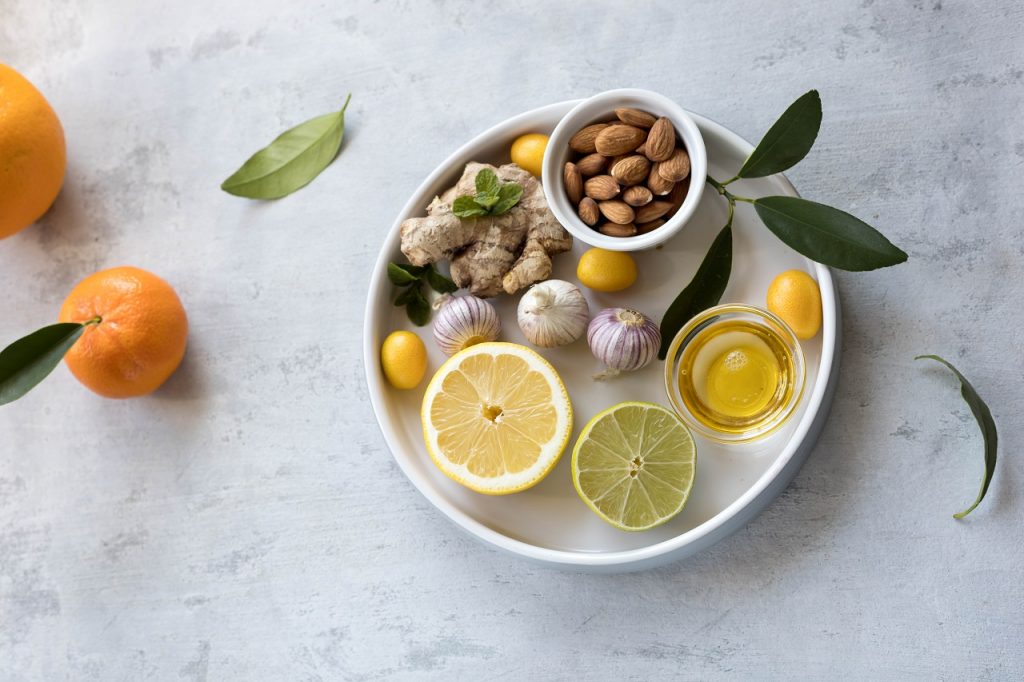
  1. Fruits: are packed with vitamins and minerals. They are a rich source of Vitamin C and Vitamin A which play a very important role in building immunity. They are packed with antioxidants. Citrus fruits like Orange, grapefruit, Sweet Lime, lemon as well as kiwi, papaya and all types of berries are the best. To get the best of fruits, we should always consume seasonal and locally grown fruits. 2-3 serving of fruits are recommended per day if there is no restriction.
  2. Vegetables: like green leafy veg, broccoli, red bell pepper are packed with vitamins, minerals and antioxidants. Green leafy vegetables are packed with fiber and water. They are loaded with Vitamin A, C and K. Calcium, iron, magnesium, potassium are the minerals which we can get from them. They are also good sources of phytochemicals like litein, zeaxanthin and beta-carotene which revitalize our health. In fact, Broccoli is supercharged with vitamins A, C and E. It has sulforaphane which is an antioxidant. It has good amounts of fiber which supports the immune system. Red bell pepper has good amounts of Vitamin C which can be compared to Citrus fruits. If anyone wants a good amount of Vitamin C with fruit sugar (Fructose), bell peppers are the best option. It is also a good source of Beta carotene (which gets converted into Vitamin A). Along with helping boost your immunity, it also improves your skin and eye health.
  3. Nuts and Seeds: are good sources of good fat/omega 3 fatty acids and have protein and antioxidants in it along with Vitamin E minerals. In nuts and seeds, almonds and sunflower seeds help you boost your immunity. Vitamin E is fat soluble and almonds have plenty of it! Sunflower seeds are great sources of phosphorus, magnesium, selenium, Vitamin B-6 and E. Vitamin E is very important in regulating and maintaining the immune system.
  4. Roots like Ginger and Garlic: Ginger is anti-inflammatory and antioxidative in nature, hence it helps in preventing illnesses. Certain chemical compounds in ginger helps our body ward off germs. Both fresh and dried ginger are good to build immunity. Garlic is used in home remedies for common cough and cold and other illnesses. It has allicin in it which helps to lower down the blood pressure, cholesterol and helps in heart health.
  5. Green Tea: is packed with flavonoids and epigallocatechin gallate (EGCG) which are antioxidants. In studies, it’s shown that ECGC helps boost your immunity. Green tea also contains L-theanine which is an amino acid that helps in the production of germ fighting compounds called T-cells, which reduce inflammation in the body and helps fight infections.
  6. Dark Chocolate: The Cocoa found in dark chocolate can strengthen the defence of our immune system. Dark chocolate may help fight a stubborn cough. It contains an antioxidant called theobromine, which may help boost your immunity by protecting the body’s cells from free radicals. But dark chocolate is high in calories and saturated fat, so it is important to maintain portion control.

These are the few foods which help boost your immunity. With these, there are many more foods that help us, such as amla, haridra, neem, tulsi and ashwagandha. They are known to strengthen the immune function. As with all foods, you need to maintain portion control. Before you try any of the above foods, check with your doctor, dietitian or nutritionist. 

For more on immunity, check out Healthy Reads or ask a GOQii Coach by subscribing for personalized coaching here: https://goqiiapp.page.link/bsr

#BeTheForce 

November 28, 2021 By Urvi Gohil 1 Comment

Healthy Eating: Vegetable Bajra Uttapam

vegetable bajra uttapam

Uttapam is quite a popular dish! How about we add a twist of health and nutrition to it with Bajra? That’s right! Today let’s prepare Vegetable Bajra Uttapam. Bajra, as you know, is rich in fiber, it is gluten-free and helps one manage blood sugar, lose weight and it also reduces cholesterol levels.

Let’s get started!

What You Will Need

  • Whole Bajra – ¼ cup (soaked for 8 hours and drained)
  • Bajra Flour – 1 cup
  • Rice Flour – ¼ cup
  • Carrot – ½ cup (grated)
  • Onion – ½ cup (finely chopped)
  • Tomato – ½ cup (finely chopped)
  • Coriander – ½ cup (finely chopped)
  • Salt to taste
  • Ginger Garlic Paste – 1 tsp
  • Chilli powder – 1 tsp
  • Turmeric powder – 1 tsp
  • Lemon Juice – 1 tbsp
  • Oil 

How to Prepare

  1. Combine whole Bajra with ½ cup of water and some salt. Put it in a pressure cooker and cook for 5 whistles. It will take time to cook, so be patient.
  2. Once done, drain the excess water and keep the cooked Bajra aside.
  3. Combine Bajra flour, rice flour, whole cooked Bajra, all vegetables, ginger garlic paste, lemon juice & spices along with 1-1.5 cup of water in a mixing bowl, mix them well.
  4. Heat a nonstick griddle and grease it lightly with oil.
  5. Using a spatula pour the batter on the tawa and spread it lightly to make a medium thick circle. Allow it to cook on medium flame.
  6. Once golden brown, flip it over and allow it to cook on the other side.
  7. Serve it hot with freshly made green chutney.

Highlights of the Vegetable Bajra Uttapam

  • Vegetable Bajra Uttapam is rich in fiber and iron, giving you satiety with just 1-2 Uttapam.
  • Best for any meal of the day, and very colorful with all the veggies.
  • Will give you a change from the regular Uttapam and is super healthy! 

We hope you enjoy this delicious and nutritious Vegetable Bajra Uttapam recipe! Do share your thoughts with us in the comments below. For more healthy recipes, check out Healthy Reads or ask a GOQii Coach by subscribing for personalized coaching here: https://goqiiapp.page.link/bsr

#BeTheForce

  • « Previous Page
  • 1
  • …
  • 54
  • 55
  • 56
  • 57
  • 58
  • …
  • 66
  • Next Page »

Search

Recent Posts

  • Best Foods To Alleviate Irritable Bowel Syndrome
  • ALL ABOUT VERTIGO!
  • PCOS and Anxiety: Discover Relief with the 54321 Technique
  • Navigating the Maze of Nutrition: Finding Clarity Amidst Confusion
  • Get children active and keep them healthy

Stay Updated

Archives

  • December 2025 (6)
  • November 2025 (15)
  • October 2025 (20)
  • September 2025 (6)
  • August 2025 (6)
  • July 2025 (12)
  • June 2025 (18)
  • May 2025 (16)
  • April 2025 (23)
  • March 2025 (23)
  • February 2025 (22)
  • January 2025 (26)
  • December 2024 (26)
  • November 2024 (25)
  • October 2024 (22)
  • September 2024 (24)
  • August 2024 (31)
  • July 2024 (21)
  • June 2024 (26)
  • May 2024 (31)
  • April 2024 (27)
  • March 2024 (29)
  • February 2024 (26)
  • January 2024 (25)
  • December 2023 (15)
  • November 2023 (11)
  • October 2023 (22)
  • September 2023 (22)
  • August 2023 (20)
  • July 2023 (22)
  • June 2023 (24)
  • May 2023 (24)
  • April 2023 (24)
  • March 2023 (23)
  • February 2023 (20)
  • January 2023 (16)
  • December 2022 (12)
  • November 2022 (15)
  • October 2022 (15)
  • September 2022 (12)
  • August 2022 (10)
  • July 2022 (17)
  • June 2022 (11)
  • May 2022 (10)
  • April 2022 (6)
  • March 2022 (6)
  • February 2022 (13)
  • January 2022 (12)
  • December 2021 (7)
  • November 2021 (3)
  • October 2021 (6)
  • September 2021 (3)
  • August 2021 (8)
  • July 2021 (7)
  • June 2021 (15)
  • May 2021 (16)
  • April 2021 (10)
  • March 2021 (7)
  • February 2021 (4)
  • January 2021 (4)
  • December 2020 (3)
  • November 2020 (4)
  • October 2020 (10)
  • September 2020 (3)
  • August 2020 (3)
  • July 2020 (2)
  • June 2020 (4)
  • May 2020 (10)
  • April 2020 (12)
  • March 2020 (10)
  • February 2020 (4)
  • January 2020 (4)
  • December 2019 (3)
  • November 2019 (7)
  • October 2019 (5)
  • September 2019 (4)
  • August 2019 (9)
  • July 2019 (9)
  • June 2019 (11)
  • May 2019 (4)
  • April 2019 (9)
  • March 2019 (8)
  • February 2019 (9)
  • January 2019 (8)
  • December 2018 (9)
  • November 2018 (3)
  • October 2018 (3)
  • September 2018 (5)
  • August 2018 (10)
  • July 2018 (6)
  • June 2018 (13)
  • May 2018 (8)
  • April 2018 (18)
  • March 2018 (9)
  • February 2018 (8)
  • January 2018 (15)
  • December 2017 (12)
  • November 2017 (19)
  • October 2017 (13)
  • September 2017 (15)
  • August 2017 (4)
  • July 2017 (8)
  • June 2017 (7)
  • May 2017 (6)
  • April 2017 (8)
  • March 2017 (6)
  • February 2017 (7)
  • January 2017 (9)
  • December 2016 (10)
  • November 2016 (7)
  • October 2016 (7)
  • September 2016 (7)
  • August 2016 (11)
  • July 2016 (9)
  • June 2016 (9)
  • May 2016 (12)
  • April 2016 (17)
  • March 2016 (17)
  • February 2016 (8)
  • January 2016 (6)
  • December 2015 (2)
  • November 2015 (9)
  • October 2015 (7)
  • September 2015 (9)
  • August 2015 (11)
  • July 2015 (9)
  • June 2015 (12)
  • May 2015 (9)
  • April 2015 (13)
  • March 2015 (8)
  • February 2015 (5)
  • January 2015 (12)
  • December 2014 (14)
  • November 2014 (11)
  • October 2014 (6)
  • September 2014 (13)
  • August 2014 (12)
  • July 2014 (6)
  • June 2014 (2)
  • May 2014 (7)
  • April 2014 (5)

From “Laddu Nawin” to Fit and Fierce: How a 25-Year-Old Insurance Advisor Shed 20 Kilos and Gained His Life Back

When 25-year-old Nawin Yadav from Hyderabad walked into his office every morning, he carried more than just his files and policy papers. He had the weight of fatigue, sluggish energy, and an ever-growing belly that was becoming the butt of jokes. “People … [Read More...]

“I’ve Challenged Myself to Live 100 Years” – The Story of Chandubhai Savani’s Second Chance at Life

At 67, most people start slowing down. Not Chandubhai Savani. A resident of Surat, Chandubhai, thought life was on track. “My life was going well till I had my bypass surgery,” he says. That surgery, back in 2021, was a wake-up call.  Medication was routine, but exercise wasn’t. His diet? What he calls ‘normal.’ “I […]

From Shimla’s Slopes to Chandigarh’s Sidewalks: Surinder Kaur Bhalla’s Journey from Chaos to Control

Some journeys start with a plan. Others begin with a stumble literally. Surinder Bhalla, a government professional, born and raised in the scenic hill town of Shimla, had always lived a life of movement. “In Shimla, you walked everywhere,” she reflects. “Walking was never an exercise. It was just life.” But after shifting to Chandigarh, […]

Ananda Mukherjee Health Story

From Terminal Illness To Complete Wellness! Ananda Mukherjee Health Story

As we observe World Cancer Day under the powerful theme ‘United by Unique’ (2025-2027)**, we are reminded that every individual’s journey with cancer is distinct, yet united by shared resilience, hope, and the collective fight against this disease. This theme places people at the centre of care and their stories at the heart of the […]

  • HOME
  • HEALTHY LIVING
  • FITNESS
  • HEALTHY RECIPES
  • USER STORIES
  • KARMA
  • BUY GOQii

Copyright ©2016 GOQii