GOQii

Blog

  • HOME
  • HEALTHY LIVING
  • FITNESS
  • HEALTHY RECIPES
  • USER STORIES
  • KARMA
  • BUY GOQii

June 29, 2023 By Arooshi Garg Leave a Comment

How Good Nutrition Before Conception Can Affect Up To 3 Generations

How Good Nutrition Before Conception Can Affect Up To 3 Generations

We usually lay a lot of emphasis on the pregnancy and postpartum diet, however, a new study suggests that a gene called VTRNA20-1 which is responsible for reducing the risk of future diseases for a developing baby is directly related to nutritional status of a mother before pregnancy.

A mother’s pre-pregnancy diet is directly related to the foetus’s genetic makeup and immunity. If a mother is nutritionally deficient before conception, it may lead to radical and permanent change in the unborn child’s genetic makeup responsible for immunity and future risk of cancer.

Factors That Determine The Health Of The Unborn Child

A mother’s environment, nutritional intake, and mental health status determines the long term health of the unborn child.

Few nutrients are said to be extremely essential for a healthy pregnancy and should be included in a women’s diet in the pre-pregnancy period. Some babies are born with spina bifida, brain defects, preterm births, or underweight babies which is directly related to a mother’s pre-pregnancy weight and nutritional adequacy.

As soon as the egg is fertilized, the embryo starts using the mother’s nutrient stores to support its growth. Essential nutrients like Zinc, Iron, Folic Acid are needed to support development and growth of the main body organs in the developing foetus.

How Does Good Nutrition Before Conception Help?

Let’s look at the role good nutrition and the lack of it play during pre-pregnancy, pregnancy and childbirth.

  • Women in the higher BMI range have an increased risk for pregnancy induced diabetes or high blood pressure which can lead to improper foetal development. This could affect generations to come! It is extremely essential to monitor weight and be in a BMI range that is below 25.
  • Folate or Vitamin B9 is a very important vitamin for the development of the brain and spinal cord of the baby. Deficiency of which can cause neural tube defects or Spina Bifida, where the backbone encasing the spinal cord doesn’t develop properly, exposing the spinal cord. This can lead to intellectual disability or paralysis which might be carried on to generations to come as a hereditary issue. Folic acid is a very essential nutrient found in nuts, legumes, orange and yellow fruits.
  • Calcium is extremely important not only for the unborn child but also for the mother to maintain good nutritional status. As the embryo grows, it starts drawing minerals like calcium, zinc and magnesium from the mother’s body. Inadequacy of these nutrients might lead to poor bone development, poor muscle and nerve fibre expansion. In turn, the mother’s bones also weaken, putting them at risk of osteoarthritis in the future.
  • Iron is required in good amounts in maternal stores to prepare the mother’s body for the needs of the foetus during pregnancy. Anaemia or iron deficiency is related to increased foetal morbidity. Affected mothers may experience breathlessness, fainting, tiredness, palpitations, and sleep difficulties. Most of the iron transfer to foetus happens in the third trimester and is the most important phase where iron reserves of the mother should be extremely good. A good iron reserve ensures that the blood supply in the developing baby is proper and any blood loss that happens during delivery doesn’t prove to be fatal for the new mother.

In short, if a mother’s diet and nutritional status are poor before conception, it might lead to a plethora of adverse outcomes that might continue for generations to come. 

I hope this write-up helps to-be mothers lay more focus on correcting their nutrition before conceiving which helps them as well as their unborn babies to be at a lesser risk for any genetic or nutrition-induced life threatening outcomes!

If this article helped you, let us know in the comments below and share it with anyone who needs to read it! Find more articles on women’s health here. You can also seek advice and guidance from a certified expert during your pregnancy, by subscribing to GOQii’s Personalised Health Coaching here.

#BeTheForce  
June 18, 2023 By Neha Kapoor 5 Comments

Rise From Calorie Counting To Be Your Own Dietitian

food pyramidDo you know the long kept “Secret of Diet”? Have you heard about it? In this article I would like to share it with you. It is a mantra to facilitate weight loss, regulate diabetes, hypertension and many such diseases taking good care of your immune system as well as vital organs. I am sure you must be familiar with these idioms i.e. “Food Pyramid” and “My plate”. If you are, I will be representing it from a different perspective. These are our main tools to plan a daily diet.

The Importance of Food Pyramid & My plate

The main idea behind the design of the food pyramid is to make our healthy eating experience much easier. When starting a new healthy diet, people need to know if they are consuming the right amount of the basic nutrients such as protein, fat, and carbohydrate, which is where the importance of the food pyramid and my plate comes in.

The food pyramid contains several sections of foods which are usually grouped according to their nutrient’s similarity. This actually helps you with a larger option to choose from. This way, you are not stuck to one particular food when there’s a whole world of options out there.

How To Use It? 

  1. Keeping this picture in front of you can help in making healthier choices with the number of servings you should ideally take in a day.
  2. Now next step is to understand My Plate which makes things pretty clear.

My Plate

The beauty of My Plate is in using a plate icon to “measure” the relative portion sizes of what you’re eating.

  • My Plate is a food icon that serves as a powerful reminder to make healthy food choices and to build a healthy plate at mealtimes.
  • It is a visual cue that identifies the five basic food groups that are: Fruits-20%, Vegetables-30%, Protein group-20%, and grains 30% and a bowl of dairy products.

What to Put on Your Plate?

  • Eating the My Plate way means filling half your plate with vegetables and fruits, adding slightly more veggies than fruits (Due to sugar content).
  • Go for a colourful mix. You’ll get plenty of nutrients that way.
  • You should fill the other half of your plate with lean protein and grains, using slightly more grain than protein. For instance, lean cuts of chicken and other meat, fish, beans and peas, tofu, eggs, nuts and seeds (use sparingly).
  • Whole grains should make up at least half of your grains. That means choosing brown rice instead of white rice, whole wheat flour or multigrain or millets instead refined flours for instance. If weight loss is a goal make grains 20%.
  • The My Plate icon also shows a glass of milk/ buttermilk near your “plate.” It’s a reminder to include dairy (mostly fat-free or low-fat) in your diet. A2 or organic milk is essentially chemical-free and healthier as the cows are fed grass or organically cultivated fodder. Calcium-fortified soy milk also counts.

Dietary Guidelines of My Plate

Making food choices for a healthy lifestyle can be as simple as using these tips. Use the ideas in this list to balance your calories (energy coming from food), to choose foods to eat more often, and to cut back on foods to eat less often.

  1. Enjoy your food, but eat less: Take the time to fully enjoy your food as you eat it. Eating too fast or when your attention is elsewhere may lead to eating too many calories (overeating). Pay attention to hunger and fullness cues before, during, and after meals. Use them to recognize when to eat and when you’ve had enough.
  2. Avoid oversized portions: Use a smaller plate, bowl, and glass. Portion out foods before you eat. When eating out, choose a smaller size option, share a dish, or take a part of your meal home.
  3. Foods to eat more often: Eat more vegetables, fruits, whole grains, and fat-free or 1% milk and dairy products. These foods have the nutrients you need for health – including potassium, calcium, vitamin D, and fiber. Make them the basis for meals and snacks.
  4. Make half your plate salad and vegetables: Choose red, orange, and dark-green vegetables like tomatoes, sweet potatoes, and broccoli, along with other vegetables for your meals. Add salad to meals.
  5. Switch to fat-free or low-fat (1%) milk: They have the same amount of calcium and other essential nutrients as whole milk, but fewer calories and less saturated fat.
  6. Make half your grains whole grains: To eat more whole grains, substitute a whole-grain product for a refined product-such as eating whole wheat bread instead of white bread or brown rice instead of white rice, whole wheat flour or millets instead refined ones.
  7. Foods to eat less often: Cut back on foods high in solid fats, added sugars, and salt. They include cakes, cookies, ice cream, candies, sweetened drinks, pizza, and fatty meats like ribs, sausages, bacon, and hot dogs. Use these foods as occasional treats, not everyday foods. Natural sugars like jaggery, honey, pure maple syrup are better choices.
  8. Compare sodium in foods: Use the Nutrition Facts label to choose lower sodium versions of foods like soup, bread, and frozen meals. Select canned foods labelled “low sodium,” ”reduced sodium,” or “no salt added.”
  9. Drink water instead of sugary drinks: Cut calories by drinking water or unsweetened beverages. Soda, energy drinks, and sports drinks are a major source of added sugar, and calories, in American diets.

Do give it a try and share your experience in the comments below. After getting familiar with this tool, we really don’t need any diet charts. Stick the pictures in your kitchen and plan any day meal without any hassle.

You can find more useful information on nutrition here. You can also get this information directly from an expert by subscribing to GOQii’s Personalised Health Coaching here.

#BeTheForce 

June 9, 2023 By Mamta Joshi 4 Comments

What Is The Circadian Rhythm Diet & How Does It Help?

circadian rhythm diet

Have you heard about the Circadian Rhythm Diet or the 7am to 7pm diet and the recommended dietary habits & restrictions it involves? Surprisingly, there are no dos and don’ts on eating. It’s  all about when you should eat. The basic idea of this diet is to reset meal timings to the same one as our ancestors i.e. between sunrise and sunset – basically scheduling meals during daylight hours. 

Circadian Rhythm Diet also known as Body Clock Diet is basically a form of time restricted eating plan where we eat in sync with the body’s internal clock which gets regulated by change within the environment, mainly, light and darkness, and are controlled by a small area in the middle of the brain. This can affect metabolism, hunger, sleep, body temperature and other bodily functions.

The hormone cortisol, also known as the “get up and go” hormone is linked with body metabolism and hence weight. It rises and falls during the course of the day.  If someone eats when metabolism is at peak, calories consumed would be utilized well and not deposited as fat. On the other hand, food eaten at the wrong time may lead to weight gain.

Circadian rhythm is a natural, internal process that regulates the sleep-wake cycle and repeats every 24 hours and can be divided into 2 phases:

  1. Eating and metabolizing phase: Metabolism is high when cortisol is at its peak and slow when cortisol levels are down. The body releases cortisol naturally twice per day: once in the early morning and later in the evening and at that time, the stomach too is ready with the right amount of hormones and digestive enzymes and even good gut microbes to digest the food. So for health benefits eat with the Sun. In response to daylight, cortisol rises, insulin sensitivity increases and melatonin decreases, making one feel active and energized. Cortisol supports thyroid function and metabolism, and contributes to the energy needed  to complete daily tasks.
  2. Resting  and healing phase: When the sun sets, the body naturally wants to wind up and prepare for sleep. The sleep inducing hormone melatonin rises up, while cortisol and insulin sensitivity reduces. So food consumed later at night when cortisol levels are decreasing is more likely to be stored as fat.

As soon as one finishes dinner, the body slowly gets slow on metabolism, the body clock resets, going into repair and rejuvenation mode so that damaged cells can be repaired and replaced with healthy new cells and allergy causing chemicals or pathogens cannot attack the body. Thus, late night munching leads to weight gain and it disrupts the body’s natural healing mechanism too. 

Highlights Of The Circadian Rhythm Diet 

  1. Eat during daylight.
  2. Have breakfast and lunch as the biggest meals of the day, and dinner, the smallest.
  3. Have about 75% of nutrition before 3 pm
  4. Do not eat anything post dinner.

Benefits Of This Diet 

  1. Helps maximize weight loss efforts
  2. Reduces the risk of obesity
  3. Improves digestive health
  4. Improves metabolism
  5. Improves sleep, mood and energy levels
  6. Reduces inflammation in the body
  7. Lowers the risk of type-2 diabetes and cardiovascular disease
  8. Promotes longevity 

Those who schedule their meals between 12 hours (7 am to 7 pm) might have a much better circadian rhythm and health unlike those who delay dinner and eat within 15-16 hours (7am to 11pm or more). After 12-16 hours of fasting when we have the next meal i.e. breakfast – the body gets enough time to heal/repair as required. Don’t eat anything post dinner as the body enters the healing and rejuvenation mode. Compounds that encourage the inflammatory response rise at night. This is likely because the body is better at fighting infections while it is at rest, and energy can be poured into the effort, rather than into other functions like metabolism.

Even if the food choice & calorie consumed is the same, those who eat during daylight have better health than those who delay. Food at the wrong time can disturb the internal clock and break the metabolic balance in our body, and that can push us towards disease. Biological rhythms are meant to protect us. Disturbing this rhythm can lead to weight gain, hormonal issues, mental health issues, metabolic diseases like type -2 diabetes and heart problems. 

So do give this Circadian Rhythm Diet a go and let us know what you feel in the comments below! We hope this article helps you. For more informative articles such as this, check out Healthy Reads or you can get this information directly from a GOQii Coach by subscribing for personalized health coaching here.

#BeTheForce 

June 4, 2023 By Urvi Gohil 2 Comments

Healthy Eating: Fruit and Chia Salad With Nuts

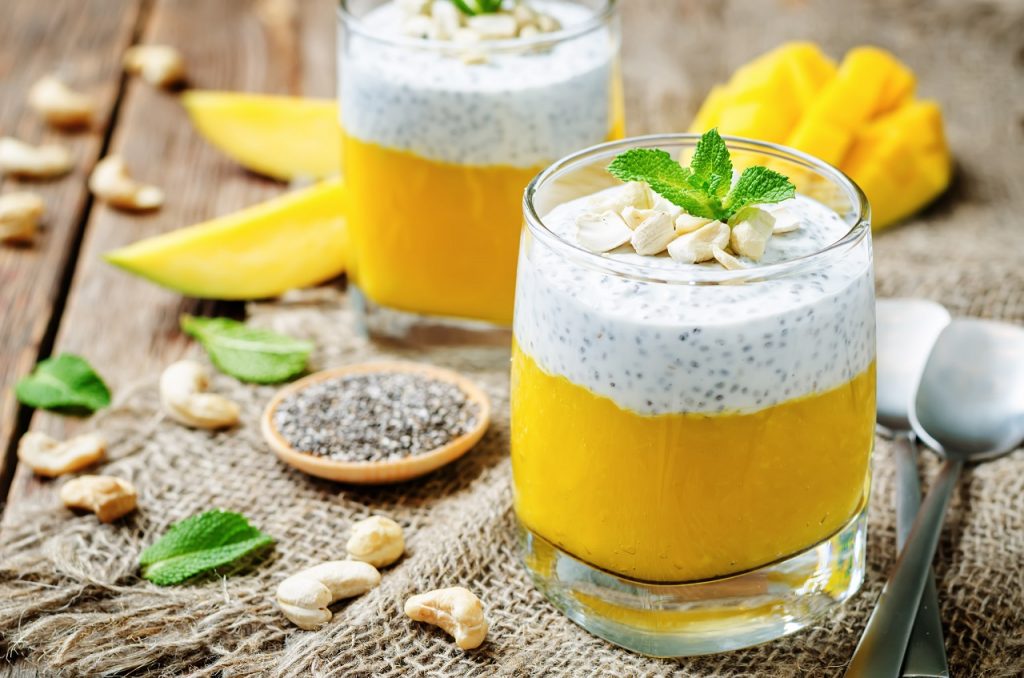
healthy eatingIs preparing evening snacks a challenge for you? If you haven’t figured out what you’ll be eating today, this Fruit and Chia Salad with Nuts is perfect! This healthy recipe is filling and it will satisfy your sweet tooth as well. It can also be served as a cold dessert to beat the heat!

Ingredients:

  • Apple/Banana/Ripe Mango – 1 medium size chopped
  • Strawberries – 5-6
  • Kiwi – 1 medium size chopped
  • Chia seeds – 1 tbsp
  • Almond milk/ Coconut milk/ Low-fat milk – ½ cup (100 ml)
  • Honey – 1 tsp
  • Walnuts (4 halves), almonds (5), Pista (5), Cashews (4)
  • Cinnamon powder

Method:

  1. Chop all the nuts roughly
  2. Heat a pan and roast the chopped nuts for 3-4 minutes on low to medium flame to make them brittle and crunchy
  3. Take 100ml low-fat milk/ coconut milk/ almond milk, add 1 tablespoon of chia seeds, pinch of cinnamon powder and 1 tsp of honey in it
  4. Allow this mixture to stay in refrigerator overnight or for 8-10 hours to allow the chia seeds to swell up
  5. Take a mason jar or a glass and start layering
  6. Add chopped mangoes to base and add milk + chia seeds mixture on it to cover the mangoes
  7. To this, add the chopped kiwi and again add milk + chia seeds mixture on it
  8. Top this with chopped strawberries and again some milk + chia seeds mixture
  9. Add the roasted nuts on top

Please Note: If you’re allergic to nuts, replace them with seeds.

Highlights of the Fruit and Chia Salad Recipe 

  • Chia seeds are very rich in omega 3 fatty acids and fiber which makes this snack very filling
  • You can add seasonal fruits of your own choice and get all the seasonal nutrients
  • This will give a variation to your normal fruit intake

Did you like this fruit and chia salad with nuts recipe? Have you already tried it out? Share a pic on social media or the GOQii Arena and tag us! You can find more healthy recipes here.

To get more advice on recipes, nutrition and diet tips from an expert, subscribe to GOQii’s Personalised Health Coaching here.

#BeTheForce

  • « Previous Page
  • 1
  • …
  • 31
  • 32
  • 33
  • 34
  • 35
  • …
  • 66
  • Next Page »

Search

Recent Posts

  • Best Foods To Alleviate Irritable Bowel Syndrome
  • ALL ABOUT VERTIGO!
  • PCOS and Anxiety: Discover Relief with the 54321 Technique
  • Navigating the Maze of Nutrition: Finding Clarity Amidst Confusion
  • Get children active and keep them healthy

Stay Updated

Archives

  • December 2025 (6)
  • November 2025 (15)
  • October 2025 (20)
  • September 2025 (6)
  • August 2025 (6)
  • July 2025 (12)
  • June 2025 (18)
  • May 2025 (16)
  • April 2025 (23)
  • March 2025 (23)
  • February 2025 (22)
  • January 2025 (26)
  • December 2024 (26)
  • November 2024 (25)
  • October 2024 (22)
  • September 2024 (24)
  • August 2024 (31)
  • July 2024 (21)
  • June 2024 (26)
  • May 2024 (31)
  • April 2024 (27)
  • March 2024 (29)
  • February 2024 (26)
  • January 2024 (25)
  • December 2023 (15)
  • November 2023 (11)
  • October 2023 (22)
  • September 2023 (22)
  • August 2023 (20)
  • July 2023 (22)
  • June 2023 (24)
  • May 2023 (24)
  • April 2023 (24)
  • March 2023 (23)
  • February 2023 (20)
  • January 2023 (16)
  • December 2022 (12)
  • November 2022 (15)
  • October 2022 (15)
  • September 2022 (12)
  • August 2022 (10)
  • July 2022 (17)
  • June 2022 (11)
  • May 2022 (10)
  • April 2022 (6)
  • March 2022 (6)
  • February 2022 (13)
  • January 2022 (12)
  • December 2021 (7)
  • November 2021 (3)
  • October 2021 (6)
  • September 2021 (3)
  • August 2021 (8)
  • July 2021 (7)
  • June 2021 (15)
  • May 2021 (16)
  • April 2021 (10)
  • March 2021 (7)
  • February 2021 (4)
  • January 2021 (4)
  • December 2020 (3)
  • November 2020 (4)
  • October 2020 (10)
  • September 2020 (3)
  • August 2020 (3)
  • July 2020 (2)
  • June 2020 (4)
  • May 2020 (10)
  • April 2020 (12)
  • March 2020 (10)
  • February 2020 (4)
  • January 2020 (4)
  • December 2019 (3)
  • November 2019 (7)
  • October 2019 (5)
  • September 2019 (4)
  • August 2019 (9)
  • July 2019 (9)
  • June 2019 (11)
  • May 2019 (4)
  • April 2019 (9)
  • March 2019 (8)
  • February 2019 (9)
  • January 2019 (8)
  • December 2018 (9)
  • November 2018 (3)
  • October 2018 (3)
  • September 2018 (5)
  • August 2018 (10)
  • July 2018 (6)
  • June 2018 (13)
  • May 2018 (8)
  • April 2018 (18)
  • March 2018 (9)
  • February 2018 (8)
  • January 2018 (15)
  • December 2017 (12)
  • November 2017 (19)
  • October 2017 (13)
  • September 2017 (15)
  • August 2017 (4)
  • July 2017 (8)
  • June 2017 (7)
  • May 2017 (6)
  • April 2017 (8)
  • March 2017 (6)
  • February 2017 (7)
  • January 2017 (9)
  • December 2016 (10)
  • November 2016 (7)
  • October 2016 (7)
  • September 2016 (7)
  • August 2016 (11)
  • July 2016 (9)
  • June 2016 (9)
  • May 2016 (12)
  • April 2016 (17)
  • March 2016 (17)
  • February 2016 (8)
  • January 2016 (6)
  • December 2015 (2)
  • November 2015 (9)
  • October 2015 (7)
  • September 2015 (9)
  • August 2015 (11)
  • July 2015 (9)
  • June 2015 (12)
  • May 2015 (9)
  • April 2015 (13)
  • March 2015 (8)
  • February 2015 (5)
  • January 2015 (12)
  • December 2014 (14)
  • November 2014 (11)
  • October 2014 (6)
  • September 2014 (13)
  • August 2014 (12)
  • July 2014 (6)
  • June 2014 (2)
  • May 2014 (7)
  • April 2014 (5)

From “Laddu Nawin” to Fit and Fierce: How a 25-Year-Old Insurance Advisor Shed 20 Kilos and Gained His Life Back

When 25-year-old Nawin Yadav from Hyderabad walked into his office every morning, he carried more than just his files and policy papers. He had the weight of fatigue, sluggish energy, and an ever-growing belly that was becoming the butt of jokes. “People … [Read More...]

“I’ve Challenged Myself to Live 100 Years” – The Story of Chandubhai Savani’s Second Chance at Life

At 67, most people start slowing down. Not Chandubhai Savani. A resident of Surat, Chandubhai, thought life was on track. “My life was going well till I had my bypass surgery,” he says. That surgery, back in 2021, was a wake-up call.  Medication was routine, but exercise wasn’t. His diet? What he calls ‘normal.’ “I […]

From Shimla’s Slopes to Chandigarh’s Sidewalks: Surinder Kaur Bhalla’s Journey from Chaos to Control

Some journeys start with a plan. Others begin with a stumble literally. Surinder Bhalla, a government professional, born and raised in the scenic hill town of Shimla, had always lived a life of movement. “In Shimla, you walked everywhere,” she reflects. “Walking was never an exercise. It was just life.” But after shifting to Chandigarh, […]

Ananda Mukherjee Health Story

From Terminal Illness To Complete Wellness! Ananda Mukherjee Health Story

As we observe World Cancer Day under the powerful theme ‘United by Unique’ (2025-2027)**, we are reminded that every individual’s journey with cancer is distinct, yet united by shared resilience, hope, and the collective fight against this disease. This theme places people at the centre of care and their stories at the heart of the […]

  • HOME
  • HEALTHY LIVING
  • FITNESS
  • HEALTHY RECIPES
  • USER STORIES
  • KARMA
  • BUY GOQii

Copyright ©2016 GOQii